Hedy Habra: A Micro-Interview and Three Poems

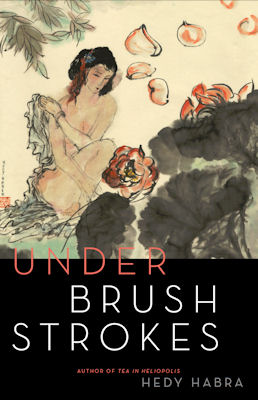
brush Strokes cover sm copy

OE: The poems in Under Brushstrokes are ekphrastic, but they don’t always announce themselves as such. How do you conceive of ekphrasis and how do you mobilize it as a technique in these poems?

HH: I do not aim at giving a purely ekphrastic rendition of the artworks through a mere description, but rather use the image as a point of departure for a surreal or oneiric recreation that may depart from the original. In Under Brushstrokes, poems often engage in a dialogue with the artist or his model, eliminating the boundaries of time and space, or offer an imagined version of what might have happened before or after the portrayed scene, oftentimes from the point of view of one of the characters in the paintings.
Although some of the poems in Under Brushstrokes are intrinsically connected to the artwork, I gradually wanted poems to stand on their own. With time, I decided against using epigraphs, and most poems were submitted to journals and published without acknowledging the source of inspiration. When I compiled the collection, I listed at the end the artists’ names and titles with their corresponding poems, in order to offer readers an additional perspective along with a different layer of interpretation. I chose to write many of the poems without knowing the identity of the artist, to be freed from preconceptions; although I also enjoy writing with a conscious knowledge of the artist and his work.

OE: You make use of myth in various ways in your poetry. Could you tell us in what ways you funhouse-mirror the contents of myth to create your own work?

HH: We find echoes of these allegories in our daily lives, and one of the roles of poetry is to highlight these similarities, which mirror archetypal patterns of the unconscious. I was always fascinated by the fissures between the oftentimes contradictory versions of a given myth or legend. It is tempting to enable a character–stilled within pigments–to tell his/her story. In Under Brushstrokes, writing a poem from Europa’s point of view, for example, ironically subverts the accepted version, because it aims at revealing that she wasn’t raped but participated in Zeus’ seduction. The painting that inspired this poem suggests a sensuous interaction and complicity between the young woman and the sacred bull. In another poem, as she is being encircled with bark, Daphne laments having refused Apollo’s advances, and reconsiders her former decision to escape. Although myths have their own sacred time linked to the present, the mirroring between their different artistic depictions reveals that they aren’t frozen in time but open to reinterpretations and re-appropriation.

OE: You also work with Spanish-language literature. How does this influence your work, either directly or indirectly?

HH: I love magical realism and the way some fabulist authors incorporate dreamlike and surreal elements in their work. I favor texts that mix levels of reality and blur boundaries between genres. My favorite Latin American poet is Octavio Paz, who has vastly experimented with form and genres, and wrote superb prose poems. I greatly admire Borges, Cortázar, Lorca, and the Neruda of Residencia en la tierra, among many others. In Under Brushstrokes, prose poems alternate with verse, as though each poem seems to dictate a particular form.

There is a myriad of authors that have affected me as a reader and as a writer. I grew up with French literature, with an early love for Baudelaire’s and Rimbaud’s verse and prose poems. I also love Italian literature, namely Montale’s poetry, and lyrical fabulists such as Buzzati, and Calvino, whose Invisible Cities I constantly revisit. It is difficult to pin point influences but my profound admiration for all these authors’ œuvre has undoubtedly influenced my writing, consciously as well as unconsciously.

***

Brushstrokes

Without any sound, waves permeate the floor, algae cover the curtains with an insidious verdigris patina, and she watches herself, complacent, looking awry in the mirror while she unbuttons her black evening dress, a mirror that remains empty like her own life. Seated in a sofa, back turned, he drowns in his indifference into the surge, and surely, it is his face that is seen reflected in the portrait hanging on the wall, an immersed look, barely visible behind the wide-open newspaper. Waters rise to the rhythm of the notes resounding from the rear window, in which a man with a white wig plays the piano, as though it were Mozart composing his Requiem. The painter raises inexorably the level of the waters, and the woman knows that even in that last moment, she will only be fulfilled by drowning in the torrent furtively surrounding them.

***

Broken Ladder

I am no longer this little boy who ran away at night to milk the moon and stars. What am I to do if the ladder is broken, leaving golden threads dangling in broad daylight, braided rays of hardened light yet fine as silk spun by a silkworm, once linking me to that lost site of fearless joys? But I will send back the stardust I fed on for so long. Now you know why I study the Almanac, awaiting for the right day and time when wheat is ripe, reaching high into those rays of light. You know why I’m here, in the midst of this field, dressed in my Sunday clothes: I will pull these gilded chords as those of a tower bell ringing above beckoning a gift filled with the substance of dreams, wrapped with Queen Mab’s veils. Don’t fear it is too heavy: it weighs less than a breath or a sigh. Let the wind blow softly, watch it rise to the top with your eyes closed.

***

The Memory of Unspoken Words

She has landed on the deck of an abandoned wreck, fails to remember how she swallowed the fiery ball that pulled her like a tidal wave into the stillness of a metallic sky steeped in lavender where angry clouds hover around the drowning sun suffused with coral. Her pillow is a melted cloud filled with birds that forgot how to fly and now swim in a pool that overflows the deck, washing the souls of dead sailors from every leak and corner. She presses on her eyelids to find a different ending to their story, sees her body glow with scales and the fish in the pool grow wings. She knows every drop of water will vanish at dawn, erasing with black ink her luminous shape, alive only in the formless night, and the rainbow will soon shine over a boat with discarded bags heavy with the stained memory of unspoken words and broken planks.

***

[The above poems initially appeared in Danse Macabre and Pirene’s Fountain and are reprinted here by permission of the author.]

SATURDAY POETRY SERIES PRESENTS: SARA JUNE WOODS

FullSizeRender (1)
& SOMEWHERE THE SUN
By Sara June Woods

Somewhere there is a clearing
in a forest where the world is
not a lonely place.

Somewhere there is a mountain
I have written on in forest fires
that says I am sorry I am not

the one you were looking for.
I wanted to be so badly.
But I am just this one person.

& it says all this
spiraling across
below the tree line.

& somewhere the sun
looks the same coming up
as it does going down.


Today’s poem was previously published in jellyfish magazine and appears here today with permission from the poet.


Sara June Woods is author of three books, Sara or the Existence of Fire (Horse Less Press, 2014), Wolf Doctors (Artifice Books, 2014) and the forthcoming Careful Mountain (Civil Coping Mechanisms, 2016). Her poetry is published widely in journals such as Guernica, Columbia Poetry Review, Diagram, Gulf Coast, Denver Quarterly and Salt Hill. She is a trans woman and a Scorpio and she lives in Portland, OR with her girlfriend she is married to.

Editor’s Note: What do you do when a poem is heartbreaking? When its simple, honest revelations break your heart? When its line breaks break you? What do you do with a poem that devastates you with its simple, brutal truth? With a poem that’s so good, it hurts to read it? Why, you share it, of course. Here, you say to the world. You’re welcome.

Want more from Sara June Woods?
Healthy Dog Poem – Writing by Sara June Woods
P(r)o(bl)em – saramountain tumblr

SATURDAY POETRY SERIES PRESENTS: MARIANNE KUNKEL

Kunkel photo
By Marianne Kunkel:

A SLOTH FIRST HEARS ITS NAME

But why should it care? It munches
a cecropia leaf. It probes the air
with its blunt snout, detecting
a waft of sour coconut. It lumbers to a branch,
grabs hold with its claws, drops,
dangling upside down like a knapsack.
It doesn’t know to feel ashamed
that its name means lazy and sinful.
Like my little sister
after her abortion, when our father
changed her name from Molly to Molly.


Today’s poem originally appeared in Rattle and appears here today with permission from the poet.


Marianne Kunkel is the author of the chapbook The Laughing Game (Finishing Line Press), as well as many poems that have appeared in Hayden’s Ferry Review, Notre Dame Review, Columbia Poetry Review, Poet Lore, and elsewhere. A former managing editor of Prairie Schooner, she is an assistant professor of creative writing and publishing at Missouri Western State University, where she edits the undergraduate literary journal The Mochila Review. Follow her on Twitter @mariannekunkel.

Editor’s Note: Today’s poem is awesome for a myriad of reasons. Because it is about sloths (sort of). Because it is about words, about labels, about judgment and ignorant bliss. Because it vibrant both with images and with sound. Because it houses epic proportions in eleven short lines. Because its advocacy relies on neither a soap box nor a sense of superiority. But what is most striking about today’s poem, perhaps, is its volta. The way it turns the world of the poem on its head. The way it leaves the reader staggering, contemplative, changed.

Want more from Marianne Kunkel?
Verse Daily
“To Pee or not to Pee,” Portland Review
“Keep Away,” Portland Review
Phoebe
Rattle

Time for the Professoriate to Lead the Way

Time for the Professoriate to Lead the Way

by William Trent Pancoast


It’s about time for working folks to stand up for themselves. Walmart workers haven’t been able to get it done. The old line unions are still reeling from the ongoing attacks begun by Reagan and continued by the right wing.

It looks to me like it should happen on our college campuses, and it should for starters be about adjunct instructors having a chance to make a living wage with benefits. That will require that tenured faculty support adjuncts. Much of the bargaining success of the United Auto Workers resulted from skilled and unskilled (high wage and low wage) belonging to the same union. Tenured faculty, making $50,000-$175,000 annual pay with health care and retirement, and adjuncts, making piecework of roughly $400 to $1000 per credit hour taught with no benefits, must join together. They need to form unions, bargain, and be willing to go on strike if necessary. If the brightest group in our country can’t take on the right wing corporatists, who can?

I’m calling out the Professoriate. Folks who spend eight to twelve years in undergraduate, masters, and PhD programs and are respected for their achievements, intelligence, and contributions to our society and civilization. Someone needs to take on the global corporations killing the planet and demeaning the humans on it. Someone needs to take on the corporatization of our universities that has resulted in up to 75% of college instructors serving as low paid temps. Who is better positioned to fight this war than the best educated and most intellectually capable group among us?

The middle and working classes continue to be stunted. They need raises. Benefits. Retirement. Some hope for the future. While the middle class needs to regain its losses, the working class needs its ladder put back.

Walmart seemed like the Great Labor Hope. Its employees have organized in some areas and done informational pickets and strikes. A nationwide strike by Walmart employees would result in a good contract within 48 hours. Once Walmart’s bean counters told the brass that what the striking employees wanted was what the company had lost in two days, the middle class would be on its way back. But the national momentum is not there for Walmart workers to organize. Many are ignorant of unions and scared for the minimum wage jobs they need. Maybe just like adjuncts.

The industrial unions in steel, auto, glass, and rubber have been decimated by off-shoring and never-ending attacks on wages and benefits. The Big Three, after the 2008 collapse of capitalism as we know it, is finally profitable again with workers perhaps getting raises after seven years of givebacks. (Please don’t tell me about Ford. The only reason they didn’t go bankrupt is that they borrowed every nickel of equity in the company before the depression began in 2008.) The United Auto Workers can’t even organize the transplants, most of which are in the south, even though the foreign factories are sweatshops with 50% temps making low wages with no benefits.

Lately refinery and port workers have gone on strike and improved their situations. The United Auto Workers were recently in Detroit at their Special Bargaining Convention, an event that not long ago set this country’s social agenda through what it decided to bargain for—vacations and sick leave, retirement and safety, apprenticeships and worker training, unemployment compensation and civil rights, family leave and health care, always health care, always trying to negotiate a one payer system for every citizen. Labor set the agenda after World War II to develop and protect our middle class. It is now next to powerless and nothing has so far taken its place.

The college Professoriate should be the group to take on the corporatism in the university system by addressing the adjunct crisis and securing good pay, benefits, and job security for all college instructors. The ruckus they make in accomplishing this task will help move the discussion, and our middle class, forward. They have the brain power, work ethic, and hopefully the moral compass to get the job done.

How would they do it? A lot of frustration has been moldering in the ranks of the adjuncts. They are the institutional temps whose low wages and lack of benefits are carrying the load in higher education. The tenured faculty should also be open to the chance to lead the way in saving our middle class. They surely understand that unless the bottom ranks are protected by labor unions, they themselves, or their successors, will become adjuncts. As tenured professors retire, many will not be replaced. Then a day will come when none are replaced.

Everything about higher education and the Professoriate is involved in this social venture of taking back our universities from the education corporatists: economics and law, literacy, every science, the humanities, government, personal injury lawyers, medicine, religion. No segment of academia would get a by. Of course they would need to acknowledge their own dire conditions. Academia would need to step up to organize and educate.

It is not difficult to tap into the framework of unionism today. Call the United Auto Workers at Solidarity House in Detroit. Invite the office professionals (OEPIU) in. The unions will respond big time. They can have the infrastructure for adjunct organizing in place quickly. Start a new union. Use the brave adjuncts who led the recent walkout and informational pickets on Adjunct Day last February. They have a framework in place.
Maybe I’m a crackpot, some kind of dinosaur pushing for a solution from the past. Maybe I’m generalizing that Solidarity is even possible in such diverse ranks as the Professoriate. Maybe I’m crazy to suggest such an idea—that the best educated, but also the most exploited, group in America today should go to war against global corporations, and specifically corporatism in education, in order to redefine and strengthen our middle class so that it can survive another generation.

But nothing will change the truth of the matter at hand. The corporatists are trashing our economy and educational system by taking more resources for themselves at the expense of the workers on the bottom. If our country’s Professoriate will not step forward and engage the enemy, who will?

***

William Trent Pancoast’s recent fiction has appeared in Night Train, Revolver, Steel Toe Revue, and Fried Chicken and Coffee. His novels are Wildcat and Crashing, with a third, Valley Real Estate, soon to appear. His story collection Vietnam. Fucking Vietnam is looking for a publisher. Pancoast spent 25 years as a labor newspaper editor and is a 1972 graduate of the Ohio State University. He lives in Ontario, Ohio.

SATURDAY POETRY SERIES PRESENTS: DEVIN KELLY


DSC_0759


FEAR OF
By Devin Kelly

We are discussing the roots of things. How phobia
means fear of, and we make them up. Bookaphobia.
Classroomaphobia. Girlaphobia. I say there will be
a quiz. They laugh. It is evening in a small room
in Queens where the desks are miniatures
of the things they should be and the children
sitting in them too close to me and my coffee
so soon done. Then I ask them if they are afraid.
Then I ask them of what. The word penis. Spiders.
The people who hate me for my name. How a moment
turning stills to a moment stilled. How silence,
even in silence, breathes. Their pages of homework
loiter upon their desks. Fifteen words they had
never seen before, and fifteen meanings, written out
beside. Benevolent. Ailurophile. I spoke, upon the hearing,
of opposites, to think of words as people, rooted,
experimenting with different prefixes. To think of words
as lovers, hungry for what it might be they want.
What is her name? It lingers a moment before
it hassles its way out of my mouth. The shape it takes,
unfamiliar, awkward. A word I have never spoken before.
And her skin brown. How she taught me the way
to count to ten in Arabic. The people who hate me
for my name. The people who hate me. The people.
Across an ocean, a man kneeling does not see the hand
that holds the gun that fires the bullet that splits
his head in two. Across an ocean, someone laughs
at a fence of severed heads. I do not know
what to teach anymore. Graphophobia. Philophobia.
Fear of writing, fear of love. And all these children
who do not have a name for their sorrow. At night,
in bed, I turn her name for the hundredth time
and find its beauty. The soft grace of wanting
to be held. A child, scared, moving in dark
from room to room to find the mother who named her,
the father, too, and their reasons why.


Today’s poem originally appeared in Rattle and appears here today with permission from the poet.


Devin Kelly earned his MFA from Sarah Lawrence College. His collaborative chapbook with Melissa Smyth, This Cup of Absence, is forthcoming from Anchor & Plume Press. His poetry, fiction, and essays have appeared or are forthcoming in Gigantic Sequins, Armchair/Shotgun, Post Road, RATTLE, The Millions, Appalachian Heritage, Midwestern Gothic, The Adirondack Review, and more, and his essay “Love Innings” was recently nominated for a Pushcart Prize. He co-hosts the Dead Rabbits Reading Series in Manhattan, teaches Creative Writing and English classes to high schoolers in Queens, and lives in Harlem. You can find him on twitter @themoneyiowe.

Editor’s Note: June 26, 2015 was a day of imperative progress in American history. A day of change. A day when love triumphed. I celebrated this historic event in the most wonderful way I could have imagined, at the wedding of two women whose love is beshert. But when one of the brides gave her speech, she reminded us that there is still more to be done. “Today we celebrate,” she said, “but tomorrow, we keep fighting.” Even amidst a joy so great she shared it with the entire country, the blushing bride reminded us that we can—and should—always be working to make the world a better place.

Today’s poem was written in response to Islamophobia. A Muslim girl in a classroom. What is she afraid of? “The people who hate me for my name.” The families of the victims of a racist hate crime—a terrorist act—in Charleston, SC have what to teach us about love and forgiveness. But what are they truly the victims of? “The people who hate me. The people.” We speak words today that carry with them the chalk outlines of the hatred that flows from fear: Black Lives Matter; I can’t breathe. “I do not know / what to teach anymore,” writes the poet, but he knows “all these children / who do not have a name for their sorrow.”

Let us shout our joy from the rooftops and dance in the streets because yesterday love won. And today, tomorrow, and in the days to come, let us fight until love triumphs over fear and hatred, until there is justice and equality for all.

Want more from Devin Kelly?
The Adirondack Review
District Lit
Little Fiction
Warscapes
Devin Kelly – Published Work

SATURDAY POETRY SERIES PRESENTS: GERARD MANLEY HOPKINS


Gerard_Manley_Hopkins


MOONRISE
By Gerard Manley Hopkins

I awoke in the Midsummer not to call night, in the white and the walk of the morning:
The moon, dwindled and thinned to the fringe of a finger-nail held to the candle,
Or paring of paradisaïcal fruit, lovely in waning but lustreless,
Stepped from the stool, drew back from the barrow, of dark Maenefa the mountain;
A cusp still clasped him, a fluke yet fanged him, entangled him, not quit utterly.
This was the prized, the desirable sight, unsought, presented so easily,
Parted me leaf and leaf, divided me, eyelid and eyelid of slumber.


(Today’s poem is in the public domain, belongs to the masses, and appears here today accordingly.)


Gerard Manley Hopkins (1844 – 1889) was an English poet, Roman Catholic convert, and a Jesuit priest, whose posthumous fame established him among the leading Victorian poets. His experimental explorations in prosody (especially sprung rhythm) and his use of imagery established him as a daring innovator in a period of largely traditional verse. (Annotated biography of Gerard Manley Hopkins courtesy of Wikipedia.)

Editor’s Note: Today’s poem appears here on the recommendation of my mother, a faithful reader of this series. As this coming Monday is her birthday, and the moon her ruling planet, I wanted to share this poem with you today in her honor. Happy Birthday, Mama! May you forever shine as brightly as the moon.

Want to read more by and about Gerard Manley Hopkins?
The Poetry Foundation
Academy of American Poets
Bartleby.com

SATURDAY POETRY SERIES PRESENTS: PATTY PAINE

10259779_10152027363561933_7567284404520260511_n copy

ANTIPHONY
By Patty Paine

Go back to that stream, touch
your lips to the cold, clear quivering,
draw into yourself a time when it was simple
as this to be quenched, to draw in what was
needed. Walk back over the dewed grass
of your past, past the water tower you filled
with dark imaginings, feel
the air crisp & clean on your skin, call
this hope, and carry it
to these moments when a photograph
can send you spiraling, your husband
now six months gone, waiting at the bottom
of an escalator in some airport
or another, everyone hurrying to be somewhere
else, except for this one man, waiting
for you to descend. How a face can be
indelible, yet fade so quickly, is an alchemy
best left unknowable. Hold that sting
of hope, and call out
the name of one who ministered
to you, over & over, until from the dark
you hear your own name return
to you, wild, and rising and clear.


Today’s poem originally appeared in Thrush and appears here today with permission from the poet.


Patty Paine is the author of Grief & Other Animals (Accents Publishing), The Sounding Machine (Accents Publishing), Feral (Imaginary Friend Press), Elegy & Collapse (Finishing Line Press), and co-editor of Gathering the Tide: An Anthology of Contemporary Arabian Gulf Poetry (Garnet Publishing & Ithaca Press) and The Donkey Lady and Other Tales from the Gulf (Berkshire Academic Press). Her poems, reviews, and interviews have appeared in Blackbird, Verse Daily, The Atlanta Review, Gulf Stream, The Journal and many other publications. She is the founding editor of diode poetry journal and Diode Editions. She is an Assistant Professor of English at Virginia Commonwealth University in Qatar where she teaches writing and literature, and is Interim Director of Liberal Arts & Sciences.

Editor’s Note: Today’s poem is one I encourage you to read over and over. For each reading is like opening the next layer of a Russian doll, and there is always more waiting to be discovered within. While one reading simply does not do the poem justice, you honor yourself, dear reader, each time you slip deeper into these words.

Start in media res. Start in motion. Begin not at the beginning, but by turning back. The world of the poem is visceral. Go on, touch the stream, feel the “cold, clear quivering.” Go deeper now. “[D]raw into yourself a time when it was simple / as this to be quenched, to draw in what was / needed.” Move backwards; a poem—a life—in rewind. Let the story unfold in this way—cinematic, emotive, devastating. Let the reverse motion be what propels you forward. You are Lot’s Wife. You are Orpheus. There is only looking back, but looking back leaves you alone in the dark, “hear[ing] your own name return / to you, wild, and rising and clear.”

What a fraught landscape, yes, but what a gift to have been taken on such a journey by such a guide.

Want more from Patty Paine?
Buy The Sounding Machine from Amazon
Buy Feral from Imaginary Friend Press
diode poetry journal
Diode Editions
Interview on The Best American Poetry blog

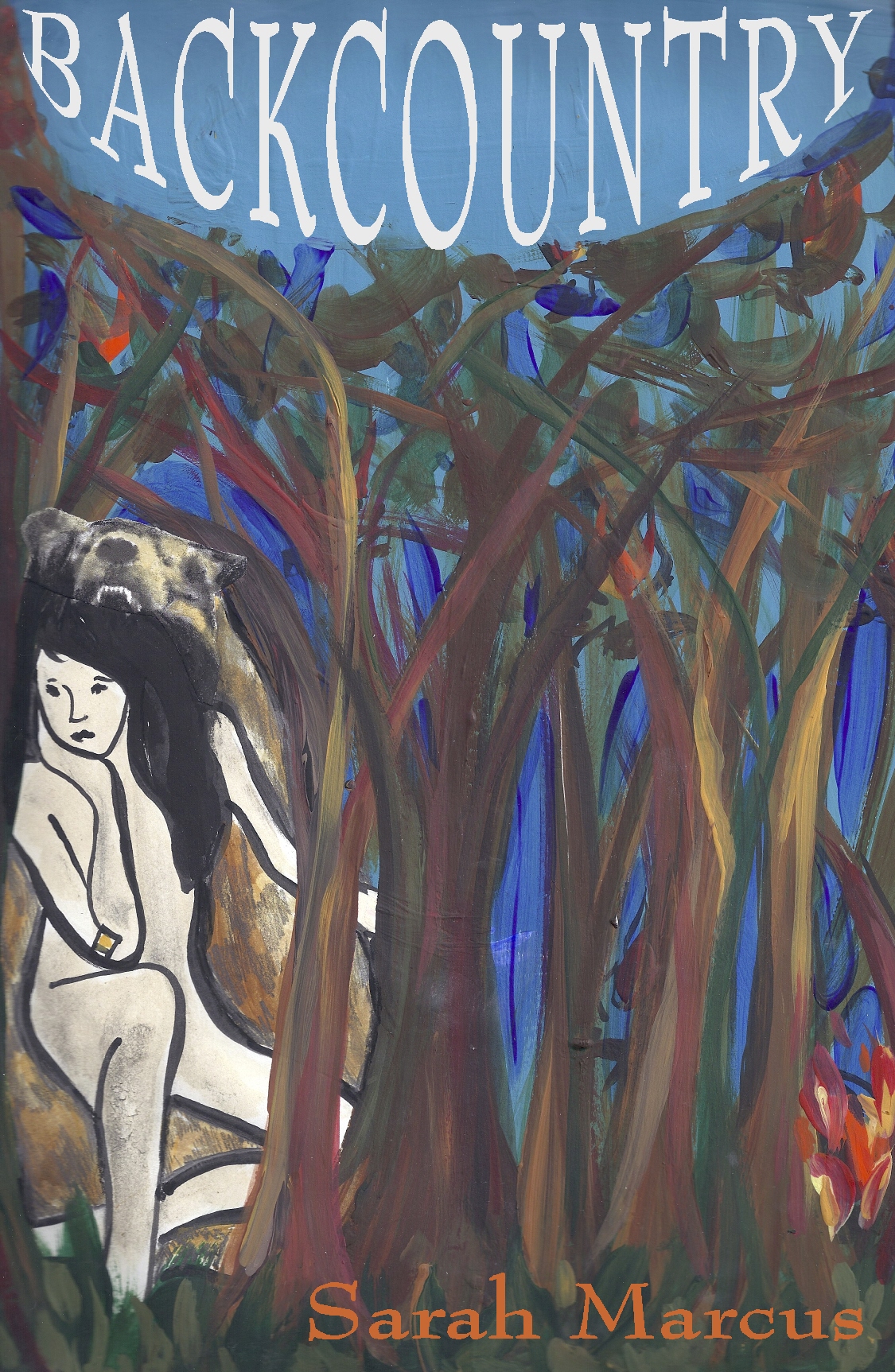
A Review of Sarah Marcus’s Backcountry

Sarah Marcus Backcountry

A Review of Sarah Marcus’s Backcountry

by Karen Skolfield

In my review copy of Sarah Marcus’s chapbook from Finishing Line Press, Marcus includes a friendly, cheerful handwritten note to me which she signs “Love & Bears.” Love – a not-unusual sign off, and she knew my gender, so it’s the salutation between two women writers, but bears? And I look at the title: Backcountry. Of course. Where there are bears.

Turns out, in the backcountry there’s also plenty of love, so Marcus was giving me a succinct preview of her book. There’s love and its near-opposite, a couple we see struggling in their relationship, their lives. By placing the couple so often in the outdoors, the usual trappings of domesticity disappear: no one’s fixing the indoor plumbing as a sign the romance has gone out of the relationship, no one’s passive aggressively leaving dishes in the sink. Instead, they’re looking at maps, watching for storms, telling stories and dreaming, building a fire, building a fire again, that deep symbol of made and shared warmth, the collapse into coals, and is that good or bad? – Marcus lets us answer that question ourselves, even as this couple cycles through unhealthy behavior that may or may not be healthier than the lives they lived without each other.

The couple flashes in and out of the backcountry and a more urban and expected life, both offering their unique dangers. The way a simple rain can turn into a flash flood, “how water steals faces but leaves bodies.” A car rusting in a driveway as the woman contemplates the relationship. What a boat’s spinning propeller can do. When a coyote follows the woman and the couple take up a gun and bow, it’s clear this is not a real coyote but the specter of the relationship’s disintegration they’re warding off.

We hear that howl. We wish the couple well.

I should say: We sort of wish them well. This is a couple we sense shouldn’t be. Still, if this invented couple were all prairie paintbrush and squeaking marmots, all fireweed – the flower that blooms prolifically and purple after wildfire has scarred the landscape black – we’d be disappointed. We need their struggles and their troubles. We know those troubles, and hope we’re mostly beyond them, or won’t stumble into them again. We’ve been the man, telling her “not to make this more difficult than it needs to be.” We’ve been the woman saying everything’s fine, but “annoyed they’ve hiked all these miles to have the same conversation they’ve had at their kitchen table hundreds of times before.” We’re the looming need for rehab, the possibility of prison or a psych ward, the needle scars, the parent dying, the waste of looking for completion through another person instead of through the self.

Though I’m spending time telling the stories, that’s not to say it’s the only reason to keep reading. The narrative arc is pleasing, no doubt, but it’s the fineness of the poems and the finesse of language that makes each poem worthwhile. Like a tracker, I follow Marcus’s language, looking for the misstep in the mudbank – the classic mistake of a creature not wanting to be noticed – but there are no missteps here. Marcus’s chap is the literary equivalent of walking on rocks, each line firm and carefully placed. The endings are an absolute pleasure, never forced, and when I go back through and read them I notice that all but three or four of them end on the woman’s actions or point of view, and maybe this shouldn’t be surprising but I’m enormously pleased by this. Toward the end of the book, the softer third person switches to first person, the hammer of it – there’s been a major shift in the relationship – and it’s dizzying and perfect, both sad and triumphant.

And not to give too many spoilers, but there are bears, though not, perhaps, the bears you might expect. Take a woman and a man. Add some hardships and addiction. Have the adults deal with those things again and again. Now add bears – see how the wildest things go on and live or die without us, see how they move on, as in dreams? That’s how it is, Marcus tells us, for good or ill. That’s what happens in the backcountry.

Sarah Marcus, Backcountry. Finishing Line Press, 2013: $14

***

Karen Skolfield is the author of FROST IN THE LOW AREAS (Zone 3 Press, 2013). She lives in Massachusetts with her husband and two kids. She teaches technical writing at the University of Massachusetts Amherst, where she also earned her MFA. She is a contributing editor at Bateau Press and the literary magazine Stirring, and her poems have appeared in 2011 Best of the Net Anthology, Cave Wall, Memorious, Painted Bride Quarterly, Rattle, Tar River Poetry, Verse DailyWest Branch, and others.


SATURDAY POETRY SERIES PRESENTS: AMORAK HUEY

IMG_3503

By Amorak Huey:


THE POND IN THE CORNER OF THE YARD

It seems so important that I get this right—

memory choked with algae,
memory dried to nothing in the summer,

memory’s post-dawn sky already fevered with desire,
memory’s grass grabbing wet at my hungry ankles.

I remain the same lonely child I was,

never having learned the rules of prayer. Instead I offer
this uncurling body, this frog-song,
tornado-spike, voice-from-the-trees:

the word green
the word green
the word green
.


THE CORN IN THE VALLEY

A sea of silk, a sky of stalk, a sun of ear and song.

There is a season for planting,
a season for harvest,

a moon-color for the storms between.

The lightning has something to do with nourishment,
something to do with need.


THE DOGWOOD AT THE CORNER OF THE PORCH

By our presence we alter the shape of the tree,

crook its looping limbs to suit our prayers,
our psalms and songs,
our cautionary tales.

It’s not the tree asking forgiveness
for its part in our most thoughtless acts—

our blossom-burst and leaf-turn,
our self-inflicted separations.


“The Pond in the Corner of the Yard” originally appeared in Thrush. Today’s poems appear here today with permission from the poet.


Amorak Huey is author of the chapbook The Insomniac Circus (Hyacinth Girl Press, 2014) and the forthcoming poetry collection Ha Ha Ha Thump (Sundress Publications, 2015). A former newspaper editor and reporter, he teaches writing at Grand Valley State University in Michigan. His poems appear in The Best American Poetry 2012, The Cincinnati Review, The Southern Review, The Collagist, Menacing Hedge, and many other print and online journals. Follow him on Twitter: @amorak.

Editor’s Note: I have had the pleasure of featuring Amorak Huey here on the Saturday Poetry Series before, and I am as struck by his poetry today as I was when I encountered it all those years ago. Is it the way he infuses the everyday with a touch of magic? Is it the fine line he conjures between nature and spirit and prayer? Perhaps it is the world he harvests, words sprouting from the earth as if from seeds, the quiet calm of the farm balanced by the weight of repetition, alliteration, form. It is as if you could part the corn stalks and encounter the poem. As if the poem could be turned over like earth, fertile ground for all the words that have yet to be planted.

Want more from Amorak Huey?
“Self-Portrait Following a Trail of Reese’s Pieces” in Radar
“When They Serialize My Life They’re Going to Have a Problem with 1993” in disquieting muses quarterly
“The Fathers at the Little League Field” in Hobart
“Melon Heads” in Stirring from Sundress Publications

SATURDAY POETRY SERIES PRESENTS: SARA BIGGS CHANEY

BiggsChaneyauthor

ST. EUGENIA DECLARES HER ALLEGIANCES
By Sara Biggs Chaney

The girl said: I am not skin,
but sackcloth.

She said: I am not spoke,
but symphony.

My rib bones, how they burn
for the Son.

For Him, I will suffer
this harmonic ache–

I will pin my maiden head,
a moth wing,

I will bear the shames
of a thousand men,

I will wear the hands
of a healer.


Today’s poem was originally published in Thrush and appears here today with permission from the poet.


Sara Biggs Chaney received her Ph.D. in English in 2008 and currently teaches first-year and upper-level writing in Dartmouth’s Institute for Writing and Rhetoric. Her most recent chapbook, Ann Coulter’s Letter to the Young Poets, was released from dancing girl press in November, 2014. Sara’s poems have recently appeared or are forthcoming in RHINO, Sugar House Review, [PANK], Juked, and elsewhere. You can catch up with Sara at sarabiggschaney.com.

Editor’s Note: Today’s poem, like the famous Walt Whitman quote, contains multitudes. Relaying an epic history in a few swift couplets, the interplay between referentiality and alliteration is as precise as it appears effortless. Discreet moments—brilliant vignettes—are carefully pieced together to reveal the story of a life: “The girl said: I am not skin, / but sackcloth;” “I will bear the shames / of a thousand men, // I will wear the hands / of a healer.” As readers, we are as transported by the world of the poem as we are transformed.

Want more from Sara Biggs Chaney?
“St. Barbara, Locked Away” in Atticus Review
“St. Theodora in the Brothel” in Tinderbox Poetry