Sarah Carleton: “That Cloud Looks Like a Typewriter”

.

.

.

That Cloud Looks Like a Typewriter

In mid-century films, the typewriter
was an extroversion machine, clattering day after day
as if to declare, “I’m not some dream-bound poet

lying back, looking up at the sky,
but a vital cog in the gears of capitalism.
Check out my rising paper stack!”

and on-screen scribblers, prolific
even when spinning their wheels, would toss
wadded sheets, filling trash cans and littering

floors with their blockage,
because back then you could fix any jam
by generating mounds of garbage, not like how

I now burrow into my muted keyboard, private
except for the crowing and sighing I scatter
across social-media sites—no prop could advertise

my steady pecking and writerly pluck here
twixt laptop and couch or the ethereal junkpile
of false starts that’s seeding a cloud.

.

.

About the Author: Sarah Carleton writes poetry, edits fiction, tutors English, plays the banjo, and makes her husband laugh in Tampa, Florida. Her poems have appeared in numerous publications, including Cider Press Review, Nimrod, Chattahoochee Review, Tar River Poetry, Crab Orchard Review, and New Ohio Review. Her first collection, Notes from the Girl Cave, was recently published by Kelsay Books.

.

Image Credit: Harris & Ewing, photographer “Woman at typewriter” [between 1921 and 1923] The Library of Congress
Ilari Pass: “delayed rays of a star”

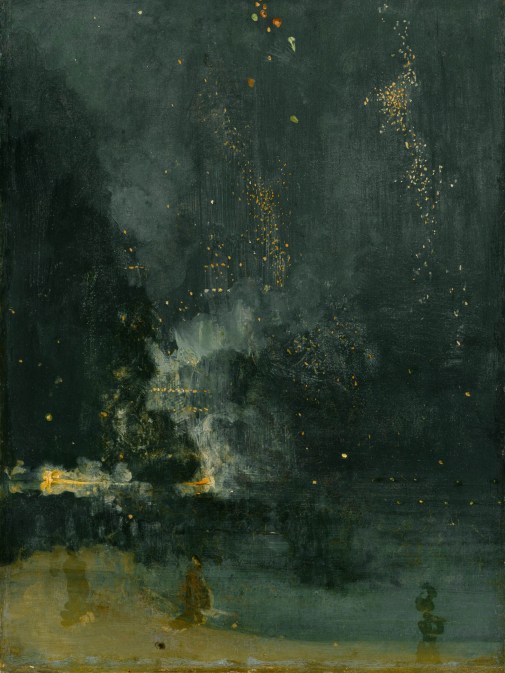
Whistler-Nocturne_in_black_and_gold

.

.

delayed rays of a star

starts with a chance meeting—
peek-a-boo says Eve—crooked,

the night brings good counsel
for deception, the stars become

pinholes in the curtain of night,
opening up like a long fall

from the moon, feeling broken when she rises,
she hides behind a terrifying beauty

stares up at the moon, counting her dimples
she sees the beauty of her road curving

through a tranquil copse of Silver birch,
often marked by wild zinnias,

she wants to lie there and play there
and splash there on the purple edge

on the road, however, she
finds a road made straight

of Adam

the moon peers down,
she’s wishes for his hands

not made of light
she is just another, broken woman

standing in the cold
not allowed to play the lead

.

.

About the Author: Ilari Pass holds a BA in English from Guilford College of Greensboro, NC, and an MA in English, with a concentration in literature, from Gardner-Webb University of Boiling Springs, NC. Her work appears, or forthcoming in Brown Sugar Literary, Kissing Dynamite, Unlikely Stories, Rigorous Magazine, Triggerfish Critical Review, RedFez, The Daily Drunk, The American Journal of Poetry, Drunk Monkeys, Free State Review, Oyster River Pages, Common Ground Review, and others.

.

Image Credit: James Abbott McNeil Whistler “Nocturne in Black and Gold” (1875)

Nadia Arioli: “On “A Bird in the Room” by Kay Sage”

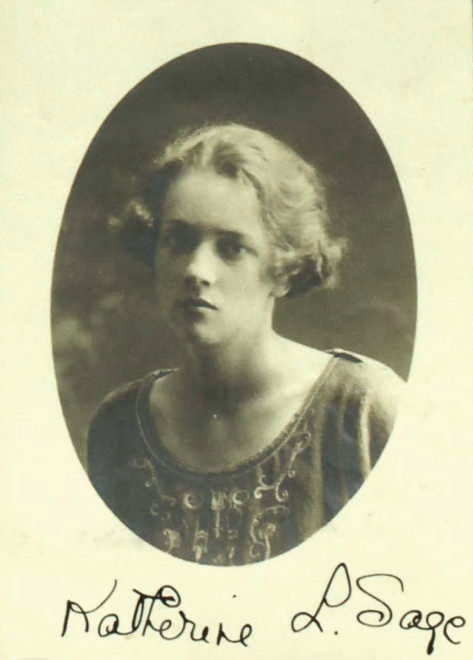
(You can view Sage’s painting A Bird in the Room here)

On “A Bird in the Room” by Kay Sage


The year after you died, I refused all fruit.
I could not bear that hybrid of plant and ghost.
By the time a lemon reaches the east coast,
its tree could be in flames.
All that’s left a sour ball,
a seed unwelcome on chicken.

The month you died, I kept the fruit
I found on walks in shadows.
If I can’t have it, no one will.
I stuck them in my rafters,
where darkness transformed them.
Not castration but refuse.

The week you died, I examined pits.
Nectarines, apricots, peaches,
all malformed brains. I had wondered
about mangoes. Under sunset skin,
thick, orange slime. What keeps
their roundness? Can you read braille?

The day you died, there was a bird
in the room. Round and pulsing,
a bird is a kind of fruit. You
can take it apart with your hands.
I think it was looking for a tree
filled with pomegranates or twigs.

I know what the old women say:
If a bird enters your home, a member
of your household will die. I did not know
they meant the spot where all gentleness gathers,
the pit. You have to wonder the causality
and how far back it will go.

The year I refused fruit made me still
inside, the stillness filled our house
with grey. The pits fell out of rotting
bodies. The bird got lost somehow
and invited itself in. I think it killed you,
love, killed you with feathers and legs.

How perverse that you will never go
into the ground, never go to tree.
You’ll fly, little bird, out over the coast.
But I will leave my door open for you
in case you get lost. For you, love,
I’ll fill my home with ash.

About the Author: Nadia Arioli (nee Wolnisty) is the founder and editor in chief of Thimble Literary Magazine. Their work has appeared or is forthcoming in Spry, SWWIM, Apogee, Penn Review, McNeese Review, Kissing Dynamite, Bateau, Heavy Feather Review, Whale Road Review, SOFTBLOW, and others. They have chapbooks from Cringe-Worthy Poetry Collective, Dancing Girl Press, and a full-length from Spartan.

More by Nadia Arioli:

On “I Walk Without Echo” by Kay Sage

On “The Fourteen Daggers” by Kay Sage

Agnes Vojta: “Nursing Home Visit in Times of Corona”

Nursing Home Visit in Times of Corona

You must make an appointment by phone.
You must call between ten and three on a weekday.
You may only visit once a week.
You must visit between 1 and 5 pm.
You may not stay longer than one hour.
You must check in fifteen minutes before.


You must fill out a form.
You must wear a face mask.
You must keep a distance.
You must disinfect your hands.
You must walk to the building along the shortest way
you have been directed to use.

You must check in with the nurse.
You must wait if the nurse is busy.
You may not speak with a doctor.
You must make an appointment to call the doctor
by phone if you have questions.

You must check out with the nurse.
You receive a check mark by your name.
You get a green mark if you kept the time limit.
You get a red mark if you overstayed.
If you have a red mark,
you may be denied
further visits.

About the Author: Agnes Vojta grew up in Germany and now lives in Rolla, Missouri where she teaches physics at Missouri S&T and hikes the Ozarks. She is the author of Porous Land (Spartan Press, 2019) and The Eden of Perhaps (Spartan Press, 2020), and her poems have appeared in a variety of magazines.

More By Agnes Vojta:

Legend

Sisyphus Calls It Quits

Flotsam

Image Credit: Chase Dimock “Victoria Leaves” (2019)

Jason Baldinger: “let go of atlantis”


let go of atlantis

jerry believes in ivory soap
he believes in starched collars
his spine is straight
he says all the flying plagues
of florida are near sited
don’t give them room to smell

I missed the manatees
out in some cove near
the launch pad that’s etched
in our consciousness
I see it in the rearview
and I want to write about
shoveling snow as a boy
about dreams exploding
about hot cocoa
and christa mcauliffe

jerry says for fifteen bones
they’ll give me a sea kayak
I can paddle over the surf
to a barrier island all my own

out there cooking hamburger
helper over a pocket rocket
Ill turn back/ahead time
ill forget my couth
and go native

going native is a racist term
meant to minimize
the people who were killed
so this land could be our land
a universe of violence

it seems that every inch
of this land is steeped
in blood, I wonder
if a barrier island
off the coast of the atlantic
may be one of the few places
I can step where that blood
doesn’t well up a hot spring
of unacknowledged history

I’m gonna stay out
an island a mile away from
civilization, the sun paints
the sky every twelve hours
every day the ocean
steps a little higher
when it reaches my neck
Ill know its time
to let go of atlantis


About the Author: Jason Baldinger is bored with bios. He’s from Pittsburgh and misses roaming around the country writing poems. His newest book is A Threadbare Universe (Kung Fu Treachery Press) with The Afterlife is A Hangover (Stubborn Mule Press) coming soon. His work has been published widely across print journals and online. You can hear him read his work on Bandcamp and on lp’s by the bands The Gotobeds and Theremonster.


More Poetry by Jason Baldinger:

This Ghostly Ambience

It was a Golden Time

Beauty is a Rare Thing


Image Credit: Carol M. Highsmith “Sunrise on a Florida beach ” (2014) The Library of Congress


Poetry Soundbite: A Reading and Interview with Bunkong Tuon


Welcome to AIOTB Magazine’s second Poetry Soundbite, an on-going series of poetry readings and interviews. For this edition, we welcome Bunkong Tuon, a Cambodian-American writer and critic. He is the author of GruelAnd So I Was Blessed (both published by NYQ Books), The Doctor Will Fix It (Shabda Press), and Dead Tongue (a chapbook with Joanna C. Valente, Yes Poetry). He teaches at Union College, in Schenectady, NY. He tweets @BunkongTuon

Below the video, you can find links to the poems from Tuon’s reading.


From Bunkong Tuon’s reading:

“Our Neighborhood in Revere, MA”

“Snow Day”

“Tightrope Dancer”

“Women’s March in Albany”

“My Mother on Her Deathbed”

Ivan Jenson: “Last Call”


Last Call

why didn’t you
say this
when we were
both beautiful
I mean look at us now
our shoes are shinier
than our complexions
and when was the last time
we were complimented
by our own reflections
at this stage we would rather
sleep too damn much
than search the city at night
for a stranger selling
the soft drug called touch
anyway you say
you still know your way
around a midnight mattress
and this time
I won’t mix and match
my feelings
or misplace your
rusty red kiss


About the Author: Ivan Jenson is a fine artist, novelist and popular contemporary poet who lives in Grand Rapids, Michigan. His artwork was featured in Art in America, Art News, and Interview Magazine and has sold at auction at Christie’s. Ivan was commissioned by Absolut Vodka to make a painting titled Absolut Jenson for the brand’s national ad campaign. His Absolut paintings are in the collection of the Spiritmusuem, the museum of spirits in Stockholm, Sweden.

Jenson’s painting of the “Marlboro Man” was collected by the Philip Morris corporation. Ivan was commissioned to paint the final portrait of the late Malcolm Forbes.  Ivan has written two novels, Dead Artist and Seeing Soriah, both of which illustrate the creative and often dramatic lives of artists. Jenson’s poetry is widely published (with over 600 poems published in the US, UK and Europe) in a variety of literary media. A book of Ivan Jenson’s poetry was recently published by Hen House Press titled Media Child and Other Poems, which can be acquired on Amazon. Two novels by Ivan Jenson entitled, Marketing Mia and Erotic Rights have been published hardcover.

.
Ivan Jenson’s new psychological thriller novel The Murderess is now available on Amazon for preorder and will be published June, 1, 2021 by Dark Edge Press, UK. Ivan Jenson’s website is: www.IvanJenson.com
.
.
Image Credit: Russell Lee “Truck full of mattresses in front of mattress factory. San Angelo, Texas ” (1939) The Library of Congress

John Dorsey: “The Prettiest Girl at Dirty Frank’s Bar”


The Prettiest Girl at Dirty Frank’s Bar

helped take the stools down every morning
& wore an eyepatch to keep out sunlight
& bad decisions

she hung art on the walls
just below a faded banner
for budweiser

& she talked about the moon landing
while dancing in a circle
with her arms out
to properly explain
the laws of gravity.


About the Author: John Dorsey lived for several years in Toledo, Ohio. He is the author of several collections of poetry, including Teaching the Dead to Sing: The Outlaw’s Prayer (Rose of Sharon Press, 2006), Sodomy is a City in New Jersey (American Mettle Books, 2010), Tombstone Factory, (Epic Rites Press, 2013), Appalachian Frankenstein (GTK Press, 2015) Being the Fire (Tangerine Press, 2016) and Shoot the Messenger (Red Flag Press, 2017),Your Daughter’s Country (Blue Horse Press, 2019),Which Way to the River: Selected Poems 2016-2020 (OAC Books, 2020) and The Prettiest Girl at the Dance (Blue Horse Press, 2020. His work has been nominated for the Pushcart Prize, Best of the Net, and the Stanley Hanks Memorial Poetry Prize. He was the winner of the 2019 Terri Award given out at the Poetry Rendezvous. He may be reached at archerevans@yahoo.com.


More By John Dorsey:

Anthony Bourdain Crosses the River of the Dead

Punk Rock at 45

Perpetual Motion


Image Credit: John Margolies “Beer sign, Seaside Heights, New Jersey” (1984) The Library of Congress

Frank Gallimore: “The Shape of My Name”


About the Author: Frank Gallimore is the creative director of marketing for ZVRS and Purple Communications, a telecommunications company for the deaf and hard of hearing. He also holds an MFA in poetry from Johns Hopkins University and paints in his spare time. A sampling of his art and poetry can be found at frankgallimore.com.  His poetry has appeared in Slate, Harvard Review Online, Unsplendid, Cold Mountain Review, and was featured on Verse Daily.


Image Credit: Chase Dimock “Grover Beach Dunes” (2020)

Ron Riekki: “The Roaring 20’s Are Roaring Already”


The Roaring 20’s Are Roaring Already

& 2019 was 1919 & they were refusing to wear masks
then & they’re refusing to wear masks now & a cousin
who was an alcoholic in high school is an alcoholic in old

age & my limp I had as a kid is a limp I have as an old
man & there is this feeling that nothing changes but then
a Buddhist monk friend, completely committed, shaved

head & unisex kayasa that he says with laughter is, yes,
like wearing a curtain, “but it’s a comfortable curtain”
& he explains everything changes, that impermanence

is at the heart of Buddhism, & that hearts change, pump,
& stop, & decay, & spread out as dust across the world
where we breathe in parts of a million hearts every day.


About the Author: Ron Riekki’s books include My Ancestors are Reindeer Herders and I Am Melting in Extinction (Apprentice House Press), Posttraumatic (Hoot ‘n’ Waddle), and U.P. (Ghost Road Press).  Riekki co-edited Undocumented (Michigan State University Press) and The Many Lives of The Evil Dead (McFarland), and edited The Many Lives of It (McFarland), And Here (MSU Press), Here (MSU Press, Independent Publisher Book Award), and The Way North (Wayne State University Press, Michigan Notable Book).  Right now, he’s listening to Elliott Smith’s “Cupid’s Trick.”


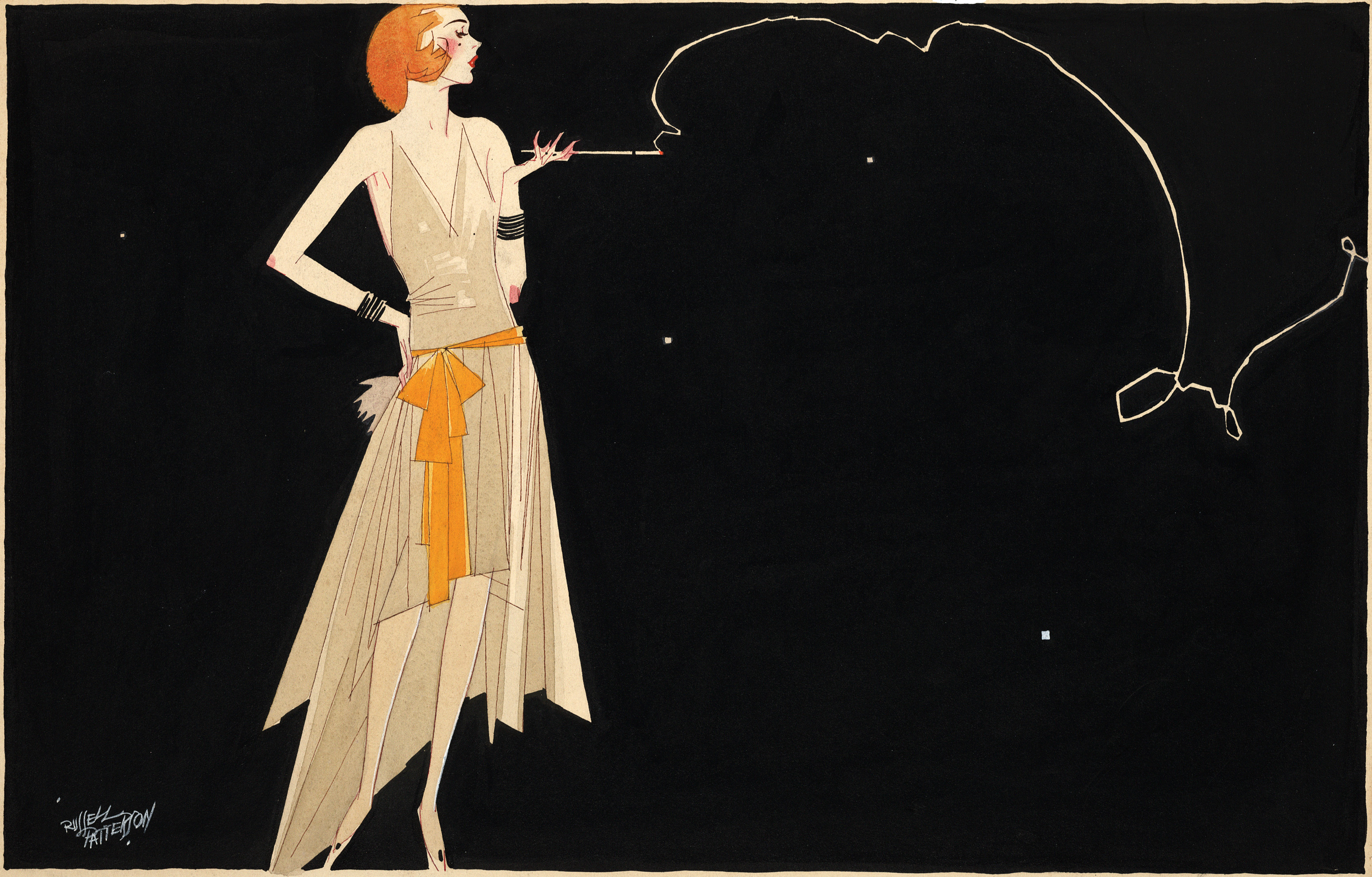
Image Credit: Russell Patterson “Where There’s Smoke, There’s Fire” Public Domain