Howie Good: “The View from Here”


The View from Here

I’m dusting the indoor plants when the doorbell rings. It’s you, and you’re bleeding from an ear. “What happened to your ear?” I ask. You touch it. Your fingers come away with blood. “Steely Dan on the headphones,” you say. I don’t move, don’t even nod. Now that an estimated 150 species go extinct every day, I try not to rush through my days. And if, as sometimes happens, it feels like everything is speeding up, I’ll lie down on the floor and stare at the ceiling or out the window, my view a small thing but my own.


About the Author: Howie Good’s latest poetry collection, Gunmetal Sky, is due in February from Thirty West Publishing


More By Howie Good:

The Third Reich of Dreams

Reason to Believe

People Get Ready


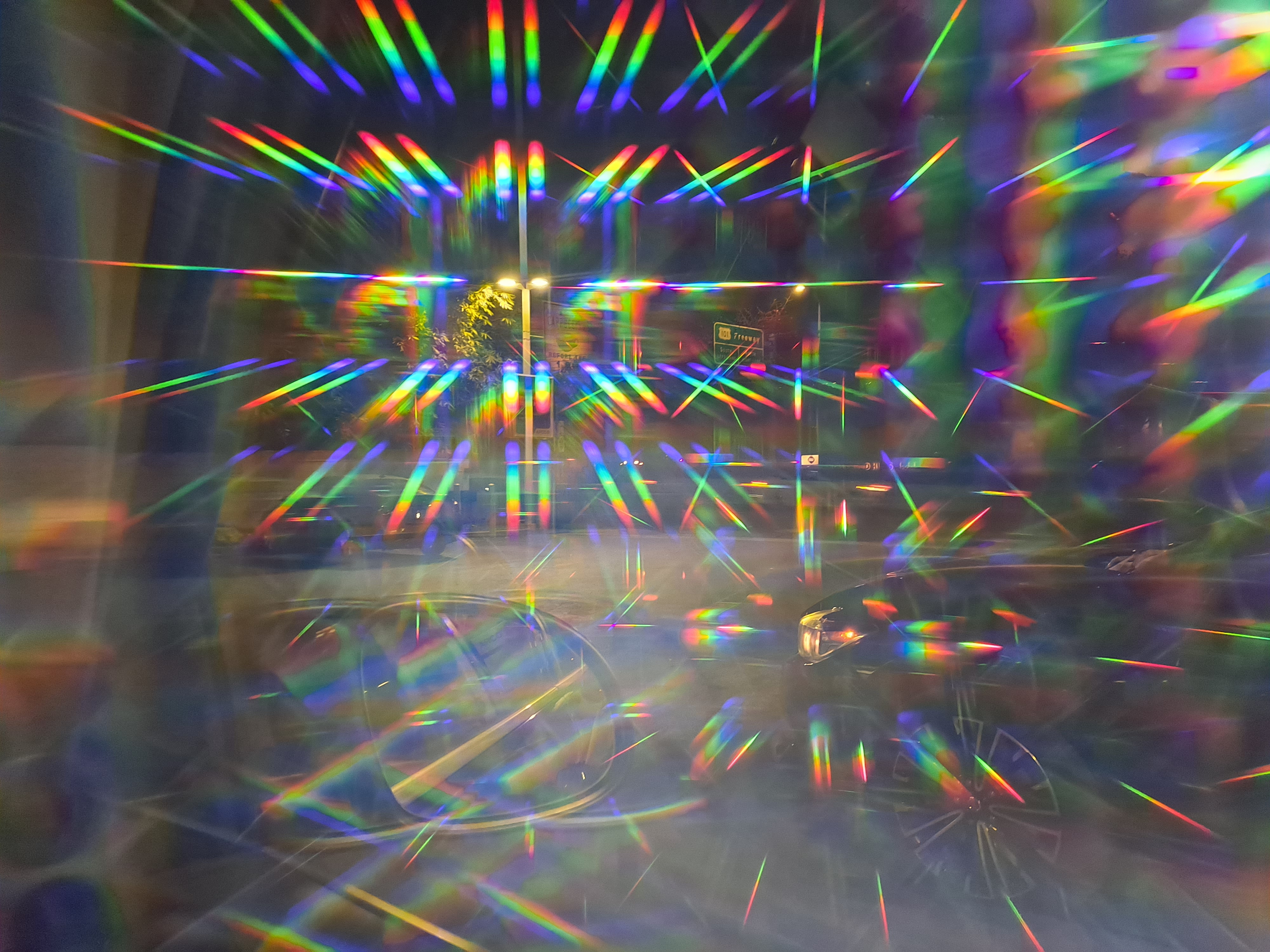
Image Credit: Chase Dimock “Parking Lot Prism” (2021)

Tali Cohen Shabtai: “In the Image of God”


In the Image of God

To whom will you imagine me and compare me to?

“For in his image he
created man.”

As worded,
I am
called a man (Adam in Hebrew)
named after the earth (Adama in Hebrew)
why was I named as a man after the lowest
part of creation?
For that I am flattered. In any case
the sky is not achievable.

And yet at the same time as a man I am
treated upliftingly and exaltedly that the Torah gives
me
for the Creator of the World who chose
me in his image and in this passes over
my futility
in front of God? I relish
ironic statements like this,
but

as long as I don’t know
the sight of God

It does not interest me
that it’s possible to simulate a shape to its creator
like clay in the potter’s hand
and allow me to reflect on
this paradox:

hence, God can
wear my bra
snort a cigarette and confront
the forlorn thoughts that
visit me
in Jerusalem – where
the divine revelation in the world
resides, so to speak.

And if I was created in God’s image,
from here it is possible to compare with the parable
about a craftsman who with does the material
as he pleases,
for which it is called “matter in the hand of the creator”
but should I admire
that I
am in God’s hands like the matter in the hand of the artist?

And more than that, it is said
that I was created in his image.
Of course not.


About the Author: Tali Cohen Shabtai, is a poet, she was born in Jerusalem, Israel. She began writing poetry at the age of six, Tali’s poems expresses spiritual and physical exile. She is studying her exile and freedom paradox, her cosmopolitan vision is very obvious in her writings. She lived some years in Oslo Norway and in the U.S.A. Tali has written three poetry books: “Purple Diluted in a Black’s Thick”, (bilingual 2007), “Protest” (bilingual 2012) and “Nine Years From You” (2018). By 2021, her fourth book of poetry will be published which will also be published in Norway. Her literary works have been translated and published into many languages as well.


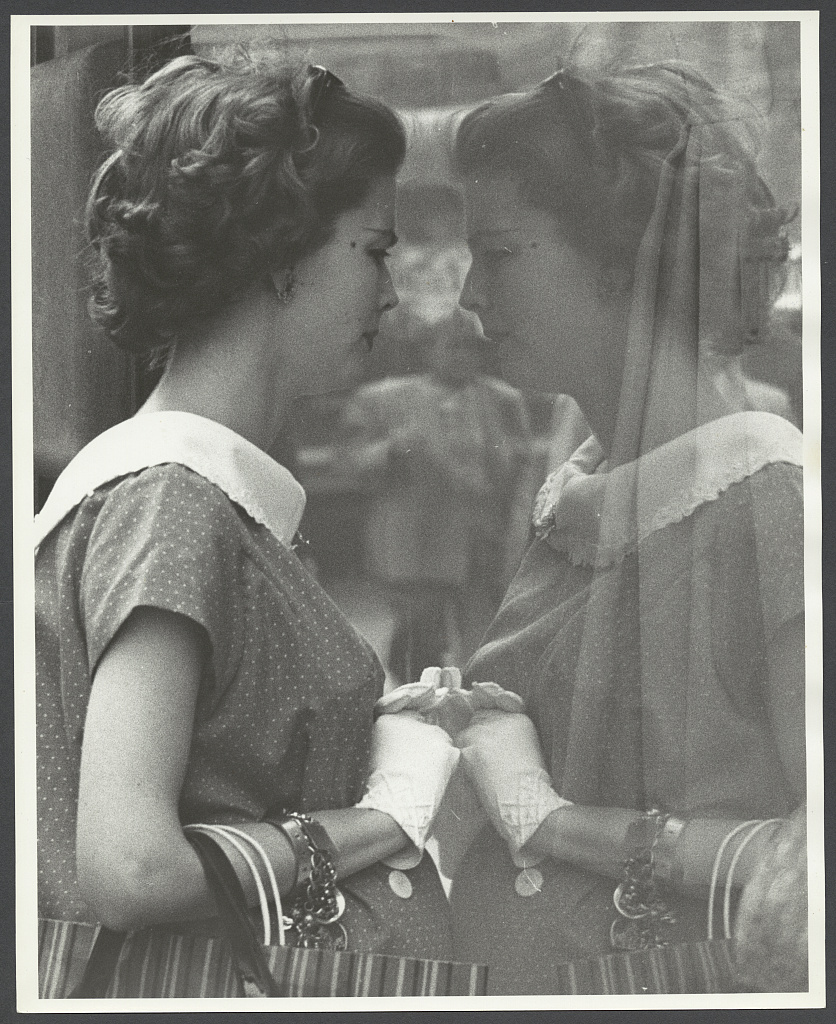
Image Credit: Angelo Rizzuto “Unidentified woman and her reflection” (1959) The Library of Congress

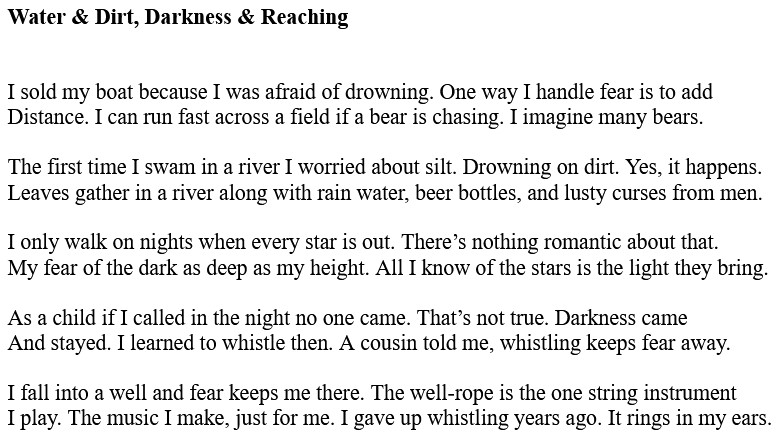
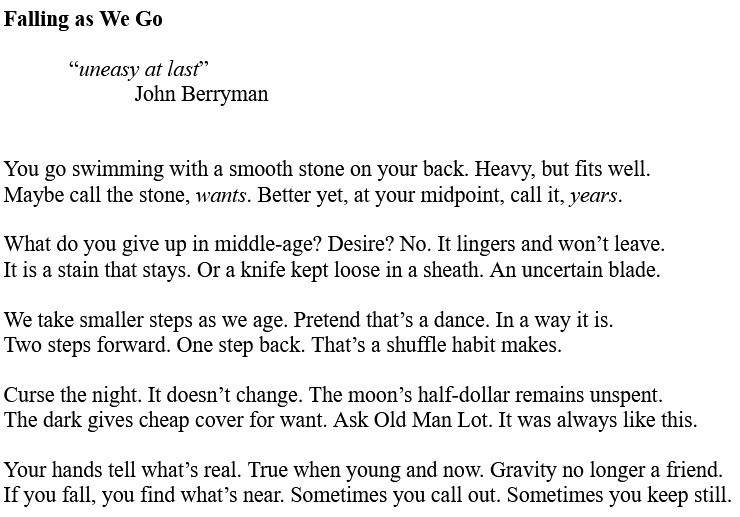
Poetry Soundbite: An Interview and Reading with Mike James


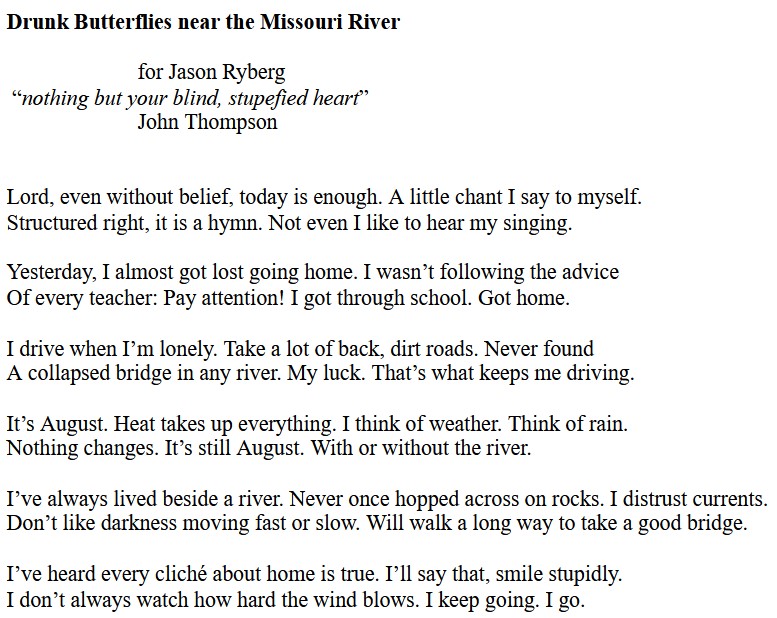
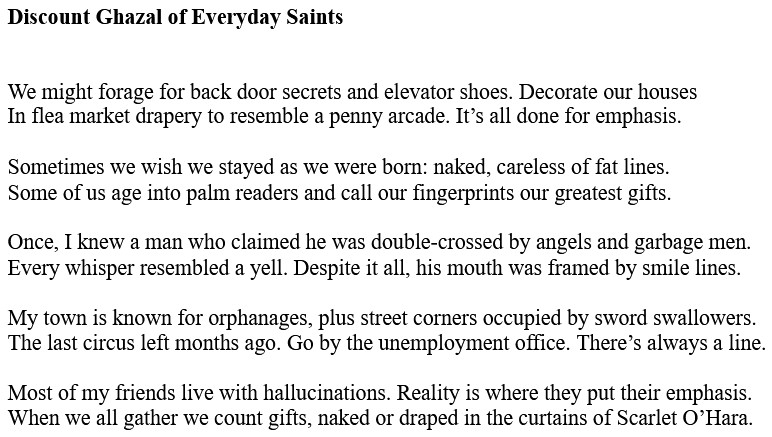
Welcome to AIOTB Magazine’s first Poetry Soundbite, an on-going series of poetry readings and interviews. For our inaugural Poetry Soundbite, we welcome Mike James, author of over a dozen books of poetry, including the soon to be released Leftover Distances, from Luchador Press. Below the video, you can find the text of the poems from James’ reading.


.

.


.


“Falling as We Go” and “Drunk Butterflies near the Missouri River” previously appeared in The Rye Whiskey Review.


About the Author: Mike James has published widely in places such as Plainsongs, Laurel Poetry Review, Birmingham Poetry Review, Gargoyle, and Tar River Poetry. His poetry collections include: Parades (Alien Buddha), Jumping Drawbridges in Technicolor (Blue Horse), Crows in the Jukebox (Bottom Dog), and My Favorite Houseguest (FutureCycle.) He has served as an associate editor of The Kentucky Review, of Autumn House Press, and of The Good Works Review, as well as the publisher of the now defunct Yellow Pepper Press. He currently serves as an associate editor of the prose poem journal Unbroken. His 18th collection, Leftover Distances, is forthcoming from Luchador Press. A multiple Pushcart nominee, Mike has read and lectured at festivals and universities throughout the country He is strong supporter of cats, literacy, coffee, white wine, top hats, crows, and free range poetics. He is an opponent of plaid, rigidity, salads, and quiet parakeets. He currently makes his home right outside Nashville.

Sue Blaustein: “On Hubbard Street”


On Hubbard Street


April

My new friend
is the northern end
of Hubbard Street.
Hubbard is a homely

name! Old Mother
Hubbard’s bare cupboard;
fall wagons heaped
with warty squash.

Hubbard Street comes
near my house too. But
the northern end – the terminus –
feels like a distant

village. By going there
this spring I learned
that I need a distant
village. It has outskirts.

Where a copter-beanie
wind turbine
in a warehouse parking
lot goes whup whup

whup whup whup.


June

East Side Stor-Mor
is on the outskirts. Not
Store not More.
We shaved e’s off

naming places
in the 20th century.
Not anymore – too
corny. I’m scuffing

a heated mix of brown
pine needles and litter.
A cups-and-bags-and-wrappers mix
that clogs catch-basins

and recurs;
piling ahead of your same feet
in all the summers of your life,
to appear again

across lifetimes, suffusing
you with feelings
about eternity. Everything
simultaneous… could be…


November

The curbstones are soft-edged
along the street
between Stor-Mor and what
I call my village proper.

Where there are
seven houses – residences!
Modest, and I don’t know
who lives there. I’ve

dwelt in houses and flats
I might’ve passed;
circumstances and years
before I lived there.

Hubbard Street –
I feel something in your ether.
You seem to know where I’ve been.
I sense you know

where I might be, when one
day another now
turns to then. It’s 2:00 PM
and the turbine blades whirl,

casting shadows
on the units of Stor-Mor –
garage doors 29, 30 and 31 –
whup whup…whup whup whup


About the Author: Sue Blaustein is the author of “In the Field, Autobiography of an Inspector”. Her publication credits and bio can be found at www.sueblaustein.com. Sue retired from the Milwaukee Health Department in 2016, and is an active volunteer. She blogs for ExFabula (“Connecting Milwaukee Through Real Stories”), serves as an interviewer/writer for the “My Life My Story” program at the Zablocki VA Medical Center, and chases insects at the Milwaukee Urban Ecology Center.


More by Sue Blaustein:

A Song for Harvest Spiders

A Song for Noise

The Old Ways


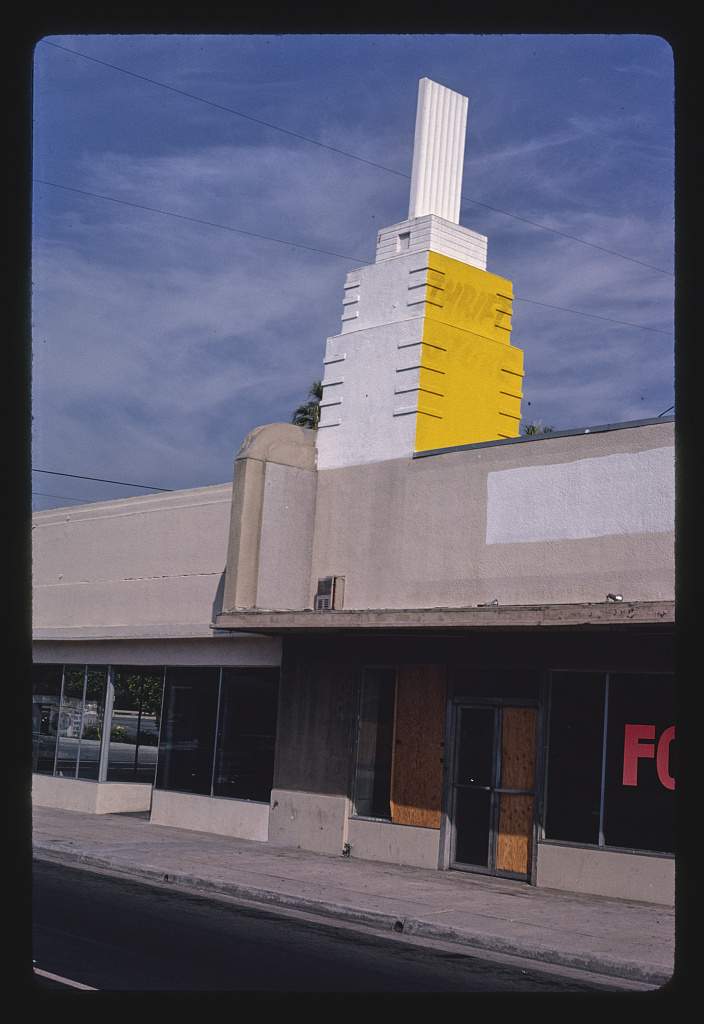
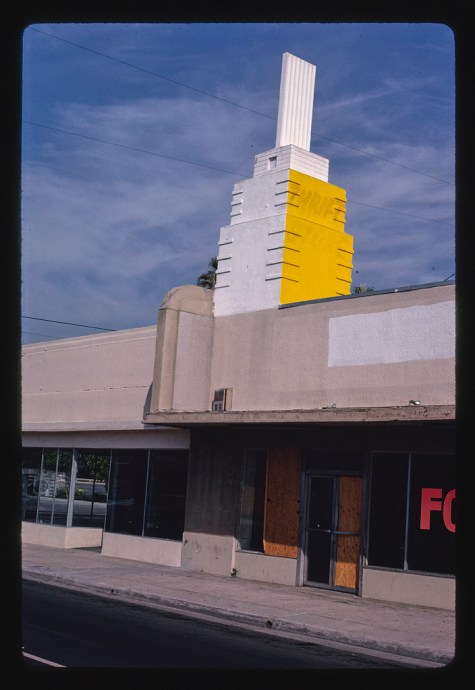
Image Credit: John Margolies “Thrift Store, Baseline [i.e. Base Line] Street, San Bernardino, California” (1991) The Library of Congress