Gwil James Thomas: “Passing by Polloe/A Slice of Life”


Passing by Polloe/A Slice of Life. 

On the top of the hill  
crickets hop and chirp   
around the entrance of Polloe,
emulating miniature guard dogs –
their barks sounding as silence 
when the living stroll by.  

Strong but naive spring flowers 
rise up through the cracks 
in the concrete. 

Etched into the sturdy sandstone 
entrance of Polloe Cemetery 
a message in Spanish roughly 
translates to:  
‘Soon they will say about you 
what they say about us – 
they died!’

Sometimes it feels like the dead 
are as talkative 
as the living –
but if you talk to the dead enough, 
after a while you’ll only 
hear them say one thing – 
live. 

Come lunch warm aromas 
are carried up the hill 
from the pizzeria and each day 
they only serve one pizza, 
but each day also 
brings a totally different pizza.

Some slices may contain 
traces of déjà vu.


About the Author: Gwil James Thomas is a novelist, poet and inept musician originally from Bristol, England. He’s recently been published in The Bees are Dead, GOB zine, Expat Press, Paper & Ink and The Dope Fiend Daily. His sixth poetry chapbook Cocoon Transitions is available here. He currently lives in San Sebastián, Northern Spain.’


More By Gwil James Thomas:

Blend


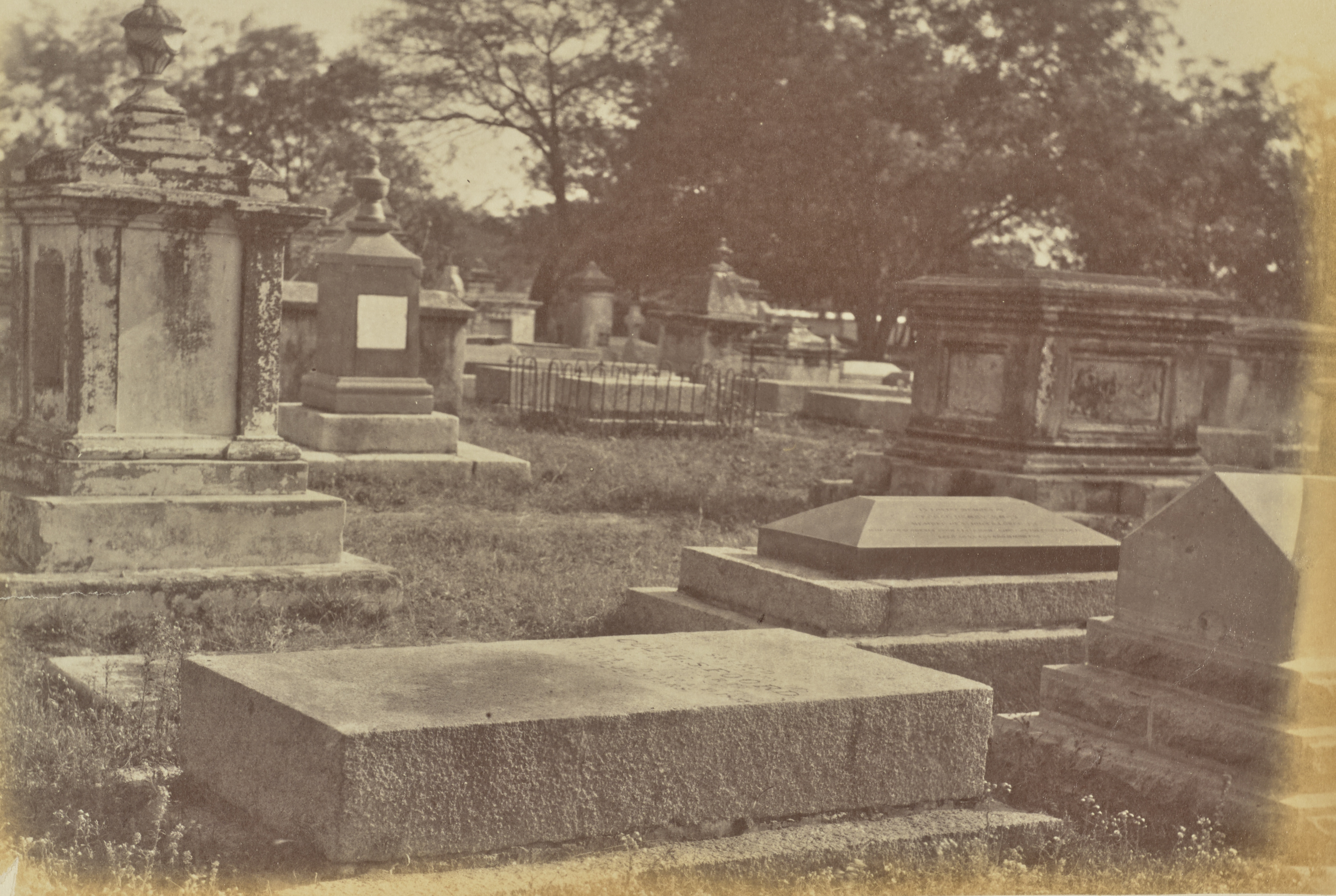
Image Credit: Willoughby Wallace Hooper “Cemetery, Secunderabad” (1870) Digital image courtesy of the Getty’s Open Content Program.


M.J. Arcangelini: “A Few Random Thoughts”


A FEW RANDOM THOUGHTS
 (after “My Favorite Houseguest” by Mike James)

Gertrude Stein
In Paris I ate in a restaurant where she and Alice took Samuel
Steward when he would visit them. A wall of mirrors, echoes.
Small stones cover her grave at Pere Lachaise and a jar of pens. 

Bette Davis
She brought a dignity to Baby Jane that Joan Crawford could never
muster, though she might have thought she could. I love her best
when she is being bad, but still keep watching All About Eve

Self-Portrait, In Movies
They’re all Swedish. 

Andy Kaufman
Fascinated me, but never sure why. I watched him whenever the
chance arose. He was hairy, which always gets my attention, but I
would not have had a beer with him. He’d have squished this bug.

Marilyn Monroe
She died just before I turned 10 but even I knew about the pills. I 
loved her from Monkey Business and River of No Return. My Diva,
her sadness kisses the world. Bright red lipstick.

Orson Welles
Brilliance is not enough. One is required by success to learn
compromise, absent which creation becomes difficult. Not
impossible, but difficult and costly to both body and soul

J.R. Ewing
I could never get over expecting Jeannie to appear at some
inconvenient time in the drama. Or thinking about his mother
flying around a stage on wires, pretending to be a young boy.

Billy Strayhorn
Always in shadow, that is where his type had to live then. The
shadow beneath Duke’s piano, the shadows of alleys and bushes
after closing time. Today he’d be a star casting his own shadows.

Steve McQueen
Sullen and sexy. Eventually sullen won out. Whether riding a
motorcycle or a horse he always seemed in cold control. In the
living room he feels impatient, not really wanting to be there.

Sal Mineo
I knew he had the hots for Dean, everyone knew that, but I
couldn’t say it. Dean knew too, and didn’t send him away.
Somehow that made it OK for me to feel it, but still not say it.

John Wayne
(for Jason Baldinger)
He had his shtick, repeating it in nearly every film. John Ford
knew what to do with him the same way he knew how to use
Monument Valley. Marion was always watching, just off-camera.

Nixon
Throwing Agnew under the wheels didn’t help. Nor the secret plan
to end the war. Nor did China. Checkers. Sweltering under studio
lights. From out of his ashes emerged government as a business.

Warren Zevon
The world twists in ways we seldom anticipate but with which he
seemed intimate. His songs charted for other people, which kept
checks coming in until his shit got fucked up and he checked out.

John Ritter
I had a crush on him but hated that sitcom character: straight actor
playing a straight man mincing around as gay for cheap rent. I’d
watch occasionally, hoping he’d take his shirt off. Never saw it.

David Wojnarowicz
Played rough along the edges of American culture and America
played back, rougher. Waterfronts, alleys, aging sleazy movie
houses, backrooms. Broken streetlights in the urban world night.

Lou Reed
A belligerent interviewee, he took no prisoners. Knew Delmore
Schwartz. Married Laurie Anderson and started meditating. Died
when even his transplanted liver gave up. The music. The music.


About the Author: M.J. (Michael Joseph) Arcangelini was born 1952 in western Pennsylvania, grew up there & in Cleveland, Ohio.  He’s resided in northern California since 1979. He began writing poetry at age 11. His work has been published in magazines, online journals, over a dozen anthologies, & four books: “With Fingers at the Tips of My Words” 2002, Beautiful Dreamer Press; the chapbooks “Room Enough” 2016, and “Waiting for the Wind to Rise” 2018, both from NightBallet Press; & “What the Night Keeps” 2019, Stubborn Mule Press. In 2018 he was nominated for a Pushcart Prize.


Image Credit: Collage of Gertrude Stein based off the photo “Gertrude Stein sitting on a sofa in her Paris studio”

Bunkong Tuon: “Lisel Mueller Died at 96”


Lisel Mueller Died at 96 
After O’Hara’s “Lana Turner Has Collapsed!”

There are papers to grade
& classes to prepare
and they continue to pile up
high over my head as
I drink coffee and scroll
through Twitter and Facebook.
Oh no, Lisel Mueller’s passed away
this past Friday! The poet
who escaped the Nazis and found
a new language for her voice.
The poet who gave me permission
to put “grief in the mouth of language”
without embarrassment or shame.
Oh, I’m ashamed it’s taking me
this long to grade these papers.
My four-year-old is yanking
at my arm, “I’m the daddy
and you can be my boy daughter.”
“And what’s a boy daughter?”
I ask. And she says, “Silly Daddy.
That’s when you’re born a boy
but you’re actually a girl.”
So we play while the papers
pile high and Lisel Mueller’s poetry
is shared and loved all over again.
And isn’t that what all of us
(refugees and non-refugees alike)
want from this precious world?


About the Author: Bunkong Tuon is a Cambodian-American writer and critic. He is the author of Gruel, And So I Was Blessed (both published by NYQ Books), The Doctor Will Fix It (Shabda Press), and Dead Tongue (a chapbook with Joanna C. Valente, Yes Poetry). He teaches at Union College, in Schenectady, NY. He tweets @BunkongTuon


More By Bunkong Tuon:

Gender Danger

Lies I Told About Father

Fishing for Trey Platoo


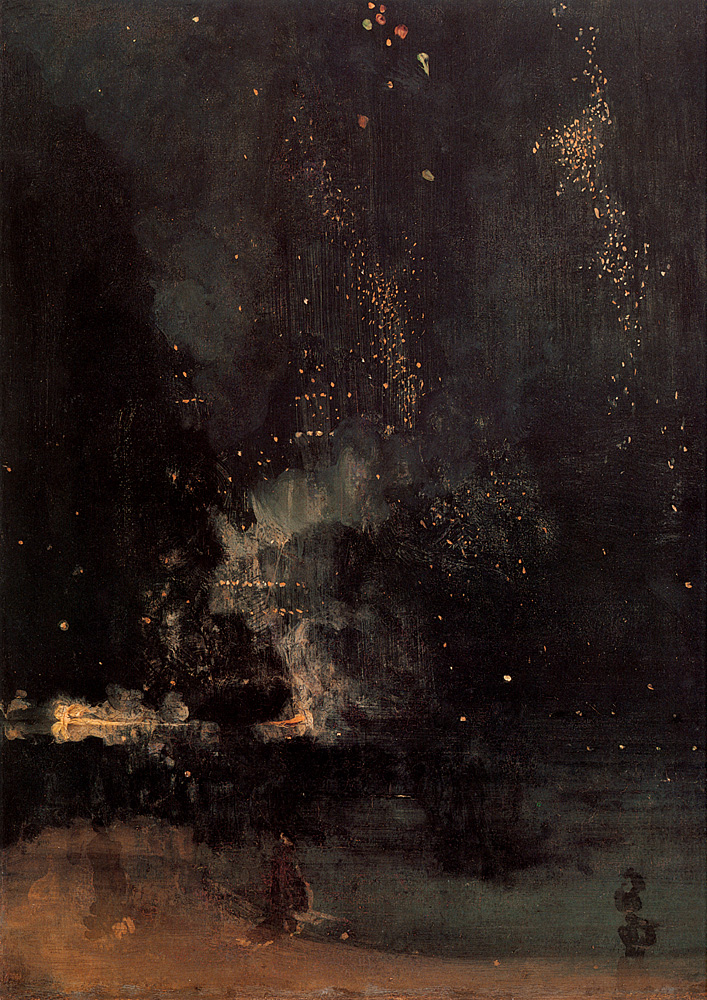
Image Credit: James Abbott McNeil Whistler “Nocturne in Black and Gold The Falling Rocket” (c. 1874 – 1875) Public Domain

John C. Mannone: “Letter to April”


Letter to April

Thank you for new life,

Your shy trilliums shoot through woodsy
soil—floral tri-foils spreading their own kind
of faith, hope, and charity; a rapid burst

of phacelia—frilled snowflakes in a gorge
of green—mountains’ awakening; redbud
and yellow crocus sprouting with spring-rain

rainbows promising joy, but your adornment
doesn’t soften the hard truths of roses or make
the graveyards full of columbines any prettier.


John C. Mannone has poems appearing/accepted in the 2020 Antarctic Poetry Exhibition, North Dakota Quarterly, The Menteur, Blue Fifth Review, Poetry South, Baltimore Review, and others. His poetry won the Impressions of Appalachia Creative Arts Contest (2020). He was awarded a Jean Ritchie Fellowship (2017) in Appalachian literature and served as celebrity judge for the National Federation of State Poetry Societies (2018). His latest of three collections, Flux Lines: The Intersection of Science, Love and Poetry, is forthcoming from Linnet’s Wings Press (2020). He edits poetry for Abyss & Apex and other journals. A retired physics professor, he lives near Knoxville, Tennessee. http://jcmannone.wordpress.com


Image Credit: “Larger White Tillium” from How to know the wild flowers (1893) Image Courtesy of the Biodiversity Heritage Library

Mike Acker: “Unholy”


.

About the AuthorMike Acker lives in Vancouver, British Columbia. He has lived in various parts of the world; his early education was in German and French. While living in California, he worked as a professional translator. Mike enjoys writing short poetry, especially with the intent of exploring the possibilities latent in a single image.

.
More By Mike Acker:
.
.
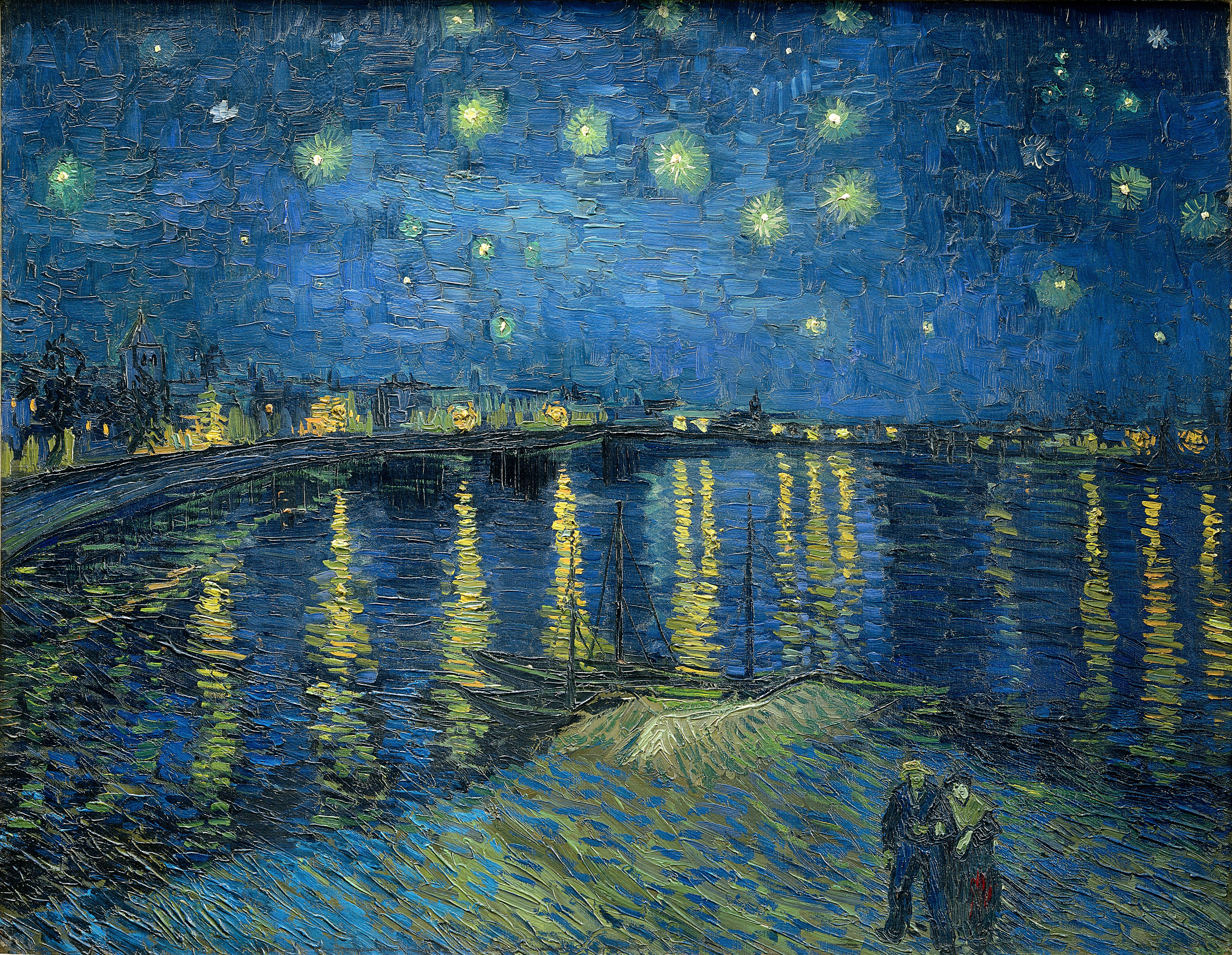
Image Credit: Vincent Van Gogh “Starry Night Over the Rhone” (1888) Public Domain

Luis Cuauhtémoc Berriozábal: “Beautiful Mournings”


Beautiful Mournings

Do you object
to beautiful mournings?
The path to the
cemetery with stones and

roses. Do you like
the fumes from open graves?
Who are you to
whine and complain? You’re dead.

The rotten sun 
is the cook of your skin.
Nature’s gift for
one and all. Keep your dead 

eye on the sky.
Watch the flowers bloom as
your stench 
perfumes the collapsed trees.

The flies buzz on
not worrying of health.
Their stinking breath
worsens in summertime.

In this world the
babbling mouths speak and shout.
The dead man sleeps
soundly and with such ease.


About the Author: Born in Mexico, Luis lives in California and works in the mental health field in Los Angeles, CA. His poetry has appeared online and in print over the years. His poetry has appeared in Blue Collar Review, Kendra Steiner Editions, Mad Swirl, Pygmy Forest Press, Red Fez Publications, Unlikely Stories, Yellow Mama Magazine, and ZYX.


More by Luis Cuauhtémoc Berriozábal:

Dracula

Eat Rain


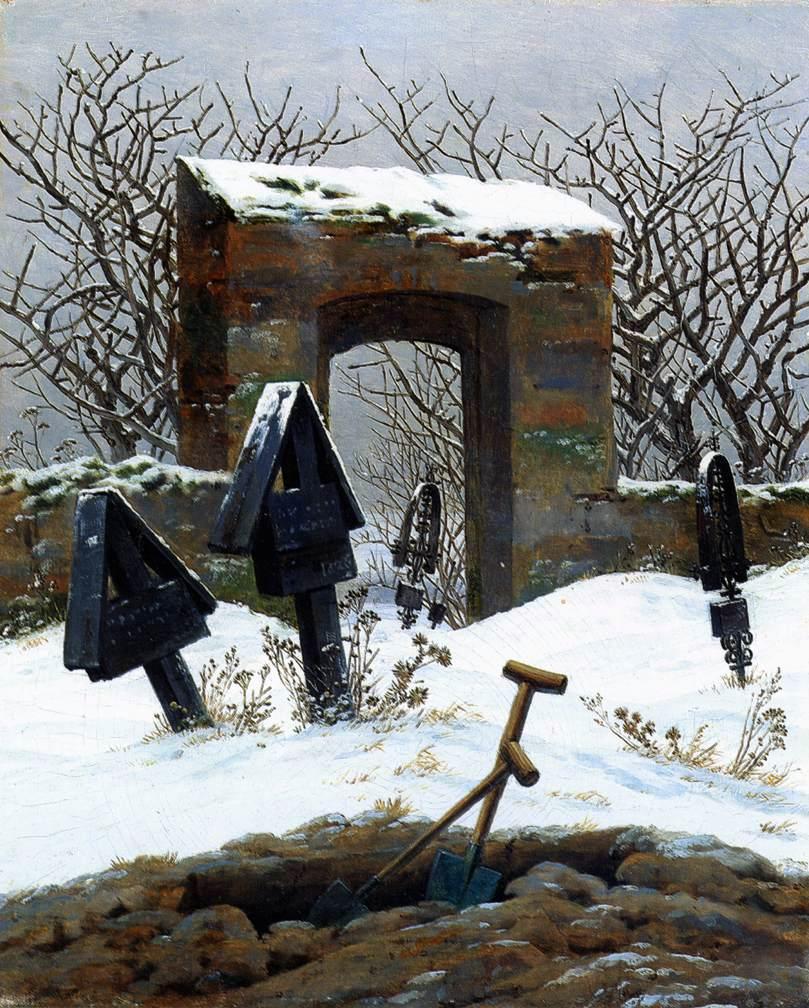
Image Credit: Caspar David Friedrich “Graveyard Under Snow” (1826) Public Domain

Matthew Borczon: “In 2010”


In 2010

Afghanistan
embedded
the war
in my
chest like
a pacemaker

I still
feel the
cold metal
every time
I salute
the flag


About the Author: Matthew Borczon is a writer and a Navy sailor from Erie, Pa. He has published widely in the small press and written 12 books of poetry; the most recent the PTSD Blues was released through Rust Belt Press in 2019. He works hard as a nurse for developmentally disabled adults and works even harder at forgetting the war he served in in 2010.


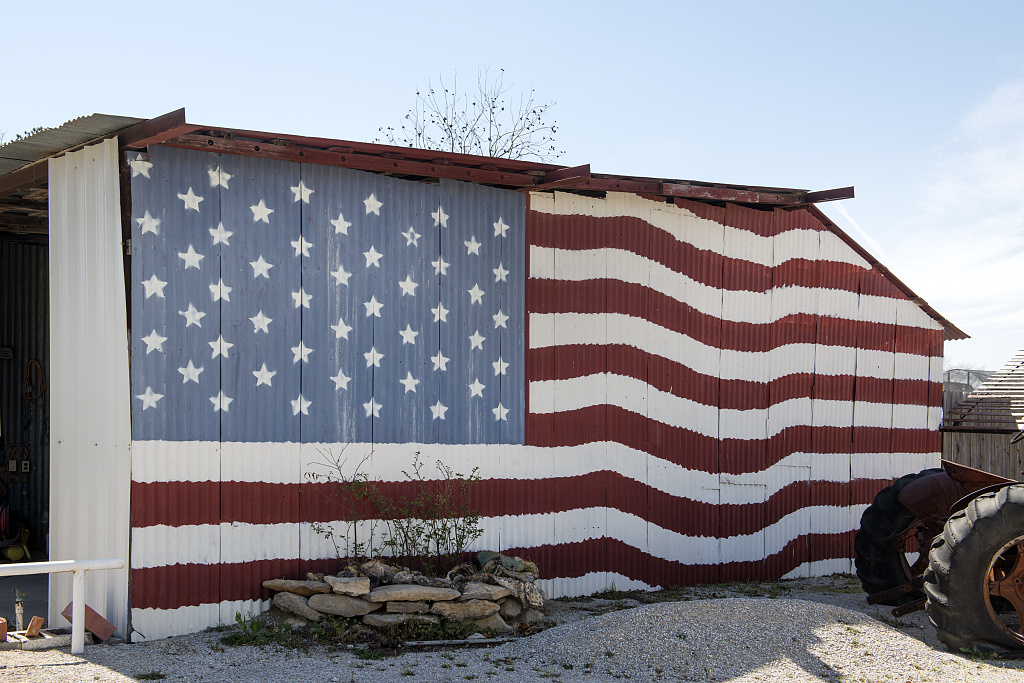
Image Credit: Carol M. Highsmith: “A colorful rendition of the American flag, painted on the side of a large utility shed in the town of Carbon in Eastland County, Texas” (2014) The Library of Congress

Seth Jani: “Forest Dream”


Forest Dream

I knelt down to touch the multiplicity
bursting from the soil. The red hoods
met my fingers. Their little figures bowed.
I dreamt of toads and the dark doors of fable,
of infectious sleep traveling the spores
of wind, of the countryside fallen into itself
forming a shadow image: inverted houses,
underground fruits, chromatic summers
blooming in reverse. And the mushrooms,
in their gnarled approximations,
running, like lunatics, through the streets.


About the Author: Seth Jani lives in Seattle, WA and is the founder of Seven CirclePress (www.sevencirclepress.com). Their work has appeared in The American Poetry JournalChiron ReviewRust+Moth and Pretty Owl Poetry, among others. Their full-length collection, Night Fable, was published by FutureCycle Press in 2018. More about them and their work can be found at www.sethjani.com.


More By Seth Jani:

Vesper


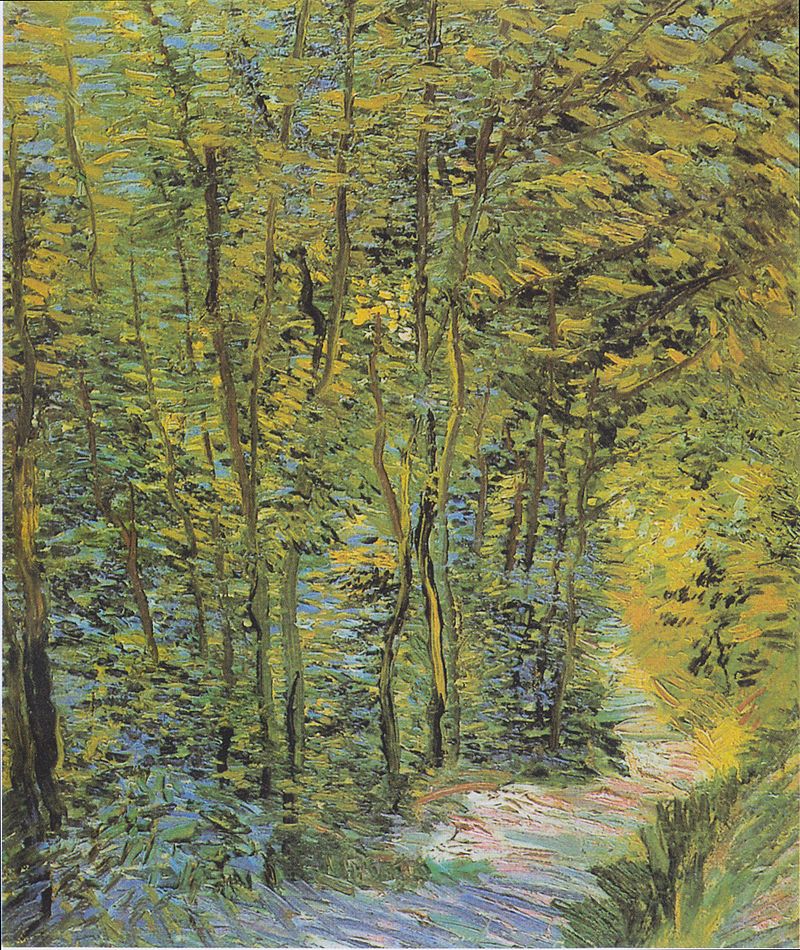
Image Credit: Vincent Van Gogh “Path in the Woods” (1887) Public Domain

Stephen Barile: “Engine Block”


ENGINE BLOCK

On the Lost Coast 
in dense fog, 
from a weathered cliff
held by wildflowers and weeds,
a warning-bell clangs
every five seconds
for eight hours straight.
Boats that venture too close
near the anchoring ground 
enter a sea-churned chaos, 
Anguish of white foam
and piteous self-destruction.
On the shore at Shelter Cove,
a rusted, cast-iron engine block,
Barr Marine V-8,
valve-covers torn off
rocker arms crumbling
flywheel frozen, resting
in a cobble field
sea-grass smelling profane.
Where were the mountings
of the pleasure craft 
that surrounded you?
Way too heavy 
for the price of salvage
battered inward
with each succeeding tide,
to the land 
where it came from. 
The sea’s contribution, 
a predictable pull 
of sun and moon
in the maelstrom.


About the Author: Stephen Barile, a Fresno, California native, was educated in the public schools, and attended Fresno City College, Fresno Pacific University, and California State University, Fresno. He is the former chairman of the William Saroyan Society, and a long-time member of the Fresno Poet’s Association. Mr. Barile taught writing at Madera Center Community College, lives and writes in Fresno. His poems have been published extensively, including The Heartland Review, Rio Grande Review, The Packinghouse Review, Undercurrents, The Broad River Review, The San Joaquin Review, Haight-Ashbury Literary Journal, Beginnings, Pharos, and Flies, Cockroaches, and Poets.


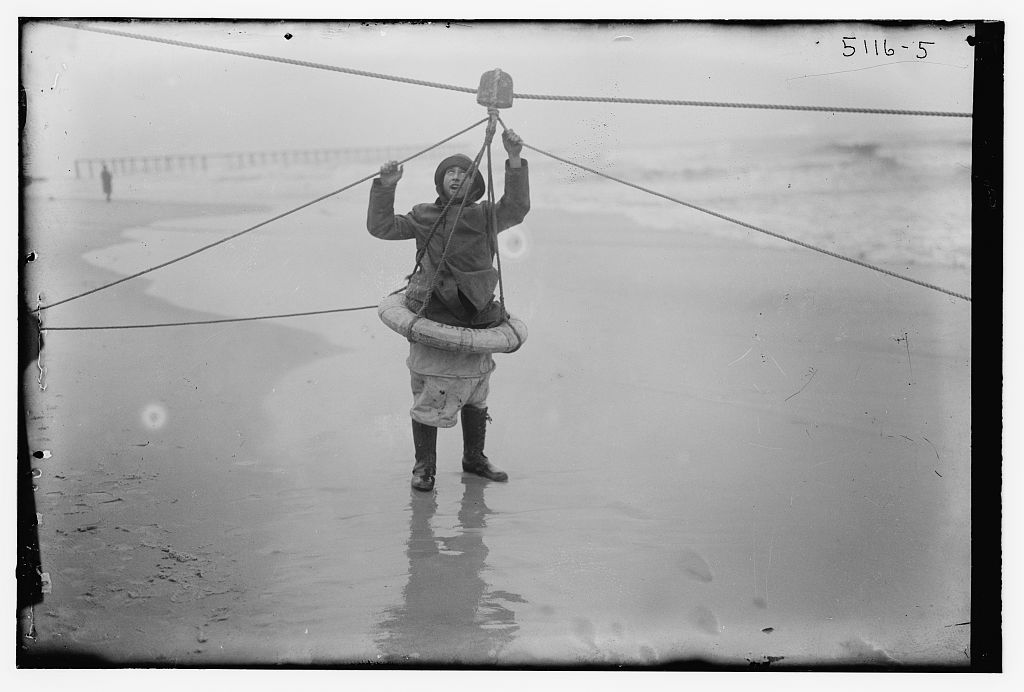
Image Credit: “Man demonstrating ship rescue apparatus” Bain News Service, The Library of Congress, Public Domain

Jonathan K. Rice: “AAA”


AAA

My car gassed up, 
oil changed, 
tires balanced and rotated.

Roadworthy
all I needed 
was roadmaps. 

I approached the rep
at the counter, 
a young woman

with a Gothic look −
black hair, pale skin, 
black nail polish,

silver nose ring. 
With a smile she asked
how she could help me.

I told her I needed maps. 
Maps of states, cities,
the Eastern Seaboard. 

A few west of the Mississippi.
She was curious where I was heading. 
I told her at the time I wasn’t going that far

but I didn’t trust my cell phone, GPS,
computers and satellites.
What if there’s a Zombie Apocalypse?

What good will technology be?
And who can even read a simple roadmap these days?
Her jaw dropped. She slapped the counter

with an open hand. Exclaimed, 
That’s what I’ve been saying! You never know!
Here, take all the maps you want!

Her coworkers looked on 
as she gave me one of everything.
I left arms full, bottled water,
nonperishable food and can opener next on my list.


About the Author: Jonathan K. Rice edited Iodine Poetry Journal for seventeen years. He is the author of two full-length poetry collections, Killing Time (2015), Ukulele and Other Poems (2006) and a chapbook, Shooting Pool with a Cellist (2003), all published by Main Street Rag Publishing. He is also a visual artist. His poetry and art have appeared in numerous publications, including Cold Mountain Review, Comstock Review, Diaphanous, Empty Mirror, Gargoyle, Inflectionist Review, Levure Litteraire, The Main Street Rag, Wild Goose Poetry Review and the anthologies, Hand in Hand: Poets Respond to Race and The Southern Poetry Anthology VII: North Carolina.


More by Jonathan K. Rice

“Springmaid Pier”

“Cards”

“Stravinsky in the Shower”


Image Credit: Arnold Eagle “Three men work under the hood of a car” (about 1940–1942) Digital image courtesy of the Getty’s Open Content Program.