Sunday Poetry Series Presents: Jason Gray


CIRCUS CIRCUS


This is the trapeze a dream might make—

Precarious height from which you swing to safety

Or fall into your life, the swollen sea

Of calliope music where no driftnet lays.

Blessed to land on solid ground for once

Instead of sinking deeper into the whirlpool

Where you are phase-shifted to some Middle Europe

With its klaxon angels that scream at you to wake.

Their dissonance overwhelms, like slides

Of all your human failures stacked together.

Try forgetting, and life will send its lions

To ravage the hole you make—so wide,

It is a flaming hoop. See how they leap

Through to the past, that sewer that does not drain?

Photograph what you see to freeze the moments

And watch the way the light betrays

Its very gift by fading. Even the light can’t bear

The repeating, a scratch against the silence, the record

Never getting to where you want it to go,

But always in motion. The Big Top’s shadow stretches

Across the grass and changes every second,

Like a sundial, but you refuse to see it,

Hiding beneath your never-unmade bed.


Jason Gray is the author of Photographing Eden (Ohio UP, 2008), winner of the Hollis Summers Prize, and two chapbooks, How to Paint the Savior Dead (Kent State UP, 2007) and Adam & Eve Go to the Zoo (Dream Horse, 2003). His poems and reviews have appeared in Poetry, The Kenyon Review, American Poetry Review, The Southern Review, Cincinnati Review, and elsewhere. He co-edits the online journal, Unsplendid.

Sunday Poetry Series Presents: Heather Kirn

.

WRITER REPENTS

by Heather Kirn


Crown, I said, or kite, and that was that.

Like flames encased in glass, the nouns dissolved.

But levitate had weight around it. Rapt,

I wrote it down. Then menacing jabbed dark

with dark and triumph made me win. I grinned,

heard the strained trill of an oriole

and knew it too was mine. As was the phone.

It sang an octave lower than the bird,

rang all day. Go away, I wrote

and dialogue was born. I gave the words

a mouth, designed a face, a body, legs

for him to choose the wrong direction—there

he went and there he fell. I clasped my hands.

He multiplied. Then, Yes? I took the call.

The voice said, First you killed the oriole.

You killed the old man who found it too.

You say you’re sitting down?, it asked. You killed

entire villages, then carved initials

into anything that bled. A eulogy?

A prayer? How could we say a word? I bowed

my head, left the pens and rode the car

to padded walls. I ate soup. Soup, I said

and slapped my wrists. Pill, I swallowed. The walls

are blank as pages. In my dreams, I write

the kiddy-books that label every noun.

I write door, bed, salamander, slug,

erase a letter only when I start

to feel an adjective, a verb. Nothing does.

By morning, all the work evaporates.

No word remains but one. Intent. When split,

it names a sleeping spot. If stripped on the sides

it calculates the digits on my hands.

But whole, it settles me to self. I meant

no harm. I found a shape and made a world,

then crawled inside. Where else was I to live?


***

Heather Kirn’s essays have been noted in The Best American Essays Series and published in The Florida Review, Colorado Review, Prairie Schooner, and elsewhere.  Her poems appear most recently in Cincinnati Review and Shenandoah. She teaches writing at UC-Berkeley. The above poem originally appeared in Beloit Poetry Journal and is reprinted here by permission of the author.

SATURDAY POETRY SERIES PRESENTS: WILLIAM BUTLER YEATS

By William Butler Yeats:

NO SECOND TROY

Why should I blame her that she filled my days
With misery, or that she would of late
Have taught to ignorant men most violent ways,
Or hurled the little streets upon the great,
Had they but courage equal to desire?
What could have made her peaceful with a mind
That nobleness made simple as a fire,
With beauty like a tightened bow, a kind
That is not natural in an age like this,
Being high and solitary and most stern?
Why, what could she have done, being what she is?
Was there another Troy for her to burn?

“No Second Troy” is reprinted from The Green Helmet and Other Poems. W.B. Yeats. Dundrum: Cuala Press, 1910.

ON BEING ASKED FOR A WAR POEM

I think it better that in times like these
A poet’s mouth be silent, for in truth
We have no gift to set a statesman right;
He has had enough of meddling who can please
A young girl in the indolence of her youth,
Or an old man upon a winter’s night.

“On Being Asked for a War Poem” is reprinted from The Wild Swans at Coole. W.B. Yeats. New York: Macmillan, 1919.

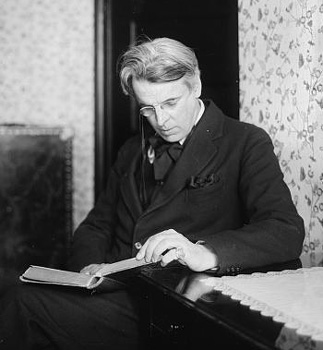
William Butler Yeats (1865-1939) was an Irish poet, dramatist, and one of the foremost figures of 20th century literature. A pillar of both the Irish and British literary establishments, in his later years Yeats served as an Irish Senator for two terms. He was a driving force behind the Irish Literary Revival, and along with Lady Gregory and Edward Martyn founded the Abbey Theatre, serving as its chief during its early years. In 1923, he was awarded a Nobel Prize in Literature for what the Nobel Committee described as “inspired poetry, which in a highly artistic form gives expression to the spirit of a whole nation.” He was the first Irishman so honored. Yeats is generally considered one of the few writers whose greatest works were completed after being awarded the Nobel Prize; such works include The Tower (1928) and The Winding Stair and Other Poems (1929). (Annotated biography of William Butler Yeats courtesy of Wikipedia.org.)

Editor’s Note: I’ll be honest, I do not tend to be a fan of rhyming poetry. As a result, I tend to overlook many of the greats of yesteryear, such as Longfellow, Keats, and Yeats – to name a few. However, my mother informs me that William Butler Yeats was a relative of ours, being of the same Butlers from which my family comes. Having presented me with that information, my mother promptly informed me that I should feature Mr. Yeats on my Saturday Poetry Series. Well, what kind of a Jewish daughter would I be if I did not heed the subtly guilt-ridden instructions of my mother?

Of course I would not publish something that I do not stand behind, so I perused Mr. Yeats’ work and found two pieces that I am pleased to share here today. “No Second Troy” I adore for both its story and its end line. “On Being Asked For a War Poem” I find wholly appropriate for As It Ought To Be in that it explores the relationship between the poet and politics. I was doubly pleased as I learned more about Yeats to find that he himself was a politician in addition to a poet.

May the relationship between poetry and politics live long and prosper, and may poets have the power to make the change we want to see in the world, as it ought to be.

Want to read more by and about William Butler Yeats?

The National Library of Ireland Presents The Life and Works of William Butler Yeats
NobelPrize.org
Poets.org
The Literature Network
The Poetry Archive
Poetry Archive

Sunday Poetry Series Presents: Leonard Kress

.

CHARLES AZNAVOUR’S GOT SOUL LIKE A MOTHERFUCKER

by Leonard Kress


My shortcomings are my voice, my height, my gestures, my lack of culture and education, my frankness and my lack of personality…. I am incorrigible … I say ‘merde’ to anybody, however important he is, when I feel like it.

—Charles Aznavour

***

“Come to my suite at the Bellevue-Stratford,”

Grossman said, urgent and tense. “I’ll treat

you to the most splendid meal I can afford.”

In Philadelphia, this was the seat

of glitz: grand chandeliers in the lobbies,

plushness to end all plush, crushed velvet

Bellhops and clerks from earlier centuries—

spit-polished pumps, braided epaulets.

Then came the plague of Legionnaire’s Disease

and scores of legionnaires from upstate hamlets

died or nearly died. And their survivors,

dumpy in their fezzes, downing shots

between tall drafts, slim-jims, popping beer

nuts—why did this plague choose us, they wonder?

“Come to my suite,” said Grossman. This was before

all that, before the grand hotel went under,

auctioned off, renamed. I went to visit

him that night, explained to him with candor

why I quit my job at the psychiatric

hospital, where he’d been in the men’s

locked ward, treated with electric shock

while I held down his charged and flapping limbs.

When he arrived he was too medicated

to talk, his chart so chock-full of nonsense

like all charts there, narratives created

by English majors serving as COs

opposed to Vietnam. I loved James Hood’s, which stated

he’d never known a night that didn’t come to blows

or sex, and always with a different foe

or girl, and skeptical he’d ever lose

count—an entourage he kept in tow

to keep his tally. Dark with greased-back hair,

hobnailed boots and tight jeans, a pack or two

of smokes twisted into his tee, not a care

that he was, in fact, locked up. I suspected

that a fellow aide, a Curtis voice major,

who’d just seen Don Giovanni, concocted

the tale, for James was scarless and his skin

smooth, a stipple of bristles that never connected

to form a beard. Emerging from a thorazine

stupor, Grossman was thrust into my ward

where I would be his keeper. Written in

his chart—“patient delusional, declared

a vibrator was stuck in his posterior,

and turned on high, implanted there, he feared

by homosexual aliens to mate with inferior

beings like him.” Another prank, I thought,

too many English majors working here

avoiding the draft. But here he was, slippers

and robe, amphetamine-buzzed, among the dead

slugs of my ward. On TV Charles Aznavour

was singing “I hate Sundays,” and when someone said,

“Change the channel, I hate everything French,”

Grossman flew into a dreamy rage that turned sad,

“that guy’s got soul like a motherfucker,”

as Aznavour crooned: I’m drunk/And staggering

I shout loudly/ That the little cops are

all my friends. Grossman ignored the badgering

ward—their voices and conspiracy of death wishes—

and won me over, crooning along, hugging

himself to intensify longings to smother his

demons. Weeks later when we meet

at the Bellevue, he storms the lobby, thrashes

his arms, demanding that I cover his bill and treat

him to the meal he’d promised me. Grossman grown

shorter, rat-like, like he’d been groomed in the street

since his release. As though he’d been kicked in the groin

repeatedly, his rounded shoulders like a hump

under his suit. I’d come, he thought, to join

his ratty rampage—soulful, belligerent, and tortured.


Leonard Kress’s 4th poetry book, The Orpheus Complex, was just published by Main Street Rag.  He is also the author the chapbook Orphics (Kent State Univ Press). He has published poetry, fiction, and translations in APR, Iowa Review, Massachusetts Revew, Crab Orchard Review, etc.  He has also completed a new verse translation of the 19th century Polish Romantic epic, Pan Tadeusz, by Adam Mickiewicz, and was recently a guest at the International Poetry Festival in Warsaw, Poland.  He teaches creative writing, philosophy, and religion at Owens College in northwest Ohio. The above poem is used by permission of the author and of Another Chicago Magazine, where it was originally published.

SATURDAY POETRY SERIES PRESENTS: MARTIN CAMPS

By Martin Camps:

DO YOU STILL WRITE POETRY?

They ask
               sometimes
as if it were a demise
in need
           of a cure
No one asks a doctor
are you still curing people?
             Yes,
I have not
been cured at all.


PERSISTENCE OF WATER

Poetry is not carried in vessels of mud.
I said: I will stop writing, one or two years,
Let poetry speak through other mouths.
I will forget. I will not be called a poet.
Now I will be a teacher, a laborer, an employee.
I will not listen to the inner anthill,
this noise of sheets waved by the wind.
But poetry finds its way,
Like water that filters through
a wall of plaster.
And to begins again,
as if from fear, to suffocate
the noise of the leaves.
Poetry does not spill like wine,
it is not exchanged for thirty silver coins,
it does not even hide like talents in the ground.
Poetry shatters your mouth.


T. REX AT THE ACADEMY OF SCIENCES

How
hungry
time
is
to
leave
us
these
clean
bones


Martin Camps has published three books of poetry in Spanish: Desierto Sol (Desert Sun, 2003), La invencion del mundo (The Invention of the World, 2008), and La extincion de los atardeceres (The Extintion of Twilight, 2009). Has is the recipient of two poetry prizes from the Institute of Culture of Mexico and an Honorable Mention in the Bi-National Poetry Prize Pellicer-Frost in 1999. His poems have been published in The Bitter Oleander (Pemmican Press), Alforja, and Tierra Adentro, among others. He answers all email at markampz@hotmail.com.

Editor’s Note: Martin is one of the most innovative poets I know. I have seen his poems in video format, power point, as if an investment brochure, and laid out on the page so that form mirrors meaning. Sometimes political, often comedic, and always heartbreakingly good, Martin masterfully illuminates both his own experience and that of the Poet at large.

Want more of Martin Camps?

Buy his books online, or email markampz@hotmail.com to buy them directly from the poet for $6 each.
Peticao a NASA
La Belleza de No Pensar
Mosquitoes

Sunday Poetry Series Presents: Robert Archambeau

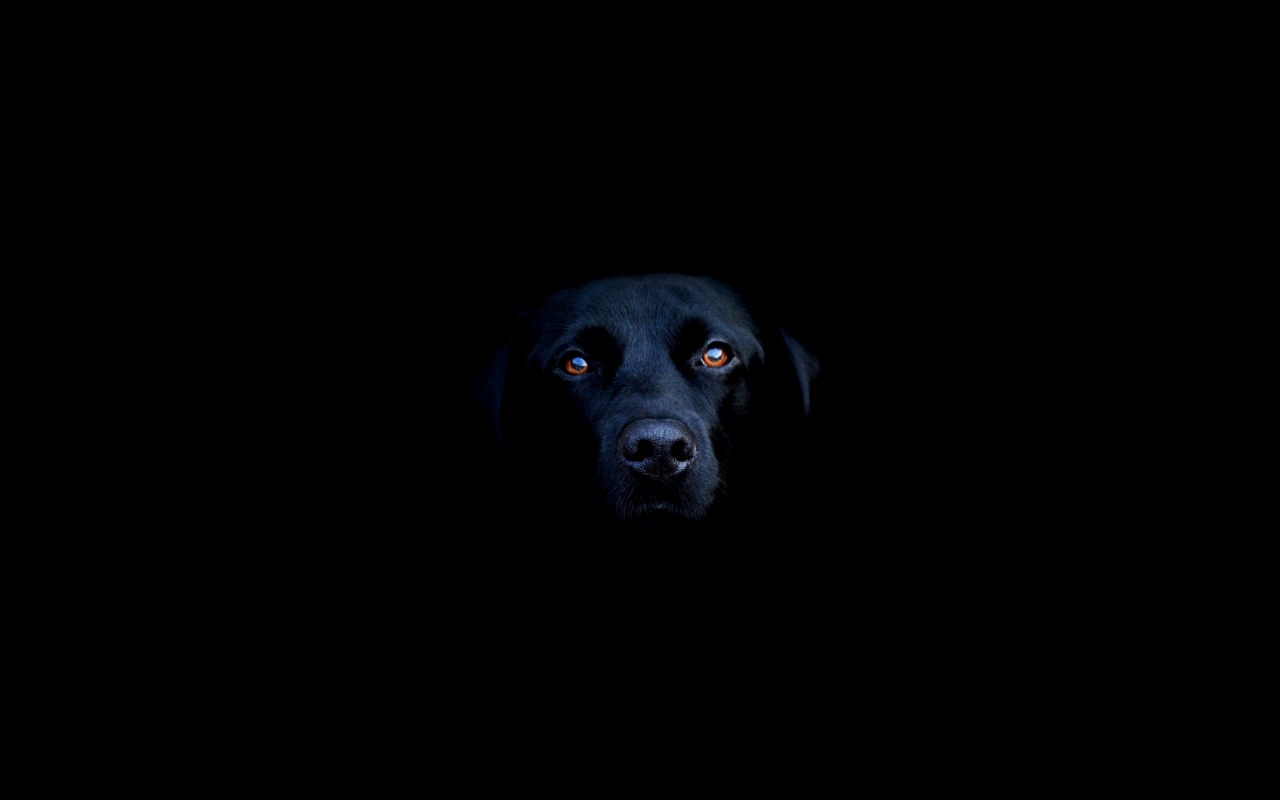
Black Dog’s Bedside Manner

by Robert Archambeau

for John Matthias in a losing season,
the black dog depression at his side

The black dog’s in the room with you,
and what to do but wait until he bites?
He’ll wolf your dinner, spill your whiskey,
piss in the fireplace when you try to write.
He’ll bar the door, he’ll stretch and lean, stare cross-eyed
at your daughters and then leer at your wife.
He’s slipped the Bishop’s muzzle, he’s gnawed the lawyer’s cat.
Despite the best prescriptions, he’s made the doctors’ cough.
The black dog’s in your bed with you,
and what to do but wait until he bites?
Spurt-sprinting in his sleep, he dreams you’re prey,
caught, clutched and carried, cradled in his gentle jaw back home.
In your dream you run from him, or write
“sit, boy” or “beg” or “heel” or “fetch.”
And in your dream the black dog takes his bitch.
Beside your bed and fevered sleep
he rests his paw upon your sweating head,
he leans in to hear you muttering
“Play dead, play dead, play dead…”

_______

Robert Archambeau is the author of Word Play Place (Ohio/Swallow), Home and Variations (Salt), and Laureates and Heretics (Notre Dame). He is one of the editors of The &NOW Awards: The Best Innovative Writing (Lake Forest/&NOW), and professor of English at Lake Forest College. He blogs at www.samizdatblog.blogspot.com. The above poem is used by permission of the author and originally appeared in Another Chicago Magazine.

SATURDAY POETRY SERIES PRESENTS: TSERING WANGMO DHOMPA

AS REMEMBERED

by Tsering Wangmo Dhompa

I am only beginning to understand how seasons affect me.

Winter. Snow beating street people into obedience. How mothers
held back from stepping out in discreetly ornamented shoes and
thin nylon socks.

This is the way I count years: the winters we had fire and the
summers we erased because we were in another place.

I am told I was five in 1971 even though my birth certificate states
I was born in 1969. The elders count on their fingers. They have
done it for a long time.

It was winter but not the kind of winter they were born into.
They were wearing hand knitted woolen sweaters. I was wearing
a jacket that children born to refugees wear.

When I am with them, I cannot say I remember. I say, as I am told
I remember.

It is not the accuracy of the story that concerns us.

But who gets to tell it.

“As Remembered,” from Rules of the House. Copyright © 2002 by Tsering Wangmo Dhompa / Apogee Press.

Tsering Wangmo Dhompa was raised in India and Nepal. She received her MA from University of Massachussetts and her MFA in Creative Writing from San Francisco State University. Her first book of poems, Rules of the House, published by Apogee Press in 2002 was a finalist for the Asian American Literary Awards in 2003. Other publications include In the Absent Everyday as well as two chapbooks, In Writing the Names (A.bacus, Potes & Poets Press) and Recurring Gestures (Tangram Press). Tsering works for a San Francisco based non-profit foundation that provides humanitarian aid to people of the Himalayas. (Annotated biography of Tsering Wangmo Dhompa courtesy of Apogee Press, with edits.)

Editor’s Note: This selection by Tsering Wangmo Dhompa seemed an appropriate choice for the holiday and for the season. Encompassing such themes as family, storytelling, and what one thinks of when they think of seasons, Dhompa’s work lulls us with simple language while bringing us into a larger world context and deep within the poet’s personal experience. When I think of Thanksgiving, I think of my grandparents, who always had guests for Thanksgiving dinner. Their guests would include foreigners, elderly people without family of their own, and anyone who would otherwise be without the warm experience of Thanksgiving. This piece brings to mind for me the experience of being a foreigner, a refugee, of being without. Dhompa and her family are exactly the kind of guests one might have expected to find at my grandparents’ Thanksgiving table. Today I am thankful to Dhompa for making me remember my grandparents’ kindness, and for encompassing their giving spirit both in her writing and in her humanitarian work. Tsering Wangmo Dhompa- a poet who embodies living and writing as it ought to be.

Want to read more by and about Tsering Wangmo Dhompa?
Tsering Wangmo Dhompa – Apogee Press
Review of Tsering Wangmo Dhompa on Verse Magazine
12 or 20 Questions with Tsering Wangmo Dhompa
Caffeine Destiny – Tsering Wangmo Dhompa

Purchase Tsering Wangmo Dhompa’s work:
Small Press Distribution
Amazon.com

SATURDAY POETRY SERIES PRESENTS: KRISTEN HOLDEN

kristen_holden

WHO SAYS

by Kristen Holden

We said the sky was white, that was the weather

we walk through a seeming window and chime

the sound of non-grey. The city had a backdrop

a canvas a watercolor paper, skyscrapers took

with us a loosing of our blankness. Some of us

have our fingers beating on our thighs a something

piano song, a beat we’d figure with each finger.

We bent down de-valved. Then the biggest buildings,

Paintless! they cried. We’re dry and you are this way

Kristen Holden is a poet and visual artist living in San Francisco. Her work has appeared in The Bitter Oleander, SFist and Phoebe. Holden is a Feminist, works in the fashion industry, and blogs at holdenarchive.com.

Editor’s Note: Holden believes in Feminism with a capital F, in fashion with a small f being anything but small, and in banana slugs, which is how I have the pleasure of knowing this multi-faceted artist. She is quoted as saying: “Plan things, then make things.” And she does just that, drawing from a world of art and urban living to make poetry happen. You may add model and Russian-trained dancer to her bag of tricks, but for today, let’s focus on her poetry, as it ought to be.

Want to see more by Kristen Holden?
Holdenarchive.com
San Francisco Love Story
SF Love Story’s Photostream

SATURDAY POETRY SERIES PRESENTS: BARBARA GUEST

BarbaraGuest

PARACHUTES, MY LOVE, COULD CARRY US HIGHER

by Barbara Guest

I just said I didn’t know
And now you are holding me
In your arms,
How kind.
Parachutes, my love, could carry us higher.
Yet around the net I am floating
Pink and pale blue fish are caught in it,
They are beautiful,
But they are not good for eating.
Parachutes, my love, could carry us higher
Than this mid-air in which we tremble,
Having exercised our arms in swimming,
Now the suspension, you say,
Is exquisite. I do not know.
There is coral below the surface,
There is sand, and berries
Like pomegranates grow.
This wide net, I am treading water
Near it, bubbles are rising and salt
Drying on my lashes, yet I am no nearer
Air than water. I am closer to you
Than land and I am in a stranger ocean
Than I wished.

From The Collected Poems of Barbara Guest, Edited by Hadley Haden Guest, © 2008 Wesleyan University Press


Barbara Guest (1920 – 2006) is one of the most impressive and inspirational poets of this century. By the time she passed away at age eighty-six she had been writing poetry for sixty years. She stands out among the group of American poets born in the 1920s, a generation various enough to include poets as dissimilar as Allen Ginsberg and James Merrill, Adrienne Rich and Robert Creeley, and was associated with the New York School, including poets John Ashbery and Frank O’Hara. Guest’s bibliography is extensive, including several books of poems, plays, and prose, and cannot be captured in this space alone. Her primary task in writing poetry was, in her words, “to invoke the unseen, to unmask it.”


Editor’s Note: Barbara Guest is, to me, one of the most influential and important poets of all time. Her place among 20th and 21st Century poets cannot be overstated. This Saturday Poetry Series would not be complete without a shining spotlight upon her and her work, and this particular poem is my personal favorite.


Want to read more by and about Barbara Guest?
Barbara Guest Author Home Page
Barbara Guest on Poets.org
Barbara Guest: Fair Realist by Peter Gizzi
Ceaselessly Opportuning: On Barbara Guest by Barry Schwabsky

SATURDAY POETRY SERIES PRESENTS: BETH MATTSON

BethMattson

ROME

by Beth Mattson

The US is totally just like ancient Rome.
The perfect analogy.
The participatory democracy,
The classic over-extension,
The silly dress code.
And do you remember when Rome fell,
To the walking-dead,
Flesh-eating,
Tooth-gnashing zombies?
We could be next.

From My Own Devices – A Word Comic. © 2006 licensed under a Creative Commons Attribution-Noncommercial 3.0 United States License.


Beth Mattson lives in San Francisco, where she writes zombie fiction and poetry about your mom. Originally from Wisconsin, she earned her MFA at California College of the Arts.


Editor’s Note: Beth Mattson is at the forefront of the New Humorist movement in modern poetry. Through the use of short, simple language, with an expert application of levity, she is able to communicate her message to a widespread audience. But there is nothing elementary about Beth’s tackling of topical issues such as war, politics, sex, sexuality, and self-esteem. Through the use of sarcasm and absurdity, she is not making light of weighty issues, but rather giving her audience the gift of humor in an age when it is much needed. I hope to see more poets fighting for the future of the art by creating work that the masses can and will embrace and appreciate.


Want to read more by and about Beth Mattson?
My Own Devices – A Word Comic.
California College of the Arts 2009 MFA in Writing