SATURDAY POETRY SERIES PRESENTS: BLACK LIVES MATTER POETRY


“It is not necessary that you believe that the officer who choked Eric Garner set out that day to destroy a body. All you need to understand is that the officer carries with him the power of the American state and the weight of an American legacy, and they necessitate that of the bodies destroyed every year, some wild and disproportionate number of them will be black.” ― Ta-Nehisi Coates


Editor’s Note: Every word I have attempted to write here has been wholly inadequate. I can only offer you poetry written by those who have lived an experience that I have only witnessed from the sidelines, in abject horror.


BLACK LIVES MATTER POETRY:

“Standing In Courage” by Jacinta V. White

“The All Black Penguin Speaks” by Roger Bonair-Agard

“Black Woman” by Georgia Douglas Johnson

#BlackPoetsSpeakOut

Black Lives Matter: A Roundup of Worthy Reads – The Poetry Foundaton

10 Artists of the Black Lives Matter Movement – Sojourners

Poets for Ferguson

Black Lives Matter – Renee Mitchell Speaks

‘Black Lives Matter’: A Poem by Nikkita Oliver

Anthony McPherson – “All Lives Matter: 1800s Edition”

Black Lives Matter/Freddie Gray Poem


SATURDAY POETRY SERIES PRESENTS: TWO MERMAID POEMS


792px-Elisabeth_Jerichau_Baumann_havfruen


Editor’s Note: In response to last week’s feature, Saturday Poetry Series favorites Erin Lyndal Martin and Elana Bell introduced me to two more fabulous mermaid poems. These poems have been swimming through my mind all week, and are too fantastic not to share. Get a taste here, then follow the links below to read each of these stunning poems in full.


from FABLE OF THE MERMAID AND THE DRUNKS
By Pablo Neruda, Translated by Paul Weinfield

But having come from the river, she understood nothing
She was a mermaid and was lost
Their insults flowed down her perfect, smooth flesh
Their filth enveloped her golden breasts
But not knowing tears, she did not weep tears


(Read the complete poem as translated by Paul Weinfield.)


from LATE SUNDAY MORNING
By Elana Bell

I kiss

the puckered lips, taste
ocean breath and remember

myself, slippery and long
under sun-slanted depths, swaying

to the whine of boats overhead.
I did not need you then, my scales

shining in their pristine sea.


(Read the entire poem in Winter Tangerine.)


Want to read more?
“Sunday Morning” in Winter Tangerine
“Fable of the Mermaid and the Drunks” as translated by Paul Weinfeild
“Fable of the Mermaid and the Drunks” in English and Spanish via Susan’s Place
“Fable of the Mermaid and the Drunks” on youtube, as read by Ethan Hawke


Today’s selections appear via Fair Use.

SATURDAY POETRY SERIES PRESENTS: TWO SUMMER POEMS

"England - English Summer Woods" courtesy of Jacopo Werther via Creative Commons: http://bit.ly/1qRZ81t
“England – English Summer Woods” courtesy of Jacopo Werther via Creative Commons: http://bit.ly/1qRZ81t


LILY-BELL AND THISTLEDOWN SONG
By Louisa May Alcott

Awake! Awake! for the earliest gleam 

Of golden sunlight shines 

On the rippling waves, that brightly flow 

Beneath the flowering vines. 

Awake! Awake! for the low, sweet chant 

Of the wild-birds’ morning hymn
Comes floating by on the fragrant air, 

Through the forest cool and dim; 

Then spread each wing, 

And work, and sing, 

Through the long, bright sunny hours; 

O’er the pleasant earth 

We journey forth, 

For a day among the flowers.

Awake! Awake! for the summer wind 

Hath bidden the blossoms unclose, 

Hath opened the violet’s soft blue eye, 

And awakened the sleeping rose. 

And lightly they wave on their slender stems 

Fragrant, and fresh, and fair, 

Waiting for us, as we singing come 

To gather our honey-dew there. 

Then spread each wing, 

And work, and sing, 

Through the long, bright sunny hours; 

O’er the pleasant earth 

We journey forth, 

For a day among the flowers.


SUMMER RAIN
By Fannie Isabel Sherrick

Oh, what is so pure as the glad summer rain,
That falls on the grass where the sunlight has lain?
And what is so fair as the flowers that lie
All bathed in the tears of the soft summer sky?

The blue of the heavens is dimmed by the rain
That wears away sorrow and washes out pain;
But we know that the flowers we cherish would die
Were it not for the tears of the cloud-laden sky.

The rose is the sweeter when kissed by the rain,
And hearts are the dearer where sorrow has lain;
The sky is the fairer that rain-clouds have swept,
And no eyes are so bright as the eyes that have wept.

Oh, they are so happy, these flowers that die,
They laugh in the sunshine, oh, why cannot I?
They droop in the shadow, they smile in the sun,
Yet they die in the winter when summer is done.

The lily is lovely, and fragrant her breath,
But the beauty she wears is the emblem of death;
The rain is so fair as it falls on the flowers,
But the clouds are the shadows of sunnier hours.

Why laugh in the sunshine, why smile in the rain?
The world is a shadow and life is a pain;
Why live in the summer, why dream in the sun,
To die in the winter, when summer is done?

Oh, there is the truth that each life underlies,
That baffles the poets and sages so wise;
Ah! there is the bitter that lies in the sweet
As we gather the roses that bloom at our feet.

Oh, flowers forgive me, I’m willful to-day,
Oh, take back the lesson you gave me I pray;
For I slept in the sunshine, I woke in the rain
And it banished forever my sorrow and pain.


(Today’s poems are in the public domain, belong to the masses, and appear here today accordingly.)


Louisa May Alcott: (1832-1888) was an American novelist and poet best known as the author of the novel Little Women (1868). Raised by her transcendentalist parents, Abigail May and Amos Bronson Alcott in New England, she grew up among many of the well-known intellectuals of her day. (Annotated biography of Louisa May Alcott courtesy of Wikipedia, with edits.)

Fannie Isabel Sherrick: (Lived circa mid-to-late 19th c.) was a native of St. Louis. Much of her early life was spent in California and Colorado, where many of her best productions in verse were written. Her collected poems were published in 1888, in a volume entitled Star Dust. Poor health caused her–at least temporarily–to give up literary endeavors. (Annotated biography of Fannie Isabel Sherrick courtesy of Evenings with Colorado Poets: an Anthology of Colorado Verse, with edits.)

Editor’s Note: Technically summer is not for another month yet, but here in New York the sun is shining, and Memorial Day weekend is the official start of our summer season, so “O’er the pleasant earth 
/ We journey forth, 
/ For a day among the flowers.” And, while summer rain was not a common occurrence in California–from whence I came–here in New York the sky opens up to quench the grasses, the flowers, the rivers and streams, all summer long: “Oh, what is so pure as the glad summer rain, / That falls on the grass where the sunlight has lain? / And what is so fair as the flowers that lie / All bathed in the tears of the soft summer sky?”

Want to read more summer poetry?
The Poetry Foundation

SATURDAY POETRY SERIES PRESENTS: KELLY HANSEN MAHER

IMG_0480

CO-SLEEPING
By Kelly Hansen Maher


Accepting the rise and fall of boxcars heaving
across the city, our industrial neighborhood.
Old neighborhood, in which immigrants,
studying for citizenship exams,
named the streets in the order of the presidents.
Trains make their slow move uphill, Fillmore,
Pierce, Buchanan, measuring each breath taken,
the newborn on my chest. Her small head
in the dark room, nose and mouth open,
sleeping. We stir; we are steady as train yards, lids
flutter. I hear insects at the open windows, the out
and in of her breath, my husband’s
deep twitching, the dog’s snore. Our bed
smells of human milk, which is lean
of fat and protein so that she will wake frequently
and want me. She has this one country.
I’m on an incline, never fully prone,
kept my word, kept her head
above the blankets, on the pillow of my arm,
kept her face to the air of the room all spring, all
summer. It’s before dawn when the birds…
the light in the room doesn’t change, but the trains
have stopped rolling over the narrow
bridges… birds must know… the pale yellow
beyond the yard… what first birds? chickadees
or sparrow, or thrush? I have small dreams
all night, it’s a covenant to keep her
breathing. Her new system in delicate
crating at the rail of my clavicle,
she’ll track with me, start again after stopping.
I don’t miss depth, tuned from sleep, Lincoln,
Johnson, Ulysses, anything could happen
to her in that other room
without me, and god help me,
there will be no more death in this house.


Today’s poem was was previously published in the Blue Mesa Review and appears in the collection Tremolo (Tinderbox Editions, 2016, copyright Kelly Hansen Maher). It appears here today with permission from the poet.


Kelly Hansen Maher is originally from Minneapolis, Minnesota but now lives in Grinnell, Iowa. She is the author one book of poetry, Tremolo (Tinderbox Editions, 2016), and is currently working on a second collection, as well as a book of memoir/essays. Her poems have been published by the New Orleans Review, Briar Cliff Review, and others journals. She teaches creative writing courses with the Minnesota Prison Writing Workshop.

Editor’s Note: With its evocative imagery and haunting ending, today’s poem is motherhood poetry that resonates, that stays with the reader. There are truths here all mothers of infants know: “I have small dreams / all night, it’s a covenant to keep her / breathing.” Time is measured like breath. Breath is the promise that life will go on, one breath at a time. Sound functions on the level of the line, the scene, the moment, propelling the poem forward, pacing the reader to go on expectantly, breath slow, aware and uncertain.

Want to read more by and about Kelly Hansen Maher?
Kelly Hansen Maher’s Official Website
Buy Tremolo from Tinderbox Editions
New Orleans Review
Midway Journal
Tinderbox Poetry Journal

SATURDAY POETRY SERIES PRESENTS: MOTHERHOOD POETRY


"Arab Motherhood" by Georges Sabbagh, c. 1920. Public domain image.
“Arab Motherhood” by Georges Sabbagh, c. 1920. Public domain image.


Editor’s Note: In honor of Mother’s Day, I have gathered together some of my favorite poems that I’ve featured on this series over the years that consider motherhood from a plethora of perspectives, for motherhood is such a multi-faceted experience. From the perspective of the child: memories of mothers, good mothers, bad mothers, absent mothers, mothers we have lost. From the perspective of the mother, of the would-be-mother, of the once-was mother: pregnancy and childbirth, love and fear of and for our children, the kind of mother we are or are not, the kind of mother we want to be, the children we never had, the children we have lost.

Today’s selection is in honor of motherhood itself and its many faces, in honor of that imperative person without whom none of us would exist and who–for better or worse–so deeply affects who we come to be.

Today’s post is dedicated to my own mother, who has always been one of my most dedicated readers and faithful supporters, who has shaped my being from zygote through womanhood, and whose legacy as mother takes on its newest incarnation on this, my first Mother’s Day as a mother.


Mother, I’m trying
to write
a poem to you

which is how most
poems to mothers must
begin—or, What I’ve wanted
to say, Mother
…but we
as children of mothers,
even when mothers ourselves,

cannot bear our poems
to them.

–Erin Belieu,
“Another Poem for Mothers”


MOTHERHOOD POETRY
FROM THE SATURDAY POETRY SERIES ARCHIVES:

“Elegy for a Mother, Still Living” by Elana Bell

“Cultiver Son Potager / Growing Vegetables” by Dara Barnat; translated by Sabine Huynh

“Prayers Like Shoes” by Ruth Forman

“We Speak of August” by Valentina Gnup

State of Grace: The Joshua Elegies by Alexis Rhone Fancher

“A Poem for Women Who Don’t Want Children” by Chanel Brenner

“Baby” by Jaimie Gusman

“Psalm to Be Read While My Daughter Considers Mary” by Nicole Rollender

Hemisphere by Ellen Hagan

“Labor Pantoum” by Leslie Contreras Schwartz

“Depression” by Terri Kirby Erickson

“Dinner for the Dying” by Jen Lambert

Decency by Marcela Sulak

Little Spells by Jennifer K. Sweeney

“The Invention of Amniocentesis” by Jen Karetnick

“The Sadness of Young Mothers” by Richard D’Abate

“Mom’s Cocks” by Jenna Le

“The Balance” by Danusha Laméris

“The Committee Weighs In” by Andrea Cohen

“Mother-In-Law” by Nicole Stellon O’Donnell

“Change of Address” by Ruth Deborah Rey


Want to read more Mother’s Day poems?
Mother’s Day poetry from the Academy of American Poets
Poetry about mothers from the Academy of American Poets

SATURDAY POETRY SERIES PRESENTS: NAN COHEN

nan cohen

A NEWBORN GIRL AT PASSOVER
By Nan Cohen


Consider one apricot in a basket of them.
It is very much like all the other apricots–
an individual already, skin and seed.

Now think of this day. One you will probably forget.
The next breath you take, a long drink of air.
Holiday or not, it doesn’t matter.

A child is born and doesn’t know what day it is.
The particular joy in my heart she cannot imagine.
The taste of apricots is in store for her.


Today’s poem was was first published on the Academy of American Poets website and appears here today with permission from the poet and publisher.


Nan Cohen is the author of Rope Bridge, a collection of poems. Her work has appeared in Gulf Coast, The New Republic, Ploughshares, Poetry International, and Tikkun, among other magazines and anthologies. She is the recipient of a Wallace Stegner Fellowship, a Rona Jaffe Writer’s Award, and a Literature Fellowship from the National Endowment for the Arts. A high school teacher and English department chair in Los Angeles, she is also the Poetry Director of the Napa Valley Writers’ Conference.

Editor’s Note: Simple, yet revelatory. A personal experience that belongs to one and to many. The day you will likely not remember. The apricot that is like all the others–unique. “The particular joy in my heart she cannot imagine.” The way that line bowls you over. How unadorned it is, yet how stunning. This poem. This poem. This poem.

Want to read more by and about Nan Cohen?
Rope Bridge
Nan Cohen’s Blog
“The Fear of the Dark” (with audio) at Slate
“Storm” at The New Republic
“Girder” at Verse Daily

SATURDAY POETRY SERIES PRESENTS: GEORGE MOSES HORTON ON LIBERTY AND SLAVERY

George-moses-horton_at_aalbc
ON LIBERTY AND SLAVERY
By George Moses Horton

Alas! and am I born for this,
To wear this slavish chain?
Deprived of all created bliss,
Through hardship, toil, and pain!

How long have I in bondage lain,
And languished to be free!
Alas! and must I still complain–
Deprived of liberty.

Oh, Heaven! and is there no relief
This side the silent grave–
To soothe the pain–to quell the grief
And anguish of a slave?

Come, Liberty, thou cheerful sound,
Roll through my ravished ears!
Come, let my grief in joys be drowned,
And drive away my fears.

Say unto foul oppression, Cease:
Ye tyrants rage no more,
And let the joyful trump of peace,
Now bid the vassal soar.

Soar on the pinions of that dove
Which long has cooed for thee,
And breathed her notes from Afric’s grove,
The sound of Liberty.

Oh, Liberty! thou golden prize,
So often sought by blood–
We crave thy sacred sun to rise,
The gift of nature’s God!

Bid Slavery hide her haggard face,
And barbarism fly:
I scorn to see the sad disgrace
In which enslaved I lie.

Dear Liberty! upon thy breast,
I languish to respire;
And like the Swan upon her nest,
I’d to thy smiles retire.

Oh, blest asylum–heavenly balm!
Unto thy boughs I flee–
And in thy shades the storm shall calm,
With songs of Liberty!


(Today’s poem is in the public domain, belongs to the masses, and appears here today accordingly.)


George Moses Horton: (1798–1883) Born a slave on William Horton’s tobacco plantation, George Moses Horton taught himself to read. Around 1815 he began composing poems in his head, saying them aloud and “selling” them to an increasingly large crowd of buyers at the weekly Chapel Hill farmers market. Students at the nearby University of North Carolina bought his love poems and lent him books. As his fame spread, he gained the attention of Caroline Lee Whiting Hentz, a novelist and professor’s wife who transcribed his poetry and helped publish it in her hometown newspaper. With her assistance, Horton published his first collection of poetry, The Hope of Liberty (1829), becoming the first African American man to publish a book in the South—and one of the first to publicly protest his slavery in poetry. (Annotated biography of George Moses Horton courtesy of The Poetry Foundation.)

Editor’s Note: As Passover is coming up this week, I have been thinking about slavery and freedom. About histories of bondage and those who are still wandering in search of sustainable freedom today. As we remember our own slavery this Passover and celebrate our own redemption, may these words from another Moses help us to also remember the experiences of those who have likewise suffered, and to advocate for those who are wandering the world today in search of life and liberty.

Want to read more by and about George Moses Horton?
The Poetry Foundation
UNC Documenting the American South
Academy of American Poets

SATURDAY POETRY SERIES PRESENTS: D.H. LAWRENCE ON SPRING

DH_Lawrence_1906
THE ENKINDLED SPRING
By D.H. Lawrence

This spring as it comes bursts up in bonfires green,
Wild puffing of emerald trees, and flame-filled bushes,
Thorn-blossom lifting in wreaths of smoke between
Where the wood fumes up and the watery, flickering rushes.

I am amazed at this spring, this conflagration
Of green fires lit on the soil of the earth, this blaze
Of growing, and sparks that puff in wild gyration,
Faces of people streaming across my gaze.

And I, what fountain of fire am I among
This leaping combustion of spring? My spirit is tossed
About like a shadow buffeted in the throng
Of flames, a shadow that’s gone astray, and is lost.


(Today’s poem is in the public domain, belongs to the masses, and appears here today accordingly.)


David Herbert Richards Lawrence (1885 – 1930) was an English novelist, poet, playwright, essayist, literary critic and painter who published as D. H. Lawrence. His collected works, among other things, represent an extended reflection upon the dehumanising effects of modernity and industrialisation. Although best known for his novels, Lawrence wrote almost 800 poems, most of them relatively short. His first poems were written in 1904 and two of his poems, “Dreams Old” and “Dreams Nascent,” were among his earliest published works in The English Review. His early works clearly place him in the school of Georgian poets, a group not only named after the reigning monarch but also to the romantic poets of the previous Georgian period whose work they were trying to emulate. (Annotated biography of Yehuda Amichai courtesy of Wikipedia, with edits.)

Editor’s Note: Lyric gyrations, thick alliteration, words and images like blossoms and wildfire. D.H. Lawrence helps us welcome spring while questioning the I amidst such a season.

Want to read more by and about D.H. Lawrence?
The world of DH Lawrence
Biography.com
Academy of American Poets

SATURDAY POETRY SERIES PRESENTS: DIODE

Screen Shot 2016-04-02 at 11.12.42 AM
Editor’s Note: It has been my honor and privilege to write another omnibus review for Diode Poetry Journal, this time a review of four full-length poetry collections. Each of the poets that are the subject of this review have been featured here on the Saturday Poetry Series, and diode gave me the opportunity to expand my inquiries into these collections and to help share the gift of poetry with the world. Read selections from the review below, then hop on over to diode and read the full review and the incredible issue.


from SMALL PRESS FULL LENGTH COLLECTIONS OMNIBUS REVIEW
diode 9.1, by Sivan Butler-Rotholz

New from [Red Hen Press, Texas Tech University Press, Black Lawrence Press, and The (Great) Indian Poetry Collective] are four full-length poetry collections from four visionary writers. Whether crafted by award-winning artists or carefully curated, whether hand-selected or born of generous mentorship, these thoughtful and painstaking works gift the reader an exquisite unrest. Vivid, lyric, and evocative, the words and ideas proffered within these books enable the reader not only to question, but to reconsider, not only to reflect, but to be transformed.

Seemingly disparate, these collections grow from the fertile soil of common ground. Each one stems from the rich roots of questioning, and among their boughs are inquiries into science and religion, genesis, generations, and death, the infinite and the inevitable, history, humanity, and crossing over.

from Review | Histories of the Future Perfect, by Ellen Kombiyil
The (Great) Indian Poetry Collective, 2015

Imagine a world freed by the boundless realms of a child’s imagination. A child, that is, with a PhD and the resources of NASA at its fingertips. And a heart that has lived more than one lifetime. “Of the heart,” Kombiyil observes, “one might say that it slows,” and “love is / lava spilling out & cooling into rock.” From earth, she imagines the stars, and from space, she longs for earth. In “While Sipping Lemon Tea on Saturn’s Ice-Cloud Deck,” the poet experiences “Dizzy days and sleepless nights—elongated years,” wistful when admitting that “I’ve forgotten the outline of my body against you.”

from Review | The Glad Hand of God Points Backwards, by Rachel Mennies
Texas Tech University Press, 2014

The Glad Hand of God Points Backwards “cradle[s] a weight unasked of it.” This ambitious collection is laden with questions of religion and God, of Judaism as a uniquely weighted experience, of the tension between a lost matriarchy and a present patriarchy—“prayers as old as a thousand matriarchs;” “Sarah had Rebekah had Leah and Rachel had… no use for sarcasm but lived thick within God’s ironies…” Woven between the fibers of these themes are the intrinsic considerations of—and reflections upon—history and those relationships that are the genesis, generation, and continuation of life.

from Review | Decency, by Marcela Sulak
Black Lawrence Press, 2015

When the book considers history, that consideration is varied enough to encompass Cortés, the Holocaust, and the southern backyard of the poet’s own childhood. Sulak writes of La Malinche, a Nahau (Aztec) woman who was born noble, sold into slavery, and came into the possession of Cortés:

              They call me La Malinche,
              because I betrayed. Cortés called me
              Doña Marina. Our friends
              called us by the same name.
              You can call me mother,
              of course. But what I like most,
              is the unanswered calling in the sun
              and the corn and the coins, those luminous
              voices eternally seeking their gods

And of the poet’s own history:

              At the end of our marriage, I remember
              the raccoons of my childhood . . .
              how my brother set the spring-triggered steel jaw trap for the coons
              in the dim light of the barn floor; my cat stepped into it and caught her paw,
              and how she howled, her desperate twist, and when I bent to release her
              she bit my finger and it swelled ten times its normal size, how that’s what
                     happens,
              my father said, when you touch an animal in pain.

from Review | River Electric With Light, by Sarah Wetzel
Red Hen Press, 2015

The driving force and metaphor running through this work is water. Rivers carry words, ideas, people. “If I must choose a word for you, / let it be river,” the book opens, and in this way the poet conjures up a world in which water and the you of the collection become one. She then echoes these words with a shift that sets the stage for the ways in which water—and the you—shifts throughout the book, throughout life, and throughout both personal history and the history of the world: “If I must choose a word for you, / let it be the word / for what flows.”


Today’s selections are from diode 9.1. Read the full omnibus review here. Read the full issue here.


Diode: Diode publishes electropositive poetry. Poetry that excites and energizes. Poetry that uses language that crackles and sparks. The journal features poetry from all points on the arc, from formal to experimental.

Want to read more at the intersection of yours truly and diode?
Diode 9.1 – Small Press Full Length Collections Omnibus Review
Diode 8.3 – Accents Publishing Chapbook Omnibus Review

SATURDAY POETRY SERIES PRESENTS: THE BOOK OF ESTHER BY STACEY ZISOOK ROBINSON

me

By popular demand, in celebration of Purim we are re-featuring this stellar poem by Stacey Zisook Robinson, in conversation with your faithful editor at the crossroads of feminism and midrash.

By Stacey Zisook Robinson:


THE BOOK OF ESTHER

That blush on my cheek?
It’s paint,
And I have glittered my eyes
And robed myself in the finery
of silk and gossamer,
lapis and gold–
And whored myself for your salvation.

You asked for no thoughts.
You merely offered my body
to the king–
My life forfeit
If my beauty failed.

You asked for no ideas
And I gave you none,
Though I had a thousand,
And ten thousand more.

Diplomacy was played on the field of my body,
The battle won in the curve of my hip
And the satin of my skin,
Fevered dreams of lust
And redemption.

That blush on my cheeks?
It is the stain of victory
And of my shame.


Today’s poem was originally published on Stumbling Towards Meaning and appears here today with permission from the poet.


Stacey Zisook Robinson is a single mom. She sings whenever she can. She writes, even when she can’t. She worked in Corporate America for a long time. Now she works at her writing and looks for God and grace, meaning, connection, and a perfect cup of coffee, not necessarily in that order. Stacey has been published in the Summer 2013 issue of Lilith Magazine and in several anthologies including The Hope (Menachem Creditor, ed) and In Transit (BorderTown Press, Daniel MacFadyen, ed). Watch for her book, Dancing in the Palm of God’s Hand, forthcoming from Hadasah Word Press. Stacey has recently launched a Poet in Residence program designed to work with both adults and kids in a Jewish setting to explore the connection between poetry and prayer as a way to build a bridge to a deepened Jewish identity and faith.

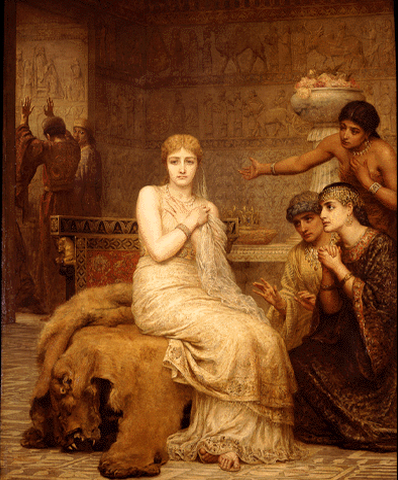
Editor’s Note: This week we celebrated Purim, a Jewish holiday that commemorates Queen Esther (5th c. B.C.E.) saving Persian Jews from genocide. Esther’s rise to power, however, was problematic. Her predecessor, Queen Vashti, was summoned to appear in her crown, ordered to display her beauty before the king and his nobles. The implication, according to many scholars, is that Queen Vashti was ordered to appear wearing only her crown. She refused, and it was suggested that she should be de-throned and replaced by a “worthier woman” so that “all wives [would] henceforth bow to the authority of their husbands, high and low alike” (Esther 1:19-20).

And there’s your daily dose of female oppression, Bible style.

"Vashti Refuses the King's Summons" by Edwin Long (1879). Public Domain image.
“Vashti Refuses the King’s Summons” by Edwin Long (1879). Public Domain image.


A search began for beautiful young virgins. Those who made the cut were subjected to twelve months of beauty treatments before the king would even deign to lay eyes on them. The hopefuls then appeared before the king, who did not see any of them ever again “unless he was particularly pleased by her” (Esther 2:12-14). King Xerxes liked Esther best of all the young virgins displayed before him, and crowned her queen in Vashti’s stead. Plot twist: the king did not know that Esther was Jewish, for she had deliberately kept that fact from him. In the end Esther was able to use her beauty to bend the king to her will, and when one of his henchmen sought to have all the Jews in the kingdom annihilated, Esther stood up for her people and they were spared.

While it is this end-result that is remembered and celebrated each year at Purim, it is Esther’s degrading rise to the throne—and what it cost her to to save her people—that is the subject of today’s poem.

To come to power, Esther had to take the rightful queen’s place and become the poster child for the idea that “all wives [should] bow to the authority of their husbands.” To catch the king’s eye she had to strip away her personhood until nothing was left but her physical beauty. “That blush on my cheek? / It’s paint, / And I have glittered my eyes / And robed myself in the finery / of silk and gossamer, / lapis and gold.” It was not her devotion to her people that allowed her to save them, but that she “whored [her]self for [their] salvation.” Nor did her people care who she was beneath her beauty, or whether she survived her attempt to save them: “You asked for no thoughts. / You merely offered my body / to the king– / My life forfeit / If my beauty failed.”

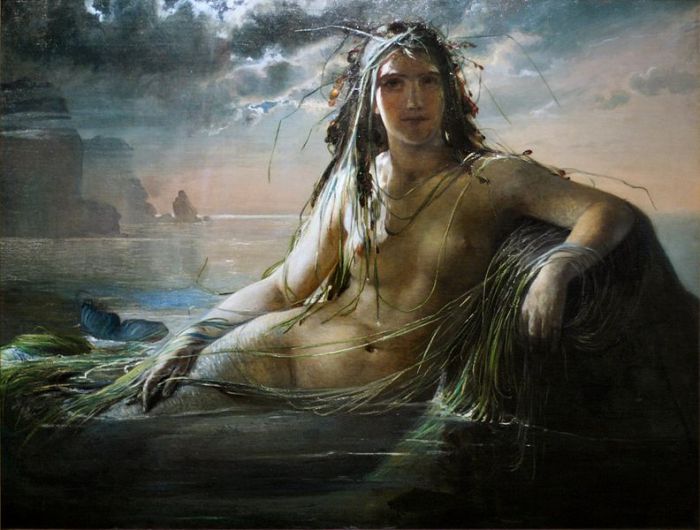
"Queen Esther" by Edwin Long (1878). Public Domain image.
“Queen Esther” by Edwin Long (1878). Public Domain image.


Queen Esther was a pawn in men’s games, as women of history have too often been. “Diplomacy was played on the field of my body, / The battle won in the curve of my hip.” She used her beauty and her sexual allure because, as a woman of her time and place, they were the only instruments of power available to her. But if she were given a voice, she might speak of inner conflict. She might tell us what it feels like to lack the ability to either refuse or consent. Queen Esther was a hero, but what did it cost her to package and sell herself in the name of the greater good? “That blush on my cheeks? / It is the stain of victory / And of my shame.”

Today’s poem does what all great feminist biblical interpretation and midrashot do: it examines, deconstructs, and reconstructs androcentric assumptions, biases, and perspectives in biblical literature, placing women, gender, and sexuality at the center of reinterpretation.

In a time when the Bible is still being used to justify the oppression of women, we need much more of the important work Stacey Zisook Robinson is doing with “The Book of Esther.”

Want more from Stacey Zisook Robinson?
Stacey Zisook Robinson’s Blog
Stacey Zisook Robinson’s Official Website
Personal Essays and Opinion Pieces on iPinion
ReformJudaism.org