Imran Boe Khan: “A Thousand Miles from Your Bedside”

.

602981sl

.

.

A Thousand Miles from Your Bedside

I’ve watched you lose life
in measures I cannot grasp.

Distance was the only way to escape
the time loop back to my origin story.

I’d like to say I travelled
to reinvent myself

though I know I just wanted a reason
to not be the one closing your eyes.

They are emissaries from your conscience;
I fear the contradictions they carry.

I have spent my years pursuing an unreachable remoteness,

knowing my life has been yours to roam through
like a mother tasting her own poisoned milk.

While I cower beneath a son’s first day at school,

a daughter’s graduation party, I can feel those eyes
fumbling their ways softly across my face,
lighting a wick beneath the chiselled brow
they cannot read.

.

.

About the Author: Imran Boe Khan has work appearing in places such as the Rumpus, Sixth Finch, Cosmonauts Avenue, Yes, Poetry, and The Bitter Oleander. A previous winner of the Thomas Hardy Prize, Imran is a lecturer at Bournemouth University, and lives in Christchurch, Dorset.

.

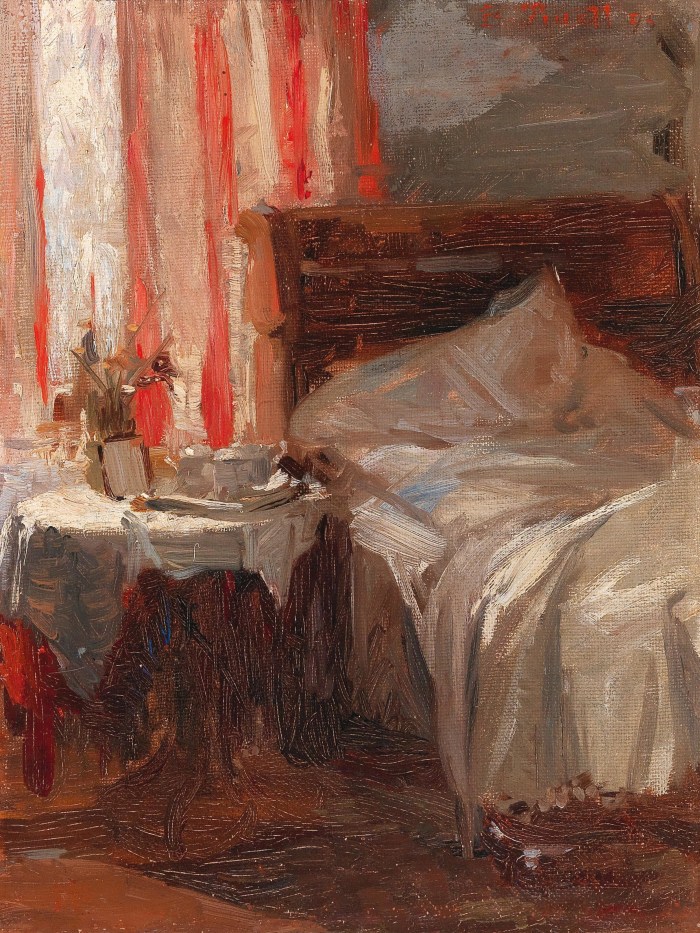
Image Credit: Broncia Koller-Pinell “A Bedroom Interior” (1895) Public Domain

Jeremy Nathan Marks: “Edgemere Road”

.

service-pnp-fsa-8c11000-8c11300-8c11310v

.

.

Edgemere Road

-for Ruth and Milton in memoriam

When there were pictures
on the wall
the house seemed larger
end tables in the hall
and someone answering
the phone

Telemarketers and fundraisers
would call but now no one does
because mail and bills are forwarded
to next of kin.

I remember both of you
moving from room
to room
creaking floors
and chiming clocks
every one of which spoke
of a particular purchase
or repair
work histories and earnings
wood grain walls
appliance doors grasped with a turning
of plumbing fixtures foot prints in linoleum.

I remember how you fed squirrels
picked beetles off of your plum tree
admired that flaming sugar maple
across the street

You cultivated tomatoes
and were proud to be
the first and only owners
of your house

You paid your bills and cut your grass
did all of the things responsible home owners do
taking a particular joy in your obligations because

They were yours.

.

.

About the Author: Jeremy Nathan Marks lives in Canada. Brand new work appears/is appearing in Unlikely Stories, The Pangolin Review, Every Day Fiction, Bluepepper, Sledgehammer Lit, Ginosko Review, and New Reader Magazine.

.

More by Jeremy Nathan Marks:

Plus Ten

Frontiers are Frontiers but Once

.

Image Credit: Marion Post Wolcott “Mr. and Mrs. Elvin Wilkins (Rosa) discussing whether or not they will buy this linoleum for their kitchen floor. They decided it was too light and not wide enough and that they would wait. They came to Durham, North Carolina from their farm near Stem, Granville County, to sell their tobacco at auction and to do some general shopping” (1939) The Library of Congress

Melody Wang: “When I Die, Liken Me to the Sparrow”

.

.

.

When I Die, Liken Me to the Sparrow

Tread lightly near the clearing in fading
light; there is no telling which plants
contain pure poison nestled in
waxy-smooth petals and stems

Pretend not to notice striated pink-purple flowers
strewn about the forest floor — unsuspecting
creatures pulled from their nesting
place and tossed aside as an afterthought

Seek and find near a clump of irises: the cold
sparrow, cramped on its side, lurid flesh showing
more than it had in life, features oddly twisted and
sleep-softened eyes closed eternally

Revel in the sacred realization that it belongs
to the earth now, requiring neither proper burial
nor the slightest acknowledgment of the fact
that it is no longer among the living

.

.

About the Author: Melody Wang currently resides in sunny Southern California with her dear husband. In her free time, she dabbles in piano composition and also enjoys hiking, baking, and playing with her dogs. She is a reader for Sledgehammer Lit and can be found on Twitter @MelodyOfMusings.

.

More by Melody Wang:

All that My Mother Cultivates

.

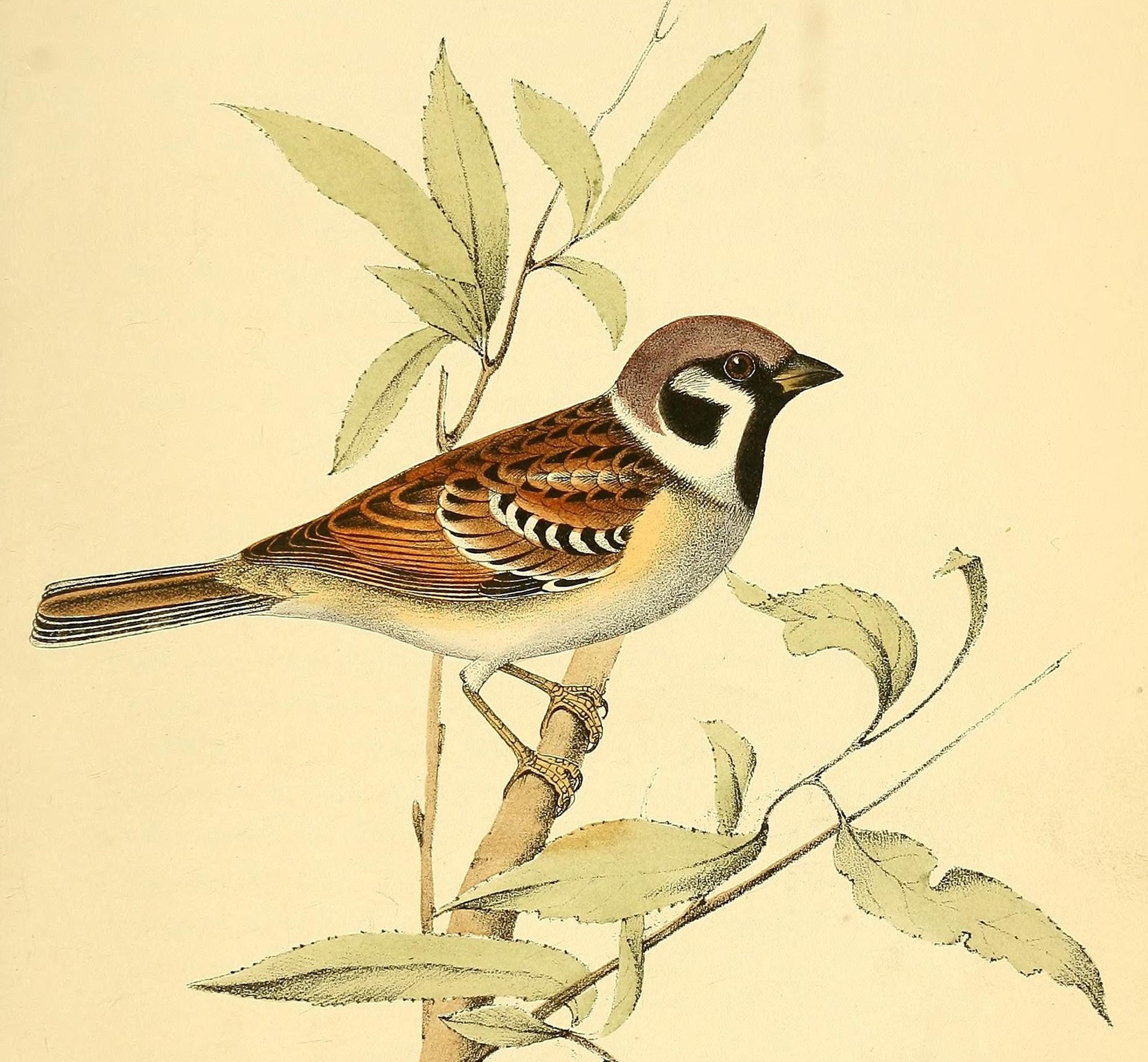
Image Credit: Illustration from “Coloured illustrations of British birds, and their eggs” London :G.W. Nickisson,1842-1850. Public Domain. Image courtesy of The Biodiversity Heritage Library

Maryfrances Wagner: “Losing Cousin Carolyn”

.

20200816083609_IMG_0808

.

.

Losing Cousin Carolyn

The news came via Facebook.  Simple Obit.
Immediate family only.  This is the age of Covid.
This is the time of dying alone.  Grieving alone.

We sat in a funeral home pew the last time I saw
Carolyn, cousins lined up together as we always are
when we say goodbye, in this case to our last uncle.

Despite opposite views, we shared a life together,
weddings, reunions, death.  A time to share family
stories or photos we found in a parent’s basement.

I imagine her sons graveside with their father,
no chairs, no flower sprays, no family circling them.
Her brother hundreds of miles away, kidneys failing.

I drive past the house where they lived when we
played Fish or paper dolls on her bedroom floor.
It seems so small.  The shutters and window box sag.

A vacant birdhouse sways near an empty feeder. A clump
of limp jonquils wave, and their old Dragon Blood Sedum
I loved pokes through the broken arms of a gargoyle.

.

.

About the Author: Maryfrances Wagner’s books include Salvatore’s Daughter, Light Subtracts Itself, Red Silk (Thorpe Menn Book Award for Literary Excellence), Dioramas, Pouf, The Silence of Red Glass, and The Immigrants’ New Camera. Poems have appeared in New Letters, Midwest Quarterly, Laurel Review, Natural Bridge, Voices in Italian Americana, Unsettling America:  An Anthology of Contemporary Multicultural Poetry (Penguin Books), Literature Across Cultures (Pearson/Longman), Bearing Witness, The Dream Book, An Anthology of Writings by Italian American Women (American Book Award from the Before Columbus Foundation), et.al.  She co-edits I-70 Review and served as Missouri’s Individual Artist of the Year for 2020.

.

More by Maryfrances Wagner:

Dreaming Through Covid

.

Image Credit: Chase Dimock “Bird on Wire” (2020)

Sue Blaustein: “Rest In Peace”

.

.

.


Rest in Peace

Forsythias come into bloom. Then magnolias.
This is the week it happens.

Early evening  – radio drivetime – I
head south on Holton Street.

The ad on the back
of the bus I’m following

is CALL 411-PAIN.
That’s easy to remember!

411 is kind of like 911, and PAIN
            is self-explanatory.

The whole bus – for this ad – is a puke pink.
Puke pink 411-PAIN. The bus and I

cross Auer Avenue, where a magnolia
            rules the northeast corner.

Timing! The blossoms, the bus, the blossoms…
            pink, puke pink, pink.

The tree fades in my rearview.
I still follow the bus, puke pink PAIN for my eyes.

For my ears and tender heart –
drivetime reports of celebrity deaths.

An NBA legend’s son lost at 33,
from asthma. Asthma? With all the drugs they have?

Steroids, non-steroids, inhalers…
On TV, asthma is vanquished. Or at least tamed. 

Then, an actor. He was in his eighties –
old enough to go. Notable because,

as the deejay explained, He played
Cousin Itt on the Addams Family. 

Rest in Peace, Cousin Itt.
The deejay spoke with respect, 

yet you could tell it was fun for him
to say Cousin Itt so solemnly.

Blossoms, a puke pink bus, 411 PAIN
for my eyes. And, for my ears

and sore heart Rest in Peace, Cousin Itt.
It gentled an April afternoon. 

.

.

About the Author: Sue Blaustein is the author of “In the Field, Autobiography of an Inspector”. Her publication credits and bio can be found at www.sueblaustein.com. Sue retired from the Milwaukee Health Department in 2016, and is an active volunteer. She blogs for ExFabula (“Connecting Milwaukee Through Real Stories”), serves as an interviewer/writer for the “My Life My Story” program at the Zablocki VA Medical Center, and chases insects at the Milwaukee Urban Ecology Center.

.

More by Sue Blaustein:

A Song for Harvest Spiders

A Song for Noise

The Old Ways

,

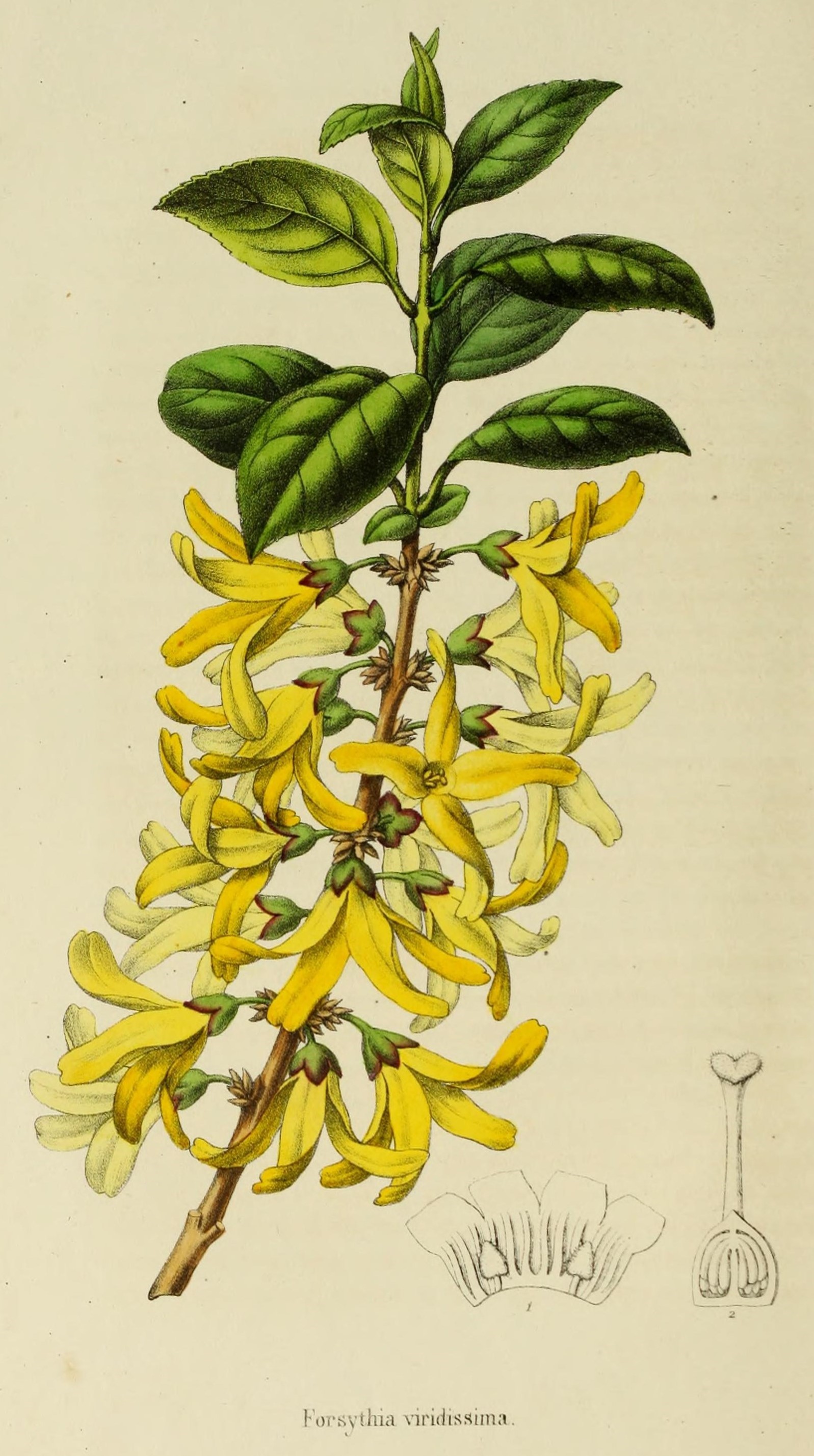
Image Credit: Digitally enhanced illustration from “Annales de la Société royale d’agriculture et de botanique de Gand” Société royale d’agriculture et de botanique,1845-1849. Courtesy of the Biodiversity Heritage Library. Creative Commons License 2.0.


John Dorsey: “Poem for Danny Bell”

.

service-pnp-fsa-8b35000-8b35500-8b35577v

.

.

Poem for Danny Bell

you had a face like a weasel
& a heart like a lion
in your late 40’s
your parents gone
you had never lived alone
carrying your faded baby picture
around the factory floor

in the morning
watching for deer
from the bus window

the sun dancing
along every wrinkle
you never noticed

the passing of time

your thin black hair
slicked back
with a cheap plastic comb

eat your lunch
apple first
tuna sandwich
with the crust cut off

wait to go home.

.

.

About the Author: John Dorsey lived for several years in Toledo, Ohio. He is the author of several collections of poetry, including Teaching the Dead to Sing: The Outlaw’s Prayer (Rose of Sharon Press, 2006), Sodomy is a City in New Jersey (American Mettle Books, 2010), Tombstone Factory, (Epic Rites Press, 2013), Appalachian Frankenstein (GTK Press, 2015) Being the Fire (Tangerine Press, 2016) and Shoot the Messenger (Red Flag Poetry, 2017),Your Daughter’s Country (Blue Horse Press, 2019), and Which Way to the River: Selected Poems 2016-2020 (OAC Books, 2020). His work has been nominated for the Pushcart Prize, Best of the Net, and the Stanley Hanks Memorial Poetry Prize. He was the winner of the 2019 Terri Award given out at the Poetry Rendezvous. He may be reached at archerevans@yahoo.com.

.

More By John Dorsey:

Anthony Bourdain Crosses the River of the Dead

Punk Rock at 45

Perpetual Motion

.

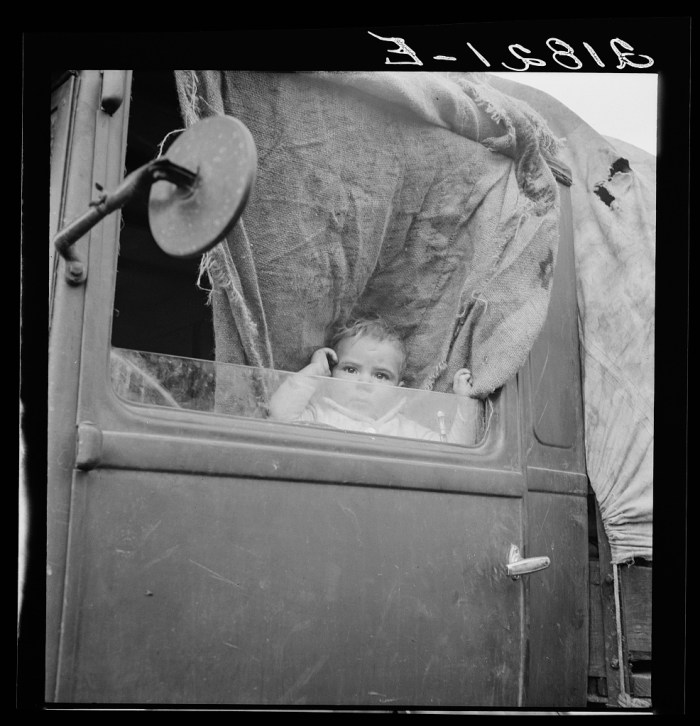
Image Credit: Dorothea Lange “Baby from Mississippi parked in truck at FSA (Farm Security Administration) camp, Merrill, Oregon” (1939) The Library of Congress

Melody Wang: “All That My Mother Cultivates”

.

35021810922_0207f22b0a_o

.

.

All That My Mother Cultivates  

On the morning of his death, my mother: a lone
cypress, statuesque in her mourning
even as rising smoke clouded her vision

Plum blossoms cast downward, she morphed
into a resolute blackthorn boasting branches
bursting with tales of courage amid darkness

Autumn crept in and she invited the lost
to harvest her fruit as the fading world
oscillated between darkness and light

She teaches me how to forage wild fennel
and radish greens — the spiced aroma of anise waltzes
with a subtle mustard melody of earth-warmed resilience

Umbel flowers extend proud heads upward,
amber brilliance quivering over parched land.
We delight in spotting whimsical wood sorrel

Heart-shaped leaflets grouped in threes
fold up at night and unfurl again
with the sleepy smile of dawn

As golden hour illuminates the first buds
of magnolia, sporadic blooms appear,
eager to take in the first rains of June

Amid the deserts of Southern California,
an unmistakable fragrance permeates
the night air, not soon to be forgotten.

.

.

About the Author: Melody Wang currently resides in sunny Southern California with her dear husband. In her free time, she dabbles in piano composition and also enjoys hiking, baking, and playing with her dogs. She can be found on Twitter @MelodyOfMusings.

.

Image Credit: Digitally enhanced image of a Magnolia from Curtis’s Botanical magazine. London ; New York [etc.]  Academic Press [etc.]. Courtesy of the Biodiversity Heritage Library. Creative Commons License 2.0.

Maryfrances Wagner: “Dreaming Through Covid”

.

50402460188_a050fa2bfe_o

.

.

Dreaming Through Covid

Most nights I dream of the dead,
my mother telling me, my father agreeing,

that we all feel afraid sometimes.
That’s what the counselors tell us.

I rescued a dog but she bit my friend.
Someone is dreaming about her daughter.

I want my mother to come back
to dream about me.

I stand in a crowd and everyone offers me
caviar, wine, and crisp crusts with smoked salmon.

Will someone come to get me when I die?
Today my nephew called to say he dreamed

about his Nonny and Papa, about going
to their house on Sunday, but I wasn’t there.

He said that he didn’t want me to die
until I gave him Nonny’s red sauce recipe.

Today the peace plant unfurled two new
cupped white heads, shiny and perfect.

Only two days ago, I considered, its leaves
tiresome, moving it downstairs.

.

.

About the Author: Maryfrances Wagner’s books include Salvatore’s Daughter, Light Subtracts Itself, Red Silk (Thorpe Menn Book Award for Literary Excellence), Dioramas, Pouf, The Silence of Red Glass, and The Immigrants’ New Camera. Poems have appeared in New Letters, Midwest Quarterly, Laurel Review, Natural Bridge, Voices in Italian Americana, Unsettling America: An Anthology of Contemporary Multicultural Poetry (Penguin Books), Literature Across Cultures (Pearson/Longman), Bearing Witness, The Dream Book, An Anthology of Writings by Italian American Women (American Book Award from the Before Columbus Foundation), et.al. She co-edits I-70 Review and served as Missouri’s Individual Artist of the Year for 2020.

.

Image Credit: Digitally enhanced illustration excerpted from the Biodiversity Heritage Library. South African botany London, Longmans, Green,1922. biodiversitylibrary.org/page/37736321 Creative Commons License 2.0.

SATURDAY POETRY SERIES PRESENTS: NOME EMEKA PATRICK

By Nome Emeka Patrick:


MONOLOGUE IN A ROOM WITH THE PORTRAITS OF MY DEAD BROTHER

You were my brother until your eyes wore a dragon’s breath until your hands grew into an orchard of blood until your mouth unwound into a coffin. May the blood that hums in our veins like a river knifing past a dark forest bear me witness. I love you brother with all the birds psalming in my bones. I love you o brother. In this sanctuary that’s my mouth, brother there’s a prayer burning wild –a lamp in the wrinkled hands of a monk searching God in a dark room. You were my brother until the ten o’ clock news says a young man walks into a market with explosives strapped to his body like a life jacket. On the TV your face appears like a surprise & so it is. A scar glitters like a promise on your neck & so it is. How you got the scar: we were god’s descendants in a garden one afternoon when you said let’s play a game –a game of stones. Everything always started with you even the morning fajr. You hurled your stone but I ducked. Mine stabbed your neck into spittle of warm blood. We both knelt like two unfurling hibiscuses. We both cried like a night wind behind a chariot until the ambulance came. & today the scar glitters on every neighbour’s screen. That’s your lips o brother where prayers & ablutions grew wings & flew into the heavenly nest of a whistling God beyond. O brother the dancing firefly in a dark museum. O brother the lonely lamb where the forest is wildest. Until your eyes wore the skin of night & your hands grew into a garden of cold fallen leaves, you were the vision I never had. You were all the places I always dreamt of. You were the only prayer I learnt to keep in my heart before opening it into Allah’s eyes. O you were my only dear brother. How do I pray for your soul when every song that leads me to you is a dirge stuck on a raven’s beak?


Reprinted with permission from the author. This poem first appeared in the Winter 2019 issue of Flapperhouse.


Nome Emeka Patrick is a blxck bxy and student in the University of Benin, Nigeria, where he studies English language and literature. A recipient of The 40th edition of Festus Iyayi award for excellence (Poetry) in 2018. His works have been published or forthcoming in Gaze journal, Beloit poetry journal, FLAPPER HOUSE, Crannóg magazine, Puerto Del Sol, Mud Season Review, The Oakland Review, Notre Dame Review, Gargouille, Barnhouse journal and elsewhere. His manuscript, We Need New Moses. Or New Luther King, was a finalist for the 2018 Sillerman First Book Prize for African poets. Say Hi on twitter @paht_rihk

Guest Editor’s Note: In this poem, a river knifes past a dark forest, and a scar glitters; memory of shared experience becomes love, and a brother questions his own mourning in the wake of a terrible devotion in “a prayer burning wild.” The speaker addresses his brother and cries out for meaning in a senseless world that broadcasts the terror and disregards the humanity. The speaker talks of their kinship in the past, signaling its destruction at the moment the bomb exploded, leaving the speaker with an unresolved grief.

Original similes are sometimes hard to come by, but this poem surprises with each comparison that contains images igniting all of the senses and lines delving deeper into the emotions associated with a brother’s death. Remembering how they dealt with tragedy in their youth, the speaker compares them to “two unfurling hibiscuses,” kneeling and crying. The poem is a visual and musical lament that uses personal memory and imagery to convey intimate sorrow and grief, universal human feelings that rely on recollection to commemorate loved ones and keep close those times that define life in the living and not in its end.

Want to read more by and about Nome Emeka Patrick?
Gaze Journal
FLAPPERHOUSE
Vagabond City


Contributing Editor Anne Graue is the author of Fig Tree in Winter (Dancing Girl Press), and has published poems in literary journals and anthologies, including The Book of Donuts (Terrapin Books), Blood and Roses: A Devotional for Aphrodite and Venus (Bibliotheca Alexandrina), Gluttony (Pure Slush Books), The Plath Poetry Project, One Sentence Poems, Random Sample Review, Into the Void Magazine, Allegro Poetry Magazine, and Rivet Journal.


A NOTE FROM THE MANAGING EDITOR:

After nearly ten years as Contributing Editor of this series, it is an honor and a unique opportunity to share this space with two new Contributing Editors, including the one featured here today. I am now thrilled to usher in an era of new voices in poetry as the Managing Editor of this series.

Viva la poesia!
Sivan, Managing Editor
Saturday Poetry Series, AIOTB


SATURDAY POETRY SERIES PRESENTS: F. E. CLARK

“Daily Painting, 12th June 2017” by F. E. Clark


By F. E. Clark:


MYOPIA

We lost the far away from our eyes
peering at our precious tiny screens.
Addicted to the chatter in the blue light
we spat and growled at the slam, slam, slam,
of constant crisis, constant cries.
We marched figuratively through our newsfeeds,
wound tighter and tighter—blinded,
to that which was not inside our screens.
And all the while the earth was turning,
away, away, away.
Until we could see her
no more, and we were gone.


TO BRING THE SKY DOWN

A scared flame of violet – burnt from a found bone,

The indigo of your first lover’s jeans,

High sky blue of a day in spring when the larks sung,

Green fired algae from the dead pond’s ditch

Yellow of the belly of the one who cowers,

Orange from the fungi that grows under the dead fox,

The red of a berry that poisons.

Plait the rainbow – red over orange, yellow over green, blue over indigo,

Tie with violet at the deepest hour of black,

Make sure you bind the rainbow’s ends tight,

When required, cast from a clifftop on a dark moon night.


“Myopia” previously appeared in Burning House Review, and “To Bring the Sky Down” previously appeared in Luna Luna Magazine. These poems appear here today with permission from the poet.


F. E. Clark lives in Scotland. She writes, paints, and takes photographs—inspired by nature in all its forms. A Pushcart, Best of the Net, and Best Small Fictions nominee, her poetry, flash-fiction, and short stories can be found in anthologies and literary magazines.

Contributing Editor’s Note: In “Myopia,” F. E. Clark takes an existential view of what has become second nature to all of us: looking at our phones while ignoring the world around us. The poem is written in the past tense and reveals the sad outcome of having lived our lives through a few inches of screen. She exposes the profound sadness when, “We lose the far away from our eyes” and are exposed to “constant crisis, constant cries” as we respond and read social media and news feeds, while the world continues its routing rotating When we “away, away, away.” And at the same time turning its back on us. Her dystopic conclusion is that the less we participate in the world, the less we ourselves exists.

Clark regains her vision of what life can be in her poem, “To Bring the Sky Down.” Her remedy for the blindness she encountered in “Myopia” is keen observation reinforced by incantatory rhythms. What she sees when she looks closely at the world around her is remarkable. Clark finds antidotes in vivid technicolor, among the discarded, “The indigo from your first lover’s jeans”; the decayed, “Orange from the fungi that grows under the dead fox”; and the dead, “Green fired algae from the dead pond’s pitch”. She collects strands of color, plaiting them into a rainbow for eventual use in the darkest times.

Want to read more by F. E. Clark?
F. E. Clark’s Official Website
Twitter: @feclarkart
Umbel & Panicle
Mojave Heart Review
Luna Luna Magazine


Contributing Editor Alan Toltzis is the author of The Last Commandment. Recent work has appeared in print and online publications including Hummingbird, Right Hand Pointing, IthacaLit, r.k.v.r.y. Quarterly, and Cold Noon. Find him online at alantoltzis.com.


A NOTE FROM THE MANAGING EDITOR:

After nearly ten years as Contributing Editor of this series, it is an honor and a unique opportunity to share this space with a number of contributing editors, including the one featured here today. I am thrilled to usher in an era of new voices in poetry as the Managing Editor of this series.

Viva la poesia!
Sivan Butler-Rotholz, Managing Editor
Saturday Poetry Series, AIOTB