SATURDAY POETRY SERIES PRESENTS: DEVIN KELLY


DSC_0759


FEAR OF
By Devin Kelly

We are discussing the roots of things. How phobia
means fear of, and we make them up. Bookaphobia.
Classroomaphobia. Girlaphobia. I say there will be
a quiz. They laugh. It is evening in a small room
in Queens where the desks are miniatures
of the things they should be and the children
sitting in them too close to me and my coffee
so soon done. Then I ask them if they are afraid.
Then I ask them of what. The word penis. Spiders.
The people who hate me for my name. How a moment
turning stills to a moment stilled. How silence,
even in silence, breathes. Their pages of homework
loiter upon their desks. Fifteen words they had
never seen before, and fifteen meanings, written out
beside. Benevolent. Ailurophile. I spoke, upon the hearing,
of opposites, to think of words as people, rooted,
experimenting with different prefixes. To think of words
as lovers, hungry for what it might be they want.
What is her name? It lingers a moment before
it hassles its way out of my mouth. The shape it takes,
unfamiliar, awkward. A word I have never spoken before.
And her skin brown. How she taught me the way
to count to ten in Arabic. The people who hate me
for my name. The people who hate me. The people.
Across an ocean, a man kneeling does not see the hand
that holds the gun that fires the bullet that splits
his head in two. Across an ocean, someone laughs
at a fence of severed heads. I do not know
what to teach anymore. Graphophobia. Philophobia.
Fear of writing, fear of love. And all these children
who do not have a name for their sorrow. At night,
in bed, I turn her name for the hundredth time
and find its beauty. The soft grace of wanting
to be held. A child, scared, moving in dark
from room to room to find the mother who named her,
the father, too, and their reasons why.


Today’s poem originally appeared in Rattle and appears here today with permission from the poet.


Devin Kelly earned his MFA from Sarah Lawrence College. His collaborative chapbook with Melissa Smyth, This Cup of Absence, is forthcoming from Anchor & Plume Press. His poetry, fiction, and essays have appeared or are forthcoming in Gigantic Sequins, Armchair/Shotgun, Post Road, RATTLE, The Millions, Appalachian Heritage, Midwestern Gothic, The Adirondack Review, and more, and his essay “Love Innings” was recently nominated for a Pushcart Prize. He co-hosts the Dead Rabbits Reading Series in Manhattan, teaches Creative Writing and English classes to high schoolers in Queens, and lives in Harlem. You can find him on twitter @themoneyiowe.

Editor’s Note: June 26, 2015 was a day of imperative progress in American history. A day of change. A day when love triumphed. I celebrated this historic event in the most wonderful way I could have imagined, at the wedding of two women whose love is beshert. But when one of the brides gave her speech, she reminded us that there is still more to be done. “Today we celebrate,” she said, “but tomorrow, we keep fighting.” Even amidst a joy so great she shared it with the entire country, the blushing bride reminded us that we can—and should—always be working to make the world a better place.

Today’s poem was written in response to Islamophobia. A Muslim girl in a classroom. What is she afraid of? “The people who hate me for my name.” The families of the victims of a racist hate crime—a terrorist act—in Charleston, SC have what to teach us about love and forgiveness. But what are they truly the victims of? “The people who hate me. The people.” We speak words today that carry with them the chalk outlines of the hatred that flows from fear: Black Lives Matter; I can’t breathe. “I do not know / what to teach anymore,” writes the poet, but he knows “all these children / who do not have a name for their sorrow.”

Let us shout our joy from the rooftops and dance in the streets because yesterday love won. And today, tomorrow, and in the days to come, let us fight until love triumphs over fear and hatred, until there is justice and equality for all.

Want more from Devin Kelly?
The Adirondack Review
District Lit
Little Fiction
Warscapes
Devin Kelly – Published Work

SATURDAY POETRY SERIES PRESENTS: SARA BIGGS CHANEY

BiggsChaneyauthor

ST. EUGENIA DECLARES HER ALLEGIANCES
By Sara Biggs Chaney

The girl said: I am not skin,
but sackcloth.

She said: I am not spoke,
but symphony.

My rib bones, how they burn
for the Son.

For Him, I will suffer
this harmonic ache–

I will pin my maiden head,
a moth wing,

I will bear the shames
of a thousand men,

I will wear the hands
of a healer.


Today’s poem was originally published in Thrush and appears here today with permission from the poet.


Sara Biggs Chaney received her Ph.D. in English in 2008 and currently teaches first-year and upper-level writing in Dartmouth’s Institute for Writing and Rhetoric. Her most recent chapbook, Ann Coulter’s Letter to the Young Poets, was released from dancing girl press in November, 2014. Sara’s poems have recently appeared or are forthcoming in RHINO, Sugar House Review, [PANK], Juked, and elsewhere. You can catch up with Sara at sarabiggschaney.com.

Editor’s Note: Today’s poem, like the famous Walt Whitman quote, contains multitudes. Relaying an epic history in a few swift couplets, the interplay between referentiality and alliteration is as precise as it appears effortless. Discreet moments—brilliant vignettes—are carefully pieced together to reveal the story of a life: “The girl said: I am not skin, / but sackcloth;” “I will bear the shames / of a thousand men, // I will wear the hands / of a healer.” As readers, we are as transported by the world of the poem as we are transformed.

Want more from Sara Biggs Chaney?
“St. Barbara, Locked Away” in Atticus Review
“St. Theodora in the Brothel” in Tinderbox Poetry

SATURDAY POETRY SERIES PRESENTS: MIRIAM’S SONG

Feuerbach_Mirjam_2

“Miriam the prophetess” by Anselm Feuerbach. Public Domain image.


“Miriam the prophetess… took the tambourine in her hand; and all the women followed her with tambourines and dances. And Miriam called to them: Sing…” (Exodus 15:20-21)


Editor’s Note: The most important thing that has happened to Passover this year is the Notorious RBG’s decree that when we remember the Exodus, we need to remember the women. First and foremost among them, for me, is Miriam. The unsung hero of what is usually thought of as “Moses’ story,” Miriam is responsible for everything from Moses’ birth to his survival to providing water for the Israelites throughout their forty-year-sovereign in the desert. The first person in the Bible to be called a prophet, Miriam was beloved by her people but less-loved by her creator, who struck her down with leprosy to teach her the consequences of a woman voicing her opinion.

Song is one of the oldest forms of poetry, and the poetry of the Bible is one of the oldest written records of poetry we have. Sadly, all that remains of Miriam’s song in the Bible is a call to action: “And Miriam called to them: Sing…”

We are lucky, therefore, that Debbie Friedman (1951-2011) picked up this mantle. In “Miriam’s Song” she joins her voice with a new generation of women to remember and celebrate the heroine of the Passover story, responding to the prophetess’ call to action: “Sing.” Beloved by women and men alike all the world over, Debbie Friedman and “Miriam’s Song” are the kinds of modern Passover traditions we need. Inclusive and powerful, shedding new light on ancient traditions. For, as Debbie Friedman reminds us, “The more our voices are heard in song, the more we become our lyrics, our prayers, and our convictions.”

Want more Miriam, Debbie Friedman, and Feminist Passover?
Read the lyrics to “Miriam’s Song” by Debbie Friedman on Ritualwell
Debbie Friedman via the Jewish Women’s Archive
Miriam via the Jewish Women’s Archive
Buy The Journey Continues: The Ma’yan Passover Haggadah on Amazon

SATURDAY POETRY SERIES PRESENTS: STACEY ZISOOK ROBINSON

me

By Stacey Zisook Robinson:


THE BOOK OF ESTHER

That blush on my cheek?
It’s paint,
And I have glittered my eyes
And robed myself in the finery
of silk and gossamer,
lapis and gold–
And whored myself for your salvation.

You asked for no thoughts.
You merely offered my body
to the king–
My life forfeit
If my beauty failed.

You asked for no ideas
And I gave you none,
Though I had a thousand,
And ten thousand more.

Diplomacy was played on the field of my body,
The battle won in the curve of my hip
And the satin of my skin,
Fevered dreams of lust
And redemption.

That blush on my cheeks?
It is the stain of victory
And of my shame.


Today’s poem was originally published on Stumbling Towards Meaning and appears here today with permission from the poet.


Stacey Zisook Robinson is a single mom. She sings whenever she can. She writes, even when she can’t. She worked in Corporate America for a long time. Now she works at her writing and looks for God and grace, meaning, connection, and a perfect cup of coffee, not necessarily in that order. Stacey has been published in the Summer 2013 issue of Lilith Magazine and in several anthologies including The Hope (Menachem Creditor, ed) and In Transit (BorderTown Press, Daniel MacFadyen, ed). Watch for her book, Dancing in the Palm of God’s Hand, forthcoming from Hadasah Word Press. Stacey has recently launched a Poet in Residence program designed to work with both adults and kids in a Jewish setting to explore the connection between poetry and prayer as a way to build a bridge to a deepened Jewish identity and faith.

Editor’s Note: This week we celebrated Purim, a Jewish holiday that commemorates Queen Esther (5th c. B.C.E.) saving Persian Jews from genocide. Esther’s rise to power, however, was problematic. Her predecessor, Queen Vashti, was summoned to appear in her crown, ordered to display her beauty before the king and his nobles. The implication, according to many scholars, is that Queen Vashti was ordered to appear wearing only her crown. She refused, and it was suggested that she should be de-throned and replaced by a “worthier woman” so that “all wives [would] henceforth bow to the authority of their husbands, high and low alike” (Esther 1:19-20).

And there’s your daily dose of female oppression, Bible style.

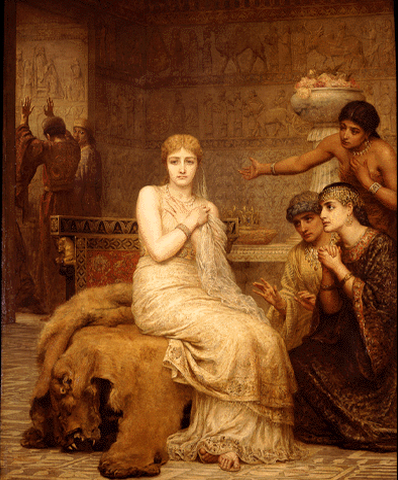
"Vashti Refuses the King's Summons" by Edwin Long (1879). Public Domain image.
“Vashti Refuses the King’s Summons” by Edwin Long (1879). Public Domain image.


A search began for beautiful young virgins. Those who made the cut were subjected to twelve months of beauty treatments before the king would even deign to lay eyes on them. The hopefuls then appeared before the king, who did not see any of them ever again “unless he was particularly pleased by her” (Esther 2:12-14). King Xerxes liked Esther best of all the young virgins displayed before him, and crowned her queen in Vashti’s stead. Plot twist: the king did not know that Esther was Jewish, for she had deliberately kept that fact from him. In the end Esther was able to use her beauty to bend the king to her will, and when one of his henchmen sought to have all the Jews in the kingdom annihilated, Esther stood up for her people and they were spared.

While it is this end-result that is remembered and celebrated each year at Purim, it is Esther’s degrading rise to the throne—and what it cost her to to save her people—that is the subject of today’s poem.

To come to power, Esther had to take the rightful queen’s place and become the poster child for the idea that “all wives [should] bow to the authority of their husbands.” To catch the king’s eye she had to strip away her personhood until nothing was left but her physical beauty. “That blush on my cheek? / It’s paint, / And I have glittered my eyes / And robed myself in the finery / of silk and gossamer, / lapis and gold.” It was not her devotion to her people that allowed her to save them, but that she “whored [her]self for [their] salvation.” Nor did her people care who she was beneath her beauty, or whether she survived her attempt to save them: “You asked for no thoughts. / You merely offered my body / to the king– / My life forfeit / If my beauty failed.”

"Queen Esther" by Edwin Long (1878). Public Domain image.
“Queen Esther” by Edwin Long (1878). Public Domain image.


Queen Esther was a pawn in men’s games, as women of history have too often been. “Diplomacy was played on the field of my body, / The battle won in the curve of my hip.” She used her beauty and her sexual allure because, as a woman of her time and place, they were the only instruments of power available to her. But if she were given a voice, she might speak of inner conflict. She might tell us what it feels like to lack the ability to either refuse or consent. Queen Esther was a hero, but what did it cost her to package and sell herself in the name of the greater good? “That blush on my cheeks? / It is the stain of victory / And of my shame.”

Today’s poem does what all great feminist biblical interpretation and midrashot do: it examines, deconstructs, and reconstructs androcentric assumptions, biases, and perspectives in biblical literature, placing women, gender, and sexuality at the center of reinterpretation.

In a time when the Bible is still being used to justify the oppression of women, we need much more of the important work Stacey Zisook Robinson is doing with “The Book of Esther.”

Want more from Stacey Zisook Robinson?
Stacey Zisook Robinson’s Blog
Stacey Zisook Robinson’s Official Website
Personal Essays and Opinion Pieces on iPinion
ReformJudaism.org

SATURDAY POETRY SERIES PRESENTS: NORMA LILIANA VALDEZ

NLValdez head shot


By Norma Liliana Valdez:


UNACCOMPANIED

Everything is happening now. Everything is present tense. The horses. The running.

The losing. This operation is a well-oiled machine. All is slow motion until dusk. After

dusk come the icy furrows. Overnight temperatures the kind of cold that enters marrow.

There is so much winter in the eyes. From here the only lights: the moon and Chula

Vista. After the ice, the running. Ravine. Huizache. Thorns. The hiding. A Cadillac.

There is a gun in the glove compartment. There are two boys in the trunk. Two other

boys contort their bodies on the back seat floor, legs entwined. Face down. Face down.

He is the one balled on the front passenger floor because he is the smallest. He is bones

and destiny.


HUMMINGBIRD

every breath you exhaled

a blanket of hosannas

each hand like prayer, like

unfettered music

you were night, naked

shoulders in moonlight

I lost my breath

beneath your gravity

your touch slid along the arc

of every whisper

I inhaled greedily

filled every room

filled every empty space

inside of me

you must have known my anthem

when you left

urgent as an animal


“Unaccompanied” was the poetry winner of the 2015 San Miguel Writers’ Conference Writing Contest, and “Hummingbird” is an original feature on the Saturday Poetry Series on As It Ought To Be. Both poems appear here today with permission from the poet.


Norma Liliana Valdez is an alumna of the VONA/Voices Writing Workshop, the Writing Program at UC Berkeley Extension, and a 2014 Hedgebrook writer-in-residence. Her poems have appeared in Calyx Journal, The Acentos Review, As It Ought To Be, La Bloga, and Dismantle: An Anthology of Writing from the VONA/Voices Writing Workshop. She is the poetry winner of the 2015 San Miguel Writers’ Conference Writing Contest. Additional work is forthcoming in Poetry of Resistance: A Multicultural Anthology by University of Arizona Press. She lives and works in the San Francisco Bay Area.

Editor’s Note: Over the years Norma Liliana Valdez’s writing has grown much in the way bougainvillea grows. Along earth-toned buildings in warm places. A steady, fertile spread erupting in vibrant blossoms. Like the sight of bright and blooming bougainvillea, today’s poems take my breath away.

“Unaccompanied,” winner of the 2015 San Miguel Writers’ Conference Writing Contest in poetry, is a work of art. The title is evocative, deftly making its mark. The narrative envelopes us in a gripping and heart-wrenching tale that speaks as much to the experience of the few as to the dreams and suffering of the masses. This work is vocal, political, and brave. Brimming with stunning lyric, we feel “the kind of cold that enters marrow,” see how “there is so much winter in the eyes,” and are left with what reads like a told fortune: “He is bones / and destiny.”

While “Unaccompanied” is yin-like—covert and treacherous—”Hummingbird” is like the yang—in relief, open, belonging to this world. The energy is sensual and intense, with “each hand like prayer.” And while both poems end spectacularly, “Hummingbird” is volta-like in its finale, confessing that “you must have known my anthem / when you left / urgent as an animal.”

This is the poet’s third Saturday Poetry Series feature. Three is a sacred number. The Holy Trinity. Maiden, Mother, Crone. The Triple Bodhi. The Trimurti. Which is fitting, as the poet divines poems that are alchemical. Spiritual. Faithfully wrought and nearly religious in their lyricism. Evocative of a humanity made palpable through poetry.

Want to read more by Norma Liliana Valdez?
Saturday Poetry Series feature, As It Ought To Be, 2011
Saturday Poetry Series feature, As It Ought To Be, 2010
Winners of the 2015 San Miguel Writers’ Conference Writing Contest
Spiral Orb
The Acentos Review

SATURDAY POETRY SERIES PRESENTS: MOTHER NIGHT

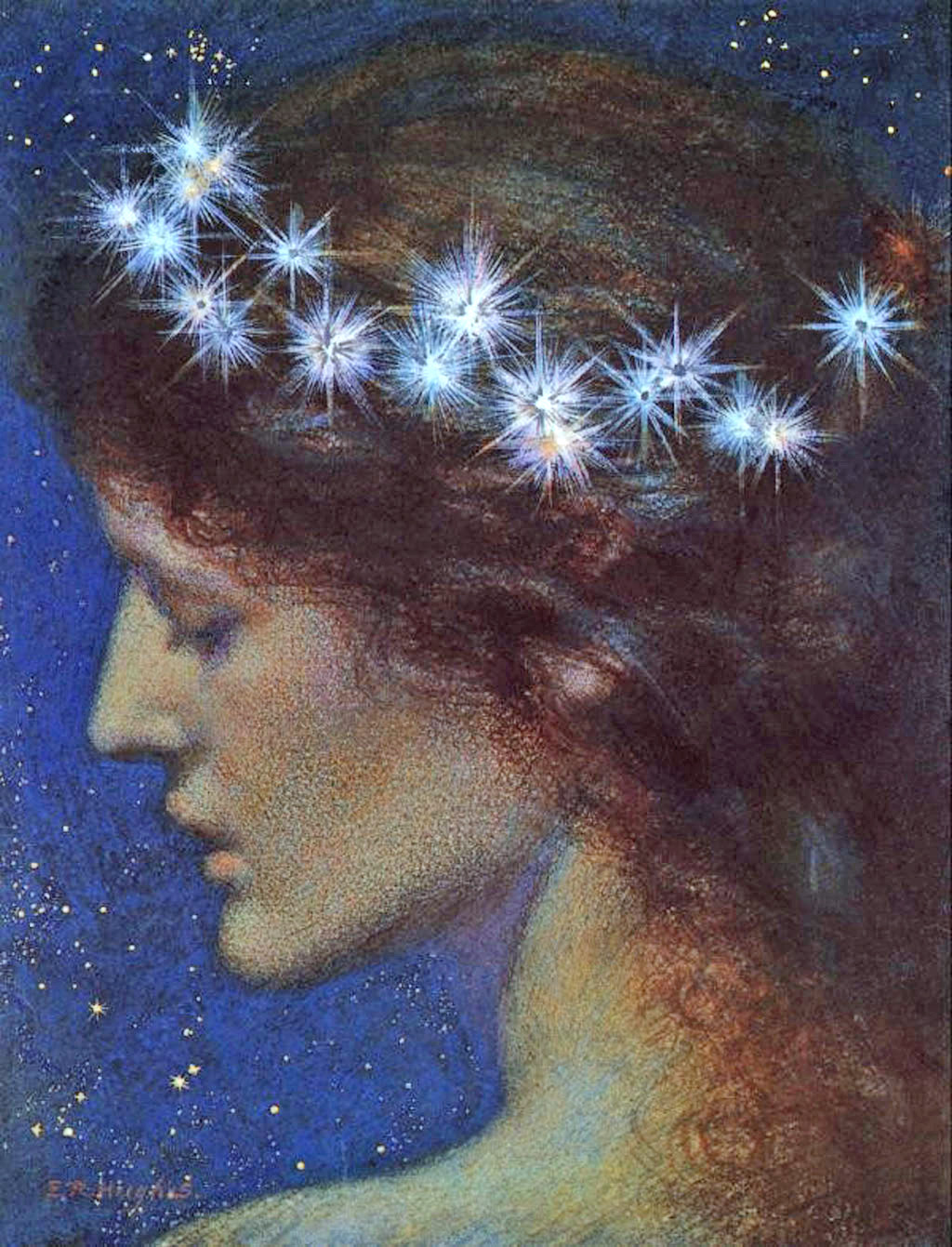
Edward-Robert-Hughes-Painting-003

MOTHER NIGHT
By James Weldon Johnson

Eternities before the first-born day,
Or ere the first sun fledged his wings of flame,
Calm Night, the everlasting and the same,
A brooding mother over chaos lay.
And whirling suns shall blaze and then decay,
Shall run their fiery courses and then claim
The haven of the darkness whence they came;
Back to Nirvanic peace shall grope their way.

So when my feeble sun of life burns out,
And sounded is the hour for my long sleep,
I shall, full weary of the feverish light,
Welcome the darkness without fear or doubt,
And heavy-lidded, I shall softly creep
Into the quiet bosom of the Night.


(Today’s poem is in the public domain, belongs to the masses, and appears here today accordingly.)


James Weldon Johnson (1871-1938) was an American author, educator, lawyer, diplomat, songwriter, and civil rights activist. In addition to being known for his leadership of the NAACP, Johnson was known during the Harlem Renaissance for his poems, novels, and anthologies collecting both poems and spirituals of black culture. (Annotated biography of James Weldon Johnson courtesy of Wikipedia, with edits.)

Editor’s Note: This Yuletide season I have been thinking—and writing—about ancient holiday traditions that we still practice, and how we received them. So when I came across today’s poem I was struck by the homage it seems to pay to the ancient festival of Mothers’ Night. This winter celebration was held on the eve of Yule, and celebrated The Mothers (goddesses) giving birth to the sun and the new year.

Beyond its title, today’s poem is rich with images of this ancient holiday: the night of labor, the birth of the sun, and the cycle of a year, when “whirling suns shall blaze and then decay.” Yet just as winter is a kind of death, in the second stanza the poet turns “Mother Night” into a metaphor for his own eventual death, imagining that when his time comes he will “Welcome the darkness without fear or doubt” and “softly creep / Into the quiet bosom of the Night.”

Want to see more by and about James Weldon Johnson?
The Poetry Foundation
Poets.org

SATURDAY POETRY SERIES PRESENTS: THE GLAD HAND OF GOD POINTS BACKWARDS

9780896728547


From THE GLAD HAND OF GOD POINTS BACKWARDS
By Rachel Mennies:


HOW GRANDMOTHER PAID HER PASSAGE TO NEW YORK

One by one her mother sold her silver spoons
and heirloom bracelets; goodbye, porcelain bear,
silk blouses, patent-leather Mary Janes, the scarves
and stud earrings for newly pierced ears, the red wool coat
spotted walking on another tiny body’s shoulders
down Wittenbergplatz. Goodbye, books bound
in leather, bone china, even the hangers, the goblets
and cabinets; goodbye to the Torah buried in the backyard,

the neighbors, the schoolmates, the mothers dressed so well
at services, the men with businesses who stayed behind
one week, two weeks more. What stylish
objects they became: the coins from fillings
and wedding rings, the soap, the wigs, lamp
after lamp to light a thousand decorated homes.


PHILADELPHIA WOMAN

The old sisters spoke with the wild gestures of trapped birds, snared or
cooped, their wings working toward an impossible escape. They stood
on street corners in Germantown and gesticulated the full span of their
arms. They argued over coffee, over books, over the dinner table, food
chilled to the temperature of the air. They hewed their beliefs for the
sake of debate. Soft-handed and pale-skinned, they lived mostly inside.

They took the trolley to Center City when they were in their twenties,
living in Logan with the rest of the refugee Jews. They told wild stories
of their childhoods, never explored or questioned. They worked as
bookkeepers, secretaries. They went to Girls’ High School, classrooms
filled with young women speaking foreign tongues, caught and released,
caught and released each day, back when men and women were kept
separately until marriage, fine china and daily dishware.

The oldest of the three married a soldier (never explored) who loved her
dearly (never questioned). When he died his mouth made words that
opened her chest like shrapnel. Tell them whatever you want, he said,
but I need you to know. I need you to know. Her hands stayed slack at her
side. Her name was. It was. She left his bedside and paced a block of Old
York Road, north and south, east and west, as if a cage around her kept
her close.


YAHRZEIT

Here the eye of God opens, unblinking,
at the throats of our grandmothers. The small pale
candle flickers on the windowsill, making
constellations of all our deaths.

How long a wick, how short a year. And here,
the family site, the only real estate
that’s mine—how clever, the way earth
makes us into mud—how heavy

the feet of our commemorators, how white
the knuckles that clasp their books of prayer.


Today’s poems are from The Glad Hand of God Points Backwards, published by Texas Tech University Press, copyright © 2014 by Rachel Mennies, and appear here today with permission from the poet.


The Glad Hand of God Points Backwards: In her first poetry collection, Rachel Mennies chronicles a young woman’s relationship with a complicated God, crafting a nuanced world that reckons with its past as much as it yearns for a new and different future. These poems celebrate ritual, love, and female sexuality; they bear witness to a dark history, and introduce us to “our God, the / collector of stories / and bodies,” a force somehow responsible for both death and liberation. Here, Mennies examines survival, assimilation, and intermarriage, subjects bound together by complex, if sometimes compromised, ties to the speaker’s Judaism. Through wit and careful prosody, The Glad Hand of God Points Backwards lays bare the struggles and triumphs experienced through a teenage girl’s coming of age, showing the reader what it means to become—and remain—a Jewish woman in America. —TTUP


Rachel Mennies is the author of The Glad Hand of God Points Backwards, winner of the Walt McDonald First-Book Prize in Poetry (Texas Tech University Press, 2014), and the chapbook No Silence in the Fields (Blue Hour Press, 2012). Her poems have appeared in Hayden’s Ferry Review, Poet Lore, The Journal, and elsewhere, and have been reprinted at Poetry Daily. She teaches in the First-Year Writing Program at Carnegie Mellon University.


Editor’s Note: The Glad Hand of God Points Backwards is an absolutely stunning collection. It is that rare breed of poetry book that you cannot help but read cover to cover, knowing all the while that you will return to it again and again. There is magic in this work. Ritual. Tradition. Its stories rise from the page in painstaking detail—vivid, emotive, and all too real. History is both honored and excavated; bones and memories are buried in the backyard. Time is not linear, but fifth dimensional; the past, present, and future unfold more like a snowflake than a line. The soundscape is rich and evocative, the themes resonant and deeply lyric, the entirety layered and striking.

And then there are these moments. These perfect, brilliant, heartbreaking moments. Reveals like the volta in “How Grandmother Paid Her Passage to New York,” when we discover what became of “the men with businesses who stayed behind / one week, two weeks more.” Lines like “When he died his mouth made words that / opened her chest like shrapnel.” Like every freakin’ moment of “Yahrzeit.”

Easy to invest in, the rewards of The Glad Hand of God Points Backwards are “as numerous as the stars in the sky and the sand on the seashore.”


Want to see more from Rachel Mennies?
Rachel Mennies – Official Website
Buy The Glad Hand of God Points Backwards from Texas Tech University Press
Buy The Glad Hand of God Points Backwards from Amazon
Linebreak
Thrush Poetry Journal

SATURDAY POETRY SERIES PRESENTS: NOMI STONE

Stone headshot

By Nomi Stone:


WAR GAME, AMERICA

The war scenario has: [vegetables stalls], [roaming animals],
and [people] in it. The people speak

the language of the country we
are trying to make into a kinder country.
Some of the people over there are good
others evil others circumstantially

bad some only want cash some
just want their family to not
die. The game says figure

out which
are which.


WHAT IS GROWING IN THESE WOODS

Green in here, gleaming like
being inside a fable but with
stalls of fruit you can’t eat.
To go home, leave crumbs.
When the wood circles you
back here instead, let the lost
and the impossible ripen in
you, ripen and go.


US AND THEM

“I would make love to one of our

whores before I
would fuck one of their
bourgeoisie.” There was a proverb,

like this: Don’t trust a         if
he becomes a         even though
he remains a       for

forty years. And the sister opposite
proverb: Don’t trust a       even
though he has been in the grave

for forty years. It was a difficult day,
a bomb had spun open
a bus, and children

had been crushed down by
a machine. Each wondered if he was born
too soon, if later would have been better, if 40

+ 40 + 40 + 40


War Game, America” and “What is Growing in these Woods” previously appeared in Painted Bride Quarterly, and “Us and Them” previously appeared via The Poetry Foundation. These poems appear here today with permission from the poet.


Nomi Stone is the author of the poetry collection Stranger’s Notebook (TriQuarterly, 2008), a PhD Candidate in Cultural Anthropology at Columbia University, and an MFA Candidate in Poetry at Warren Wilson. She previously earned a Masters in Modern Middle Eastern Studies from Oxford and was a Creative Writing Fulbright scholar in Tunisia. Her poems have been published or are forthcoming in Poetry Northwest, Memorious, The Painted Bride Quarterly, The Bloomsbury Anthology of Contemporary Jewish Poetry, at The Poetry Foundation, and elsewhere. She is currently researching and writing a book of poetry as well as a book of non-fiction about combat simulations in mock Middle Eastern villages erected by the US military across America.

Editor’s Note: Nomi Stone’s poetry is a veritable minefield of experience. Politics, war, violence, history, proverbs, culture, peoplehood, nationality, borders, mythology, folklore, fairy tales, and biblical referentiality lie in wait for the keen and unsuspecting reader alike. The unsaid is as present and powerful as what is written, so that her poetry echoes the Bible’s black fire written on white fire. This is a poetry rich and blooming. Thick with the sights and smells of Near Eastern markets, yet heavy with human tragedy. Herein lies the old world. Herein lies the Levant. Herein lies the wild woods of our imagination set against the all-too-real world of war. If you cannot find your way out, “let the lost / and the impossible ripen in / you, ripen and go.”

Want more from Nomi Stone?
“Many Scientists Convert to Islam”
“Trapped on Djerba, Island of the Lotus Eaters”
“Purim, Spring Festival: How to Escape Massacres”
Interview with Nomi Stone with poems: “The Notionally Dead” and “War Game America”
An interview about Nomi Stone’s research on war games

SATURDAY POETRY SERIES PRESENTS: ALLIE MARINI BATTS

Allie Back_Photo

By Allie Marini Batts:


breeding, trumpet flowers out of the dead ash


a cautious unfurling, petals, these fragile fingers,

extended through layers of silt and salt,

the battle-blown lands where once a city stood.

these vines, they labor furiously,


expanding and dividing beneath the dust of nations

nightshades in mitosis, their toxins lovely, bright and narrow

set against a land destroyed.


likewise myself and my skin,

a playground for dead things

and invasive plants to rise from,

a phoenix, in botany.


the mythology of the night skies


you were once a man

square but bright

incense in the dark


your story, told by Greeks

naïve, the way we

lit sticks of incense and prayed


wantonly to false hopes and square gods

and stars, naïve offerings

and devotions meant to keep us safe


protections and punishments

remembered in the

rotations of the planet


naïve, how we thought

you loved us

and would keep us safe


“breeding, trumpet flowers out of the dead ash” previously appeared in quarter after and “the mythology of the night skies” previously appeared in Symmetry Pebbles. These poems appear here today with permission from the poet.


Allie Marini Batts holds degrees from both Antioch University of Los Angeles and New College of Florida, meaning she can explain deconstructionism, but cannot perform simple math. Her work has been a finalist for Best of the Net and nominated for the Pushcart Prize. She is managing editor for the NonBinary Review and Zoetic Press, and has previously served on the masthead for Lunch Ticket, Spry Literary Journal, The Weekenders Magazine, Mojave River Review & Press, and The Bookshelf Bombshells. Allie is the author of the poetry chapbooks, You Might Curse Before You Bless (ELJ Publications, 2013) Unmade & Other Poems, (Beautysleep Press, 2013) and This Is How We End (forthcoming 2014, Bitterzoet.)

Editor’s Note: “breeding, trumpet flowers out of the dead ash” is so stunning that the poem speaks for itself. I am loathe to feature a favorite line in the face of so many beautifully wrought images emerging one after another. The subject matter is as rich as the soil the poem’s flowers rise from. The world revealed is post apocalyptic, brimming with nature’s resilience and with death nurturing new life, “a phoenix, in botany.”

“the mythology of the night skies” turns our eyes upward to the heavens and our minds to the gods. While pressing against the idea of worship in antiquity, the poem’s echo seems to question deity worship altogether. “naïve, how we thought / you loved us / and would keep us safe.”

Want more from Allie Marini Batts?
Find her on the web
Follow her on Twitter @kiddeternity

SATURDAY POETRY SERIES PRESENTS: GLOSSOLALIA

GLOSSOLALIACOVER


from GLOSSOLALIA
By Marita Dachsel:


PATTY BARTLETT SESSIONS

I

I was 17, newly married
when I first put a woman to bed,
her new babe in arms.

Awaiting death, I’ve tallied,
attended 3977 births. Midwife,
my eminent title.

Pride is a sin,
but I think I will be forgiven
for the surge I feel
when I consider my record.


II

47 did not feel old,
but looked ancient to him.
A month after my daughter,
me. Sexless, righteous.
Virtuous. Finished.


III

I became a Mother in Israel,
coaxing young women
into the new covenant.

We were Sarah & Hagar. Rachel & Leah.

But I was wrong about polygamy.

Lust, envy & wrath are sins,
& I know I will never be forgiven
for being the zealous handmaiden
to this difficult life.


IV

I have lost four children. Heartache
is my chronic companion,
chafing the every day.

But my dear husband David
took a second wife
& I will tell you
what the others won’t admit:

There is no other earthly pain,
constant, raw & rending,
like sharing your man
with a younger wife.


V

I am a practical woman:
I can heal with herbs & my hands,
I brew my own beer, sew, knit,
& speak in tongues.

After birth, I would show
the mother the slick placenta,
raised up, a stretched orb.
An offering.

It carries the tree of life.
Rough, ropey. Red,
the colour of strawberry jam
boiling low on the stove.


VI

Being the first hand
to touch a life
is a powerful thing.

I have wondered
what imprint
I have left

& what has been
left on me.


AFTER THE MARTYRDOM

The men, they surged
from their homes,
from their women,
a confluence
in search of
their Galilee.

They shuffled, they scuffed
dirt across the land,
a hand of a crone.

The men, they fished.
Eyes skimmed the shore
for a stranger they would know.
Hope bobbed in their throats.
Loss, a lure, caught
shredding what they once knew true.

The women, they were left
with the children,
the dead.
The scriptures gave no guide
for wives at a time like this.


Today’s poems are from Glossolalia, published by Anvil Press, copyright © 2013 by Marita Dachsel, and appear here today with permission from the poet.


GLOSSOLALIA is an unflinching exploration of sisterhood, motherhood, and sexuality as told in a series of poetic monologues spoken by the thirty-four polygamous wives of Joseph Smith, founder of The Church of Jesus Christ of Latter-day Saints. In Marita Dachsel’s second full-length collection, the self-avowed agnostic feminist uses mid-nineteenth century Mormon America as a microcosm for the universal emotions of love, jealousy, loneliness, pride, despair, and passion. Glossolalia is an extraordinary, often funny, and deeply human examination of what it means to be a wife and a woman through the lens of religion and history. (From the Anvil Press website.)


Marita Dachsel is the author of Glossolalia, Eliza Roxcy Snow, and All Things Said & Done. Her poetry has been shortlisted for the Robert Kroetsch Award for Innovative Poetry and the ReLit Prize and has appeared in many literary journals and anthologies. Her play Initiation Trilogy was produced by Electric Company Theatre, was featured at the 2012 Vancouver International Writers Fest, and was nominated for the Jessie Richardson Award for Outstanding New Script. She is the 2013/2014 Artist in Residence at UVic’s Centre for Studies in Religion and Society.


Editor’s Note: In this collection Marita Dachsel has taken on no small task. By seeking to reclaim women’s stories from the polygamous world of Joseph Smith, the poet gives voice to the voiceless, the unknown, the lost and forgotten. Their stories come to life, their lives become known history. In “Patty Bartlett Sessions,” polygamous wife Patty Bartlett converts other women to the Mormon faith, “coaxing young women / into the new covenant.” But when she realizes the insurmountable trials of polygamy, she knows she “will never be forgiven / for being the zealous handmaiden / to this difficult life.” Instead she finds inspiration and fulfillment in her work as a midwife, for “Being the first hand / to touch a life / is a powerful thing.” In “After the Marytrdom” Dachsel speaks for a chorus of wives left by husbands seeking a divine experience, noting ruefully that “The scriptures gave no guide / for wives at a time like this.”


Want to see more from Marita Dachsel?
All Things Said & Done – Marita Dachsel’s Official Blog
Canadian Poetries
The Rusty Toque
The Barnstormer
Youtube: Too True: The poetry of four acclaimed BC poets