SATURDAY POETRY SERIES PRESENTS: ANTHONY SEIDMAN

TRANSMISSION
By Anthony Seidman

A jungle, a small jungle, the size
of a hummingbird-heart or crab-nebula
witnessed through an Arizona telescope the girth
of a blue whale’s lungs; a jungle
only I can hear: its rustle of fronds, ant
mandibles scissoring leaves which
will raft phalanxes across the river
and into the bush, ox-carcasses scattered and
picked to the bone; a jungle with its thunder
as rain clatters on the canopy
covering this page; a jungle,
no larger than a toddler’s tooth,
yet teeming with beetles, rills,
spider-monkeys, irritable tarantulas, termites;
it is a jungle I taste in the manner
a boy extends his tongue in a snowfield,
and flake lands on tongue’s tip and
twilight is like voices reverberating
through amniotic fluid into an embryo’s sleep;
a jungle I savor as fruitful, fluvial, tang of lemon,
lifetimes of salt, a fountain of milk,
a tributary, the blossom of a wet dream;
this jungle which you too
apprehend, like a man smelling lust
in the pores of a female flushed with estrus,
the way a woman tastes the stiffened nerves
in a boy awakening to puberty like
fanged fish flitting through warm currents–
this, the jungle I bequeath you. It is the genius
jungle, the genus jungle, the shaman’s feather,
and the word’s ovulation. It is the only
jungle that matters. The emerald
flash between two immemorial nocturnes.


(“Transmissions” originally appeared in The Bitter Oleander, and appears here today with permission from the poet.)


Anthony Seidman is the author of six collections of poetry, including Where Thirsts Intersect (The Bitter Oleander Press), Black Neon (Pudding House Press), and the artist’s book The Motel Insomnia, created with French artist, Jean-Claude Loubieres, and published by AdeLeo Editions of Paris, France. His poetry, short fiction, essays and translations have appeared in such publications as Pearl, The Bitter Oleander, Nimrod, Borderlands: Texas Poetry Review, Cider Press Review, Poetry International, and in Latin America in Newsweek en Español, La Jornada, Critica, La Prensa of Managua, Nicaragua, the University of Guadalajara’s Luvina.

Editor’s Note: Today’s poem is as thick as the jungle it shares with us. Words, hard consonants, alliteration, and images have to be cut through with the mind’s machete to trek along this rich track. Your reward? The Congo, the Amazon, the jungles of Papa New Guinea. A jungle that can only be seen under a microscope; a jungle that reaches the far corners of the universe. Be patient, be persistent, be adventurous. Seek, and you shall find.

Want to see more by and about Anthony Seidman?
Out of Nothing
Big Bridge
Scythe
White Print Inc.

SATURDAY POETRY SERIES PRESENTS: ELANA BELL

ON A HILLTOP AT THE NASSAR FARM,
OVERLOOKING THE SETTLEMENT OF NEVE DANIEL
By Elana Bell

This is for Amal, whose name means hope,
who thinks of each tree she’s planted like a child,
whose family has lived in the same place
for a hundred years, and when I say place
I mean this exact patch of land
where her father was born, and his father,
so that the shoots he planted before her birth
now sweep over her head. Every March
she plucks the green almonds and chews
their sour fuzzy husks like medicine.

I have never stayed anywhere long enough
to plant something and watch it settle into its bloom.
I am from a people who move.
Who crossed sea and desert and city
with stone monuments, with clocks, with palaces,
on foot, on skeleton trains, through barracks
with iron bunks, aching for a place we could stay.
All our prayers, all our songs for that place
where we had taken root once, where we had been
the ones to send the others packing and now—

Amal laughs with all her teeth and her feet
tickle the soil when she walks. She moves
through her land like an animal. She knows it
in the dark. She feeds stalks to the newborn
colt and collects its droppings like coins
to fertilize the field. Amal loves this land
and when I say land I mean this
exact dirt and the fruit of it
and the sheep who graze it and the children
who eat from it and the dogs who protect it
and the tiny white blossoms it scatters in spring.

And when I say love I mean Amal has never married.

All around her land the settlements sprout like weeds.
They block out the sun and suck precious water
through taps and pipes while Amal digs wells
to collect the rain. I am writing this poem
though I have never drunk rain
collected from a well dug by my own hands,
never pulled a colt through
the narrow opening covered in birth fluid
and watched its mother lick it clean,
or eaten a meal made entirely of things
I got down on my knees to plant.

And when I say settlement I mean
I love the red tiled roofs,
the garden in the shape of a garden,
water that comes when I call it forth
with the flick of my wrist and my hand on the tap.
Only lately I find that when I ache
it takes the shape of a well.
And when I bleed I emit a scent
something like a sheep in heat,
like dirt after rain,
like a patch of small white flowers
too wild to name.

(“On a Hilltop at the Nassar Farm, Overlooking the Settlement of Neve Daniel” originally appeared in CALYX Journal Summer 2011 issue, Volume 26:3, and appears here today with permission from the poet.)

See Elana Bell Read in New York 8/24/2011:
Rediscovering Literature by Women:
Readings by CALYX Authors
Elana Bell, Claudia Cortese, and Janlori Goldman
Bluestockings Bookstore, 172 Allen St. New York, NY 10002
Wednesday August 24, 2011 at 7 P.M.

Elana Bell was selected by Fanny Howe as the winner of the Walt Whitman Award for 2011. Her first collection of poetry, Eyes, Stones, will be published by Louisiana State University Press in 2012. Elana is the recipient of grants and fellowships from the Jerome Foundation, the Edward Albee Foundation, and the Drisha Institute. Her work has recently appeared in Harvard Review, CALYX Journal, Bellevue Literary Review, and Storyscape. Elana has led creative writing workshops for women in prison, for educators, and for underserved high school students in Israel, Palestine, and throughout the five boroughs of New York City. She currently serves as the writer-in-residence for the Bronx Academy of Letters and sings with the a cappella trio Saheli.

Editor’s Note: Peace poetry, like peace itself, is not always easy. An effective peace poem gets the reader thinking by pushing them to the edges of their own comfort zones, thereby shifting their stance, if only a little. Today’s poem pushes me to the edges of my own mindset, makes me a little uncomfortable, and leaves me thinking about Israeli Palestinian borders in a slightly altered way. Elana Bell has a true gift for this. Before the work she does, before who and what she stands for, I am humbled. But at the end of the day, the poem itself must capture me for me to share it here with you. When I first laid eyes on her words, Elana Bell had me at “the ache at the center of the world,” and today she blew me away with “Only lately I find that when I ache / it takes the shape of a well.”

Want to see more by and about Elana Bell?
Academy of American Poets
Harvard Review
Storyscape
Union Station

SATURDAY POETRY SERIES PRESENTS: MARTIN CAMPS


MOSQUITOES
By Martin Camps

Mosquitoes do not die of hunger.

There is always a leg for them

an arm or a deaf ear to their hungry voice.

You will never see the aged corpse of a gnat.

They only know about violent death:

of a body burst by a slap,

by a discharge of light or by air poisoning.

They will sink the day they find out they can

walk on the water.


(“Mosquitos” appears here today with permission from the poet.)


Martin Camps has published three books of poetry in Spanish: Desierto Sol (Desert Sun, 2003), La invencion del mundo (The Invention of the World, 2008), and La extincion de los atardeceres (The Extintion of Twilight, 2009). Has is the recipient of two poetry prizes from the Institute of Culture of Mexico and an Honorable Mention in the Bi-National Poetry Prize Pellicer-Frost in 1999. His poems have been published in The Bitter Oleander (Pemmican Press), Alforja, and Tierra Adentro, among others. He answers all email at markampz@hotmail.com.

Editor’s Note: Martin Camps is among my all-time favorite poets. His work never ceases to be breathtaking in its form, its function, and–especially–its sound. The way Camps plays with language appears, in some ways, to stem more from his Spanish-speaking roots than from an experimental poetry slant, and the effects simply blow me away. And then, of course, in all his poetic brilliance, he concludes with an epic end-line.

Want to see more by and about Martin Camps?
Email markampz@hotmail.com to buy his books directly from the poet for $6 each.
See an alternate version of today’s poem: Mosquitoes

Peticao a NASA
La Belleza de No Pensar

SATURDAY POETRY SERIES PRESENTS: THE ACHE AT THE CENTER OF THE WORLD: ISRAEL-PALESTINE PEACE POETRY

Editor’s Note: Peace is always a timely topic. Today much of the middle east is in a state of political unrest. Civil wars are raging, dictators are struggling to keep the masses under their control, and citizens are taking up arms – be they in the form of guns or words – in the name of freedom. Having been born in Israel, the daughter of Israel-Palestine peace activists, conflict in the middle east has been a reality in my life for thirty years. I believe peace in the middle east is not only possible, but is an eventual reality, for Israel-Palestine and beyond.

Throughout history, poets have used their poems and songs in the name of peace. Today, rather than share a particular poem with you, I want to share with you some of my favorite Israel-Palestine peace poets. May their energy, their words, and their efforts help to bring forth peace.

Yehuda Amichai

Elana Bell

Mahmoud Darwish

Naomi Shihab Nye

SATURDAY POETRY SERIES PRESENTS: SARAH LAW

FALL INTO PLACE
by Sarah Law

You love the way my hair falls
over your bones, your prone body, how
I choose to cover you with words
so close to your own. From here
I can’t imagine why we ever worried,
even the span of my hand, small
compared with yours, fits to your plan. READ MORE

SATURDAY POETRY SERIES PRESENTS: RUTH DEBORAH REY


CHANGE OF ADDRESS
by Ruth Deborah Rey

If it is true that only
five hundred thousand
people died in the camps
and that the others,
the other Jews, that is,
moved away to Israel,
the States, or to the East,
I do not understand why
not even one of them
sent a change of address
to those they left behind;
the ones that still, even
today, weep over the
loss of them and the horror
they were subjected to
that – supposedly – is not true.
I wonder why, if she was one
of those who simply moved
to the East and did not die,
my Mother … why my Mother
never even sent me a pretty
postcard from where she
is living now.

(“Change of Address” was originally published in Raving Dove. This poem is reprinted here today with permission from the poet.)

Ruth Deborah Rey, born in Amsterdam in 1938, has from the time she was a little girl worked in radio, (later) television, publicity and the theatre, as an actress, broadcaster, entertainer, scriptwriter, translator and editor in the Netherlands, Canada, and the USA. Today, retired, she finally has the time to be a full-time writer and editor. She lives at the French Atlantic coast with her husband, two dogs, and five cats. Rey is recognized by the Dutch Foundation 1940-1945 as a participant in the Resistance during the German occupation.

Editor’s Note: When I asked Ms. Rey’s permission to publish today’s poem she said she was glad to let me publish it, “even though the poem is one of the saddest I ever wrote.” I think this response says a lot about the kind of person, and poet, that Ms. Rey is. Living a life touched by the Holocaust, some might succumb to darkness, and their poetry might be reflective of such. But Ms. Rey lives a life of light, and her writing outshines any darkness that has touched her. She is quoted as saying “I speak my soul. I write.” I am inspired by Ms. Rey’s optimism, her shining light, and the adept way in which she speaks her soul.

Want to read more by and about Ruth Deborah Rey?
The Blue Blog
Raving Dove
Author’s Den
LitList

SATURDAY POETRY SERIES PRESENTS: AARON ZEITLIN

POETRY
by Aaron Zeitlin

Translated by Jon Levitow (2009)

Go become yourself the words,
Yourself the essence.

– Angelus Silesius

Poems should be like Elijahs
entering the homes of wretched brothers.
I wait for poems that turn into poets,
I wait for poets that turn into poems.

I wait for unexpected wonder,
when poets become the words they write,
each poem fills with blood and shows its face
and approaches people – as a poet.
New breath for old hearts!
Make cold frogs jump!
Let dry stumps blossom!
Proclaim Sabbath throughout all the worlds!

Aaron Zeitlin (1898 – 1973) was the son of the noted Yiddish writer and thinker Hillel Zeitlin. After an invitation to New York by director Maurice Schwartz for the production of his play Esterke (“Esther”), the start of World War II on 1 September 1939 prevented his return to his family, all of whom were murdered in the Shoah. He settled in New York City where he worked as a journalist and a professor of Hebrew literature at the Jewish Theological Seminary of America. Zeitlin’s literary writings include bilingual (Hebrew and Yiddish) poems, narratives, dramas, essays, and criticism. Noteworthy is his contribution from the Warsaw period. He was a moving force in the inclusion of Yiddish literature and Yiddish writers as members of the World PEN Organization (late 1920s), whose branch in Warsaw he chaired in the 1930s. Tragically, German militarism destroyed a number of his unpublished manuscripts and works in progress, including five volumes of poetry ready for publication. (Annotated biography of Aaron Zeitlin courtesy of Novelguide.com, with edits.)

Editor’s Note:
Today’s post was inspired by a combination of outside sources. First, my father challenged me to determine the meaning of “zeesh punim,” a yiddish phrase. While contemplating the meaning of this phrase, As It Ought To Be posted a poem that inspired and moved me, that piece being On This Earth What Makes Life Worth Living by Palestinian Poet Mahmoud Darwish.

I wanted today’s post to be by a Yiddish poet. Yiddish is the language of my ancestors, a dying language that was nearly wiped out with the Holocaust. I also wanted today’s post to be a celebration of poetry and life, as Mahmoud Darwish’s poem is. What these two poets have in common is the ability to celebrate life and poetry through tragic events, to see the beauty in life even amidst so much death and tragedy. May their spirits come together through poetry to shift the energy of the middle east and bring about peace between men who would otherwise be brothers.

Want to read more by and about Aaron Zeitlin?
YiddishPoetry.org
VoicesEducation.org
Novelguide.com

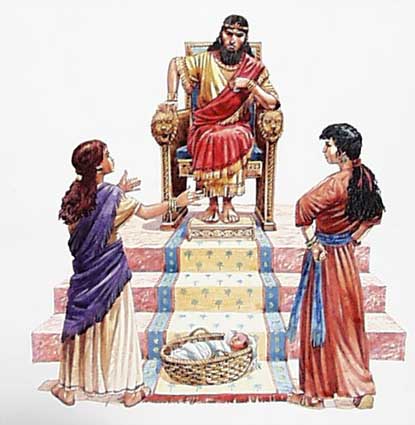
SATURDAY POETRY SERIES PRESENTS: KING SOLOMON


TO EVERYTHING THERE IS A SEASON / EXCERPT FROM KOHELET/ECCLESIASTES
by King Solomon


To every thing there is a season, and a time to every purpose under the heaven:

A time to be born, and a time to die; a time to plant, and a time to pluck up that which is planted;

A time to kill, and a time to heal; a time to break down, and a time to build up;

A time to weep, and a time to laugh; a time to mourn, and a time to dance;

A time to cast away stones, and a time to gather stones together; a time to embrace, and a time to refrain from embracing;

A time to get, and a time to lose; a time to keep, and a time to cast away;

A time to rend, and a time to sew; a time to keep silence, and a time to speak;

A time to love, and a time to hate; a time of war, and a time of peace.

King Solomon was, according to the Hebrew Bible, a King of Israel. The biblical accounts identify Solomon as the son of David. The Hebrew Bible credits Solomon as the builder of the First Temple in Jerusalem and portrays him as great in wisdom, wealth, and power. Solomon had seven hundred wives and three hundred concubines. The wives are described as foreign princesses, including Pharaoh’s daughter and women of Moab, Ammon, Sidon and of the Hittites. He is considered the last ruler of the united Kingdom of Israel before its division into the northern Kingdom of Israel and the southern Kingdom of Judah. According to Jewish tradition, King Solomon wrote three books of the Torah/Bible: Mishlei (Book of Proverbs), Kohelet (Ecclesiastes), and Shir ha-Shirim (Song of Songs). (Annotated biography of King Solomon courtesy of Wikipedia.org, with edits.)

Editor’s Note: Today’s post became most famous in modern popular culture for the version put to music (with six words added) by Pete Seeger in 1962 and made more famous in 1965 when recorded by the Byrds. Thus, today’s post continues our ongoing discussion about where the lines of poetry and music are blurred.

Today’s post takes that discussion a step further, by taking a look at how biblical text and mythology come into play in poetry. Arguably mythological stories and oral storytelling, which later became incorporated into the written word and went on to form important texts such as the Torah, Bible, and Koran (among many others) are the oldest form of poetry. Ideas became stories and songs, stories and songs became the written word, the written word was crafted as a form of art, that art informed and inspired others, and poetry as we know it was born.

On my paternal grandmother’s side of the family a family tree has been kept for so many generations that it traces our lineage to King David. That makes King Solomon my kin, and I am proud to honor him today by celebrating his poetry. Let’s hope his talent runs in the family!

Want to read more by and about King Solomon?
King Solomon on Wikipedia
Turn! Turn! Turn! on Wikipedia
U Penn / Song of Songs

SATURDAY POETRY SERIES PRESENTS: RABINDRANATH TAGOR


UNTITLED

by Rabindranath Tagore


The foolish run.
The clever wait.
And the wise go into the garden.


Rabindranath Tagore (1861-1941) was an Indian Bengali polymath. He was a popular poet, novelist, musician, and playwright who reshaped Bengali literature and music in the late 19th and early 20th centuries. As author of Gitanjali and its “profoundly sensitive, fresh and beautiful verse”, and as the first Asian to win the Nobel Prize in Literature, Tagore was perhaps the most widely regarded Indian literary figure of all time. He was a mesmerizing representative of the Indian culture whose influence and popularity internationally perhaps could only be compared to that of Gandhi, whom Tagore named ‘Mahatma’ out of his deep admiration for him. (Annotated biography of Rabindranath Tagor courtesy of Wikipedia.org.)

Editor’s Note: This piece was by suggestion of my mother, a poet and gardener who, often, knows best.


Want to read more by and about Rabindranath Tagor?
NobelPrize.org
SchoolOfWisdom.com
INDOlink.com

SATURDAY POETRY SERIES PRESENTS: OCTAVIO PAZ


BETWEEN GOING AND STAYING

by Octavio Paz


Between going and staying the day wavers,
in love with its own transparency.
The circular afternoon is now a bay
where the world in stillness rocks.

All is visible and all elusive,
all is near and can’t be touched.

Paper, book, pencil, glass,
rest in the shade of their names.

Time throbbing in my temples repeats
the same unchanging syllable of blood.

The light turns the indifferent wall
into a ghostly theater of reflections.

I find myself in the middle of an eye,
watching myself in its blank stare.

The moment scatters. Motionless,
I stay and go: I am a pause.


Octavio Paz (1914-1998) was a Mexican writer, poet, and diplomat. Under the encouragement of Pablo Neruda, Paz began his poetic career in his teens by founding an avant-garde literary magazine, Barandal, and publishing his first book of poems, Luna Silvestre (1933). In 1962, Paz became Mexico’s ambassador to India and resigned six years later in protest when government forces massacred student demonstrators in Mexico City. Paz was awarded the Cervantes Award in 1981, the Neustadt Prize in 1982, and the Nobel Prize for Literature in 1990.

Editor’s Note: This post is both in line with my love for great Spanish poets and with an ongoing discussion here on As It Ought To Be of the role of artists in politics. In a time of great turmoil – the new racist police state law in Arizona, the BP oil catastrophe, and Israel’s attack on those trying to aid occupied Palestine, to name a few – we as artists have a responsibility to use our voices for the greater good. May Octavio Paz serve as an inspiration to do so.


Want to read more by and about Octavio Paz?
Poets.org
NobelPrize.org
Britannica Online