SATURDAY POETRY SERIES PRESENTS: NAN COHEN

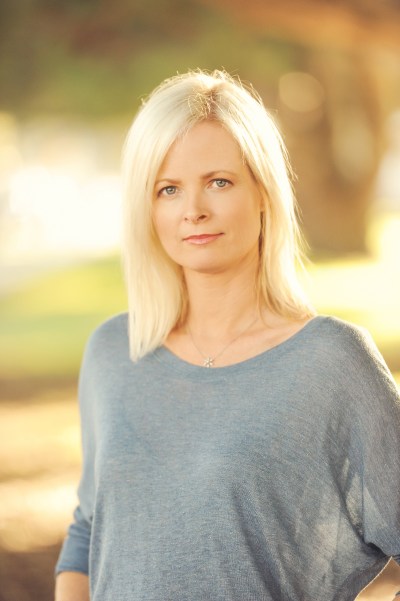
nan cohen

A NEWBORN GIRL AT PASSOVER
By Nan Cohen


Consider one apricot in a basket of them.
It is very much like all the other apricots–
an individual already, skin and seed.

Now think of this day. One you will probably forget.
The next breath you take, a long drink of air.
Holiday or not, it doesn’t matter.

A child is born and doesn’t know what day it is.
The particular joy in my heart she cannot imagine.
The taste of apricots is in store for her.


Today’s poem was was first published on the Academy of American Poets website and appears here today with permission from the poet and publisher.


Nan Cohen is the author of Rope Bridge, a collection of poems. Her work has appeared in Gulf Coast, The New Republic, Ploughshares, Poetry International, and Tikkun, among other magazines and anthologies. She is the recipient of a Wallace Stegner Fellowship, a Rona Jaffe Writer’s Award, and a Literature Fellowship from the National Endowment for the Arts. A high school teacher and English department chair in Los Angeles, she is also the Poetry Director of the Napa Valley Writers’ Conference.

Editor’s Note: Simple, yet revelatory. A personal experience that belongs to one and to many. The day you will likely not remember. The apricot that is like all the others–unique. “The particular joy in my heart she cannot imagine.” The way that line bowls you over. How unadorned it is, yet how stunning. This poem. This poem. This poem.

Want to read more by and about Nan Cohen?
Rope Bridge
Nan Cohen’s Blog
“The Fear of the Dark” (with audio) at Slate
“Storm” at The New Republic
“Girder” at Verse Daily

SATURDAY POETRY SERIES PRESENTS: D.H. LAWRENCE ON SPRING

DH_Lawrence_1906
THE ENKINDLED SPRING
By D.H. Lawrence

This spring as it comes bursts up in bonfires green,
Wild puffing of emerald trees, and flame-filled bushes,
Thorn-blossom lifting in wreaths of smoke between
Where the wood fumes up and the watery, flickering rushes.

I am amazed at this spring, this conflagration
Of green fires lit on the soil of the earth, this blaze
Of growing, and sparks that puff in wild gyration,
Faces of people streaming across my gaze.

And I, what fountain of fire am I among
This leaping combustion of spring? My spirit is tossed
About like a shadow buffeted in the throng
Of flames, a shadow that’s gone astray, and is lost.


(Today’s poem is in the public domain, belongs to the masses, and appears here today accordingly.)


David Herbert Richards Lawrence (1885 – 1930) was an English novelist, poet, playwright, essayist, literary critic and painter who published as D. H. Lawrence. His collected works, among other things, represent an extended reflection upon the dehumanising effects of modernity and industrialisation. Although best known for his novels, Lawrence wrote almost 800 poems, most of them relatively short. His first poems were written in 1904 and two of his poems, “Dreams Old” and “Dreams Nascent,” were among his earliest published works in The English Review. His early works clearly place him in the school of Georgian poets, a group not only named after the reigning monarch but also to the romantic poets of the previous Georgian period whose work they were trying to emulate. (Annotated biography of Yehuda Amichai courtesy of Wikipedia, with edits.)

Editor’s Note: Lyric gyrations, thick alliteration, words and images like blossoms and wildfire. D.H. Lawrence helps us welcome spring while questioning the I amidst such a season.

Want to read more by and about D.H. Lawrence?
The world of DH Lawrence
Biography.com
Academy of American Poets

SATURDAY POETRY SERIES PRESENTS: THE BOOK OF ESTHER BY STACEY ZISOOK ROBINSON

me

By popular demand, in celebration of Purim we are re-featuring this stellar poem by Stacey Zisook Robinson, in conversation with your faithful editor at the crossroads of feminism and midrash.

By Stacey Zisook Robinson:


THE BOOK OF ESTHER

That blush on my cheek?
It’s paint,
And I have glittered my eyes
And robed myself in the finery
of silk and gossamer,
lapis and gold–
And whored myself for your salvation.

You asked for no thoughts.
You merely offered my body
to the king–
My life forfeit
If my beauty failed.

You asked for no ideas
And I gave you none,
Though I had a thousand,
And ten thousand more.

Diplomacy was played on the field of my body,
The battle won in the curve of my hip
And the satin of my skin,
Fevered dreams of lust
And redemption.

That blush on my cheeks?
It is the stain of victory
And of my shame.


Today’s poem was originally published on Stumbling Towards Meaning and appears here today with permission from the poet.


Stacey Zisook Robinson is a single mom. She sings whenever she can. She writes, even when she can’t. She worked in Corporate America for a long time. Now she works at her writing and looks for God and grace, meaning, connection, and a perfect cup of coffee, not necessarily in that order. Stacey has been published in the Summer 2013 issue of Lilith Magazine and in several anthologies including The Hope (Menachem Creditor, ed) and In Transit (BorderTown Press, Daniel MacFadyen, ed). Watch for her book, Dancing in the Palm of God’s Hand, forthcoming from Hadasah Word Press. Stacey has recently launched a Poet in Residence program designed to work with both adults and kids in a Jewish setting to explore the connection between poetry and prayer as a way to build a bridge to a deepened Jewish identity and faith.

Editor’s Note: This week we celebrated Purim, a Jewish holiday that commemorates Queen Esther (5th c. B.C.E.) saving Persian Jews from genocide. Esther’s rise to power, however, was problematic. Her predecessor, Queen Vashti, was summoned to appear in her crown, ordered to display her beauty before the king and his nobles. The implication, according to many scholars, is that Queen Vashti was ordered to appear wearing only her crown. She refused, and it was suggested that she should be de-throned and replaced by a “worthier woman” so that “all wives [would] henceforth bow to the authority of their husbands, high and low alike” (Esther 1:19-20).

And there’s your daily dose of female oppression, Bible style.

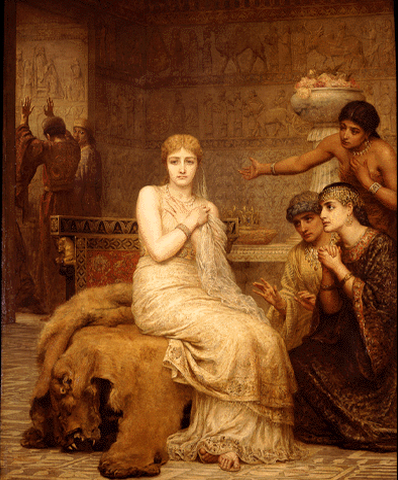
"Vashti Refuses the King's Summons" by Edwin Long (1879). Public Domain image.
“Vashti Refuses the King’s Summons” by Edwin Long (1879). Public Domain image.


A search began for beautiful young virgins. Those who made the cut were subjected to twelve months of beauty treatments before the king would even deign to lay eyes on them. The hopefuls then appeared before the king, who did not see any of them ever again “unless he was particularly pleased by her” (Esther 2:12-14). King Xerxes liked Esther best of all the young virgins displayed before him, and crowned her queen in Vashti’s stead. Plot twist: the king did not know that Esther was Jewish, for she had deliberately kept that fact from him. In the end Esther was able to use her beauty to bend the king to her will, and when one of his henchmen sought to have all the Jews in the kingdom annihilated, Esther stood up for her people and they were spared.

While it is this end-result that is remembered and celebrated each year at Purim, it is Esther’s degrading rise to the throne—and what it cost her to to save her people—that is the subject of today’s poem.

To come to power, Esther had to take the rightful queen’s place and become the poster child for the idea that “all wives [should] bow to the authority of their husbands.” To catch the king’s eye she had to strip away her personhood until nothing was left but her physical beauty. “That blush on my cheek? / It’s paint, / And I have glittered my eyes / And robed myself in the finery / of silk and gossamer, / lapis and gold.” It was not her devotion to her people that allowed her to save them, but that she “whored [her]self for [their] salvation.” Nor did her people care who she was beneath her beauty, or whether she survived her attempt to save them: “You asked for no thoughts. / You merely offered my body / to the king– / My life forfeit / If my beauty failed.”

"Queen Esther" by Edwin Long (1878). Public Domain image.
“Queen Esther” by Edwin Long (1878). Public Domain image.


Queen Esther was a pawn in men’s games, as women of history have too often been. “Diplomacy was played on the field of my body, / The battle won in the curve of my hip.” She used her beauty and her sexual allure because, as a woman of her time and place, they were the only instruments of power available to her. But if she were given a voice, she might speak of inner conflict. She might tell us what it feels like to lack the ability to either refuse or consent. Queen Esther was a hero, but what did it cost her to package and sell herself in the name of the greater good? “That blush on my cheeks? / It is the stain of victory / And of my shame.”

Today’s poem does what all great feminist biblical interpretation and midrashot do: it examines, deconstructs, and reconstructs androcentric assumptions, biases, and perspectives in biblical literature, placing women, gender, and sexuality at the center of reinterpretation.

In a time when the Bible is still being used to justify the oppression of women, we need much more of the important work Stacey Zisook Robinson is doing with “The Book of Esther.”

Want more from Stacey Zisook Robinson?
Stacey Zisook Robinson’s Blog
Stacey Zisook Robinson’s Official Website
Personal Essays and Opinion Pieces on iPinion
ReformJudaism.org

SATURDAY POETRY SERIES PRESENTS: STATE OF GRACE: THE JOSHUA ELEGIES

41oGCGJb2kL._SX331_BO1,204,203,200_


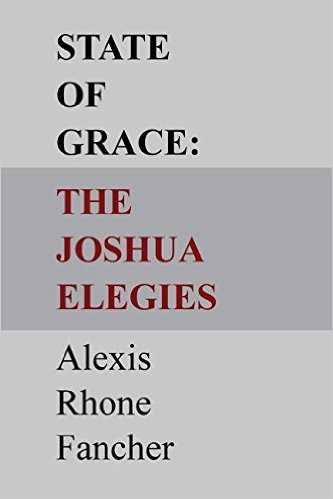
From STATE OF GRACE: THE JOSHUA ELEGIES
By Alexis Rhone Fancher:


DYING YOUNG

Midnight, and again I’m chasing
sleep: its fresh-linen smell and
deep sinking, but when I close my eyes I see
my son, closing his eyes. I’m afraid of that dream,
the tape-looped demise as cancer claims him.

My artist friend cancels her L.A. trip. Unplugs the
internet. Reverts to source. If cancer
will not let go its grip, then she will
return its embrace. Squeeze the life out of
her life. Ride it for all it’s worth.

By the time his friends arrive at the cabin
my son is exhausted, stays behind while
the others set out on a hike. He picks up the phone.
“Mom, it’s so quiet here. The air has never
been breathed before. It’s snowing.”

I put on Mozart. A warm robe. Make a pot
of camomile tea. The view from my 8th floor
window, spectacular, the sliver moon, the stark,
neon-smeared buildings, their windows dark.
Sometimes I think I am the only one not sleeping.

My artist friend wants to draw the rain. She
wants to paint her memories, wrap the canvas
around her like a burial shroud.

Tonight, a girl in a yellow dress stands below
my window, top lit by a street lamp, her long shadow
spilling into the street. She’s waiting for someone.

I want to tell my friend I’ll miss her.
I want to tell my son I understand.
I want to tell the girl he won’t be coming.
That it’s nothing personal. He died young.


SNOW GLOBE

Despair arrived, disguised as
nine pounds of ashes in a
velvet bag, worried so
often between my fingers
that wear-marks now stain
the fabric.

Is it wrong to sift
the remains of my dead son,
bring my ashen finger to my
forehead, make the mark of
the penitent above my eyes?

His eyes, the brown of mine,
the smooth of his skin, like mine.
Unless I look in the mirror
I can’t see him.

Better he’d arrived
as a snow globe, a small figure,
standing alone at the bottom of his
cut-short beauty.

Give him a shake, and watch
his life float by.


OVER IT

Now the splinter-sized dagger that jabs at my heart has
lodged itself in my aorta, I can’t worry it
anymore. I liked the pain, the
dig of remembering, the way, if I
moved the dagger just so, I could
see his face, jiggle the hilt and hear his voice
clearly, a kind of music played on my bones
and memory, complete with the hip-hop beat
of his defunct heart. Now what am I
supposed to do? I am dis-
inclined toward rehab. Prefer the steady
jab jab jab that reminds me I’m still
living. Two weeks after he died,
a friend asked if I was “over it.”
As if my son’s death was something to get
through, like the flu. Now it’s past
the five-year slot. Maybe I’m okay that he isn’t anymore,
maybe not. These days,
I am an open wound. Cry easily.
Need an arm to lean on. You know what I want?
I want to ask my friend how her only daughter
is doing. And for one moment, I want her to tell me she’s
dead so I can ask my friend if she’s over it yet.
I really want to know.


Today’s poems are from State of Grace: The Joshua Elegies (KYSO Flash, 2015), copyright © 2015 by Alexis Rhone Fancher, and appear here today with permission from the poet.


State of Grace: The Joshua Elegies: “Alexis Rhone Fancher’s book, State of Grace: The Joshua Elegies, maps in searing detail a landscape no parent ever wants to visit—a mother’s world after it’s flattened by her child’s death. Though her son’s early passing was ‘nothing personal,’ her poems howl with personal devastation. They insist that the reader take the seat next to hers in grief’s sitting room and ‘imagine him in his wooden forever.’ Fancher grapples with how to reconcile oneself to the slow loss of memory’s fade-out, and with how to go on living without betraying the dead, how to ‘[s]queeze the life out of / her life.’ You’ll need tissues when you read this book, but it’s well worth rubbing your heart raw against the beauty of these poems and their brave, fierce honesty.” — Francesca Bell, eight-time nominee for the Pushcart Prize in poetry, and winner of the 2014 Neil Postman Award for Metaphor from Rattle


Alexis Rhone Fancher is the author of How I Lost My Virginity To Michael Cohen and Other Heart Stab Poems, (Sybaritic Press, 2014). Find her work in Rattle, Menacing Hedge, Slipstream, Fjords Review, H_NGM_N, great weather for media, River Styx,The Chiron Review, and elsewhere. Her poems have been published in over twenty American and international anthologies. Her photos have been published worldwide. Since 2013 Alexis has been nominated for three Pushcart Prizes and two Best of The Net awards. She is photography editor of Fine Linen, and poetry editor of Cultural Weekly, where she also publishes The Poet’s Eye, a monthly photo essay about her ongoing love affair with Los Angeles. www.alexisrhonefancher.com


Editor’s Note: The poems in today’s collection slew me. Long after I finished reading them, they stayed with me, a specter. As I nursed my young son, worried over his maladies, rejoiced in his small accomplishments, there in the shadows was the poetry of Alexis Rhone Fancher reminding me that life is precious, fleeting, that nothing should be taken for granted, that anything–no matter how dear–can be taken away.

It is impossible not to be moved by these poems. By “a girl in a yellow dress [who] stands below / my window, top lit by a street lamp, her long shadow / spilling into the street… waiting for someone.” By the poet, the mother, who wants “to tell the girl he won’t be coming. / That it’s nothing personal. He died young.” By the admission, “Unless I look in the mirror / I can’t see him.” By the callousness of a friend who would ask if a mother is “over” her son’s death. By a mother’s very human reaction to such a question: “I want to ask my friend how her only daughter / is doing. And for one moment, I want her to tell me she’s / dead so I can ask my friend if she’s over it yet. / I really want to know.”

State of Grace: The Joshua Elegies is raw, brave, honest. It rips you apart as you read it–and leaves you grieving long after–because of the very vulnerable and wounded place from whence the poems arose. This is an incredibly compelling collection that does what lyric, confessional, narrative poetry does best: invites the reader into a human experience that is at once personal and shared, pairing vivid imagery and beautiful language with a story so moving that the reader is forever changed by the very act of having read it.


Want to see more from Alexis Rhone Fancher?
Buy State of Grace: The Joshua Elegies from Amazon
Four poems in Ragazine, including “When I turned fourteen, my mother’s sister took me to lunch and said:,” chosen by Edward Hirsch for inclusion in The Best American Poetry, 2016
Broad (“Dying Young” was first published in Broad)
Alexis Rhone Fancher’s Official Website / link to published works

SATURDAY POETRY SERIES PRESENTS: CHANEL BRENNER

Photo by The POD Photography


A POEM FOR WOMEN WHO DON’T WANT CHILDREN
By Chanel Brenner


I won’t preach about the rewards of motherhood.
I won’t say it’s the best thing that ever happened to me.
I won’t say it’s the best job I’ve ever had.
I won’t say you’ll regret not having a child.
I won’t say you’ll forget what life was like before.
I won’t say it makes life worth living.
What I will say
is my son died.
What I will say
is I would still do it again.


Today’s poem was originally published in Rattle and appears here today with permission from the poet. Hear the poet read today’s poem aloud via Rattle.


Chanel Brenner is the author of Vanilla Milk: a memoir told in poems, (Silver Birch Press, 2014). Her poems have appeared in Poet Lore, Rattle, Cultural Weekly, Diverse Voices Quarterly, Anderbo, West Trestle Review, and others. Her poem, “July 28th, 2012” won first prize in The Write Place At the Write Time’s contest, judged by Ellen Bass. In 2014, she was nominated for a Best of the Net award and a Pushcart Prize.

Editor’s Note: I won’t say it’s because I first read today’s poem while pregnant. I won’t say it’s because three weeks ago I became a mother for the first time. I won’t say it’s because I did not want children myself. I will say that my son is an amazing human being and that I am honored to be in his service. I will say that today’s incredibly moving, incredibly brave poem breaks my heart each and every time I read it.

Want to read more from Chanel Brenner?
Chanel Brenner’s Official Website
Deep Water Literary Journal
Cultural Weekly
Women’s Voices for Change
Silver Birch Press
Buy Vanilla Milk on Amazon

SATURDAY POETRY SERIES PRESENTS: FALL POEMS

By Someone35 (Own work) [CC BY-SA 3.0 (http://creativecommons.org/licenses/by-sa/3.0)], via Wikimedia Commons
By Someone35 (Own work) [CC BY-SA 3.0 (http://creativecommons.org/licenses/by-sa/3.0)%5D, via Wikimedia Commons


AFTER APPLE-PICKING
By Robert Frost

My long two-pointed ladder’s sticking through a tree
Toward heaven still,
And there’s a barrel that I didn’t fill
Beside it, and there may be two or three
Apples I didn’t pick upon some bough.
But I am done with apple-picking now.
Essence of winter sleep is on the night,
The scent of apples: I am drowsing off.
I cannot rub the strangeness from my sight
I got from looking through a pane of glass
I skimmed this morning from the drinking trough
And held against the world of hoary grass.
It melted, and I let it fall and break.
But I was well
Upon my way to sleep before it fell,
And I could tell
What form my dreaming was about to take.
Magnified apples appear and disappear,
Stem end and blossom end,
And every fleck of russet showing clear.
My instep arch not only keeps the ache,
It keeps the pressure of a ladder-round.
I feel the ladder sway as the boughs bend.
And I keep hearing from the cellar bin
The rumbling sound
Of load on load of apples coming in.
For I have had too much
Of apple-picking: I am overtired
Of the great harvest I myself desired.
There were ten thousand thousand fruit to touch,
Cherish in hand, lift down, and not let fall.
For all
That struck the earth,
No matter if not bruised or spiked with stubble,
Went surely to the cider-apple heap
As of no worth.
One can see what will trouble
This sleep of mine, whatever sleep it is.
Were he not gone,
The woodchuck could say whether it’s like his
Long sleep, as I describe its coming on,
Or just some human sleep.


AUTUMN: A DIRGE
By Percy Bysshe Shelley

The warm sun is falling, the bleak wind is wailing,
The bare boughs are sighing, the pale flowers are dying,
And the Year
On the earth is her death-bed, in a shroud of leaves dead,
Is lying.
Come, Months, come away,
From November to May,
In your saddest array;
Follow the bier
Of the dead cold Year,
And like dim shadows watch by her sepulchre.

The chill rain is falling, the nipped worm is crawling,
The rivers are swelling, the thunder is knelling
For the Year;
The blithe swallows are flown, and the lizards each gone
To his dwelling.
Come, Months, come away;
Put on white, black and gray;
Let your light sisters play–
Ye, follow the bier
Of the dead cold Year,
And make her grave green with tear on tear.


AUTUMN LEAVES
By Juliana Horatia Ewing

The Spring’s bright tints no more are seen,
And Summer’s ample robe of green
Is russet-gold and brown;
When flowers fall to every breeze
And, shed reluctant from the trees,
The leaves drop down.

A sadness steals about the heart,
–And is it thus from youth we part,
And life’s redundant prime?
Must friends like flowers fade away,
And life like Nature know decay,
And bow to time?

And yet such sadness meets rebuke,
From every copse in every nook
Where Autumn’s colours glow;
How bright the sky! How full the sheaves!
What mellow glories gild the leaves
Before they go.

Then let us sing the jocund praise,
In this bright air, of these bright days,
When years our friendships crown;
The love that’s loveliest when ’tis old–
When tender tints have turned to gold
And leaves drop down.


Today’s poems are in the public domain, belongs to the masses, and appears here accordingly.


Editor’s Note: Today we celebrate another change in seasons. As the leaves turn red, yellow, orange and gold, as they fall from the trees and blanket the ground, as Mother Earth sheds her summer splendor and Persephone prepares to go underground, may we bid farewell through poetry. And may we meet again in spring when life blooms anew.


Want to read more fall poetry?
Academy of American Poets
The Poetry Foundation

SATURDAY POETRY SERIES PRESENTS: EMMA LAZARUS


Emma_Lazarus


1492
By Emma Lazarus

Thou two-faced year, Mother of Change and Fate,
Didst weep when Spain cast forth with flaming sword,
The children of the prophets of the Lord,
Prince, priest, and people, spurned by zealot hate.
Hounded from sea to sea, from state to state,
The West refused them, and the East abhorred.
No anchorage the known world could afford,
Close-locked was every port, barred every gate.
Then smiling, thou unveil’dst, O two-faced year,
A virgin world where doors of sunset part,
Saying, “Ho, all who weary, enter here!
There falls each ancient barrier that the art
Of race or creed or rank devised, to rear
Grim bulwarked hatred between heart and heart!”


Today poem is in the public domain, belongs to the masses, and appears here accordingly.


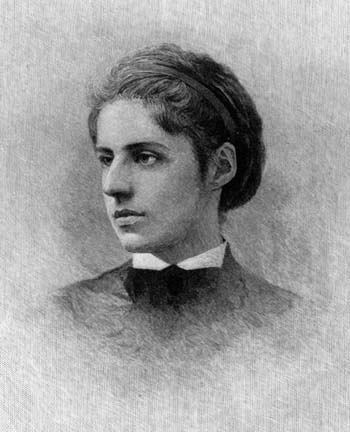
Emma Lazarus (1849 – 1887): A descendant of Sephardic Jews who immigrated to the United States from Portugal around the time of the American Revolution, Emma Lazarus was born in New York City on July 22, 1849. Before Lazarus, the only Jewish poets published in the United States were humor and hymnal writers. Her book Songs of a Semite was the first collection of poetry to explore Jewish-American identity while struggling with the problems of modern poetics. (Annotated biography courtesy of The Academy of American Poets.)


Editor’s Note: I wanted to share with you today a poem for Rosh Hashanah, the Jewish New Year. Rosh Hashanah is a celebration of newness, ushered in by sweet wishes of the year to come. But we spend the days that follow in contemplation of those regrets we have from the year past, in asking for forgiveness, and in letting go. When I came across today’s poem I thought of the Syrian refugees, of how the plight of exile has plagued my own people in the past, and how others are suffering from it today.

5776, the Jewish year that begins at sundown on Sunday September 13th, will be a “two-faced year, Mother of Change and Fate” for countless Syrian refugees. That fate that my own people have suffered in the past is today their reality: “The West refused them, and the East abhorred. / No anchorage the known world could afford, / Close-locked was every port, barred every gate.”

Emma Lazarus is most famous for penning the words that appear at the base of the Statue of Liberty, wherein the “Mother of Exiles” declares, “Give me your tired, your poor, / Your huddled masses yearning to breathe free, / The wretched refuse of your teeming shore. / Send these, the homeless, tempest-tossed to me, / I lift my lamp beside the golden door!” As we celebrate a new year, may the words of the Mother of Exiles find their way into the hearts and minds of ports and borders across Europe and throughout the world, “Saying, ‘Ho, all who weary, enter here!'”


Want to read more by and about Emma Lazarus?
The Academy of American Poets
Jewish Women’s Archive
The Poetry Foundation

SATURDAY POETRY SERIES PRESENTS: PATRICK PHILLIPS

Photo by Marion Ettlinger


HEAVEN
By Patrick Phillips

It will be the past
and we’ll live there together.

Not as it was to live
but as it is remembered.

It will be the past.
We’ll all go back together.

Everyone we ever loved,
and lost, and must remember.

It will be the past.
And it will last forever.


Today’s poem is from the collection Boy (The University of Georgia Press, 2008, © Patrick Phillips), and appears here today with permission from the poet.


Patrick PhillipsElegy for a Broken Machine was published in 2015 by Alfred A. Knopf. A recent Guggenheim and National Endowment for the Arts fellow in poetry, he is the author of two earlier collections, Boy and Chattahoochee, and translator of When We Leave Each Other: Selected Poems of Henrik Nordbrandt. His work has appeared in many magazines, including Poetry, Ploughshares, and The Nation, and his honors include the Kate Tufts Discovery Award, a Pushcart Prize, and the Lyric Poetry Award from the Poetry Society of America. He lives in Brooklyn and teaches at Drew University.

Editor’s Note: I came across today’s poem on the New York subway as part of the MTA/Poetry Society of America collaboration, “Poetry in Motion.” Whenever I see a poem on the subway I read it. Of course I do. How often does one come across poetry in public spaces in America these days? But not since I came across Reznikoff’s “If There is a Scheme” on the PATH train has a poem in a public space so moved me.

What is so wonderful about today’s poem? Is it the way it plays with time, making the future of the past? “It will be the past / and we’ll live there together.” Is it the subtle way the poet uses rhyme and repetition, as if the poem were a lullaby — “together / remembered / together / remember / forever”? Or is it the promise of the poem? That within our future lies our past, that heaven is where we might relive our memories over and over, that we will be reunited there with everyone we ever loved, “And it will last forever.”

Want more from Patrick Phillips?
Buy Elegy for a Broken Machine from Amazon
Patrick Phillips’ Official Website

SATURDAY POETRY SERIES PRESENTS: SARA JUNE WOODS

FullSizeRender (1)
& SOMEWHERE THE SUN
By Sara June Woods

Somewhere there is a clearing
in a forest where the world is
not a lonely place.

Somewhere there is a mountain
I have written on in forest fires
that says I am sorry I am not

the one you were looking for.
I wanted to be so badly.
But I am just this one person.

& it says all this
spiraling across
below the tree line.

& somewhere the sun
looks the same coming up
as it does going down.


Today’s poem was previously published in jellyfish magazine and appears here today with permission from the poet.


Sara June Woods is author of three books, Sara or the Existence of Fire (Horse Less Press, 2014), Wolf Doctors (Artifice Books, 2014) and the forthcoming Careful Mountain (Civil Coping Mechanisms, 2016). Her poetry is published widely in journals such as Guernica, Columbia Poetry Review, Diagram, Gulf Coast, Denver Quarterly and Salt Hill. She is a trans woman and a Scorpio and she lives in Portland, OR with her girlfriend she is married to.

Editor’s Note: What do you do when a poem is heartbreaking? When its simple, honest revelations break your heart? When its line breaks break you? What do you do with a poem that devastates you with its simple, brutal truth? With a poem that’s so good, it hurts to read it? Why, you share it, of course. Here, you say to the world. You’re welcome.

Want more from Sara June Woods?
Healthy Dog Poem – Writing by Sara June Woods
P(r)o(bl)em – saramountain tumblr

SATURDAY POETRY SERIES PRESENTS: MARIANNE KUNKEL

Kunkel photo
By Marianne Kunkel:

A SLOTH FIRST HEARS ITS NAME

But why should it care? It munches
a cecropia leaf. It probes the air
with its blunt snout, detecting
a waft of sour coconut. It lumbers to a branch,
grabs hold with its claws, drops,
dangling upside down like a knapsack.
It doesn’t know to feel ashamed
that its name means lazy and sinful.
Like my little sister
after her abortion, when our father
changed her name from Molly to Molly.


Today’s poem originally appeared in Rattle and appears here today with permission from the poet.


Marianne Kunkel is the author of the chapbook The Laughing Game (Finishing Line Press), as well as many poems that have appeared in Hayden’s Ferry Review, Notre Dame Review, Columbia Poetry Review, Poet Lore, and elsewhere. A former managing editor of Prairie Schooner, she is an assistant professor of creative writing and publishing at Missouri Western State University, where she edits the undergraduate literary journal The Mochila Review. Follow her on Twitter @mariannekunkel.

Editor’s Note: Today’s poem is awesome for a myriad of reasons. Because it is about sloths (sort of). Because it is about words, about labels, about judgment and ignorant bliss. Because it vibrant both with images and with sound. Because it houses epic proportions in eleven short lines. Because its advocacy relies on neither a soap box nor a sense of superiority. But what is most striking about today’s poem, perhaps, is its volta. The way it turns the world of the poem on its head. The way it leaves the reader staggering, contemplative, changed.

Want more from Marianne Kunkel?
Verse Daily
“To Pee or not to Pee,” Portland Review
“Keep Away,” Portland Review
Phoebe
Rattle