The Very Southern Pronunciation Still Rings In My Ears: A Conversation With Poet Mike James

.

The Very Southern Pronunciation Still Rings In My Ears:

A Conversation With Poet Mike James

By Chase Dimock

.

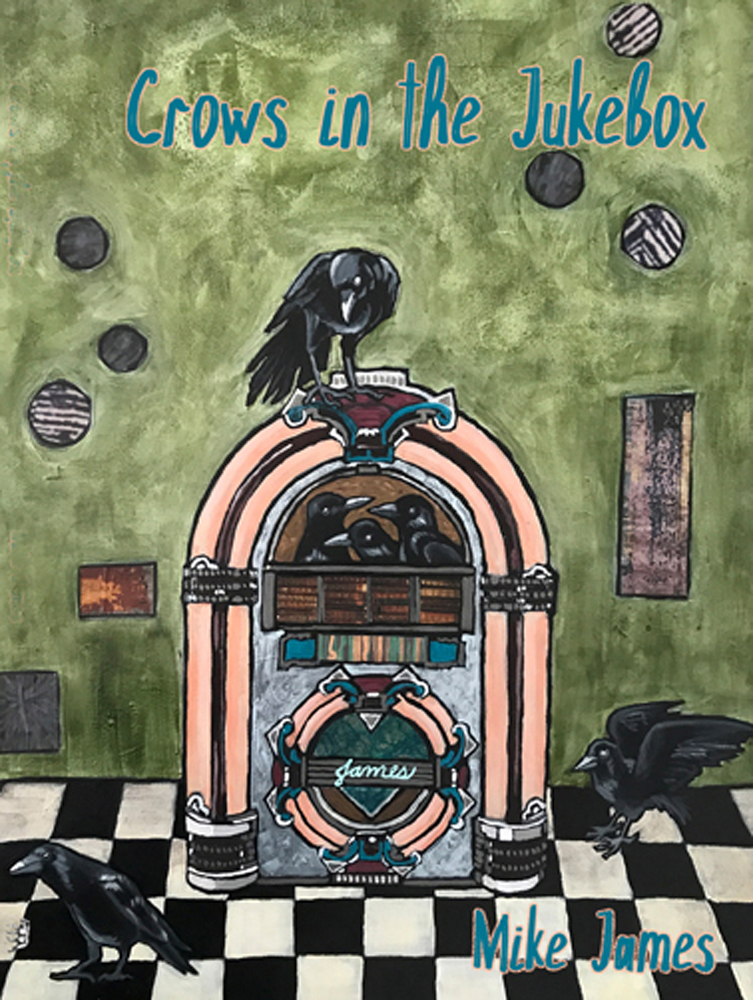
Keats had his nightingale, Shelley had his skylark, Poe had his raven, Stevens had 13 ways of looking at a blackbird, and Mike James has a jukebox full of crows. While fans of poems about birds will not be disappointed, Crows in the Jukebox is just as much about the jukebox as it is about the crows. James’s book reads like the playlist of an old jukebox in a roadside, greasy spoon diner. There are folk songs that retell old family lore, slow ballads that honestly and sweetly pay tribute to his love, and melancholic memories of a self-destructive father on par with any country tune sung by Loretta Lynn or Tammy Wynette. You can hear the drawl in his words, but James is not constrained by the clichés or expectations of his background in the Carolinas. His poetry is, as the crow flies, direct in its route and positioned with a vision that can muse on the specific while connecting it to a wider, areal view.

.

Chase Dimock: Crows pop up as the subject of several poems in your book, Crows in the Jukebox. In “The Crows,” you write that you “love those damned birds for what they aren’t” and in “Poem” you declare that “crows are good at waiting, much better than we are with our alphabet of needs.” What is it about crows that makes them such a fertile subject for poems? How does your interest in crows connect with some of the other ideas and themes in your work?


Mike James:  I’ve always loved crows. They are, with pigeons, my favorite birds.  Part of what I like about them is their intelligence, but I also love the fact that they exist at the margins. No one goes to the zoo to see crows. They are always around, watching and plotting survival. Many people have a real aversion to them. That marginality probably interests me as much as anything since I think the best writing comes from working against dominant culture, of getting by at the margins. So many of “the great dead” I admire worked actively outside of the mainstream.  (I’m thinking of poets like Stephen Jonas, Bill Knott, Jack Spicer, Lorine Niedecker, and Mbembe Milton Smith.) I don’t make a conscious decision to work around any specific themes; however, I have a real love for the decayed, the failing, and the decrepit. In so many ways I am in love with ruination. Give me the choice between walking through a mansion and walking through a closed factory and I will choose the factory on every occasion.


Chase Dimock: Let’s talk more about your interest in marginality and resisting the dominant culture. I feel that one way writers cultivate a unique voice and resist the dominant culture in their work is through identifying with the unique region and culture in which they live and write. Steinbeck had Monterrey Bay and Faulkner had rural Mississippi. You were born in the Carolinas, and you currently live in Chapel Hill. A number of your poems make references to places in the South, including a town in the poem “Off Interstate 95” where “people hope for jury duty ’cause it’s a job.” How does living in this region inform your poetry and influence your feeling of marginality?


Mike James: It’s easy for a southerner to relate to marginalized cultures because the south has always been either looked down upon or romanticized in an unhealthy and non-useful way.  Coming from a blue collar background, as I do, presents two choices:  Either accept the dominant culture imposed by wealth and commercialism and forget your origins or stand slightly outside the mainstream and question basic assumptions. Good writing, for me, is all about questioning assumptions.

I’ve been very determined to never lose my, fairly thick, southern accent.  My voice identifies my birth region.  So many people have negative views of southerners.  Once, at a training seminar for my job, the instructor, who I had not spoken with, mentioned her hatred for southern accents because, she said, southerners do not sound educated.  When I questioned her, she asked, “Honestly, don’t you ever think you sound like a hillbilly?” I replied, “No.  I think I sound like William Faulkner and Reynolds Price and Tennessee Williams.”

One way the south definitely influenced me was through the orality of the culture I grew up in.  During my childhood, my relatives gathered on an almost nightly basis and told stories. Even though I’m not a narrative poet, that spoken tradition still informs my work. And the very southern pronunciation still rings in my ears. It’s only in the south that tired and hard can come off like off-rhymes. (You can hear that rhyme in Loretta Lynn’s “Coal Miner’s Daughter.”)

All that being said, I really don’t consider myself a southern writer. James Dickey and Everette Maddox are, probably, the only two southern poets I can definitely say have influenced me and those are two wildly disparate voices.  Most of the poets I read and relate to are from places outside of the south.
Continue reading “The Very Southern Pronunciation Still Rings In My Ears: A Conversation With Poet Mike James”

Two Prose Poems

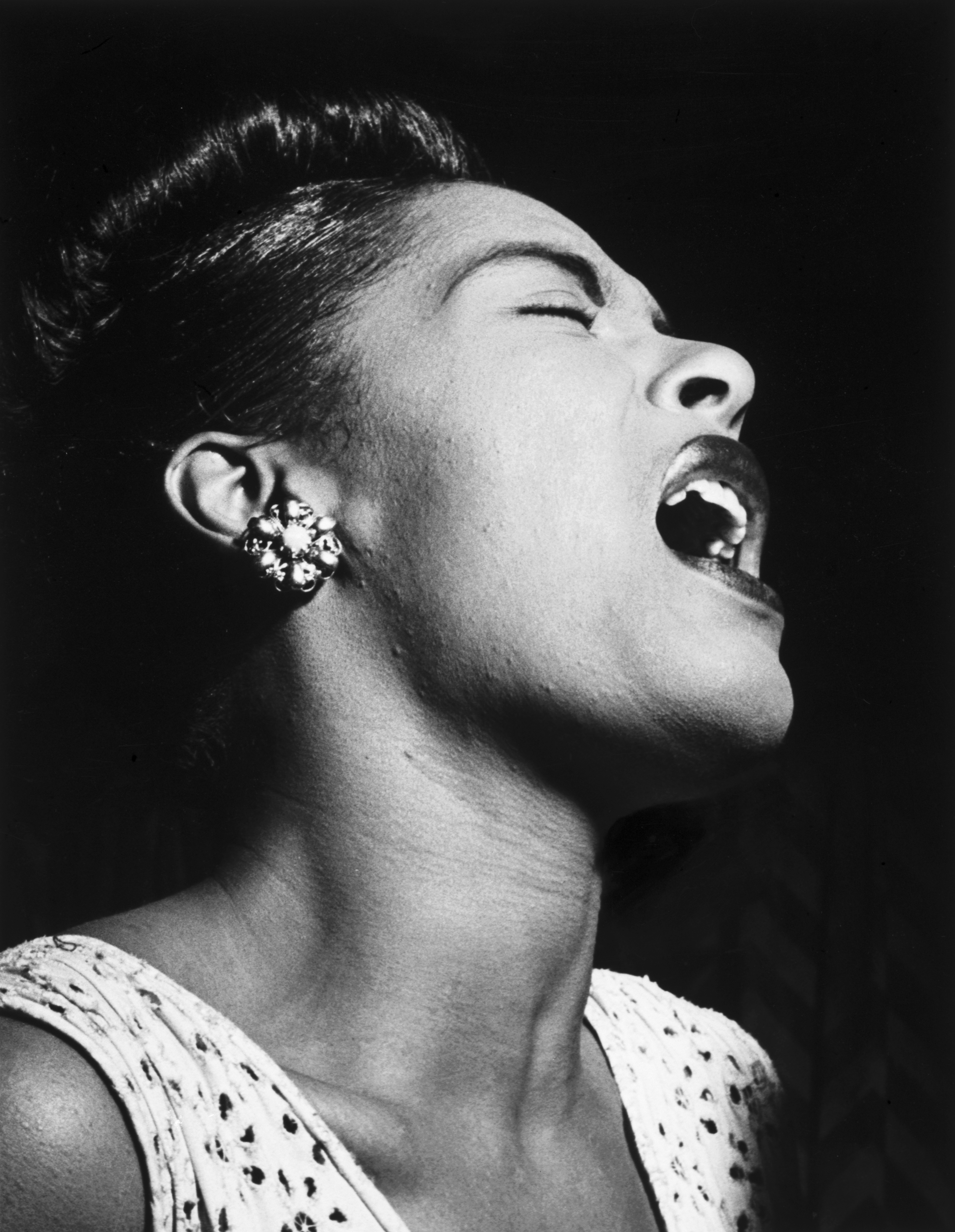
William P. Gottlieb “Billie Holiday at the Downbeat Club”

.

Two Prose Poems

By Mike James

.

That One Singer

Seems to know your life…How you lift yourself, just a little, from your seat when she reaches up past the ceiling, the roof, the trees, up near that first cloud to hit a high note…Or how you almost brace for a train to thunder by when she growls down and down with low ones…It’s like she looked out the window, for no good reason, the night you got your first streetlight kiss…As if she knows how you got that knee scrape from belt buckle dodging at ten…


Beyond The Land Of Misfit Toys

Drop that bucket into the memory well and it’s never what you wish. You pull up clown porn. (Yes, that’s a thing.) Shot glasses serve as telescopes to galaxies you’d rather not see. Even one night stands, much heralded in the movies, offer minimum relief. Every woman you end up with wears heels or boots you desire more than her. You beg to be her carpet, her footstool, her bath mat. If the question is lust, the answer is confusion. You look at every closet and hope for big locks. More than the butterfly you love the butterfly tattoo.

.

About the Author:  Mike James is the author of eleven poetry collections. His most recent books include: Crows in the Jukebox (Bottom Dog), My Favorite Houseguest (FutureCycle), and Peddler’s Blues (Main Street Rag.) He has previously served as associate editor for both The Kentucky Review and Autumn House Press. After years spent in South Carolina, Missouri, Pennsylvania, and Georgia, he now makes his home in Chapel Hill, North Carolina with his large family and a large assortment of cats.

Two Prose Poems

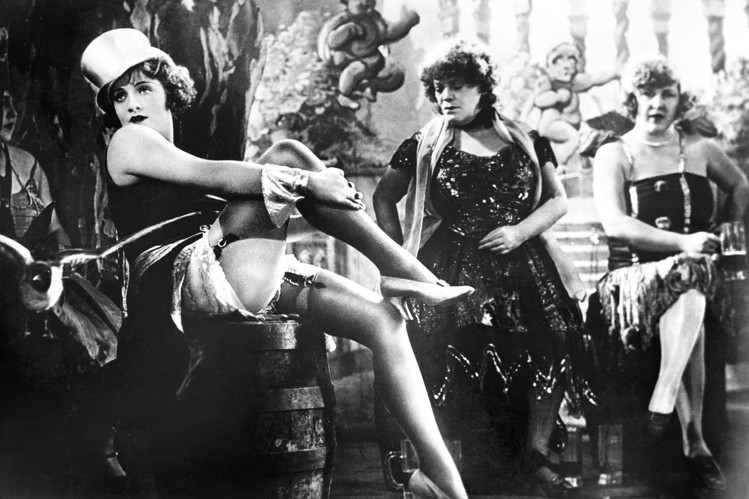
Marlene Dietrich in Der Blaue Engel (1930)

Two Prose Poems

By Mike James

.

Oh Daddy, Give Me A Quarter For The Time Machine

I want to go to Berlin! Back before reunifications or walled up divisions, back before that
screaming little man with his silly mustache.Yes, I want to go to the Weimar Republic
and catch, just one, cabaret. See Marlene sulk sexy onto the stage in black top hat, tux
(with white gloves, of course.) I want to see the scribblers making napkin notes for later.
Hello, Walter Benjamin with your weak tea and indigestion. Good evening to you, Mr.
Brecht, with your new girlfriend and old, out of tune guitar. Kurt Weill at the piano
smoking his black, extra-long filter. Some unknown Sally at a barstool listening to other
people’s dreams.

.

Rebel, Rebel

for David Bowie

Once he took off his dress, he didn’t know what to wear. He tried walking around, naked
as sunlight. Despite summer days, that became quite drafty. And nothing held in place.
Appendages sagged, this way and that. So he put on a blue suit, same color blue Candy
Darling used for lipstick. The color looked more natural romantic on her. He wore the
suit to walk the dog, shop for scarves, take out the trash, order delivery cheese pizza.
Despite adjustments from a sensible tailor, the suit was never a perfect fit. In stilettos he
no longer liked the click heels made for his ears.


About the Author: Mike James is the author of eleven poetry collections. His most recent books include: Crows in the Jukebox (Bottom Dog), My Favorite Houseguest (FutureCycle), and Peddler’s Blues (Main Street Rag.) He has previously served as associate editor for both The Kentucky Review and Autumn House Press. After years spent in South Carolina, Missouri, Pennsylvania, and Georgia, he now makes his home in Chapel Hill, North Carolina with his large family and a large assortment of cats.

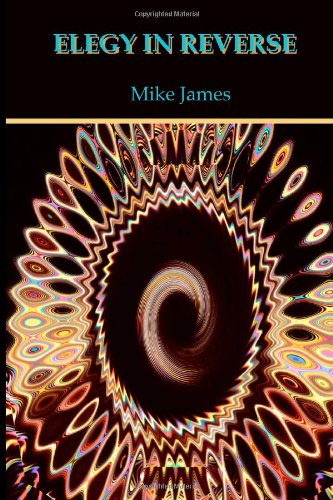
A Review of Mike James’s Elegy in Reverse

Mike James Elegy in Reverse

A Review of Mike James’s Elegy in Reverse

By J. Andrew Goodman

Elegy in Reverse is a tense poetry collection exploring how loss and absence manifest. Family, friends, lovers, talents, and faith are shadows made measurable by experience and reverence in Mike James’s eighth collection, released by Aldrich Press earlier this year. James’s verse reminds us that what we hold dear is perishable and that words are often not enough to hold these things accountable for leaving. His poetry is plainspoken but evocative, fully rendering the familiarity of longing and grief for that which has a propensity toward leaving. Amid such an exodus, James captivates readers with his rapturous voice.

The characters of James’s past are made tangible by his written memory. In the early pages of his collection, readers are introduced to his mother and his alcoholic father; the latter is deceased and the former presumably so. In “Jailbird,” his father invents a dance, “the prison shuffle,” that the son enjoys, but his mother refuses to join:

when i was with your father
i had enough dancing
to do me
until cows or jesus
came home

she always
laughed
when she said that
as if she were saying it
for the first time

In economic verse, James details the family situation of his childhood: His father goes or returns to prison. His mother hopes to prevent her son from making similar choices. She makes light of her husband’s antics, yet reveals in doses the continuity of the past, her worry refreshed.

His mother appears sparingly throughout the collection, despite James’s apparent fondness of her, while his father returns frequently. The collection contains a number of heartbreaking poems about his father’s alcoholism, which “cost him a sense of direction,” ultimately turning him away from his family. The son is left only with his memory, piecemeal and bitter. James seems to believe he has inherited such transience. Or, possibly, he recognizes this as a feature of human nature, the human condition. He expresses “a sad anger” toward most loss or abandonment, writing in a poem later in the collection that “an old friend says leaving is contagious.” This sets a precedent for the remainder of the book.

Despite his ability to make good use of them, James recognizes that words often escape or fail us as well. In “Message at Babel,” James alludes to the biblical account of God confounding the human language. As part of a short series of poems within the collection that questions the necessity of disparity in faith, James explores through a lens of mourning what it means that Eve was possibly judged “before she even chewed,” that Job’s wife was silenced by her children’s “faces / so stiff in death.”

Still, James shows us clearly that language and voice help diffuse the power of death and grief. Our memories become stories, become physical. “I don’t know what to make / of the language / of grace” James writes in a poem about refusing to offer a prayer before a meal with his wife. The litany and ritual of biblical language are not as significant or endearing to him as experience itself:

those words / don’t cling to me / the way a blanket does / on mid-winter / mornings / / or the way we cling / to one another / at night / as we swim / across the ocean of our bodies / past the edge of our wants / / the night sky full of stars / mariners used / for passage/ their breath filling sails / with a word / that can be a taunt / a promise / or something close to grace / / home

James’s refusal isn’t a rejection of faith, but of its language, poor in its appraisal of our desires and necessities. He suggests silence is its own grace in “However Bright the Sun” and “Wild Apples.” In labor, we work through our grief and unpleasantness. We forget our losses, even though their accumulation manifests into a shadow, “some days . . .  into a taste.”

The dichotomy of what is unreal as it exists in reality is essential to James’s collection. He is visited by his father’s ghost, and they converse. Eden’s inhabitants are capricious, envious of Eve’s taste. James even defines an elegy as “a love poem to an abstraction / once touched.” It seems, then, that with poetry James is enabled to seek the abstraction through language, to define absence by its bounty. The way the monk in “The Monk’s Dream” seeks God’s face during sleep or contemplation but can think only of hawk’s feathers and an empty bowl is how we, with James, seek the unreal through the limitations of the real.

More than a reconciliation of grief, Elegy in Reverse is a love poem to language and the surprising result of what happens when we’re able to say the right thing. Even when describing that which is fleeting, Mike James’s voice is nascent, emerging. He is never at a loss for words.

Mike James, Elegy in Reverse. Aldrich Press, 2014: $16.00

***

J. Andrew Goodman is a graduate of Murray State University’s MFA program and an intern for the independent literary publisher, White Pine Press. He currently lives and works in Louisville, Kentucky.