SATURDAY POETRY SERIES PRESENTS: PATRICK PHILLIPS

Photo by Marion Ettlinger


HEAVEN
By Patrick Phillips

It will be the past
and we’ll live there together.

Not as it was to live
but as it is remembered.

It will be the past.
We’ll all go back together.

Everyone we ever loved,
and lost, and must remember.

It will be the past.
And it will last forever.


Today’s poem is from the collection Boy (The University of Georgia Press, 2008, © Patrick Phillips), and appears here today with permission from the poet.


Patrick PhillipsElegy for a Broken Machine was published in 2015 by Alfred A. Knopf. A recent Guggenheim and National Endowment for the Arts fellow in poetry, he is the author of two earlier collections, Boy and Chattahoochee, and translator of When We Leave Each Other: Selected Poems of Henrik Nordbrandt. His work has appeared in many magazines, including Poetry, Ploughshares, and The Nation, and his honors include the Kate Tufts Discovery Award, a Pushcart Prize, and the Lyric Poetry Award from the Poetry Society of America. He lives in Brooklyn and teaches at Drew University.

Editor’s Note: I came across today’s poem on the New York subway as part of the MTA/Poetry Society of America collaboration, “Poetry in Motion.” Whenever I see a poem on the subway I read it. Of course I do. How often does one come across poetry in public spaces in America these days? But not since I came across Reznikoff’s “If There is a Scheme” on the PATH train has a poem in a public space so moved me.

What is so wonderful about today’s poem? Is it the way it plays with time, making the future of the past? “It will be the past / and we’ll live there together.” Is it the subtle way the poet uses rhyme and repetition, as if the poem were a lullaby — “together / remembered / together / remember / forever”? Or is it the promise of the poem? That within our future lies our past, that heaven is where we might relive our memories over and over, that we will be reunited there with everyone we ever loved, “And it will last forever.”

Want more from Patrick Phillips?
Buy Elegy for a Broken Machine from Amazon
Patrick Phillips’ Official Website

SATURDAY POETRY SERIES PRESENTS: DEVIN KELLY


DSC_0759


FEAR OF
By Devin Kelly

We are discussing the roots of things. How phobia
means fear of, and we make them up. Bookaphobia.
Classroomaphobia. Girlaphobia. I say there will be
a quiz. They laugh. It is evening in a small room
in Queens where the desks are miniatures
of the things they should be and the children
sitting in them too close to me and my coffee
so soon done. Then I ask them if they are afraid.
Then I ask them of what. The word penis. Spiders.
The people who hate me for my name. How a moment
turning stills to a moment stilled. How silence,
even in silence, breathes. Their pages of homework
loiter upon their desks. Fifteen words they had
never seen before, and fifteen meanings, written out
beside. Benevolent. Ailurophile. I spoke, upon the hearing,
of opposites, to think of words as people, rooted,
experimenting with different prefixes. To think of words
as lovers, hungry for what it might be they want.
What is her name? It lingers a moment before
it hassles its way out of my mouth. The shape it takes,
unfamiliar, awkward. A word I have never spoken before.
And her skin brown. How she taught me the way
to count to ten in Arabic. The people who hate me
for my name. The people who hate me. The people.
Across an ocean, a man kneeling does not see the hand
that holds the gun that fires the bullet that splits
his head in two. Across an ocean, someone laughs
at a fence of severed heads. I do not know
what to teach anymore. Graphophobia. Philophobia.
Fear of writing, fear of love. And all these children
who do not have a name for their sorrow. At night,
in bed, I turn her name for the hundredth time
and find its beauty. The soft grace of wanting
to be held. A child, scared, moving in dark
from room to room to find the mother who named her,
the father, too, and their reasons why.


Today’s poem originally appeared in Rattle and appears here today with permission from the poet.


Devin Kelly earned his MFA from Sarah Lawrence College. His collaborative chapbook with Melissa Smyth, This Cup of Absence, is forthcoming from Anchor & Plume Press. His poetry, fiction, and essays have appeared or are forthcoming in Gigantic Sequins, Armchair/Shotgun, Post Road, RATTLE, The Millions, Appalachian Heritage, Midwestern Gothic, The Adirondack Review, and more, and his essay “Love Innings” was recently nominated for a Pushcart Prize. He co-hosts the Dead Rabbits Reading Series in Manhattan, teaches Creative Writing and English classes to high schoolers in Queens, and lives in Harlem. You can find him on twitter @themoneyiowe.

Editor’s Note: June 26, 2015 was a day of imperative progress in American history. A day of change. A day when love triumphed. I celebrated this historic event in the most wonderful way I could have imagined, at the wedding of two women whose love is beshert. But when one of the brides gave her speech, she reminded us that there is still more to be done. “Today we celebrate,” she said, “but tomorrow, we keep fighting.” Even amidst a joy so great she shared it with the entire country, the blushing bride reminded us that we can—and should—always be working to make the world a better place.

Today’s poem was written in response to Islamophobia. A Muslim girl in a classroom. What is she afraid of? “The people who hate me for my name.” The families of the victims of a racist hate crime—a terrorist act—in Charleston, SC have what to teach us about love and forgiveness. But what are they truly the victims of? “The people who hate me. The people.” We speak words today that carry with them the chalk outlines of the hatred that flows from fear: Black Lives Matter; I can’t breathe. “I do not know / what to teach anymore,” writes the poet, but he knows “all these children / who do not have a name for their sorrow.”

Let us shout our joy from the rooftops and dance in the streets because yesterday love won. And today, tomorrow, and in the days to come, let us fight until love triumphs over fear and hatred, until there is justice and equality for all.

Want more from Devin Kelly?
The Adirondack Review
District Lit
Little Fiction
Warscapes
Devin Kelly – Published Work

SATURDAY POETRY SERIES PRESENTS: HEMISPHERE

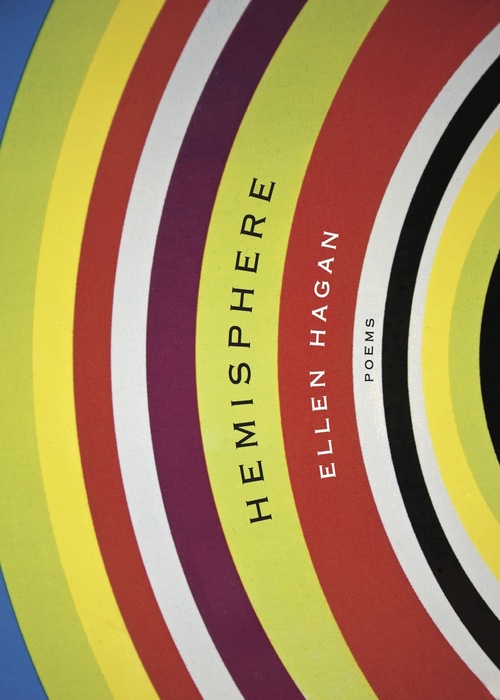
hemisphere


From HEMISPHERE
By Ellen Hagan:


RIVER. WOMAN.

I.
Downriver is always long
& always flailing, finding

where our lives begin,
intersect?  You, your bones

the humped slope of nose
browned skin of home.

You, sand. You, ocean.
You, bending & me.

How many nights we sleep
alone, our bodies rising—

what it means to miss you.
What it means to expand.
What it means to be birthed.
What it means to be sacred.
What it means to go home.

Place of birth, birthing
ground. Ground that is sacred.
You that is sacred.

Bones that hold together.  Bind.
Bound to you.  My mother.

II.
Me
I am bound to you.  My mother.
You stitch me from inside.  Hollowed.
your split sheath of self, your letters
the slow cursive of your language,
can’t I hear your voice, always?

Her
Lock the doors.  Latch the locks.
Shut the windows.  Close the blinds.
Cover up.  Clean your room.  Do
the dishes.  Wash the clothes.  Behind
your ears, yourself.  Clean the floor.  
Scrub.  Mop the remains every day
is one that you can use to erase all
the mistakes.  Blemish free.
Shine the doorknobs, pine, every
crease of space.  Cabinets.  Don’t leave
food out.  Food brings mice.  Mice
bring disease.  You will die.  You could 
die.  Don’t die.  Don’t ever die.  You 
stitch me from inside.  I am bound
to you.  Can’t you always hear
my voice?


LESSONS ON SPELLING

Bring the snakes in their skins, sly
& surrender. Simple bodies of grass
& clover, their slithering and sleuth-ness.
& the earth & the dusty fisherman
in from their boats, bobbing. Bring
piano, bring pain. That yellow skirt
pocked w/ fuchsia & the halter
of your mother’s pixie 60’s ways.
Let out the hems from your dresses,
the vertebrae in your back, body
forget skeleton—be loose, let it be dirty.
Get there. Call the black cat promenade,
lazy through the streets. Let your hair
down. Let it crawl, crowd the length
of your back. Bring soca & fiddle,
that record player your father bought
your mother in 1974. Bring all the days
from 1974 & on because time is a revolver.
A bag of limes on your back porch
squeezed & bitter & neon & orbiting
over you. Is your neighbor calling.
Is satsumas bursting on your tongue.
Bring your shiny shoes & arched soles
for the flapping pageant of second line
parade, the 100 parades from now until.
Autumnal. Hymns. Prayers.
Ways to say yes. Bring with you
your rope of hide, your many rings
of muscle & the washcloth
for your stomach, your feet
for the laying nape of your neck.
Bring danger & ways to hold your lips,
your lips, bring them too.
Spanning the whole of you.
You become.


WATER SIGN

Already a lullaby inside.
Your palms to belly, breath
on hip.  You are changing,
beginning. Too.  And you,
baby girl, or boy. Or two.
Are just gills. Still. Heart in
mouth. Red burst of newness.
Fins.  Fish or fowl. Shrimp
are larger than you.

Still, you are breaking me
apart. Him too. Our hearts
and lungs, and gills. Bursting 
You are stretching all,
all of us. Open.


Today’s poems are from Hemisphere, published by TriQuarterly Press/Northwestern University Press, copyright © 2015 by Ellen Hagan, and appear here today with permission from the poet.


Hemisphere: The poems in Hemisphere explore what it means to be a daughter and what it means to bear new life. Ellen Hagan investigates the world historical hemispheres of a family legacy from around the globe and moves down to the most intimate hemisphere of impending motherhood. Her poems reclaim the female body from the violence, both literal and literary, done to it over the years. Hagan acknowledges the changing body of a mother from the strains of birth from the growing body of a child, to the scars left most visibly by a C-section €”as well as the changes wrought by age and, too often, abuse. The existence of a hemisphere implies a part seeking a whole, and as a collection, Hemisphere is a coherent and cogent journey toward reclamation and wholeness. —TriQuarterly Press/Northwestern University Press


Ellen Hagan is a writer, performer, and educator. Her latest collection of poetry, Hemisphere, was released by Northwestern University Press in Spring 2015. Ellen’s poems and essays can be found in the pages of Creative Nonfiction, Underwired Magazine, She Walks in Beauty (edited by Caroline Kennedy), Huizache, Small Batch, and Southern Sin. Her first collection of poetry, Crowned, was published by Sawyer House Press in 2010. Ellen’s performance work has been showcased at The New York International Fringe and Los Angeles Women’s Theater Festival. She is the recipient of the 2013 NoMAA Creative Arts Grant and received grants from the Kentucky Foundation for Women and the Kentucky Governor’s School for the Arts. National arts residencies include The Hopscotch House and Louisiana Arts Works. Ellen recently joined the po­etry faculty at West Virginia Wesleyan in their low-residency MFA program. She teaches Memoir, Poetry & Nature, and co-leads the Alice Hoffman Young Writer’s Retreat at Adelphi University. She is Poetry Chair of the DreamYard Project and a regular guest artist at the Kentucky Governor’s School for the Arts.


Editor’s Note: I fell in love with the poems in Ellen Hagan’s Hemisphere for their language: earthy, sensual, gritty. Unafraid of blood and birth, of mud and heat, of nature, of relationship, of what is real and lush and vivid, of what is primal and complex. I am reminded of the swamp, of the first creatures that dragged themselves forth from the murky depths, crawling forward, always, evolving for the sake of life. I am reminded, also, of witchcraft, of alchemy, of drawing down the moon. Of things my mother taught me, of that which has been handed down from woman to woman through the ages.

Today’s poems were meant to be, here, today. Because they are about the twin experience of birth—both as child and mother. Because much of this book is about the relationship between mother and daughter, the circle of life as only mother and daughter experience it: “where our lives begin, / intersect;” “what it means to miss you. / What it means to expand. / What it means to be birthed. / What it means to be sacred. / What it means to go home.”

In honor of Mother’s Day, and of the magic that grows from the rich soil of today’s poems, today’s feature is dedicated to my mother, the water sign, from your daughter, the water sign. “You that is sacred… I am bound to you. My mother.”


Want to see more from Ellen Hagan?
Ellen Hagan’s Official Website
Ellen Hagan’s Blog
Duende
Drunken Boat
Buy Hemisphere from Indie Bound

SATURDAY POETRY SERIES PRESENTS: EARTH VOICES FOR SPRING

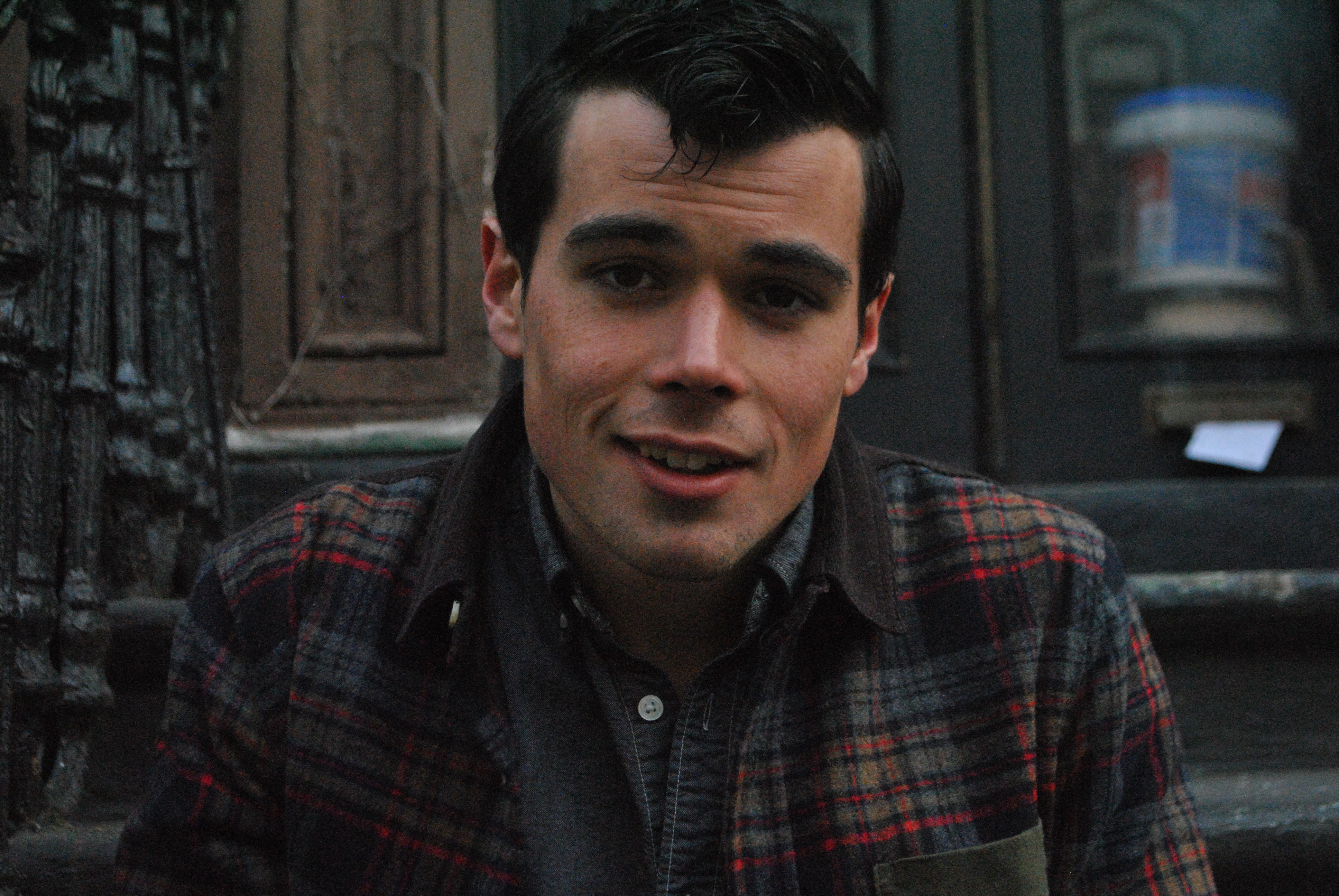
Public Domain image.


EARTH VOICES
By Bliss Carman

I

I heard the spring wind whisper
Above the brushwood fire,
“The world is made forever
Of transport and desire.

“I am the breath of being,
The primal urge of things;
I am the whirl of star dust,
I am the lift of wings.

“I am the splendid impulse
That comes before the thought,
The joy and exaltation
Wherein the life is caught.

“Across the sleeping furrows
I call the buried seed,
And blade and bud and blossom
Awaken at my need.

“Within the dying ashes
I blow the sacred spark,
And make the hearts of lovers
To leap against the dark.”

II

I heard the spring light whisper
Above the dancing stream,
“The world is made forever
In likeness of a dream.

“I am the law of planets,
I am the guide of man;
The evening and the morning
Are fashioned to my plan.

“I tint the dawn with crimson,
I tinge the sea with blue;
My track is in the desert,
My trail is in the dew.

“I paint the hills with color,
And in my magic dome
I light the star of evening
To steer the traveller home.

“Within the house of being,
I feed the lamp of truth
With tales of ancient wisdom
And prophecies of youth.”

III

I heard the spring rain murmur
Above the roadside flower,
“The world is made forever
In melody and power.

“I keep the rhythmic measure
That marks the steps of time,
And all my toil is fashioned
To symmetry and rhyme.

“I plow the untilled upland,
I ripe the seeding grass,
And fill the leafy forest
With music as I pass.

“I hew the raw, rough granite
To loveliness of line,
And when my work is finished,
Behold, it is divine!

“I am the master-builder
In whom the ages trust.
I lift the lost perfection
To blossom from the dust.”

IV

Then Earth to them made answer,
As with a slow refrain
Born of the blended voices
Of wind and sun and rain,

“This is the law of being
That links the threefold chain:
The life we give to beauty
Returns to us again.”


(Today’s poem is in the public domain, belongs to the masses, and appears here today accordingly.)


Bliss Carman FRSC (1861–1929) was a Canadian poet who lived most of his life in the United States, where he achieved international fame, and was acclaimed as Canada’s poet laureate during his later years. (Annotated bio courtesy of Wikipedia, with edits.)

Editor’s Note: Each year around this time I become so excited by the fact that winter is finally over that I must celebrate the birth of spring through poetry. The sun is shining, the crocuses and tulips are rising, the spring blossoms are in bloom. The cold and darkness that are just behind us are quickly forgotten by the promise of all that is warm and beautiful and worthy of rejoicing. So it has been since the days of Demeter and Persephone, and so it shall be until humankind destroys the natural balance of the world with climate change.

Today’s poem calls upon the “Earth Voices”—the spring wind, the spring light, the spring rain, and the Earth herself—to tell a story of the rebuilding of the world at springtime. The voices of spring speak of the newness they create: “Across the sleeping furrows / I call the buried seed, / And blade and bud and blossom / Awaken at my need.” “I am the master-builder / In whom the ages trust. / I lift the lost perfection / To blossom from the dust.” And the voice of Earth answers, calling upon the ancient power of three, reminding us, as spring does, that what is buried beneath winter “Returns to us again.”

Want to read more Spring Poetry?
SATURDAY POETRY SERIES PRESENTS: SPRING! (2014)
SATURDAY POETRY SERIES PRESENTS: LIZZIE LAWSON ON SPRING
SATURDAY POETRY SERIES PRESENTS: SPRING! (2013)
The Poetry Foundation – Spring Poems

SATURDAY POETRY SERIES PRESENTS: THE OPERATING SYSTEM FOR NATIONAL POETRY MONTH


national-poetry-month1


Editor’s Note: April is National Poetry Month. According to the Academy of American Poets, who founded the annual event in 1996, “National Poetry Month is the largest literary celebration in the world, with tens of millions of readers, students, K-12 teachers, librarians, booksellers, literary events curators, publishers, bloggers, and, of course, poets marking poetry’s important place in our culture and our lives.”

Today I want to highlight one of the countless organizations that has picked up the gauntlet the AAP has thrown down. This April the Operating System celebrates its 4th Annual 30-on-30-in-30 Poetry Month Celebration:

“Over the course of Poetry Month The OS brings you 30 poets (+ writers, musicians, and artists) writing on 30 (+ a few extra) poets for 30 days (every day in April). The intention is simple, but crucial: to explode the process of sharing our influences and joys beyond the random. To create a narrative archive around that moment where we excitedly pass on the work of someone who has made a difference in our lives. And so, too, this is an opportunity for The OS to introduce our audience to the work of the people writing — who are invited to share work of their own that demonstrates that influence. Really, its an exercise in appreciation.”

An exercise in appreciation. A labor of love. 30 days for 30 artists to share their 30 favorite poets with you. What more could you ask for? A little love from your fearless editor? You’ve got it! Keep up with the Operating System throughout the month of April and be on the lookout for yours truly sharing the love and inspiration that is Li-Young Lee.

What should you be doing RIGHT NOW? Go forth and fall in love, poetry style, with the Operating System’s 4th Annual 30-on-30-in-30 Poetry Month Celebration.

Want more National Poetry Month?
Spend each day in April with The Operating System.
Learn About National Poetry Month from the Academy of American Poets.
Read blog entries, online poetry sources, and get writing prompts from NaPoWriMo.
Celebrate NaPoMo with WordPress: Celebrating poetry, all month long.
30 ways to celebrate National Poetry Month, from the Academy of American Poets.

SATURDAY POETRY SERIES PRESENTS: MIRIAM’S SONG

Feuerbach_Mirjam_2

“Miriam the prophetess” by Anselm Feuerbach. Public Domain image.


“Miriam the prophetess… took the tambourine in her hand; and all the women followed her with tambourines and dances. And Miriam called to them: Sing…” (Exodus 15:20-21)


Editor’s Note: The most important thing that has happened to Passover this year is the Notorious RBG’s decree that when we remember the Exodus, we need to remember the women. First and foremost among them, for me, is Miriam. The unsung hero of what is usually thought of as “Moses’ story,” Miriam is responsible for everything from Moses’ birth to his survival to providing water for the Israelites throughout their forty-year-sovereign in the desert. The first person in the Bible to be called a prophet, Miriam was beloved by her people but less-loved by her creator, who struck her down with leprosy to teach her the consequences of a woman voicing her opinion.

Song is one of the oldest forms of poetry, and the poetry of the Bible is one of the oldest written records of poetry we have. Sadly, all that remains of Miriam’s song in the Bible is a call to action: “And Miriam called to them: Sing…”

We are lucky, therefore, that Debbie Friedman (1951-2011) picked up this mantle. In “Miriam’s Song” she joins her voice with a new generation of women to remember and celebrate the heroine of the Passover story, responding to the prophetess’ call to action: “Sing.” Beloved by women and men alike all the world over, Debbie Friedman and “Miriam’s Song” are the kinds of modern Passover traditions we need. Inclusive and powerful, shedding new light on ancient traditions. For, as Debbie Friedman reminds us, “The more our voices are heard in song, the more we become our lyrics, our prayers, and our convictions.”

Want more Miriam, Debbie Friedman, and Feminist Passover?
Read the lyrics to “Miriam’s Song” by Debbie Friedman on Ritualwell
Debbie Friedman via the Jewish Women’s Archive
Miriam via the Jewish Women’s Archive
Buy The Journey Continues: The Ma’yan Passover Haggadah on Amazon

SATURDAY POETRY SERIES PRESENTS: ELIZABETH LANGEMAK

LangemakPhoto

By Elizabeth Langemak:

A PHOTOGRAPH OF HER SHOWERING

                                          As passionless, burned-out, dusty shells, we dislike love poems . . . As [one of our editors] says, why not “text me a photograph of her showering”?

I am enclosing, as text, the photo
you ask for. Though my husband

refuses, I make this in secret
and print it black over white. Though

the angles and lighting are tough
to nail down, and the process

makes my whole body a long face
for tears as the spray breaks over

my scalp and rolls down.
Though my right hand withers,

as I rake damp hair into rows.
Though the cheap curtain cleaves

to my thigh, I peel it off like a rind
teased from its fruit in one strip.

You thought I was dusty, a shell.
You said I was burned out,

but now my skin is slapping and slick,
the camera demanding more arch

and frontal. When I read your note
I was spitting with anger. I could

not get your eyes off my nipples,
my breasts, but now I make you

this square handful of edges,
a black-and-white chip where my ass

hangs over tan lines like a sun
without set, where stretch marks

like fault lines ride over each thigh
and a pocked scar stabs into my shoulder.

Once I knew men like you and tried
to be sexy but in the shower

I only got soaked. On the bed
where I practiced I only looked

posed. In cabins on nights with your jars
full of scotch I hoped you might

see past what you saw and fuck me,
but now it seems we have both changed

our minds. Here I am. In a poem,
just breath-long, I am perfect.

I send you this picture because
a photo of showering is just wet

and sex, but the poem lays down
its camera and hands me a towel,

knows the route I send it
over my calves, over my nape

and around. How many
flashes and clicks turn a love poem

around into only a woman to
fuck you? Fuck you.

Today’s poem was originally published in AGNI and appears here today with permission from the poet.

Elizabeth Langemak lives in Philadelphia, Pennsylvania.

Editor’s Note: Today’s poem is one of resistance. In response to the editors who called love poems “burned-out, dusty shells” and said, why not “text me a photograph of her showering,” Elizabeth Langemak speaks out against the objectification of women’s bodies and the misogyny rearing its ugly head in a still-patriarchal society. Frankly feminist, exquisitely lyric, and commendably unabashed, today’s poet answers the question “Why not text me a photograph of her showering?” with the only response needed: “Fuck you.”

Want more from Elizabeth Langemak?
Elizabeth Langemak’s Official Website

SATURDAY POETRY SERIES PRESENTS: KAREN ALKALAY-GUT

karen2014


By Karen Alkalay-Gut:


HER STORY

I have never been able to tell her story
Sometimes it escapes me, sometimes I am not sure
It could really have happened, sometimes I read
Different accounts of her demise, or a paragraph
From some testimony jogs my memory and the terrible days
When I first heard what happened to her return.

This much is in my blood:
I was conceived on the day she died.
This much is in my blood.
She blew up trains.
The courage came from her uplifted chin
And the two infants she watched
Dashed against the wall of their home.
Avram twelve months old and Masha two years.
My first cousins.
They too – in my blood – all that is left.

If I can write of these babies,
I can manage the rest –
Following her path as she escaped
The prison camp with her husband
And joined the Otrianski Otriade
Lenin Brigade, Lipinskana Forest.

I can feel her mouth, her narrow lips clamped
As she bends over the delicate mines,
Solemn as in the photo when as a child
She sat for with the rest of the choir
Unsmiling amid the festive singers
Unwilling perhaps to feel poetic joy
Perhaps destined for so much more.

There are at least three accounts of her death:
The partisan Abba Kovner told me she was caught
In a mission and hung. He looked away when he spoke,
Not piercing me as always with his tragic eyes,
And I knew there was more he would not say.

Another book says she lagged behind the platoon
Escaping an attack, perhaps pregnant,
And was imprisoned in Zhedtl.
The jail was ignited, perhaps by accident,
And she was just one of the victims.

When mother first told me the story
She had just heard at the hairdresser’s,
I must have been fifteen, and outraged
That she was weeping, tears
Rolling down her face. She knew
All I cared for was my own life,
And her latest discovery
Of the fate of her youngest sister
A disruption.
But who else could she tell?

The loft in the barn, she said,
They were hiding there – three women,
Her husband and her. They came
And set the barn afire. He helped
The women first, and his wife came last
But didn’t come, was burnt alive.

Malcah Malcah who saved all our lives
Malcah who was waiting for them
When the ship brought them back to Danzig
After they were barred from the Holy Land,
Who found them the agricultural visas to England
And saw them off the night that Hitler invaded.
But there is no real story.
All that remains is a faded snapshot
A few sentences in unread memorial tomes,
And me, who cannot tell any story for sure.


Today’s poem was originally published in Prairie Schooner and appears here with permission from the poet.


Karen Alkalay-Gut is now easing out of a fifty-year academic career at Tel Aviv University and beginning to concentrate on writing. Born in London during World War II, she was raised in Rochester, New York and moved to Israel in 1972. She has published almost 30 books in English, and Hebrew, Spanish, and Italian translation, and has collaborated on half a dozen music CDs.

Editor’s Note: Is it possible to read today’s poem without being moved to tears? To wax poetic (this is the place for that, after all), when I read today’s poem the first words that come to mind are “How do I love thee? Let me count the ways.” No, really. Let me.

1) Parallelism, as both an incantatory device and as a conversation between the poem and biblical poetry. “This much is in my blood: / I was conceived on the day she died. / This much is in my blood.” “Malcah Malcah who saved all our lives / Malcah who was waiting for them.” This parallelism is working on more levels than we might imagine. To echo the Bible in this way is a tradition that dates back to the earliest World War II and Holocaust poetry. But, in fact, it dates back to long before the Holocaust, finding rich roots among the varied history of all Jews in exile, and particularly those in Spain’s Golden Age and the time of the expulsion.

2) Vivid imagery that does not let us forget the many tragedies of “her story.” “[T]he two infants she watched / Dashed against the wall of their home,” “I can feel her mouth, her narrow lips clamped / As she bends over the delicate mines,” “He helped / The women first, and his wife came last / But didn’t come, was burnt alive.” This poem is rife with what Aristotle termed Pathos, the emotional connection to the audience. This is not a poem that you can read without feeling, deeply.

3) The poet herself shines through as a character, real and flawed and human. We know her struggles and her failings, and we experience them with her. “If I can write of these babies, / I can manage the rest,” “When mother first told me the story… I must have been fifteen, and outraged / That she was weeping… She knew / All I cared for was my own life, / And her latest discovery / Of the fate of her youngest sister / A disruption.”

4) Malcah, on the other hand, is made a hero through raw nostalgia. Malcah means “queen,” and while the poet did not invent her lost aunt’s name, bringing her name into the poem elevates the heroine to near-godly proportions. “She blew up trains. / The courage came from her uplifted chin,” “Malcah who saved all our lives / Malcah who was waiting for them / When the ship brought them back to Danzig / After they were barred from the Holy Land, / Who found them the agricultural visas to England / And saw them off the night that Hitler invaded.” Malcah the martyr, who did not die before first ensuring that the poet and her family would live.

5) “Her Story.” It is no secret that I am a big fan of herstory. I created a project to revive and celebrate it. But herstory, as today’s poem makes clear, is multi-faceted. It is women’s history, it is one woman’s history, it is women’s stories, and it is one woman’s story. But in today’s poem it is also the admission that there is no one story. (An idea I am incredibly interested in, as I spent the fall of 2013 researching my own family’s history through the lens of varying versions of the same story, much as today’s poem does.) In today’s poem we are given every known version of Malcah’s story, but the poet twins the telling of “her story” with the idea that “there is no real story” to tell. This is as true to an accurate historical retelling as anyone can come.

Want more from Karen Alkalay-Gut?
Karen Alkalay-Gut’s Official Website
Interview in The Madison Journal of Literary Criticism
Tel Aviv Radio
Buy The Encantadas: Evolution and Emotion from Amazon
The Bridge at Raqqa (eBook)
Youtube

SATURDAY POETRY SERIES PRESENTS: THE GLAD HAND OF GOD POINTS BACKWARDS

9780896728547


From THE GLAD HAND OF GOD POINTS BACKWARDS
By Rachel Mennies:


HOW GRANDMOTHER PAID HER PASSAGE TO NEW YORK

One by one her mother sold her silver spoons
and heirloom bracelets; goodbye, porcelain bear,
silk blouses, patent-leather Mary Janes, the scarves
and stud earrings for newly pierced ears, the red wool coat
spotted walking on another tiny body’s shoulders
down Wittenbergplatz. Goodbye, books bound
in leather, bone china, even the hangers, the goblets
and cabinets; goodbye to the Torah buried in the backyard,

the neighbors, the schoolmates, the mothers dressed so well
at services, the men with businesses who stayed behind
one week, two weeks more. What stylish
objects they became: the coins from fillings
and wedding rings, the soap, the wigs, lamp
after lamp to light a thousand decorated homes.


PHILADELPHIA WOMAN

The old sisters spoke with the wild gestures of trapped birds, snared or
cooped, their wings working toward an impossible escape. They stood
on street corners in Germantown and gesticulated the full span of their
arms. They argued over coffee, over books, over the dinner table, food
chilled to the temperature of the air. They hewed their beliefs for the
sake of debate. Soft-handed and pale-skinned, they lived mostly inside.

They took the trolley to Center City when they were in their twenties,
living in Logan with the rest of the refugee Jews. They told wild stories
of their childhoods, never explored or questioned. They worked as
bookkeepers, secretaries. They went to Girls’ High School, classrooms
filled with young women speaking foreign tongues, caught and released,
caught and released each day, back when men and women were kept
separately until marriage, fine china and daily dishware.

The oldest of the three married a soldier (never explored) who loved her
dearly (never questioned). When he died his mouth made words that
opened her chest like shrapnel. Tell them whatever you want, he said,
but I need you to know. I need you to know. Her hands stayed slack at her
side. Her name was. It was. She left his bedside and paced a block of Old
York Road, north and south, east and west, as if a cage around her kept
her close.


YAHRZEIT

Here the eye of God opens, unblinking,
at the throats of our grandmothers. The small pale
candle flickers on the windowsill, making
constellations of all our deaths.

How long a wick, how short a year. And here,
the family site, the only real estate
that’s mine—how clever, the way earth
makes us into mud—how heavy

the feet of our commemorators, how white
the knuckles that clasp their books of prayer.


Today’s poems are from The Glad Hand of God Points Backwards, published by Texas Tech University Press, copyright © 2014 by Rachel Mennies, and appear here today with permission from the poet.


The Glad Hand of God Points Backwards: In her first poetry collection, Rachel Mennies chronicles a young woman’s relationship with a complicated God, crafting a nuanced world that reckons with its past as much as it yearns for a new and different future. These poems celebrate ritual, love, and female sexuality; they bear witness to a dark history, and introduce us to “our God, the / collector of stories / and bodies,” a force somehow responsible for both death and liberation. Here, Mennies examines survival, assimilation, and intermarriage, subjects bound together by complex, if sometimes compromised, ties to the speaker’s Judaism. Through wit and careful prosody, The Glad Hand of God Points Backwards lays bare the struggles and triumphs experienced through a teenage girl’s coming of age, showing the reader what it means to become—and remain—a Jewish woman in America. —TTUP


Rachel Mennies is the author of The Glad Hand of God Points Backwards, winner of the Walt McDonald First-Book Prize in Poetry (Texas Tech University Press, 2014), and the chapbook No Silence in the Fields (Blue Hour Press, 2012). Her poems have appeared in Hayden’s Ferry Review, Poet Lore, The Journal, and elsewhere, and have been reprinted at Poetry Daily. She teaches in the First-Year Writing Program at Carnegie Mellon University.


Editor’s Note: The Glad Hand of God Points Backwards is an absolutely stunning collection. It is that rare breed of poetry book that you cannot help but read cover to cover, knowing all the while that you will return to it again and again. There is magic in this work. Ritual. Tradition. Its stories rise from the page in painstaking detail—vivid, emotive, and all too real. History is both honored and excavated; bones and memories are buried in the backyard. Time is not linear, but fifth dimensional; the past, present, and future unfold more like a snowflake than a line. The soundscape is rich and evocative, the themes resonant and deeply lyric, the entirety layered and striking.

And then there are these moments. These perfect, brilliant, heartbreaking moments. Reveals like the volta in “How Grandmother Paid Her Passage to New York,” when we discover what became of “the men with businesses who stayed behind / one week, two weeks more.” Lines like “When he died his mouth made words that / opened her chest like shrapnel.” Like every freakin’ moment of “Yahrzeit.”

Easy to invest in, the rewards of The Glad Hand of God Points Backwards are “as numerous as the stars in the sky and the sand on the seashore.”


Want to see more from Rachel Mennies?
Rachel Mennies – Official Website
Buy The Glad Hand of God Points Backwards from Texas Tech University Press
Buy The Glad Hand of God Points Backwards from Amazon
Linebreak
Thrush Poetry Journal

SATURDAY POETRY SERIES PRESENTS: NICOLE ROLLENDER

_59A1171-Edit


THE FORMS OF SEEKING
By Nicole Rollender

Behind my father’s house, the lake is stained
with floating water lilies, where deep marsh grass smells

like want. Where we’re always returning. Swan wings extended,
a flash of white and water. My father, now blind in one eye,

doesn’t know what chartless world he’ll enter tomorrow.
These flowers, here now, will die by week’s end. I understand why at night

they close so slowly, sinking under moon drift and leaf fall. He watches
a snapping turtle cross the lake, a slow, even trailing – its weighted body

knows how to cross waters, unsinking. Yet, my father’s journey
still ripens. Unmoored, he walks the yard, seeking the self

who has already walked up the mountain path toward a village,
its gate festooned with red flags and bells. And a woman holding a wash

basin filled with oil and flowers, a bread basket. He creates and creates
these streets, hung with paper lanterns, windows open, fountains flowing

with the passage of time. From the gates, what man will emerge?
Will he always wonder how his life was chosen for him?

Underwater, the lilies’ stalks will curl up, submerging and holding
the pollinated flower heads. As something beautiful dies,

it makes another kind of rapture: From bees’ flight, the flower petals
browning into thick seed pods (oh, the memory of their fragrance) will burst

into the lake, the old lily falling apart and drifting. His chance
for survival is remembered joy: Live your life as if pulling from a well

inside yourself. For you are alone, and within you is all of your past
and all of what will come. Live your depths over and over with gratitude.

Behind the shed, he finds a deer skull resting on moss, stippled
with evening light, and then rain. Here now, he’s swept away,

swept away.


“The Forms of Seeking” appears here with permission from the poet.


Nicole Rollender is the author of the poetry chapbooks Absence of Stars (forthcoming July 2015, dancing girl press & studio), Little Deaths (forthcoming November 2015, ELJ Publications) and Arrangement of Desire (Pudding House Publications). She is the recipient of CALYX Journal’s 2014 Lois Cranston Memorial Prize, the 2012 Princemere Journal Poetry Prize, and Ruminate Magazine’s 2012 Janet B. McCabe Poetry Prize for her Pushcart Prize-nominated poem “Necessary Work,” chosen by Li-Young Lee. Her poetry, nonfiction and projects have been published or are forthcoming in The Adroit Journal, Alaska Quarterly Review, Creative Nonfiction, Radar Poetry, Ruminate Magazine, PANK, Salt Hill Journal and THRUSH Poetry Journal, among others. She received her MFA from The Pennsylvania State University, and currently serves as media director for Minerva Rising Literary Journal and editor of Stitches Magazine, which recently won a Jesse H. Neal Award.

Editor’s Note: I suggest you curl up with today’s poem as you would with a good book. Read and reread until its thick layers enfold you. Read once for sound. For music and alliteration. Read once for story. For the father and the momentary windows that open into his life. Read once for structure. For form. Then read several times for beauty. Because “As something beautiful dies, // it makes another kind of rapture.” Because this poem wants you to “Live your life as if pulling from a well // inside yourself.” Give this poem enough of yourself to discover all that it offers in return. Then go forth and “Live your depths over and over with gratitude.”

Want more from Nicole Rollender?
Nicole Rolldener’s Official Website
CALYX
Heron Tree
Thrush
Quail Bell Magazine
Hermeneutic Chaos