About the Author: Tim Heerdink is the author of Somniloquy & Trauma in the Knottseau Well, The Human Remains,Red Flag and Other Poems, Razed Monuments, Checking Tickets on Oumaumua, Sailing the Edge of Time, I Hear a Siren’s Call, Ghost Map, A Cacophony of Birds in the House of Dread, and short stories, The Tithing of Man and HEA-VEN2. His poems appear in various journals and anthologies. He is the President of Midwest Writers Guild of Evansville, Indiana.
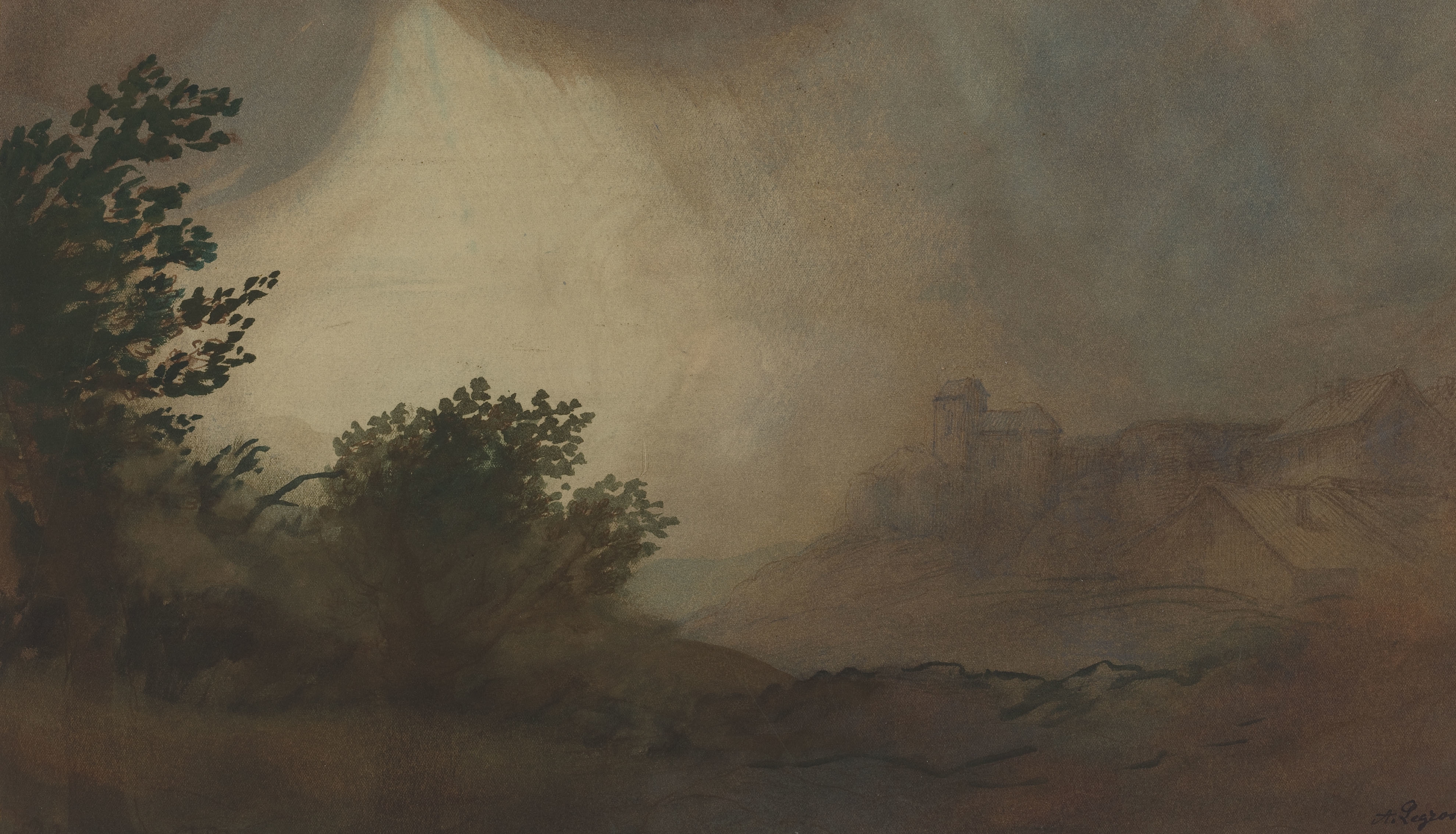
Image Credit: “Alphonse Legros “Storm” (French 1837-1911) Public Domain. Image courtesy of Artvee
It is a few raindrops past midnight
the skies crossed by streaks of bright fumes
lay abandoned above the concrete floors.
Greenish plastic seats at least get a rest
from the myriad wary a traveler
malodorous business suits and naked feet.
It was another maddening day in the glassy hall
tall as a skyscraper without purpose
with screams, and calls, and cries.
A cosmopolitan world in transit
the ghosts of many souls remain
exhausted, ecstatic, fearful or perhaps broken.
Not a sound remains of this resonating chamber
with sterile tiles and stale coffee drinks
mausoleum in waiting of its next harvest.
I have often wandered those corridors alone
when the night had sent the mobs home
to recall adventures lived and not.
How eerie the deathly silence
where so much was alive
hiding within the walls to be born again.
International travels to begin and end here
dreams for those who have but a moment to hope
joy in anticipation of a vicarious journey.
.
.
About the Author: Fabrice Poussin teaches French and English at Shorter University. Author of novels and poetry, his work has appeared in Kestrel, Symposium, The Chimes, and many other magazines. His photography has been published in The Front Porch Review, the San Pedro River Review as well as other publications.
Image Credit: Historic American Buildings Survey Richard Koch, Photographer June, 1936 DETAIL STAIR AT SECOND FLOOR – First Skyscraper, 638 Royal Street, New Orleans, Orleans Parish, LA. The Library of Congress
Tread lightly near the clearing in fading
light; there is no telling which plants
contain pure poison nestled in
waxy-smooth petals and stems
Pretend not to notice striated pink-purple flowers
strewn about the forest floor — unsuspecting
creatures pulled from their nesting
place and tossed aside as an afterthought
Seek and find near a clump of irises: the cold
sparrow, cramped on its side, lurid flesh showing
more than it had in life, features oddly twisted and
sleep-softened eyes closed eternally
Revel in the sacred realization that it belongs
to the earth now, requiring neither proper burial
nor the slightest acknowledgment of the fact
that it is no longer among the living
.
.
About the Author: Melody Wang currently resides in sunny Southern California with her dear husband. In her free time, she dabbles in piano composition and also enjoys hiking, baking, and playing with her dogs. She is a reader for Sledgehammer Lit and can be found on Twitter @MelodyOfMusings.
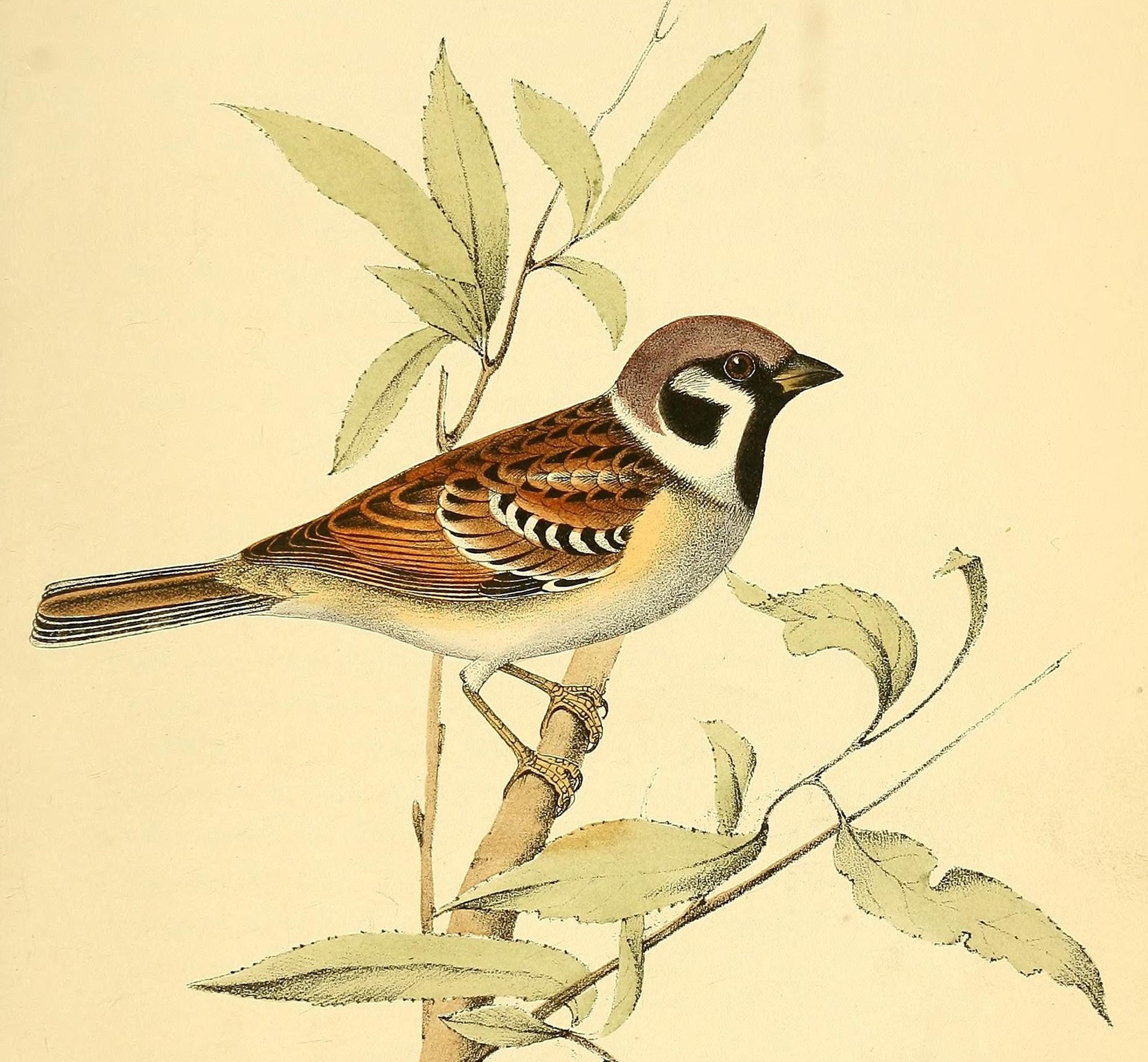
Image Credit: Illustration from “Coloured illustrations of British birds, and their eggs” London :G.W. Nickisson,1842-1850. Public Domain. Image courtesy of The Biodiversity Heritage Library
The brilliance of the night sky remains mostly hidden over Los Angeles with only the brightest stars able to punch through the haze. In the City of the Angels, the dazzle of the cosmos can only be seen from the desert.
We were camping deep in the Mojave, the Milky Way above glistening more beautiful than a thousand cities of man.
We had pitched a tent and a campfire, circled by stones crackled and popped. The October air was still warm and we would instead sleep outside, the bed of my pickup softened by army blankets and unzipped sleeping bags.
We passed a bottle looking out at the silent llano. A shepherd rested next to her, tired from the heat of the day. Shooting stars crossed the sky, so many that we stopped calling them out. She asked me if I thought there were others out there looking back at us. I think there must be I said quietly. Do you think we’ll ever be able To travel out there And see?
I pictured miles of gravel roads scattered houses peeling in the sun rusted chain-link dusty kids on dirt bikes and the flags that decorated the bumpers of broken-down vehicles. I thought about the Fermi Paradox which is astronomer talk for the theory that any civilization with the machines needed to cross the expanse would have burned itself out before it could ever make the final leap.
Her hair, golden in the firelight. Stroking the dog waiting for an answer. The fire popped twice sounding like the cap guns I shot as a kid and my voice softly Why would we want to be anywhere but right here.
.
.
About the Author: Curtis Hayes has worked as a grip, gaffer, and set builder in TV and film production. He’s been a truck driver, a boat rigger, a print journalist and a screenwriter.
He is the author of the non-fiction top-ten NYT bestseller, I Am Jesse James, and his first poetry collection, Bottleneck Slide, has recently been published by Vainglory Press. His work has been featured in numerous anthologies and small press journals.
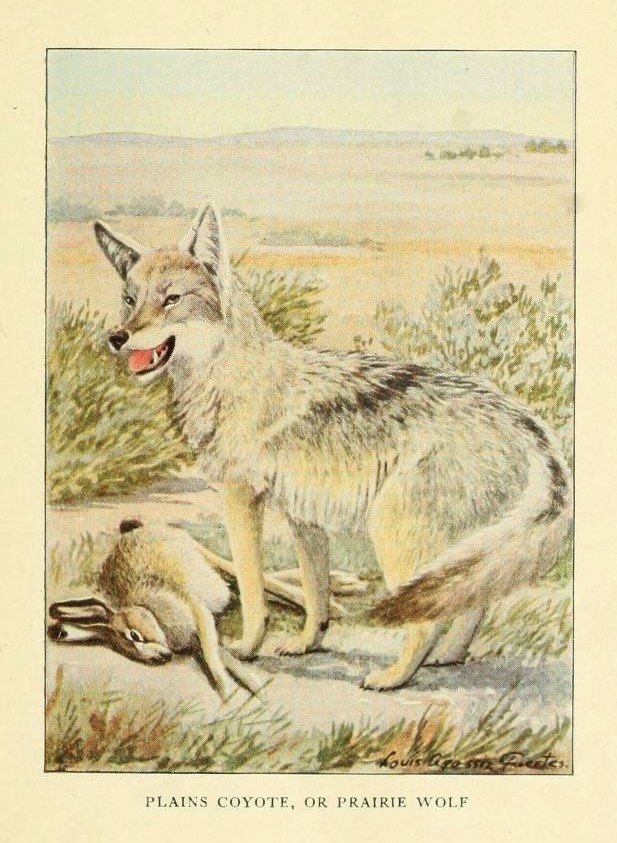
arced his body across the gap, gracefully draped himself
across my shoulders.
I stood there, not wanting to move, the coyote
snugged against me. Maybe I worried
about fleas. Maybe I was guarding his sleep.
I don’t know how long I was still and quiet. I don’t know
how time is measured there.
.
.
About the Author: Samuel Prestridge lives and works in Athens, Georgia. He has published or has forthcoming articles, poems, essays, and interviews in a wide range of publications, including Literary Imagination, Style, Appalachian Quarterly, Paideuma, Poem, The Southern Humanities Review, The Lullwater Review, The Arkansas Review, Autumn Skies, and Better Than Starbucks.
Regarding his approach to writing, he says, “I write poetry because there are matters that cannot be directly stated, but are essential to the survival of whatever soul we can still have. Also, I’m no good at interpretive dance, which is the only other options that’s occurred to me.”
.
Image Credit: Illustration taken from Wild animals of North America Washington, D.C.,The National geographical society[c1918] Public Domain. Courtesy of the Biodiversity Heritage Library.
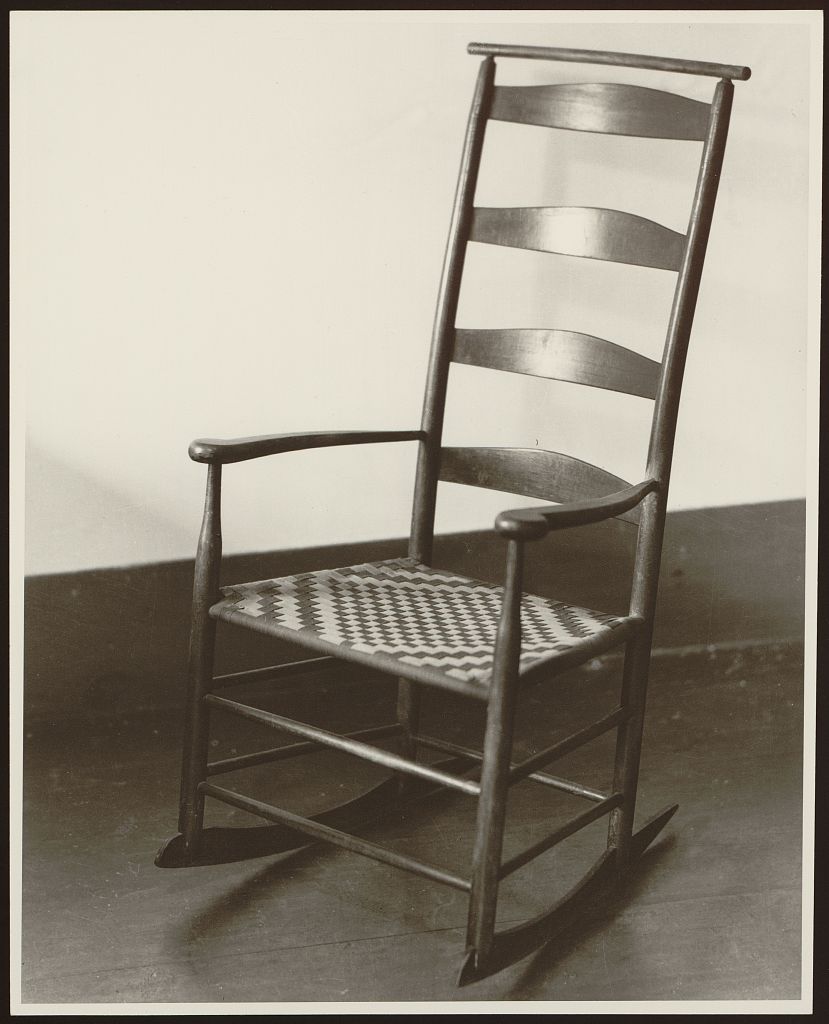
Memories alive as spirits encased in objects,
Set in amber, locked in lucite, wrapped in plaster,
Hanging within webs of spider and silk worm.
A small shell, butterfly, baby shoes, decayed molar,
A coffee cup, refrigerator magnet, Limoges china,
That chair, that blanket, that framed photograph.
The bed which witnessed such tender gymnastics
Turned over to the junk man and thrown onto his truck.
Things given away, things thrown away, things kept.
A 1920s straight razor, a 1903 Colt .32 revolver.
Hoping to feel lighter when the gravity of the past
Still weighs heavy, tethered to dead men’s things.
.
.
About the Author: M.J. (Michael Joseph) Arcangelini was born 1952 in western Pennsylvania. He has resided in northern California since 1979. He has published in a lot of little magazines, online journals, & over a dozen anthologies. He is the author of five collections, the most recent of which is “A Quiet Ghost,” Luchador Press 2020. Arcangelini has been nominated for a Pushcart Prize. He can be reached at poetbear@sonic.net
About the Author, Kerry Trautman: I am a poetry editor for Red Fez, and my work has appeared in various anthologies and in journals, including The Fourth River, Gasconade Review, Midwestern Gothic, Paper & Ink, Third Wednesday, and Think Journal. My poetry books are, Things That Come in Boxes (Kingcraft Press 2012,) To Have Hoped (Finishing Line Press 2015,) Artifacts (NightBallet Press 2017,) and To Be Nonchalantly Alive (Kelsay Books 2020.)
this café is contrary
a strange anomaly in a land of diners
walls paper brick with watercolor mustangs
one calendar, two posters of the hulk
one hulk decal on the cooler
I wonder about the calendar to quality ratio
an equation mastered in blue highways
then wonder how many hulk posters equal a calendar
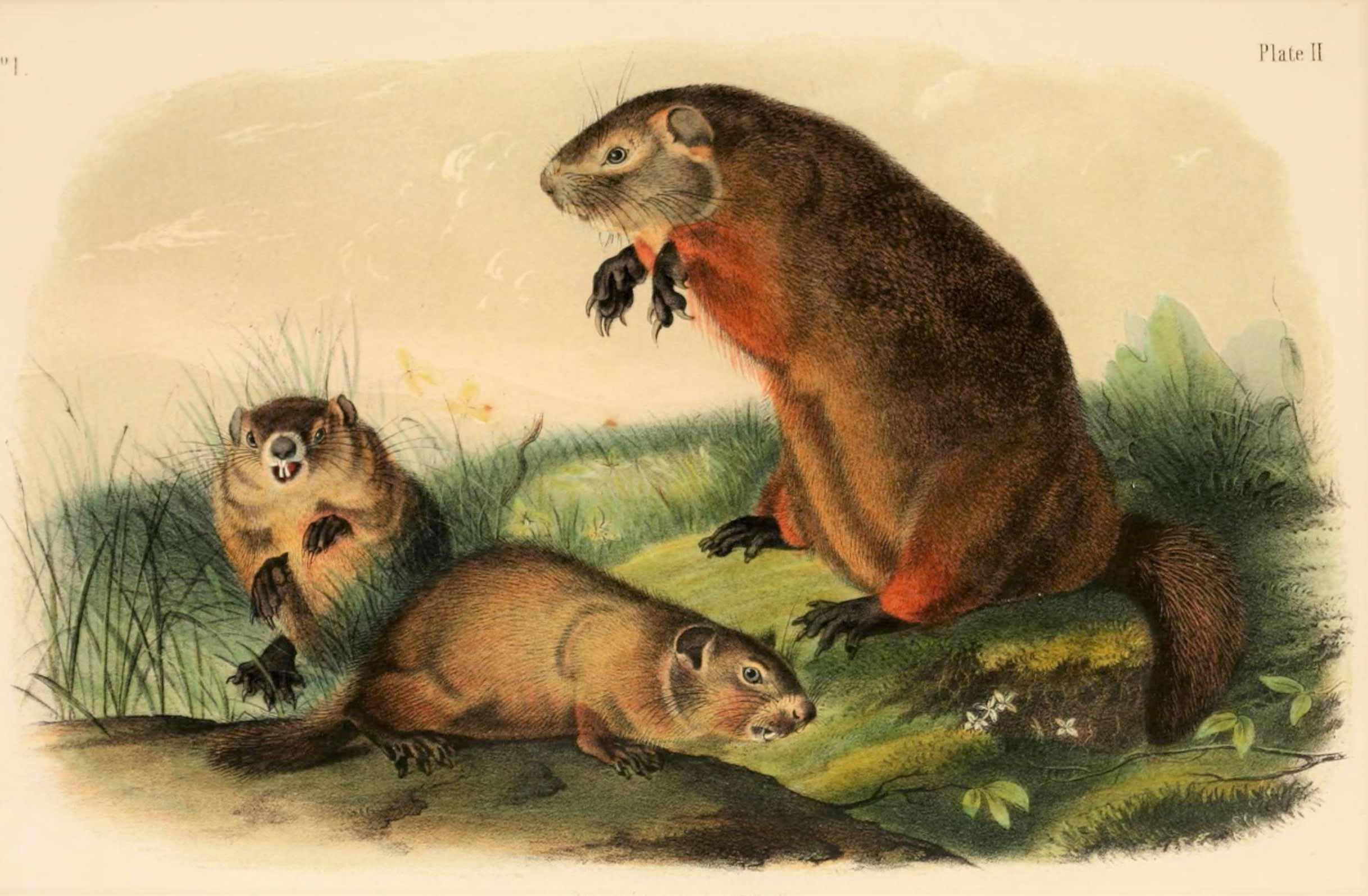
the waitress says her son raises groundhogs
I don’t know what to say
maybe she’s fucking with me
I look deep in the hulk’s eyes this year he has forty-two groundhogs
I say, that sure is a lot of groundhogs
bessemer tunnels and carbon snow
a few towns away
my mother’s family settled in the 1850’s
dropping the A and E
dropping the family crest
marrying into a family with a township named after them
a yellow sign juts from the snow in surrender I miss the america I grew up in
I want to believe this is a statement
on a widening gap in equality
on the erosion of class
on the working persons giving everything away
on the ways we allow government to fail
in not mandating social responsibility
instead, it’s another absurd conservative screed
about the good old days that never were
times when people went to church
family values happened and abortions didn’t
the stop signs have addendums
one says stop touching me
another stop, hump me
the last stop and dance
these winter messages so conflicted
I hunt frozen snakes along the kiskiminetas
here in the bleak of february
I fill myself with enough gray
to crush the restlessness that grows each snow
punxsutawney
ten hours after the groundhog
he saw his shadow
so did this town
there is no evidence this civilization
still tries to understand weather
through the eyes of animals
.
.
About the Author: Jason Baldinger is from Pittsburgh and looks forward to roaming the country writing poems again. His newest books are A Threadbare Universe (Kung Fu Treachery Press) and The Afterlife is a Hangover (Stubborn Mule Press). A History of Backroads Misplaced: Selected Poems 2010- 2020 (Kung Fu Treachery) is forthcoming later this year. His work has been published widely across print journals and online. You can hear him read his work on Bandcamp and on lp’s by The Gotobeds and Theremonster.
The news came via Facebook. Simple Obit.
Immediate family only. This is the age of Covid.
This is the time of dying alone. Grieving alone.
We sat in a funeral home pew the last time I saw
Carolyn, cousins lined up together as we always are
when we say goodbye, in this case to our last uncle.
Despite opposite views, we shared a life together,
weddings, reunions, death. A time to share family
stories or photos we found in a parent’s basement.
I imagine her sons graveside with their father,
no chairs, no flower sprays, no family circling them.
Her brother hundreds of miles away, kidneys failing.
I drive past the house where they lived when we
played Fish or paper dolls on her bedroom floor.
It seems so small. The shutters and window box sag.
A vacant birdhouse sways near an empty feeder. A clump
of limp jonquils wave, and their old Dragon Blood Sedum
I loved pokes through the broken arms of a gargoyle.
.
.
About the Author: Maryfrances Wagner’s books include Salvatore’s Daughter, Light Subtracts Itself, Red Silk (Thorpe Menn Book Award for Literary Excellence), Dioramas, Pouf,The Silence of Red Glass, and The Immigrants’ New Camera. Poems have appeared in New Letters, Midwest Quarterly, Laurel Review, Natural Bridge, Voices in Italian Americana,Unsettling America: An Anthology of Contemporary Multicultural Poetry (Penguin Books), Literature Across Cultures (Pearson/Longman), Bearing Witness, The Dream Book, An Anthology of Writings by Italian American Women (American Book Award from the Before Columbus Foundation), et.al. She co-edits I-70 Review and served as Missouri’s Individual Artist of the Year for 2020.
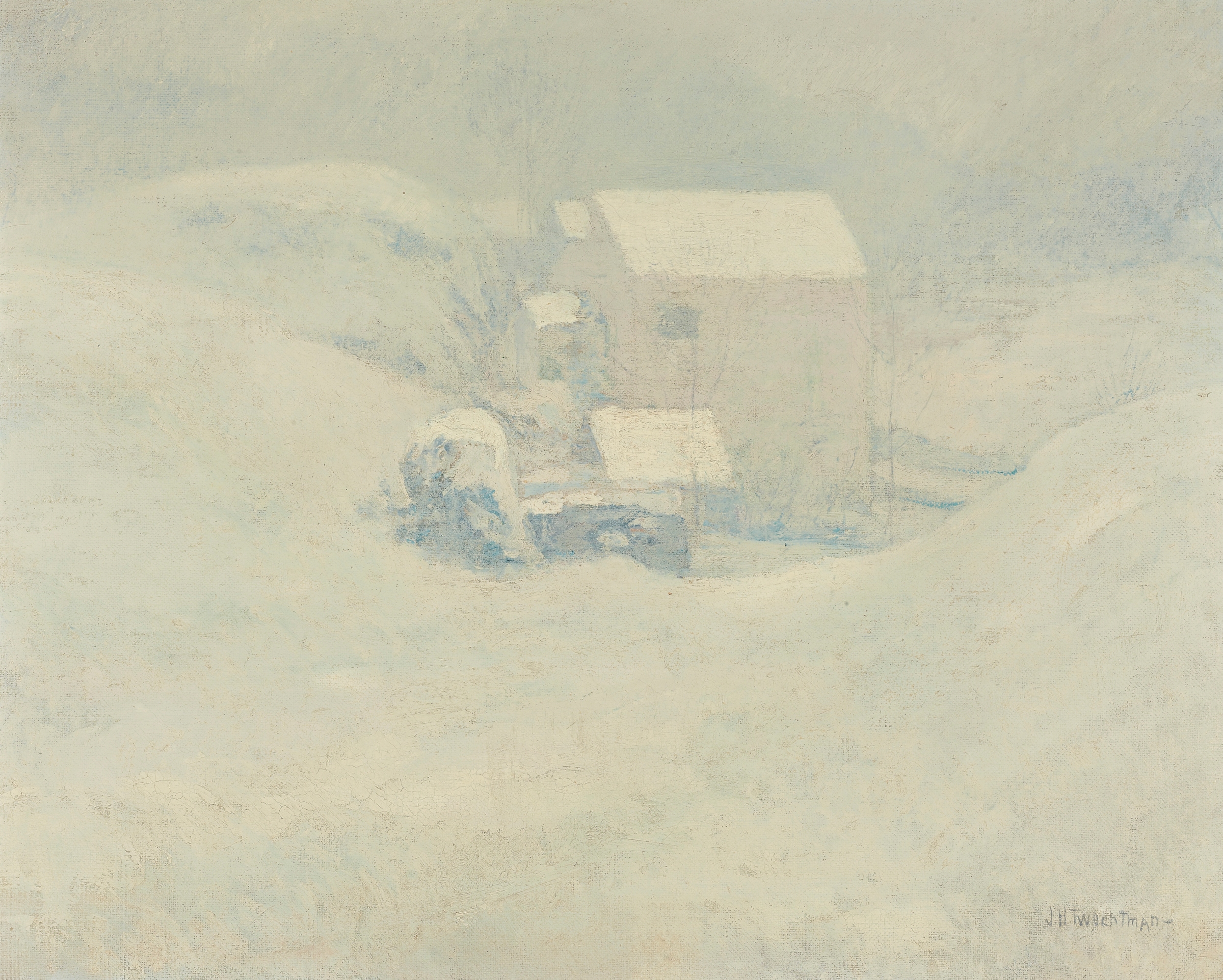
Who can hold the color of the moon,
a porcelain saucer of sweet cream?
The curse of skin at times translucent,
blue veins like gold coursing through quartz.
Pink and red meat glow through with promise.
Its tide of tumbling spindrift seeking
to dissolve all else, to consume even people
poking along in the sand.
Wading through snow carrying thick black books
with tiny type flowing through pages
like marauding ants snapping at the air
they spread through forests and plains,
a seething blizzard that demands
of all falling under, the pure flag of surrender.
.
.
About the Author: Greg Field is a writer, artist, and musician living in Independence, Missouri with his wife, poet Maryfrances Wagner. His poems have appeared in many journals and anthologies to include New letters and Chiron Review. His new book, from Mammoth Press, is Black Heart, which focuses on his Native American heritage. He is a co-editor of the I-70 Review. His paintings are in private collections all over the country. He plays drums for the improvisational jazz band River Cow Orchestra.

 As It Ought To Be