A Review of “What Is Left” By Bunkong Tuon

Shawn Pavey Reviews

What is Left

By Bunkong Tuon

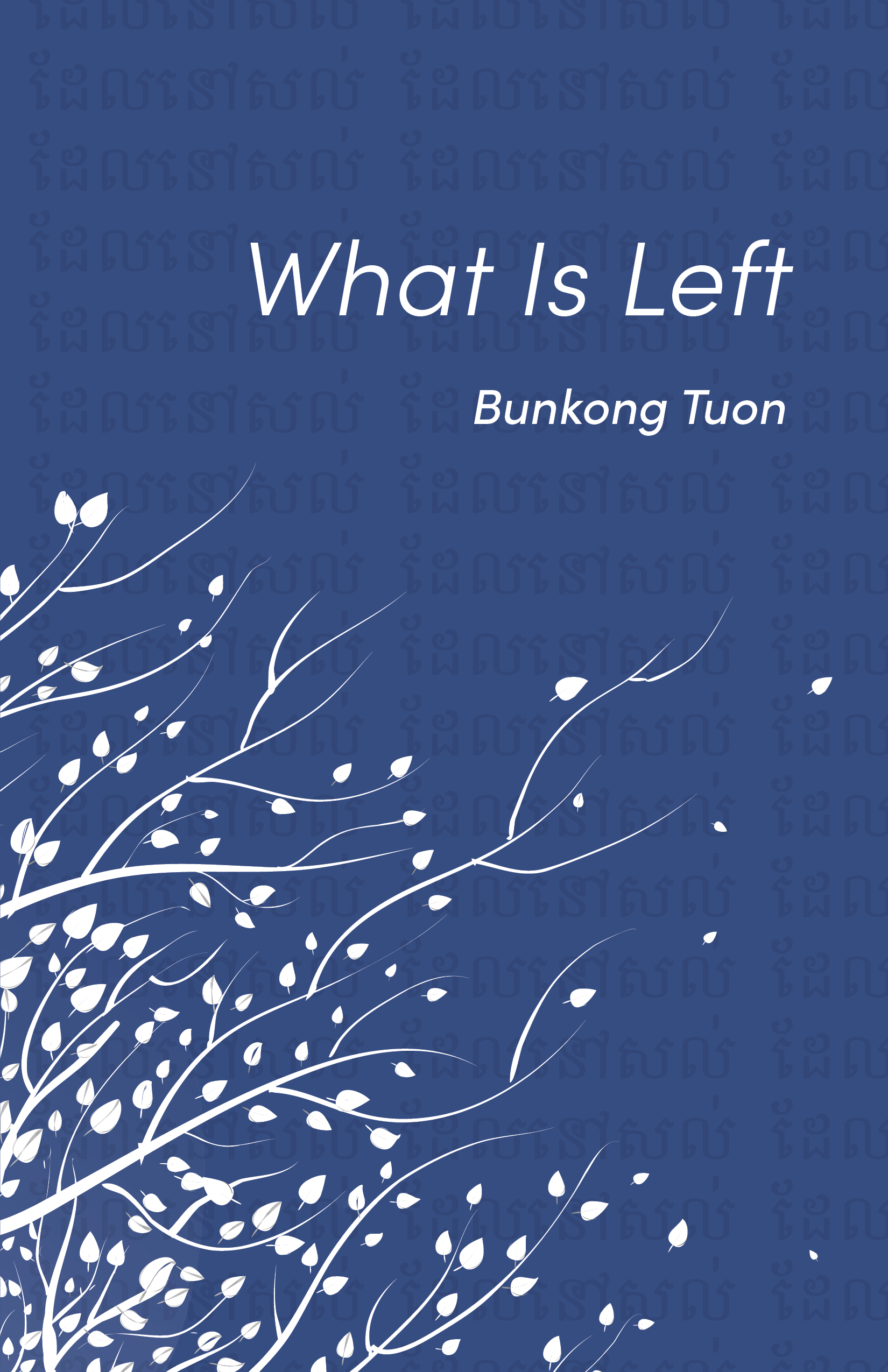
In What Is Left, part of Jacar Press’ “Greatest Hits” chapbook series, Bunkong Tuon brings us on his personal journey as a child refugee of the Khmer Rouge’s atrocities in his homeland of Cambodia. As David Rigsby states in his insightful foreword, “Bunkong Tuon’s childhood took place in a country whose national life in the 1970s underwent unimaginable depredation at the hands of the Khmer Rouge: slaughter, torture, starvation, and the forceful smashing and separation of families.”

To set the tone for the entire collection, the titular opening poem, recently announced as a winner of the 2024 Pushcart Prize, begins:

What is left after war is the gratitude for what is left.
My dreams are filled with ghosts looking for home.
The dead speak to the living through my poetry.
Each time I write, I rebuild. Retrieve what was stolen.

Tuon, while being open about struggle and loss and deep, deep pain, infuses each of these poems with an almost incessant sense of hope. This is one of the most surprising aspects of this work: how Tuon navigates the telling of his story yet, somehow, gives the reader a sense that the life he leads now is both unexpected and a joy. However, as this first poem continues, Tuon, soberly, informs the reader:

Nothing is dead until I let it. English is not the language
Of my birth. It is the language of death. More bombs
Dropped on Cambodia's countryside than in Hiroshima
And Nagasaki. I was bombarded by this language.

I had no choice but to use it.

Tuon references, of course, the covert bombing of Cambodia by the United States from 1969 to 1973 designed to minimize the capabilities of the People’s Army of Vietnam. Tuon as a small child knows America as bombs, destruction, and death. During the reign of the Khmer Rouge, more than a million people were executed – more than 13% of the country’s total population. Families were shattered and much of the country’s population fled the atrocities as refugees.

This is the historical backdrop for Tuon’s poems. The second poem, Under the Tamarind Tree, Tuon reveals a memory of sitting on the lap of an aunt – a child herself – witnessing the funereal rites performed by monks for his mother.

The tree stands still, quiet, 
indifferent. The house sways 
on stilts. 

Monks in saffron robes
and nuns with shaved heads,
lips darkened with betel-nut stain, 

sit chanting prayers 
for the child’s mother. 
Incense perfumes the hot dry air.

The image is heartbreaking but the true marvel is Tuon’s sparse yet musical language. He writes these poems with an almost journalistic detachment, avoiding the temptation to overwrite the emotional vulnerability. Tuon shows us, with his carefully chosen lexicon, the sheer tragedy and loss of this moment experienced by a child in the care of a slightly older aunt. The poem concludes:

Each time the child hears prayers
coming from the house, he cries;
each time he cries, the aunt, a girl herself, 
pinches the boy’s thigh.

It is that last line that shares with the reader the absolute cruelty of the moment. The funeral is witnessed as a result of institutional cruelty, but that tiny act of violence, the thigh-pinch of the aunt on the crying boy’s thigh shows that in that moment, there was little time to grieve. Survival of what lies ahead will require its own toughness.

The next few poems detail Tuon’s refugee journey. In “The Carrying,” he gives us a glimpse of their long journey – on foot – as his grandmother carried the small boy on her back to the refugee camp. In the poem “Gruel,” Tuon recalls a conversation with his uncle about survival.

“When you were young,
we had nothing to eat.
Your grandmother saved for you
the thickest part of her rice gruel.
Tasting that cloudy mixture
of salt, water, and grain, you cried out,
‘This is better than beef curry.’”

All my life I told myself I never knew
suffering under the regime, only love.
This is still true.

The last two lines of this poem may be the true heart of this collection. What carried Tuon through all of this tragedy and trauma was knowing he was loved by extended family members who gave him this, the only thing they had left to their names, this love and this belonging in love, desperate as it was. Tuon’s poem “Debt” shows us a glimpse of his father begging the Khmer Rouge, after they slaughtered children and cut open the bodies to eat the livers.

My father got down
on his knees,
clasped hands over head,
and begged them
for a sliver of a victim’s liver
so that I would not starve.
While everyone was sleeping
my father snuck into the kitchen,
stole a branch of coconuts,
and buried them in the woods.
Each time I cried from hunger
he disappeared into the night,
dug up a coconut,
gave me the juice to drink
and with dirt-encrusted fingers
spooned out the flesh
for me, his only child.

This terrible memory ends the poems specifically about fleeing terror. The following poems in the book deal with how Tuon built a life and is, in a way, relaying his experience to his children but, also, to the readers. There is a poem about how air conditioning in a library hurts to breathe after fleeing jungles. There are poems to his daughter and son. There are poems trying to find purpose in living and moving on from unspeakable loss.

And there is so very much hope.

This hope, deeply ingrained in every single poem, drives this collection. These poems are intimate, they are deeply personal, they reveal the vilest atrocities, and these poems do all that while holding tightly to hope and love and never once slip into maudlin self-pity. While these poems, at least on the surface, could be considered confessional, they never feel like confessional poems. Autobiographical, certainly, which is a type of confessionalism, but they avoid writing about emotion in favor of stark imagery. Tuon shows us the horror and despair and struggle of living through and in spite of the Khmer Rouge. He shows us the life he built because of the sacrifice of the family members who kept him alive. And, ultimately, Tuon shows us the joy that life can hold in contrast to experienced evil.

What Is Left 
by Bunkong Tuon,
2024, Jacar Press.
ISBN: 978-0-936481-56-2,
28 pages.

About the Author: Shawn Pavey is the author of Talking to Shadows (Main Street Rag Press, 2008), Nobody Steals the Towels From a Motel 6 (Spartan Press, 2015), and Survival Tips for the Pending Apocalypse (2019, Spartan Press) which was 1st runner up for the 2020 Thorpe Menn Literary Excellence Award. He co-founded The Main Street Rag Literary Journal and served as an Associate Editor. Recently, he was featured in the second anthology by THE NU PROFIT$ OF P/O/E/T/I/C/ DI$CHORD entitled, And Even If We Did, So What!? from OAC Books. His infrequently updated blog is at http://www.shawnpavey.com.
	

Poetry Soundbite: A Reading and Interview with Bunkong Tuon


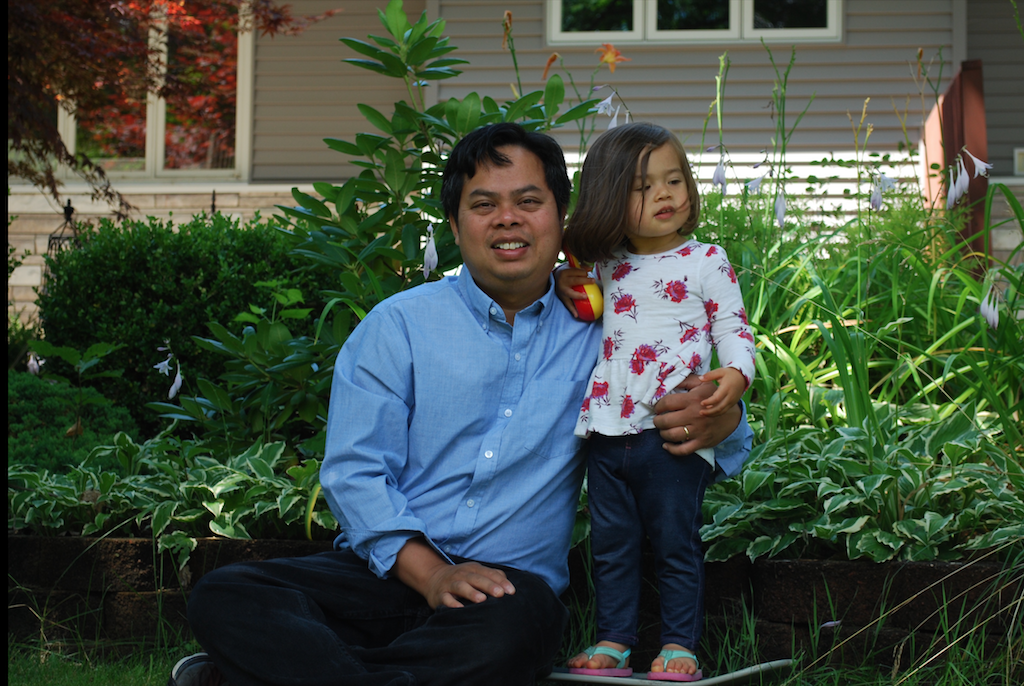
Welcome to AIOTB Magazine’s second Poetry Soundbite, an on-going series of poetry readings and interviews. For this edition, we welcome Bunkong Tuon, a Cambodian-American writer and critic. He is the author of GruelAnd So I Was Blessed (both published by NYQ Books), The Doctor Will Fix It (Shabda Press), and Dead Tongue (a chapbook with Joanna C. Valente, Yes Poetry). He teaches at Union College, in Schenectady, NY. He tweets @BunkongTuon

Below the video, you can find links to the poems from Tuon’s reading.


From Bunkong Tuon’s reading:

“Our Neighborhood in Revere, MA”

“Snow Day”

“Tightrope Dancer”

“Women’s March in Albany”

“My Mother on Her Deathbed”

“My Mother on Her Deathbed” by Bunkong Tuon


This is the sixth in a series of poems from a forthcoming poetry collection about raising a biracial daughter in contemporary America, during this polarizing time of political and cultural upheavals where sexual harassment allegations abound, where a wall, literal and figurative, threatens to keep out immigrants like the narrator, a former refugee and child survivor of the Cambodian Genocide. You can find links to the full series of poems on As It Ought To Be Magazine below.


My Mother on Her Deathbed

Withered away in pus,
knowing that she’d leave
me, her only child.
My uncle’s body crouched in
fetal position on the red
dirt of the refugee camp,
heavy boots of Thai soldiers
thundering on his head,
back and stomach.  
Grandmother weeps
at night
for all her children,
alive and dead,
for her orphaned grandson,
for all parents haunted
by helplessness.
In America
I was the new kid,
a reminder of a war
that tore families apart.  
Saliva clung
to my tear-stained cheeks
and stuck to my hair.
Stephanie  
my first crush said,
“It’s nothing personal.”
But these memories
are wiped clean.
All is forgiven.
A flower blooms
in the desert
when my daughter
hugs me.


About the Author: Bunkong Tuon is the author of Gruel (2015) and And So I Was Blessed (2017), both poetry collections published by NYQ Books, and a regular contributor to Cultural Weekly  He is also an associate professor of English and Asian Studies at Union College, in Schenectady, NY.


Bunkong Tuon’s series of poems on raising a biracial daughter in contemporary America:

Ice Cream

Gender Danger

The Bite

Tightrope Dancer

Women’s March in Albany

My Mother on Her Deathbed


Image Credit: Charles Aubry “Still Life Arrangement” (1864) Digital image courtesy of the Getty’s Open Content Program.

“Tightrope Dancer” By Bunkong Tuon


This is the fourth in a series of poems from a forthcoming poetry collection about raising a biracial daughter in Contemporary America, during this polarizing time of political and cultural upheavals where sexual harassment allegations abound, where a wall, literal and figurative, threatens to keep out immigrants like the narrator, a former refugee and child survivor of the Cambodian Genocide. You can find the complete series of poems below.


Tightrope Dancer

You climb the five-rung ladder
at the children’s playground.

Your mother crouches
below, holding breath.

I stand behind
counting the plastic rungs.

You kick us away,
“I’m a big girl.”

Your mother prepares
to catch your fall.

Each day we hold our breath,
cover our mouths with our hands,

close our eyes, and pray.
Of course, we want you to reach

The top, but not too fast.
And not too far from us.


About the Author: Bunkong Tuon is the author of Gruel (2015) and And So I Was Blessed (2017), both poetry collections published by NYQ Books, and a regular contributor to Cultural Weekly  He is also an associate professor of English and Asian Studies at Union College, in Schenectady, NY.


Bunkong Tuon’s series of poems on raising a biracial daughter in contemporary America:

Ice Cream

Gender Danger

The Bite

Tightrope Dancer

Women’s March in Albany

My Mother on Her Deathbed


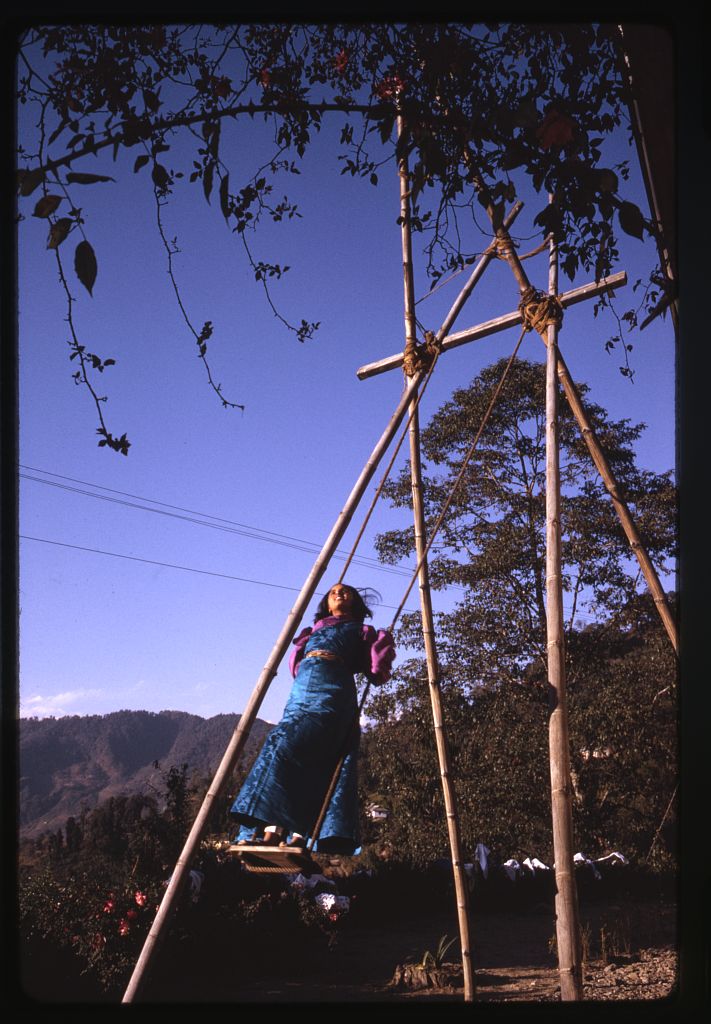
Image Credit: Alice S. Kandell “A young girl swinging on a handcrafted swing, Sikkim” (1969) The Library of Congress

Bunkong Tuon: “Gender Danger”


This is the second in a series of poems from a forthcoming poetry collection about raising a biracial daughter in Contemporary America, during this polarizing time of political and cultural upheavals where sexual harassment allegations abound, where a wall, literal and figurative, threatens to keep out immigrants like the narrator, a former refugee and child survivor of the Cambodian Genocide. You can find the full series of poems below.


Gender Danger

Chanda goes down
the slide, then climbs
back on it, and laughs
when I shake my head,
“No, not that way.”
She flies on the zip-line,
yells, “Look at me, Daddy.”
Inside a giant plastic globe
she screeches as I spin
her world. Then she says,
“Potty, Daddy, Potty.”
We cross the lawn,
go through a corridor,
and find ourselves in
front of the bathroom.
I move us towards
the men’s room
but Chanda yanks me
to the women’s room.
She is aware of gender
but is not ready to use
the restroom on her own.
“Daddy can’t go in there,”
I explain. She cries, “No
boysroom. No boys!”
A woman walks by.
I want to ask for help
but reason prevails.
So I pull Chanda
into the men’s room.
She’s on the toilet,
tears streaming
down her face.
Someone comes in
right after us, whistling.
Chanda looks at me,
eyes squinting, screeches.
I hold one of her hands,
pat her shuddering
shoulders, and repeat,
“It’s okay, Honey.
Daddy’s right here.”


About the Author: Bunkong Tuon is the author of Gruel (2015) and And So I Was Blessed (2017), both poetry collections published by NYQ Books, and a regular contributor to Cultural Weekly  He is also an associate professor of English and Asian Studies at Union College, in Schenectady, NY.


Bunkong Tuon’s series of poems on raising a biracial daughter in contemporary America:

Ice Cream

Gender Danger

The Bite

Tightrope Dancer

Women’s March in Albany

My Mother on Her Deathbed


Image Credit: “Young girl taking a Kodak picture of her doll” (1917) Library of Congress

Bunkong Tuon: “Ice Cream”


This is the first in a series of poems from a forthcoming poetry collection about raising a biracial daughter in Contemporary America, during this polarizing time of political and cultural upheavals where sexual harassment allegations abound, where a wall, literal and figurative, threatens to keep out immigrants like the narrator, a former refugee and child survivor of the Cambodian Genocide. You can find links to the full series of poems below.


Ice Cream

I take Chanda
to the local mall,
where she flies
in the bounce house
with other kids,
screaming and laughing.
She climbs up
the slide and rolls
down the cushy steps.
She pirouettes
on the piano floor.
Then I take her
to the ice cream place
where we share
a cup of vanilla.
I watch her quietly
shove a spoonful
into her waiting mouth,
tasting the sweetness
on her pink tongue.
Memories of my father
flood, how he lost his wife.
When the Khmer Rouge regime
fell, Grandma was preparing to
take me with her to Thailand.
My father took me out
for ice cream one day.
He was telling me
something important.
That he would follow
Grandma and bring me home.
That he would wait
for me.
That he would always . . .
But I couldn’t hear a word
he said once the ice cream
flooded my tongue with
such sweetness.


About the Author: Bunkong Tuon is the author of Gruel (2015) and And So I Was Blessed (2017), both poetry collections published by NYQ Books, and a regular contributor to Cultural Weekly  He is also an associate professor of English and Asian Studies at Union College, in Schenectady, NY.


Bunkong Tuon’s series of poems on raising a biracial daughter in contemporary America:

Ice Cream

Gender Danger

The Bite

Tightrope Dancer

Women’s March in Albany

My Mother on Her Deathbed


Image Credit: “Miss Lisa’s ice cream sign, old Rt. 31, Perrysburg, Michigan” By John Margolies, The Library of Congress

Under the Tamarind Tree

Francisco Manuel Blanco: “Tamarindus Indica”

.

Under the Tamarind Tree

By Bunkong Tuon

.

Editor’s Note: This past week, the nation witnessed devastating images from detention centers and heard hateful rhetoric spewed about immigration. Now, more than ever, it is important to humanize immigration and emphasize empathy. It is in this spirit that we are proud to present the final post in a series of poems about the immigrant experience in America.

Our late Managing Editor, Okla Elliott, featured Bunkong Tuon’s work on As It Ought To Be back in January of 2017. Okla was particularly concerned about the anti-immigration rhetoric heating up in the country and he hoped to showcase the voices of immigrants on our site. In honor of Okla’s memory, Tuon has allowed us to feature more of his poetry about his experience as an immigrant from Cambodia in the United States. All of the poems from this series can be found linked at the end of this article.

.

Under the Tamarind Tree

The child sits on the lap
of his aunt, under the old tamarind tree
outside the family home.

The tree stands still, quiet,
indifferent. The house sways
on stilts.

Monks in saffron robes,
and nuns with shaved heads,
lips darkened with betel-nut stain,

sit chanting prayers
for the child’s mother.

Incense perfumes the hot dry air.

There emerges a strange familiar song
between the child and his aunt that day—
a distant one, melodic but harsh,
as if the strings are drawn too tight—

Each time the child hears prayers
coming from the house, he cries;
each time he cries, the aunt, a girl herself,
pinches the boy’s thigh.

.

Previous poems from Bunkong Tuon’s series on the immigrant experience in America:

Fragments

Our Neighborhood in Revere, MA

Snow Day

An Elegy for a Fellow Cambodian

Halloween, 1985

Dancing Fu Manchu Master

Fishing for Trey Platoo

Lies I Told About Father


.

About the Author: Bunkong Tuon is the author of Gruel (2015) and And So I Was Blessed (2017), both poetry collections published by NYQ Books, and a regular contributor to Cultural Weekly  He is also an associate professor of English and Asian Studies at Union College, in Schenectady, NY.

Bunkong Tuon: “Lies I Told about Father”

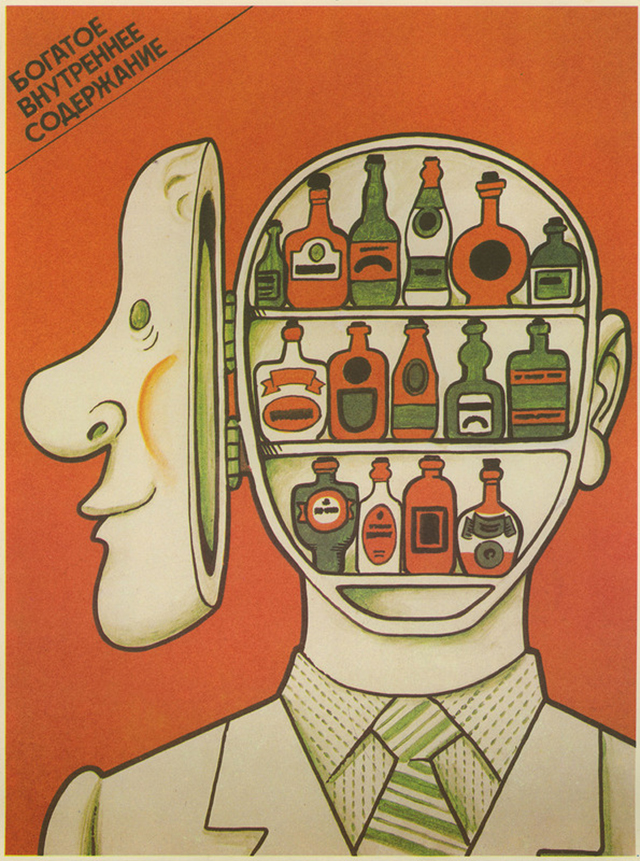
From a Russian Anti-Alcohol Poster

.

Editor’s Note: This is the fifth post in a series of poems about the immigrant experience in America. Our late Managing Editor, Okla Elliott, featured Bunkong Tuon’s work on As It Ought To Be back in January of 2017. Okla was particularly concerned about the anti-immigration rhetoric heating up in America and he hoped to showcase the voices of immigrants on our site. In honor of Okla’s memory, Tuon has allowed us to feature more of his poetry about his experience as an immigrant from Cambodia in the United States. You can find the full series of poems at the end of this page.

.


Lies I Told about Father

I believed I had the power to revive you,
to sit you up in the family’s pigsty,
drunk off your ass, smiling at nothingness,
the late morning light shining on your face.
With a son’s quiet adoration, I chiseled you:
a gangster from the East, a Khmer Krom
whose blood cried out Khmer characters (not Vietnamese),
who, guided by fate, found himself in the West
and married mother for her virtue and beauty.

In these poems you drink because, well, real men
drink, curse, and sleep around (the cursing
and sleeping around, you didn’t do, of course,
because of your love and respect for Mother).
I was an aspiring writer then,
renting a tiny studio on Ocean Boulevard
in Long Beach, following in the drunken
bouts of Charles Bukowski, buying cheap wine,
imitating free verse,
waking up to the stench of sour vomit.
Of course, this life did not last long.
I can’t hold liquor, let alone women.
I have always been a reader,
safe behind words, punctuation, and sentences,
between the pages, where I can conquer
an entire nation or seduce women with my long dash—.

Now, I am engaged to a kind, generous person.
Mother would approve of her.
I am returning to you once again,
not for approval, just to talk,
son to father, but it dawns on me:
I am without you.

.


About the Author: Bunkong Tuon is the author of Gruel (2015) and And So I Was Blessed (2017), both poetry collections published by NYQ Books, and a regular contributor to Cultural Weekly. He is also an associate professor of English and Asian Studies at Union College, in Schenectady, NY.


Previous poems from Bunkong Tuon’s series on the immigrant experience in America:

Our Neighborhood in Revere, MA

Snow Day

An Elegy for a Fellow Cambodian

Halloween, 1985

Dancing Fu Manchu Master

Fishing for Trey Platoo

Lies I Told About Father

Bunkong Tuon: “Fishing for Trey Platoo”

Fishing for Trey Platoo

By Bunkong Tuon


Editor’s Note: This is the fourth post in a series of poems about the immigrant experience in America. Our late Managing Editor, Okla Elliott, featured Bunkong Tuon’s work on As It Ought To Be back in January of 2017. Okla was particularly concerned about the anti-immigration rhetoric heating up in America and he hoped to showcase the voices of immigrants on our site. In honor of Okla’s memory, Tuon has allowed us to feature more of his poetry about his experience as an immigrant from Cambodia in the United States. The full series of poems is available below.

.


Fishing for Trey Platoo 

You might have seen them 
fishing on the shores of the Cape Cod Canal: 

My uncle in his fisherman’s hat 
pulling in a one-foot scup, my aunt in her pajama-like 

pants walking backward up the bike path, 
snapping a line that’s got stuck between the rocks, 

my other aunt reeling in a sea bass 
her husband by her side directing. 

Bikers, joggers, teenagers and their dates, 
families with their children look curiously on. 

Or maybe you have seen them
lining up all three sides of a pier in Salem, 

their wrists jerking in a language 
that bewitches the squids below. 

They are not the only ones.
Other Cambodians and Vietnamese, once enemies, 

fish side by side on the same American pier. 
Other immigrants, Chinese, Spanish, Portuguese 

speaking languages that I can’t understand, come together 
on this spot: sacred rods in hands, beckoning the squid. 

Or maybe you have seen them
under a bridge fishing the Providence River, 

looking for trey platoo, a type of mackerel
like they used to eat in the refugee camps in Thailand. 

Sometimes, my aunts and uncles run into an old friend 
from those long ago days. They talk about the lack 

of food, of sneaking out at night to fish, and of running, 
always running, from the Thai police. 

They exchange phone numbers, share fishing secrets,
and set up a time and place where they’ll fish together again. 

When they get home, my aunts gut the fish,
clean them, fry them, and put them in boiling stew 

of galangal, lemongrass, and kaffir leaves.
My uncles and aunts sit in a circle on the floor, 

eat, and tell stories of how this fish got away
or how one of them got caught by the Thai police. 

No matter how hard they try, they can never understand 
why my cousin and I ever bother with fishing— 

Why we catch and release food, as if it’s some sport.

.


About the Author: Bunkong Tuon is the author of Gruel (2015) and And So I Was Blessed (2017), both poetry collections published by NYQ Books, and a regular contributor to Cultural Weekly  He is also an associate professor of English and Asian Studies at Union College, in Schenectady, NY.


Previous poems from Bunkong Tuon’s series on the immigrant experience in America:

Our Neighborhood in Revere, MA

Snow Day

An Elegy for a Fellow Cambodian

Halloween, 1985

Dancing Fu Manchu Master

Fishing for Trey Platoo

Lies I Told About Father


Image Credit: “Still Life with Mackerel, Lemon and Tomato” By Vincent Van Gogh (1886) Public Domain

Three Poems by Bunkong Tuon


Three Poems

By Bunkong Tuon

.


Editor’s Note: This is the second post in a series of poems about the immigrant experience in America. Our late Managing Editor, Okla Elliott, featured Bunkong Tuon’s work on As It Ought To Be back in January of 2017. Okla was particularly concerned about the anti-immigration rhetoric heating up in America and he hoped to showcase the voices of immigrants on our site. In honor of Okla’s memory, Tuon has allowed us to feature more of his poetry about his experience as an immigrant from Cambodia to the United States. The full series of links can be found below.

.


Snow Day

Silent as night

the morning snow covered

the school, the playground.

A ghost town in this city near the beach.
But no one told this refugee child
about such a day. No one said

to turn on the TV. No one called.

He walked in the white field

looking up to the sky, raising his hands,
letting his brown body fall backward
into the white landscape.

His eyes closed,

each flake gently caressing

his cheeks.

.


An Elegy for a Fellow Cambodian

The reason Vannark got into that fight

  was because Rob had called him a dog-eater.

.


Halloween, 1985

The saliva on your face
(for all the world to see!).

A lifetime of desire, a daily prayer
for death, a return to the beginning,
a place of warmth and affection,

a desire to be with Mother.

.


About the Author: Bunkong Tuon is the author of Gruel (2015) and And So I Was Blessed (2017), both poetry collections published by NYQ Books, and a regular contributor to Cultural Weekly  He is also an associate professor of English and Asian Studies at Union College, in Schenectady, NY.


Previous poems from Bunkong Tuon’s series on the immigrant experience in America:

Our Neighborhood in Revere, MA

Snow Day

An Elegy for a Fellow Cambodian

Halloween, 1985

Dancing Fu Manchu Master

Fishing for Trey Platoo

Lies I Told About Father


Image Credit: “Snow on Fence” Artist: Unknown, Digital image courtesy of the Getty’s Open Content Program.