Stew Jorgenson: “5 Geezuz”


5 Geezuz

I asked her how she felt about 5G
she said it might be
the new heaven and earth
of which Jesus spoke
everything so nice
a real virtual paradise
smart TVs
camera phones
electric cars
surveillance drones

artificial and
emotional intelligence
unconscious streaming
on demand

I took a sip of my high-buck latte
and told her wed die just in time
if were lucky

She said its too late for that
come back to bed
its memory foam
Ill make you forget


About the Author: Stew is a part-time wordsmith who has more words than he knows what to do with. Sometimes he uses the extras for poetry, celestial navigation, or target practice. He has worked on farms, fishing boats, and in factories.  He’s skilled at mistakes, guilty by association, and suffers from occasional bouts of inspiration. He is working on a cure.


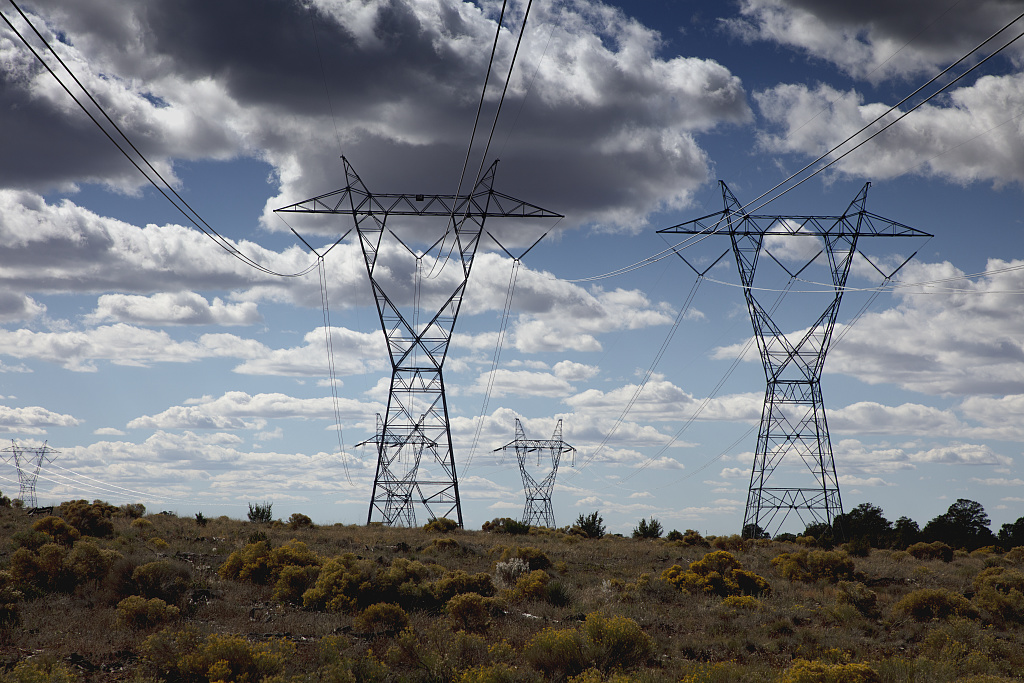
Image Credit: Carol M. Highsmith “Power lines dominate the skyscape above Flagstaff in northern Arizona” (2018) The Library of Congress

Rusty Barnes: “The Act of Working”


The Act of Working

The act of working occupied 
my father like an obsession,

a crushing sixty hours a week,
running a loader over and over

again into heaps of gravel
and sand, piling dump trucks

full and sending them out into
the world. Rock he loaded built

prisons and roads all over 
the states of NY and PA

but he came home every night
dirty and so exhausted he’d

eat then fall asleep, cigarette
still in his fingers and  I write

this poem over and over,
seeing my father lie there,

hoping somehow this poem,
this time, will end differently.


About the Author: Rusty Barnes lives in Revere MA with his family. His poems appear widely, in Plumb, Heavy Feather Review, and Black Coffee Review, most recently. His latest chapbook, Apocalypse in A-Minor, is out from Analog Submission Press.


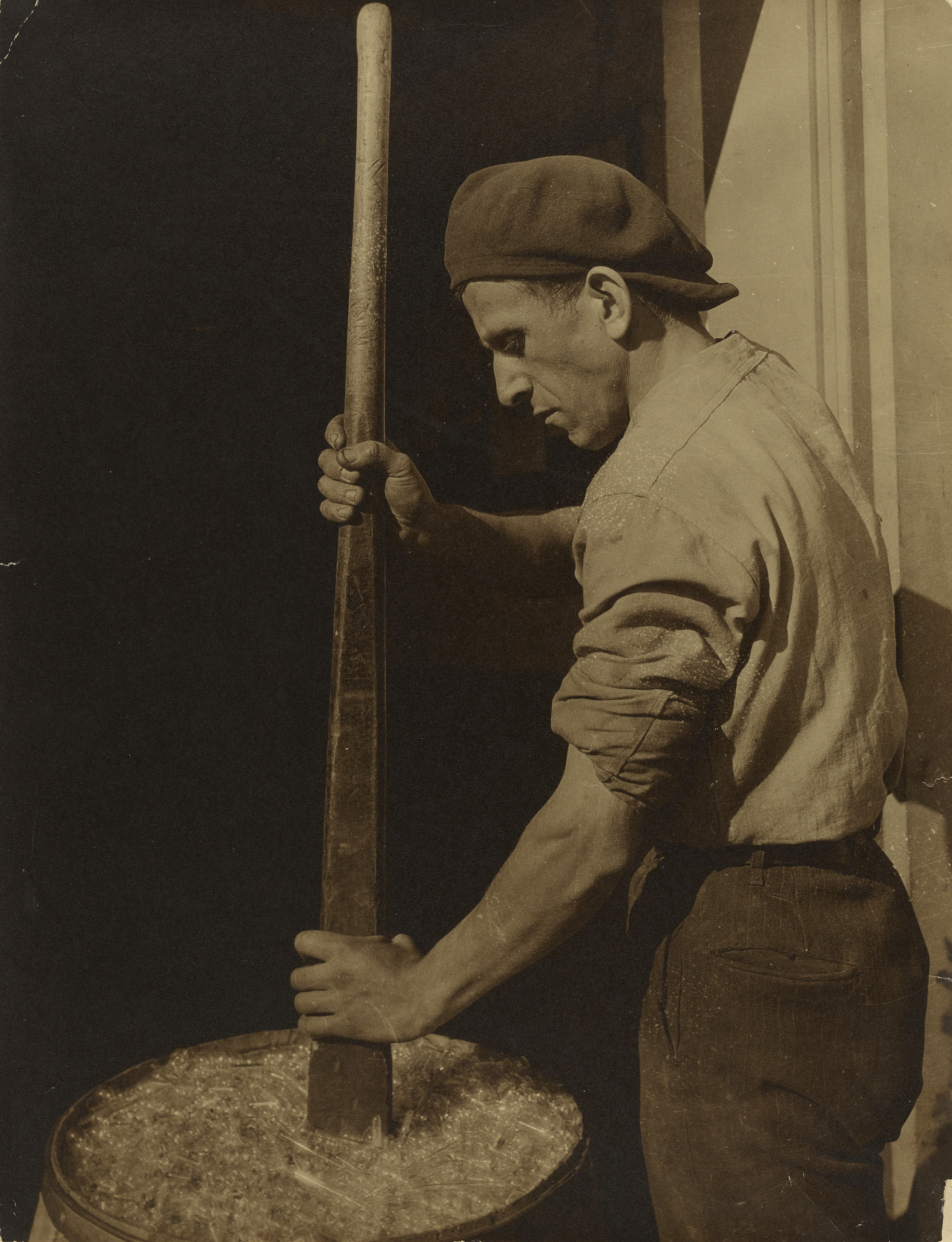
Image Credit: Lewis Hine “Factory Worker” (1931) Digital image courtesy of the Getty’s Open Content Program.

William Taylor Jr: “A Seventeen Dollar Glass of Wine and the Early Works of Matisse”


A Seventeen Dollar Glass of Wine and the Early Works of Matisse 

I’m drinking overpriced wine 
in the cafe at the Museum 
of Modern Art on a Tuesday 
afternoon.

Summer is done and the tourists 
have gone back to whatever sad places
spawned them.

Everything is quiet and civilized
as I sip the Chardonnay of the day
while reading about Baudelaire
and his miserable genius.

The women are pretty
in skirts and dresses
whispering to each other
as they gaze upon some lesser 
work of Edvard Munch.

Everything is clean, white and pristine
while outside are all the things 
the headlines drone on about:

cancer and freeway crashes 
things on fire and the inevitable 
collapse of every decent 
thing we’ve ever known.

But it all seems so far away 
and meaningless when 
compared to what Matisse 
achieved in his later years

and it feels pointless 
to dwell upon such dreariness
when confronted with Warhol’s 
comic book yellows 
and reds.

Here the mistakes of our past
have been captured and neutralized
handsomely framed and placed 
upon the walls with gilded 
plaques of explanation

so that we might see
and soberly contemplate
for a moment or two
before moving on 
to something else 

and then back downstairs 
for another glass of wine 
before everything
closes.


About the Author: William Taylor Jr. lives and writes in the Tenderloin neighborhood of San Francisco.  He is the author of numerous books of poetry, and a volume of fiction. His work has been published widely in journals across the globe, including Rattle, The New York Quarterly, and The Chiron Review. He is a five time Pushcart Prize nominee and was a recipient of the 2013 Kathy Acker Award. Pretty Words to Say, a new collection of poetry, is forthcoming from Six Ft. Swells Press.


Image Credit: “Henri Matisse Working on a Paper Cut Out” Creative Commons Public Domain

Seth Jani: “Vesper”


Vesper

It’s getting dark now.
I set down the half-finished book
and find the kingdom filling with water.
Insects murmur as the light drains
and a second radiance pours out
its alms.
May I be forgiven for never knowing
the earth closely enough?
For never discerning the small words
in the wind’s confusion?
I pause and watch the shadow
of a moment.
I count the breaths between
eons of time.
From the lip of the canyon
the blood moon almost fits
into the palm of my hand.


About the Author: Seth Jani lives in Seattle, WA and is the founder of Seven CirclePress (www.sevencirclepress.com). Their work has appeared in The American Poetry JournalChiron ReviewRust+Moth and Pretty Owl Poetry, among others. Their full-length collection, Night Fable, was published by FutureCycle Press in 2018. More about them and their work can be found at www.sethjani.com.


Image Credit: Alfred Stieglitz”Equivalents” (1927) Digital image courtesy of the Getty’s Open Content Program.

John Dorsey: “Perpetual Motion”


Perpetual Motion

in the 1980’s 
everything was smooth sailing 
except 
drugs
aids
starvation
exploding space shuttles 
&
the threat of foreign wars 

we had miami vice
& a small hole 
peeking through the ozone layer
from all of those cans of hairspray 

everyone in the trailer park 
had a waterbed

our neighbors at the top of the hill
got their kids a chihuahua puppy for christmas

they would take turns tossing it
onto the bed 

watching the poor thing 
sway back & forth
like a drunken sailor

only a few weeks 
after bringing it home 
it slid right off the bed

snapping its neck 
without even a whimper

rubber ball still firmly in its mouth

as a child’s birthday party went on
in full swing in the next room

it was so quiet
that we thought 
it was playing a game

& then the youngest neighbor boy
started wailing  

as his brother approached the body 
with plastic army men
as if it was just some peaceful beast 
he had killed in battle

their father covered it up 
with a beach towel
as their mother asked us
who wanted cake

& somehow like magic
the decade was over
before it had even really 
gotten started.


About the Author: John Dorsey lived for several years in Toledo, Ohio. He is the author of several collections of poetry, including Teaching the Dead to Sing: The Outlaw’s Prayer (Rose of Sharon Press, 2006), Sodomy is a City in New Jersey (American Mettle Books, 2010), Tombstone Factory, (Epic Rites Press, 2013), Appalachian Frankenstein (GTK Press, 2015) Being the Fire (Tangerine Press, 2016) and Shoot the Messenger (Red Flag Press, 2017) and Your Daughter’s Country (Blue Horse Press, 2019). His work has been nominated for the Pushcart Prize. He may be reached at archerevans@yahoo.com.


More By John Dorsey:

The Mark Twain Speech

Creatures of Our Better Nature

Picker


Image Credit: Marion Post Wolcott “Parked cars on private yard and trailer park sign where many workers from United Aircraft live in their own trailers. East Hartford, Connecticut”  (1941) The Library of Congress


Ben Nardolilli: “Large Bull-Thistle”


Large Bull-Thistle

Looking up Chenango County,
It’s what I do at work, travelling through
The internet and coming across
Maps, images, and demographic data
For counties I’ll probably never go to

But I help out the people there,
Or who died there and whose families
Have moved on to other places,
They need their checks
And I make sure they get them

I know death unites us all,
Yet asbestos seems a runner-up,
I wonder if I’ve ever been exposed
And if some pale tumor
Is ready to bloom inside me because of it

Then I can join with the men
And women who died by similar means,
In Erie, in Albany, in Kings County,
In Warren, and in Wayne, finally,
Someone else can process a claim for me


About the Author: Ben Nardolilli currently lives in New York City. His work has appeared in Perigee Magazine, Red Fez, Danse Macabre, The 22 Magazine, Quail Bell Magazine, Elimae, The Northampton Review, Local Train Magazine, The Minetta Review, and Yes Poetry. He blogs at mirrorsponge.blogspot.com and is trying to publish a novel.


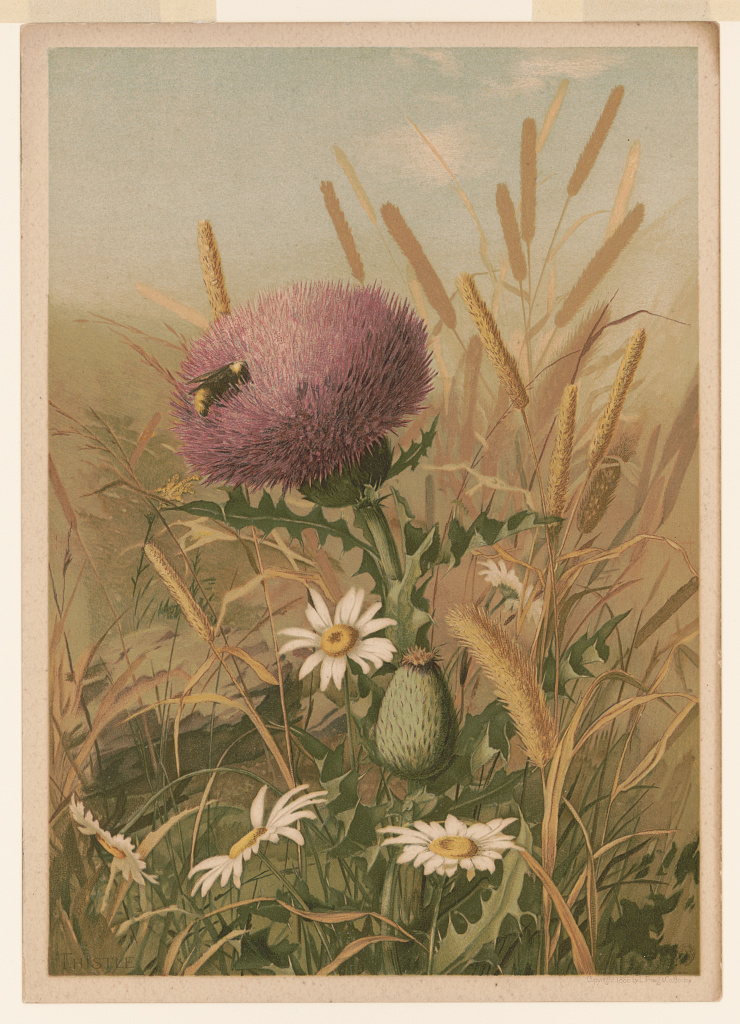
Image Credit: “Thistle” L Prang & Co. (1886) The Library of Congress


L.B. Sedlacek: “The Moon’s Trees”


The Moon’s Trees

In 1971 Stuart Roosa orbited the moon
on Apollo 14 with some 400 seeds packed
away in his personal kit, orbiting too.

The seeds were: loblolly pine, redwood,
sweetgum, sycamore and douglas fir.
They were germinated back on earth

and planted all over the world.  
Some were planted beside
their earthbound counterparts.

After more than 20 years, there’s 
no discernible difference between 
the two classes of trees.

Some of the trees are no longer alive.
Roosa is buried in section 7A of
Arlington National Cemetery.

Even with the intricate machinery,
the trees didn’t like what the
moon is supposed to do.


About the Author: L.B. Sedlacek is an award winning poet and author with poetry and fiction appearing in many different journals and zines.  Her latest poetry books are “The Adventures of Stick People on Cars” (Alien Buddha Press), “The Architect of French Fries” (Presa Press) and “Words and Bones” (Finishing Line Press.)  She is a former Poetry Editor for “ESC! Magazine” and also co-hosted the podcast for the small press, “Coffee House to Go,” for several years.  She teaches poetry at local elementary and middle schools and publishes a free resource for poets, “The Poetry Market Ezine.”  In her free time, LB enjoys swimming, reading, and taking guitar lessons.


Image Credit: John Russell “The Face of the Moon” (1797) Public Domain

John Macker: “Last Riff for Chet”


Last Riff for Chet

Chet Baker used to bend over
his horn like the saddest, most suffering flower
speak into it like an echo does in dream
coaxing faded blossoms from the air
gathering them in breath to the place
on earth he felt closest to
trembling with shadows
then mutate their fragrances into a
civilization of invisible words as if
every spring, trigger-fingered
April’s bent their music to the ground
coaxing forth rose after rose
their powder-burned faces
bold, fragrant, strained, maverick
delivering echo after echo.

Chet sounded the blues,
riffed circles around the discordant rainbows
of romance in the dark until 
they drifted so close
you could pluck them like strings:
standing there streetlamp insouciant 
smoking the heroin gun of Paris
blowing interstellar lullabies
working his own myth into the 
hard ground
while I’m bent over this ancient
jukebox in the Lariat Bar
hit parade reduced to a row of square
buttons I punch into entropy.

At last, I find Chet as he empties a 
chamber of pure blue language
onto a white tablecloth
opens the window to each new bloom
with his lips
as he always has,
saying something pure to the earth
knowing no surrender is a cliché.
He had chiseled features.  
There’s a plaque for him in Amsterdam
outside the Hotel
Prins Hendrik at the last spot
he soared through life
on his way  
to the ground.


About the Author: John Macker’s latest books are Atlas of Wolves (Stubborn Mule Press, 2019) and The Blues Drink Your Dreams Away: Selected Poems 1983-2018 (Stubborn Mule Press, 2018 and a finalist for a New Mexico/Arizona Book Award.) Macker has lived in Northern New Mexico for 24 years.

Chase Dimock: A Review of Sugar Fix By Kory Wells


A Review of Kory Wells’ Sugar Fix

By Chase Dimock


       When Kory Wells sent a submission of poetry to As It Ought To Be Magazine last Spring, I was first struck by her sense of history. In “The Assistant Marshal Makes an Error in Judgement”, Wells writes about a census taker in the 19th century whose guesses at the races of citizens become their legal racial identity inscribed in his government ledger. Today in 2020, it took a court battle to resolve the citizenship question on this year’s census. This poem is more than just a historical footnote; its reminder of how the politics of identity and who has the right to recognize it have continually defined American society. In this way, Wells follows the words of fellow southern writer William Faulkner, who famously wrote (and was even more famously quoted by President Obama) “The past is never dead. It’s not even past.”

       With Sugar Fix, Wells explores the never dead past of today through the personal and cultural memories of sugar. Recipes handed down from generations are clues to her family mythologies, the proustian taste of chocolate ice cream on her tongue is a confessional, the trade in sugar and sweets in the south is a material history of the racial and class tensions of reconstruction to today. It would be easy for a book of poetry centered on the metaphor of sugar to lapse into saccharine sentimentality and syrupy cutesiness, but Wells is a poet who understands the cost of pleasure and the sweat demanded of our brow before we taste the sweet. She knows the personal price of indulgence and the social cost of supplying society with its sugar fix.

       In “Still Won’t Marry” Wells takes on the persona from the traditional Appalachian song “Angeline the Baker,” envisioning her as weary of the constant propositions of trading sugar for skin:

He says a little taste of sugar will cure
my weary back, my aching shoulders, my
singed arms. Like I don’t know what that man wants.

Angeline’s side of the story is wise to the after effects of the sugar fix “The bed a pleasure too short. Babies Chores./ His wants ahead of mine.” Wells connects this folklore of indulgence in sugar and flesh to her own past in a poem whose title conveniently saves me from having to summarize its premise: “He drove a four-door Chevy, nothing sexy, but I’d been thinking of his mouth for weeks.” During a date at a Dairy Queen Drive in, Wells is fixated: Continue reading “Chase Dimock: A Review of Sugar Fix By Kory Wells”

Larry D. Thacker “In the Days of Drones”


In the Days of Drones    

            “And it came to pass that each of them 
            Were given their unique mark, a familiar, 
             A spirit drone following on each action 
            Made by them, as one with their thoughts.”

There is no satisfactory term yet
for the size of these personal drones,
not nano-sized, micro nor mini.

They are not the size of the tiniest  
domesticated animals, teacup Yorkies, 
for instance, but indeed visible. 
Let us say, somewhere between 
a large dragonfly and a fit swamp frog. 
These are, of course, non-technical terms. 

Some hybridized ho-hum miracle 
of organic-electronic-philosophical flesh,
most resemble agile, fragile insects. 
They are very near indestructible. 
They crawl. They fly. They hover and hide.

They do not belong to us. You belong
to them essentially, assigned 
by the Office on Personal Safety. 

It is not a choice. You turn fifteen, 
you get a monitor drone. A third eye 
some call them. There is no fanfare, no 
happy party, no article in the local news 
crawl, no culturally significant ritual 
with drums, dancing. 

                                      No marching 
across a stage, no bowing, transferring 
of drones from one hand to another, 
no mutilating of body parts, no gifts,
handshakes or hugs from an official,  
no new names imagined by a shaman,
no vision quest, sweat lodge, no songs, 
cards with cash. No cake. No ice cream. 

You just wake up from a night’s sleep
and your drone is with you, in sleep mode
on your chest, having already finished 
merging with your brain however it must.   

Who, or what, exists on the other side 
of these creatures, monitoring, recording, 
watching, listening, or not, or whatever, 
remains a great mystery to most of society. 

But there are rumors. Always rumors. 


About the Author: Larry D. Thacker’s poetry is in over 150 publications including SpillwayStill: The JournalValparaiso Poetry ReviewPoetry South, The Southern Poetry Anthology, The American Journal of Poetry, and Illuminations Literary Magazine. His books include three full poetry collections, Drifting in AweGrave Robber Confessional, and Feasts of Evasion, two chapbooks, Voice Hunting and Memory Train, as well as the folk history, Mountain Mysteries: The Mystic Traditions of Appalachia. His fourth full poetry collection, Gateless Menagerie, is forthcoming from Unsolicited Press. His MFA in poetry and fiction is earned from West Virginia Wesleyan College. Visit his website at: www.larrydthacker.com


Image Credit: The Library of Congress