Two Ghazals

Two Ghazals

By Mike James

.

Cowboys & Cinderellas

I’m waiting for the apocalypse or the rapture. In the meantime, I’m reading Stein.
Also, growing cabbages, Watching John Wayne movies, while I paint my nails.

Some people pretend to live without shadows. Are always perfectly shaved.
Ignore salsa stains, flatulence. Expect worry to be, at least, three houses away.

The best we hope for are angels grown tired of heaven’s many perfections.
Who miss beer, sex, mascara. Who miss a world happy to wake from dreams.

On slow days, I work in the garden. The squirrels seem to like what I produce.
In good years I harvest peppers, cucumbers. Bad years, profanity and (yep) dust.

Art News tells us, second chances are no harder than the first. We just write
Songs about the second. We romanticize failure since we all have practice.

.

Ghazal

A garden doesn’t make you a farmer any more than boots make you a
Cowboy. Go on and play your make-believe. Go to your fashion show.

Appropriation is the least appreciated art. Going forward, we should
Only speak in quotes from Collete, Betty Boop, and her doe-eyed ilk.

If thievery was legal, where would the fun be? Cat burglars no more
Romantic than postman. Duchamp another man with an extra urinal.

Listen, the whole world practices make-believe. Have you ever seen
A President give an oath with fingers not crossed? That’s was a dream.

Matthew Broderick, once parroted the line, There’s a kind of freedom in
Being completely screwed. Let me an offer an agreement. Give an amen.

.

About the Author:  Mike James is the author of eleven poetry collections. His most recent books include: Crows in the Jukebox (Bottom Dog), My Favorite Houseguest (FutureCycle)and Peddler’s Blues (Main Street Rag.) He has previously served as associate editor for both The Kentucky Review and Autumn House Press. After years spent in South Carolina, Missouri, Pennsylvania, and Georgia, he now makes his home in Chapel Hill, North Carolina with his large family and a large assortment of cats.

“The Mark Twain Speech” By John Dorsey

.

.

The Mark Twain Speech
for mark mcclane

you talk about frontiers
that only dead men
& drunks can see

not about the blood
& sweat that goes
into words that won’t sell
the stories of heartbreak
& what time can do
to beautiful things

everything turned to bone

words careening off your tongue
& down a river
slow to offer amnesty
to those in a sinking ship.

.

Check out our interview with John Dorsey on his book, Letting the Meat Rest.

.

About the Author: John Dorsey lived for several years in Toledo, Ohio. He is the author of several collections of poetry, including Teaching the Dead to Sing: The Outlaw’s Prayer (Rose of Sharon Press, 2006), Sodomy is a City in New Jersey (American Mettle Books, 2010), Tombstone Factory, (Epic Rites Press, 2013), Appalachian Frankenstein (GTK Press, 2015) Being the Fire (Tangerine Press, 2016) and Shoot the Messenger (Red Flag Press, 2017). He is the current Poet Laureate of Belle, MO. His work has been nominated for the Pushcart Prize. He may be reached at archerevans@yahoo.com


More By John Dorsey:

Punk Rock at 45

Creatures of Our Better Nature


Image Credit:  Chase Dimock “The Mississippi River in Cape Girardeau”

The Incredible Bipolar Hulk: A Conversation with Poet Daniel Crocker

.

The Incredible Bipolar Hulk:

A Conversation with Poet Daniel Crocker

By Chase Dimock

.

The genius of The Incredible Hulk is that everyone can identify with him. All people have a reservoir of anger inside them, and we all know the painful discipline of managing anger, lest it erupt into senseless rage. The Hulk Smash is the fantasy of acting on our anger with a violent ferocity that mirrors the inner, emotional experience of pain.

In his latest chapbook, Gamma Rays, Daniel Crocker identifies with the Hulk as a metaphor for the experience of bipolar disorder. As It Ought To Be debuted Crocker’s Hulk poem “The Incredible Hulk Tries to Write a Poem” last January. For Crocker, the Hulk is more than just a momentary outburst; he is an enduring persona who embodies the manic energy of bipolar disorder. Crocker’s poems humanize the Hulk, and in turn, provide insight into the mind of the bipolar person as they navigate the impulses within them. I had a chance to ask Crocker about the Hulk and how he personifies the bipolar experience in his poetry.


Chase Dimock:  The first question on anyone’s mind when they first look at your cover is going to be “Why the Hulk?” In the past, you’ve written poems in which you take on the personas of Cookie Monster, Skeletor, and George Bailey from It’s a Wonderful Life among others. What is it about the Hulk that made him worthy of an entire collection of poetry? What does taking on his persona uniquely achieve among your pantheon of pop culture icons?


Daniel Crocker: The simple answer is, I love the Hulk. I wrote one Hulk poem, the one where he goes shopping after taking klonopin, and then I couldn’t stop for awhile. I was filtering everything through the Hulk. I originally thought I might end up with a full length, but after about 20 poems I realized I was kind of done with the story I wanted to tell. But, he’s a great metaphor. Any negative aspect of your personality, especially those that center around losing control, that’s basically the Hulk. He’s the things you bury deep. In a lot of ways this books is about coming to terms with that.

So I used it as a metaphor for my bipolar disorder because you never know when you’re going to have another episode. You just try to keep them at bay with medication. Then I started thinking about what it means to navigate love and a relationship when you have this hanging over your head–when you’re not always sure you’re going to wake up okay. Unlike Shit House Rat, however, this is more about coming to terms with it. It is, I think, a happy book with a happy ending.


Chase Dimock: The Hulk has been incarnated as a comic, a cartoon, a TV show, and several movies. I know the TV show version of the Hulk the best because I grew up watching reruns. In that version, he’s somewhat of a loner who tries to manage his rage alone and channel it toward productive ways to help the people he runs into. The show always ends with “The Lonely Man Theme.” It seems like your Hulk is more like the Hulk from the comics, which places him in a romantic relationship with Betty. Why was it important to focus so many of your poems on the Hulk in a relationship?


Daniel Crocker: In the end, it’s a book about navigating a relationship while having a mental illness. In my favorite runs of the Hulk, Bruce was always afraid of his anger coming out. He would do anything to keep the Hulk away–even though it’s a part of him. He was so obsessed with finding a cure that his relationship with Betty would be strained. When I was diagnosed with bipolar, I read up everything I could on it. So, I understand that level of obsession. I also, of course, worry that my symptoms could come back at any time—even while on medication.  So, I hope it shows the impact of bipolar disorder on one’s immediate family as well as just the person who has it. In the end, though, it’s just coming to terms with the monster inside of you–whatever that may be.

Continue reading “The Incredible Bipolar Hulk: A Conversation with Poet Daniel Crocker”

“Paul Lynde” By Mike James

.

Paul Lynde

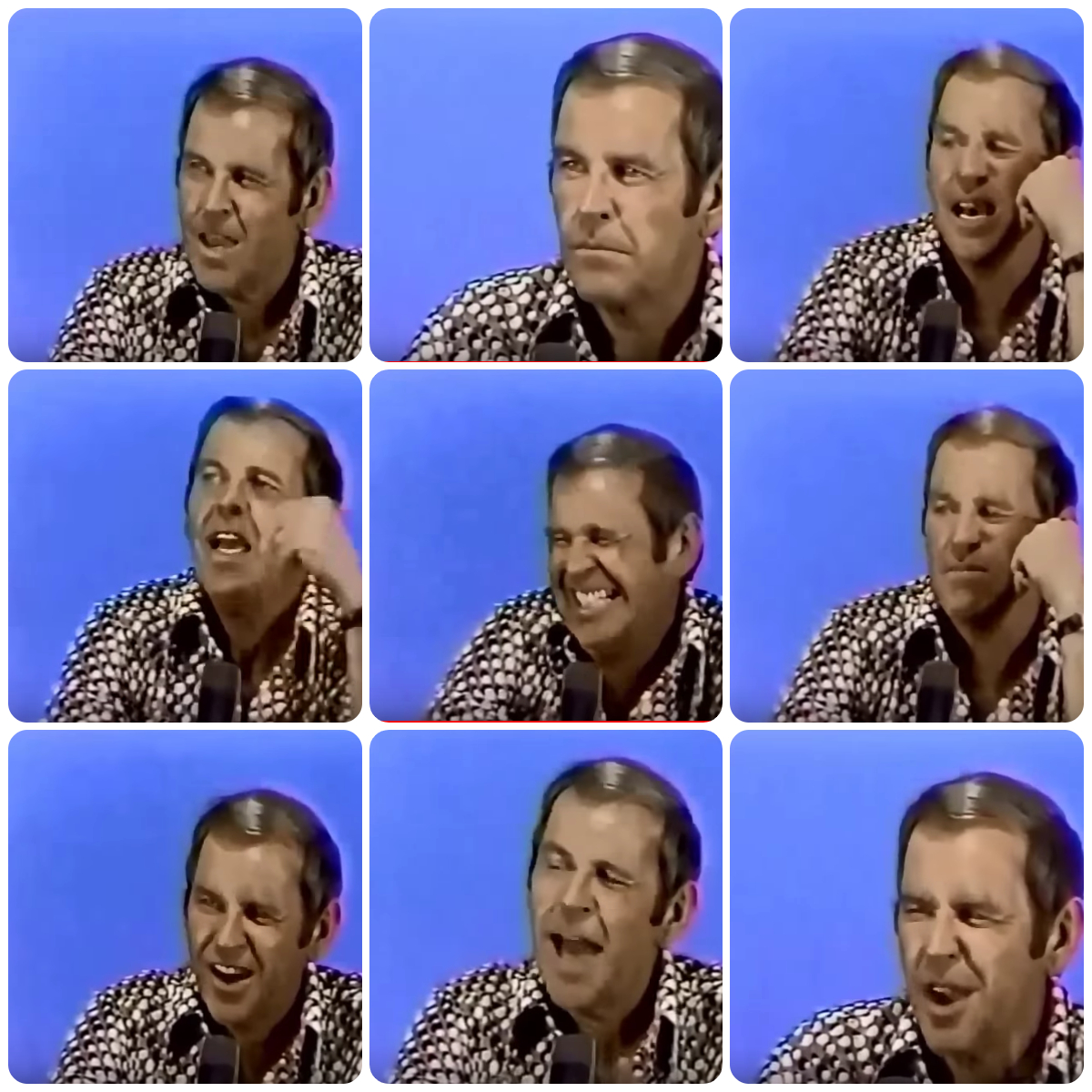
Died on an early January Sunday in Beverly Hills. If he’d been born in early January, he’d be a Capricorn. He was a Gemini. During the 1970’s it was popular to tell people “your sign.” Like shag carpet, that’s less popular now. Paul trusted astrology. Call him a man of the times. Call him Liberace without a piano, add a scarf. Geminis love illusions and music. Prefer light blue and yellow. The great talents of Geminis “are in the social realm.” Does that include cooking? Paul Lynde liked to drink white wine while cooking. He loved to cook.

.


About the Author: Mike James has been widely published in magazines, large and small, throughout the country. His thirteen poetry collections include: Jumping Drawbridges in Technicolor (Blue Horse), First-Hand Accounts from Made-Up Places (Stubborn Mule), Crows in the Jukebox (Bottom Dog), My Favorite Houseguest (FutureCycle)and Peddler’s Blues (Main Street Rag.) He has served as an associate editor for the Kentucky Review and Autumn House Press, as well as the publisher of the now defunct Yellow Pepper Press. He makes his home outside Nashville, Tennessee.More information can be found on his website at mikejamespoetry.com.


More By Mike James:

Grace

Two Ghazals

Visit Our Updated Author Interviews Page

Vanessa Bell “Conversation at Asheham House” (1912)

Over the years, we have had the privilege to interview a range of poets, novelists, and multimedia artists. Check out our updated archive of interviews and discover some new, contemporary literary voices.

Bunkong Tuon: “Lies I Told about Father”

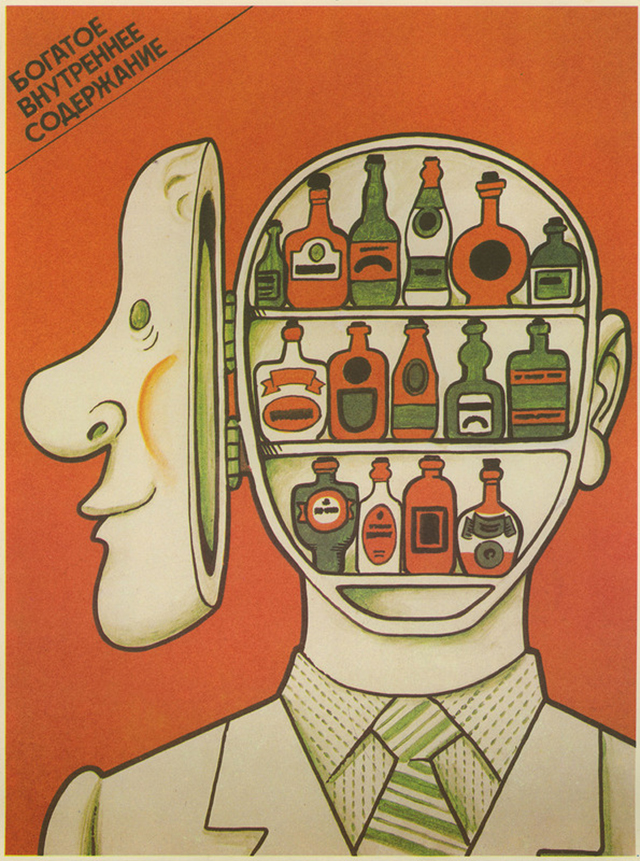
From a Russian Anti-Alcohol Poster

.

Editor’s Note: This is the fifth post in a series of poems about the immigrant experience in America. Our late Managing Editor, Okla Elliott, featured Bunkong Tuon’s work on As It Ought To Be back in January of 2017. Okla was particularly concerned about the anti-immigration rhetoric heating up in America and he hoped to showcase the voices of immigrants on our site. In honor of Okla’s memory, Tuon has allowed us to feature more of his poetry about his experience as an immigrant from Cambodia in the United States. You can find the full series of poems at the end of this page.

.


Lies I Told about Father

I believed I had the power to revive you,
to sit you up in the family’s pigsty,
drunk off your ass, smiling at nothingness,
the late morning light shining on your face.
With a son’s quiet adoration, I chiseled you:
a gangster from the East, a Khmer Krom
whose blood cried out Khmer characters (not Vietnamese),
who, guided by fate, found himself in the West
and married mother for her virtue and beauty.

In these poems you drink because, well, real men
drink, curse, and sleep around (the cursing
and sleeping around, you didn’t do, of course,
because of your love and respect for Mother).
I was an aspiring writer then,
renting a tiny studio on Ocean Boulevard
in Long Beach, following in the drunken
bouts of Charles Bukowski, buying cheap wine,
imitating free verse,
waking up to the stench of sour vomit.
Of course, this life did not last long.
I can’t hold liquor, let alone women.
I have always been a reader,
safe behind words, punctuation, and sentences,
between the pages, where I can conquer
an entire nation or seduce women with my long dash—.

Now, I am engaged to a kind, generous person.
Mother would approve of her.
I am returning to you once again,
not for approval, just to talk,
son to father, but it dawns on me:
I am without you.

.


About the Author: Bunkong Tuon is the author of Gruel (2015) and And So I Was Blessed (2017), both poetry collections published by NYQ Books, and a regular contributor to Cultural Weekly. He is also an associate professor of English and Asian Studies at Union College, in Schenectady, NY.


Previous poems from Bunkong Tuon’s series on the immigrant experience in America:

Our Neighborhood in Revere, MA

Snow Day

An Elegy for a Fellow Cambodian

Halloween, 1985

Dancing Fu Manchu Master

Fishing for Trey Platoo

Lies I Told About Father

Bunkong Tuon: “Fishing for Trey Platoo”

Fishing for Trey Platoo

By Bunkong Tuon


Editor’s Note: This is the fourth post in a series of poems about the immigrant experience in America. Our late Managing Editor, Okla Elliott, featured Bunkong Tuon’s work on As It Ought To Be back in January of 2017. Okla was particularly concerned about the anti-immigration rhetoric heating up in America and he hoped to showcase the voices of immigrants on our site. In honor of Okla’s memory, Tuon has allowed us to feature more of his poetry about his experience as an immigrant from Cambodia in the United States. The full series of poems is available below.

.


Fishing for Trey Platoo 

You might have seen them 
fishing on the shores of the Cape Cod Canal: 

My uncle in his fisherman’s hat 
pulling in a one-foot scup, my aunt in her pajama-like 

pants walking backward up the bike path, 
snapping a line that’s got stuck between the rocks, 

my other aunt reeling in a sea bass 
her husband by her side directing. 

Bikers, joggers, teenagers and their dates, 
families with their children look curiously on. 

Or maybe you have seen them
lining up all three sides of a pier in Salem, 

their wrists jerking in a language 
that bewitches the squids below. 

They are not the only ones.
Other Cambodians and Vietnamese, once enemies, 

fish side by side on the same American pier. 
Other immigrants, Chinese, Spanish, Portuguese 

speaking languages that I can’t understand, come together 
on this spot: sacred rods in hands, beckoning the squid. 

Or maybe you have seen them
under a bridge fishing the Providence River, 

looking for trey platoo, a type of mackerel
like they used to eat in the refugee camps in Thailand. 

Sometimes, my aunts and uncles run into an old friend 
from those long ago days. They talk about the lack 

of food, of sneaking out at night to fish, and of running, 
always running, from the Thai police. 

They exchange phone numbers, share fishing secrets,
and set up a time and place where they’ll fish together again. 

When they get home, my aunts gut the fish,
clean them, fry them, and put them in boiling stew 

of galangal, lemongrass, and kaffir leaves.
My uncles and aunts sit in a circle on the floor, 

eat, and tell stories of how this fish got away
or how one of them got caught by the Thai police. 

No matter how hard they try, they can never understand 
why my cousin and I ever bother with fishing— 

Why we catch and release food, as if it’s some sport.

.


About the Author: Bunkong Tuon is the author of Gruel (2015) and And So I Was Blessed (2017), both poetry collections published by NYQ Books, and a regular contributor to Cultural Weekly  He is also an associate professor of English and Asian Studies at Union College, in Schenectady, NY.


Previous poems from Bunkong Tuon’s series on the immigrant experience in America:

Our Neighborhood in Revere, MA

Snow Day

An Elegy for a Fellow Cambodian

Halloween, 1985

Dancing Fu Manchu Master

Fishing for Trey Platoo

Lies I Told About Father


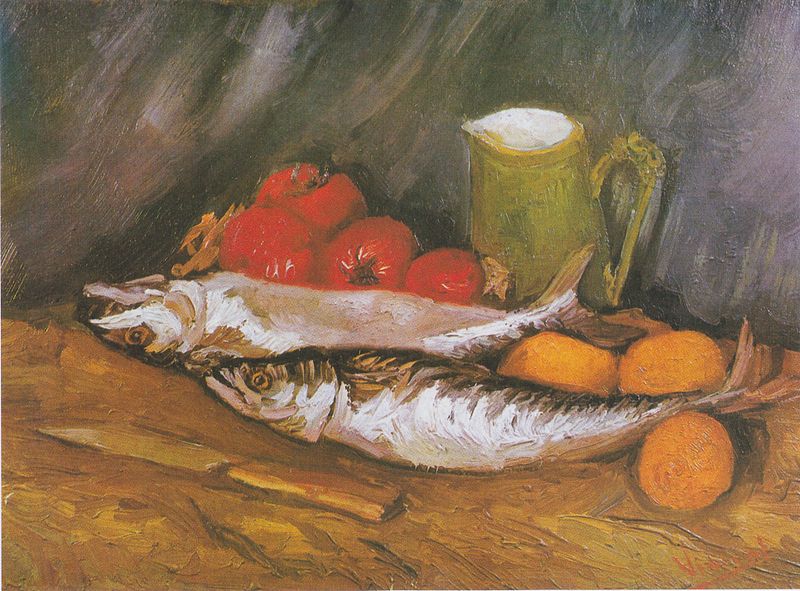
Image Credit: “Still Life with Mackerel, Lemon and Tomato” By Vincent Van Gogh (1886) Public Domain

Bunkong Tuon: “Dancing Fu Manchu Master”

Dancing Fu Manchu Master

By Bunkong Tuon


Editor’s Note: This is the third post in a series of poems about the immigrant experience in America. Our late Managing Editor, Okla Elliott, featured Bunkong Tuon’s work on As It Ought To Be back in January of 2017. Okla was particularly concerned about the anti-immigration rhetoric heating up in America and he hoped to showcase the voices of immigrants on our site. In honor of Okla’s memory, Tuon has allowed us to feature more of his poetry about his experience as an immigrant from Cambodia in the United States. The full series of poems is available below.

.


Dancing Fu Manchu Master

One day, walking home

by myself, a blue plastic backpack slung

over my shoulders, a Christmas gift

from our sponsor, I noticed three boys

watching me from the convenience store

down the corner near an apartment complex.
The leader, a short, red-haired, chubby kid,
stepped out of the shadow, and called out,
“Ching Chong, are you from Hong Kong?”

I quickened my pace pretending

to hear my Grandmother calling me.

“Hey, can you help me with my math homework?”
They burst out laughing.

Seeing me walk firmly away, they slurred out

a slew of hurtful words.

“Why don’t you go back to China?”

“Do you eat dogs where you come from?”

“You use grass and leaves to wipe your ass, right?”
“Do you know Kung Fu?”

With this last question saliva,

warm and gooey, hit my neck.

I closed my eyes, counted my steps,
mindful of my breath, my heart slowed.
I jumped and turned,

thirty feet straight into the air,

took out my sword, with a flick

of the wrist, saw heads roll,

tumbling away down the sidewalk,
bodies slumped behind:

red blossoming concrete.

Trained in the mysterious arts

of Dr. Fu Manchu, I made myself
disappear before the police arrived.

.


About the Author: Bunkong Tuon is the author of Gruel (2015) and And So I Was Blessed (2017), both poetry collections published by NYQ Books, and a regular contributor to Cultural Weekly  He is also an associate professor of English and Asian Studies at Union College, in Schenectady, NY.


Previous poems from Bunkong Tuon’s series on the immigrant experience in America:

Our Neighborhood in Revere, MA

Snow Day

An Elegy for a Fellow Cambodian

Halloween, 1985

Dancing Fu Manchu Master

Fishing for Trey Platoo

Lies I Told About Father

Saturday Afternoon at The Midland Theatre in Newark, Ohio

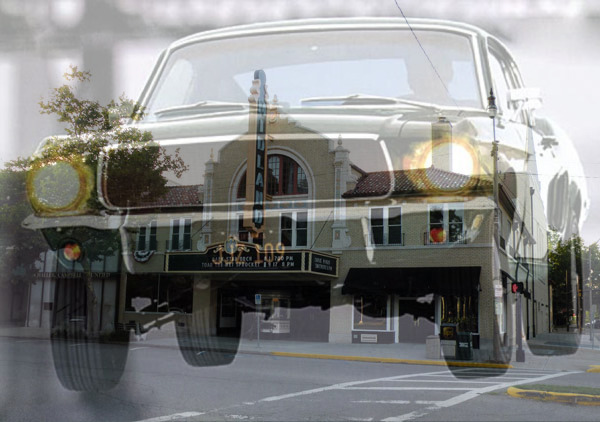
Montage of a scene from Bullitt and a photo by Leepaxton at en.wikipedia, CC BY-SA 4.0,


Saturday Afternoon at The Midland Theatre in Newark, Ohio

By Roy Bentley

.

Slouched in a theater seat and watching Bullitt for the third time, a look I
get from an usher might best be described as granting a general amnesty
and full pardon for my having shelled out only the one admission price.
There’s the balcony with its blue and red curved seat backs. By a door to the
upstairs men’s room a framed likeness of the Civil War drummer boy, Johnny
Clem, whose baby-faced looks and sudden-dark hair remind me of a young
Italian, then Sal Mineo in Rebel Without a Cause. There’s that angels-in-the-
architecture grand gesture of a ceiling, the wall of drapes of eloquently
pleated purple. And there’s the screen framed in its filigree of gold and silver.
The usher is accommodating me by simply not noticing—I’m on my third
popcorn, third enormous Coca-Cola, second box of Milk Duds, when I realize
I’m happy. Elated. In Ohio at fourteen you’re disappointed most of the
time. So I want to tell Frank Bullitt just how it feels to be from Dayton and
new here, a fat-kid eighth grader at Fulton Middle School. But then, Steve
McQueen is French-kissing Jacqueline Bisset good-morning. Strapping on
a shoulder holster and .38 pistol. Now he’s stopped at the corner of Clay and
Taylor, searching the pockets of his trench coat/suit coat for change. I’ve loved
that look all afternoon. The usher reacts as if that says it, that fuck-the-world
expression of Frank Bullitt as he gives up and bangs the cover and steals a
newspaper. Turns out, 1968 isn’t for the faint of heart. You need a Mustang
GT 390. Ice water for a blood type. A tolerance for the visages of the dead
you made dead, slaughtering out of that old American purity of motive
that dissolves into a communion of terrific car chases wherein thunderous
algorithms of horsepower rule.

This poem first appeared in The Southern Review


About the Author: Roy Bentley has published five books of poems, including Walking with Eve in the Loved City, which was selected as a finalist for the 2018 Miller Williams Poetry Prize and is available from the University of Arkansas Press or at Amazon. Bentley’s poems have appeared in Able Muse, Rattle, Blackbird, Shenandoah, Prairie Schooner, The Southern Review, and elsewhere. He is the recipient of a Creative Writing Fellowship in Poetry from the National Endowment for the Arts, as well as fellowships from the Florida Division of Cultural Affairs and the Ohio Arts Council.

Three Poems by Bunkong Tuon


Three Poems

By Bunkong Tuon

.


Editor’s Note: This is the second post in a series of poems about the immigrant experience in America. Our late Managing Editor, Okla Elliott, featured Bunkong Tuon’s work on As It Ought To Be back in January of 2017. Okla was particularly concerned about the anti-immigration rhetoric heating up in America and he hoped to showcase the voices of immigrants on our site. In honor of Okla’s memory, Tuon has allowed us to feature more of his poetry about his experience as an immigrant from Cambodia to the United States. The full series of links can be found below.

.


Snow Day

Silent as night

the morning snow covered

the school, the playground.

A ghost town in this city near the beach.
But no one told this refugee child
about such a day. No one said

to turn on the TV. No one called.

He walked in the white field

looking up to the sky, raising his hands,
letting his brown body fall backward
into the white landscape.

His eyes closed,

each flake gently caressing

his cheeks.

.


An Elegy for a Fellow Cambodian

The reason Vannark got into that fight

  was because Rob had called him a dog-eater.

.


Halloween, 1985

The saliva on your face
(for all the world to see!).

A lifetime of desire, a daily prayer
for death, a return to the beginning,
a place of warmth and affection,

a desire to be with Mother.

.


About the Author: Bunkong Tuon is the author of Gruel (2015) and And So I Was Blessed (2017), both poetry collections published by NYQ Books, and a regular contributor to Cultural Weekly  He is also an associate professor of English and Asian Studies at Union College, in Schenectady, NY.


Previous poems from Bunkong Tuon’s series on the immigrant experience in America:

Our Neighborhood in Revere, MA

Snow Day

An Elegy for a Fellow Cambodian

Halloween, 1985

Dancing Fu Manchu Master

Fishing for Trey Platoo

Lies I Told About Father


Image Credit: “Snow on Fence” Artist: Unknown, Digital image courtesy of the Getty’s Open Content Program.