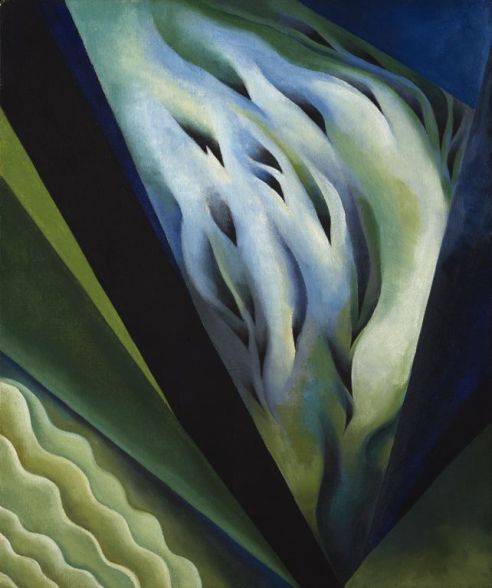
“Grace” By Mike James


Grace

Before she chose her one new name, she trembled through a dozen baby books. Walked through library stacks and touched every Anna and Sylvia, all the Marianne’s, Eileen’s, and Audre’s. Said each in a slow whisper, elongating vowels into a wish. Now and then, imagined saying the name with a confident rasp. What she wanted was not a mark of winter, but spring’s first color and the alchemy of change.

Finally, the choice stood out as much as her dark over-tall frame, as much as her cliff-sharp cheek bones. Jacob, her former self, became a passenger on a bus headed to an endless west.

The directions were in the small compass of her hands.

.

About the Author:  Mike James is the author of eleven poetry collections. His most recent books include: Crows in the Jukebox (Bottom Dog), My Favorite Houseguest (FutureCycle)and Peddler’s Blues (Main Street Rag.) He has previously served as associate editor for both The Kentucky Review and Autumn House Press. After years spent in South Carolina, Missouri, Pennsylvania, and Georgia, he now makes his home in Chapel Hill, North Carolina with his large family and a large assortment of cats.


Image Credit: “Blue and Green Music” By Georgia O’Keeffe (1921)

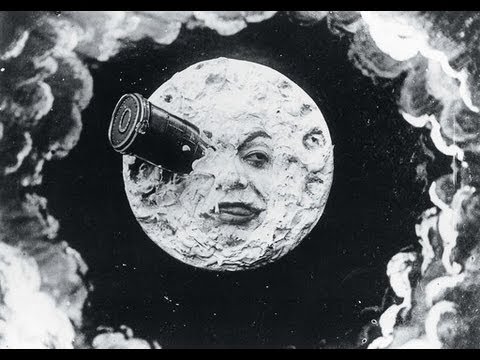
“Sometimes the Moon is Nothing More Than the Moon” By Jason Ryberg


Sometimes the Moon is Nothing
More Than the Moon

Sometimes the moon comes down
(if she happens to be in town)
from her royal couch of clouds
to drink with us (my shadow
and me) when no one else will.

Sometimes the moon rings like a temple bell
on a brittle, breathless, freeze-dried night,
signaling the beginning (or maybe the end)
of something important and radiates
with a halo of steam like a luminous
ball of dry ice.

Sometimes the moon is a curved dagger
that some Bedouin bandit prince
might have brandished in the blue and grainy
late, late show of my childhood dreams.

Sometimes the moon is a white rose
that drunken fools inevitably try
to shoot arrows and poems at,
knowing full-well that both return
to Earth with potentially dangerous results.

Sometimes the moon is a pallid face
peering in at us through a Winter window scene
while the radio begins to glow with a moody
Ellington Indigo and a car down on the street
is struggling to clear the early frost from its throat.

Sometimes the moon is a cop’s
flashlight cutting a cautious path                                                                                                          through film-noir ghosts of gutter steam.

Sometimes the moon is a 60-watt bulb
shining from the back porch,
out into the sweaty, firefly-infused,
backyard jungle nights of long ago.

Sometimes the moon is a guard tower spot,
always trying to catch us with its magic lasso
whenever we make our midnight raids, over the walls,
into the Garden of Earthly Delights.

Sometimes the moon is a silver dollar
that’s been sheared in two by a dull
and rusty pair of tin snips.

Sometimes the moon is a shiny dime
flattened on a railroad track,
in which, if one looks just right,
a semblance of Roosevelt’s confident
and reassuring smirk can still be seen.
Sometimes the moon is a fat, blue
androgynous Buddha, grinning out
at the universe in every direction at once.

Sometimes the moon is a single bright eye
of a dark god of the ancient world,
peering down at us through a hole torn
in the top of a circus tent of clouds,
or up from an inversely alternate underworld
through the dimensional portal
of a swollen, marshy pond.

Sometimes the moon is nothing more
than the moon.

No.

That’s never true.


.

About the Author: Jason Ryberg is the author of twelve books of poetry, six screenplays, a few short stories, a box full of folders, notebooks and scraps of paper that could one day be (loosely) construed as a novel, and, a couple of angry  letters to various magazine and newspaper editors. He is currently an artist-in-residence at both The Prospero Institute of Disquieted P/o/e/t/i/c/s and the Osage Arts Community, and is an editor and designer at Spartan Books. His latest collections of poems are Zeus-X-Mechanica (Spartan Press, 2017) and A Secret History of the Nighttime World (39 West Press, 2017). He lives part-time in Kansas City with a rooster named Little Red and a billygoat named Giuseppe and part-time somewhere in the Ozarks, near the Gasconade River, where there are also many strange and wonderful woodland critters. 

“I don’t want this poem to be about the death penalty, but it is” By Rebecca Schumejda


APS2412


Before my brother’s incarceration, I held many beliefs that I now grapple with; one is my once vehement view embracing an eye for an eye, the law of retribution. The idea once seemed simple, if you do wrong, you should suffer an equivalent consequence. The problem is I interpreted this guiding principle through the kaleidoscope of my own limited experience, an experience that did not take life’s complexity or the fallibilities of the justice system into account. The variables are endless, for example just pick up Anthony Ray Hinton’s new book, The Sun Does Shine, which discusses how he survived three decades on death row in Alabama for a crime he did not commit. The number of death row inmates who were set free is absolutely staggering. Then of course, you have to consider mental illness and countless other factors when considering retaliation in lieu of a more magnanimous alternative.

Here’s the thing, I never thought I would be standing on line, shoes in hand, waiting to walk through a metal detector at a maximum-security prison to see my little brother. I never thought I would sit across from someone whom I once knew as the kindest, gentlest person and question every conviction I ever held about him and about all my perceptions. I never thought someone I loved would cause others, including myself, such intense pain by committing an inane act, an act still unfathomable to all affected. Here’s another thing, sometimes you cannot make sense of a tragedy no matter how hard you try. That aside, I want to believe that if you are willing to look at your experiences, even the most painful ones, as opportunities to learn then you will grow as a person and you may even be able to help others along the way. I have to constantly remind myself that good can come from a tragedy, that all is not lost. I use what I know, poetry, as a catalyst for thought and discussion, the chance to make people feel less lonely. I believe poetry is a good place to start any conversation.


I don’t want this poem to be about the death penalty, but it is

After our family’s hamster cannibalized three of her newly born babies,
I placed her into isolation, an old tar bucket I found in the garage.
I don’t tell my daughter this when she asks if she can get a pet hamster,
instead I remind her of the fish she fails to feed and the cat litter I clean.
I don’t tell her how I believed in the death penalty when I carried
that tar bucket outside, dug a hole in the snow, dropped the hamster in,
and buried her alive. I don’t tell her how, shortly after that, my parents
called my brother and I to dinner. Remorseless, I scooped a heaping
serving of mashed potatoes on to my plate and didn’t notice my brother
crying. I almost forgot how he left the table, without explanation,
ran outside, dug up the hamster with his bare hands, brought her into
his bedroom and rocked her for hours. I tell my daughter to ask her father
because I know he’ll say no. He doesn’t want to deal with another
caged animal who will eventually be forgotten by everyone except me.
I don’t tell her I believed in an eye for an eye until her Uncle,
that small boy who cradled that hamster, murdered someone we loved.
I remember their tiny pink bodies ripped apart and strewn over the woodchips.
I remember thinking what kind of animal could do something so disturbing?
They never even had the chance to open their eyes. I tell her to stop
begging, but I don’t tell her how our scent on the newborns may have
triggered the massacre, how the hamster may have feared a lack of resources,
or was in shock after giving birth. My daughter cradles this want in her
bones. She asks why not as if there is an answer that will satisfy either of us.

.

About the Author: Rebecca Schumejda is the author of Falling Forward (sunnyoutside press), Cadillac Men (NYQ Books), Waiting at the Dead End Diner (Bottom Dog Press), Our One-Way Street (NYQ Books) and several chapbooks including Common Wages, a joint project with poet Don Winter. She received her MA from San Francisco State University and currently lives with her family in New York’s Hudson Valley. She is a co-editor of the online publication Trailer Park Quarterly.


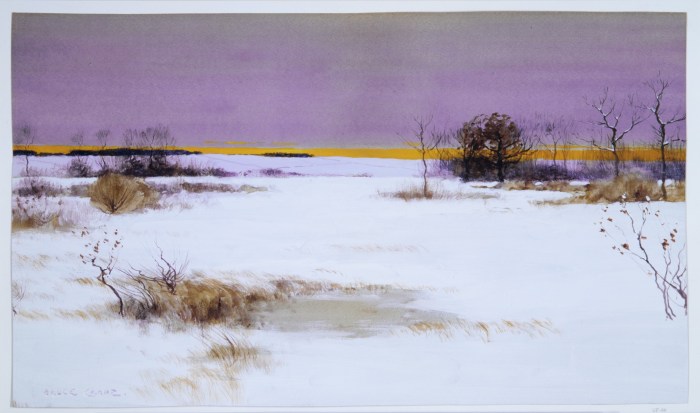
Image Credit: “Snow Scene” By Bruce Crane. The Metropolitan Museum of Art
Farm Near a Bend in River Tummel

“A Marsh Farm” Peter Henry Emerson (1886) courtesy of the Getty’s Open Content Program.


Farm Near a Bend in River Tummel

By Jeffrey Alfier


Farm Near a Bend in River Tummel

There was a shed here once. If you look close,
you can see grass ghosting its outline.

Any tool the day required could be found here.
Tack, as well: bits, bridles, a harness or two.

Never mind weather; some days I think decades
of dad’s swearing finally brought it down,

his voice burning beams like fire. Rust crumbling
from the ledges didn’t help. Neither did I,

backing the Landini loader against its worst wall.
My brother and I once set a drowned ewe inside—

it was our fault—we’d left a gate open. Never told
dad. He found out, of course. But that was the day

he got word his father died up north, a fall down
stone stairs along a Stornoway quay.

Look: there’s two planks left from the door.
You can still make out where the lock used to be.


(from The Red Stag at Carrbridge: Scotland Poems Aldrich Press, 2016)


About the Author: Jeffrey Alfier is 2018 winner of the Angela Consolo Manckiewick Poetry Prize, from Lummox Press. In 2014 he won the Kithara Book Prize, judged by Dennis Maloney. Publication credits include Crab Orchard ReviewSouthern Poetry Review, Atlanta Review, Copper NickelEmerson ReviewIron Horse Literary ReviewKestrelHotel AmerikaMidwest QuarterlyPoetry Ireland Review and South Carolina Review. He is author of The Wolf YearlingIdyll for a Vanishing RiverFugue for a Desert MountainAnthem for Pacific Avenue: California PoemsSouthbound Express to Bayhead: New Jersey PoemsThe Red Stag at Carrbridge: Scotland PoemsBleak Music – a photo and poetry collaboration with poet Larry D. Thomas and The Storm Petrel: Poems of Ireland. He is founder and co-editor at Blue Horse Press and San Pedro River Review. An Air Force veteran, he is a member of Iraq and Afghanistan Veterans of America.

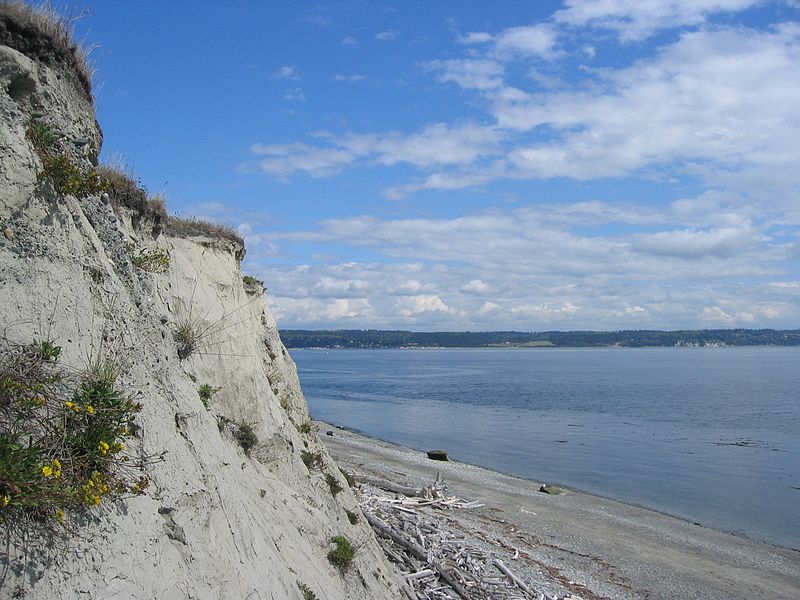
Possession Sound, Whidbey Island, Washington

“A Cliff on Whidbey Island near Fort Casey” By  Jonathan Zander, CC BY-SA 3.0,


Possession Sound, Whidbey Island, Washington

By Tobi Alfier


Possession Sound, Whidbey Island, Washington

The canyon water ran black,
the driftwood ran gray
on a day when
sky blended into sea
a seamless bone.

Slivered ancient trees.
Lines around the eyes
of wizened faces of locals
nearly worn away.
Old timber,

sharp to the touch,
piled at random
discovered at the end
of an uneven spider-webbed
path.

The lapping of tiny waves
announces a boat.
A fisherman, a net
all the same soft
icy hue.

Memory of an air-mail letter,
an atlas traced with music
softly playing behind
in pale yellow rooms.
Light candles,

listen to the drone
of seaplanes, shorebirds
hopping with schedules
we do not know.
Send books

to houses covered
with ancient vines, the
purpleness of ground
reflected in rot and neglected
beams.

You don’t have to tell
her you love her. All
this gray quiet splintered
silence tells her as if the sea
could spell

and you made this place
just for her.

.

(This poem original was published in the book Surface Effects in Winter Wind)

.

About the Author: Tobi Alfier (Cogswell) is a multiple Pushcart nominee and multiple Best of the Net nominee.  Her chapbook “Down Anstruther Way” (Scotland poems) was published by FutureCycle Press. Her full-length collection “Somewhere, Anywhere, Doesn’t Matter Where” is recently out from Kelsay Books. She is co-editor of San Pedro River Review (www.bluehorsepress.com).

Ballers 2, the Star’s Monologue 3

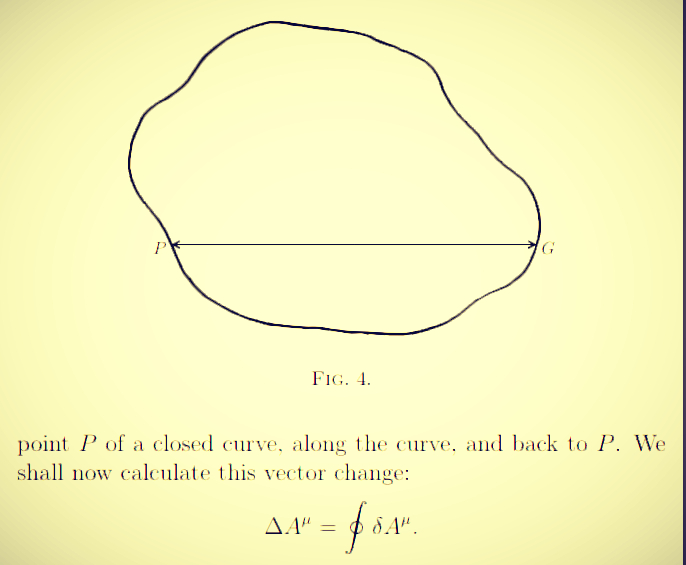
from The Meaning of Relativity by Albert Einstein


Ballers 2, the Star’s Monologue 3

By Tim Peeler


Ballers 2, the Star’s Monologue 3

So he puts X=6 on the board,
says I’m gonna show you
how to figure out this problem
and then starts drawing
all this other number stuff;
then pretty soon he’s back
to X=6 at the bottom.
So math is like this I think;
you remember when the kids
all went cruising,
into the downtown,
around the courthouse,
you know, back before the mall.
Now when they stopped at a light,
they would all get out,
run around the car
screaming and laughing,
get back in
when the light turned green.
They would of course be
in different seats,
but it would be
the same damn kids in the car;
that’s how math works.

.

About the Author: A past winner of the Jim Harrison Award for contributions to baseball literature, Tim Peeler has also twice been a Casey Award Finalist (baseball book of the year) and a finalist for the SIBA Award. He lives with his wife, Penny in Hickory, North Carolina, where he directs the academic assistance programs at Catawba Valley Community College. He has published close to a thousand poems, stories, essays, and reviews in magazines, journals, and anthologies and has written sixteen books and three chapbooks. He has five books in the permanent collection at the Baseball Hall of Fame Library in Cooperstown, NY. His recent books include Rough Beast, an Appalachian verse novel about a southern gangster named Larry Ledbetter, Henry River: An American Ruin, poems about an abandoned mill town and film site for The Hunger Games, and Wild in the Strike Zone: Baseball Poems, his third volume of baseball-related poems.

Pollock Paints Reflection Of The Big Dipper

.

.

pollock paints reflection of the big dipper


the sun too bright on saturday afternoon
and nothing i say worth
believing

listen

i love you

i’m afraid

all of these ideas
that become empty shells

the air cold where it
touches my fingers

shadows curved sharply up
the sides of houses
and down all of the meaningless streets
i’ve ever lived on

and what happens when every country
has been carefully defined?

why do we care if
certain babies are left to die in
windowless rooms?

i’ve got fences to build

holes to dig and nails to hammer

entire days to waste
holding objects in my scraped
and bleeding hands

and does it matter if the war is lost
when it’s fought 5000 miles away?

there are those who claim it does

there are instances when
i’m mistaken for my father

when all i can taste are his ashes

the phone ringing in
another part of the house while i
stumble drunkenly across the
bedroom

my friends dead or disappeared

my letters returned unopened

notebook after notebook
filled with words scribbled down and
then crossed out

not poems but prayers

not god but religion

small moments of illumination
that mean nothing in the end

.

About the Author: john sweet, b 1968, still numbered among the living.  A believer in writing as catharsis. Opposed to all organized religion and political parties.  His latest collections include APPROXIMATE WILDERNESS (2016 Flutter Press), BASTARD FAITH (2017 Scars Publications) and the limited edition HEATHEN TONGUE (2018 Kendra Steiner Editions).  All pertinent facts about his life are buried somewhere in his writing.

“Standard Time” By Stephen Roger Powers

G_flocky (2)

.

Standard Time

The highway to work was longer than usual
the first Monday after turning back the clocks.

My watch suggested I slow down.
You are not late enough, it said. Daydream some more.

Hood up, hands in his pockets, a boy waited
at the end of a driveway by a mailbox.

His jowly fawn boxer sat in charge
of watching the other direction for the school

bus, its muzzle and underbelly
white as a fence post.

My super vision cut a hole, like a glass on biscuit
dough, in the boy’s bag sagging at his feet.

His math homework wore a corsage
of purple jelly

thumb prints above the first story problem.
If you are traveling fifty miles per hour,

my watch said, and work is fourteen miles away
racing toward you a hundred kilometers per hour,

when and where will the train derail?
How long does it take the bullet to exit the barrel?

My eyes met the boy’s through the windshield
as I passed. He yawned contagiously.

The boxer’s little docked tail
bustled up leaves that matched its coat.

.

About the Author: Stephen Roger Powers started writing poetry almost twenty years ago to pass time in the middle of the night when he was too energized to sleep after coming off the stage in comedy clubs around the Midwest. He is the author of The Followers Tale and Hello, Stephen, both published by Salmon Poetry. Other work has appeared in 32 Poems, Shenandoah, The Southern Poetry Anthology Volume V: Georgia, Rabbit Ears: TV Poems, and Stone, River, Sky: An Anthology of Georgia Poems. He hasnt done stand-up in a long time, but every once in a while he finds avenues for the performer he was born to be. He was an extra in Joyful Noise with Queen Latifah and Dolly Parton, and he can be seen if you know just where to look.

“A Murder” By Ruth Bavetta

.


A Murder

Crescendo of crows, sinister
as black umbrellas preening

around an open grave, conclave
of shadows, damascene of dark.

Where gilded flickers filled the air,
there is only this enormous darkness.

Trees no longer brimmed
with tanagers or thrashers.

The hills have burned. Quail
and mockingbirds

have not returned. Soon
night will be the only color.

.

About the Author: Ruth Bavetta writes at a messy desk overlooking the Pacific Ocean. Her poems have appeared in Rattle, Nimrod, Tar River Review, North American Review and many other journals and anthologies. Her books are Fugitive Pigments (FutureCycle Press, 2013) Embers on the Stairs (Moontide Press, 2014,) Flour Water Salt (FutureCycle Press, 2016.) and No Longer at This Address (Aldritch Books 2017.) She likes the light on November afternoons, the music of Stravinsky, the smell of the ocean. She hates pretense, fundamentalism and sauerkraut.


Image Credit: close up from “Fish Crow” by John James Audubon

“Mania Makes Me A Better Poet” By Daniel Crocker

.

Mania Makes Me A Better Poet

By Daniel Crocker


I paced up and down the front porch on a rare, cool Missouri night.

“The government wants me to take pills,” I told my wife. She asked why, but I didn’t have an answer. Part of me knew it wasn’t true. Part of me wasn’t convinced. My thoughts shifted rapidly.

“Do you ever wonder about that guy from the Oak Ridge Boys? You know, the one with the big beard?”  I had also suddenly become obsessed by William Lee Golden. I was worried about him.

“Do you think he feels trapped? Like, he wishes he could shave off that scraggly damned beard and be free of if.”

 I wondered if he’d ever regretted growing that beard, probably sometime in his early twenties, and regretted it.

“He has to think his fans just won’t get the real Oak Ridge Boys experience without it? And what about John Berryman? Did he have the same problem? Is that why he jumped off that bridge?”

This was just a few days before I broke down, went to a clinic, and got help for bipolar 1 disorder. The symptoms had been ramping up for months—compulsive intrusive thoughts and rituals—I’m going to kill myself tomorrow was a favorite of mine, running on a loop in my mind.  I was trucking along on little to no sleep or food. My speech was pressured.  The mania had started out fun. I was creative. I felt unstoppable. I had the energy to do some work.  In the end it always gets scary. It devolves into anxiety, paranoia and the occasional mild delusion.  In the end, however, I got a hell of a poem about William Lee Golden out of it.

The truth is, mania makes me a better poet, although it’s taboo to say so. Not among other bipolar people. We’ll readily admit to each other that we love parts of our mania. We usually just don’t tell the sane people in our lives. They look at us shocked, or sad, or worse. Sometimes they look at us with anger. Our loved ones have seen the wake of destruction left behind by mania. I’ve hurt plenty of people myself while manic, including my significant other. I swear by my medications now. They keep me stable, if not fully content. Sometimes something is missing.

Unless you’ve been through it, you just can’t understand how mania feels. It’s like being on speed and booze at the same time—except better. Your mind, at least for a while, is laser-focused. You actually have the desire and energy to want to create—or do whatever it is that you do. Depression, on the other hand, is a creativity killer. It can be hard to get out of bed, much less write a poem. Mania, when it hits just right, calls for hours of steady work. Continue reading ““Mania Makes Me A Better Poet” By Daniel Crocker”