“A Familial Scene” By Tiffany Troy


A Familial Scene

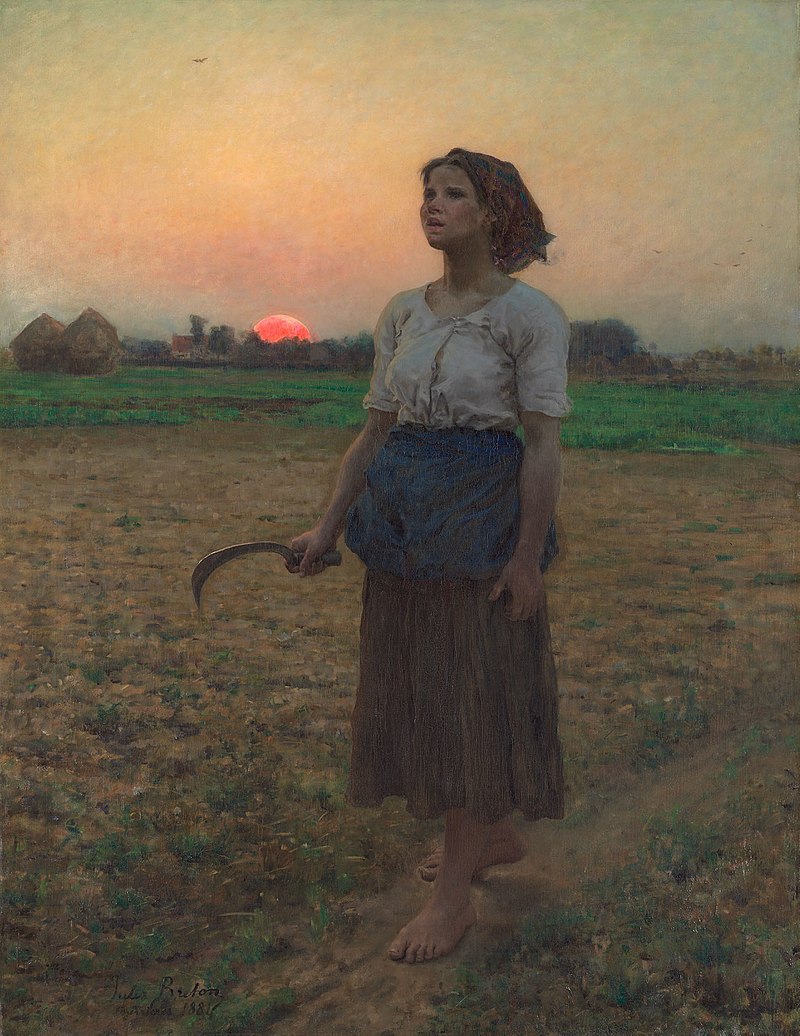
In the flat hills of the village
Next to the tiny streams irrigating the wheat
The sweat hangs, clinging.
Like tears—cleaving skin—to that tight white blouse
Before dropping to the ground the hour before dark
As the hornpipe and the heart swell with yearning
Waiting for the hour to sit down as the blood-orange red sun sits 
Momentarily in the embrace of the hay 
As the colors of the world drained away by the shoulder aching
Until at last that salmon roe of a sun finally bursts
Letting out all that is glowing, glistening, 
bulging, bleeding, burning
the riding hood in scarlet face facing against the sun, still
waiting for the prodigal son.

Her brother. 
Returning but never 
returning from his adventures with women.
Her scythe will one day take her father away, she thought,
as the sun ravaged her baby white skin, toughed it, burned it.
Like her pink soft lips. 

A moment of translucent clarity–that boundary of brown–
That all colors melt to 
like the ground–dappled with her sweat.
Yet at the beginning of darkness, she sees, distinguishes still:
The purple dome and the church she never saw, and had no use for.
For that was the color that lured her brother away.
She had no use for that grandiosity.
She wondered if she still retains faith in Father,
When the sun sets and the moon comes by
And the silence of the night perturbs memory
Of Father who knew it all and talked
but was powerless
to stop the destruction of his son.


About the Author: Tiffany Troy is a poet based in Flushing, Queens. Her poems have appeared in Chrysanthemum, Portales, Tabula Rasa, Quarto, and the Underground and have been awarded the Core Scholar Prize and Louis Sudler Prize in the Arts. She is a CA/T Community Class participant since 2017. This poem was written in the Art of Ekphrasis, taught by Emma O’Leary in Spring 2019.


Image Credit: Jules Breton The Song of the Lark (1884) Public Domain

“Poem for Demetrius M. Salada, Admiral (RA) of the Golden Arc Spaceship” By Scott Silsbe


Poem for Demetrius M. Salada, Admiral (RA) of the Golden Arc Spaceship

Admiral Salada, I don’t know if it’s really true—
if the Golden Arc that you built got you to space.
By chance, I found myself in a small apartment
in Braddock Hills sifting through what remained
of your library—books rescued, I was told, from 
a house fire. Some of the better titles I noticed…
Experiences of Space in Contemporary Physics.
The Harmonics of Sound, Color, and Vibration.
Extraterrestrial Contact and Human Responses.
Effects of Nuclear War on the Pittsburgh Area.

The man who was selling the books handed me 
your old business card, which is how I know of
The Golden Arc. That and his story about how 
you just vanished one day after years and years
of telling people that you were building yourself 
a way to leave this cracked earth, busted world,
this unsustainable planet we’re breaking to shards.

I hope that your spaceship held up and got you 
to wherever it was that you were heading for.
I now keep your business card in my wallet as 
a conversation piece, as a souvenir from my job
to show off to people I meet. And I guess as a
small piece of your life, which I know little of—
just a small fragment from someone who had hope
of another world that was obtainable, if very distant.
Someone who didn’t care if people thought he was
stupid, crazy, or a dreamer of otherworldly dreams.


About the Author: Scott Silsbe was born in Detroit. He now lives in Pittsburgh. His poems have been collected in three books—Unattended FireThe River Underneath the City, and Muskrat Friday Dinner. He is also an assistant editor at Low Ghost Press.


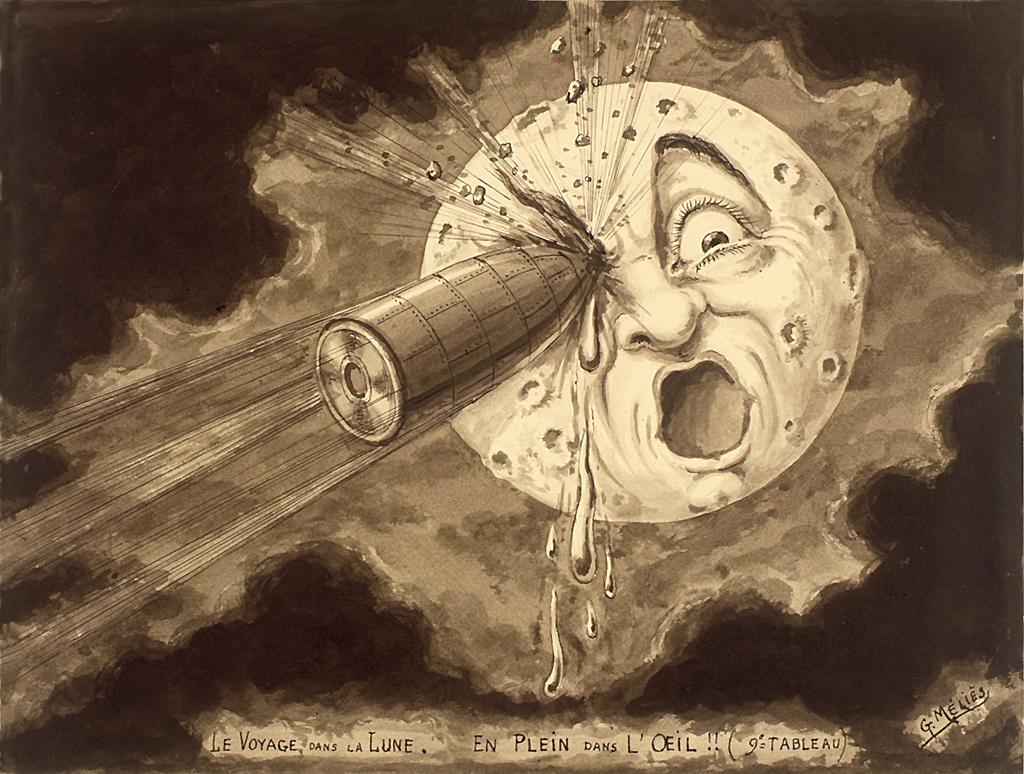
Image Credit: “Le voyage dans la lune, en plein dans l’œil!!”, a drawing by Georges Méliès of the vessel landing in the moon’s eye in the film Le voyage dans la lune Public Domain


“Unknown Soldiers” By Brian Rihlmann

.

.

UNKNOWN SOLDIERS

There ought to be
a monument,
a sort of war memorial
for workers killed
on construction sites,
in industrial accidents,
for those chewed up
and spit out
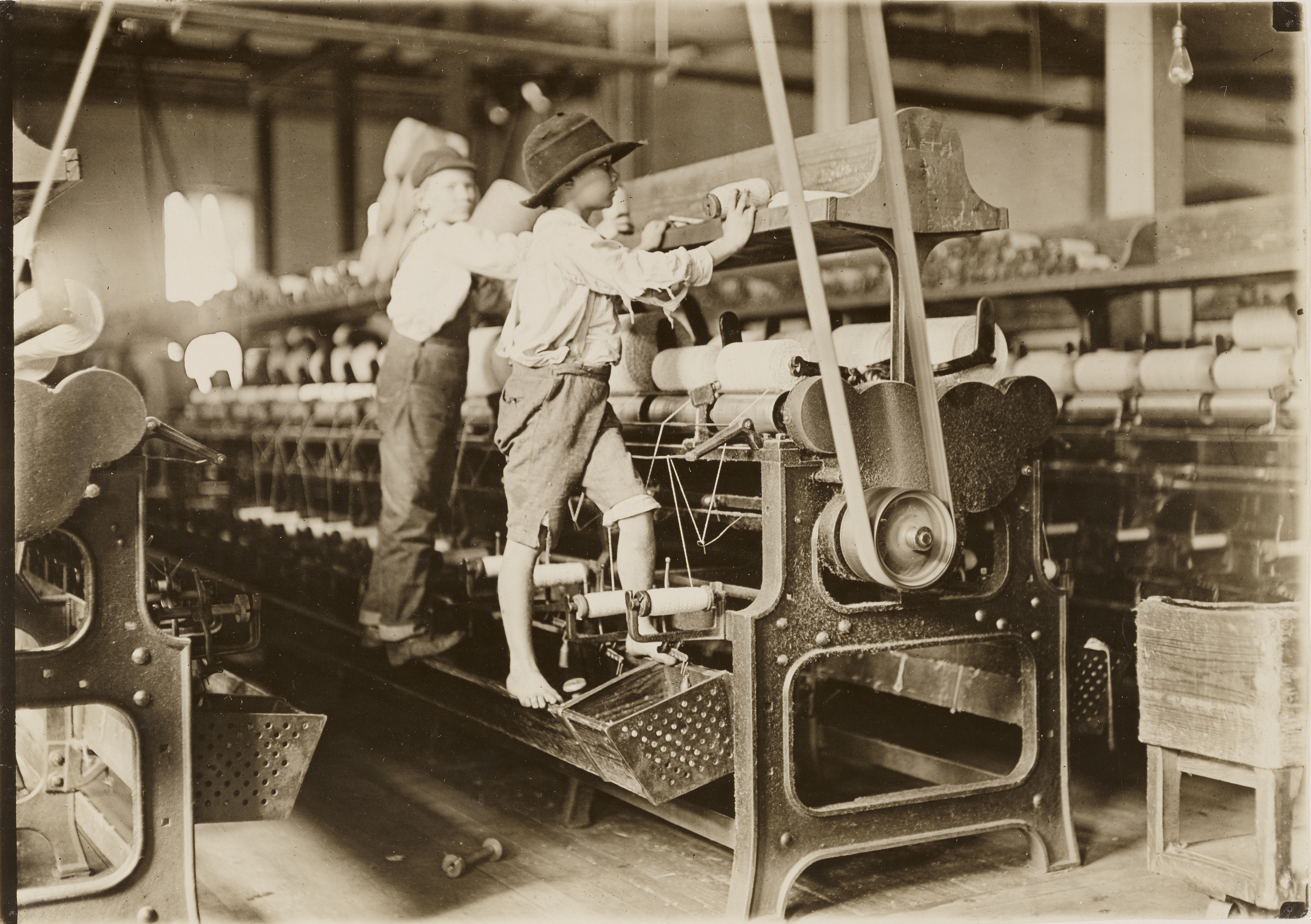
by the cruel machinery.

For migrant workers,
underpaid foreigners
crippled by cut corners,
then banished
from this promised land
of stone faced natives,
not so far removed.

For those whose true genius
was stamped out in childhood,
and their lives burned up,
firewood reduced to ash
by the slow flame
of factory drudgery,
by the booze and pills
that made enduring it possible.

Unknown soldiers
fighting daily battles
every bit as important
to our way of life
as men in uniform.

But such a monument
would cover half the country
in a black granite slab,
a giant tombstone
where fields of grain stand tall.

So there will never be one,
of that I am certain,
just as I am certain
that somebody,
somewhere, someday,
will hate me
for writing this.

.
.
About the Author: Brian Rihlmann was born in NJ, and currently lives in Reno, NV. He writes mostly semi autobiographical, confessional free verse. Folk poetry…for folks. He has been published in Constellate Magazine, Poppy Road Review, The Rye Whiskey Review, Cajun Mutt Press and has an upcoming piece in The American Journal Of Poetry.
.
.
Image Credit: Lewis W. Hine “Doffer Boys, Macon, Georgia” (1909) Digital image courtesy of the Getty’s Open Content Program

“The President Called the United States a Company” By Prince Bush


The President Called the United States a Company 

A Christmas mourning / I mourn God’s slain child
and Jesus Christ, a wall that’s hard to yield
to while crows eat / kids starve / ovaled stomachs 

feed on human flesh / hosts as repurposed
puppets or proponents purporting laws
and slips on behalf of Freudian slips 

            the President called the United States
            a company / and there’s truth / I too sing 

company / throwing precious repastures
away / enough to feed refugees they
say there’s no food for. I mourn a Jesús

             and Jesus / you might not / so how can I
             show you mercy?—replace Jesus with green

wood-plants / white people / you / must keep Jesús
because death is owned by a company
that must throw away precious repastures.


About the Author: Prince Bush is a poet attending Fisk University. His work has appeared in Glass: A Journal of Poetry, SOFTBLOW, Cotton Xenomorph, Protean, and Mobius, among others. More work and biographical information can be found at pbush.com

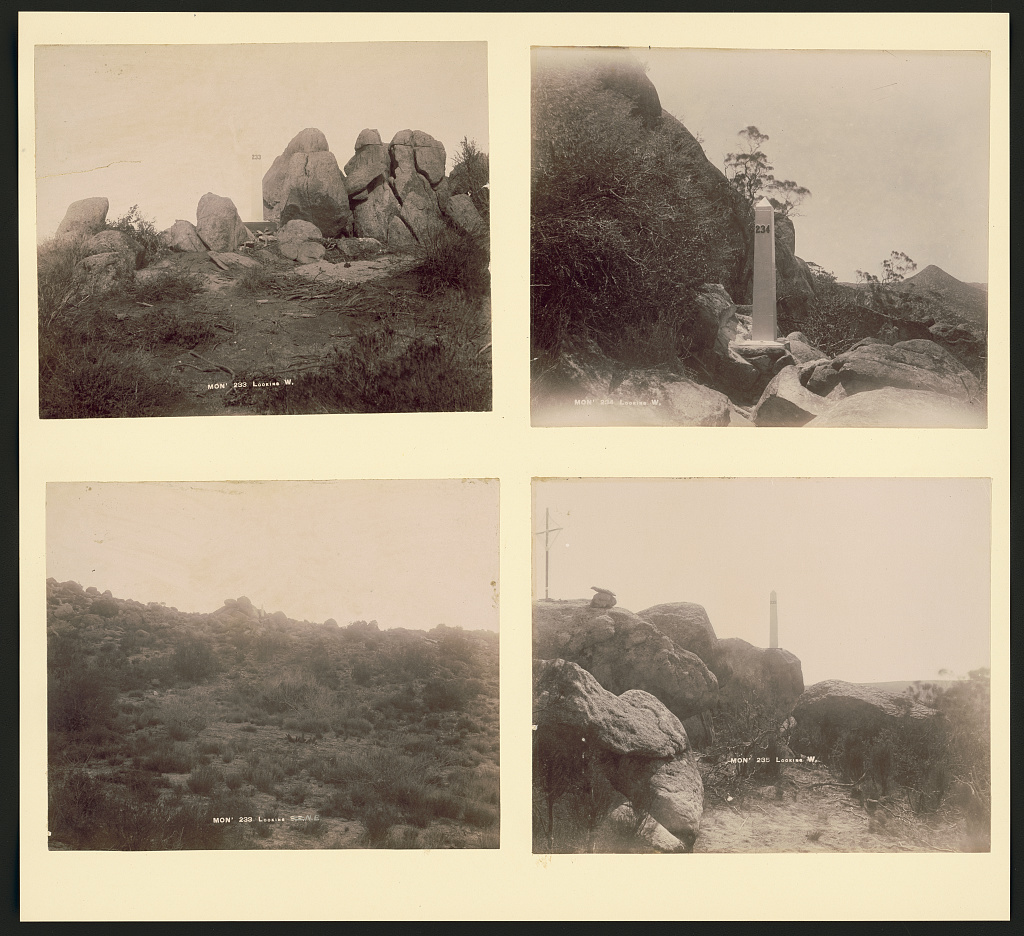
Image Credit: D.R. Payne “Border monuments 223, 224, and 225, along the California-Mexico border” (1892) The Library of Congress

“Downpour” By Z. D. Dicks


Downpour 

The class was over     three men remained
chewing words and rummaging 
through syntax     I sat youngest of the three
as they spoke of gratitude     flooding faces

I’ve made it to seventy     everything else is a bonus
I digested these words     chopped sausage 
and tomato sauce     ate them his feather lite words 
soaking heavy like lead rain     vision blurry 

Like glasses broken     left arm tight and sluggish
as if sodden on one side     wet chill with tingles of death
I write because I have to     not to get published
drenched by his first words     everything else 

Is a bonus     the slow drip into a half filled tank
that patter wouldn’t fill my years     my land 
was cracked and broken     thirty five years he’s 
drenched by a day     and I’m a puddle in sun


About the Author: Z. D. Dicks is the author of Malcontent (Black Eye Publishing) described as ‘Uncompromising, sometimes controversial, but always entertaining’ by Clive Oseman and ‘Evocative, atmospheric, breathing new life into the everyday’ by Nicola Harrison. Z. Dicks is the CEO of Gloucestershire Poetry Society and Gloucester Poetry Festival. His work has been accepted by Ink, Sweat and Tears, Three Drops from a Cauldron and Fresh Air Poetry. He frequently reads at poetry events throughout the UK.


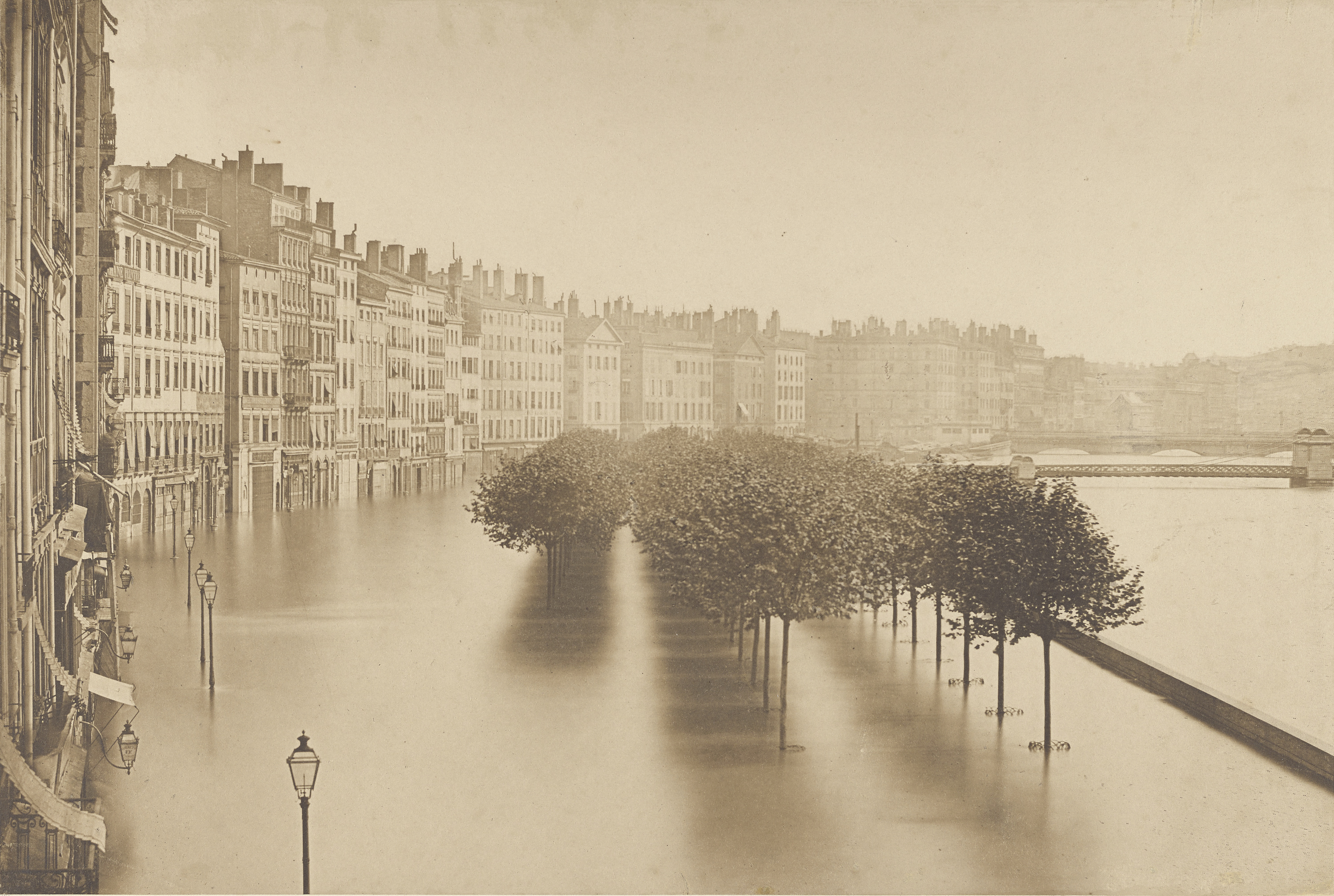
Image Credit: Louis-Antoine Froissart “A Flood in Lyon” (1856) Digital image courtesy of the Getty’s Open Content Program.

As It Ought To Be Magazine’s Nominees for the 2019 Best of the Net Anthology


As It Ought To Be Magazine is proud to announce our nominees for Sundress Publications’ 2019 Best of the Net Anthology.


Poetry

Ruth Bavetta “A Murder”

John Dorsey “Anthony Bourdain Crosses the River of the Dead”

Mike James “Grace”

Rebecca Schumejda “i don’t want this poem to be about the death penalty, but it is”

Bunkong Tuon “Gender Danger”

Kory Wells “Untold Story”


Nonfiction

Daniel Crocker “Mania Makes Me a Better Poet”

Nathan Graziano “The Misery of Fun”


Congratulations to our nominees and thank you to all of the writers and readers who have supported As It Ought To Be Magazine.


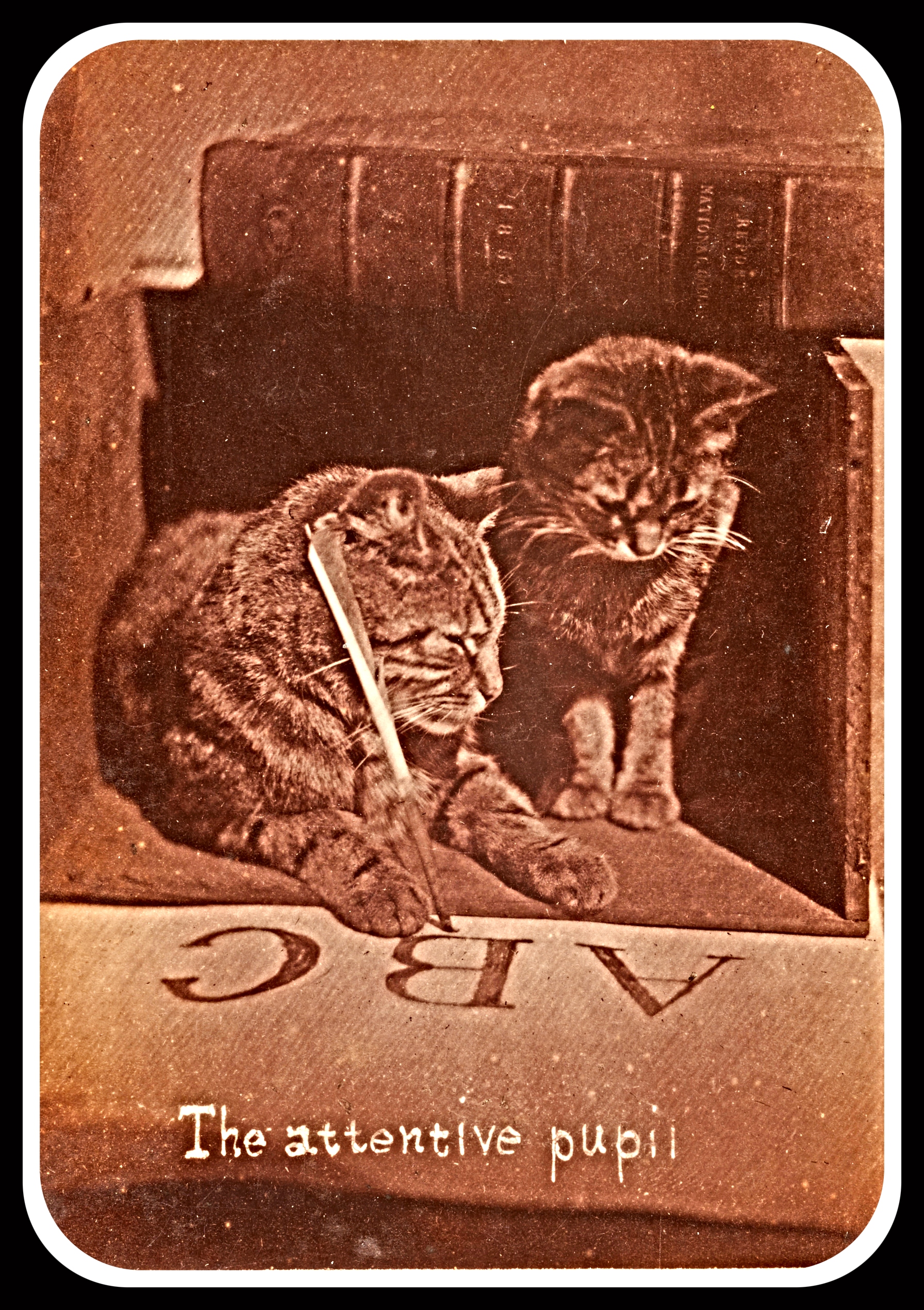
Image Credit: Henry Pointer “The Attentive Pupil” (1865) Digitally Enhanced. Digital image courtesy of the Getty’s Open Content Program

“A disappearance” By Dameion Wagner


A disappearance

I would like to disappear

into my thin white

body I am day- 

dreaming again of

you and him 

my blue eyes 

are open 

two lips,

are four when they

met in secret

in a kitchen 

where people 

prepare food &

eat because they

are hungry and 

cannot wait 

wait wait don’t 

think for a minute

before you take

a bite of that

Tonight give me 

a kiss  if I die in

my sleep.


About the Author: Dameion Wagner lives and works in Columbus, Ohio. His work has appeared in Crab Creek Review, Glass: A Journal of Poetry, and The Gordian Review among a few others. He has also written reviews for Heavy Feather Review and The Rumpus. He won Miami University’s 2017 Jordan-Goodman poetry Prize judged by Janice Lowe, and most recently was the 2018 recipient of the Academy of American Poets University Prize. He received his MFA from Miami University’s Low Residency program. 


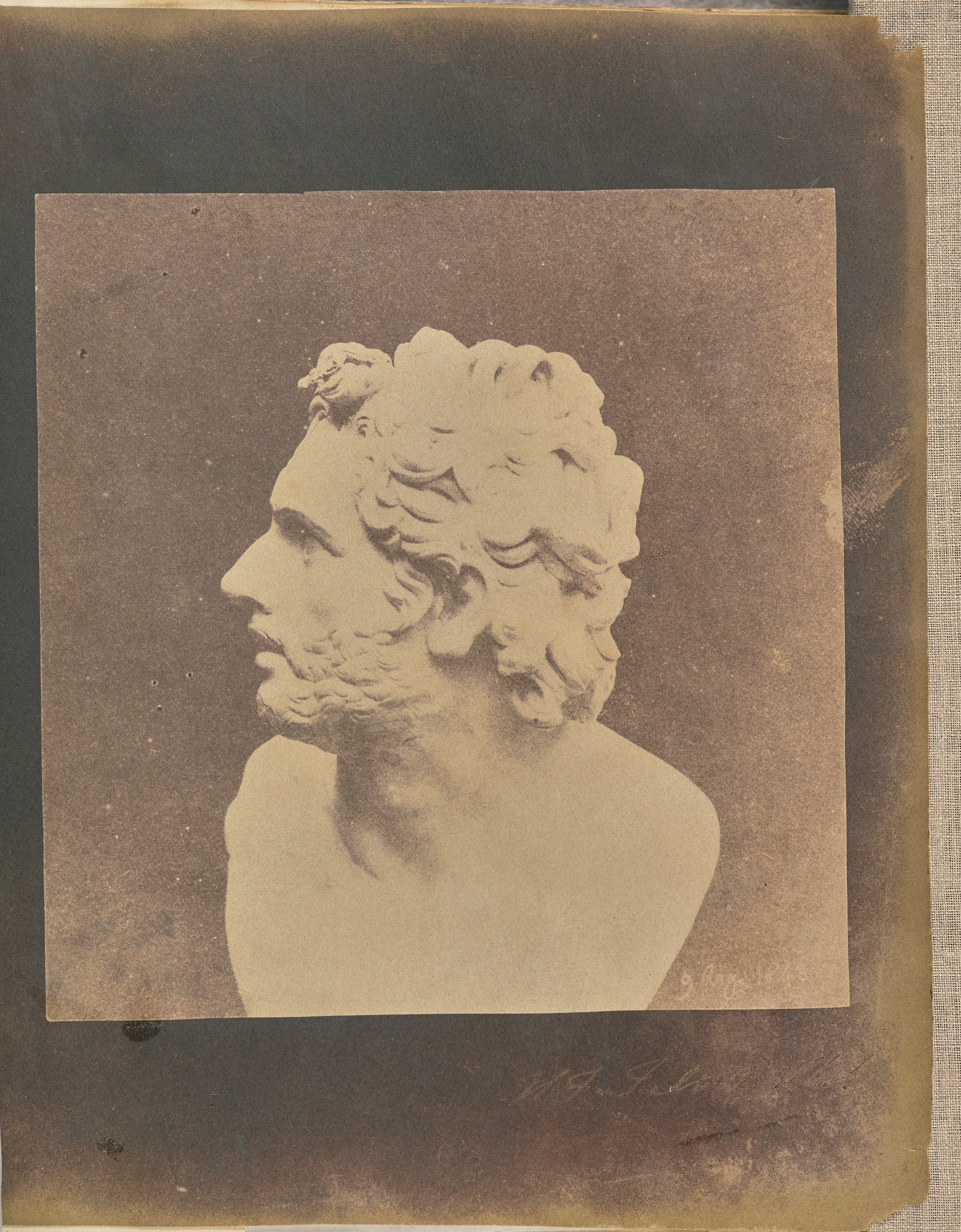
Image Credit: William Henry Fox Talbot “The Bust of Patroclus” (1843) Digital image courtesy of the Getty’s Open Content Program

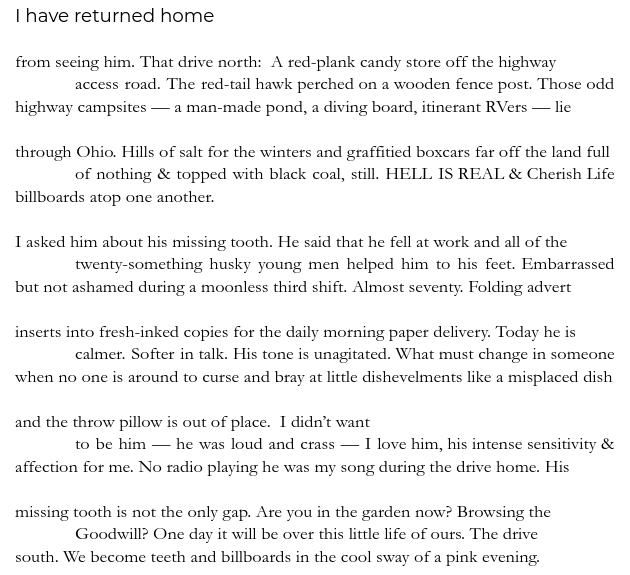
Dameion Wagner: “I Have Returned Home”


(Click on the poem to view it in a larger format)


About the Author: Dameion Wagner lives and works in Columbus, Ohio. His work has appeared in Crab Creek Review, Glass: A Journal of Poetry, and The Gordian Review among a few others. He has also written reviews for Heavy Feather Review and The Rumpus. He won Miami University’s 2017 Jordan-Goodman poetry Prize judged by Janice Lowe, and most recently was the 2018 recipient of the Academy of American Poets University Prize. He received his MFA from Miami University’s Low Residency program. 


More By Dameion Wagner:

A Disappearance


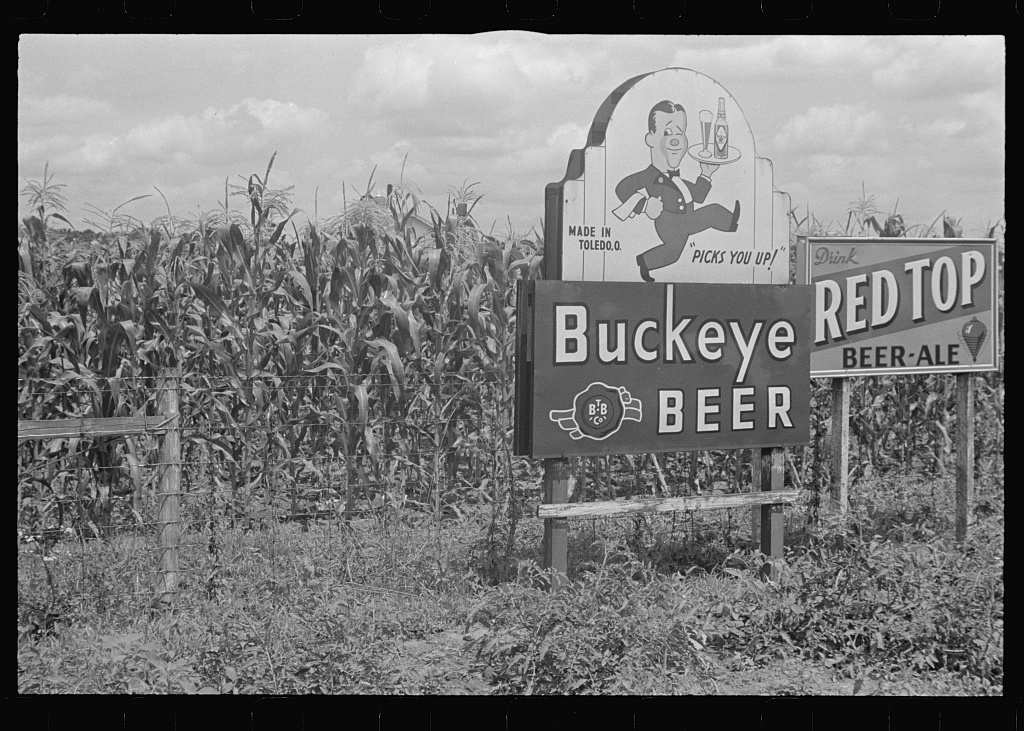
Image Credit: Ben Shahn “Sign along Route 40, central Ohio” (1938) The Library of Congress

Charlie Brice: “The Truth About Indecision”


The Truth About Indecision

Our poetry reading was a great success
even though the heavens opened that day
in Pittsburgh and turned Maple Avenue,
our street, into Deluge Boulevard.

“The only time I believe in a supreme
being,” I told my wife, Judy, herself a poet
who was to read that night. “Only a god
could be this nasty,” I said, falling into the same

self-centered lunacy that my religious friends
favor. “This is god’s revenge upon my poor
atheist self,” I proclaimed, but she (for in
my atheist lexicon, god is an angry woman)

relented, the rain stopped, and it was 
standing room only at our reading.

What I really wanted this poem to be
about was the day after our reading 
when our friends fell in love with the 
flowers and trees Judy had planted

in our back yard. They didn’t even mind 
the organic calling cards our poodle, Mugsi,
had left for them, but that’s not what 
I wanted to write about either.

It’s the names of flowers that inspired
this poem. Why do they call them Rose 
of Sharon? Why not Sharon’s Rose—just
the kind of economy an editor requires.

What of these gorgeous bursts of pink
we call azaleas? Are there zaleas that
azaleas negate, as amorality negates morality?
And where are the lips that tulips connote? 

Looking at them a strange misshapen mouth
comes to mind, but lips? Were marigolds
originally Mary’s gold? What happened
to the apostrophe? Has someone named

Mary ever traded a marigold for goods or cash? 
What a bright and colorful world it would be
if Marys, or Kathys, or Larrys, or Johnys could
trade marigolds for movie tickets, tomatoes,

maple syrup, or bacon and eggs—especially
bacon and eggs. What if flowers became currency?
People could pay off mortgages with roses,
their cars with orchids, rent with dahlias,

and their college debt with peonies. But here’s
what I really wanted to write about:

Day lilies, the only aptly named flower 
in our garden. They are lilies that last
a single day—like the fame of a poet,
or the bloom of Buddha’s final breath.


About the Author: Charlie Brice is the author of Flashcuts Out of Chaos (2016), Mnemosyne’s Hand (2018), and An Accident of Blood (2019), all from WordTech Editions. His poetry has been nominated for the Best of Net anthology and twice for a Pushcart Prize and has appeared in The Atlanta Review, The Main Street Rag, Chiron Review, Permafrost, The Paterson Literary Review, and elsewhere.


Image Credit: Kazumasa Ogawa “Group of Azaleas” (1896) Digital image courtesy of the Getty’s Open Content Program.


“And Why Am I a Free Man?” By Ace Boggess

51089v


“And Why Am I a Free Man?”
         —Paulo Coelho, The Zahir  

time is the most valuable element
on any periodic table

spend it
give or lose it
wear it around one’s neck like gold

or clamped on wrists
like iron shackles

breathing it in takes a moment
but the exhale lasts a lifetime

less with good behavior

I mined years for their raw hours
spent & spent

another dinner in some sad café


About the Author: Ace Boggess is author of four books of poetry, most recently I Have Lost the Art of Dreaming It So (Unsolicited Press, 2018). His writing appears in Notre Dame Review, Rhino, North Dakota Quarterly, Rattle, and many other journals. He received a fellowship from the West Virginia Commission on the Arts and spent five years in a West Virginia prison. He lives in Charleston, West Virginia.


More By Ace Boggess:

“Why Did You Try to Sober Up?”

“Are Your Emotions More Or Less Intense?”


Image Credit: Carol M. Highsmith “View from the inside of the clock face on Portland, Oregon’s, historic Union Station’s 150-foot-high tower” (2018) The Library of Congress