Okla Elliott: “The Social and Spiritual Possibilities of Lent”

The Social and Spiritual Possibilities of Lent

by Okla Elliott

Editor’s Note: Our late Managing Editor, Okla Elliott, originally posted this article three years ago. It was his final post before he passed away. We are republishing this article in his memory. In the final year of his life, Okla took a deep interest in exploring spirituality, theology, and Catholic teachings. This article is a prime example of his great ability to investigate new ideas and understand their capacity for better expressing and illuminating his core values and principles.

.We do not generally conceive of Lent as a political or social matter. Its central purpose is a personal and spiritual one, but as the well-worn phrase instructs us, the personal is political. I therefore want to invite us all to think of how we might combine the personal and spiritual aspects of Lent with potential social gains.

According to a 2016 article in The Independent, the three most common things given up for Lent are chocolate, social media, and alcohol—in that order. And a 2015 TIME article offers similar findings. These are all personal sacrifices that do not have much of a social or political dimension. Giving up certain popular items such as meat does have a notable social impact. The environmental gains of giving up meat are significant, since the factory-farming livestock industry has several negative impacts on the environment, from inefficiency of food production to detrimental waste products.

I offer here a list of five options for what we might give up for Lent that can merge spiritual growth and social betterment.

1) I would strongly suggest the aforementioned meat option, since it has such a prominent place in tradition and can have such a positive social impact.

2) If possible, give up driving and use public transit instead. This will have a positive environmental impact, obviously, but it will also allow you to see the people of your city whom you might otherwise never encounter. Of course, this is perhaps an option only for those who live in certain areas, but you might be surprised how elaborate your city’s public transit is if you’ve never looked into it.

3) Give up eating out. At first this might not seem social at all, or even the opposite of a social option, but if you conceive of Lent as not only a negative notion of giving up, but also a positive notion of doing something good with what you gain by giving up things, then you will see that the several hundred dollars you save by not eating out can be used in myriad ways for social good. I would suggest donating to non-profits or your church’s efforts to help the poor. You could also use the money saved to do nice things for friends and family, which will strengthen your social community at the closest level.

4) Give up the convenience of plastic bags. Make the extra effort to bring a canvas bag with you when you shop, or if you’ve only purchased one or two items, don’t ask for a plastic bag. With an estimated 8 million metric tons of plastic entering our oceans every year, to say nothing of the millions of tons in our landfills, reducing unnecessary use of plastic is of paramount importance.

5) Give up self-reinforcing thought. This one is a bit more abstract, but it is no less important. What I mean here is that if you’re a staunch Democrat, make yourself read several issues of a conservative magazine not with an eye for criticism but rather an urge to understand and empathize. And do the same if you’re a diehard Republican. Read some classics of liberal thought and really try to hear the concerns mentioned. The point is to bridge divides and to prevent hatreds between humans. If we can force ourselves to develop the habits of mind that reduce prejudice and living in our echo chambers, we have a much better chance of curing the ills of the world.

What makes the above choices good ideas is that the social impact in no way reduces the spiritual impact. Giving up driving to work in favor of taking the bus, for example, is a personal sacrifice just as much as giving up social media would be, yet it helps society more broadly in addition to the spiritual gains associated with the sacrifice.

And there is no need to limit yourself to the five options I offer here. Get creative and make your own list that suits your personal and social concerns. There are many ways to improve ourselves and the world around us, and doing one does not preclude doing the other.

[This piece originally appeared at PennLive.com and was syndicated to several other venues in 2017.]


About the Author: Okla Elliott was the co-founder and Managing Editor of As It Ought To Be from its inception until his passing in 2017. For more about his life and work, visit our memorial page. 


Image Credit: “Ash Wednesday” Julian Falat (1881)
Robert A. Morris: “Natchez Green”


Natchez Green

I was eleven, walking out past Silver Street to 
the river’s edge, headed “under the hill,” a spot
infamous for men who no longer exist and their 
transient killers.  Some say a ghost woman walked

the Mississippi, her body anchored by gold from 
her lover so she could lay beside him at the bottom 
where the bottles turned to jewels.  Looking out, I 
saw something flash, deep emerald, and unbroken, 

glittering in the river silt, waiting like a patient miracle. 
Expecting Laffite’s treasure map. Clutching the cork 
with my teeth, little boy hands twisted. The sharp too 
sour smell gave me a headache, and I stood hearing 

phantoms as the wind made the bottle coo. In the river 
debris, a hand summoning me to the water. I threw 
the bottle, which it accepted, swirling the rank liquor, 
towing it further and further from my shore.


About the Author: Robert A. Morris lives near Baton Rouge and works as a teacher.  Besides poetry, he also writes fiction and bashes out the occasional song on his blue Stratocaster. His work has appeared in The Main Street Rag, Pear Noir, and The Chaffin Review among others.  He is in the final stages of editing a chapbook titled Descending to Blue that he would like to see published in the near future.  For updates, please visit his blog  https://robertamorrisblog.wordpress.com


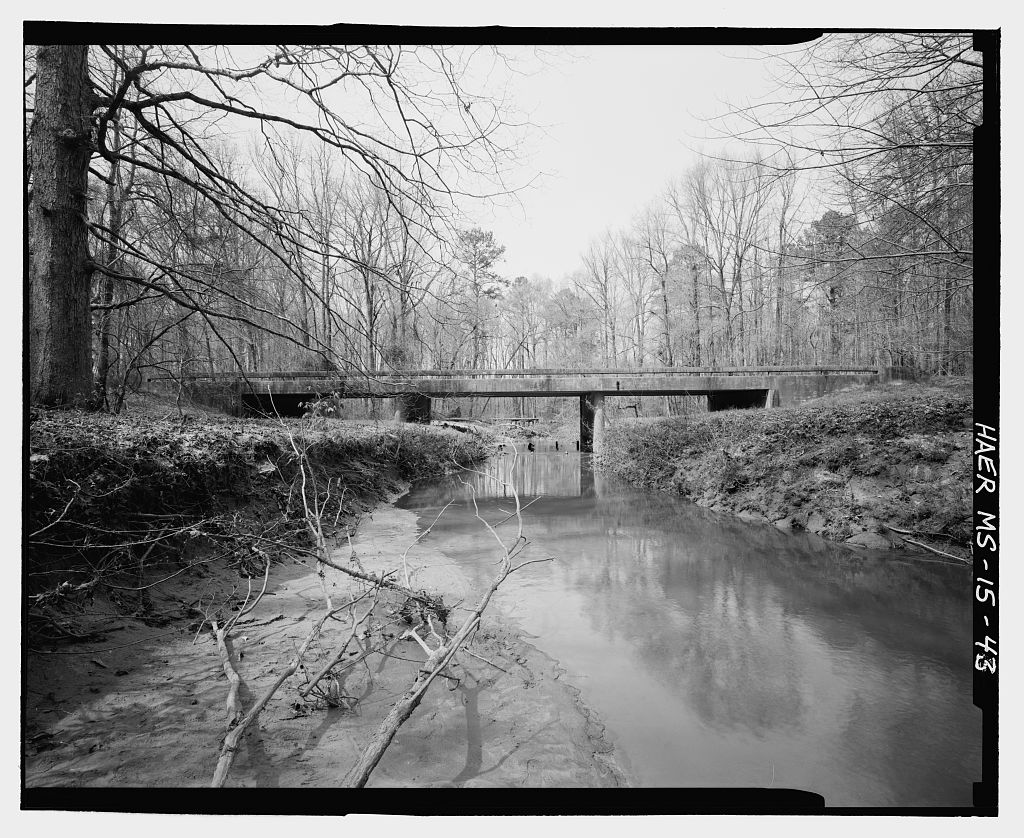
Image Credit: William A. Faust “Natchez Trace Parkway, Located between Natchez, MS & Nashville, TN, Tupelo, Lee County, MS” (1997)

Rob Plath “that which”


that which 

sitting on 
my old green 
couch 
she asked, 
“are you afraid”
& i replied, 
“terrified”
w/ out even 
asking of 
who or what 
& we lifted 
our bottles 
against 
that which 
follows us both 
day & night 
across streets 
beneath sun
& moon
thru doors 
& down corridors 
& into rooms 
of any dimension 
& into dreams 
& moments 
of waking 
& dreams again


About the Author: Rob Plath is a writer from New York. He was once tutored by Allen Ginsberg for two years from 1995-1997.  He has published 22 books and a ton of poems in the small presses over the last 26 years. He lives with his cat and tries his best to stay out of trouble.


Image Credit: “Portrait of a Couple” Unknown Artist (1860s) Digital image courtesy of the Getty’s Open Content Program.

Stew Jorgenson: “5 Geezuz”


5 Geezuz

I asked her how she felt about 5G
she said it might be
the new heaven and earth
of which Jesus spoke
everything so nice
a real virtual paradise
smart TVs
camera phones
electric cars
surveillance drones

artificial and
emotional intelligence
unconscious streaming
on demand

I took a sip of my high-buck latte
and told her wed die just in time
if were lucky

She said its too late for that
come back to bed
its memory foam
Ill make you forget


About the Author: Stew is a part-time wordsmith who has more words than he knows what to do with. Sometimes he uses the extras for poetry, celestial navigation, or target practice. He has worked on farms, fishing boats, and in factories.  He’s skilled at mistakes, guilty by association, and suffers from occasional bouts of inspiration. He is working on a cure.


Image Credit: Carol M. Highsmith “Power lines dominate the skyscape above Flagstaff in northern Arizona” (2018) The Library of Congress

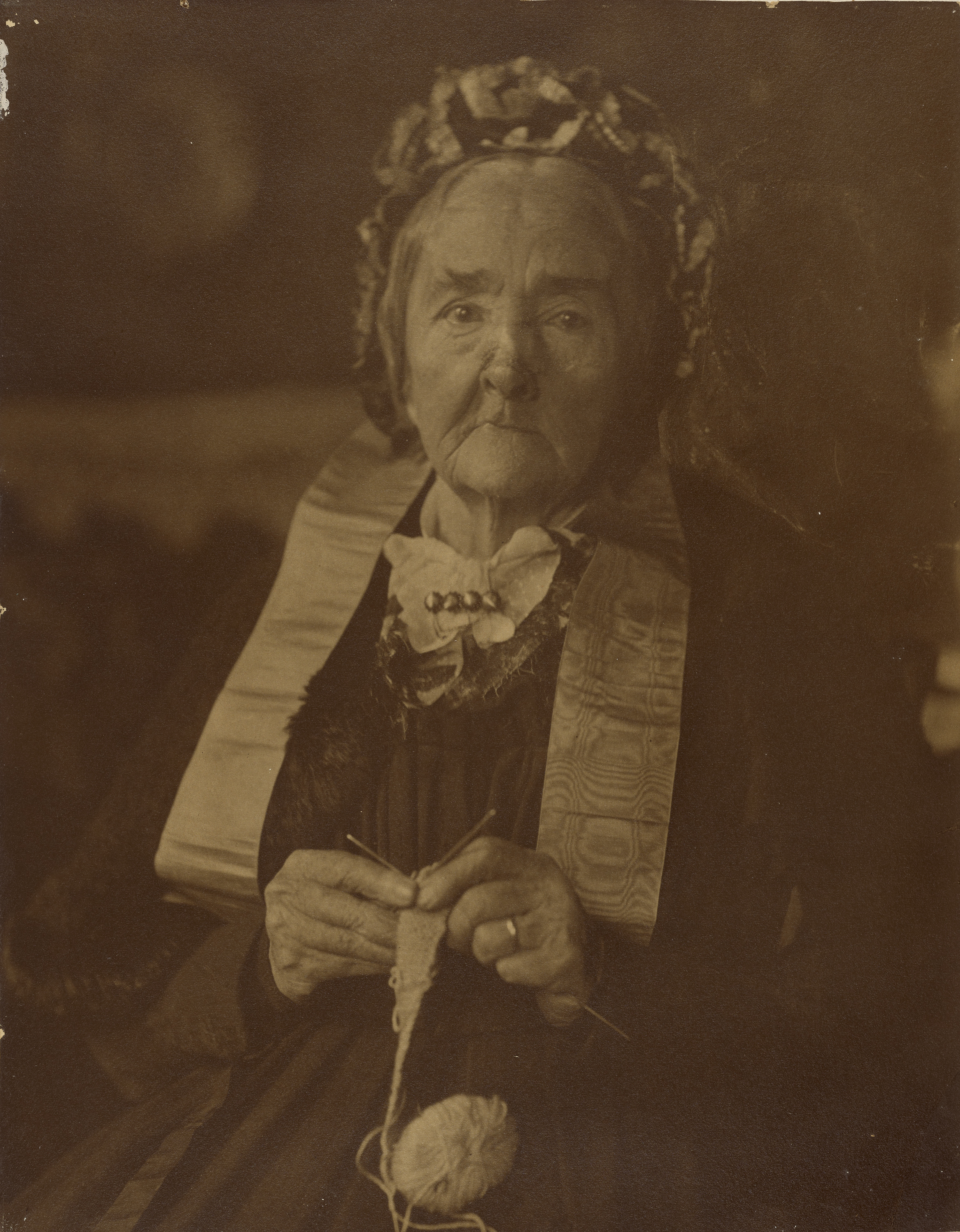
John Grey: “Maud”


MAUD

The parlor
stands for all of life,
even for those things that most resemble death,
because Maud occupies her favorite chair,
knitting a sweater for no one to wear,
out of the necessity to busy the hands,
relieve the mind of its terrible duties,
retell her story in stitch after stitch
so the end result is something warm and lovely.

A crucifix on the wall,
a husband behind glass,
bestow in silver-plate and photograph
the blessings that remain to her,
from her thick mop of white hair,
to wrinkled but active fingers,
all the way down to
the knitting needles,
the basket of wool skeins.

Jesus is nailed and hurting.
The man in uniform 
is off to war, off to heaven.
She joins them in pain
with a bend to her spine,
a much-broken heart.

But there’s still this 
sheer blood-red dreaminess
to her shapeless eyes
And her breath is like a breeze
continually rousing her aged loveliness.
Yes, it’s more of a winter wind these days.
But the chill can never settle.
And she cannot quite settle on the chill.


About the Author: John Grey is an Australian poet, US resident. Recently published in That, Dunes Review, Poetry East and North Dakota Quarterly with work upcoming in Haight-Ashbury Literary Journal, Thin Air, Dalhousie Review and Failbetter.


More By John Grey: 

Move On

Downsizing


Photo Credit:  Gertrude Käsebier “Grandmother Käsebier with Knitting” (1895) Digital image courtesy of the Getty’s Open Content Program.

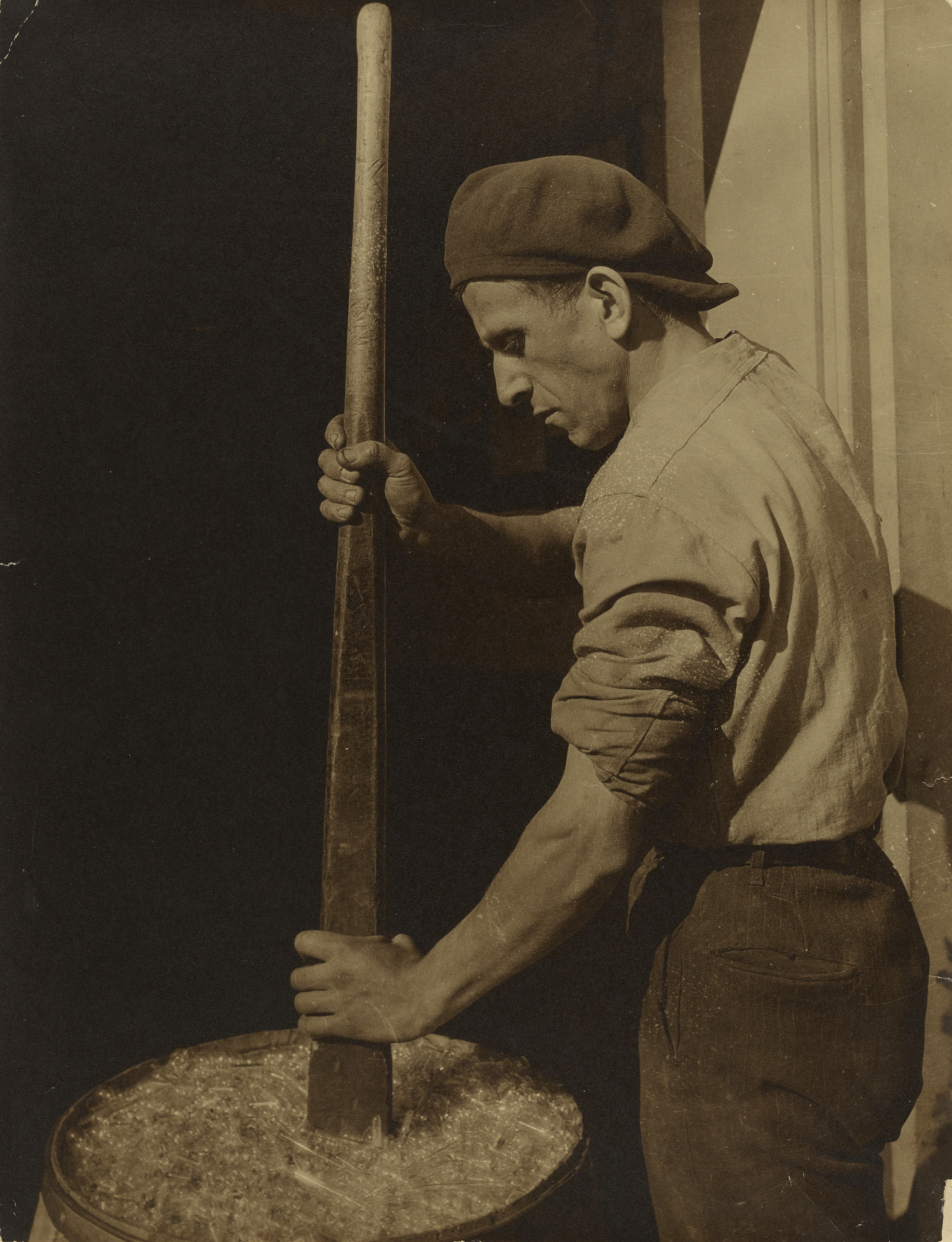
Rusty Barnes: “The Act of Working”


The Act of Working

The act of working occupied 
my father like an obsession,

a crushing sixty hours a week,
running a loader over and over

again into heaps of gravel
and sand, piling dump trucks

full and sending them out into
the world. Rock he loaded built

prisons and roads all over 
the states of NY and PA

but he came home every night
dirty and so exhausted he’d

eat then fall asleep, cigarette
still in his fingers and  I write

this poem over and over,
seeing my father lie there,

hoping somehow this poem,
this time, will end differently.


About the Author: Rusty Barnes lives in Revere MA with his family. His poems appear widely, in Plumb, Heavy Feather Review, and Black Coffee Review, most recently. His latest chapbook, Apocalypse in A-Minor, is out from Analog Submission Press.


Image Credit: Lewis Hine “Factory Worker” (1931) Digital image courtesy of the Getty’s Open Content Program.

William Taylor Jr: “A Seventeen Dollar Glass of Wine and the Early Works of Matisse”


A Seventeen Dollar Glass of Wine and the Early Works of Matisse 

I’m drinking overpriced wine 
in the cafe at the Museum 
of Modern Art on a Tuesday 
afternoon.

Summer is done and the tourists 
have gone back to whatever sad places
spawned them.

Everything is quiet and civilized
as I sip the Chardonnay of the day
while reading about Baudelaire
and his miserable genius.

The women are pretty
in skirts and dresses
whispering to each other
as they gaze upon some lesser 
work of Edvard Munch.

Everything is clean, white and pristine
while outside are all the things 
the headlines drone on about:

cancer and freeway crashes 
things on fire and the inevitable 
collapse of every decent 
thing we’ve ever known.

But it all seems so far away 
and meaningless when 
compared to what Matisse 
achieved in his later years

and it feels pointless 
to dwell upon such dreariness
when confronted with Warhol’s 
comic book yellows 
and reds.

Here the mistakes of our past
have been captured and neutralized
handsomely framed and placed 
upon the walls with gilded 
plaques of explanation

so that we might see
and soberly contemplate
for a moment or two
before moving on 
to something else 

and then back downstairs 
for another glass of wine 
before everything
closes.


About the Author: William Taylor Jr. lives and writes in the Tenderloin neighborhood of San Francisco.  He is the author of numerous books of poetry, and a volume of fiction. His work has been published widely in journals across the globe, including Rattle, The New York Quarterly, and The Chiron Review. He is a five time Pushcart Prize nominee and was a recipient of the 2013 Kathy Acker Award. Pretty Words to Say, a new collection of poetry, is forthcoming from Six Ft. Swells Press.


Image Credit: “Henri Matisse Working on a Paper Cut Out” Creative Commons Public Domain

Seth Jani: “Vesper”


Vesper

It’s getting dark now.
I set down the half-finished book
and find the kingdom filling with water.
Insects murmur as the light drains
and a second radiance pours out
its alms.
May I be forgiven for never knowing
the earth closely enough?
For never discerning the small words
in the wind’s confusion?
I pause and watch the shadow
of a moment.
I count the breaths between
eons of time.
From the lip of the canyon
the blood moon almost fits
into the palm of my hand.


About the Author: Seth Jani lives in Seattle, WA and is the founder of Seven CirclePress (www.sevencirclepress.com). Their work has appeared in The American Poetry JournalChiron ReviewRust+Moth and Pretty Owl Poetry, among others. Their full-length collection, Night Fable, was published by FutureCycle Press in 2018. More about them and their work can be found at www.sethjani.com.


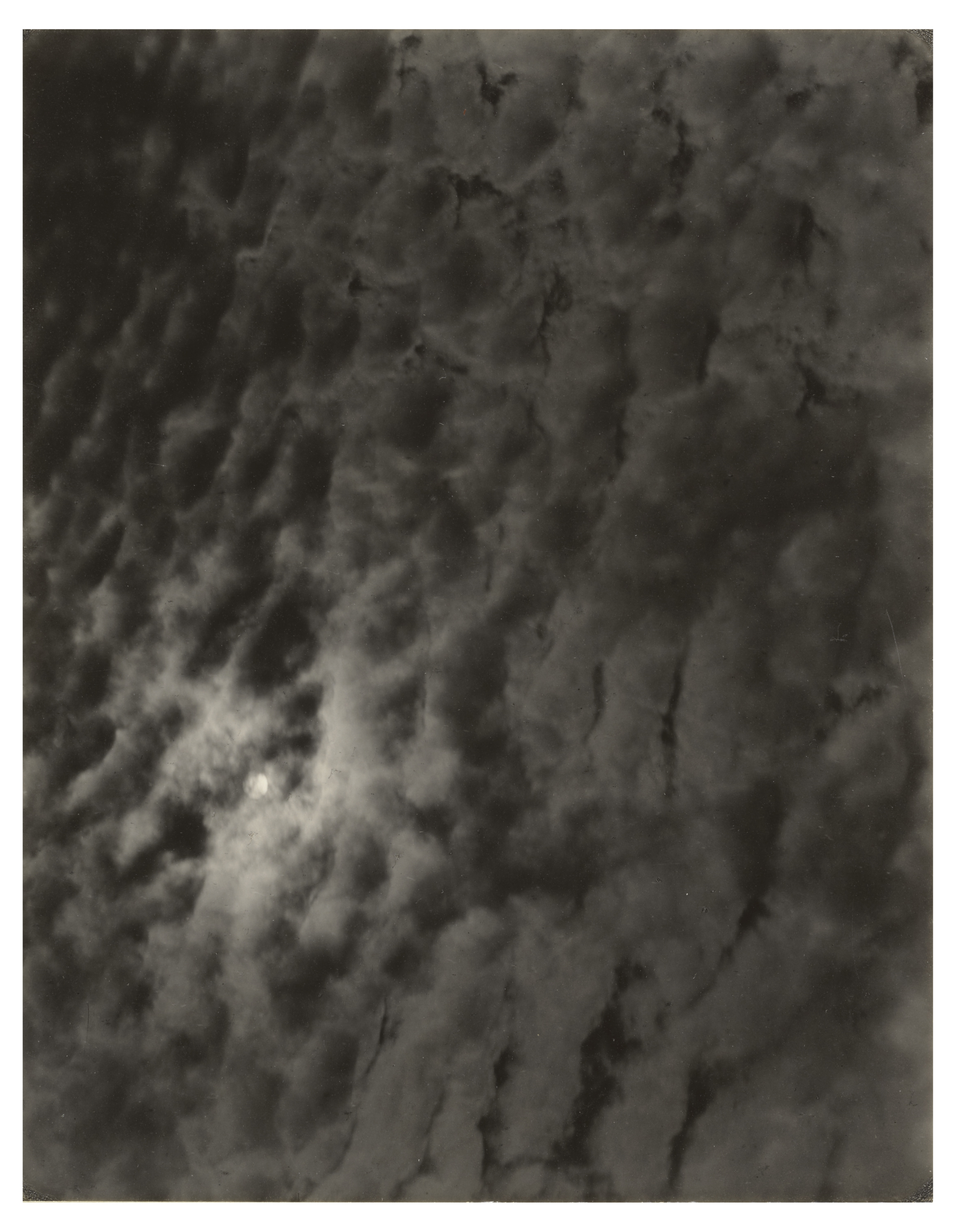
Image Credit: Alfred Stieglitz”Equivalents” (1927) Digital image courtesy of the Getty’s Open Content Program.

John Dorsey: “Perpetual Motion”


Perpetual Motion

in the 1980’s 
everything was smooth sailing 
except 
drugs
aids
starvation
exploding space shuttles 
&
the threat of foreign wars 

we had miami vice
& a small hole 
peeking through the ozone layer
from all of those cans of hairspray 

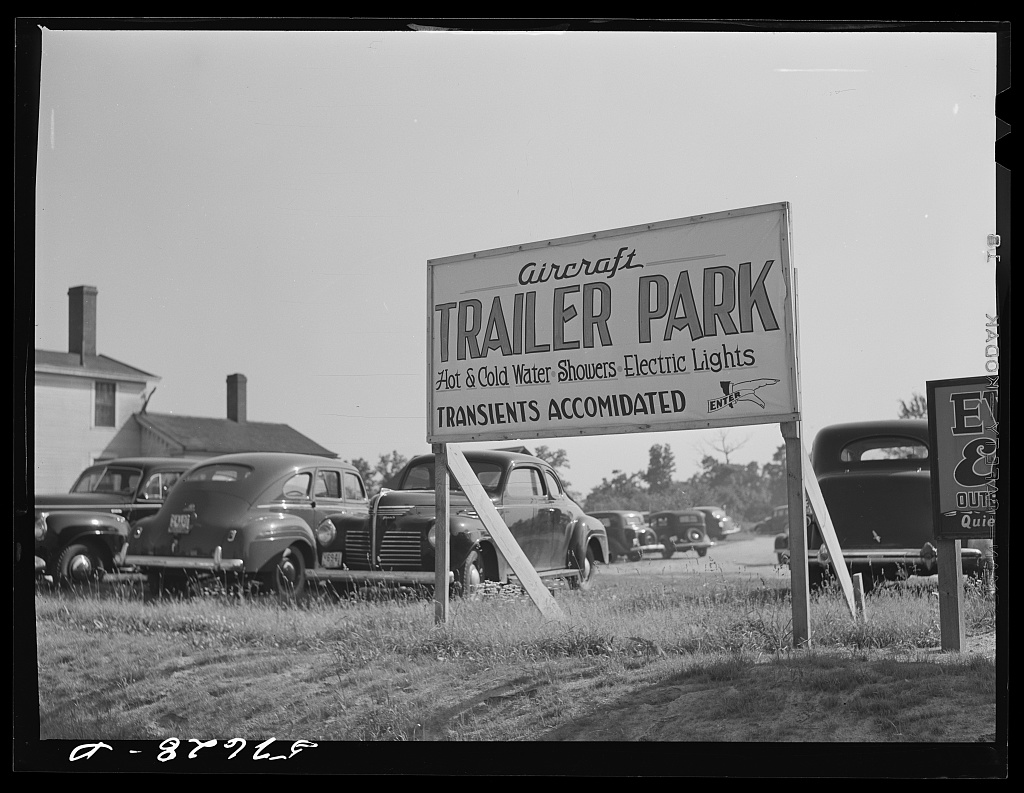
everyone in the trailer park 
had a waterbed

our neighbors at the top of the hill
got their kids a chihuahua puppy for christmas

they would take turns tossing it
onto the bed 

watching the poor thing 
sway back & forth
like a drunken sailor

only a few weeks 
after bringing it home 
it slid right off the bed

snapping its neck 
without even a whimper

rubber ball still firmly in its mouth

as a child’s birthday party went on
in full swing in the next room

it was so quiet
that we thought 
it was playing a game

& then the youngest neighbor boy
started wailing  

as his brother approached the body 
with plastic army men
as if it was just some peaceful beast 
he had killed in battle

their father covered it up 
with a beach towel
as their mother asked us
who wanted cake

& somehow like magic
the decade was over
before it had even really 
gotten started.


About the Author: John Dorsey lived for several years in Toledo, Ohio. He is the author of several collections of poetry, including Teaching the Dead to Sing: The Outlaw’s Prayer (Rose of Sharon Press, 2006), Sodomy is a City in New Jersey (American Mettle Books, 2010), Tombstone Factory, (Epic Rites Press, 2013), Appalachian Frankenstein (GTK Press, 2015) Being the Fire (Tangerine Press, 2016) and Shoot the Messenger (Red Flag Press, 2017) and Your Daughter’s Country (Blue Horse Press, 2019). His work has been nominated for the Pushcart Prize. He may be reached at archerevans@yahoo.com.


More By John Dorsey:

The Mark Twain Speech

Creatures of Our Better Nature

Picker


Image Credit: Marion Post Wolcott “Parked cars on private yard and trailer park sign where many workers from United Aircraft live in their own trailers. East Hartford, Connecticut”  (1941) The Library of Congress


Ben Nardolilli: “Large Bull-Thistle”


Large Bull-Thistle

Looking up Chenango County,
It’s what I do at work, travelling through
The internet and coming across
Maps, images, and demographic data
For counties I’ll probably never go to

But I help out the people there,
Or who died there and whose families
Have moved on to other places,
They need their checks
And I make sure they get them

I know death unites us all,
Yet asbestos seems a runner-up,
I wonder if I’ve ever been exposed
And if some pale tumor
Is ready to bloom inside me because of it

Then I can join with the men
And women who died by similar means,
In Erie, in Albany, in Kings County,
In Warren, and in Wayne, finally,
Someone else can process a claim for me


About the Author: Ben Nardolilli currently lives in New York City. His work has appeared in Perigee Magazine, Red Fez, Danse Macabre, The 22 Magazine, Quail Bell Magazine, Elimae, The Northampton Review, Local Train Magazine, The Minetta Review, and Yes Poetry. He blogs at mirrorsponge.blogspot.com and is trying to publish a novel.


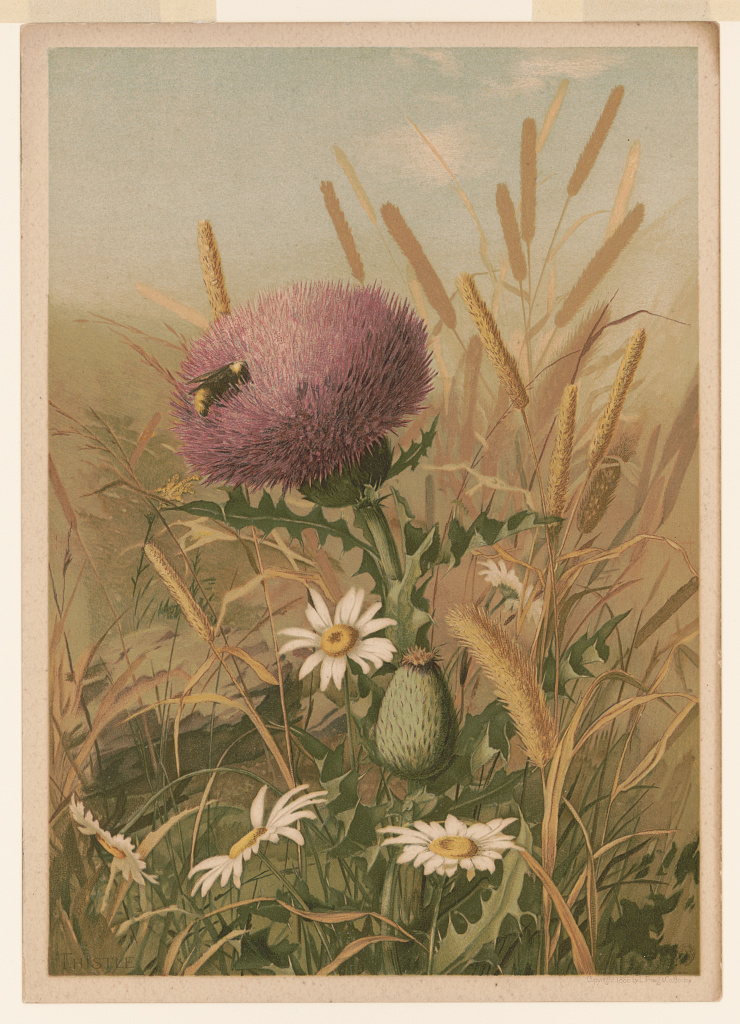
Image Credit: “Thistle” L Prang & Co. (1886) The Library of Congress