“Tightrope Dancer” By Bunkong Tuon


This is the fourth in a series of poems from a forthcoming poetry collection about raising a biracial daughter in Contemporary America, during this polarizing time of political and cultural upheavals where sexual harassment allegations abound, where a wall, literal and figurative, threatens to keep out immigrants like the narrator, a former refugee and child survivor of the Cambodian Genocide. You can find the complete series of poems below.


Tightrope Dancer

You climb the five-rung ladder
at the children’s playground.

Your mother crouches
below, holding breath.

I stand behind
counting the plastic rungs.

You kick us away,
“I’m a big girl.”

Your mother prepares
to catch your fall.

Each day we hold our breath,
cover our mouths with our hands,

close our eyes, and pray.
Of course, we want you to reach

The top, but not too fast.
And not too far from us.


About the Author: Bunkong Tuon is the author of Gruel (2015) and And So I Was Blessed (2017), both poetry collections published by NYQ Books, and a regular contributor to Cultural Weekly  He is also an associate professor of English and Asian Studies at Union College, in Schenectady, NY.


Bunkong Tuon’s series of poems on raising a biracial daughter in contemporary America:

Ice Cream

Gender Danger

The Bite

Tightrope Dancer

Women’s March in Albany

My Mother on Her Deathbed


Image Credit: Alice S. Kandell “A young girl swinging on a handcrafted swing, Sikkim” (1969) The Library of Congress

“A Review of Mike James’ Jumping Drawbridges in Technicolor” By Chase Dimock


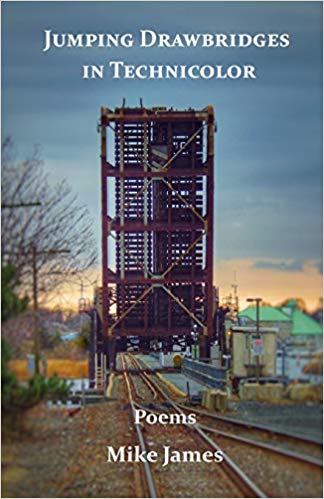
In “My Wife’s Shoes,” the first poem of Jumping Drawbridges in Technicolor (Blue Horse Press), Mike James writes “some nights we turn the radio to ballroom music and I pretend to be Fred Astaire, led by Ginger Rogers for a change, and dance in high heels in reverse.” “High heels in reverse” is the essence of his book. Astaire and Rogers had to know the geometry of each other’s bodies and steps inside and out to perform their moves. A careful eye can spot the scenes where Rogers is actually leading. This is exactly what Jumping Drawbridges in Technicolor achieves.

We’ve all heard the old adage about reserving judgement until we’ve walked a mile in a man’s shoes, but that always assumes a lack of empathy and the need for a radical thought experiment just to imagine outside the self. In reality, as Mike James reminds us, we are always wearing each others shoes, although sometimes we lack the insight to see them, or we keep our steps hidden. Just as the surrealists were not about random weird imagery, but about making the real experience of our psyches visible, so too does Mike James make the multiplicity of self and the malleability of the body legible in his prose poems.

Like in his previous collections, My Favorite Houseguest and First-Hand Accounts from Made Up Places, James populates some of his book with portraits of celebrities. Yet, these portraits are never about the celebrity him or herself so much as they are about the process of painting them and seeing the pigment of self in each brushstroke. In “The Films of Burt Reynolds” he begins with “not the films, but the books about the films…Someone loved Burt enough to watch each, then write descriptively.” While James writes about someone writing about Burt, he’s also writing about himself, and how his “mother said she’d marry him if he’d just stop by.” For men, Burt’s mustachioed masculinity is something we’re supposed to identify through as he “walked down the carpet with Dinah, Lauren, Sally and Loni.” Yet, when he is written about, he becomes an object of grammar. Straight, gay, or in between, all men must ask, do we want to be Burt, do we want Burt, do we want to be wanted by Burt, or is it all of the above? Continue reading ““A Review of Mike James’ Jumping Drawbridges in Technicolor” By Chase Dimock”

“In the Mental Architecture of the Deceased” By Chase Dimock

.

In the Mental Architecture

of the Deceased

By Chase Dimock

.

Five years ago, my father, grandfather, and I remodeled the bathroom in our family cabin. This was no luxury ski chalet or time share condo masquerading as a cabin. My great-grandfather built it himself in the 30s with the help of his five daughters and the boy scout troop he lead. Great-grandpa was not a master carpenter or plumber, so as we tore away the rotting drywall and jackhammered the cracked cement floor, we discovered an unexpected and unconventional layout of pipes. It was a map of kludges, improvisations, and applications of sheer brute force.

The more Dad and Grandpa studied how the pipes were fashioned and connected, the more it became clear that the success of the remodeling job became dependent on interpreting Great-Grandpa’s plumbing choices, and then predicting where the pipes would take us. They had to think like Great-Grandpa, and in the process, his cognition and imagination became reanimated. The pipes were a network of thought like the neural pathway of synapses in his mind. Debates between Dad and Grandpa over the next step in the project evolved into nostalgic appreciations of Great-Grandpa’s resourcefulness. They were once again enveloped in the creative vision of a man who built his own carnival rides and managed to keep a citrus grove thriving during the severe rationing of WWII.

If you clicked over here from Facebook or Twitter, you are probably wondering why I am beginning a remembrance of Okla Elliott with an anecdote about plumbing. My Great-Grandpa died well before I was born, so the experience of a man’s resurrection through exploring his handiwork was only secondhand. I could see it in Dad’s and Grandpa’s faces, but I could not feel it directly. In August 2017, when I took over As It Ought To Be following Okla’s untimely passing, I finally experienced this phenomena first hand.

As the new Managing Editor, I have been combing through nearly a decade of articles on As It Ought To Be. This has meant figuring out formatting, style, and organization as Okla had established them, and charting how he evolved in these ways. I’ve read through all of the posts Okla authored from the beginning of the site to his final article about Lent and its political and social possibilities posted just weeks before he unexpectedly passed. Just as the plumbing revived the spirit of Great-Grandpa for my father and grandfather, so too has editing and organizing As It Ought To Be kept Okla’s voice as a writer and thinker perpetually resonant in my mind.

Although I have known Okla since right around the founding of As It Ought To Be, one tends to forget how people were when you first knew them. You don’t always remember them as they ended either. Rather, you remember people for their established role in your life and you preserve them in that stance. You build a home for them in the structure of your existence, and when they die, that’s where they stay, beautifully enshrined in your memory as a witness and an ally. This would be the Okla of 2010-2014, when we were grad students drinking Bushmills, debating Sartre, and geeking out over the genius of Professor Cary Nelson. Like so many published here on As It Ought To Be and in many of his other creative endeavors, he encouraged me to expand my mind, amplify my voice, and apply my sense of reason and empathy toward engaging with the world’s social issues and political problems.

Reviewing Okla’s writings and editorial work has reacquainted me with the younger, wildly ambitious Okla, and introduced me to the older, more circumspect Okla with whom I wish I had spent more time after I graduated and bounced around the country. As I edit the site, I find myself more and more thinking like Okla, most notably in the joy I take in providing a spotlight for the work of my talented friends. And yes, like my Great-Grandfather’s patchwork of pipes, Okla left plenty of ingenious kludges and creative engineerings for me to smooth out as I have begun to archive the site. I’m slowly putting together more organized and navigable collections of past articles while considering how to preserve his vision through necessary remodelings and additions for As It Ought To Be’s progress into the future. This year, that meant moving to the new As It Ought To Be Magazine site, primarily because his password for renewing the domain registration passed with him.

Throughout this process, one nagging worry has loomed over me; memory is malleable. Every time we remember something, we change it. We access it differently, and then add that moment of access to the memory. It’s as if every time you play a tape, the ambient noise of the room in which you played it is added to the song. I worry that the act of remembering distances us from the original affect of its experience to the point where we can no longer access it directly. Men and moments become replaced by their mythologies, and while this is how we carry them into the future, a part of me wants to reach back and relive moments that have not been codified into a monument.

I challenge myself to remember without memorializing, knowing this is nearly impossible. What can I remember that is authentic to the moment in which it happened, and not just a generalized narrative my memory has woven out of collected experiences? I remember Korean tacos, extremely cold walks around the library late at night, how he liked living in on-campus housing even though the apartments looked like Cold War era bomb shelters inside. I remember when he went with me to a memorial for teenage LGBT victims of suicide and I cried uncontrollably.

I remember that over one Summer, he lost a considerable amount of weight, and when I returned that Fall, he seemed so much smaller than I remembered him. But after a few minutes of talking, his stature immediately inflated back to feeling ten feet tall. I guarantee that the majority of Okla’s friends misremember how tall he actually was because his personality enveloped every room he entered.

Although I am fortunate to have not lost many people close to me, I have learned that after someone dies as a biological organism, there are several other layers of their being that die at different intervals. Obviously the most painful is the loss of their presence. The second most dreaded is the moment when nothing new will come from them. If you can keep uncovering new things about them posthumously, one of the most beautiful parts of their life remains operational. That layer remains alive. In the memoir Maus, Art Spiegelman plunges into deep despair when he learns his father had burned his deceased mother’s diaries. The idea of reading new words and experiencing new ideas from his mother promised to bring her back to life, and their burning further cemented the painful reality of her passing. The fact that artists like Prince die with huge catalogs of unreleased material eases the grief of their passing.

Managing As It Ought To Be has kept Okla very much alive for me in this sense because I am constantly coming across something he had crafted that I had not seen before. It’s been oddly Proustian at times. I’ll come across something Okla drafted or edited, and a certain phrase will suddenly trigger a memory, reminding me of a time we discussed this topic, or just a momentary visualization of the expression on his face that I know he had as he wrote it.

Reposting his article on Lent a few weeks ago reminded me of the arguments we used to have over religion. In grad school, he was an ardent atheist. He could not believe that I could maintain my faith given how terribly the church has treated some minority populations such as LGBT people. This was a completely valid argument. He knew that this was the most contradictory and fragile element of my professed beliefs, and like any philosopher challenging what seemed unreasonable, he aimed directly for it. And yet, I knew he was not trying to disable me. Rather, he was sparring with me. If I was going to stand on this principle, it needed to be swifter and more resilient. After many of our debates, my ideas came home bloodied and bruised, and sore in the morning, but became far stronger in the long run.

In the final years of his life, Okla became receptive to the teachings of the church. Inspired by the new pope, he began writing about theology and social justice. I regret that I never had the chance to revisit this topic with him. What did he read or hear that spoke to him? I hope someday I’ll get the opportunity to read his unfinished writings and begin round two of our conversation.


About the Author: Chase Dimock is the Managing Editor of As It Ought To Be Magazine and he makes his living teaching literature and writing at College of the Canyons. He is the author of Sentinel Species (Stubborn Mule Press 2020). His poetry has been published in Waccamaw, Hot Metal Bridge, Faultline, Roanoke Review, New Mexico Review, and Flyway among others. He holds a PhD in Comparative Literature from the University of Illinois and his scholarship in World Literature and LGBT Studies has appeared in College Literature, Western American Literature, Modern American Poetry, The Lambda Literary Review, and several edited anthologies. For more, visit chasedimock.com


More by Chase Dimock: 

Letting the Meat Rest: A Conversation With Poet John Dorsey 

Leadwood: A Conversation With Poet Daniel Crocker

First-Hand Accounts From Made-Up Places: An Interview With Poet Mike James
“A Review of John Dorsey’s Your Daughter’s Country” By Chase Dimock


Your Daughter’s Country by John Dorsey

Reviewed by Chase Dimock


Reading Your Daughter’s Country (Blue Horse Press) is like leafing through an old family photo album. But, instead of your good-natured grandma narrating while tactfully dancing around family secrets and perfuming the pictures of cousins nobody talks about anymore with a folksy “it takes all kinds,” your guide is Uncle John, who tells you everything. Schlitz in hand, he tells you of aunts with “cracked skin” who could “eat $20 worth of burger king”, abusive great-grandfathers, uncles who never left their “mother’s side,” and cousins bathing in a steel drum.

You wonder if it’s appropriate to hear all this, but you can see the fondness, empathy, and pain in Uncle John’s eyes, and you realize this isn’t gossip or the settling of old scores. It’s love for the wear and tear we see in people content with their scars or nursing their bruises, and an almost ethical duty to present people as they are: neither sensationalized nor sanitized.

Dorsey’s first two poems “Poem for Olin Marshall” and “A History of Bite Marks” might best express this style of empathy through truth.

all my grandmother’s cousin ever wanted
was his own pizza & a used lawn tractor
the son of sharecroppers & war heroes
he drove a school bus & raised wild dogs
that bit the hand that fed them

We see Olin’s life as a series of loss: he talks of his dead sister “as if she were a saint,” his wife who passed the same year (“he had never seen a ghost quite as lovely”) and the death of his brother, whose estate he inherited, but simply let sit in a bank, resigned to “gathering his history up like dead leaves.” It’s this understanding of Olin’s melancholia that perhaps explains why in “A History of Bite Marks,” Dorsey does not complain too loudly about washing Olin’s dog Bruno as “he tried to take chunks out of our ankles.” Loving others means being bitten, and finding meaning in the language of bite marks.

When applied to his family, Dorsey’s trademark empathy for the underappreciated tells us more about his own identity. In “Tommy” he remembers a great uncle born with cerebral palsy like himself:

one of the sweetest men
i’ve ever known
he was a large baby
big enough to swallow
whole japanese tourists
in some infant godzilla scenario

Several poems remember his grandfather, who bears the decline of the Rustbelt on his shoulders. In “His Summer Place” he laments his grandfather losing an inherited family property after the failure of his painting business. “We Were Still Brave Then” depicts Dorsey as a child and his naive but charitable reaction to his Grandfather’s unemployment, gifting eight dollars to help the family. In a way, we’re reading the John Dorsey origin story, a look into how he inherited and developed his human insight and empathy as a poet.


The collection’s eponymous poem “Your Daughter’s Country” is Dorsey at his most revealing and unsettling, tracing the lineage of generational trauma. It begins with a fairly standard description of his great-grandfather’s depression era farm life, but then suddenly he exposes what the family long repressed:

the family history gets a little fuzzy

it wasn’t until i was in my 20’s
that i found out he had also been
an alcoholic
a railroad man
& a rapist

something my own father never knew

The rest of the poem delves into the tragic, abused life of his grandmother, for whom “there was never anywhere for her to go that was far enough away from where she’d been.” This is Dorsey’s greatest twist. He populates the book with several endearing, or at least sympathetic portraits of family, until you come to the poem that bears the book’s name, and he rips apart our expectations, like the way his great-grandfather’s abuse likely tore through generations of family.

While the poems about his literal family stand out, for John Dorsey, the familial extends beyond blood kin. Throughout his career, Dorsey’s work has been known for his portraits of people often overlooked or misunderstood. Whether it’s an old friend or a weathered stranger’s face at a rural Missouri diner, he has the ability to pull something from deep inside a person that feels as if it came from the memories of a cousin you spent all your summers swimming with.

In “Poem for Mary Anthony” Dorsey portrays a trucker who knows “you won’t find god in the stacks of books we have piled high in the bookstore in town.” In another poem, he mentions a friend’s brief recollection of a man who placed second in an episode of Star Search, but

just like in life
nobody ever remembers
the runner up.

instead they ask you
for your last cigarette

I’d argue that Dorsey’s poetry is all about remembering the runner up, as well as the last place finishers, those who didn’t get an audition, and all those who never got to dream of an opportunity.


Your Daughter’s Country is available from Blue Horse Press.


About the Author: Chase Dimock is the Managing Editor of As It Ought To Be Magazine. He holds a PhD in Comparative Literature from the University of Illinois and his scholarship has appeared in College LiteratureWestern American Literature, and numerous edited anthologies. His works of literary criticism have appeared in Mayday MagazineThe Lambda Literary ReviewModern American Poetry, and Dissertation Reviews. His poetry has appeared in Waccamaw, Hot Metal Bridge, Saw Palm, San Pedro River Review, and Trailer Park Quarterly. For more of his work, check out ChaseDimock.com.


More by Chase Dimock: 

Letting the Meat Rest: A Conversation With Poet John Dorsey 

Leadwood: A Conversation With Poet Daniel Crocker

First-Hand Accounts From Made-Up Places: An Interview With Poet Mike James
2018: A Year in Poetry

.

2018: A Year in Poetry

By Chase Dimock


In 2018, As It Ought To Be proudly to featured astounding work by many brilliant poets. As the Managing Editor, I can say that my favorite part of the job is getting to know our contributors and building a platform for their voices to be heard. It’s an amazing privilege to work with so many talented writers. You can access an archive of As It Ought To Be’s year in poetry right here. Below are some highlights of the year by our frequent contributors.

Our Saturday Poetry Series editors Sivan Butler-Rotholz, Alan Toltzis, and Anne Graue featured some fresh voices in the world of poetry and provided insightful commentary on their work.

John Dorsey mourned with us in a remembrance of Anthony Bourdain.

Daniel Crocker summoned the Incredible Hulk to discuss bipolar disorder.

Margaret Crocker spoke volumes about the silencing of women.

Mike James gave us a preview of the ghazals in his new book and wrote a tribute to one my heroes, Paul Lynde.

Ruth Bavetta glowed in an illuminated desert

Rebecca Schumejda’s series examined the impact of incarceration on communities and families.

Bunkong Tuon contributed a series on the experience of immigrants in America.

Lynn Houston concluded a series of poems about her relationship with a veteran of the war in Afghanistan.

Tobi Alfier and Jeff Alfier both whisked us away with their travel poems and intimate landscapes.

Kevin Ridgeway transmitted the golden era of late night television

Tim Peeler wrote a tribute to one of my favorite poets, Hart Crane

Stephen Roger Powers flew us to O’Brien’s Tower on the Cliffs of Moher

Jason Ryberg ruminated on the forms and shapes poetry can take in our lives

John Sweet channeled the pain and brilliance of Jackson Pollock

Sean Karns froze a performance perfectly in time.

Roy Bentley’s pop culture compendium spanned Nosferatu, Steve McQueen, and Ringo Starr

Ryan Quinn Flanagan did the heavy lifting of the artistic process

Steve Cushman reignited the past

Jonathan K. Rice took us on a stroll down the pier

Howie Good reminded us all things are photographable.

Mike Acker charted the cracks in our cultural divisions

Lou Ella Hickman brought new perspective to the Adam and Eve story

David Chorlton explored the mysticism of relics

.

Thanks again to all our contributors from 2018. We already have some amazing poems waiting on deck for 2019. And, just as a reminder, we are always accepting submissions. Check out our contact/submit page for more information.

.

About the Author: Chase Dimock is the Managing Editor of As It Ought To Be. He holds a PhD in Comparative Literature from the University of Illinois and his scholarship has appeared in College LiteratureWestern American Literature, and numerous edited anthologies. His works of literary criticism have appeared in Mayday MagazineThe Lambda Literary ReviewModern American Poetry, and Dissertation Reviews. For more of his work, check out ChaseDimock.com.


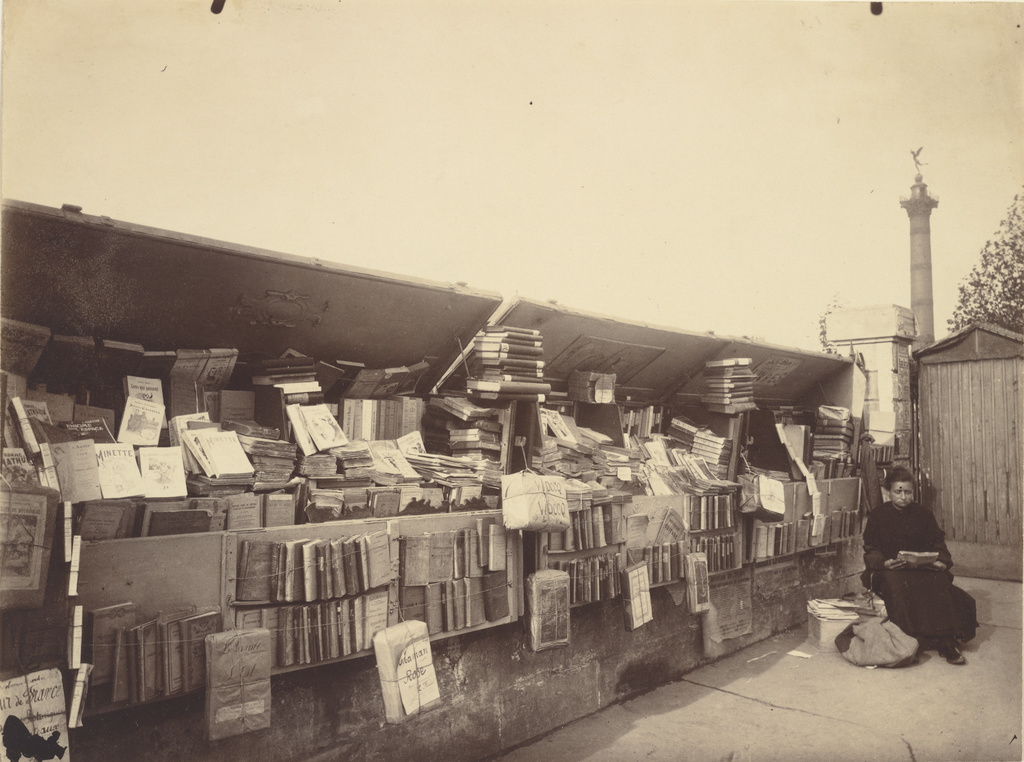
Image Credit: Eugène Atget “Place de la Bastille” Digital image courtesy of the Getty’s Open Content Program


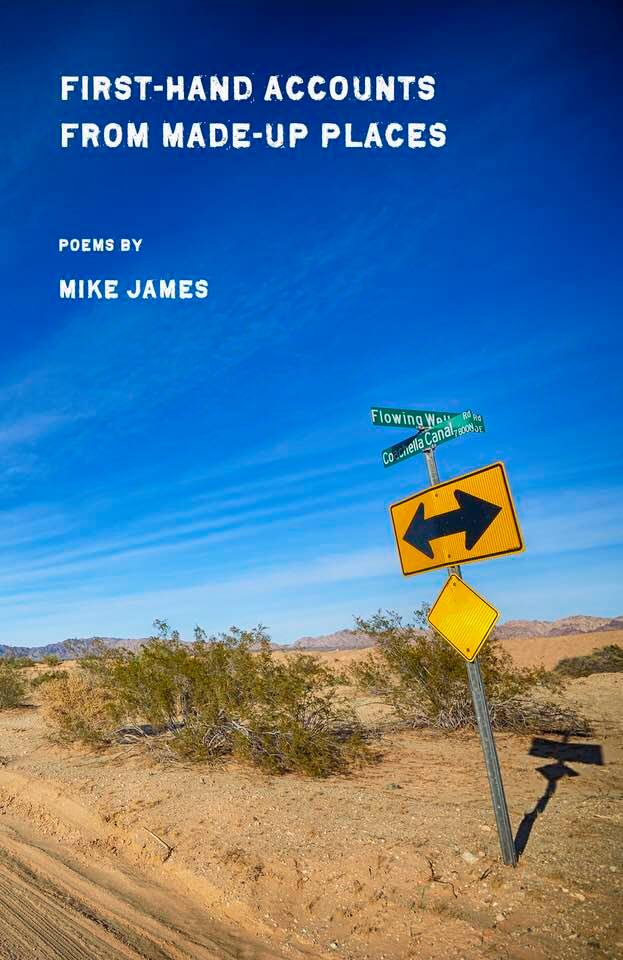
First-Hand Accounts From Made-Up Places: An Interview With Poet Mike James
First-Hand Accounts From Made-Up Places:

An Interview With Poet Mike James
By Chase Dimock

When you read Mike James’ new book of poetry, you realize that the contradiction in the title is the intersection where his creativity dwells. For James, the most interesting subjects are those we either overlook and need to re-examine, or we deem impossible and thus need to invent. These are first-hand accounts, but Mike James has many hands. He is a cartographer of the margins, whether that means the almost-icons sitting just left of the spotlight, or the eccentricities in mainstream society you can only see if you look awry.

Take his series of poems on Grant Wood’s paintings for instance. In them, he teases out the subversive, frustrated eroticism embedded in the denim overalls of Americana. He writes about flamboyance and excess, but with an exactitude of language. At first, you think his ghazals and prose poems wander through their subjects, until you get to the destination, and then you realize he took you on a precisely planned path you had never seen on the maps. These are the made-up places we all live in, and Mike James knows the routes where the dirt roads glitter.

Chase Dimock: Anyone who has been following your work will notice that you have been extremely prolific lately with diverse interests in themes and forms. Last year, you published two books: My Favorite House Guest, a collection of prose poems about pop culture icons, and Crows in the Jukebox, which draws a lot on your family history with an almost minimalist use of language. Where does First-Hand Accounts From Made-Up Places fit into your evolution as a poet? How do its themes and forms reflect where you are as a writer and a man today?

Mike James: I have very broad tastes. I love jazz and disco, classical and country. I love action movies and documentaries. I mention this because it’s applicable in how I approach my writing. I’m always interested in what I haven’t done and I tend to really run with my passions. The musicians I truly love (Bob Dylan, Miles Davis, Arthur Russell, David Bowie) all work/worked with a wide variety of styles. That’s how I approach my writing. So many of the poets who really interest me are ones who don’t have a settled “house style”, but instead work with an expansive scope.

The new collection is divided into three different sections. The first section is a sequence of ghazals. That’s a form I’ve tinkered with for years. The ghazals were the catalyst for this collection. I wrote the sequence in order, excluding the poems I discarded, with the idea that chronology would impose a structure.

The second section is mainly free verse, mostly centered on the work of Grant Wood. The final section is prose poems which are not, mainly, pop culture centered in the way that the poems in My Favorite Houseguest are.  Prose poems are wonderful because they are so liberating in regards to subject matter and expectations. I feel like I’m a different poet when I’m writing prose poems. My prose poems tend to be a more absurdist and chattily surreal.

The new collection provides an overview of my current interests in both subject matter and technique. These poems, I hope, show a comfort level with a wide variety of themes and with a wide range of technique. On a very personal level, the biggest difference between the work I’m doing now and the work I did ten years ago is that I’m much more willing to embrace failure and to follow any squirrel up any tree.  My subjects are more open and more varied now. I’ve let go of the old concepts of the kind of poet I want to be. These days, I enjoy writing more than ever before. I’m certainly much more relaxed about the wrong turns I take. I hope that joy transfers to the reader. Continue reading “First-Hand Accounts From Made-Up Places: An Interview With Poet Mike James”

Chase Dimock: “The Haunted Pop-Up Halloween Store”


The Haunted Pop-Up Halloween Store

is the zombie corpse of a long dead
retail outlet rising from the grave.
Beneath the orange banner
looms the faint spectral glow
of a Borders Books sign.

Crumbling red Circuit City tile
lines the gates of hell.
The ghosts of VCRs and Walkmen
haunt the shelves now lined
with sexy nurse costumes
and adult sized My Little Pony onesies.

The souls of empty Blockbuster DVD cases
moan in the aisles, grieving the hole within:
the lost copy of Shrek II that will never be returned.
Radioshack floppy disks flutter like bats
in the rafters, blindly searching among
the plastic pitchforks and novelty severed hands
for the Tandy computers they once called home.

The death mask of Geoffrey the Giraffe
silhouetted in dust and grime on the wall
looks over a display of polyester werewolves
hears the faint memory of children jumping rope
and dressing Cabbage Patch Dolls drowned out
by the eternal loop of “Monster Mash”
bellowing from the rusty intercom.

Come November,
when Smarties and Almond Joys line
the discount candy bin and the trucks collect
boxes of unsold rubber Pennywise masks
the retail Zombie will shut off the fluorescent lights
and bury himself again beneath the crumbling
asphalt parking lot and the scuffed linoleum.
It once more becomes the haunted K-Mart
teetering on the hill. The ghosts peer out
eyeholes cut in their Martha Stewart bedsheets.
The damned wipe Ecto-Cooler off their chins.

.


About the Author: Chase Dimock lives among mountain lions and coyotes in an undisclosed location between Laurel Canyon and the Hollywood Hills of Los Angeles. He serves as the Managing Editor of As It Ought To Be Magazine and makes his living teaching literature and writing at College of the Canyons. He is the author of Sentinel Species, published in 2020 by Stubborn Mule Press His poetry has been published in Waccamaw, Hot Metal Bridge, Faultline, Roanoke Review, New Mexico Review, and Flyway among others. He holds a PhD in Comparative Literature from the University of Illinois and his scholarship in World Literature and LGBT Studies has appeared in College Literature, Western American Literature, Modern American Poetry, The Lambda Literary Review, and several edited anthologies. For more, visit chasedimock.com


More by Chase Dimock:

Imitation Unicorns

Leadwood: A Conversation with Poet Daniel Crocker

.

Leadwood: A Conversation with Poet Daniel Crocker

By Chase Dimock


In Leadwood, Daniel Crocker surveys twenty years of his work as a poet. Ranging from the metaphysical significance of the McRib to courageous deep dives into bipolar disorder, Crocker’s book is more than a collection of poems; it’s a chronicle of a poet’s maturation and a man’s coming to terms with his upbringing and identity.

Leadwood is the Daniel Crocker origin story. He was born among the long closed lead mines and chat dumps that littered his rural Missouri hometown. He confronts poverty, bigotry, and religious zealotry along with personal tragedies that shaped him as man and a writer. As a middle aged poet, Crocker depicts the lingering effects of Leadwood, balancing nostalgia and care for his home with trauma. In his newest poems, he gives us stirring insight into his relationship with bipolar disorder.

No matter his age, his work has always been confessional and brave. Crocker is a rural Anne Sexton, a Sylvia Plath raised on Sesame Street and WWE wrestling, a John Berryman in the Wal-Mart aisles, a Robert Lowell with a smirk and morbid punchlines.


Chase Dimock: Although this is a collection of your work from the past two decades, you decided to give the book a title: Leadwood. Once the reader hits the first poem “Where We Come From,” they will learn that Leadwood is the name of your small hometown. Why did you decide that this one word would be descriptive of two decades worth of your work? What does understanding Leadwood as a town achieve toward understanding Daniel Crocker as a poet?

Daniel Crocker: This kind of dates back to my very first full length book, People Everyday and Other Poems (Green Bean Press, 1998), which I dedicated to  Leadwood. Later, me and my wife, Margaret, would do a chapbook together called “My Favorite Hell.” It was put out by Alpha Beat Press. We used the Leadwood population sign as our cover art. So, I guess Leadwood has had a hold on me from the beginning.

Like you said, it’s my hometown. I think most of us are shaped by where we grew up–for better or worse. Most of my formative experiences happened there, and I’ve written a lot about them.  And, I certainly have love/hate relationship with Leadwood. I have many great childhood memories, but also worries about lead poisoning and the ecological disaster that my home town is. Mostly, however, I wanted to make sure that the voices of my small town, and by extension other small towns, aren’t lost. There are small towns all over the country that have been ravaged and left behind by corporations–whether it’s Leadwood, which was founded by a lead mining company who later up and left the town with huge piles of chat (lead and dust) that were as big as football stadiums. The cancer rate there is extremely high. The soil has been tested there was found to be 10,000 more times the lead in the soil that is considered safe. Continue reading “Leadwood: A Conversation with Poet Daniel Crocker”

The Incredible Bipolar Hulk: A Conversation with Poet Daniel Crocker

.

The Incredible Bipolar Hulk:

A Conversation with Poet Daniel Crocker

By Chase Dimock

.

The genius of The Incredible Hulk is that everyone can identify with him. All people have a reservoir of anger inside them, and we all know the painful discipline of managing anger, lest it erupt into senseless rage. The Hulk Smash is the fantasy of acting on our anger with a violent ferocity that mirrors the inner, emotional experience of pain.

In his latest chapbook, Gamma Rays, Daniel Crocker identifies with the Hulk as a metaphor for the experience of bipolar disorder. As It Ought To Be debuted Crocker’s Hulk poem “The Incredible Hulk Tries to Write a Poem” last January. For Crocker, the Hulk is more than just a momentary outburst; he is an enduring persona who embodies the manic energy of bipolar disorder. Crocker’s poems humanize the Hulk, and in turn, provide insight into the mind of the bipolar person as they navigate the impulses within them. I had a chance to ask Crocker about the Hulk and how he personifies the bipolar experience in his poetry.


Chase Dimock:  The first question on anyone’s mind when they first look at your cover is going to be “Why the Hulk?” In the past, you’ve written poems in which you take on the personas of Cookie Monster, Skeletor, and George Bailey from It’s a Wonderful Life among others. What is it about the Hulk that made him worthy of an entire collection of poetry? What does taking on his persona uniquely achieve among your pantheon of pop culture icons?


Daniel Crocker: The simple answer is, I love the Hulk. I wrote one Hulk poem, the one where he goes shopping after taking klonopin, and then I couldn’t stop for awhile. I was filtering everything through the Hulk. I originally thought I might end up with a full length, but after about 20 poems I realized I was kind of done with the story I wanted to tell. But, he’s a great metaphor. Any negative aspect of your personality, especially those that center around losing control, that’s basically the Hulk. He’s the things you bury deep. In a lot of ways this books is about coming to terms with that.

So I used it as a metaphor for my bipolar disorder because you never know when you’re going to have another episode. You just try to keep them at bay with medication. Then I started thinking about what it means to navigate love and a relationship when you have this hanging over your head–when you’re not always sure you’re going to wake up okay. Unlike Shit House Rat, however, this is more about coming to terms with it. It is, I think, a happy book with a happy ending.


Chase Dimock: The Hulk has been incarnated as a comic, a cartoon, a TV show, and several movies. I know the TV show version of the Hulk the best because I grew up watching reruns. In that version, he’s somewhat of a loner who tries to manage his rage alone and channel it toward productive ways to help the people he runs into. The show always ends with “The Lonely Man Theme.” It seems like your Hulk is more like the Hulk from the comics, which places him in a romantic relationship with Betty. Why was it important to focus so many of your poems on the Hulk in a relationship?


Daniel Crocker: In the end, it’s a book about navigating a relationship while having a mental illness. In my favorite runs of the Hulk, Bruce was always afraid of his anger coming out. He would do anything to keep the Hulk away–even though it’s a part of him. He was so obsessed with finding a cure that his relationship with Betty would be strained. When I was diagnosed with bipolar, I read up everything I could on it. So, I understand that level of obsession. I also, of course, worry that my symptoms could come back at any time—even while on medication.  So, I hope it shows the impact of bipolar disorder on one’s immediate family as well as just the person who has it. In the end, though, it’s just coming to terms with the monster inside of you–whatever that may be.

Continue reading “The Incredible Bipolar Hulk: A Conversation with Poet Daniel Crocker”

In the Mental Architecture of the Deceased

In the Mental Architecture of the Deceased

By Chase Dimock

.

Five years ago, my father, grandfather, and I remodeled the bathroom in our family cabin. This was no luxury ski chalet or time share condo masquerading as a cabin. My great-grandfather built it himself in the 30s with the help of his five daughters and the boy scout troop he lead. Great-grandpa was not a master carpenter or plumber, so as we tore away the rotting drywall and jackhammered the cracked cement floor, we discovered an unexpected and unconventional layout of pipes. It was a map of kludges, improvisations, and applications of sheer brute force.

The more Dad and Grandpa studied how the pipes were fashioned and connected, the more it became clear that the success of the remodeling job became dependent on interpreting Great-Grandpa’s plumbing choices, and then predicting where the pipes would take us. They had to think like Great-Grandpa, and in the process, his cognition and imagination became reanimated. The pipes were a network of thought like the neural pathway of synapses in his mind. Debates between Dad and Grandpa over the next step in the project evolved into nostalgic appreciations of Great-Grandpa’s resourcefulness. They were once again enveloped in the creative vision of a man who built his own carnival rides and managed to keep a citrus grove thriving during the severe rationing of WWII.

If you clicked over here from Facebook or Twitter, you are probably wondering why I am beginning a remembrance of Okla Elliott with an anecdote about plumbing. My Great-Grandpa died well before I was born, so the experience of a man’s resurrection through exploring his handiwork was only secondhand. I could see it in Dad’s and Grandpa’s faces, but I could not feel it directly. Last August, when I took over As It Ought To Be following Okla’s untimely passing, I finally experienced this phenomena first hand.

As the new Managing Editor, I have been combing through nearly a decade of articles on As It Ought To Be. This has meant figuring out formatting, style, and organization as Okla had established them, and charting how he evolved in these ways. I’ve read through all of the posts Okla authored from the beginning of the site to his final article about Lent and its political and social possibilities posted just weeks before he unexpectedly passed. Just as the plumbing revived the spirit of Great-Grandpa for my father and grandfather, so too has editing and organizing As It Ought To Be kept Okla’s voice as a writer and thinker perpetually resonant in my mind.

Although I have known Okla since right around the founding of As It Ought To Be, one tends to forget how people were when you first knew them. You don’t always remember them as they ended either. Rather, you remember people for their established role in your life and you preserve them in that stance. You build a home for them in the structure of your existence, and when they die, that’s where they stay, beautifully enshrined in your memory as a witness and an ally. This would be the Okla of 2010-2014, when we were grad students drinking Bushmills, debating Sartre, and geeking out over the genius of Professor Cary Nelson. Like so many published here on As It Ought To Be and in many of his other creative endeavors, he encouraged me to expand my mind, amplify my voice, and apply my sense of reason and empathy toward engaging with the world’s social issues and political problems. Continue reading “In the Mental Architecture of the Deceased”