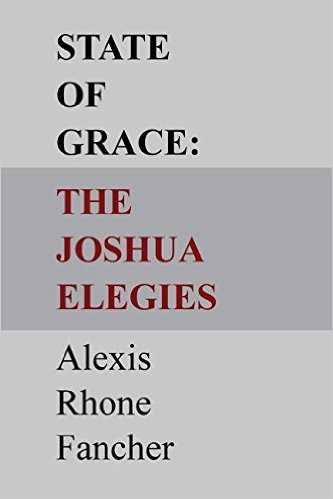
SATURDAY POETRY SERIES PRESENTS: STATE OF GRACE: THE JOSHUA ELEGIES

41oGCGJb2kL._SX331_BO1,204,203,200_


From STATE OF GRACE: THE JOSHUA ELEGIES
By Alexis Rhone Fancher:


DYING YOUNG

Midnight, and again I’m chasing
sleep: its fresh-linen smell and
deep sinking, but when I close my eyes I see
my son, closing his eyes. I’m afraid of that dream,
the tape-looped demise as cancer claims him.

My artist friend cancels her L.A. trip. Unplugs the
internet. Reverts to source. If cancer
will not let go its grip, then she will
return its embrace. Squeeze the life out of
her life. Ride it for all it’s worth.

By the time his friends arrive at the cabin
my son is exhausted, stays behind while
the others set out on a hike. He picks up the phone.
“Mom, it’s so quiet here. The air has never
been breathed before. It’s snowing.”

I put on Mozart. A warm robe. Make a pot
of camomile tea. The view from my 8th floor
window, spectacular, the sliver moon, the stark,
neon-smeared buildings, their windows dark.
Sometimes I think I am the only one not sleeping.

My artist friend wants to draw the rain. She
wants to paint her memories, wrap the canvas
around her like a burial shroud.

Tonight, a girl in a yellow dress stands below
my window, top lit by a street lamp, her long shadow
spilling into the street. She’s waiting for someone.

I want to tell my friend I’ll miss her.
I want to tell my son I understand.
I want to tell the girl he won’t be coming.
That it’s nothing personal. He died young.


SNOW GLOBE

Despair arrived, disguised as
nine pounds of ashes in a
velvet bag, worried so
often between my fingers
that wear-marks now stain
the fabric.

Is it wrong to sift
the remains of my dead son,
bring my ashen finger to my
forehead, make the mark of
the penitent above my eyes?

His eyes, the brown of mine,
the smooth of his skin, like mine.
Unless I look in the mirror
I can’t see him.

Better he’d arrived
as a snow globe, a small figure,
standing alone at the bottom of his
cut-short beauty.

Give him a shake, and watch
his life float by.


OVER IT

Now the splinter-sized dagger that jabs at my heart has
lodged itself in my aorta, I can’t worry it
anymore. I liked the pain, the
dig of remembering, the way, if I
moved the dagger just so, I could
see his face, jiggle the hilt and hear his voice
clearly, a kind of music played on my bones
and memory, complete with the hip-hop beat
of his defunct heart. Now what am I
supposed to do? I am dis-
inclined toward rehab. Prefer the steady
jab jab jab that reminds me I’m still
living. Two weeks after he died,
a friend asked if I was “over it.”
As if my son’s death was something to get
through, like the flu. Now it’s past
the five-year slot. Maybe I’m okay that he isn’t anymore,
maybe not. These days,
I am an open wound. Cry easily.
Need an arm to lean on. You know what I want?
I want to ask my friend how her only daughter
is doing. And for one moment, I want her to tell me she’s
dead so I can ask my friend if she’s over it yet.
I really want to know.


Today’s poems are from State of Grace: The Joshua Elegies (KYSO Flash, 2015), copyright © 2015 by Alexis Rhone Fancher, and appear here today with permission from the poet.


State of Grace: The Joshua Elegies: “Alexis Rhone Fancher’s book, State of Grace: The Joshua Elegies, maps in searing detail a landscape no parent ever wants to visit—a mother’s world after it’s flattened by her child’s death. Though her son’s early passing was ‘nothing personal,’ her poems howl with personal devastation. They insist that the reader take the seat next to hers in grief’s sitting room and ‘imagine him in his wooden forever.’ Fancher grapples with how to reconcile oneself to the slow loss of memory’s fade-out, and with how to go on living without betraying the dead, how to ‘[s]queeze the life out of / her life.’ You’ll need tissues when you read this book, but it’s well worth rubbing your heart raw against the beauty of these poems and their brave, fierce honesty.” — Francesca Bell, eight-time nominee for the Pushcart Prize in poetry, and winner of the 2014 Neil Postman Award for Metaphor from Rattle


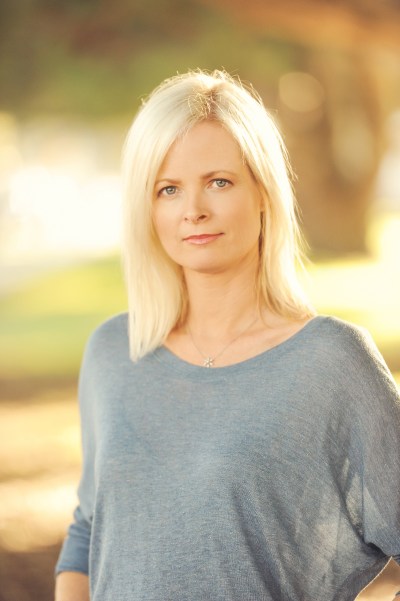
Alexis Rhone Fancher is the author of How I Lost My Virginity To Michael Cohen and Other Heart Stab Poems, (Sybaritic Press, 2014). Find her work in Rattle, Menacing Hedge, Slipstream, Fjords Review, H_NGM_N, great weather for media, River Styx,The Chiron Review, and elsewhere. Her poems have been published in over twenty American and international anthologies. Her photos have been published worldwide. Since 2013 Alexis has been nominated for three Pushcart Prizes and two Best of The Net awards. She is photography editor of Fine Linen, and poetry editor of Cultural Weekly, where she also publishes The Poet’s Eye, a monthly photo essay about her ongoing love affair with Los Angeles. www.alexisrhonefancher.com


Editor’s Note: The poems in today’s collection slew me. Long after I finished reading them, they stayed with me, a specter. As I nursed my young son, worried over his maladies, rejoiced in his small accomplishments, there in the shadows was the poetry of Alexis Rhone Fancher reminding me that life is precious, fleeting, that nothing should be taken for granted, that anything–no matter how dear–can be taken away.

It is impossible not to be moved by these poems. By “a girl in a yellow dress [who] stands below / my window, top lit by a street lamp, her long shadow / spilling into the street… waiting for someone.” By the poet, the mother, who wants “to tell the girl he won’t be coming. / That it’s nothing personal. He died young.” By the admission, “Unless I look in the mirror / I can’t see him.” By the callousness of a friend who would ask if a mother is “over” her son’s death. By a mother’s very human reaction to such a question: “I want to ask my friend how her only daughter / is doing. And for one moment, I want her to tell me she’s / dead so I can ask my friend if she’s over it yet. / I really want to know.”

State of Grace: The Joshua Elegies is raw, brave, honest. It rips you apart as you read it–and leaves you grieving long after–because of the very vulnerable and wounded place from whence the poems arose. This is an incredibly compelling collection that does what lyric, confessional, narrative poetry does best: invites the reader into a human experience that is at once personal and shared, pairing vivid imagery and beautiful language with a story so moving that the reader is forever changed by the very act of having read it.


Want to see more from Alexis Rhone Fancher?
Buy State of Grace: The Joshua Elegies from Amazon
Four poems in Ragazine, including “When I turned fourteen, my mother’s sister took me to lunch and said:,” chosen by Edward Hirsch for inclusion in The Best American Poetry, 2016
Broad (“Dying Young” was first published in Broad)
Alexis Rhone Fancher’s Official Website / link to published works

SATURDAY POETRY SERIES PRESENTS: A WINTER POEM BY ALFRED AUSTIN

"Mit Reif vom Nebel belegte Rose." Photographer: Armin Kübelbeck, CC-BY-SA, Wikimedia Commons
“Mit Reif vom Nebel belegte Rose.” Photographer: Armin Kübelbeck, CC-BY-SA, Wikimedia Commons

MY WINTER ROSE
By Alfred Austin

Why did you come when the trees were bare?
Why did you come with the wintry air?
When the faint note dies in the robin’s throat,
And the gables drip and the white flakes float?

What a strange, strange season to choose to come,
When the heavens are blind and the earth is dumb:
When nought is left living to dirge the dead,
And even the snowdrop keeps its bed!

Could you not come when woods are green?
Could you not come when lambs are seen?
When the primrose laughs from its childlike sleep,
And the violets hide and the bluebells peep?

When the air as your breath is sweet, and skies
Have all but the soul of your limpid eyes,
And the year, growing confident day by day,
Weans lusty June from the breast of May?

Yet had you come then, the lark had lent
In vain his music, the thorn its scent,
In vain the woodbine budded, in vain
The rippling smile of the April rain.

Your voice would have silenced merle and thrush,
And the rose outbloomed would have blushed to blush,
And Summer, seeing you, paused, and known
That the glow of your beauty outshone its own.

So, timely you came, and well you chose,
You came when most needed, my winter rose.
From the snow I pluck you, and fondly press
Your leaves ‘twixt the leaves of my leaflessness.


Today poem is in the public domain, belongs to the masses, and appears here accordingly.


Alfred Austin (1835 – 1913) was an English poet and journalist who succeeded Alfred, Lord Tennyson, as poet laureate. His acerbic criticism and jingoistic verse in the 1870s led Robert Browning to dismiss him as a “Banjo-Byron,” and his appointment to the laureateship in 1896 was much mocked. He also published a series of stiff verse dramas, some novels, and a good deal of lyrical but very minor nature poetry. A patriotic poet of the most confident phase of the British Empire, his work lacked the resonance of Rudyard Kipling’s. (Annotated biography courtesy of Encyclopedia Britannica, with edits.)


Editor’s Note: I love the use of metaphor in today’s poem, and the playful way language is paired with it. Moments like “And the year, growing confident day by day, / Weans lusty June from the breast of May.” I am taken, as well, by the allusion to the beloved, depicted as a winter rose arriving at what appears to be an inopportune time. But the poet eventually realizes that love–as it inevitably does–arrived exactly when it was most needed, occupying a space that had been waiting for just such an arrival: “You came when most needed, my winter rose. / From the snow I pluck you, and fondly press / Your leaves ‘twixt the leaves of my leaflessness.”


Want to read more winter poetry?
The Academy of American Poets
The Poetry Foundation

Kevin Pilkington Poetry Feature

0pilkWhat interests me most about Kevin Pilkington’s work is its range of content and tone. He can be serious and humorous with equal skill, and often in the same poem. His subject matters are human sexuality, human frailty, and post-modern life with all its joys and vicissitudes. I hope this small sampling of Pilkington’s work encourages readers to seek out his recently released Where You Want to Be: New and Selected Poems (Black Lawrence Press, 2015).

***

An Act of Seduction in the Twenty-First Century

You know as well as I
there is nothing more
than a piano between us.

So please rest your head
gently against my hip before
the moon burns a hole in my pocket.

If you close your eyes
perhaps you will see what I
did this morning at breakfast.

When I poured maple syrup
over a piece of French toast
it settled into a portrait of Christ.

Before I go any further you should
know this about me: I am
the kind of man who does not

believe in much of anything.
Now you will not be surprised
when I tell you what happened

next. I cut into it with my fork
and ate, just to feel what it is like
to chew on redemption.

***

Buying a Paper

You pass an alley
where a drunk holds
on to a rope of piss
he made with cheap wine
and these streets are the stink
August heats until
your one good lung turns
into a trash can rattling
each time you cough.

Like most tenants you keep
windows open hoping
the sax player on the corner
has a good enough lip tonight
to cool off the next breeze.

Things haven’t been right
but you know the voices you hear now
are no longer Irish arguing
in these tenements. After
moving uptown, the problems
they forgot to pack turned Spanish.

Before ever reaching
the newsstand you decided
the past year is worth the 50
cents a paper costs if it has an article
on why the women in your life
never meant more than rent.

Finding none, you light up
a cigarette, sucking down
all the smoke it takes to cloud
reasons why love has meant
just so many trout lying on their side
in the fish market window
with prices on their heads.

***

A Manual for Urban Living

Most things begin here in this city.
When the A train runs uptown
it rattles an orchard in Texas
causing fruit to fall from trees.
And when a glass of beer is knocked
over in a bar on Tenth Avenue the sunset
spills across the sky on the West Coast.
I quickly found out that any street
stretching across town is a kind
of rope that anyone can trip over.
And when I heard a neighbor on
the first floor was found in his
living room hanging from a piece
of Third Avenue wrapped around his neck,
I decided to find out what was hanging
over my head.

On the clearest night I could find,
I took an elevator to the roof
of a high rise then kept going to look
for a piece of moon, a bit of star
anything that resembled the sky
before I moved here. Later I learned
how to say no beginning with a woman
at a party who asked me to get her
a glass of wine. I told her she shouldn’t
since she was pregnant. She claimed
she wasn’t – the truth was she swallowed
the world. After she walked away,
I just hoped whenever her water broke
it turned out to be the Atlantic.

***

Kevin Pilkington is a member of the writing faculty at Sarah Lawrence College. He is the author of six collections: Spare Change was the La Jolla Poets Press National Book Award winner; Ready to Eat the Sky was a finalist for an Independent Publishers Books Award; In the Eyes of a Dog won the 2011 New York Book Festival Award; The Unemployed Man Who Became a Tree was a Milt Kessler Poetry Book Award finalist. His poems have appeared in numerous magazines including: The Harvard Review, Poetry, Ploughshares, Iowa Review, Boston Review, Yankee, Hayden’s Ferry, Columbia, North American Review, etc. He has taught and lectured at numerous colleges and universities including The New School, Manhattanville College, MIT, University of Michigan, Susquehanna University, Georgia Tech. His debut novel Summer Shares was published in 2012 and a paperback edition was reissued in summer 2014. His collection Where You Want To Be: New and Selected Poems was just published by Black Lawrence Press.

***

[The above poems are reprinted from Where You Want to Be with permission of the author.]

SATURDAY POETRY SERIES PRESENTS: CHANEL BRENNER

Photo by The POD Photography


A POEM FOR WOMEN WHO DON’T WANT CHILDREN
By Chanel Brenner


I won’t preach about the rewards of motherhood.
I won’t say it’s the best thing that ever happened to me.
I won’t say it’s the best job I’ve ever had.
I won’t say you’ll regret not having a child.
I won’t say you’ll forget what life was like before.
I won’t say it makes life worth living.
What I will say
is my son died.
What I will say
is I would still do it again.


Today’s poem was originally published in Rattle and appears here today with permission from the poet. Hear the poet read today’s poem aloud via Rattle.


Chanel Brenner is the author of Vanilla Milk: a memoir told in poems, (Silver Birch Press, 2014). Her poems have appeared in Poet Lore, Rattle, Cultural Weekly, Diverse Voices Quarterly, Anderbo, West Trestle Review, and others. Her poem, “July 28th, 2012” won first prize in The Write Place At the Write Time’s contest, judged by Ellen Bass. In 2014, she was nominated for a Best of the Net award and a Pushcart Prize.

Editor’s Note: I won’t say it’s because I first read today’s poem while pregnant. I won’t say it’s because three weeks ago I became a mother for the first time. I won’t say it’s because I did not want children myself. I will say that my son is an amazing human being and that I am honored to be in his service. I will say that today’s incredibly moving, incredibly brave poem breaks my heart each and every time I read it.

Want to read more from Chanel Brenner?
Chanel Brenner’s Official Website
Deep Water Literary Journal
Cultural Weekly
Women’s Voices for Change
Silver Birch Press
Buy Vanilla Milk on Amazon

SATURDAY POETRY SERIES PRESENTS: VALERIE BACHARACH


Untitled


GENESIS
By Valerie Bacharach

I flew across the international
date line to yesterday.
Stayed on the plane,
circumnavigated the world,
arrived at time’s beginning.

A garden of wildness.

No need of that man
whose rib I stole,
no need of knowledge,
or apples,
or snakes,
or God…

Only this—
solitude
grace
pure air

before pain found me.


Today’s poem was originally published in Poetica‘s “Poem of the Week” series and appears here today with permission from the poet.


Valerie Bacharach is a poet and teacher in Pittsburgh, Pennsylvania. She is a member of Carlow University’s Madwomen in the Attic poetry workshops and has attended Chatham University’s Summer Community of Writers. In 2015, she participated in Chautauqua Institution’s Writers Festival, and worked with the poet, Tony Hoagland. She conducts weekly poetry workshops with the women of Power House, a halfway house for women in recovery from drug and alcohol addiction. Her poetry has appeared or is forthcoming in Voices from the Attic, Pittsburgh City Paper Chapter and Verse, Uppagus, U. S. 1 Worksheets, and Poetica.

Editor’s Note: Today’s poem is epic in its sparse simplicity. Rife with the unsaid, with what does not need to be written. At the same time, the poem is laden with intertextuality, the Bible doing the heavy lifting of connectivity and association, allowing what appears on the page to be ripe with the weight of ancient tales. Amid these rich layers, a lyric beauty emerges: “[I] circumnavigated the world, / arrived at time’s beginning,” “A garden of wildness,” “before pain found me.”

Want to read more from Valerie Bacharach?
Uppagus
Pittsburgh City Paper

High School Poetry Series: Gender, Identity, & Race — Naudia Loftis

14357_10102179256599178_3776714066354638082_n

A note from Series Editor Sarah Marcus: Born from a powerful in-class discussion we had about gender, race, and the role of masculinity in rape culture, these poems are an analysis of gendered personal experience and a study of our intersectionality. This poetry series was inspired by a HuffPost essay I wrote called, “Why I Teach Feminism at an Urban High School.” The poets featured here are students from my 12th Grade Creative Writing class whose work I found to be brave, fearless, and progressive. Please help me support their crucial and influential voices.

*

Naudia Loftis is a senior poet in my Creative Writing class and the Vice President of our high school’s Poetry Club. Her passions include writing, high stepping, and helping others. She recently organized a local anti-violence Cleveland youth rally.

Loftis’s poem addresses the inescapable topic of gun violence. Cleveland has had a deadly year. In recent months, we have seen indiscriminate shootings take the lives of at least three children. Loftis explains: “It is important for me to be an anti-violence activist in my community because I am a part of the next generation that will soon run the world, and I feel it is my responsibility to help move my community on a better path. I believe in change, which is not common in my neighborhood. So if it takes me saying something, I will.”

I chose this poem for its beautiful awareness of breaking. Loftis’s careful consideration of line breaks, her masterful rhyme, and her ability to capture Cleveland’s grief is surely worthy of much more than our attention and reflection. In this midst of this holiday season, I am reminded of how grateful I am to have the opportunity to work with such talented young poets. 


A Dead City

On September 23, 2009, my cousin, Reginald Fain, was shot a week before his 26th birthday by a boy he grew up with (and on the street they grew up on). It’s hard to imagine such tragedies happening so close to you, but this is our reality in Cleveland.

I’ve seen baby boys in gangs, sagging, cussing in slang
Following role models who show them which way to bang
Mommas crying in shame, media ripping their names
And after they get locked up, the hood is taking the blame
Nobody wants to speak up, but everybody wants change
I’ve watched my city die
Cause of street signs that we claim
The knife is in our heart
While the blood is leaving stains
And we’re witnessing bodies drop like we’re stuck in a Hellraid
My summer filled with gang shootings
Police sirens in the breeze
Holding hands like precious pearls
Not knowing who’s next to leave
‘Cause shooters just want the praise
And I’m stuck out in the rain
Contemplating the beast the city needs me to tame
Shards ripping our fabric smiles
And looping us on a chain
Holding us tied together and leaving our bodies slain
It’s hard for me to be sane
In a land that’s acting strange
Moving beyond murders and savages playing games
I’m pushing in hope to gain people who are brave
To help reclaim our city
‘Cause we’re the ones who remain.


SATURDAY POETRY SERIES PRESENTS: ALAN TOLTZIS

pic 003

FORTY-TWO PLACES
By Alan Toltzis

As time passed,
they didn’t need to study love,
pray for it,
or even speak its name.

Instead,
they lived their love
silently.
Secrets remained secret

as love sank into unbending bones,
fused with supple corpuscles,
and seeped through soft skin
beneath their fingernails.

Only by looking back
and naming each
of the 42 places (in order)
they had journeyed

did they realize they had grown
into an old couple
who survived a long-forgotten stopover
of bickering and concession

and the should-
and should-not-have-saids
they should never
have crossed

leaving only unspoken love
perpetuated by the comfort and intimacy
of taking each other
for granted.


Today’s poem is from the collection The Last Commandment, published by Poetica Publishing, copyright © 2015 by Alan Toltzis, and appears here today with permission from the poet.


Alan Toltzis is the author of the book of poems, The Last Commandment (Poetica Publishing, 2015). His work appears in print and online publications including The Provo Canyon Review, Poetica Magazine, Burningword Literary Journal, Soul-Lit, and Red Wolf Journal. Alan is working on his second book of poems and is developing The Psalm Project, to teach poetry to middle- and high-school students.

Editor’s Note: There is something of a prayer in today’s poem. A thanksgiving. Something quiet, humble, and honest. Something lived, understood, known. What it is to journey throughout a lifetime of relationship. What it is to look back and reflect upon “the should- / and should-not-have-saids … leaving only unspoken love / perpetuated by the comfort and intimacy / of taking each other / for granted.”

Want to read more from Alan Toltzis?
Alan Toltzis’ Official Website
“Miles Away” in the Red Wolf Journal
The Provo Canyon Review
“Noah” in the Red Wolf Journal
“Elegy for 107696” via Poetica Publishing

SATURDAY POETRY SERIES PRESENTS: DERRICK TYSON


1442353318186_1441927095124

POEM
By Derrick Tyson


My eyes
are so green that when

I look at you, your face
becomes an emerald,

or like a meadow
that is so completely absorbed

in its color that
it catches in your throat.

Flowers never need
alterations.

Sometimes
the sky is so beautiful

that even the windows
are in awe,

not letting me
see it clearly.

Windows
built into us, into our limbs,

my feet have bricked wells
built into them,

Thus
I fall into myself.


Today’s poem was previously published in SHAMPOO, and appears here today with permission from the poet.


Derrick Tyson is a a Visual Artist/Poet currently residing in the Atlanta-area. He has been published in various online and printed magazines nationwide, and has several books of poetry out. As an artist, he has been exhibited internationally in four different countries (Israel, China, Australia and Italy) and has had many of his photographs published in online and printed magazines. He loves co-mingling, cross-pollinating Fine Art with his love of Poetics, Literature, World Cinema and the Oneiric. He refers to this as Visual Poetry. He believes that all things are interconnected, whether or not we can visually render the connections. Since “Time” is inelastic, he cherishes every second with a passion. He’s easily-amused and takes nothing for granted.

Editor’s Note: Today’s poem is full of moments of stunning, impactful surprise. In the instant of connection, is it the watcher or the watched who becomes transformed? How perfect the flower, created by the hand of science or Mother Nature, that it never needs alterations. How beautiful the sky that not even the transparency of windows will allow it to be truly seen. How deep or burdened we are, that we fall into ourselves? Built moment by moment, each its own deep thought, each its own discreet image, today’s poem asks us to slow down, to reflect, to envision and imagine and contemplate. There is layer upon layer to consider and play with, if we will open our minds and take the time.

Want to see more from Derrick Tyson?
POETRY:
      Lispy Whispers
      Isolated Lightships
ART:
      flickr
      Artitbe

SATURDAY POETRY SERIES PRESENTS: FALL POEMS

By Someone35 (Own work) [CC BY-SA 3.0 (http://creativecommons.org/licenses/by-sa/3.0)], via Wikimedia Commons
By Someone35 (Own work) [CC BY-SA 3.0 (http://creativecommons.org/licenses/by-sa/3.0)%5D, via Wikimedia Commons


AFTER APPLE-PICKING
By Robert Frost

My long two-pointed ladder’s sticking through a tree
Toward heaven still,
And there’s a barrel that I didn’t fill
Beside it, and there may be two or three
Apples I didn’t pick upon some bough.
But I am done with apple-picking now.
Essence of winter sleep is on the night,
The scent of apples: I am drowsing off.
I cannot rub the strangeness from my sight
I got from looking through a pane of glass
I skimmed this morning from the drinking trough
And held against the world of hoary grass.
It melted, and I let it fall and break.
But I was well
Upon my way to sleep before it fell,
And I could tell
What form my dreaming was about to take.
Magnified apples appear and disappear,
Stem end and blossom end,
And every fleck of russet showing clear.
My instep arch not only keeps the ache,
It keeps the pressure of a ladder-round.
I feel the ladder sway as the boughs bend.
And I keep hearing from the cellar bin
The rumbling sound
Of load on load of apples coming in.
For I have had too much
Of apple-picking: I am overtired
Of the great harvest I myself desired.
There were ten thousand thousand fruit to touch,
Cherish in hand, lift down, and not let fall.
For all
That struck the earth,
No matter if not bruised or spiked with stubble,
Went surely to the cider-apple heap
As of no worth.
One can see what will trouble
This sleep of mine, whatever sleep it is.
Were he not gone,
The woodchuck could say whether it’s like his
Long sleep, as I describe its coming on,
Or just some human sleep.


AUTUMN: A DIRGE
By Percy Bysshe Shelley

The warm sun is falling, the bleak wind is wailing,
The bare boughs are sighing, the pale flowers are dying,
And the Year
On the earth is her death-bed, in a shroud of leaves dead,
Is lying.
Come, Months, come away,
From November to May,
In your saddest array;
Follow the bier
Of the dead cold Year,
And like dim shadows watch by her sepulchre.

The chill rain is falling, the nipped worm is crawling,
The rivers are swelling, the thunder is knelling
For the Year;
The blithe swallows are flown, and the lizards each gone
To his dwelling.
Come, Months, come away;
Put on white, black and gray;
Let your light sisters play–
Ye, follow the bier
Of the dead cold Year,
And make her grave green with tear on tear.


AUTUMN LEAVES
By Juliana Horatia Ewing

The Spring’s bright tints no more are seen,
And Summer’s ample robe of green
Is russet-gold and brown;
When flowers fall to every breeze
And, shed reluctant from the trees,
The leaves drop down.

A sadness steals about the heart,
–And is it thus from youth we part,
And life’s redundant prime?
Must friends like flowers fade away,
And life like Nature know decay,
And bow to time?

And yet such sadness meets rebuke,
From every copse in every nook
Where Autumn’s colours glow;
How bright the sky! How full the sheaves!
What mellow glories gild the leaves
Before they go.

Then let us sing the jocund praise,
In this bright air, of these bright days,
When years our friendships crown;
The love that’s loveliest when ’tis old–
When tender tints have turned to gold
And leaves drop down.


Today’s poems are in the public domain, belongs to the masses, and appears here accordingly.


Editor’s Note: Today we celebrate another change in seasons. As the leaves turn red, yellow, orange and gold, as they fall from the trees and blanket the ground, as Mother Earth sheds her summer splendor and Persephone prepares to go underground, may we bid farewell through poetry. And may we meet again in spring when life blooms anew.


Want to read more fall poetry?
Academy of American Poets
The Poetry Foundation

When Hillary Clinton Plays the Victim We All Lose

lynn

by Lynn Marie Houston

After the first Democratic debate, Hillary Clinton began leveling false accusations of sexism in attempts to damage the credibility of her opponent, Bernie Sanders (https://www.youtube.com/watch?v=KJ4wiAZevec). As a woman and a feminist, I am appalled that a potential future President of the United States could stoop to such low-blow tactics.

Hillary Clinton’s campaign staff seem so frequently to make her gender the focal point of her campaign, that they have forgotten that there are people out there, like Bernie Sanders, who respectfully take issue with her platform, not with the fact that she is a woman. This is a problem in a campaign which is, at its root, one based in an argument about gender. I’ve heard it from many Clinton supporters, who claim “we’ve had a black man in the White House, now we have to get a woman in there.” This is not an argument advanced by a theory of equal rights, a theory that would argue for the best person in the White House, regardless of gender, a theory that would also argue for a certain kind of ethics in campaigning that gives equal access to all candidates, despite their race, class, or gender.

It’s as if Clinton and her staff have self-hypnotized. By making Hillary’s status as a woman their primary argument to women voters, they see any attack on her as being sexist. And when every attack is cast as sexist, then it is actually disturbing the equality of the campaign process, preventing the male candidates from engaging a woman on her ideas. It’s undemocratic. The Clinton campaign strategy seems to be that Hillary is exempt from being called on any of her beliefs by the other opponents or it is automatically sexist, shutting down policy debates which are an important part of the national process in shaping our next President. When Hillary cries wolf about attacks of sexism, no one wins. Certainly not women who experience real sexism, whose experiences are trivialized by Hillary’s false accusations.

Sexism is a very serious issue with very real and negative ramifications. It goes without saying that Hillary has surely experienced her fair share of it in her career. However, it is clear from her recent spin of the exchange with Bernie Sanders that she is inventing claims of sexism where none exists, and that doing so hurts other women just like false claims of rape make it more difficult for survivors of rape to be believed.

If I could offer some advice to Hillary campaign staff and her supporters, it would be some simple test to help them understand when sexism is legitimately occurring. In the field of linguistics, we often use what are called “frame sentences” to determine how a word is acting in a sentence. For example, the frame sentence used to test whether a word is an adverb is as follows, “The woman told her story _________.” If a word in a sentence makes sense in the blank, then it is functioning as an adverb. The word “slowly” fits in the blank, for example, so it fits one of the linguistic criteria for an adverb.

I might offer a comparable frame sentence for sexism: “My opponent claimed that I ____________ because I am a woman.” If filling in the blank with something an opponent said accurately represents the situation as it occurred, then yes this is an issue of sexism. However, if the claim is not linked to Hillary Clinton being a woman, and is, instead, a criticism of her political ideas, then no, sexism did not occur. Attacks on Hillary’s ideas are not necessarily sexist unless they attack her for having them because she is a woman.

Let’s examine Bernie Sanders’ words to see if they fit the above test. Sanders basically claimed that regarding gun control, actions are better than words. The exact quote was, “All the shouting in the world is not going to do what I would hope all of us want, and that is keep guns out of the hands of people who should not have those guns and end this horrible violence.” (http://www.slate.com/articles/news_and_politics/politics/2015/10/hillary_clinton_is_smearing_bernie_sanders_as_a_sexist_it_s_an_insult_to.html)

Can Hillary legitimately claim about the above that her opponent claimed that she should stop shouting about gun control because she is a woman?

No, she cannot. Nothing in Sander’s response makes a direct attack against Clinton because of the fact that she is a woman. Others have pointed out that this idea of “shouting” is a refrain that has synonyms like “yelling” and “screaming” in almost every one of Sanders’ speeches on gun control and never with any reference to Hillary Clinton. Because unlike Clinton, Bernie Sanders is trying to keep this race about the issues, not about the personalities. And in offering that, he is doing a great service to the women of this country who deserve the best candidate and the most equitable selection process a democracy has to offer.

***

Lynn Marie Houston holds a Ph.D. in American literature from Arizona State University. Her poetry and essays have appeared in a number of journals and websites, including The Good Men Project, Full Grown People, Alyss, S/tick, Lumen Magazine, The Fem, and Painted Bride Quarterly. In her first poetry collection, The Clever Dream of Man, she explores relationships between men and women. She is currently pursuing an M.F.A. at Southern Connecticut State University.