AND THERE’S SOMETHING ABOUT SOFTNESS
By Gili Haimovich
People are still flirting
with trying to look younger,
to make each other laugh.
Their existence is softened
by the luxuries of having some time, some needs, met.
People are still eager,
not too tired of being keen,
I have found out
among the snow banks,
pushing
the stroller of my soft new baby.
Today’s poem appears here today with permission from the poet.
Gili Haimovich is an international poet and translator who writes in both Hebrew and English. She has six volumes of poetry in Hebrew, including her most recent, Landing Lights (Iton 77 Publishing House), which received a grant from Acum, as did her previous book. She also received a grant nominating her as an outstanding artist by the Ministry of Immigrant Absorption on 2015. Her poetry in English is featured in her chapbook, Living on a Blank Page (Blue Angel Press, 2008) and in numerous journals and anthologies, such as Poetry International, International Poetry Review, Poem Magazine, LRC – Literary Review of Canada, Asymptote, Drain Magazine, Blue Lyra, Circumference, TOK1: Writing the New Toronto and Mediterranean Poetry, as well as main Israeli journals and anthologies such as The Most Beautiful Poems in Hebrew (Yedioth Ahronot Books, 2013). Her poems have been translated into several languages including Chinese, French, Italian, Bengali, and Romanian. Gili is also presenting her work as a photographer, teaches creative writing, and facilitates writing focused arts therapy.
Editor’s Note: Today’s poem excels in the realm of wordplay. Double entendres luxuriate in a language that is as rich as it is simple, as straightforward as it is complex. The poet’s clear love of language — the sheer joy of it — culminates in a narrative of the unexpected, in a revelation that demands we enter the poem again and consider it anew. Delicate and layered, this poem is a labor of love that offers the reader the fruits of its bounty.
In need of air, she unhinged every
window, revolving ones downstairs,
upstairs skylights, mid-floor French doors,
swept into the house the salt-brine,
the cricket chirp, the osprey whistle,
the sea-current, sound of the Sound,
but had not noticed the basement
bedroom window shielded by blinds,
screen-less. Later that night when they
returned home, lights illuminating
the downstairs hall, insects inhabited
the ground floor rooms. She carried handfuls
of creatures across a River Styx—
the katydids perched on lampshades,
beach tiger beetles shuttling across
floorboards, nursery web spiders splotching
the ceiling—trying to put back
the wild fury she had released.
Elise Paschen is the author of Bestiary, Infidelities (winner of the Nicholas Roerich Poetry Prize), and Houses: Coasts. Her poems have been published in numerous anthologies and magazines, including The New Yorker and Poetry Magazine. Co-editor of Poetry Speaks and Poetry in Motion, she teaches in the MFA Writing Program at the School of the Art Institute of Chicago. Her forthcoming book of poetry, The Nightlife, will be published in spring 2017.
Editor’s Note: “After the Squall” is a masterpiece of sound and image. A modern retelling of Pandora’s Box, this rich, vivid poem reaches a perfect crescendo with it’s killer end-line: “trying to put back / the wild fury she had released.” Careful, concise, and expertly wrought, this poem is a stellar example of fine poetic craft.
“A lesson about the stones that wait to rise in our hearts”:
A Review of John Guzlowski’s Echoes of Tattered Tongues
By Eric Kroczek
My first encounter with a John Guzlowski poem was as desultory as anything in life: I was eating a solitary dinner and barely listening to the news on the local public radio station one evening after work in 2007 when I gradually became aware that I was hearing Garrison Keillor read a poem, a good one. The program was The Writer’s Almanac, and the last poem’s stanza haunted me for days:
He believed life is hard, and we should help each other. If you see someone on a cross, his weight pulling him down and breaking his muscles, you should try to lift him, even if only for a minute, even though you know lifting won’t save him.
At the time, I didn’t catch the name of the poet; I meant to Google it, but forgot. Life went on.
Fast forward several years. I friended this writer on Facebook, John Guzlowski, who was friends with some of my wife’s writer friends, because I liked some of his comments, and why not, right? In any case, he wrote a lot about Polish immigrants in Chicago, which intersected with a memoir-ish thing I was working on. I bought a couple of his books of poems, and I liked them. Their unpresuming, workmanlike free verse was hard and bleak, with only just enough black humor and sympathy to leaven it. From his poems, I learned that his parents had been slave laborers for the Nazis and his family had come to the U.S. after the War by way of a DP camp and settled in Chicago in the early 1950s. And in his book Lightning and Ashes, I found the poem I’d heard years before over dinner, “What My Father Believed.”
Last year, John published Echoes of Tattered Tongues: Memory Unfolded, an experimental yet deeply satisfying mongrel at the intersection of poetry, history, biography, and memoir—in the same vein as Art Spiegelman’s MAUS, but with poems instead of pictures. Many of its constituent parts have found print in other places, particularly in his previous collections The Language of Mules and the aforementioned Lightning and Ashes. But Echoes of Tattered Tongues isn’t a simple greatest-hits anthology by any means. Rather, Guzlowski resets the older material in a new framework, much as a composer might incorporate musical themes and ideas she’s previously worked out in piano sonatas and string quartets into a new symphony that coheres and magnifies her original pieces.
Echoes is largely the story of Guzlowski’s parents, as well as the story of how he came to learnfrom them the parts of that story he didn’t already know. It progresses in three movements, each movement delving deeper into the past—unfolding memory and uncovering missing pieces of the historical record: from his parents’ twilight years, to mid-century—John’s childhood—when they left the DP camp in Germany and emigrated to America, and finally, to the War itself, and the root of the deep unhappiness his parents carried with them to the grave.
Book I introduces us to Guzlowski’s parents in retirement, in Arizona, and gives us glimpses of what happened to them in their early lives, how it haunts them. In “My Mother Reads My Poem ‘Cattle Train to Magdeberg’”, a deft poem that is equal parts hilarious and horrifying, his mother, angry and sardonic, critiques John’s earlier effort at telling her story—a poem that we don’t actually read until Book III:
She looks at me and says “That’s not how it was. I couldn’t see anything except when they stopped the boxcars and opened the doors.
And I didn’t see any of those rivers, and if I did, I didn’t know their names.[”]
A serious, if wry, indictment, considering the original poem begins “My mother still remembers” and goes on to catalogue everything she supposedly saw from the eponymous cattle train. But then, she goes on to tell him some of what she did see, and to say, “Even though you’re a grown man / and a teacher, we saw things / I don’t want to tell you about.’”
We come to know Guzlowski’s mother well over the course of the book—the asperity of her outlook (“Why My Mother Stayed With My Father” begins “She knew he was worthless the first time / she saw him…” and ends “She knew only a man worthless as mud, / worthless as a broken dog, would suffer / with her through all of her sorrow.”); her violent, abusive rages (“Later in the Promised Land,” “Danusia”); her sardonic bitterness (“My Mother Was 19”—the harrowing denouement of a series of poems, written at different times, that are variations on the story of what happened to her and her family before she was sent to the camps). She stands in contrast to Guzlowski’s passive, sentimental, “worthless” father, who is the viewpoint character of much of the horror we see in the wartime Poland and Germany of Book III.
But before that, in Book II, Guzlowski guides us through his family’s experience as immigrants to America, who brought with them little more than a wooden trunk full of necessities, a heavy burden of trauma, and what few skills they had. As outlined in “What My Father Brought With Him,”
He knew there was only work or death.
He could dig up beets and drag fallen trees without bread or hope. The war taught him how. He came to the States with this and his tools,
hands that had worked bricks and frozen mud and knew the language the shit bosses spoke.
The family slowly finds its bearings in the Polonia Triangle neighborhood in Chicago (made famous by Nelson Algren in The Man with the Golden Arm) in spite of poverty, crime, pedophile priests, his father’s frequent drinking bouts, and his mother’s violent mood swings, in which she lashes out at John, his father, and his sister Danusia—an elusive figure who holds an obvious emotional valence for Guzlowski, but who never comes clearly into focus, and whose story, one of sweetness and innocence lost, is never resolved. Several of these poems are unsettling stories told by or about others who had fled Europe after the War, and one (the charming “Kitchen Polish”) is about being a non-native speaker, who grew up speaking Polish at home and English everywhere else:
I can’t tell you about Kant in Polish, or the Reformation or deconstruction
or why the Germans moved east before attacking west, or where I came from,
But I can count to ten, say hello and goodbye, ask for coffee, bread or soup.
I can tell you people die.
It’s a fact of life, and there’s nothing
you or I can do about it. I can say, “Please, God,” and “Don’t be afraid.”
If I look out at the rain I can tell you it’s falling. If there’s snow,
I can say, “It’s cold outside today, and it’ll most likely be cold tomorrow.”
Book III takes us into the nightmarish central Europe of Guzlowski’s parents’ wartime experience as prisoners of the Third Reich, and it is among the emotionally keenest of such chronicles. Few war poems I have read equal the intensity of “Landscape with Dead Horses, 1939”:
Look at this horse. Its head torn from its body by a shell. So much blood will teach you more about the world than all the books in it. This horse’s head will remake the world for you— teach even God a lesson about the stones that wait to rise in our hearts, cold and hard.
Or of “The German Soldiers” (“We soldiers are only human. We love / to kill. It is the hidden God in each of us.”); or of the surprisingly surreal, sinister beauty of the book’s longest poem, “The Third Winter of War: Buchenwald,” about his father’s imprisonment there:
He remembers a movie he once saw when he escaped from the camp.
In it, one of the heroes is a fat man, the other skinny. On a boat lost at sea, they look at each other in hunger and cry.
Then fatty smiles, and skinny cries harder.
[….]
He dreams dogs change into men and sit at a table to discuss the war, why it began and how it will end.
He wants to ask the dogs a question but they can’t understand his howling.
Guzlowski’s attempt to learn and feel the origins of his parents’ pain thus brings us into closer emotional touch with the entirety of the War in Europe, widening by necessity from the particular to the general. It is a unorthodox way of telling such a story: though there are many examples of poems written by poets who experienced the camps firsthand, examples of secondhand histories told in verse are thin indeed. And yet it works, in ways that defy analysis or easy summary. Guzlowski’s empathy and imagination are extraordinary, at times truly shocking. His verse, which brings to mind variously Charles Bukowski, Charles Simic, and Philip Levine, has a vernacular concreteness and clarity that is all the more startling when it breaks sharply with realism, and he deftly captures those quirks of personality that bring characters into full view. Less than halfway through the book, I had unconsciously slipped from thinking What a novel way to tell this story to I can’t imagine how else it could be told.
And as if that weren’t enough, Aquila Polonica Publishing deserves great credit for producing a book that is a beautiful artifact, from its cloth and leather binding, to its creamy paper, to the stunning photographs that accompany the text. In every respect, Echoes of Tattered Tongues is an achievement that deserves wide recognition and long remembrance.
In the Absence: Dara Barnat’s In the Absence evokes a yearning of the spirit so strong that it becomes presence, its light unstopped.
Dara Barnat is the author of the poetry collection In the Absence (Turning Point, 2016), as well as Headwind Migration, a chapbook (Pudding House, 2009). She also writes critical essays on poetry and translates poetry from Hebrew. Her research explores Walt Whitman’s influence on Jewish American poetry. Dara holds a Ph.D. from The School of Cultural Studies at Tel Aviv University. She currently teaches at Tel Aviv University and Queens College, CUNY.
Editor’s Note: Dara Barnat’s first full-length collection begins by declaring that “Dark is just dark.” But the assertion casts a shadow question: Is dark just dark? For it is light that is at the heart of this work: “I close my hand around a filament of sun as it filters / through the window, try to catch / its meaning, / but light is just light.”
But “light is just light” is no more the truth of these poems — and the poet’s journey that unfolds across them — than “dark is just dark.” This work is neither a book of questions nor of answers. Instead, In the Absence is an honest experience of grief that explores the inevitable, never-ending pilgrimage inherent within loss: “I hear you’re gone and I fall with you. / In that place part of me stays, / like a hand in clay.”
Not since Li-Young Lee’s Rose have I been so slain by a book of mourning. Like Rose, In the Absence mourns the loss of a father while acknowledging that such a loss is anything but simple, that the complications of life remain a reckoning for the living. “The imprint holds the loss of everything. / It holds what we thought was joy.”
Held close within this incredibly moving and painstakingly wrought collection is a poem titled “Walt Whitman.” I had the honor of featuring this poem here on the Saturday Poetry Series in 2013 as I marked my father’s first yahrzeit (Jewish death anniversary). Tomorrow will be five years since my father’s death. What at one year could be commemorated with a single poem, five years later needs an entire book. Such is the nature of grief — it does not diminish; it grows. And in its growing it becomes more painful and more beautiful all at once.
In the Absence transforms the poet’s personal grief into communion. I will re-read this book tomorrow as I remember my father on his five-year yahrzeit, and I will grieve. But, more than that, I will say a prayer that is the poet’s and is my own: “May we live / a thousand years together, / in another life.”
It is hard to quiet the blackberrying pain.
The little chronicles, the streaks, and the intimate workings.
I will face this by red-winging my truths.
I will push my blues into orchids.
BALLAD
I decided to claim more space
But I chose the opposite
What are the words I would go to: hunger// longing// love
When you feel drawn to something you should.
Whatever your terrible is is up to you.
The question is how you lead.
I lead myself to distress; I lead myself to happiness.
This is the history of our times.
I claw my way to the surface.
I get a hold of this world with my teeth
& wolf down what I thirst for.
How do I take the I out of here?
(why should I take the I out?)
*
I am always hungry
I am always thinking of my next meal
Is it the preemie in me?
Is it just the want?
*
We all have our oddities.
I am always trying to be practical, logical, rational,
but it doesn’t always add up.
There is so much of my life that I am forever holding under the light.
What falls below the seam?
What falls outside of this poem?
*
I want to put the happy in.
I want to put the hard world in.
I want to say this is a ballad, and so it is.
Let’s enter it differently.
Any mammal feeds a hunger
Any heart needs oxygen.
CARNAGE
Everyone is saying no to me
Just as they do now
Just as they will
A kind of civil riot
A staged parade
It makes every kind of sense
That carnage that comes with falling hard,
That carnage that hassles and times,
That carnage that language picks up;
I am wanting to be picked up.
It is rarely an accident.
Elements are employed
Pounds are ranged
The number of possible routes are lost
All to force my foot door to door
To match the heart of my drive to
Coffee after coffee after coffee.
Take me as a whole,
Take these birds outside my window
Alive with the world’s chirp
Alive with the everyday thrill of
Worm or bug or crumb. Take them,
Then remember my thrills.
Everyone is saying no to me,
And I am flummoxed each time
I ask for more; or try for more.
I strive and I strive.
That’s the 21st century calling.
It’s doable. I travel great lengths
So I can match the heart
With the focus of each and every obstacle.
Can there be a rallying point?
This is not an accident.
(Is that what I should be learning here?)
Well, isn’t that magnificent.
“Hard” originally appeared in Thrush, “Ballad” originally appeared in The Inquisitive Eater, and “Carnage” originally appeared in Queen Mob’s. These poems appear here today with permission from the poet.
Leah Umansky is the author of the poetry collection, The Barbarous Century, forthcoming from London’s Eyewear Publishing in 2018, the dystopian-themed chapbook Straight Away the Emptied World (Kattywompus Press, 2016), the Mad Men–inspired chapbook Don Dreams and I Dream (Kattywompus Press, 2014), and the full length Domestic Uncertainties (BlazeVOX, 2012). She is a graduate of the MFA Program in Poetry at Sarah Lawrence College and teaches middle and high school English in New York City. More at www.LeahUmansky.com.
Editor’s Note: It seems I can’t read (or write) anything these days without seeing it through the lens of politics. Least of all poetry. Today’s poems — at once political and private — may or may not have been crafted to address the current moment. And yet they can be read as a direct address and used, accordingly, as a salve. What can we do, we ask? “I will face this by red-winging my truths,” says the poet; “I will push my blues into orchids.” Even in an ars poetica the poet’s words can function as a mirror: “The question is how you lead. / I lead myself to distress; I lead myself to happiness. / This is the history of our times.” No matter their intent, today’s poems are in the world now, speaking to us as they will. They might incite action or nurse wounds or take stalk of our humanity. “Take me as a whole,” they say, “Take these birds outside my window / Alive with the world’s chirp / Alive with the everyday thrill of / Worm or bug or crumb.”
A Review of American Justice on Trial: People v. Newton
by Assena Fairuz
Author and Film Co-Producer/Co-Director Lise Pearlman’s book American
Justice on Trial: People v. Newton is a welcome exposition of the key
components in the 20th century’s Civil Rights movement. It’s also a
much needed examination of how the U.S. judicial system destabilized
freedom movements and failed its citizens– events which burn a clear
line leading to the present. The methods of planning used by Civil
Rights leaders bear a great deal of responsibility towards informing
the way we deal with the social ills continuing to plague this new
century.
Objective and factual, American Justice On Trial gives a detailed
account of the movements and motivations of the well-known activist
group The Black Panther Party For Self Defense, while also being an
account of reactions from the public and from other Civil Rights
leaders. Voter suppression in the 1960’s, the Watts riots in 1965, and
the FBI’s involvement with attempts to destabilize movements from
within are all touched on, their connections to the larger picture of
the Civil Rights movement made plain.
The piece focuses largely upon the trial of Huey P. Newton, one of the
founders of the Black Panther Party, who in 1967 was accused of the
murder of a police officer.
The assassination of Dr. Martin Luther King Jr. just before the trial
increased the strain on the populace. The trial ended up being watched
around the world due to the public’s recognition of its potential
change the course of the U.S.
Prisoner’s rights activist and lawyer to the BPP Fay Stender, and
political essayist and one time leader of the BPP Eldridge Cleaver are
also given center stage in some areas of this book, their motives and
actions spotlighted and scrutinized with the author’s keen historical
eye.
Reporters and writers alike who supported the causes of the Black
Panthers were forced by their consciences to weigh involvement with
the movement with the possible loss of their careers. In Stender and
Cleaver we see that tenuous line between personal and professional
collapse in regards to the BPP, ultimately leading to individual ruin.
Far from glorifying the violent acts committed by the Party, American
Justice On Trial also refuses to shy away from humanizing them along
with the other major players in this chapter of history. The book
focuses on the gains won by their much-needed fierce activism, but it
also touches–in parts–on the misogyny and non-activism-related
violence of some of the Party’s leaders.
The book’s sections are arranged in a fashion that is chronologically
loose using highlights regarding events which occur before or after
the era of the trial in comparisons with modern day events. I found
this style of arrangement made the book a bit difficult to follow in
some parts, but many other readers may have no trouble with this.
With its unflinching exposition of the U.S penal system’s treatment of
Black freedom fighters, American Justice on Trial: People v. Newton is
critical reading for activists and anyone wishing to become involved
with activism in our current, turbulent political climate.
***
V. Fairuz is a writer at The Dog-Eared Dragon blog: dogeareddragon.blogspot.com
Lise Pearlman’s American Justice on Trial: People v. Newton is available at:
Yours faithful editor, with 14-month-old son in tow, visiting “The New Colossus” at the Statue of Liberty Museum, Liberty Island, NY THE NEW COLOSSUS
By Emma Lazarus
Not like the brazen giant of Greek fame,
With conquering limbs astride from land to land;
Here at our sea-washed, sunset gates shall stand
A mighty woman with a torch, whose flame
Is the imprisoned lightning, and her name
Mother of Exiles. From her beacon-hand
Glows world-wide welcome; her mild eyes command
The air-bridged harbor that twin cities frame.
“Keep, ancient lands, your storied pomp!” cries she
With silent lips. “Give me your tired, your poor,
Your huddled masses yearning to breathe free,
The wretched refuse of your teeming shore.
Send these, the homeless, tempest-tost to me,
I lift my lamp beside the golden door!”
(Today’s poem is in the public domain, belongs to the masses, and appears here today accordingly.)
The New Colossus: “In 1883, a young writer, Emma Lazarus, donated a poem to an auction raising funds for the pedestal of the Statue of Liberty. ‘The New Colossus’ vividly depicted the Statue of Liberty as offering refuge from the miseries of Europe. The sonnet received little attention at the time, but in 1903 was engraved on a bronze plaque and affixed to the base of the Statue. Still, it was only in the late 1930’s, when millions fled fascism, that the poem became fully identified with the Statue.
“Between 1886 and 1924, 14 million immigrants entered America through New York. The Statue of Liberty was a reassuring sign that they had arrived in the land of their dreams. To these anxious newcomers, the Statue’s uplifted torch did not suggest ‘enlightenment,’ as her creators intended, but rather, ‘welcome.’ Over time, the Statue of Liberty emerged as Emma Lazarus’ ‘Mother of Exiles,’ a symbol of hope to generations of immigrants.”
— “Mother of Exiles” historical marker, Statute of Liberty Museum, Liberty Island, NY
Editor’s Note: Forget the wall. Lift the ban. Let Lady Liberty’s torch, once again, be a beacon of welcome. You want to make America great again?
Give me your tired, your poor, your huddled masses yearning to breathe free. Give me your tired, your poor, your huddled masses yearning to breathe free. Give me your tired, your poor, your huddled masses yearning to breathe free. Give me your tired, your poor, your huddled masses yearning to breathe free. Give me your tired, your poor, your huddled masses yearning to breathe free. Give me your tired, your poor, your huddled masses yearning to breathe free. Give me your tired, your poor, your huddled masses yearning to breathe free. Give me your tired, your poor, your huddled masses yearning to breathe free. Give me your tired, your poor, your huddled masses yearning to breathe free. Give me your tired, your poor, your huddled masses yearning to breathe free. Give me your tired, your poor, your huddled masses yearning to breathe free. Give me your tired, your poor, your huddled masses yearning to breathe free. Give me your tired, your poor, your huddled masses yearning to breathe free. Give me your tired, your poor, your huddled masses yearning to breathe free. Give me your tired, your poor, your huddled masses yearning to breathe free. Give me your tired, your poor, your huddled masses yearning to breathe free. Give me your tired, your poor, your huddled masses yearning to breathe free. Give me your tired, your poor, your huddled masses yearning to breathe free. Give me your tired, your poor, your huddled masses yearning to breathe free. Give me your tired, your poor, your huddled masses yearning to breathe free. Give me your tired, your poor, your huddled masses yearning to breathe free. Give me your tired, your poor, your huddled masses yearning to breathe free. Give me your tired, your poor, your huddled masses yearning to breathe free. Give me your tired, your poor, your huddled masses yearning to breathe free. Give me your tired, your poor, your huddled masses yearning to breathe free. Give me your tired, your poor, your huddled masses yearning to breathe free. Give me your tired, your poor, your huddled masses yearning to breathe free. Give me your tired, your poor, your huddled masses yearning to breathe free. Give me your tired, your poor, your huddled masses yearning to breathe free. Give me your tired, your poor, your huddled masses yearning to breathe free. Give me your tired, your poor, your huddled masses yearning to breathe free. Give me your tired, your poor, your huddled masses yearning to breathe free. Give me your tired, your poor, your huddled masses yearning to breathe free. Give me your tired, your poor, your huddled masses yearning to breathe free. Give me your tired, your poor, your huddled masses yearning to breathe free. Give me your tired, your poor, your huddled masses yearning to breathe free. Give me your tired, your poor, your huddled masses yearning to breathe free. Give me your tired, your poor, your huddled masses yearning to breathe free. Give me your tired, your poor, your huddled masses yearning to breathe free. Give me your tired, your poor, your huddled masses yearning to breathe free. Give me your tired, your poor, your huddled masses yearning to breathe free. Give me your tired, your poor, your huddled masses yearning to breathe free. Give me your tired, your poor, your huddled masses yearning to breathe free. Give me your tired, your poor, your huddled masses yearning to breathe free. Give me your tired, your poor, your huddled masses yearning to breathe free. Give me your tired, your poor, your huddled masses yearning to breathe free. Give me your tired, your poor, your huddled masses yearning to breathe free. Give me your tired, your poor, your huddled masses yearning to breathe free. Give me your tired, your poor, your huddled masses yearning to breathe free. Give me your tired, your poor, your huddled masses yearning to breathe free. Give me your tired, your poor, your huddled masses yearning to breathe free. Give me your tired, your poor, your huddled masses yearning to breathe free. Give me your tired, your poor, your huddled masses yearning to breathe free. Give me your tired, your poor, your huddled masses yearning to breathe free.
Lise Pearlman appeared in Stanley Nelson’s acclaimed 2015 film “The Black Panthers: Vanguard of the Revolution” as the country’s leading expert on the 1968 Huey Newton death penalty trial. She then moved to the Bay Area where she attended Berkeley Law School and then clerked for California Chief Justice Donald White before practicing law in Oakland. From 1989-1995, she served as the first Presiding Judge of the California State Bar Court.
Cristina Deptula: People who remember, or have heard of, the Black Panthers can have various positive and negative conceptions of them. Could you explain who they were and what kind of social climate they were responding to, and what they did? Basically, give a more full and balanced idea of the group.
Lise Pearlman: In my book the answer to that question took several chapters. The Black Panther Party arose in 1966 after other black militants based in the South began rejecting the peaceful civil rights demonstrations led by Dr. Martin Luther King in favor of aggressive demands for black power to oppose Southern white racists who viciously attacked protest marchers.
Inner city blacks across the country were already impatient with the snail’s pace of racial progress, erupting first in the Watts District of Los Angeles in 1965 with days of riots that prompted President Johnson to get Congress to invest far more funding in ambitious anti-poverty programs. Bobby Seale and Huey Newton were hired for the Oakland federal jobs program, specifically aimed to prevent a new Watts-type riot in Oakland. They formed the Oakland Black Panther Party for Self-Defense in October of that year just after riots in San Francisco prompted by an officer killing a fleeing black teenager suspected of car theft.
The Panthers aggressively confronted Oakland’s mostly white police force, which blacks in the city’s ghettoized neighborhoods had long considered abusive and racist. Many local policemen beat up arrestees with regularity and knew they could kill unarmed black suspects with impunity.
The bitterly divisive Vietnam War brought the Panthers White Leftist support. The Panthers opposed the war as both racist in its objectives and in the way it was waged with disproportionately black draftees. They also established large-scale breakfast programs for poor black children, which drew support from churches and synagogues, and set up medical clinics and testing for sickle cell anemia – health issues the government had long left unaddressed. The Panthers began to gain far more support from the black middle class after the death of the teenager they called their first martyr.
In early April of 1968, just after King’s assassination, Lil Bobby Hutton (their first recruit) joined Eldridge Cleaver in a gun battle with Oakland police, but when Hutton tried to surrender unarmed, he died in the street in a hail of police bullets. The police faced no charges, but many in the black community remained convinced Hutton was murdered. (This past October as part of the official 50th anniversary celebration of the Panthers’ formation, the city dedicated Bobby Hutton Memorial Grove in his honor).
Through their underground newspaper, the Panthers addressed many issues that had been simmering for two decades. Each semi-monthly paper featured the Panthers’ 10-point Party platform including demands for jobs, housing, education, trials before juries of their peers and an end to police brutality. The Panthers distinguished themselves from other black militants by openly carrying loaded weapons and urging all black men to do the same in an era when that was legal in California. The law was changed in June of 1967 to ban “open carry” in response to armed Panthers led by Huey Newton following police around on their beats to make sure they read arrestees their rights.
Many of the Panthers’ recruits were violence-prone; some were ex-felons like Newton. Contrary to their published rules of behavior, some Panthers strong-armed black businessmen for contributions to their programs; some dealt drugs. By the fall of 1967 the Panthers were still only about a score in number – counting those both in and out of jail. Those on the streets were in open war with the local police and admired as heroes by young blacks in the Oakland flatlands.
The Panthers were also already unknowingly harboring the first of many informers reporting to COINTELPRO, a secret web of state and federal law enforcement agents first formed by FBI Director J. Edgar Hoover in the 1950s during the Cold War. Over time, some Panthers committed assaults, robberies, rape or murder—sometimes breaking the law at the instigation of FBI moles.
Cristina Deptula: Was the Black Panther Party like Black Lives Matter? Did the Panthers influence BLM?
Lise Pearlman: The Black Panthers consider themselves — and I believe are also acknowledged by Black Lives Matter spokespersons — as the grandfathers of Black Lives Matter. Beyoncé linked the Panthers and Black Lives Matter in her half-time tribute at the 2016 Super Bowl.
The Panthers were among the first to openly take to the streets to protest police brutality and shooting of unarmed suspects and to aggressively demand major societal change to combat systemic racism.
Unlike Black Lives Matter, the Panthers quickly grew to become a single, albeit loose, organization with many chapters, all of whom studied revolutionary works, trained to use guns and wore a distinctive, intimidating uniform. The Black Panthers were a political party and ran candidates for office in alliance with the Peace and Freedom Party, and later for the Panther Party. Black Lives Matter appears to serve as an umbrella for several different black activist groups who have developed long lists of societal objectives for redressing systemic racism.
Cristina Deptula: Could you explain why the jury on the Newton trial, and Huey’s defense team, was so unusual and revolutionary for the time? What sorts of precedents did they put in place to ensure there would be less racial bias in jury selection?
Lise Pearlman: Historically, the jury “of one’s peers” guaranteed by the Sixth Amendment consisted in practice almost exclusively of white men, especially in death penalty cases. Newton and his radical lawyers boldly put the American justice system itself on trial for racism.
Demonstrators drew an international spotlight to the trial, making it the first “Movement” trial –drawing wide support among college students and Leftists for the claim that no black man could get a fair trial anywhere in America, especially when charged with killing a white policeman.
Through ground-breaking techniques, including pioneering testimony of expert sociologists on race bias, the legal team managed to get most white men dismissed from the jury panel. The resulting jury consisted of seven women and five men — four of whom were minorities. Only two were white men. The diversity of the jury was extraordinary. Observers were even more astonished when the jurors chose the lone black man on the panel – banker David Harper – as the foreman, the first known black foreman of a major American murder trial. Observer Thelton Henderson (who was then a rare black civil rights lawyer and is now a federal judge) called Harper’s selection “completely revolutionary.”
Civil rights lawyer Ann Fagan Ginger, head of the Meikeljohn Civil Liberties Institute in Berkeley, recognized how ground-breaking the Newton jury selection techniques were and used them to create a new criminal defense practice guide. That handbook, Minimizing Racism in Jury Trials, quickly became the Bible for defense lawyers for minorities seeking juries “of one’s peers” nationwide.
Cristina Deptula: How did the Newton trial go beyond just influencing how we carry out jury trials to affecting our whole culture in a broader way? How/why did the trial affect race relations in our country? What about the trial influenced everyday life beyond the courtroom?
Lise Pearlman: The Newton trial was widely expected to end in a death sentence and instigate renewed riots across country like the devastating riots in Watts and elsewhere in 1965-66, in the summer of 1967 in cities like Newark, Baltimore and Detroit, and in 125 cities following Martin Luther King’s assassination in the spring of 1968.
Instead, the diverse jury came to an unexpected verdict on the conflicting evidence, concluding Newton had no gun of his own – none had been found. They also concluded that John Frey, the policeman who died, was abusive and that his back-up officer, Herbert Heanes, shot Newton first. Gravely wounded, Newton overreacted and killed Officer Frey with Frey’s own gun.
The verdict of voluntary manslaughter resulted in its peaceful acceptance by both white and black communities. It attributed fault for the shootings to both the policeman who died and to Newton. That outcome of a highly-politicized trial in such a tinderbox setting demonstrated American democracy at its best — a fair trial conducted under difficult circumstances with exemplary behavior by a judge, prosecutor, and courageous jury foreman determined to ensure justice was both done and perceived to be done. The diverse jury demonstrated that when decision-makers in the justice system reflect the communities they serve, they get far more buy-in for their actions.
Current Alameda County D. A. Nancy O’Malley, the first woman to hold that office, sums the benefits of a diversified justice system up with her motto: “If you’re not at the table, you’re on the menu.”
The Newton trial featured at the defense table a then rare woman lawyer, who became his principal lawyer on appeal. Fay Stender’s brilliant work led to unexpected reversal of his conviction, elevating Stender to international fame as one of the most sought-after Movement lawyers in the country.
The Newton trial also became the Panthers’ most effective recruitment tool both nationally and around the world — the centerpiece of their efforts to gain wide support for their 10-point platform. Huey’s older brother Melvin believes that the Panther Party would have disappeared quietly within a year of its creation but for that headline trial.
Cristina Deptula: Please explain more about the legacy of the Black Panthers and how they influenced African-American civil rights.
Lise Pearlman: The “Free Huey” Movement engendered branches of the Party in cities across the country and support from millions of college students on hundreds of campuses. One major outcome was the Panthers’ success in demanding that ethnic studies be taught in colleges and high schools, leading not only to creation of ethnic studies departments, but giving impetus to the establishment of women’s studies and LGBT studies in the ‘70s.
The Panthers also played a key role in establishing one of the first Citizens’ Police Review Boards, which have since become increasingly common across the country. The Panthers’ demands for police recruits to be drawn from the black community helped spur diversification of the Oakland police force. Diversity is a key feature of guardianship of the community policing promoted in many cities today. This is promulgated to replace the historic warrior philosophy with a primary duty to protect property owners – a view still prevalent in many communities today.
The Panthers’ legacy cuts both ways. They sped up diversification of the local police, bench, prosecutor and public defender’s offices. They also succeeded in pushing for more police accountability to the black community through oversight by a citizens’ review board. But in the process, the Panthers also became a lasting symbol of black militancy to many in white communities, engendering strong backlashes.
In the late ‘60s and early ‘70s, the FBI decimated the Panthers’ ranks and trashed their offices after Hoover labeled them the biggest internal threat to national security. The FBI was responsible for at least four Panther murders and incited a violent split in 1971 between followers of Newton and Eldridge Cleaver, who had fled to Algeria to avoid prosecution in 1969 (joined by his wife Kathleen, the Panthers’ Communications Secretary). The Panthers themselves played a major role in imprinting in the public mind a frightening image that politicians have used for decades to justify harsh sentences for black convicts, to deprive ex-felons of the vote, to adopt Stand Your Ground Laws and vilify Black Lives Matter today as a dangerous group of black militants.
Cristina Deptula: Why would you say the Newton trial was ‘the trial of the century?’ Why more so than say, the OJ Simpson trial, or anything else?
Lise Pearlman: The best definition I have seen of “the trial of the century” was by historian Anthony Lukas: “A spectacular show trial, a great national drama in which the stakes [are] nothing less than the soul of the American people.”
The Newton trial occurred during an extremely violent year in American history when American were deeply divided politically and racially. Race war was predicted. Yet the trial ended peacefully—creating a model for prosecutors and judges handling potentially explosive political trials.
Newton’s was the first Movement trial, encouraging hordes of protesters to demand his freedom and use him as a symbol of all black men caught up in an unjust system. His innovative lawyers pioneered the use of expert jury consultants and included a woman in a key role on the defense team. They engineered — with the consent of prosecutor Lowell Jensen — a diverse jury with an unheard of female majority in a death penalty case. That jury then elected the first black foreman of a major murder trial, who used his talents at organizational management to guide the jury to consensus.
In my first book, The Sky’s the Limit: People v. Newton, The Real Trial of the 20th Century? I made the argument that the unexpected verdict averting national riots created an opportunity after King’s assassination for inter-racial collaboration that led to election of black mayors, Congress members, Senators and Governors that eventually laid the groundwork for the nation’s first black President.
The O.J. Simpson trial was viewed as remarkable for featuring a woman lead prosecutor assisted by a black prosecutor, almost thirty years after Fay Stender played her pivotal role in the Newton trial. It was also still unusual in the 1990s for a high-profile murder prosecution to seat a mostly black jury. That jury wound up electing a black forewoman (again three decades after David Harper’s pioneering role in the Newton murder trial).
The stakes were much lower in the mid-90s than in 1968. Simpson himself never testified at his trial. In contrast, Newton was a revolutionary with activist lawyers who put him on the stand with his life at stake so he could educate the judge and jury about hundreds of years of racism in America – a powerful historic moment that mesmerized the packed courthouse. Also, O. J. Simpson never faced the possibility of execution; if he was convicted, national riots were far less likely than in 1968.
Unlike the O. J. Simpson case which involved innocent victims of gruesome domestic violence, the Newton trial put a dead policeman on trial as a symbol of racist abuse – gaining the Panthers an international political following when the country was already divided over a war criticized as racist. O.J. Simpson drew worldwide attention to his televised trial primarily because he was a celebrity who could afford a Dream Team to defend him.
The riveting trial acquainted millions of viewers for the first time with the intricacies of criminal procedure explained nightly on the news along with DNA evidence. The Dream Team also focused viewers and the jury on accusations of racist evidence-tampering by the Los Angeles Police. When polled after the trial, whites were split over the propriety of the acquittal verdict (42% agreed with the acquittal and 49% favored his conviction). Black viewers mostly endorsed the acquittal — 78% in favor, 10% believing he should have been convicted. Not until 2015 did a poll of African-Americans reveal a majority who believed that Simpson got away with murder.
The differing reactions to the O. J. Simpson case was an eye-opening look at the different prism through which blacks and whites view the same experience. That illustrates why diverse juries comprised of people with very different life experiences help cancel out each other’s bias and reach more defensible verdicts.
Cristina Deptula: For the younger generation, or just for everyone really, why is it important to know the history of the Black Panthers and the Huey Newton trial? How does that knowledge of history help us as we seek a more just world today?
Lise Pearlman: The Black Panthers were mostly in their teens and early to mid-twenties. They took to the streets for a cause of social justice they believed in and brought international attention to the history of racism in America. They also worked hard to start major community programs and lobby for ethnic studies programs. They trained for a revolution they could never have carried off, but were willing to lay down their lives if need be. Some did. Others went to prison.
They made mistakes to learn from, but they also achieved amazing results. Most of them never realized how much they accomplished in helping move the long arc of the moral universe toward justice, as Dr. King sought to do with his life’s work. Most Panthers considered banker David Harper an Uncle Tom. Few had any idea that the jury foreman knowingly risked his career and his life to make sure justice was done. Nor did most of the Panthers who picketed that 1968 trial learn about Ann Ginger’s resulting 1969 handbook that led to far more diverse juries “of one’s peers” for minority defendants nationwide.
Most Americans today do not know that including women and minorities among the cross-section of citizens routinely serving in jury pools got jump-started by the defense team’s aggressive efforts to seat women and minorities in the 1968 Newton death penalty trial.
Today’s issues of inequality and injustice can be addressed with similar zeal by young people focused on social justice, but it is important for them to learn from the history of this pivotal trial what worked then and what did not.
Cristina Deptula: How can we continue to further transform our legal system to treat all fairly regardless of race, class, gender etc? What reforms still need to be made?
Lise Pearlman: Oakland’s diverse police force, bench and prosecutor’s office are at the cutting edge of modern law enforcement, partly because of court-ordered reforms to the police department. Similar reforms have recently been ordered in Ferguson and Baltimore following widely publicized shooting incidents. Two black Attorneys General in a row under the nation’s first black President favored federal intervention.
This requires leadership committed to evenhanded justice regardless of race or ethnicity, class, gender, sexual identity or religion. Key reforms that should be replicated more widely are body cams for police, more cities creating police review boards with meaningful authority, and diverse police forces that mirror the populations they serve.
Oakland is also among the cities that have adopted restorative justice programs to redirect high school offenders away from the drop-out to prison pipeline, and Operation Cease Fire, an innovative program in which police, prosecutors, social workers and other government personnel sit down with gang members to intervene and give them the chance to lay down their weapons in exchange for help obtaining education, jobs, health care, and counseling to turn their lives around. This program acknowledges the handicaps that many minority youths grow up with in a society of haves and have nots and has made inroads in reducing gang membership and murders.
Legislatures committed to reform are also key. In the past few years there have been bipartisan proposals to reduce prison populations for nonviolent crimes, a population that is disproportionately minority. There have also been efforts to address racial profiling in arrests. Since Trayvon Martin’s death Black Lives Matter protesters have dramatically increased media attention to police and vigilantes killing unarmed black suspects. But sniper attacks on police are also disturbingly on the rise, exacerbating a racial divide and a split among those employed in law enforcement on how to proceed to best ensure the safety of our citizens.
To become more representative of our citizenry, the justice system needs more women and minority judges and prosecutors. Some states still seat almost all white male judges; nationwide, about 80% of elected prosecutors remain white male. We need to choose more prosecutors who emulate Newton prosecutor Lowell Jensen’s commitment to jury diversity and to doing justice rather than winning at all costs.
We need to change the macho culture of too many criminal justice personnel, including the continued hiring of predominantly white prison guards who often maintain a dehumanizing “us” versus “them” attitude toward incarcerated minorities.
The transformation of warrior-policing to guardianship of the community policing occurred in Watts in Los Angeles and is currently under way in Baltimore. After the death of Freddie Gray, the Baltimore police hired a female trainer and more recruits with a background in sociology. Prosecution of police for misconduct remains rare and convictions are often elusive.
But the public demands more accountability; police departments are increasingly using body cams and implementing other reforms under the leadership of progressive police chiefs and/or federal oversight in civil rights cases brought by legal specialists. Implementation of such reforms requires judges who care about achieving those goals. Many states have been moving in that direction; the federal courts now may be headed in the opposite direction.
Cristina Deptula: Well, we certainly hope that the moral arc of the United States judicial system will continue bending towards justice for all, regardless of race. And we thank you for your time and encourage people to order and read American Justice on Trial.
Against Provocation: a Roundabout Response to John Sanford Friedrich
by Eric Kroczek
On Inauguration Day 2017, a meme was born. Actually many memes were born that day, but the ones I’m thinking of featured noted white supremacist Richard B. Spencer getting punched in the jaw as he was giving a typically oleaginous response to an interviewer’s question about his Pepe the Frog lapel pin. His attacker, a masked, black-clad individual, escaped on foot as quickly as he had entered the camera’s frame. The Internet went wild, or at least the left half of it did. Everyone suddenly had an opinion about the morality, ethics, aesthetics, and optics of punching a Nazi. Was it always wrong? Was it usually wrong, but sometimes tactically or strategically justified? Was it okay in most cases? Or was it always just totally fucking awesome?
I offer my mea culpa: My first reaction to the video was to laugh harder than I had laughed all week. Then I ran into the other room to show my wife, who attests that I said (or yelled) something along the lines of, “Oh my God! This is so fucking cathartic! I feel so much better!” So, in the case of this particular assault, I admit I was firmly and earnestly in the “fucking awesome” camp. Or maybe earnestly isn’t the right word: I am a natural-born iconoclast.My heroes include Paul Krassner and Noël Godin; nothing gives me greater pleasure than to see a pompous, hateful gasbag get a chuckle-worthy comeuppance. I was sure my enthusiasm for watching Spencer get clocked (and watching it again, and again, and again) wasn’t about the violence—I doubted I could have stomached watching him get shot, or stabbed, or stomped; in fact, I was sure I would have been horrified by it. It was the justice of it! I was taken up in the completely unexpected—that was what made it so funny!—humbling of an arrogant race-baiter who believes he is so superior, merely by virtue of his race, to so many people—entire classes and categories of people—that he gets to decide whether those people should be allowed to coexist with superior beings like himself. My laughter was the laughter of the just, watching justice get meted out to the unjust.
But within 24 hours I wasn’t so sure of myself anymore, and after another 24 I was deeply confused and conflicted, and in 24 more my mind had changed completely. I questioned my most basic motives and feelings. This had less to do with the attack on Spencer itself than on the dynamic that was occurring on the Internet, around the meme (or memes—there were dozens, hundreds of them now) of Richard B. Spencer getting punched. Richard B. Spencer was no longer Richard B. Spencer, tiresomely proselytizing neo-Nazi nobody, or Richard B. Spencer, hapless butt of a good prank, or even both of those things put together. Richard B. Spencer was now a celebrity. Richard B. Spencer was a symbol of our left-wing righteousness and victimhood (“We showed him!”), and of their right-wing righteousness and victimhood (“Leftist violence and censorship! The horror!”). Richard B. Spencer was, in other words, blood in the water, exciting everyone’s most antisocial instincts. All because three elements came together in one time and place: Provocateur A (Spencer), Provocateur B (his assailant), and, of course, a video camera. (The camera is, as always, important.)
***
This brings us back to that time and place: Inauguration Day, downtown Washington, D.C. This is where John Sandford Friedrich begins his essay “The New Age of Political Protest,” a defense of so-called “Black Bloc” protesters. It is incorrect, Friedrich informs us (and I take him at his word, as he has spent considerable time among some of them), to think of Black Bloc as an organized group, but rather as individuals sharing a common set of tactics and—perhaps—goals. The tactics he mentions include wearing bandanas or balaclavas to disguise identity and maintain anonymity, staying mobile and loose within the group to allow individuals to “leave the bloc and perform a direct action as they see fit” while evading capture, setting off fireworks, breaking windows and causing other types of property damage and destruction (video of the protest shows trash cans being set ablaze), and generally wreaking havoc and causing chaos. It’s probably reasonable to assume that the man who punched Richard B. Spencer identified as Black Bloc; he certainly used their tactics.
Friedrich is a bit hazy as to their goals, except insofar as those goals are coterminous with their tactics; he admits that “[p]erhaps the Black Bloc mentality has become detached from specific causes”. And a few lines earlier, he notes that “[t]o break the window of a corporate person as political theatre is to face multiple years of incarceration.” (I’ll come back to that last part.) I detect here the existential frustration of atomized, decontextualized individuals struggling to find meaning and agency, and isn’t that practically the definition of the human subject under neoliberal capitalism? (I could write another, much longer essay about that.) But I sense that insofar as there is a point to the mayhem—besides mere retaliatory spite against a machine that grinds societies into lonely naked particles—it is a cathartic and theatrical one. It is Art of the Spectacle, it is Theater of Cruelty.
Friedrich hints at this when he says that Black Bloc activists are less concerned with advancing a political agenda than committing acts of violence against property as “political theatre”; that they are “more akin to Civil War re-enactors” than political activists. He does cite a recent documented instance in which a Ku Klux Klan rally was cancelled due to the presence of several hundred Bloc counter-protesters—an interesting case of Left political theater preempting Right political theater before the curtain even rises. But that case seems to be the exception, not the rule.
Much more often, violence erupts, although as Friedrich points out, it is usually violence against property, not persons. And he gives a fair argument in favor of this approach: peaceful protesters (who Friedrich characterizes—with a hint of derision—as “overtly feminine”) who do things like chain themselves to pipelines, fences, and earth-moving equipment to make a point are often charged with serious crimes and go to prison; if you’re risking imprisonment no matter how you protest, why not make a spectacle and have some fun? It is a slightly more humane version what conservative thinker Allan Bloom characterized as “joy of the knife” logic: when the deracinated, disfranchised individual is faced with a conundrum whose only solutions are forbidden by social norms—like Dostoevsky’s Raskolnikov, like Nietzsche’s “Pale Criminal,” like Brecht’s Mackie Messer—his only way out is “to see what the volcano of the id will spew forth.” Act disruptively, and—if you want to be noticed at all—act bigly, and in front of a camera. Provocation becomes violence, becomes self-actualization, becomes a kind of meaning, becomes art.
This all sounds a lot to me like Chuck Palahniuk’s Fight Club, which, if I remember correctly, was about a mild-mannered fellow whose self-alienation ran so deep that his psyche constructed another, more “masculine” persona around his id, a persona who built a fascistic army of atomized individuals who went around sowing very dramatic, very telegenic mayhem. And that didn’t end well. As Susan Sontag wrote, quoting Genet in her 1975 essay “Fascinating Fascism”: “Fascism is theater.” It is certainly theater of a particular species, and that species bears a remarkable resemblance to Black Bloc.
So it’s obvious that my initial response to the video of the assault on Richard B. Spencer was not rational or considered. What’s less obvious, but became clear to me with time, is that it wasn’t even fully emotional—by which I mean it contained no curiosity, no sympathy, no empathy. Oddly, I think it contained little real hate, at least at first—by which I mean that to feel hatred toward someone there needs to be an emotional context, a history. When I first saw the video, Richard B. Spencer was nothing to me other than “Oh, yeah, that idiot who elicited Nazi salutes by saying ‘Hail Trump!’ in a video I saw two months ago.” He was a provocateur, and what I felt was more simple than hatred. It was sensational, reactive, a reptilian-brain response to sudden, violent spectacle. I laughed because I was provoked; I partook of a vicarious joy of the knife.
***
A different kind of theater happened the day after Inauguration Day, a “peaceful, overtly feminine” theater, Friedrich would say: the spectacle of millions of women in solidarity all over the world, crowding city squares and parks in protest. Unlike Black Bloc, they came openly, making no attempt to conceal their identity. No property was damaged. No one was hurt. Not a single arrest was made. But a point was made—This will not stand—and the world took notice. Whereas the D.C. Black Bloc disruptions of the previous day seemed to consist mostly of handfuls of protesters knocking over newspaper vending machines, shattering the windows of a few businesses, and standing around trying to ignite trash cans, while far larger groups of police, National Guardsmen, legal observers, and reporters stood around waiting for something truly newsworthy to happen—Sad!—the Women’s March protests were remarkable for their dignity and self-possession. Maybe more to the point, they were noteworthy for their sheer numbers, the brute fact that such a large portion of our polity (and even large numbers of people in other countries!) participated in or supported an act of explicitly political protest. They said: This is what democracy looks like. This is what the citizenry in solidarity looks like. We are watching our government. Take notice. Whoa.
The United States is a profoundly conservative polity. By “conservative” I don’t mean in the sense of Red State conservative or Fox News conservative, but in the sense that our most venerated and salient traditions can be found in the text of two documents, the Constitution and the Declaration of Independence, and we fiercely believe in and defend those texts, or think we do. We have no state religion. We have few legends or myths that transcend a particular region of the country or a certain ethnicity, aside from the idea that anyone is welcome here who comes in goodwill, that one can prosper here. These universal myths have worn thin, certainly, but they are still held as true by most Americans. It is difficult, probably impossible, to convince a majority of voting-age Americans that it is in their best interest to align themselves with the aims of anonymous and often violent provocateurs who break windows, even if those windows belong to corporations that do public harm. Another of our handful of universal myths is that everyone has the right to own property and hold it safe.
Black Bloc tactics may convince some of the young and the dispossessed, but ultimately, unfortunately, it is the older, propertied class that holds the majority, that votes in numbers, that needs convincing of whatever of the Left’s aims they might be willing to accept. This requires slow work, a gradual warming of the water, for they are deeply skeptical of the new. The vast Center of the country is not amused by political spectacle, by joy-of-the-knife-by-proxy, by the politics of provocation. They see it as an existential threat to their version of the American founding myths. Yet they might still be convinced by knowing that we are their neighbors, that we are legion, that we come in peace and empathy, but we stand firm by our principles.
BRANDI GEORGE: We first met at Northern Michigan University. I was getting my M.A. in Lit, while you were pursuing an M.F.A. in Poetry. I still remember the first poem of yours I encountered, a villanelle titled “Of the Mantras in Your Voice, This Too.” I was blown away by the intensity of the lyricism, the way the syllables are stitched together by grief, how grief is a tide swelling beneath the surface of the poem. I wanted to do that, too. When and how did you find your voice? Were your poems always so musical?
LISA FAY COUTLEY: NMU feels like a lifetime ago now, and that poem, too. That was my favorite writing time, not just because I was surrounded by people like you in such an amazing part of the country, but because I think I was discovering my voice then. Studying with poets who complemented one another had a real impact on me. Austin Hummell urged us to follow sound, which felt natural to me, and Beverly Matherne required immersion in forms, which did not come easily.
“Of the Mantras…” was my first attempt at a villanelle, and while I broke the form, of course (because that’s just me) it asks for musicality and a point of obsession, such as grief. The poem contains so many long vowel sounds—o and e mostly—which was typical of the poems I wrote then. During that time I read my poems aloud so often and through so many drafts that I’m sure those aching vowels simply felt natural to my body, to the human I am, and to the ways in which I’ve experienced the world and a fair amount of loss.
My first love was music. I grew up singing, dancing, and analyzing song lyrics with my dad, though it was all very casual (not the result of any study or formal training) yet became a part of the way I felt about, the way I moved through, and the way I survived the world. As I see it, to “find your voice” means letting yourself be vulnerable on the page—to be yourself. For strangers. For you. It’s hard to let that happen naturally and to know how to balance that with craft. Maybe a poem’s movements (sounds and stresses) are akin to a person’s body language and happen more organically and often complement or betray the things we say. They’re less cerebral, perhaps, than the choices we make in ending and shaping lines, though once those things come together the voice is more apparent and the poems are more crafted yet more genuine, if that makes sense.
Forgive me for going on so long, but all of this brings me to Gog. There’s a great deal of variation in structure or the ways in which you use spacing or indentation from poem to poem, and I wonder if you can talk about the effect such structural diversity has on the collection as a whole and how that contrasts or coincides with the consistency of your own voice.
BG: I really love what you said about how “a poem’s movements (sounds and stresses) are akin to a person’s body language.” This is certainly true for me. Gog was written from a place of rage and intense emotional distress. The forms reflect that, too, and the order of the book reflects the order in which the poems were written. The poems became more formally chaotic as I delved deeper into my past experiences. The section, “Possessed Girls,” is perhaps the most so. When I was thirteen, my parents burnt my writing notebooks, and these poems attempt to recover what was lost. As a result, there’s a lot of white space. That’s the healing power of poetry—it can help to recover what was lost.
The body’s reckoning, the mind’s reckoning, the form’s reckoning—for me, poetry is all of those things at once. The poems contain the girl I was, the lost parts of myself—I believe that. This is all to say that the structural diversity of Gog is a landscape, a space where lost things manifest. My voice is the girl who lives there.
How do you feel about poetry’s healing potential? I know you have said that poetry saved your life—how so?
LFC: John Rybicki—another poet who I met in the U.P.—once told me, “we’re trying to heal ourselves in some ways in each poem,” and I suppose we are, though for some reason I hesitate to use the word healing. When I was a young mother with a toddler, an infant, and a partner who wasn’t right for me, I started staying up while everyone slept, and I’m pretty sure I never thought about what I was doing, writing every night in that brown recliner by one dim light—I just knew that my life felt broken, and writing felt like the way through it. Looking at it now, I can see that it’d been a long time since I’d been asking questions of my self or about my life or the world (if I ever really had), and that was the point when I realized I needed to change things. I try to make discoveries via language in an attempt to make sense of my life, the world, and myself. I don’t always find answers. What matters is that I keep asking questions. As I’ve said elsewhere—to write is to tend my desire to keep going. All of that said, I prefer growth to healing because persona poems or other poems outside of the confessional, like those in my current manuscript, aren’t necessarily about reckoning with my wounds but about asking other questions.
It’s interesting that you said your “voice is the girl who lives there,” which sounds like a version of you and also a constructed self, which is almost always what we’re dealing with in confessional poems, right? The mother in In the Carnival of Breathing and Errata says and does some things rooted in my life and imagination that I’ve fictionalized, but I wonder if you can say a bit more about how you approach that girl and if you feel that by making a relic of her you’ve made it possible to relinquish her. Furthermore, I wonder if we have different notions of voice, then, and—when you’re writing poems not about her—does that sense of voice shift?
BG: You’re right—I think growth is a much better word. I would even say transformation. The speaker of a poem is always a persona, although the artifice is to make it appear otherwise. This is a technique as much as line breaks or meter. It’s not something I did intentionally in Gog, but it’s something I understand now. The events in Gog happened, but I was a terrified teenage girl with little self-awareness. The bravery and rebelliousness of the speaker in Gog is an invention. I rewrote the history of my emotions. I mythologized my past in order to gain power over it, to become someone else.
I thought I “found my voice” in Gog, as if voice is an authentic representation of a singular essence. I don’t believe that anymore. My new manuscript is written with a polyphony of voices. Helene Cixous says it best: “Who can say who I are, how many I are, which I is the most of my I’s?” How would you define voice? And how does the mother in In the Carnival of Breathing and Errata fit with your definition?
LFC: Well, like I said above—I think that voice means being yourself on the page and that certain movements are natural to a person’s body, thoughts, rhythms, etc. When I explain it to my students, in order to try to make it simple and to strip poetry of some of its mystery, I usually describe voice as personality, which is often consistent from poem-to-poem, whereas tone shifts from subject-to-subject (I might always be morbid and sassy, but I do not feel the same about taxes as I do about love…not quite, anyway). That distinction/definition may be a simplification and doesn’t necessarily speak to personae, but even when I’m writing persona poems I find that something of my voice is still present in my style. In Errata or In the Carnival, for example, the speaker is a total back-talker who presents a great deal of bravado before allowing vulnerability its due. In many ways, that’s me (or my constructed self in those collections) yet supporting that sass is a whole host of elements and craft choices—the way that I employ a lot of masculine word endings and Germanic diction, long vowels and cutting consonants, etc. The speaker is not just back-talking in what she says but even in how she says it. The latter, it seems, is indicative of my voice and carries through even into persona poems if I’m not actively revising toward another end or another type of person(ality).
In the course of arranging and revising Errata—and by studying the exaggerated voice of the constructed self in the poems—I noticed that tension between bravado and vulnerability, though I’d never really noticed that about myself, or that maybe that’s how I’m construed (a hard exterior despite my sensitivity). In that way, I learned from the poems by seeing the ways in which the voice and style stitched those traits together. I first noticed this in “My Lake,” which is also in In the Carnival of Breathing, though I think I noticed the consistency of the bravado v. vulnerability in Errata given the length of the collection and the time I spent with that speaker.
Would you say that there is a poem in Gog in which you can pinpoint a moment when you realized what you were learning about your voice and about that girl? That is, did you know you were mythologizing this girl in order to empower her, or what is it something the poems taught you about the process afterward? It’s a little chicken and egg, but in a similar way I’m curious about how you “mythologized [your] past in order to gain power over it.” You wouldn’t say that the poet and adult woman you are possessed that power already and recreated the girl in order to give her that power, but that you both grew more empowered in the process of writing those poems?
BG: Yes, I grew with the poems, not before them. I use techniques like automatic writing, erasures, and other formal games. In fact, most of the poems in Gog are about events that I had told very few people. I couldn’t talk about my past, but I could trick myself into writing about it. The poem, “To Cora Goldman, My Exorcist,” helped me realize this. I was studying at FSU when I wrote it, and I couldn’t workshop that poem. For a long time, I couldn’t even read it. I knew that the poem was way ahead of me, and I had to catch up to it.
In the first poem of In the Carnival of Breathing, “Staying Afloat,” you write, “To dominate water / with this delicate spine, this alphabet of cells, you must / tumble through webs & chains before you can rise, / lungs full & cinched in a body heavy with disbelief” (9-12). It’s a poem about survival, discovering strength. For instance, in “My Lake,” the lake possesses characteristics that the speaker of the poem desires. Would you talk a little about how images of water represent potential and wildness in your work?
LFC: I grew up on a bay of Lake Michigan and, as you know, later fell in love with Lake Superior, so inland, freshwater seas have always been a part of my rhythm and experience. They are lulling and ferocious. They are wonderfully paradoxical in that they are sources of life yet they are also deadly forces. Despite the personification in “My Lake” I try to avoid using nature in a Romantic way but instead try to let lakes and mountains and other natural bodies/landscapes speak for themselves, revealing what they will of an emotional landscape that may or may not parallel human struggle and can in that way be explored as a vehicle for whatever tenor arises organically. To me, the Great Lakes demonstrate potential and wildness like nothing else.
In Gog, you don’t seem to settle on any one wild creature to support the emotional landscape. There are birds, snakes, insects, and on and on. Can you talk a bit about that wildness? And do you see a foil or a counterpoint to that wildness (in the same way the lakes offer creation and destruction)?
BG: I believe that the physical landscape effects and informs the emotional landscape. It’s a Romantic idea, but one I’ve found to be true nonetheless. Wildness includes the will and consciousness of nonhuman beings. Growing up in a rural landscape allowed me to observe many other forms of life, and it allowed those forms of life to observe me. It’s this reciprocity that I’m interested in. I quote Nietzsche in “The Shadow of My Black Dress”: “If you gaze into an abyss, the abyss gazes also into you.”
I wonder if my relationship to wildness is less complicated that yours because I don’t have children. One of my all-time favorite poems of yours is “On Home.” You write:
I joke, but someone should / tell these boys—in the wake of black mascara, / mothers drive away. All winter long I’ve left / feel-good Post-its on the bathroom mirror, / the espresso maker, the edge of my razor. / Every day, I’ve given myself reasons to stay.
Of course you never act on this impulse, but the pressure to care for other beings, to often put their needs before yours, must be immense. Your language is on the brink of wildness or chaos, and yet it’s reigned in by intellectual intensity. Do you think that parenthood shaped your aesthetics, perhaps your sense of restraint?
LFC: Definitely. The poems in ITCOB often explore or point toward the body as a vessel in which we are trapped, and I’m sure that feeling of being hemmed in (and the desire to feel freer) is the result of an overwhelming amount of demands on my time and more needs than a woman can reasonably meet. Certainly that has seeped into the imagery, the diction, and the tension in my poems.
I also agree wholeheartedly that physical landscapes can convey emotional landscapes. Both of the collections I’ve mentioned here rely on that relationship. That said, I try to resist the Romantic poet’s impulse to project human emotions onto landscapes rather than to allow those landscapes to reveal their own emotional terrain that may/may not align with human feeling mostly because I’m interested in collapsing the boundaries between my internal and external landscapes. I recognize moments in Gog where you attempt a similar collapse by projecting human emotion: “Birds liked to watch us, me and Lily,” which opens the Heathen in Fishnets section of “Lily and Gog.” I can see how that builds a relationship between the speaker and her environment while also adding to the tension of her anxiety or uneasy sense of self in a wild or dangerous world.
To that end, how did you approach creating an emphatic arena via exclamatory punctuation, repetition of phrases, pleading diction, such as “O,” or forceful verbs—“exploded, abandoned, roiled,” etc. I’m always afraid to overuse emphatic elements. Did you attempt to control or track your employment of those devices? Did you read the poems aloud to gauge the level of intensity? Or did this not concern you at all because you felt these gestures were of this world and of this girl?
BG: I don’t have a lot of restraint. Wildness tends to take over, which is why I cut a great deal of what I produce. I do try to let the girl in the poem have a voice, and this is often a dramatic one. I feel like there’s an honesty to the drama, even if the adult me is sometimes embarrassed by it. Maybe this is why my voice changes so much from book to book.
Are you working on a new collection, and if so, how does it differ from In the Carnival of Breathing and Errata? Is there a consistency of voice and/or form?
LFC: I am finishing my second collection, yes, which is quite a bit different in form, style, and approach. As I mentioned earlier, these are mostly persona poems, and there are two personae in particular who are separated by time and distance and are carrying on a dialogue about the universe, humanity, life, love, etc. The book is all up in the air—that is, exploring clouds and space. I’m also playing a great deal with spacing versus punctuation, collapsing syntax in ways that I had begun to explore in the latest poems I’d included in Errata.
Though, again, even in persona poems, I know my voice carries through. I’m interested in exploring facets of one’s imagination from different perspectives and in new, removed places as a way to create temporal distance and thereby gain proximity to the self or to understanding, in the same way that the Apollo astronauts saw the Earth with greater clarity once they were headed toward the moon. What about you—what are you working on now? How is it the same or different from Gog or any other collection you’ve assembled?
BG: I’m working on a book-length poem titled Faun. It’s about a young girl named Lily who grew up in my hometown of Ovid, Michigan. She undergoes a series of transformations, including plants, animals, and insects. The poem is written in Lily’s many voices as well as the voices of the nonhuman beings she encounters. Each character speaks in a different form, including blank verse, villanelles, erasures, and typography.
I’m also trying to gain distance, although for me that can only be achieved inside of the body. Lily never escapes a physical form, but she does transform away from the human. By allowing Lily to become an animal or insect, I’m able to gain a different perspective, to find a new way to think about what it means to be a human living in the twenty-first century.
Gog, as my first book, allowed me to see beyond myself. Now I’m working through collective tragedies, such as climate change and mass extinction. And yet, I can only approach these issues through the polyphony of voices issuing from my own body. Sometimes writing poetry feels absurd, and sometimes it feels absolutely necessary. Either way, I write because I write. It’s that simple. What do think about poetry’s role in our culture? Does it have a purpose?
LFC: Metamorphoses is one of my favorites, so it makes me geekily happy to know that you’re writing a book that nods to Ovid (and that it’s your hometown because I thought you were from Petoskey)! Fabulous.
You know, I do think that poetry is alive and well in our daily lives, but I’m guessing that I probably mean that in a way that doesn’t quite jibe with your question. Do I think that people are as engaged with written poems in the same way that they might have been at one time and that it carries the same sway that visual art once did in persuading the masses and therefore effecting change? No, I don’t, but then I’m not really sure how much poetry reached all people beyond its antiquated, oral tradition. Maybe it’s wrong to assume that written poetry had some grand historical reach. How many people born into lower classes or with less privilege were reading poetry, and if it doesn’t reach everyone how does it effect change?
Maybe that’s too negative. I realize that poetry still has oral forms—slam and song—but even beyond that, the devices of poetry are used to change the world all the time, for better or worse. One of the first exercises we go through in my Fundamentals of Poetry class is to examine jingles (ads from the 80s are so very amazing). We scan them. We see the ways in which various craft elements contribute to rhetoric. We learn to recognize the tools that poets use and to see how others have used them to persuasive ends. I don’t think that the majority of people are immersing themselves in written poetry, however, which really is a shame because I do believe in its power to change our lives, not just by presenting us with other perspectives but also by allowing us—and showing us how—to ask questions.

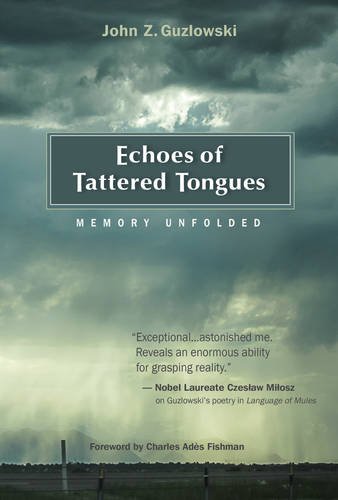
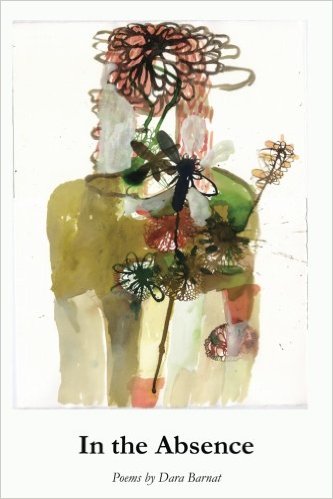

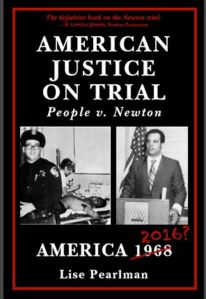
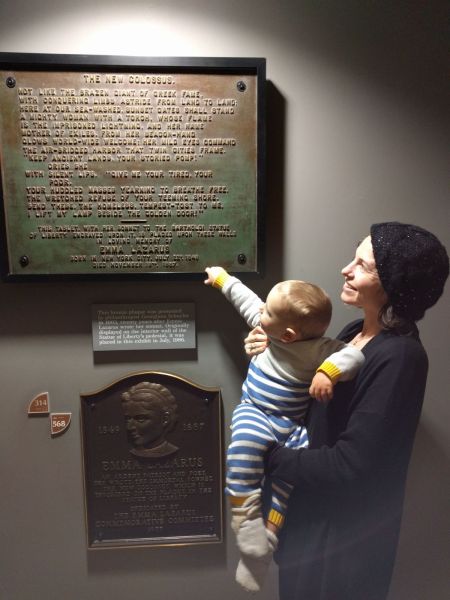

 through it. Looking at it now, I can see that it’d been a long time since I’d been asking questions of my self or about my life or the world (if I ever really had), and that was the point when I realized I needed to change things. I try to make discoveries via language in an attempt to make sense of my life, the world, and myself. I don’t always find answers. What matters is that I keep asking questions. As I’ve said elsewhere—to write is to tend my desire to keep going. All of that said, I prefer growth to healing because persona poems or other poems outside of the confessional, like those in my current manuscript, aren’t necessarily about reckoning with my wounds but about asking other questions.
 As It Ought To Be