she’s from Yonkers has white skin white hair and a bright smile she used to do social work and her insight means she can finish our therapist’s sentences and initiates the growing process of others so much until she stops responding to her name and denies everything into the fog of disassociation and waking up lost, not knowing where and how she’s found herself again.
.
About the Author: Kevin Ridgeway is from Whittier, CA. He is the author of six chapbooks of poetry. His latest book is A Ludicrous Split (alongside poems by Gabriel Ricard, Alien Buddha Press). Recent work has appeared or is forthcoming in Slipstream, Chiron Review, Up the River, Nerve Cowboy, The American Journal of Poetry, Main Street Rag, Cultural Weekly, San Pedro River Review, Lummox, Misfit Magazine, The Cape Rock, Plainsongs and So it Goes: The Literary Journal of the Kurt Vonnegut Memorial Library. He lives and writes in Long Beach, CA.
Cape Split Cape Split is quite literally the “end of the world” Google quote
I
Pain is like the prenup you forgot to get, it takes all the sweetness, leaves you with the pawn tickets. You will never be able to buy back an unfurled forehead, true smile and the grace of comfort.
II
So you sit in the bar, listen to complaints of other people’s unwanted houseguests, drink just enough. One more winter outlives its welcome as you as you lick your cold lips, search for a warm face.
III
The weather is ice over shade, you need an elbow to pity you home. This is not the first time. The tide is out, you are restingon mud, you need a pilot, who knowsyour analogies are weak
and your pride is mighty. Like a ship a–sail with no engine, you pray for wind to lead you past the soft swell of young lovers to the breakwater of hearth, to tea and the quiet compass of a stranger’s voice bidding you safe travels, small hurts.
.
(This poem first appeared in Sterling Magazine)
.
About the Author: Tobi Alfier (Cogswell) is a multiple Pushcart nominee and multiple Best of the Net nominee. Her chapbook “Down Anstruther Way” (Scotland poems) was published by FutureCycle Press. Her full-length collection “Somewhere, Anywhere, Doesn’t Matter Where” was published by Aldrich Press. “Slices of Alice & Other Character Studies” was just published by Cholla Needles Press. She is co-editor of San Pedro River Review (www.bluehorsepress.com).
It is spring, and in a town that awaits the luster of fairgrounds to come alive,
the doors of taverns open early, like strangers with a promise. Flat-roofed houses yield
to groves of mesquite. Their limbs stretch streetlight halos into frail shadows veining asphalt
that webs the neighborhood. The trundling iron of the Union Pacific enters town at a late
hour. Its headlamp startles shacks to burnished yellow as it floods for mere seconds the frame
of a drunken soldier, home on leave from a long war. He shuffles through an unpaved alley
like an astronaut scuffing the dust of the moon. A final blast from the locomotive seems to hew
the world into the past tense. It surmounts cheers unreeling from a small crowd seated under
the ballfield lighting of a pickup game. A young hopeful sprints homeward, rounds third, already out.
This poem previous appeared inIdyll for a Vanishing River (Glass Lyre Press, 2013)
.
About the Author: Jeffrey Alfier is 2018 winner of the Angela Consolo Manckiewick Poetry Prize, from Lummox Press. In 2014 he won the Kithara Book Prize, judged by Dennis Maloney. Publication credits include Crab Orchard Review, Southern Poetry Review, Atlanta Review, Copper Nickel, Emerson Review, Iron Horse Literary Review, Kestrel, Hotel Amerika, Midwest Quarterly, Poetry Ireland Review and South Carolina Review. He is author of The Wolf Yearling, Idyll for a Vanishing River, Fugue for a Desert Mountain, Anthem for Pacific Avenue: California Poems, Southbound Express to Bayhead: New Jersey Poems, The Red Stag at Carrbridge: Scotland Poems, Bleak Music – a photo and poetry collaboration with poet Larry D. Thomas and The Storm Petrel: Poems of Ireland. He is founder and co-editor at Blue Horse Press and San Pedro River Review. An Air Force veteran, he is a member of Iraq and Afghanistan Veterans of America.
Image Credit: “Main Street, Benson, Arizona” By Jeffrey Alfier
like you could slip from light (or is it life) and no one tells you
no dark was too loud to keep itself shut
but light this big quiet light it could swallow us whole
it could be wiping its lips right now
Today’s poem was previously published in Issue 14 of Rivet: The Journal of Writing that Risks and is reprinted here today with permission from the poet.
Andrea Sherwood’s work is published or forthcoming in Pennsylvania’s Best Emerging Poets, Lavender Review, and Rivet. Currently, Andrea is pursuing an MFA at the School of the Art Institute of Chicago.
Guest Editor’s Note: Repetition is effective in conveying palpable fear and panic in Sherwood’s piece about loneliness and dread. The light and dark entities in this poem reach out like hands to the throat, alternately choking and releasing air and emotion. The airiness of the lines allows space for feeling and time to process, and line breaks leave breathless openings for more. Form operates successfully to produce an uncomfortable disposition and an opportunity for understanding of the speaker’s secret inner turmoil.
The metaphorical box feels real and turning light into a terrible monster is a remarkable turn at the end of the poem. The trepidation lingers long after the terror has been distilled in the image of “screaming three a.m.” which bends the poem into a new perspective and a dialogue with the dark. Light then becomes a colossal entity more unexpectedly frightening than living in the “thick dark” of a “black box / under a barbershop.” The final image of the light that “could be wiping its lips right now” is an alarm sounding somewhere, maybe even silently, that what is true in the dark is also true in the light and fear knows no difference.
Guest Editor Anne Graue is the author of Fig Tree in Winter (Dancing Girl Press), and has published poems in literary journals and anthologies, including The Book of Donuts (Terrapin Books), Blood and Roses: A Devotional for Aphrodite and Venus (Bibliotheca Alexandrina), Gluttony (Pure Slush Books), The Plath Poetry Project, One Sentence Poems, Random Sample Review, Into the Void Magazine, Allegro Poetry Magazine, and Rivet Journal.
A NOTE FROM THE MANAGING EDITOR:
After nearly ten years as Contributing Editor of this series, it is an honor and a unique opportunity to share this space with a number of guest editors, including the editor featured here today. I am thrilled to usher in an era of new voices in poetry as the Managing Editor of this series.
Viva la poesia!
Sivan, Managing Editor
Saturday Poetry Series, AIOTB
About the Author: A past winner of the Jim Harrison Award for contributions to baseball literature, Tim Peeler has also twice been a Casey Award Finalist (baseball book of the year) and a finalist for the SIBA Award. He lives with his wife, Penny in Hickory, North Carolina, where he directs the academic assistance programs at Catawba Valley Community College. He has published close to a thousand poems, stories, essays, and reviews in magazines, journals, and anthologies and has written sixteen books and three chapbooks. He has five books in the permanent collection at the Baseball Hall of Fame Library in Cooperstown, NY. His recent books include Rough Beast, an Appalachian verse novel about a southern gangster named Larry Ledbetter, Henry River: An American Ruin, poems about an abandoned mill town and film site for The Hunger Games, and Wild in the Strike Zone: Baseball Poems, his third volume of baseball-related poems.
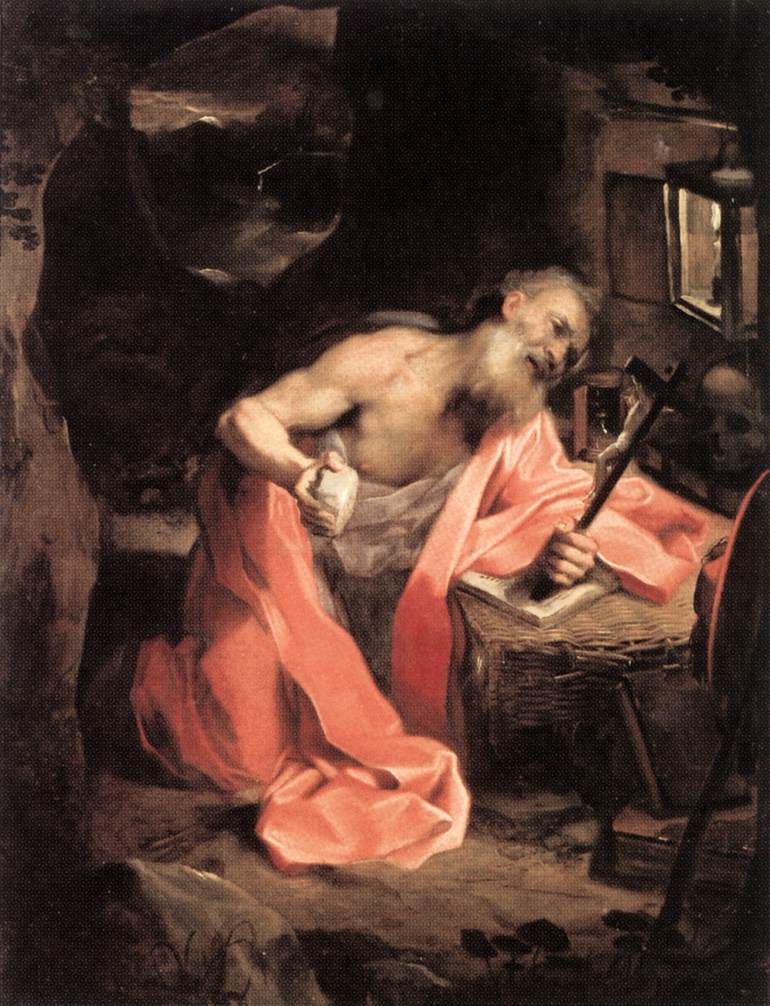
The empty habit of a priest appears between Heaven and Earth with the cross on a string of beads still flowering on the breast.
His sandals, alight with needles, rest on the incline where he stepped out of his body, and red blossoms have grown at the nine tips of his whip that put down roots since last it stung his back.
The shadow of his horizontal arms is burned into the pale stones where he was nailed to the heat
and the bones he left behind withered into straws which were taken for a nest by the immortal Phainopepla.
.
About the Author: David Chorlton is a transplanted European, who has lived in Phoenix since 1978. His poems have appeared in many publications online and in print, and often reflect his affection for the natural world, as well as occasional bewilderment at aspects of human behavior. A recent collection of poems is Bird on a Wire from Presa Press, and The Bitter Oleander Press published Shatter the Bell in my Ear, his translations of poems by Austrian poet Christine Lavant. A new book, Reading T. S. Eliot to a Bird, is out from Hoot ‘n Waddle, based in Phoenix.
The desert ends in a pit of light, streets cacophonous in their escape from dark. They’ve pried the gas from its place in the Periodic Table, stroked electricity from the demon’s feet. A hemangioma of multicolored tubing, burns blisters in the sand.
.
Disobedience
I will wake the lilies under the window. I will bite deeply into the apple’s defenseless cheek. I will follow the seagulls over the waves as they etch the air with their wings. I will not be good. I will not be safe. I will ride the tide as it goes out. And when the man comes in the dark, I will show him the family silver’s shining secrets.
.
About the Author: Ruth Bavetta writes at a messy desk overlooking the Pacific Ocean. Her poems have appeared in Rattle, Nimrod, Tar River Review, North American Review and many other journals and anthologies. Her books are Fugitive Pigments (FutureCycle Press, 2013) Embers on the Stairs (Moontide Press, 2014,) Flour Water Salt (FutureCycle Press, 2016.) and No Longer at This Address (Aldritch Books 2017.) She likes the light on November afternoons, the music of Stravinsky, the smell of the ocean. She hates pretense, fundamentalism and sauerkraut.
If you stand on the beach in Montauk and launch miniature ships from your eyes— indulge in breaking miniature champagne bottles across their bows first—the line of ships will, if they don’t change course, brush Rio Grande do Norte and Paraíba, approach Australia from the south, and make land near Perth. The things you learn from YouTube.
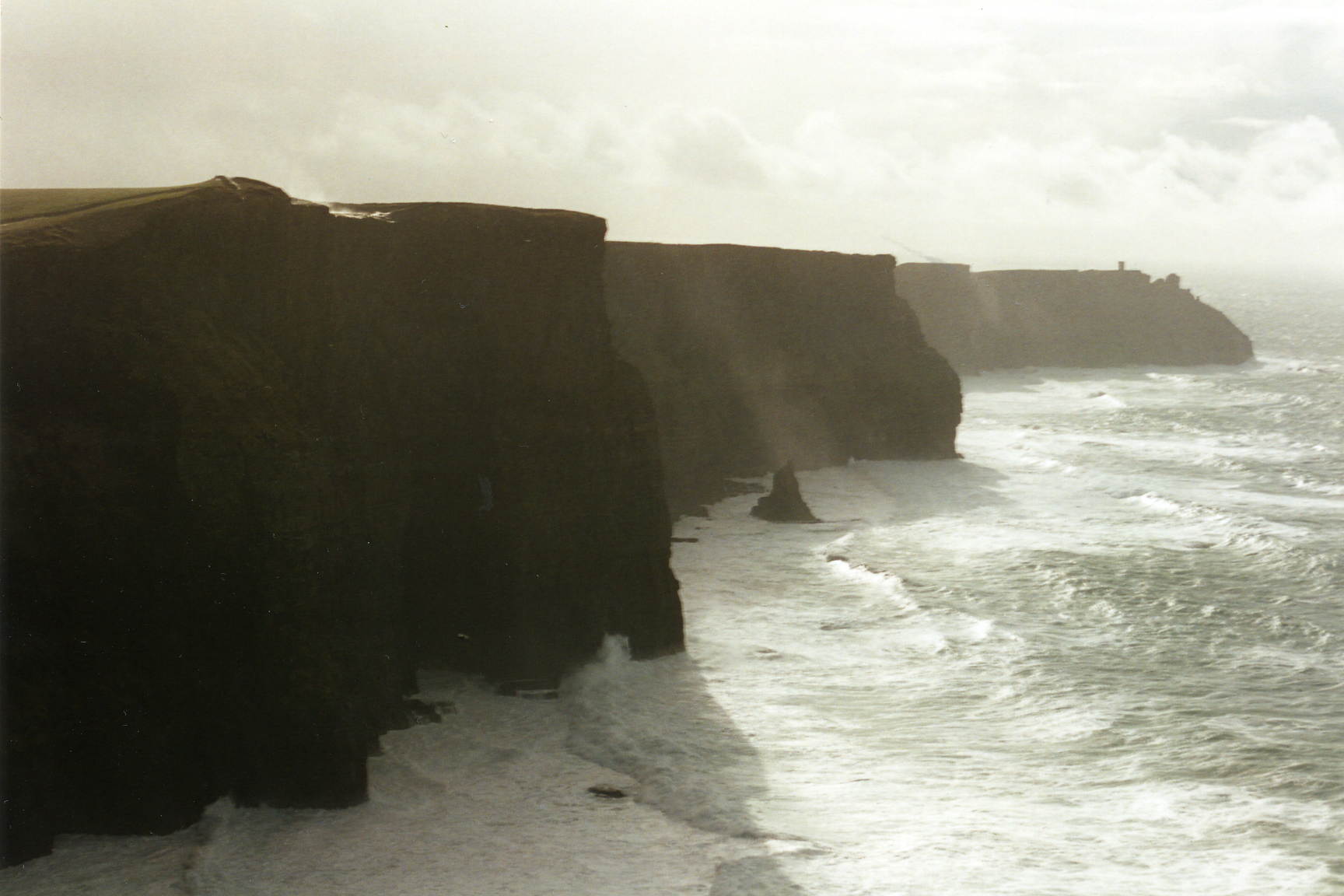
Today I am at the Cliffs of Moher throwing a message in a bottle over the edge, none of anyone’s business what it says, charting it toward a discoverer who will uncork and unroll it waves and winds and continents away from the straight-line recipient.
Sea-mist mornings like this, it is easier to imagine the nosey finder puzzled and riddled and pulled by the tease of its suggested narrative than it is to map the direction over the horizon and a thousand unseen horizons after the first where my country is from here.
.
About the Author: Stephen Roger Powers started writing poetry almost twenty years ago to pass time in the middle of the night when he was too energized to sleep after coming off the stage in comedy clubs around the Midwest. He is the author of The Follower’s Tale and Hello, Stephen, both published by Salmon Poetry. Other work has appeared in 32 Poems, Shenandoah, The Southern Poetry Anthology Volume V: Georgia, Rabbit Ears: TV Poems,and Stone, River, Sky: An Anthology of Georgia Poems. He hasn’t done stand-up in a long time, but every once in a while he finds avenues for the performer he was born to be. He was an extra in Joyful Noise with Queen Latifah and Dolly Parton, and he can be seen if you know justwhere to look.
“The Spent Wave, Indian Point, Georgetown, Maine” By Marsden Hartley” (1937)
Capitol Island
By Robert Boucheron
For the annual First Year Building Project at the Yale School of Architecture, students design and construct a small building, often a wood frame house in New Haven. Unique at American schools, the project is required of all students in the program. A faculty member who is also a contractor guides them through weeks of rough carpentry, roofing, sheetrock, and more.
In the spring of 1976, I was in the first year class. Our project was to be an office and sales showroom for a quilting cooperative in West Virginia, but it fell through. Funding for a house renovation in a black neighborhood of New Haven also stalled. The faculty was at a loss. As students made plans for the summer, the building project was likely to be cancelled.
At this point, a classmate offered an alternative to anyone who was interested. Ken Colburn and his wife and his older brother Ted had just bought an old cottage on the coast of Maine. They had spent summers there as children, and they had relatives nearby, including two cousins who lived there year-round. One of these, David, was the realtor who sold them the house. The other, Bob, was a home builder or handyman. The project was to make badly needed repairs.
The Colburns wanted to rent out the house during the summer months and use it themselves off-season. When I searched online after forty years, I found the “Colburn Cottage” is still available for rent, one or both of two furnished units, right on the water, and fifteen minutes’ drive from Boothbay Harbor. In the photos posted, the house looks unchanged. It is on Capitol Island, east of the larger Southport Island, reached by a narrow wooden bridge. People from Augusta, the state capital, bought and developed the little island in the early twentieth century, hence the name.Continue reading “Capitol Island”→
when i look at your life now i think nancy spungen got off easy breast cancer at 45 you have be a fighter to sleep in the streets with your broken heart just dangling there like a locket made of bones
i remember you at 30 beautiful tough & sad
talking about your family as we drove to 7-eleven to get hotdogs on christmas eve
how it all came flooding back your father threatening to drive the whole family off a bridge into icy cold arkansas river water on christmas morning
or the near rape by a family friend at fourteen
or the countless bad relationships that became your anthem as much as nick cave or the murder city devils ever were
your lungs filled up with silence
as the night sky balled up into a fist & hurled your childhood into the past.
About the Author: John Dorsey lived for several years in Toledo, Ohio. He is the author of several collections of poetry, including Teaching the Dead to Sing: The Outlaw’s Prayer (Rose of Sharon Press, 2006), Sodomy is a City in New Jersey (American Mettle Books, 2010), Tombstone Factory, (Epic Rites Press, 2013), Appalachian Frankenstein (GTK Press, 2015) Being the Fire (Tangerine Press, 2016) and Shoot the Messenger (Red Flag Press, 2017). He is the current Poet Laureate of Belle, MO. His work has been nominated for the Pushcart Prize. He may be reached at archerevans@yahoo.com








 As It Ought To Be


