“My Grandad” By Bruce Hodder


My Grandad

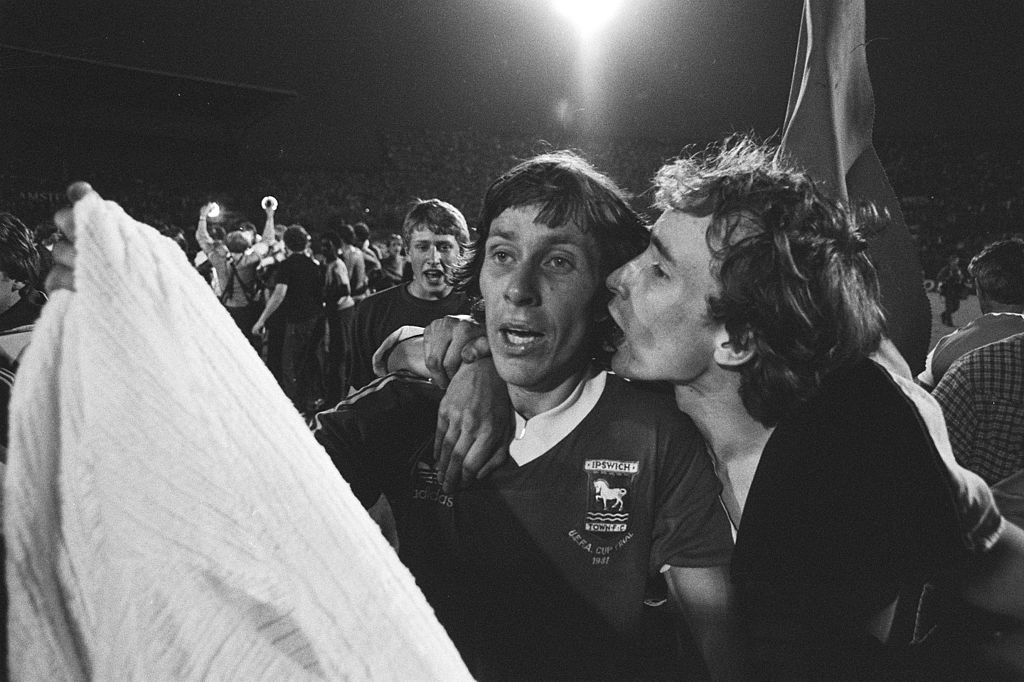
My grandad supported Ipswich Town FC.
He said he’d been to every game at home
since his teen years in the Nineteen-Thirties.
That was his escape from grief:
his wife, my gran, had died
from meningitis while the German planes
were flattening the Ipswich docks for Hitler.
She was only twenty-seven,
and in those days meningitis killed.
His love for football was how he didn’t join her.
The Tractor Boys were my grandad’s poets,
his rock stars, the actors whose careers he followed.
They made spirit light in bones and flesh
left heavy by the long, hard hours
in the factory at Ransome’s.
A ball struck high and curling past the keeper
had him gaily dancing on his mangled leg
on the terraces at Portman Road each game.
He took me to the ground one day.
It was like a mantle being passed.
‘I was your age when I first stood here,’
he told me, one hand on my shoulder.
As we left, a player that my Grandad knew
from the Fifties in a rumpled suit
called him Fred and shook his hand.


About the Author: Bruce Hodder lives in Northampton, England. He is the editor of the Suffolk Punch Literary Journal, now in its thirteenth year. Recently he has been published in Academy of Heart and Mind, Winedrunk Sidewalk and The Song Is.


Image Credit: “AZ vs Ipswich, 1981” Public Domain Nationaal Archief Fotocollectie Anefo
“Women’s March in Albany” By Bunkong Tuon


3a25016r


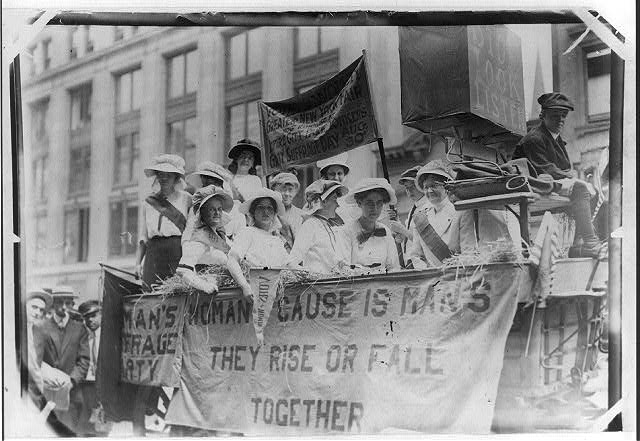
This is the fifth in a series of poems from a forthcoming poetry collection about raising a biracial daughter in Contemporary America, during this polarizing time of political and cultural upheavals where sexual harassment allegations abound, where a wall, literal and figurative, threatens to keep out immigrants like the narrator, a former refugee and child survivor of the Cambodian Genocide. You can find the complete series of links below.


Women’s March in Albany

I take Chanda out of the stroller,
lift her high up over my head,
and put her on my shoulders.

So she can see that she’s never alone.
We are here for her, my wife and I,
and other women and men too.  

We will march city streets,
climb mountains, and cross rivers
and jungles to let her know.

Our strength is in our love for her.
And her strength is felt in the trembling
ground, the demands for autonomy,

respect and decency, no woman
left behind, in speaking up and out,
in hollering and screaming. In songs.


About the Author: Bunkong Tuon is the author of Gruel (2015) and And So I Was Blessed (2017), both poetry collections published by NYQ Books, and a regular contributor to Cultural Weekly  He is also an associate professor of English and Asian Studies at Union College, in Schenectady, NY.


Bunkong Tuon’s series of poems on raising a biracial daughter in contemporary America:

Ice Cream

Gender Danger

The Bite

Tightrope Dancer

Women’s March in Albany

My Mother on Her Deathbed


Image Credit: “Suffragettes riding float…New York Fair, Yonkers” (1913) The Library of Congress

“Chimney Swifts” By Marc Frazier


Chimney Swifts

He did it by the storm cellar.
He filled a bucket with water, set it on the ground.
We couldn’t think of one reason
to drown little black birds.
When my sister cried, he said it had to be done.

We said we would never grow up,
that we would rather die.
We did not watch so we never knew where he put
the bodies.  But his hands became powerless to touch us.

She belonged to his world in some things

this strange woman whose hands
were always leaving her side to create space,
to move things about, to bring something warm to her breast.

The next morning he cooked bacon and eggs.
He stood motionless but for one arm
scrambling eggs while mother
with fluttering hands prepared a table.


(Originally published in Primavera in the late 1980’s; won an Illinois Arts Council Award in poetry)


About the Author: Marc Frazier has widely published poetry in journals including The Spoon River Poetry Review, ACM, Good Men Project, f(r)iction, The Gay and Lesbian ReviewSlant, Permafrost, Plainsongs, and Poet Lore. Marc is the recipient of an Illinois Arts Council Award for poetry and has been nominated for a Pushcart Prize and a “best of the net.” His book The Way Here and his two chapbooks are available on Amazon as well as his second full-length collection Each Thing TouchesWillingly, his third poetry book, will be published by Adelaide Books New York in 2019. His website is http://www.marcfrazier.org.


More by Marc Frazier: 

Sent My Way

Remainders


Image Credit: From Gray lady and the birds; stories of the bird year for home and school By Mabel Osgood Wright (1907) Public Domain

“In the Building” By Tony Gloeggler


IN THE BUILDING

The group home is getting dressed
for Halloween and Harry’s picked
the shiny white Elvis jump suit.
It’s way too tight. Two counselors
struggle to pull the top over
his shoulders, finally fit his arms
into sleeves. His stomach sticks
out like he’s ten months pregnant
and the workers try not to laugh.
Harry wants to know whether
he can eat five slices of pizza
at the party as he struts
toward the mirror, announces
that he looks like a fucking
dickhead. I nod, tell him
he sure does, ask if he prefers
the Humpty Dumpty costume.
He pauses, curls his top lip
like the King, strums an imaginary
guitar and sings I Can’t Help
Falling In Love as the workers
slow dance across the floor.


(This poem first appeared in Quercus)


About Tony Gloeggler: I am a life-long resident of New York City and have managed group homes for the mentally challenged for over 35 years. My work has appeared in Columbia Poetry Review, Rattle, The Examined Life Journal, Raleigh Review, New Ohio Review, Stirring and The NY Times. My full length books include One Wish Left(Pavement Saw Press 2002) and Until The Last Light Leaves (NYQ Books 2015) which focused on my job and the autistic son of a former girlfriend. My next book, What Kind Of Man, will be published by NYQ Books in 2019.


More By Tony Gloeggler

“Crossing”

“Visitor’s Day at the Group Home”


Image Credit: “You Auto Have a Happy Hallowe’en” International Art Publishing Company (1907) Missouri History Museum, Public Domain

Two Prose Poems by Howie Good


Spy Culture

Just before dawn, the train barreled across the border. My carryall bag on the overhead rack contained an entire set of ant-dreams preserved in amber. Spies lurked everywhere, but, after the train pulled in, I eluded them by frequently changing my facial expressions. Later that day, I traveled by sampan and pedicab to meet my contact, an experienced agent posing as an English nanny. We met in a neighborhood playground beside a tree whose round fruit the children pretended were bombs. At one point I forgot the word “cremated” and had to ask her, “What’s it called – incinerating the body?”


The Anxiety of Influence

A banner stretching across the building’s exterior said, What’s Shakin’. You entered through a glass door, walked down a long, dim hallway and up a set of stairs into an area with large windows. The view was constantly changing, and you weren’t always sure what you were looking at or how it was happening. Jack Kerouac berated you for your perceived lack of cool. William Burroughs wouldn’t remove his hat. If you were going to be somewhere, this maybe wasn’t the best place. Many years would pass before anyone would realize that among the 20 most common passwords is “trustno1.”


About the Author: Howie Good is the author of three recent collections, I’m Not a Robot from Tolsun Books, A Room at the Heartbreak Hotel from Analog Submission Press, and The Titanic Sails at Dawn from Alien Buddha Press.


More by Howie Good:

“Maiden Voyage”


Image Credit: Alfred Stieglitz “Rebecca Strand” (1922)  Digital image courtesy of the Getty’s Open Content Program

“Reflections in the Windows of Your First Car” by Jeanette Powers


Reflections in the Windows of Your First Car

With my first driver’s license
and the 5-speed shifter
of a gold 1984 Plymouth Turismo
gripped in my hands
I drove out of the suburbs
and into the big city
knowing nowhere to go.

Grinding gears through Raytown
passing the long sewer of Brush Creek
I found myself in Midtown Kansas City
took a left on 39th Street from Main
and flashing lights pulled me
into the bank parking lot
immediately.

I didn’t know what to do
when justice is demanded
I popped out of the car
and just began to beg
it’s my first day driving
my mom will kill me
I promise it won’t happen again.

Then I catch a glimpse of myself
in the reflection of the window
and see my face covered
in armadillo stamps
from goofing around
with Sam after school,
who we, of course, all called Scooby.

My heart falls out, because I think
no one looking so foolish
will ever get out of anything
could never be taken seriously
and I surrender myself to my fate
look the officer straight in the eye
and just say, I’m sorry.

He pats me on the shoulder
and laughs, be more careful next time
and drives away, I watched that man
choose mercy over justice
two decades later, I still think of him
and the power of an honest apology
every nowhere I go.


About the Author: Jeanette Powers: poet, painter, philosopher, professional party dancer and working class, anarchist, non-binary queer. Here to be radically peaceful, they are a founding member of Kansas City’s annual small press poetry fest, FountainVerse. Powers is also the brawn behind Stubborn Mule Press. They have seven full length poetry books and have been published often online and  print journals. Find more at jeanettepowers.com and @novel_cliche


Image Credit: Ruby T. Lomax “Woman Sitting in Car, Texas” (1937) The Library of Congress

“The Legend of Cousin Wally” By Randall Rogers


The Legend of Cousin Wally

Rules and convention
didn’t constrain him
he walked his
own path true
the smartest
non-formally
educated man
I ever knew
learning in
discourse too often
and maybe most
truthfully most
rewarding
drinking in bars
parties
talking, sharing,
absorbing
the angles

reading comprehension
facility I dare say
a touch of dyslexia
I always suspect
in such instances
where acute verbal
synthesis comprehension
is markedly on display

I learned much
when I knew
his worth beyond
measure as
intelligent man
educated in discourse
vast
Socratic-like
absorbed in repast
lubricated
into vino veritas

a unique perspective
in my life
silenced
age forty-nine
in time
to this day
I say
when asked
by those few
who do
I say
in things I do
nowadays
I take the
Wally path
in almost
everything I do
except drinking. 


About the Author: I am Randall.  Last seen in’ Mad Swirl’ and ‘Beatnik Cowboy’.  I help edit the latter.  I am fifty-seven years of Swedish-English extraction but I live in America now.  That is, North America, specifically the United States.  Yes I’m a patriot.  A poet patriot.  Too old to join the air force now though!  Unless I want to stay indoors and join.


Image Credit: Ernst Ludwig Kirchner “Männerkopf- Selbtsbildnis” (1926)

“Untold Story” By Kory Wells


Untold Story

She was religious     about reading aloud
         Ann Landers’ advice in the Free Press
              Jello salad recipes in Good Housekeeping
                   letters and postcards from cousins
    and one odd relation    all the way in Australia.

         But neither of us ever     said a word about
the National Enquirer
         which she’d pick up in the Winn Dixie checkout
              next to the gum and chocolate bars     
    as if it were essential           as milk and sugar.

Back from the grocery
              on a summer afternoon
         she’d start supper
              and I’d slip away
          to the over-warm sanctuary
                             of her modest living room:
                   thin floral carpet   knotty pine walls
                       and a nubby mauve sofa where I—
                                  a sensitive and impressionable child—
              would spread the tabloid
and kneel before it

              to absorb    cover to cover
                           and back again
                                           until my knees ached
the gospel of my disbelief:
                    a moon-landing hoax    
         an alien abduction     a two-headed
                                 motherless kitten nursing
                           a domesticated squirrel
              and of course the secret
                                             lives of stars.

What is it that makes us want to swallow
         a story whole?      To think
                   only one version can be true?

We were not          true disciples
    but my grandmother      tended the altar of
                             narrative possibilities
         this woman with an eighth-grade education
                           who I never saw reading a book.


About the Author: Kory Wells is a poet, writer, storyteller, and advocate for the arts, democracy, afternoon naps, and other good causes. In 2017 she was named the inaugural poet laureate of Murfreesboro, Tennessee, where she also founded and manages a reading series. Her poetry collection Sugar Fix is forthcoming from Terrapin Books. Read more of her work at korywells.com.


Image Credit: John Vachon “Grandmother MacDuffey with blackberries she has picked from nearby swamps. Irwinville, Georgia” (1938) The Library of Congress


“No Walls” By Larry Smith


15584v


No Walls

Where is the wall that can hold us
keep us from each other’s love?
Artifice is nothing before spirit
mind melted by heart.
Dogs bark at its corners
bay at rocks stacked high,
cement poured into would-be tombs.
Birds fly over, creatures dig under,
people reach through and around.
We paint its face, tear it down by night.
Sun, moon, and stars deny it.
O, where is the wall that can hold us,
keep us from each other’s love?


About the Author: Larry Smith is a poet, fiction writer, and editor-publisher of Bottom Dog Press in Ohio where they feature a Working Lives and an Appalachian Writing Series. He is also the biographer of Kenneth Patchen and Lawrence Ferlinghetti. He lives in Huron, Ohio, along the shores of Lake Erie.


More by Larry Smith:

Wages


Image Credit: Carol M. Highsmith “Piece of the Berlin Wall displayed at the Newseum museum, Arlington, Virginia” from The Library of Congress

“Down Tobacco Road, Where The Leaves Fell” By Nick Soluri


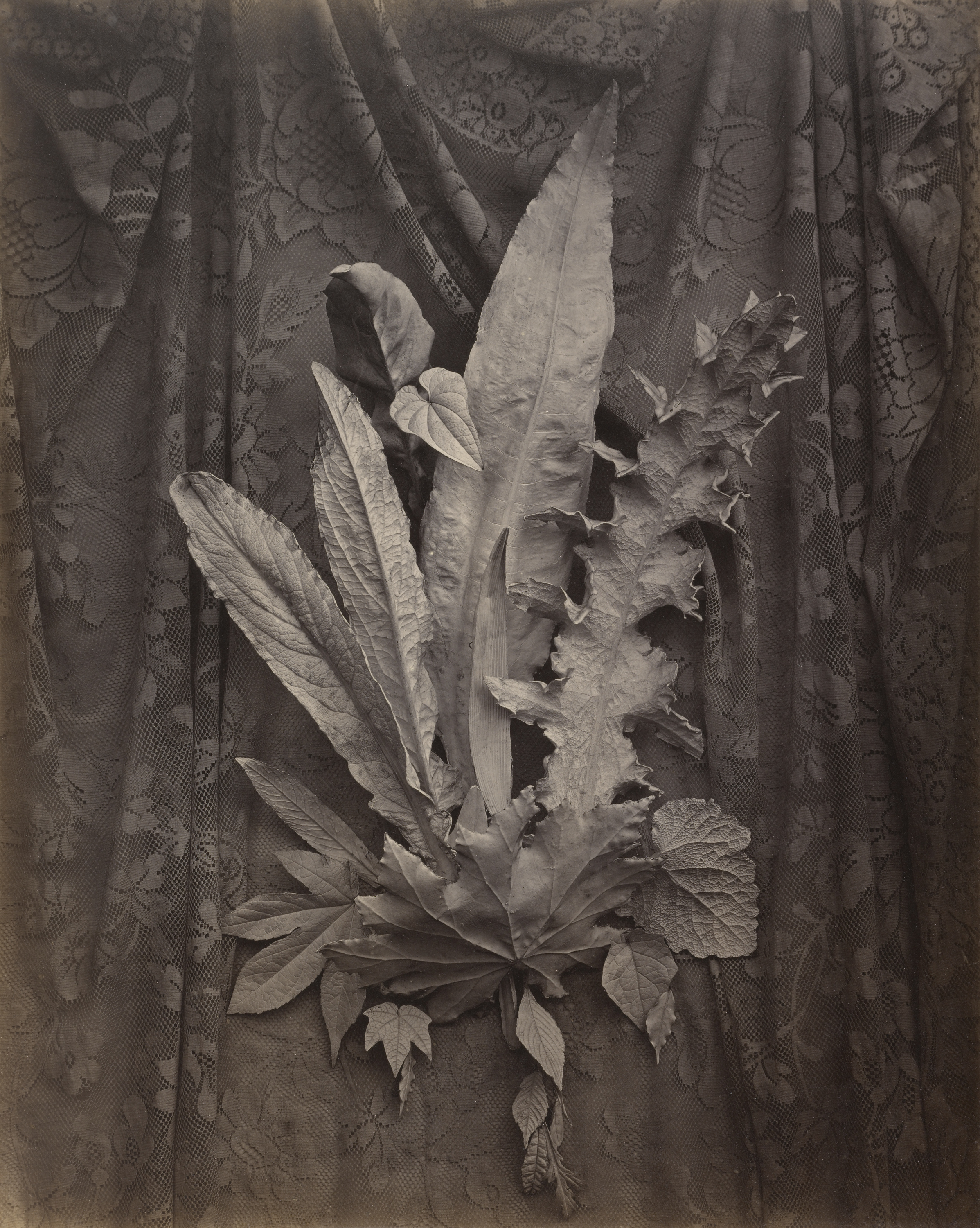
Down Tobacco Road, Where The Leaves Fell

There were plastic-wrapped blankets and the smell of ammonia,
fans on high all over the front room and scuff marks from the beds wheels,
and theyd brought her home like that, and she began to sleep again.
There was a hat, a thin blue sheet like a doily, (she had those all over
the house, different designs, she took pride in them) and her sunken eyes
were gray and tired, and that was not how she always looked at me.
She didnt talk except for a few words, a few coughs,
a few cries from the chest tube cleanings, I remember that
red liquid coming out of her and into a machine, and how I
saw a bionic thing, hardly a woman, a creature unknown to me.
The sun peaked through the window cautiously, as to not disturb,
beginning with a spot on the floor and creeping to her bed,
up her towel covered legs and onto her thin hands.
Those hands created this home, that one blanket, all the smiles
we gave to her before she got real bad, the way I still remember her.
I was always kept in the dark about things like that, we all were,
us kids werent supposed to know the inner workings of pain,
her kind of pain, a different kind that caused my mother to weep out of fear.
Her mouth was slightly open, a hand on my little shoulder,
the sun outside hit my back felt warm and comforting,
and I wanted her to feel that way too.
So I took the suns warmth from my back and let it flow through my fingers,
like beams out of my hands and onto hers, but hers were cold.

There were rows of tobacco out of the window, we sped down the road,
my mother and father, my sister, we were quiet, just sitting in the
dark listening to the hum of the wheels on the pavement, an innocuous bump or two.
The dark night was clear, clear like eyes glistening in autumnal air,
and the leaves swirled behind us, different shades of reds and yellows,
and I heard my mother begin to cry, and thats when I began too.


About the Author: Nick Soluri is a writer from New York.  His words have appeared in Five:2:One Magazine, Boston Accent, Ghost City Review, Selcouth Station, Occulum, Anti-Heroin Chic Magazine, and others.  He tweets @nerkcelery


More by Nick Soluri:

Mementos


Image Credit: Charles Aubry “An Arrangement of Tobacco Leaves and Grass” (1864) Digital image courtesy of the Getty’s Open Content Program.