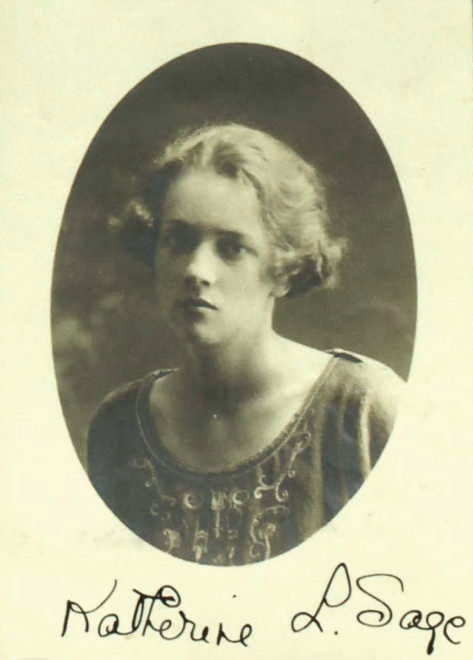
Nadia Arioli: “On “The Answer Is No” by Kay Sage”

(You can view Sage’s painting “The Answer is No” here)

.


On “The Answer Is No” by Kay Sage

Things left undone can become
a city, further out,
and have little lives of their own.

Mold blooms in teas you never tried.
Poems you meant to write paper a bathroom.
You are somewhere in that
city of unhemned garments.

The answer is “no” to a complicated question
I cannot bear to ask.
How “no” can become white noise
after a while, when uttered enough times.

Rapid spinning makes you weightless.
Preponderance becomes iteration,
iteration becomes quiet.

Quiet like barren,
quiet like cataracts,
quiet like something you slip into
your pocket and never let out.

I have glowed as much as I could,
in green and other light.
There was nothing left to do but scream.

Now you’re waiting for me again,
past the frames holding canvasses
like gums hold teeth.
I’m on my way.

.

.

About the Author: Nadia Arioli (nee Wolnisty) is the founder and editor in chief of Thimble Literary Magazine. Their work has appeared or is forthcoming in Spry, SWWIM, Apogee, Penn Review, McNeese Review, Kissing Dynamite, Bateau, Heavy Feather Review, Whale Road Review, SOFTBLOW, and others. They have chapbooks from Cringe-Worthy Poetry Collective, Dancing Girl Press, and a full-length from Spartan.

.


More by Nadia Arioli:

On “I Walk Without Echo” by Kay Sage

On “The Fourteen Daggers” by Kay Sage
Diana Rosen: “A life. Of sorts. Or, 18 ways to remember my love”

.

20210407062306_IMG_1499

.

.

A life. Of sorts. Or, 18 ways to remember my love. 

  1. My love is in the kitchen, baking popovers. The heat of the kitchen, or the intensity of his concentration, makes him sweat from head to toe. He delivers mine on a gold-rimmed plate, so proud. I break it apart, dab it in the accompanying jam and butter, offer proper oohs and ahs. He beams.
  2. My love is standing at the toilet, right shoulder to the wall, howling with laughter at the note I taped to the bottom of the seat reminding him to put it down when he is done. He doesn’t fail to forget ever again, and often giggles leaving the bathroom.
  3. My love loved and lost someone, that’s why there’s a fence of mistrust between us. I chip away. It takes so long, but he finally believes.
  4. He’s cleaned up the living room, set out candles mid-afternoon, made scones and tea for the wife of a friend who’s brought her diminished boy to spend the afternoon. My love coos and bills. The toddler giggles. The woman tries not to cry.
  5. He wants a child, but I’m no longer able. He misses his little boy with the hole in his heart that ended his life at three.
  6. My love and I play Santa and Mrs. Claus for the village holiday festival. Grown women sit on his lap, share intimate details of their lives. Children climb up, each totally astonished that he knows their names, not realizing it’s their parents’ friend Alexander underneath the red velour suit and snowy beard. Everyone wants a photo. I accommodate.
  7. My love looks like the Elephant Man, pustules of shingles up and down the left side of his face. Eventually, they go away but leave a post-herpetic pain I cannot take away. Nothing I do helps. I feel bereft.
  8. He brings me flowers. Picked by the highway. Brings me Japanese boxes, the amethyst ring, always unusual, pretty things. That they were bargains made me love them more.
  9. My love refuses to go to a girlfriend’s significant birthday. She lives way up in the hills during an era devoid of Lyft and Uber and I don’t have enough money for a cab and it’s too late to call mutual friends for a ride. She holds that against me for years. He does not apologize. This is my first view into the depression that comes and goes.
  10. My love and I tango in our gallery kitchen, belt out the soundtracks of operas, Broadway shows. He tapes me singing which was sweet, tapes me snoring, not so sweet. Shares thousands of words with me, their roots, pronunciations, he seems a veritable human dictionary. It’s not the same looking up words myself even in my mammoth Random House which sits on a stand he makes for it. We play word games in bed until one of us fallsin asleep. Usually him.
  11. His mother was beautiful and spent many hours admiring herself at her vanity table. Such a well-named piece of furniture, he says. He spent hours braiding her hair, fetching her ribbons, avoiding her temper. His father loved alcohol more than his wife or sons. His mother sent him to fetch his father from the neighborhood bar. He was five. This father, a sailor, and my love, a Marine who lied about his age, unexpectedly meet up in Japan. They drink together, of course. My love soon finds himself face to face with a Japanese soldier. No one else is around. My love bowed. Was bowed to in return. Each turned and walked away. He still thought the act was cowardice. I’m grateful his drinking stopped before we met. He quit his five-pack-a-day cigarette habit, too, then says he won’t kiss me until I stop my half-pack habit. Longest two weeks in my life.
  12. A girlfriend admits she’s never had a birthday party. We invite others, one friend brings a cake, my love makes dinner, all the women take their time hugging him goodbye.
  13. My love becomes old, age-wise, but the personality is so strong, no one believes his numerical age. The powerful energy still bristles, announces itself when he enters the room.
  14. My love reconnects with his oldest child, a daughter. They even appear on a daytime talk show on reunification. He is not who he was. I’m unsure how I feel.
  15. My love and I separate.
  16. My love recovers from a stroke but won’t let me visit. He feels diminished yet the strength of his voice, that deep radio voice, is still there, the mind is still there, his arms still work. These reminders fall on deaf ears.
  17. My love has a second stroke that puts him in a coma. His daughter comes to whisper love in his ear until there is no hearing left. I am the last to hear he died.
  18. Age fades the bad memories and leaves us with the good. He’d love today’s sunshine, hurry me up so we could go “saling” – – his dry-ground adventure visiting every garage sale in the neighborhood until the treasures surface. When I first trek through the swap meet in my new hometown, I laugh, walking countless aisles, recognizing all the many things we’d collected, then sold. As I left the arena, an ocean breeze brushed my shoulders as if to say, “Didn’t we have fun?”

.

.

About the Author: Diana Rosen is a journalist and avid tea enthusiast, with six books on the topic, who writes poetry, essays, and flash fiction and creative nonfiction. Her work appears in RATTLE, Tiferet Journal, Mad Swirl, PIF Magazine, and Potato Soup Journal, among others. She loves exploring Los Angeles’s Griffith Park, the country’s largest public green space, which is her 4,000-acre “backyard.” To read more of her work, please visit www.authory.com/dianarosen

.

More by Diana Rosen:

Dinner at Six

Hollywood Freeway

Mrs. Reagan, Who Lived Next Door

.

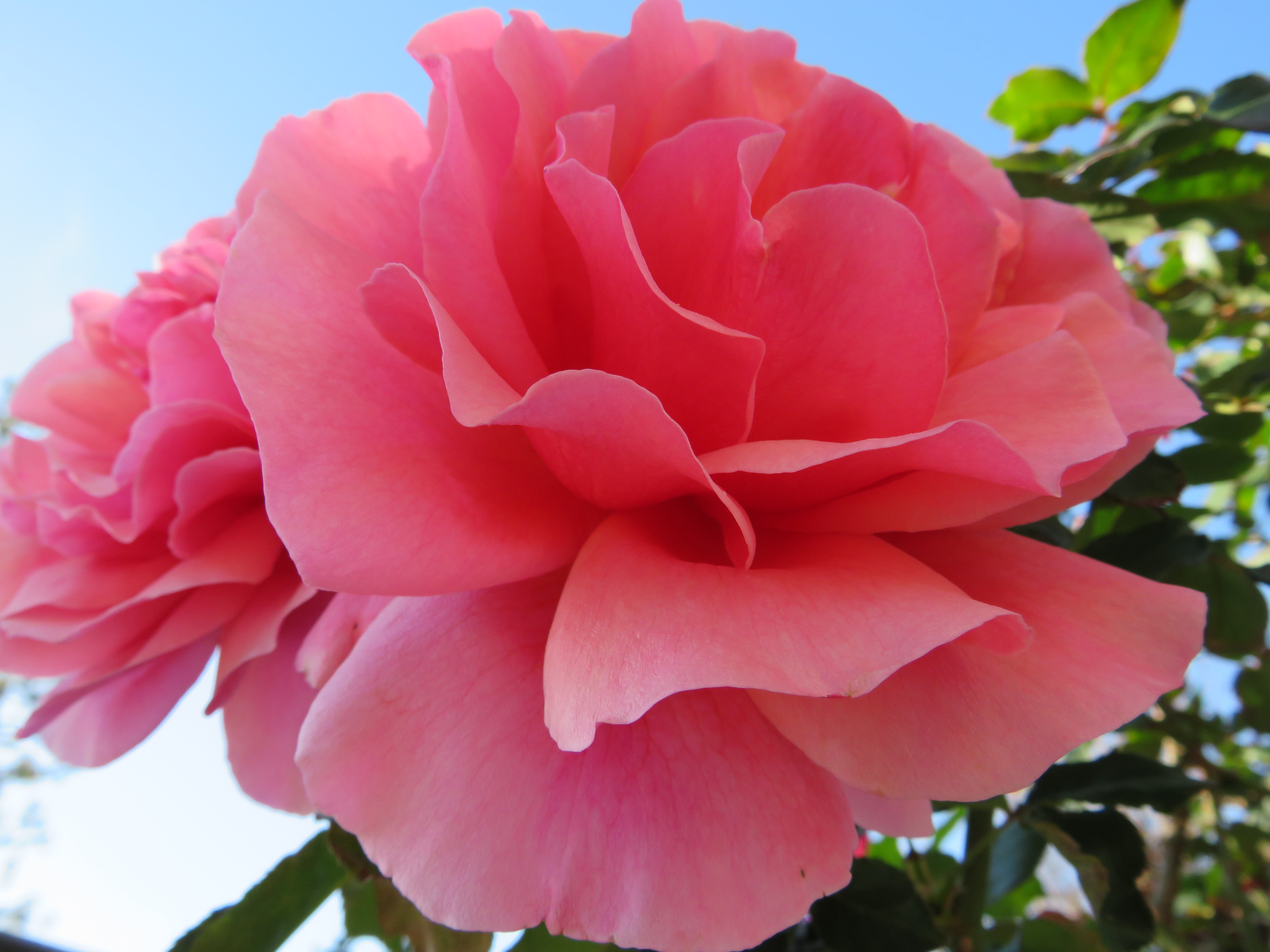
Image Credit: Chase Dimock “Spring Rose” (2021)

Giovanni Mangiante: “i have to get better”

.

service-pnp-habshaer-ma-ma1300-ma1381-photos-076909pv

.

.

i have to get better


“you have to get better” says the doctor before i leave his office—

he doesn’t shake my hand and i don’t mind.

i walk out the building, get into a taxi, pull out my phone, open the notepad

“i have to get sober” i write, and slide it down my pocket again.

i look out the car window and i know most of the faces i see

have already given up entirely while others are well on the way.

i look in the rear-view mirror “how is it that i look like?” i think.

when i get home, my father says he’s sure i’ll get better soon 

and suggests going out for dinner. i say okay, but when we get there

my mind is somewhere else and i can’t enjoy the food nor the moment.

“a lot of people don’t have a good father like yours” i think to myself, 

and the guilt doesn’t make the situation any easier to endure.

i pull out my phone again and write “i have to get sober”

then i look at my father and he vanishes; the plates, the food, 

the silverware, the table too. people’s voices suddenly go underwater 

and the restaurant is finally an empty crater with me in the middle.

i pull my phone out again—my nerves fractured and sharp

“i have to get better. i have to get better. i have to get better” i write.

i slide my phone down my pocket and look up—everything comes back. 

my father takes a bunch of fries to his mouth, and smiles. 

i smile back.

.

.

About the Author: Giovanni Mangiante is a poet from Lima, Peru. He has work published in Newington Blue Press, Rusty Truck, The Daily Drunk, Anti-Heroin Chic, Heroin Love Songs, Rat’s Ass Review, Three Rooms Press, and more. He has upcoming poems in The Piker Press and Synchronized Chaos. In writing, he found a way to cope with BPD.

.

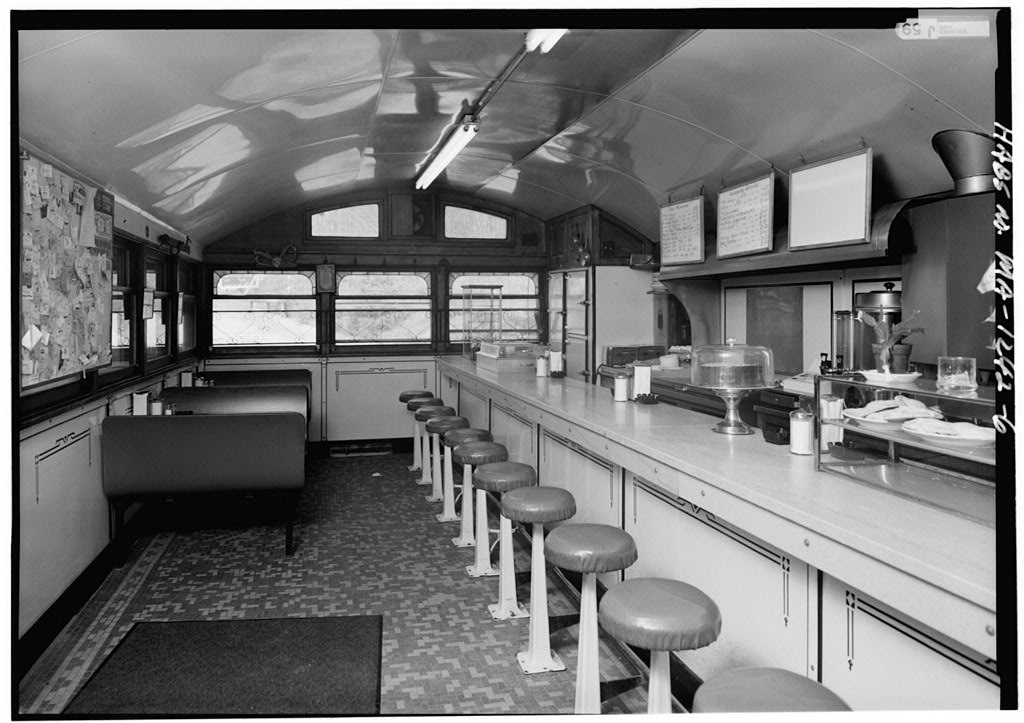
Image Credit: Jack E. Boucher. ” INTERIOR VIEW OF EAST END OF DINER – Bob’s Yankee Diner, Route 20, Charlton, Worcester County, MA” The Library of Congress

Larry Smith: “Grief into Mourning”

.

.

.

Grief into Mourning     

I.
      “Wildflowers don’t care where they grow.”
         -Dolly Parton

A friend has abandoned me
after 40 years, and not
for the first time. Once for five years.
Inside his wall of darkness he has
spit me out like spoiled milk,
and I can’t reach across
to explain. His back turned
he curses my name as he
throws down their phone.
Yet I know he cannot help it.
There is no sin here, only sorrow
and sickness, a grief-pain I carry
inside my head and heart.

And so, I write this to myself
to mourn. In quiet breath
I close my eyes to see his
wounded face in a mirror,
look deep inside his hurt eyes
and step forward to embrace
his figure, as we stand together
breathing forgiveness.

II.
With the taste of grief swelling
my tongue I remember past hurt
keeping us apart. A cherry pie
left out for weeks that I eat with
spoiled milk alone at night.

You said you could never forgive
and so, I walked away, burying it
like a dead child till now
I stare it in the face, swallow regret
and forgive us both.

III.
Placing each stone
beside the bench
where dead friends once sat.

Wild geese overhead
echo their names.

.

.

About the Author: Larry Smith is the editor-publisher of Bottom Dog Press in Ohio, also the author of 6 books of fiction and 8 books of poems, most recently The Pears: Poems. A retired professor of humanities, he lives and works along the shores of Lake Erie in Huron, Ohio.

.

More By Larry Smith:

No Walls

Union Town

At The Country Store

.

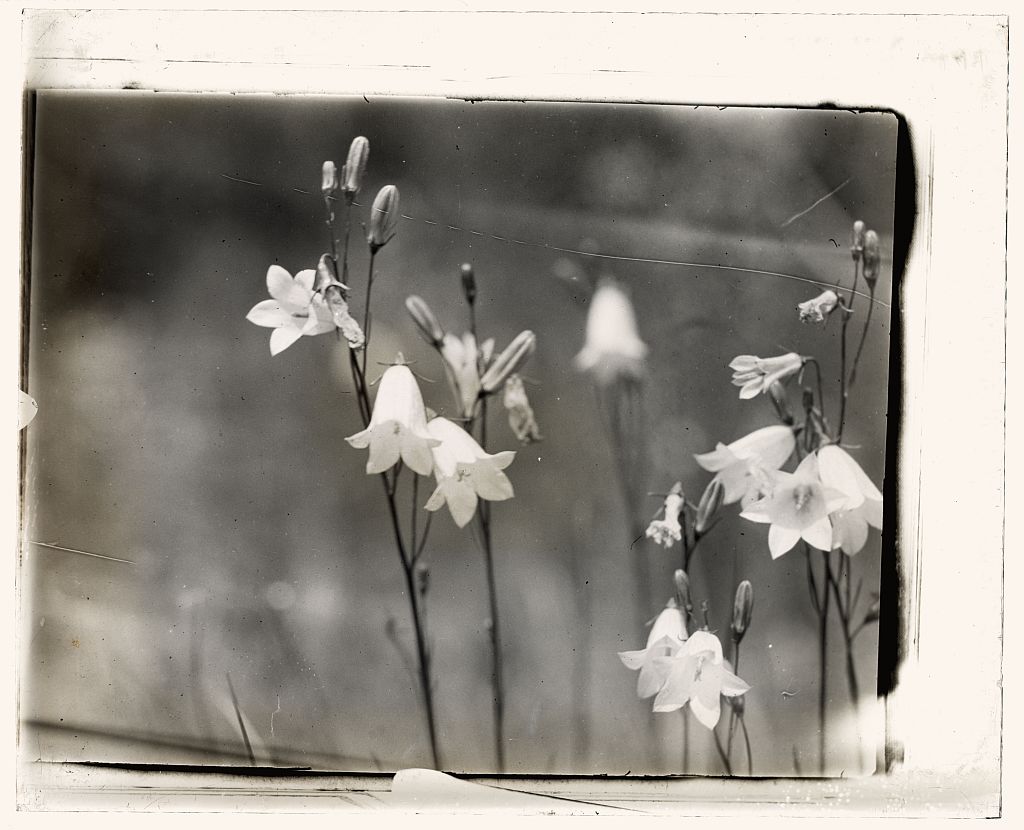
Image Credit: Frances Benjamin Johnson. “Bell Flower (campanula)” [between 1915 and 1935] image courtesy of the Library of Congress

Nada Faris: “Echo’s Song to Her Lover”

.

Echo’s Song to Her Lover

.

“Mother made Frank smell her Bible
she knew he loved the aroma of fine leather”
— CAConrad, The Book of Frank

.

It was my father who taught me how to drive. When I sat
in the passenger seat, he said with a glint in his eye,
if I made a mistake, he would punch my shoulder, hard.

         “It is how I trained your mother.” 

I could die of compassion. All this suffering, everywhere.
How can anyone muster enough hope, desire, or will
to invest in finitude? Of course, our candle fizzles
and every song knows little doves
learn the crackle of aching from belts in sharp nests.
Father in our presence. Father in our midst.
Father on the terrace. Father on the swings.
Father, I don’t blame you.
God made everything beautiful, terrible and beautiful,
as well as narcissists.

.

.

About the Author: Nada Faris is an Honorary Fellow in Writing at Iowa University’s International Writing Program. She has earned an MFA in Creative Writing from Columbia University, received an Arab Woman Award from Harper’s Bazaar Arabia for her impact on Kuwait’s creative sector, and authored three international books.

Twitter: @nadafaris


.

Image Credit: Chase Dimock “Sunset Reeds in Klamath Falls” (2020)

Meg Pokrass: “Neurology”

.

imgonline-com-ua-andy-warhol-lZIF5GiJJ2Yz

.

.

Neurology

When he walks in I’m crushed
and loved. My foot grabs the pain,
happy for his entrance lines
thick medical folder as prop.
Monthly he opens the door to my face.
If this ends
I will never get better. He writes
with his red pen all over my heart.
How long will this go on? I ask.
For a long time, he says
pain bringing its own bench

.

.

About the Author: Meg Pokrass is the author of five flash fiction collections and a book of prose poetry, Cellulose Pajamas, for which she received the Blue Light Book Award. Her work has been widely internationally anthologized, most recently in New Micro (W.W. Norton & Co., 2018), Flash Fiction International (W.W. Norton & Co., 2015) and The Best Small Fictions2018, 2019. She serves as Founding Co-Editor of Best Microfiction 2020 and teaches flash fiction online and in person.

.

More by Meg Pokrass:

Blueberry Blue

.

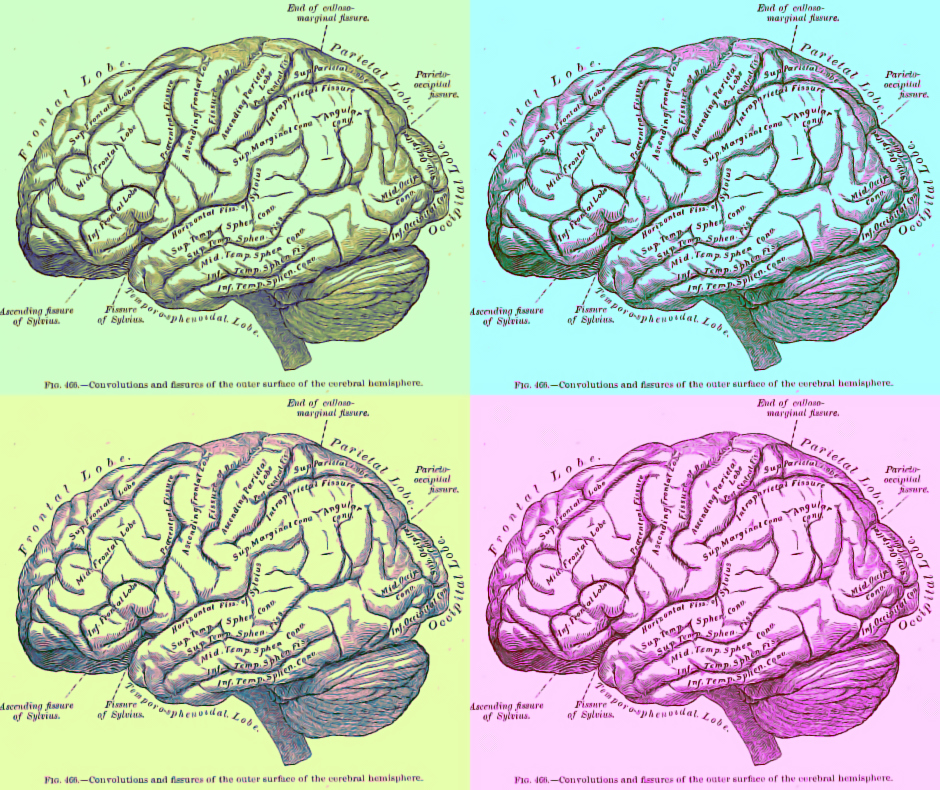
Image Credit: Photo collage adapted from a public domain image from Gray’s Anatomy

John Macker: “Nostalgia Poem”

.

.

.

Nostalgia Poem

Last night, a skunk swaggered
through the yard. Not too long ago
the skies were turbid like a teabag,
empirical proof that once language
abandons the heavens, it becomes
landscape.

At first I thought the day
was about tender aging, backyards &
companionship. The wind not so fierce
to need fire, found my woodpile to ply
its trade against. North is a word that needs
no evidence. Winds and birds come from
it sure in their skins.

For some reason
today it’s Earthboy James Welch and nostalgia
is not fit for a decent burial. A river, an elder
I still love, arrives again gratis and sings through
its teeth. Last night I longed for someplace
until it disappeared.

.

.

About the Author: John Macker grew up in Colorado and has lived in New Mexico for 25 years. He has published 8 full-length books of poetry, 2 audio recordings and several broadsides and chapbooks over 30 years. His most recent are Atlas of Wolves, The Blues Drink Your Dreams Away, Selected Poems 1983-2018, (a 2019 Arizona/New Mexico Book Awards finalist), Desert Threnody, essays and short fiction, and El Rialto (a short prose memoir published by Dry Creek Art Press) In 2019, his poem “Happiness” won a Fischer Poetry Prize finalist citation, sponsored by the Telluride Institute.  His manuscript, Acetylene Sunsets is in progress. He lives with his artist wife Annie and two mutts, Ruby Tuesday and Sean O’Casey. Has grandchildren, will travel.

.

More by John Macker:

Last Riff for Chet

Abundance

.

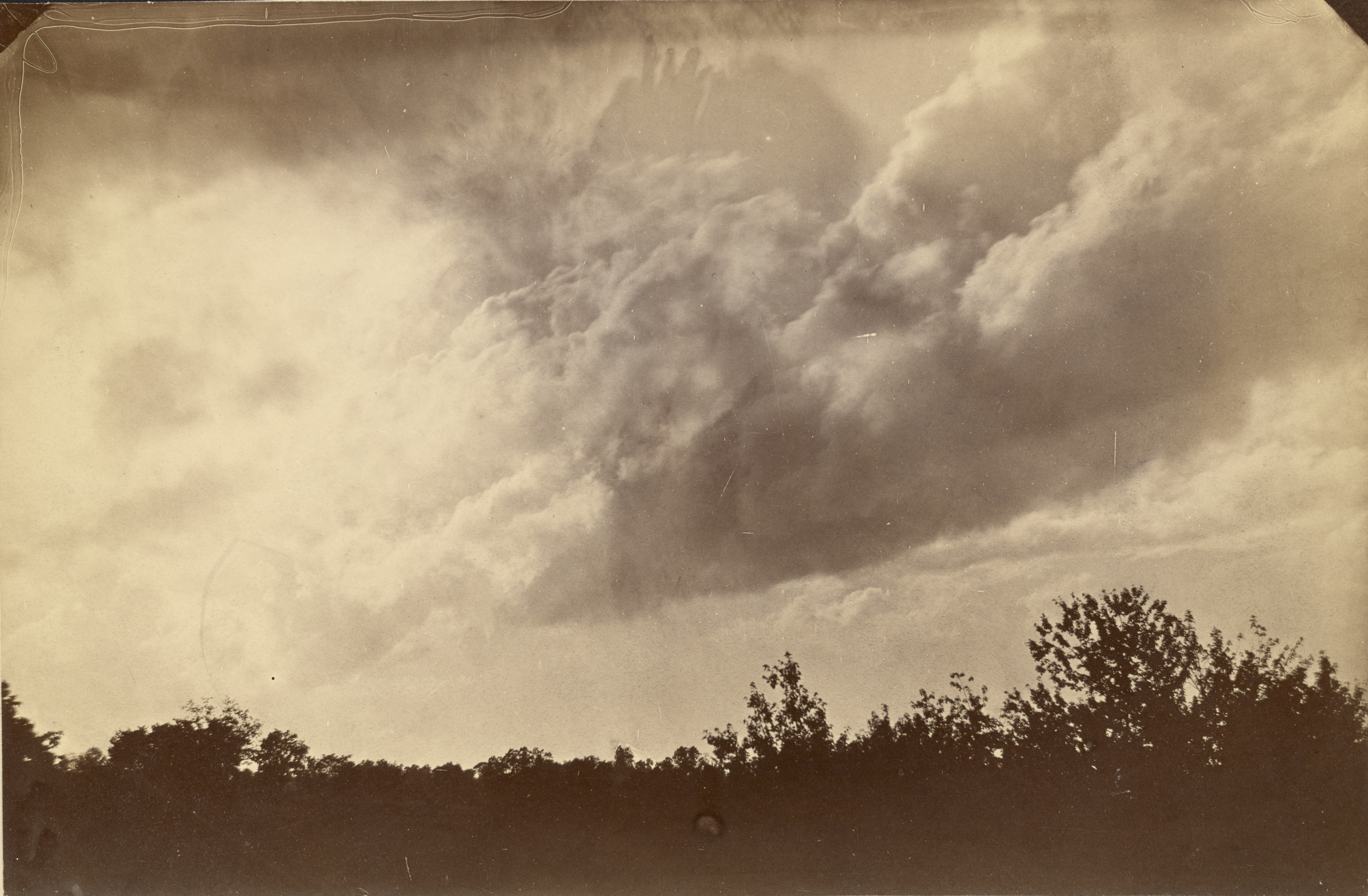
Image Credit: “Cloud study” Unknown maker, American. Digital image courtesy of the Getty’s Open Content Program.

James Diaz: “Lake Origin”

.

.

Lake Origin 

We all have our processes of abandon
Shake a leg
They say
Get a move on
whatever it is
Waiting for us tonight
Can’t be good if it’s a thing you have to rush to
We all have our slow arrivals

Tenderness was a word my mother never used
You couldn’t frighten a boy with tenderness
Could not break a bone with a word
Way you could with something solid

Hit me, my father says
To a man in the deep dark of a trailer
His arm tied off
And ready for a taste of God

Are you ready yet
We’ve a ways to go
Before you can tell the story differently
It’ll take some doing
Rough haul, this

There is no way to know
The weight of what you carry
Until you set it down.

.

.

About the Author: James Diaz is the author of This Someone I Call Stranger (Indolent Books, 2018) and All Things Beautiful Are Bent (Alien Buddha Press, 2021,) as well as the founding Editor of Anti-Heroin Chic. Their work has appeared most recently in Cobra Milk Mag, Bear Creek Gazette, Negative Capability Press, Line Rider Press and Resurrection Mag

.

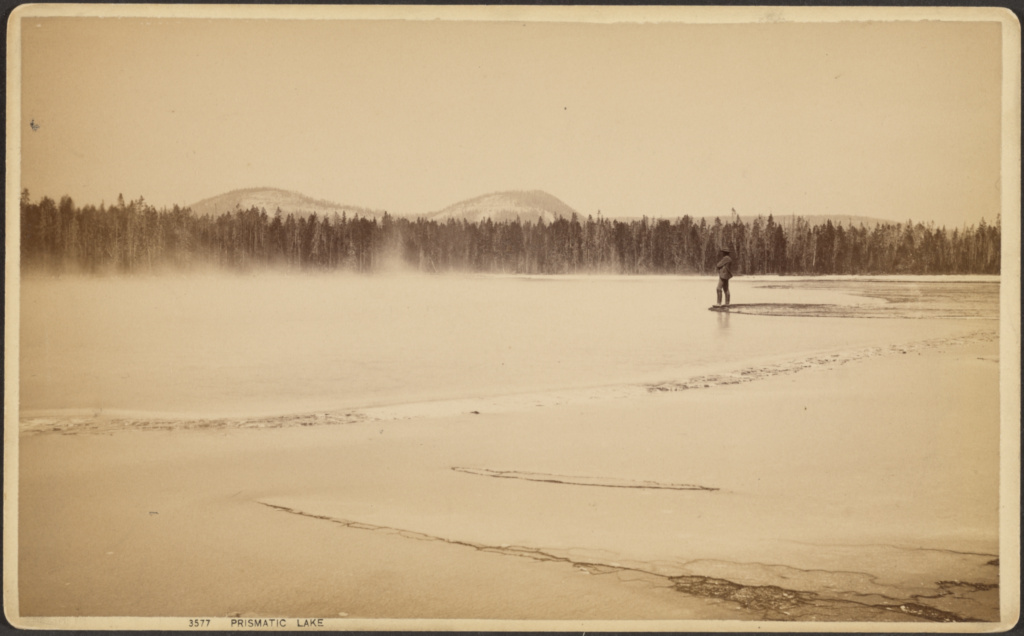
Image Credit: Frank Jay Haynes, “Prismatic Lake” (1881–1889) Digital image courtesy of the Getty’s Open Content Program.

Kelley White: “Why have you made the church so cold?”

.

.

.

Why have you made the church so cold?

The brilliant jewels from your stained glass
clock past my pew. They glow
distant. I try to remember color and light.

Darkness.
You make me remember Stephanie.
Who tried so earnestly to balance on her one foot.
To reach and follow my finger.
Whose eyes stayed crossed.
Cerebellum, tumor.

This could be her grandfather’s church.
The cold steel of the organ.
Her frilled petticoats.
Her too new shoes

Here is my seeking pride at making that diagnosis.
That I spoke the tumor that stole
her balance and sight.

And here is Michael.
Red, blue and yellow falling on my cold arms, crossing my face.
Michael, the brother born to her mother three years after
she slipped into birdsong, held and bathed.

Michael, who leaps, tosses his ball, hops, and counts by sevens.
Who says MaMa told me you knew my sister
You have her picture
Will you show me?

Is this my gift?

.

.

About the Author: Pediatrician Kelley White has worked in inner-city Philadelphia and rural New Hampshire. Her poems have appeared in Exquisite Corpse, Rattle and JAMA. Her recent books are Toxic Environment (Boston Poet Press) and Two Birds in Flame (Beech River Books). She received a 2008 Pennsylvania Council on the Arts grant.

.

Image Credit: Jack E. Boucher ” Sept 1966 DETAIL OF PEW – Trinity Church (P. E.), 651 Pequot Road, Southport, Fairfield County, CT”. Image courtesy of the Library of Congress.

Alice Teeter: “Leaf blowers”

.

.

.

Leaf blowers

Wind moans through the trees, clatters
deck furniture against railings,
pushes leaves into a corner,
whirls them up again.

In the wild, leaves fall, cushion the ground;
softness builds up, things are fed and covered.
It’s usually quiet, it’s often calm –
loud sounds are over soon, mayhem quickly
passes into peace.

It’s us, isn’t it, who drive
down the mountain
as fast as we can go?

.

.

About the Author: Alice Teeter’s most recent book Mountain Mother Poems was published in 2017 by Finishing Line Press. Previous books include Elephant Girls (2015 Adrich Press), and When It Happens To You… (2009 Star Cloud Press). Her poems have appeared in The Atlanta Review, Poetry Daily, The Tower Journal, Per Contra, and Kentucky Review. Her chapbook String Theory won the 2007 Georgia Poetry Society Charles B. Dickson prize. Teeter was awarded a Hambidge Fellowship in 2010. She was adjunct professor teaching poetry writing at Emory University in Atlanta, Georgia, from 2011 to 2016. She studied poetry with Peter Meinke at Eckerd College in St. Petersburg, Florida. She lives with her wife, Kathie deNobriga, in Pine Lake, Georgia.

.

More by Alice Teeter:

Directionless

.

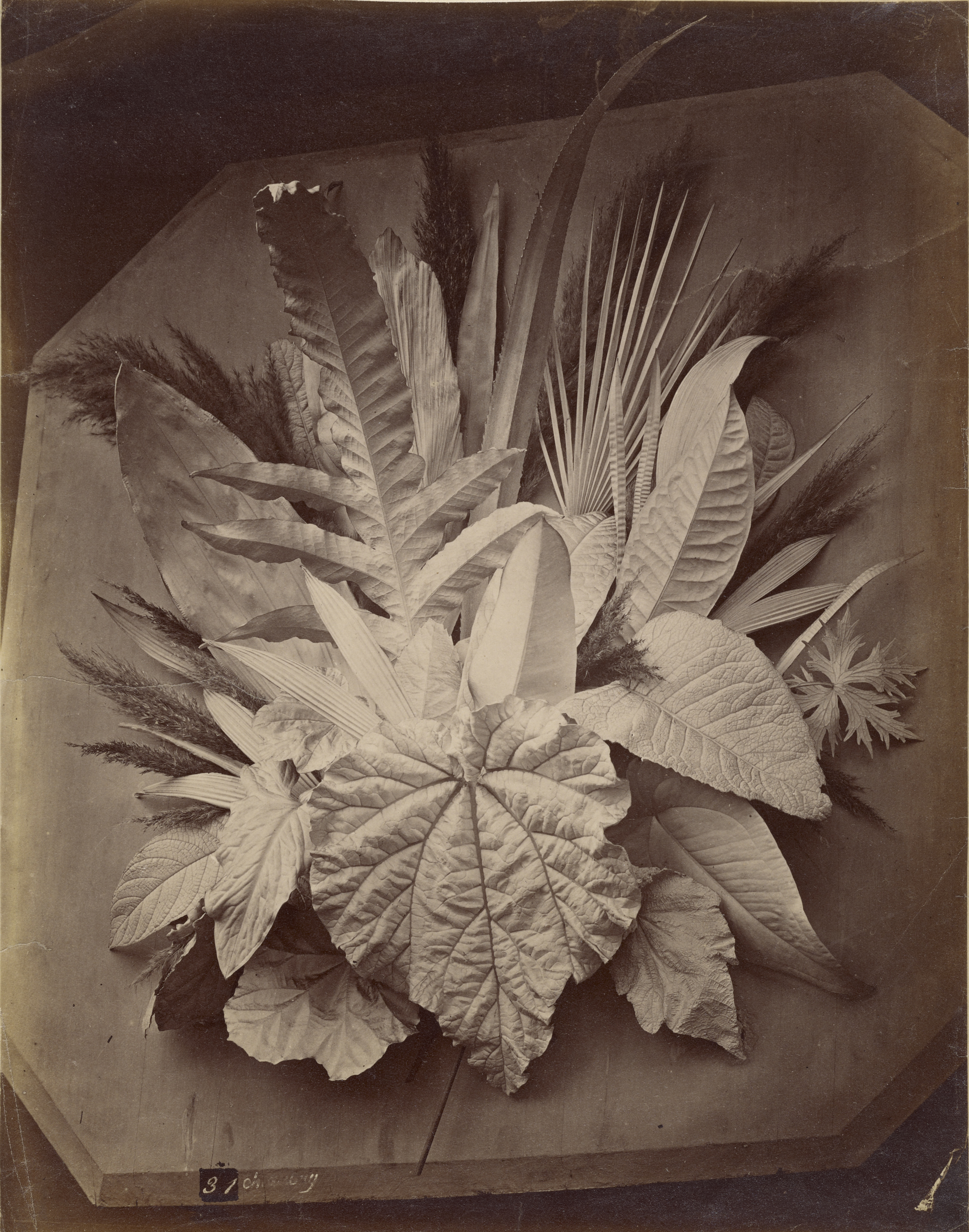
Image Credit: Charles Aubry “Leaf Arrangement” (1860–1869) Digital image courtesy of the Getty’s Open Content Program.