Kelley White: “Why have you made the church so cold?”

.

.

.

Why have you made the church so cold?

The brilliant jewels from your stained glass
clock past my pew. They glow
distant. I try to remember color and light.

Darkness.
You make me remember Stephanie.
Who tried so earnestly to balance on her one foot.
To reach and follow my finger.
Whose eyes stayed crossed.
Cerebellum, tumor.

This could be her grandfather’s church.
The cold steel of the organ.
Her frilled petticoats.
Her too new shoes

Here is my seeking pride at making that diagnosis.
That I spoke the tumor that stole
her balance and sight.

And here is Michael.
Red, blue and yellow falling on my cold arms, crossing my face.
Michael, the brother born to her mother three years after
she slipped into birdsong, held and bathed.

Michael, who leaps, tosses his ball, hops, and counts by sevens.
Who says MaMa told me you knew my sister
You have her picture
Will you show me?

Is this my gift?

.

.

About the Author: Pediatrician Kelley White has worked in inner-city Philadelphia and rural New Hampshire. Her poems have appeared in Exquisite Corpse, Rattle and JAMA. Her recent books are Toxic Environment (Boston Poet Press) and Two Birds in Flame (Beech River Books). She received a 2008 Pennsylvania Council on the Arts grant.

.

Image Credit: Jack E. Boucher ” Sept 1966 DETAIL OF PEW – Trinity Church (P. E.), 651 Pequot Road, Southport, Fairfield County, CT”. Image courtesy of the Library of Congress.
Alice Teeter: “Leaf blowers”

.

.

.

Leaf blowers

Wind moans through the trees, clatters
deck furniture against railings,
pushes leaves into a corner,
whirls them up again.

In the wild, leaves fall, cushion the ground;
softness builds up, things are fed and covered.
It’s usually quiet, it’s often calm –
loud sounds are over soon, mayhem quickly
passes into peace.

It’s us, isn’t it, who drive
down the mountain
as fast as we can go?

.

.

About the Author: Alice Teeter’s most recent book Mountain Mother Poems was published in 2017 by Finishing Line Press. Previous books include Elephant Girls (2015 Adrich Press), and When It Happens To You… (2009 Star Cloud Press). Her poems have appeared in The Atlanta Review, Poetry Daily, The Tower Journal, Per Contra, and Kentucky Review. Her chapbook String Theory won the 2007 Georgia Poetry Society Charles B. Dickson prize. Teeter was awarded a Hambidge Fellowship in 2010. She was adjunct professor teaching poetry writing at Emory University in Atlanta, Georgia, from 2011 to 2016. She studied poetry with Peter Meinke at Eckerd College in St. Petersburg, Florida. She lives with her wife, Kathie deNobriga, in Pine Lake, Georgia.

.

More by Alice Teeter:

Directionless

.

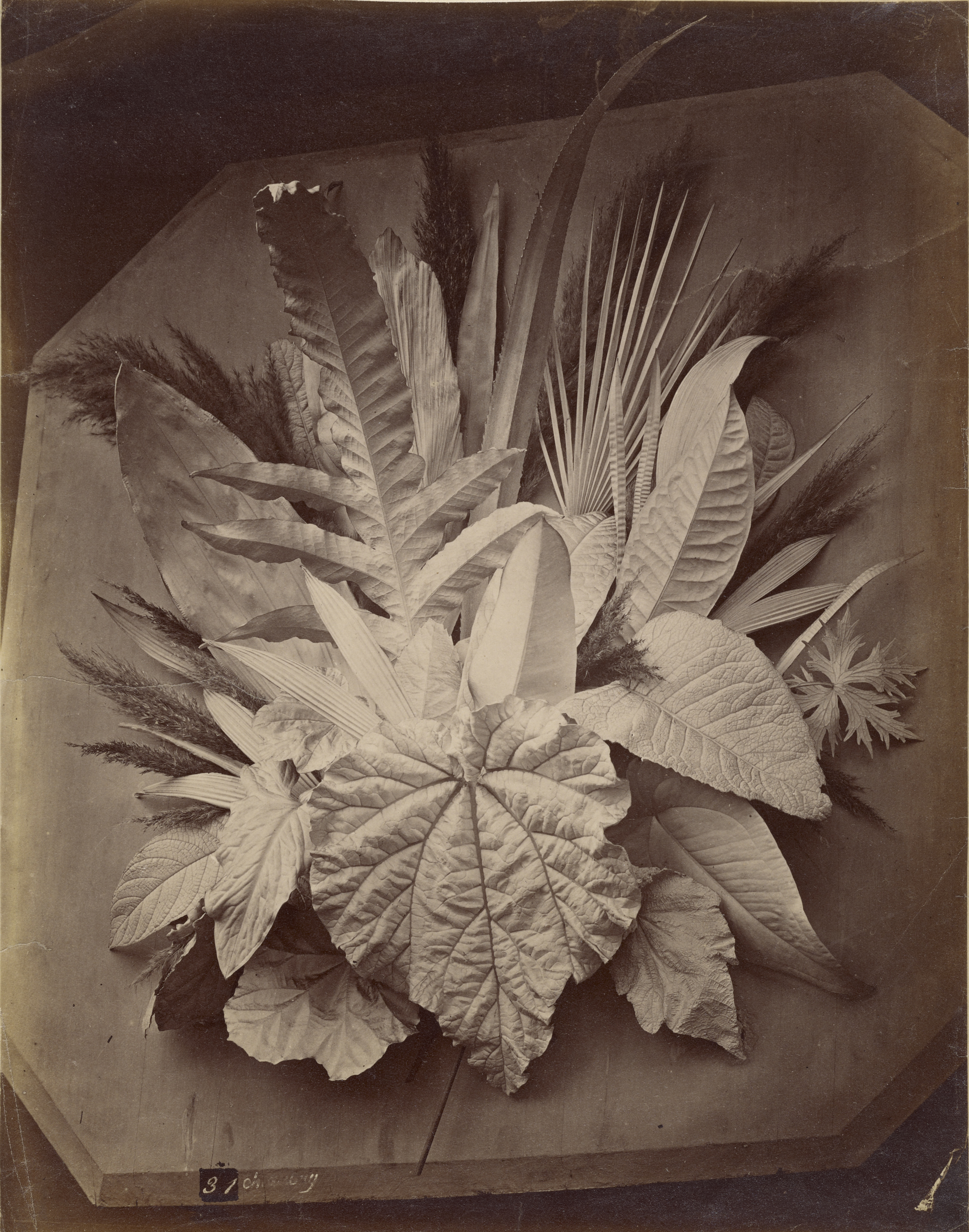
Image Credit: Charles Aubry “Leaf Arrangement” (1860–1869) Digital image courtesy of the Getty’s Open Content Program.

R.T. Castleberry: “Just to Waste the Morning”

.

.

.

Just to Waste the Morning

Too early for dogs barking,
for the train’s rolling whistle,
the sun is seized by night’s glassy course.
November rattles the sidewalk’s seam,
studio apartment windows above
a winter-shuttered pool.
Mealy apple, day old doughnuts for breakfast,
I’ll spend the day finding
the cheapest copy of a desired book,
a match for a print lost to breakup.

Stepping past grapefruit, dropped
and rotting on the sidewalk,
I wear a Bosque Redondo tourist tee
under a German greatcoat,
a twelve dollar haircut beneath a newsboy cap.
Unsteady on the landing,
optical illusions of cracked stone,
pebbled strip, rusty wrought iron
trip me up.
The clinic doctor’s instructions
rattle my last nerve.
Addresses and keys in hand,
like Son House striding his blues pony,
I’ll slake my sorrows in collection remains.

.

.

About the Author: R.T. Castleberry is a widely published poet and critic. His work has appeared in Roanoke Review, Trajectory, Blue Collar Review, White Wall Review, The Alembic and Visitant. Internationally, Castleberry’s work has been published in Canada, Wales, Ireland, Scotland, New Zealand and Antarctica. Mr. Castleberry’s work has been featured in the anthologies, Travois-An Anthology of Texas Poetry, The Weight of Addition, Anthem: A Tribute to Leonard Cohen and You Can Hear the Ocean: An Anthology of Classic and Current Poetry.

.

More By R.T. Castleberry:

Down Cold Lanes

July, Roadhouse Dinner

.

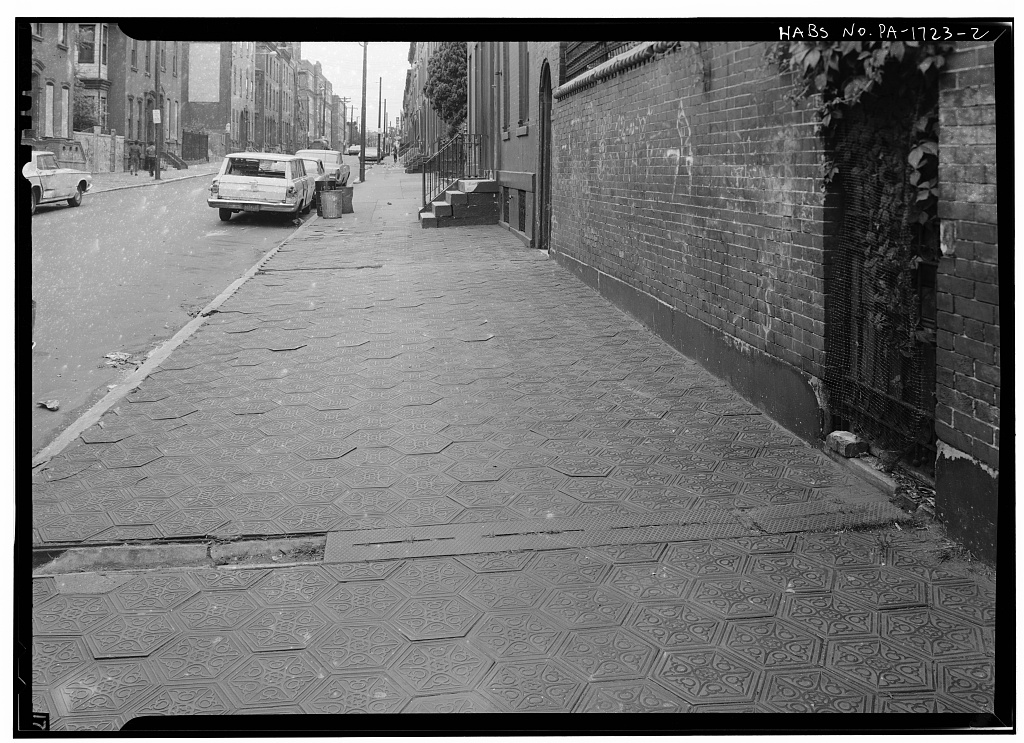
Image Credit: ” VIEW OF SIDEWALK SHOWING IRON TILES – Cast Iron Sidewalk, 1907 North Seventh Street, Philadelphia, Philadelphia County, PA” The Library of Congress

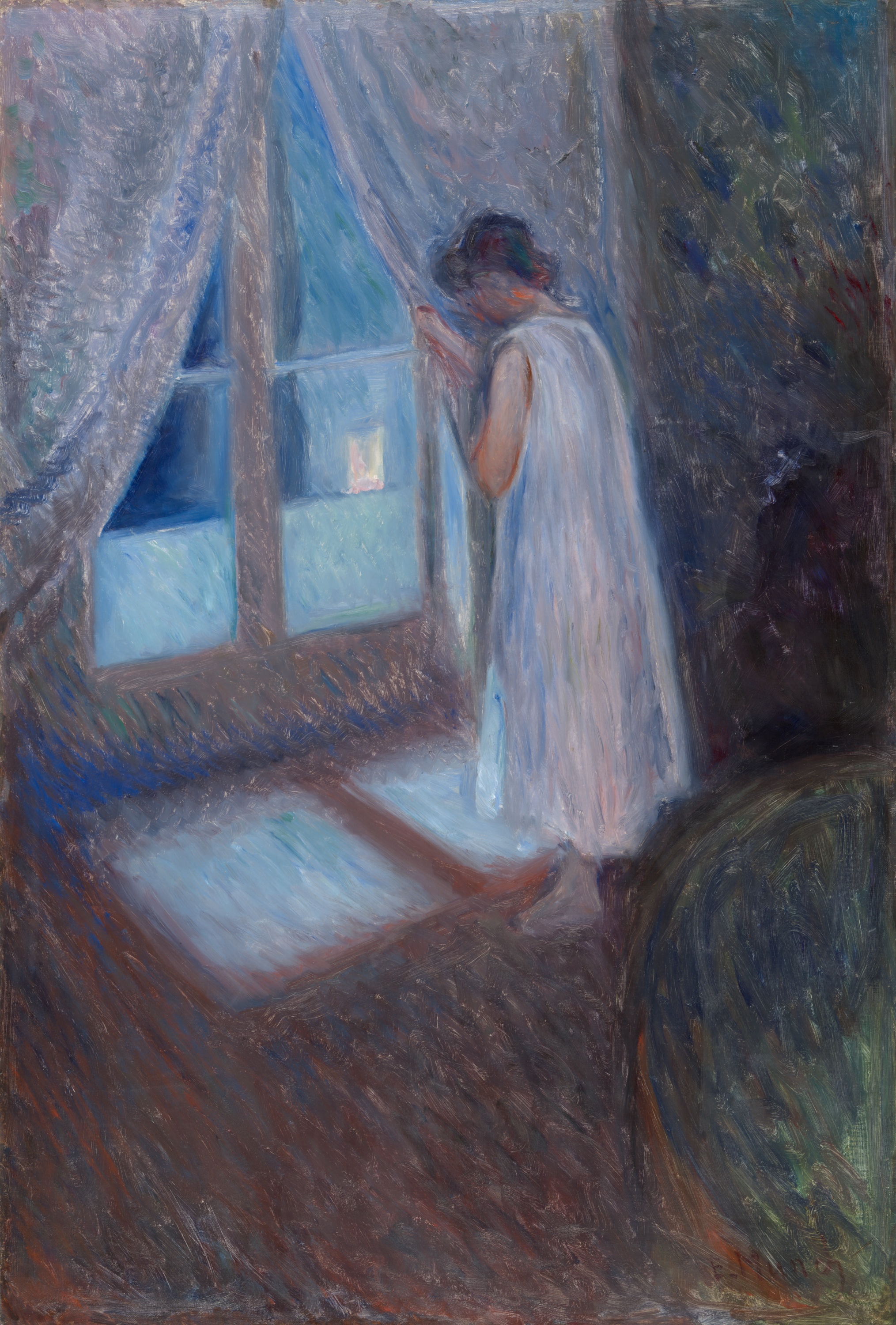
Susan Cossette: “She Waits Behind the Drapes”

.

.

.

She Waits Behind the Drapes
-after Edvard Munch


Gaslit shadows from St. Cloud Street slip through the windowpane.
Unannounced, pecking at her bruised feet.

The otherness has begun.

Hallowed room bathed in crepuscular light,
Occupied only by shadow and impossible stillness. 

The nurses feed her warm chicken noodle soup,
Record vital signs.

She imagines her daughter lying beside her,
Warm breath, soft cheek.
The child remembers things she can no longer.
Grilled cheese sandwiches and tomato soup,
Christmas mornings, drinking warm cocoa after ice skating.

The child is 1,368 miles away.
In her mind,
She is there—
A responsible mourner in training.

Prepared to face the menace,
Prepared to let the dead enter her,
A living organism of memories.

.

.

About the Author: Susan Cossette lives and writes in Minneapolis, Minnesota. The Author of Peggy Sue Messed Up (2017), she is a two-time recipient of the University of Connecticut’s Wallace Stevens Poetry Prize. Her work has appeared or is forthcoming in Rust and Moth, Vita Brevis, Adelaide, Clockwise Cat, Anti-Heroin Chic, The Amethyst Review, Ariel Chart, Poetica Review, Crow & Cross Keys, Loch Raven Review, and in the anthologies Tuesdays at Curley’s and After the Equinox.

.

Image Credit: Edvard Munch. “The Girl by the Window,” (1893). The Art Institute of Chicago. Public Domain


Gale Acuff: “Die and you go to Heaven or Hell says”

.

.

.

Die and you go to Heaven or Hell says

our Sunday School teacher so I raise my
hand and ask What if I live forever
and my classmates laugh and I join them but
I’m a hypocrite, I was serious, don’t
tell me that no one out there in the world
hasn’t or maybe even isn’t, some
-one’s as old as the hills of Granny’s chest
or even older, Methuselah-old
but a lot more than that and I wonder
if that could be our teacher, too, she looks
25 but you never know and then
she says Gale, don’t be silly–now please
lead us in the Lord’s Prayer. God damn it.

.

.

About the Author: Gale Acuff has had poetry published in Ascent, Chiron Review, McNeese Review, Adirondack Review, Weber, Florida Review, South Carolina Review, Carolina Quarterly, Arkansas Review, Poem, South Dakota Review, and many other journals. He has authored three books of poetry: Buffalo Nickel (BrickHouse Press, 2004), The Weight of the World (BrickHouse, 2006), and The Story of My Lives (BrickHouse, 2008).

Gale has taught university English in the US, China, and the Palestinian West Bank.

.

More by Gale Acuff:

Rub

.

Image Credit: Ben Shahn “Sunday school, Penderlea Homesteads, North Carolina” (1937) Public Domain photo courtesy of The Library of Congress

Two Poems by Bill Gainer

.

20210401_114946

.

.


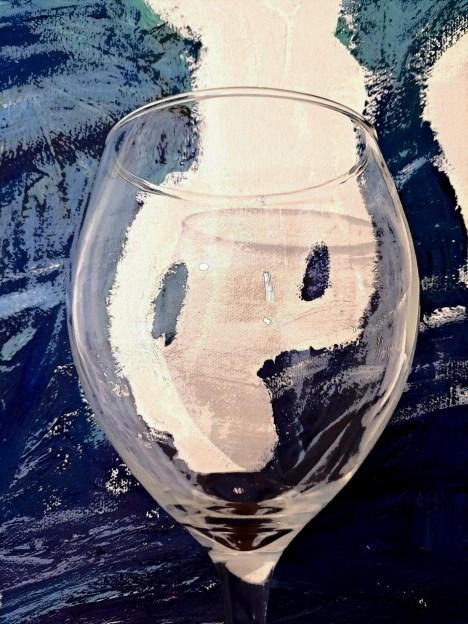
Doing Dishes 

She left a kiss
on the edge of
a glass.
I’ll wash that one
last.

.

.
Eating Ribs

Save the bones
pass them down
the babies first
then the dogs
need something
to gnaw on –
keep the teeth
strong.
Learn the taste
of red meat.

.

.


About the Author: Bill Gainer is a storyteller, humorist, an award winning poet, and a maker of mysterious things. He earned his BA from St. Mary’s College and his MPA from the University of San Francisco. He is the publisher of the PEN Award winning R. L. Crow Publications and is the ongoing host of Red Alice’s Poetry Emporium (Grass Valley, CA). Gainer is internationally published in such journals and magazines as: The Huffington Post, Sacramento News and Review, The Oregonian, Sacramento Bee, Chiron Review, Tule Review, Cultural Weekly, The Lummox Press, Poems for All, Red Fez, River Dog Zine #1, Rose of Sharon, and numerous others. His latest book is: “The Mysterious Book of Old Man Poems.” Gainer is known across the country for giving legendary, fun filled performances. Visit him in his books, at his personal appearances, or at his website: billgainer.com.

.

Image Credit: Chase Dimock “Paint and Wine Glass” (2021)


Sarah Carleton: “That Cloud Looks Like a Typewriter”

.

.

.

That Cloud Looks Like a Typewriter

In mid-century films, the typewriter
was an extroversion machine, clattering day after day
as if to declare, “I’m not some dream-bound poet

lying back, looking up at the sky,
but a vital cog in the gears of capitalism.
Check out my rising paper stack!”

and on-screen scribblers, prolific
even when spinning their wheels, would toss
wadded sheets, filling trash cans and littering

floors with their blockage,
because back then you could fix any jam
by generating mounds of garbage, not like how

I now burrow into my muted keyboard, private
except for the crowing and sighing I scatter
across social-media sites—no prop could advertise

my steady pecking and writerly pluck here
twixt laptop and couch or the ethereal junkpile
of false starts that’s seeding a cloud.

.

.

About the Author: Sarah Carleton writes poetry, edits fiction, tutors English, plays the banjo, and makes her husband laugh in Tampa, Florida. Her poems have appeared in numerous publications, including Cider Press Review, Nimrod, Chattahoochee Review, Tar River Poetry, Crab Orchard Review, and New Ohio Review. Her first collection, Notes from the Girl Cave, was recently published by Kelsay Books.

.

Image Credit: Harris & Ewing, photographer “Woman at typewriter” [between 1921 and 1923] The Library of Congress

Ilari Pass: “delayed rays of a star”

Whistler-Nocturne_in_black_and_gold

.

.

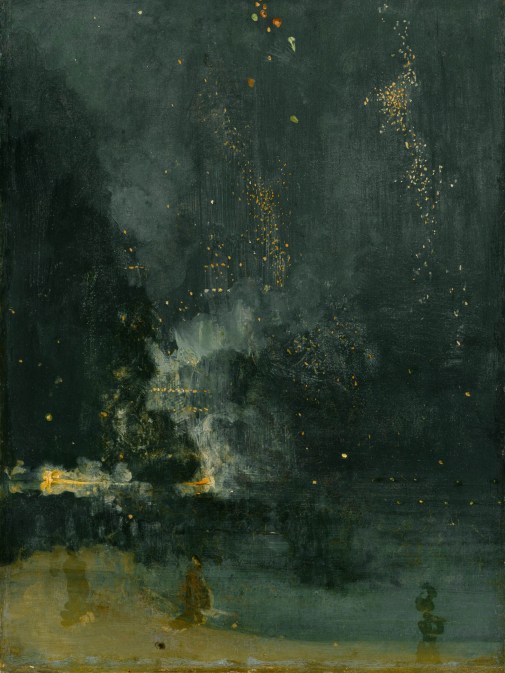
delayed rays of a star

starts with a chance meeting—
peek-a-boo says Eve—crooked,

the night brings good counsel
for deception, the stars become

pinholes in the curtain of night,
opening up like a long fall

from the moon, feeling broken when she rises,
she hides behind a terrifying beauty

stares up at the moon, counting her dimples
she sees the beauty of her road curving

through a tranquil copse of Silver birch,
often marked by wild zinnias,

she wants to lie there and play there
and splash there on the purple edge

on the road, however, she
finds a road made straight

of Adam

the moon peers down,
she’s wishes for his hands

not made of light
she is just another, broken woman

standing in the cold
not allowed to play the lead

.

.

About the Author: Ilari Pass holds a BA in English from Guilford College of Greensboro, NC, and an MA in English, with a concentration in literature, from Gardner-Webb University of Boiling Springs, NC. Her work appears, or forthcoming in Brown Sugar Literary, Kissing Dynamite, Unlikely Stories, Rigorous Magazine, Triggerfish Critical Review, RedFez, The Daily Drunk, The American Journal of Poetry, Drunk Monkeys, Free State Review, Oyster River Pages, Common Ground Review, and others.

.

Image Credit: James Abbott McNeil Whistler “Nocturne in Black and Gold” (1875)

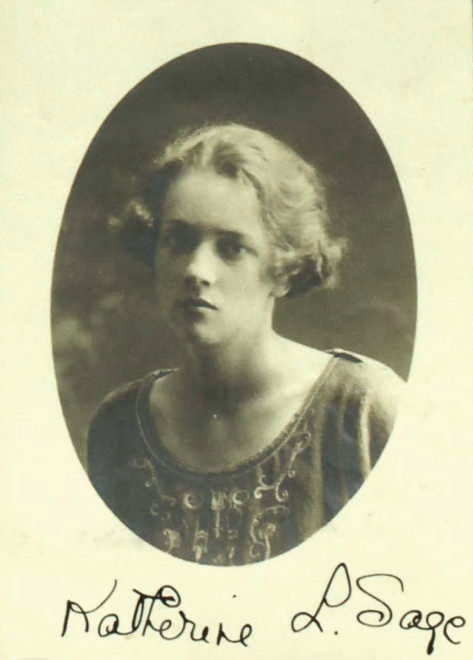
Nadia Arioli: “On “A Bird in the Room” by Kay Sage”

(You can view Sage’s painting A Bird in the Room here)

On “A Bird in the Room” by Kay Sage


The year after you died, I refused all fruit.
I could not bear that hybrid of plant and ghost.
By the time a lemon reaches the east coast,
its tree could be in flames.
All that’s left a sour ball,
a seed unwelcome on chicken.

The month you died, I kept the fruit
I found on walks in shadows.
If I can’t have it, no one will.
I stuck them in my rafters,
where darkness transformed them.
Not castration but refuse.

The week you died, I examined pits.
Nectarines, apricots, peaches,
all malformed brains. I had wondered
about mangoes. Under sunset skin,
thick, orange slime. What keeps
their roundness? Can you read braille?

The day you died, there was a bird
in the room. Round and pulsing,
a bird is a kind of fruit. You
can take it apart with your hands.
I think it was looking for a tree
filled with pomegranates or twigs.

I know what the old women say:
If a bird enters your home, a member
of your household will die. I did not know
they meant the spot where all gentleness gathers,
the pit. You have to wonder the causality
and how far back it will go.

The year I refused fruit made me still
inside, the stillness filled our house
with grey. The pits fell out of rotting
bodies. The bird got lost somehow
and invited itself in. I think it killed you,
love, killed you with feathers and legs.

How perverse that you will never go
into the ground, never go to tree.
You’ll fly, little bird, out over the coast.
But I will leave my door open for you
in case you get lost. For you, love,
I’ll fill my home with ash.

About the Author: Nadia Arioli (nee Wolnisty) is the founder and editor in chief of Thimble Literary Magazine. Their work has appeared or is forthcoming in Spry, SWWIM, Apogee, Penn Review, McNeese Review, Kissing Dynamite, Bateau, Heavy Feather Review, Whale Road Review, SOFTBLOW, and others. They have chapbooks from Cringe-Worthy Poetry Collective, Dancing Girl Press, and a full-length from Spartan.

More by Nadia Arioli:

On “I Walk Without Echo” by Kay Sage

On “The Fourteen Daggers” by Kay Sage

Agnes Vojta: “Nursing Home Visit in Times of Corona”

Nursing Home Visit in Times of Corona

You must make an appointment by phone.
You must call between ten and three on a weekday.
You may only visit once a week.
You must visit between 1 and 5 pm.
You may not stay longer than one hour.
You must check in fifteen minutes before.


You must fill out a form.
You must wear a face mask.
You must keep a distance.
You must disinfect your hands.
You must walk to the building along the shortest way
you have been directed to use.

You must check in with the nurse.
You must wait if the nurse is busy.
You may not speak with a doctor.
You must make an appointment to call the doctor
by phone if you have questions.

You must check out with the nurse.
You receive a check mark by your name.
You get a green mark if you kept the time limit.
You get a red mark if you overstayed.
If you have a red mark,
you may be denied
further visits.

About the Author: Agnes Vojta grew up in Germany and now lives in Rolla, Missouri where she teaches physics at Missouri S&T and hikes the Ozarks. She is the author of Porous Land (Spartan Press, 2019) and The Eden of Perhaps (Spartan Press, 2020), and her poems have appeared in a variety of magazines.

More By Agnes Vojta:

Legend

Sisyphus Calls It Quits

Flotsam

Image Credit: Chase Dimock “Victoria Leaves” (2019)