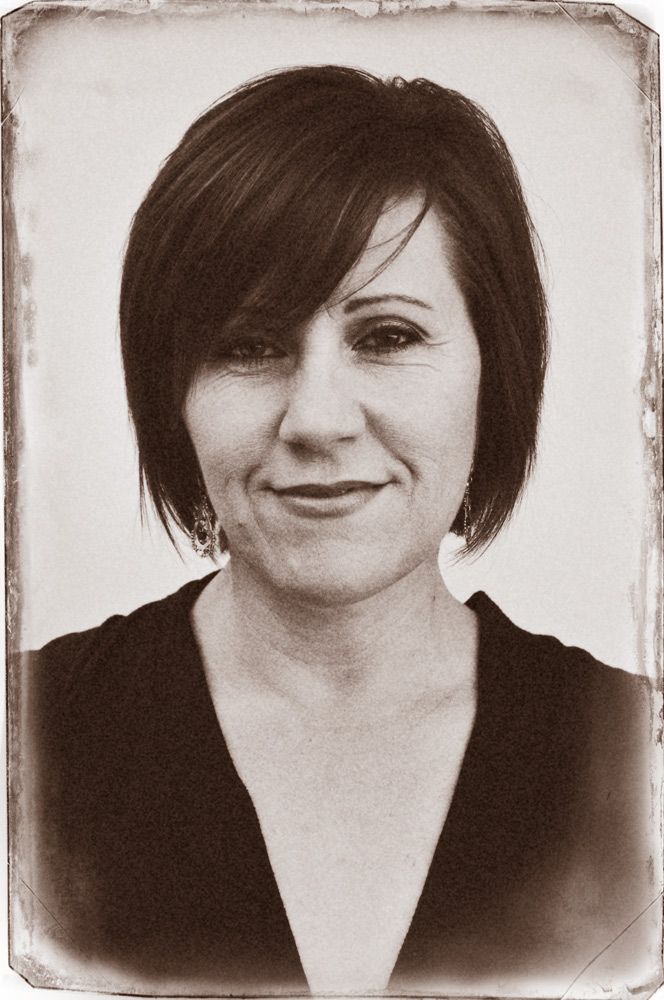
SATURDAY POETRY SERIES PRESENTS: ELIZABETH LANGEMAK

LangemakPhoto

By Elizabeth Langemak:

A PHOTOGRAPH OF HER SHOWERING

                                          As passionless, burned-out, dusty shells, we dislike love poems . . . As [one of our editors] says, why not “text me a photograph of her showering”?

I am enclosing, as text, the photo
you ask for. Though my husband

refuses, I make this in secret
and print it black over white. Though

the angles and lighting are tough
to nail down, and the process

makes my whole body a long face
for tears as the spray breaks over

my scalp and rolls down.
Though my right hand withers,

as I rake damp hair into rows.
Though the cheap curtain cleaves

to my thigh, I peel it off like a rind
teased from its fruit in one strip.

You thought I was dusty, a shell.
You said I was burned out,

but now my skin is slapping and slick,
the camera demanding more arch

and frontal. When I read your note
I was spitting with anger. I could

not get your eyes off my nipples,
my breasts, but now I make you

this square handful of edges,
a black-and-white chip where my ass

hangs over tan lines like a sun
without set, where stretch marks

like fault lines ride over each thigh
and a pocked scar stabs into my shoulder.

Once I knew men like you and tried
to be sexy but in the shower

I only got soaked. On the bed
where I practiced I only looked

posed. In cabins on nights with your jars
full of scotch I hoped you might

see past what you saw and fuck me,
but now it seems we have both changed

our minds. Here I am. In a poem,
just breath-long, I am perfect.

I send you this picture because
a photo of showering is just wet

and sex, but the poem lays down
its camera and hands me a towel,

knows the route I send it
over my calves, over my nape

and around. How many
flashes and clicks turn a love poem

around into only a woman to
fuck you? Fuck you.

Today’s poem was originally published in AGNI and appears here today with permission from the poet.

Elizabeth Langemak lives in Philadelphia, Pennsylvania.

Editor’s Note: Today’s poem is one of resistance. In response to the editors who called love poems “burned-out, dusty shells” and said, why not “text me a photograph of her showering,” Elizabeth Langemak speaks out against the objectification of women’s bodies and the misogyny rearing its ugly head in a still-patriarchal society. Frankly feminist, exquisitely lyric, and commendably unabashed, today’s poet answers the question “Why not text me a photograph of her showering?” with the only response needed: “Fuck you.”

Want more from Elizabeth Langemak?
Elizabeth Langemak’s Official Website

SATURDAY POETRY SERIES PRESENTS: KAREN ALKALAY-GUT

karen2014


By Karen Alkalay-Gut:


HER STORY

I have never been able to tell her story
Sometimes it escapes me, sometimes I am not sure
It could really have happened, sometimes I read
Different accounts of her demise, or a paragraph
From some testimony jogs my memory and the terrible days
When I first heard what happened to her return.

This much is in my blood:
I was conceived on the day she died.
This much is in my blood.
She blew up trains.
The courage came from her uplifted chin
And the two infants she watched
Dashed against the wall of their home.
Avram twelve months old and Masha two years.
My first cousins.
They too – in my blood – all that is left.

If I can write of these babies,
I can manage the rest –
Following her path as she escaped
The prison camp with her husband
And joined the Otrianski Otriade
Lenin Brigade, Lipinskana Forest.

I can feel her mouth, her narrow lips clamped
As she bends over the delicate mines,
Solemn as in the photo when as a child
She sat for with the rest of the choir
Unsmiling amid the festive singers
Unwilling perhaps to feel poetic joy
Perhaps destined for so much more.

There are at least three accounts of her death:
The partisan Abba Kovner told me she was caught
In a mission and hung. He looked away when he spoke,
Not piercing me as always with his tragic eyes,
And I knew there was more he would not say.

Another book says she lagged behind the platoon
Escaping an attack, perhaps pregnant,
And was imprisoned in Zhedtl.
The jail was ignited, perhaps by accident,
And she was just one of the victims.

When mother first told me the story
She had just heard at the hairdresser’s,
I must have been fifteen, and outraged
That she was weeping, tears
Rolling down her face. She knew
All I cared for was my own life,
And her latest discovery
Of the fate of her youngest sister
A disruption.
But who else could she tell?

The loft in the barn, she said,
They were hiding there – three women,
Her husband and her. They came
And set the barn afire. He helped
The women first, and his wife came last
But didn’t come, was burnt alive.

Malcah Malcah who saved all our lives
Malcah who was waiting for them
When the ship brought them back to Danzig
After they were barred from the Holy Land,
Who found them the agricultural visas to England
And saw them off the night that Hitler invaded.
But there is no real story.
All that remains is a faded snapshot
A few sentences in unread memorial tomes,
And me, who cannot tell any story for sure.


Today’s poem was originally published in Prairie Schooner and appears here with permission from the poet.


Karen Alkalay-Gut is now easing out of a fifty-year academic career at Tel Aviv University and beginning to concentrate on writing. Born in London during World War II, she was raised in Rochester, New York and moved to Israel in 1972. She has published almost 30 books in English, and Hebrew, Spanish, and Italian translation, and has collaborated on half a dozen music CDs.

Editor’s Note: Is it possible to read today’s poem without being moved to tears? To wax poetic (this is the place for that, after all), when I read today’s poem the first words that come to mind are “How do I love thee? Let me count the ways.” No, really. Let me.

1) Parallelism, as both an incantatory device and as a conversation between the poem and biblical poetry. “This much is in my blood: / I was conceived on the day she died. / This much is in my blood.” “Malcah Malcah who saved all our lives / Malcah who was waiting for them.” This parallelism is working on more levels than we might imagine. To echo the Bible in this way is a tradition that dates back to the earliest World War II and Holocaust poetry. But, in fact, it dates back to long before the Holocaust, finding rich roots among the varied history of all Jews in exile, and particularly those in Spain’s Golden Age and the time of the expulsion.

2) Vivid imagery that does not let us forget the many tragedies of “her story.” “[T]he two infants she watched / Dashed against the wall of their home,” “I can feel her mouth, her narrow lips clamped / As she bends over the delicate mines,” “He helped / The women first, and his wife came last / But didn’t come, was burnt alive.” This poem is rife with what Aristotle termed Pathos, the emotional connection to the audience. This is not a poem that you can read without feeling, deeply.

3) The poet herself shines through as a character, real and flawed and human. We know her struggles and her failings, and we experience them with her. “If I can write of these babies, / I can manage the rest,” “When mother first told me the story… I must have been fifteen, and outraged / That she was weeping… She knew / All I cared for was my own life, / And her latest discovery / Of the fate of her youngest sister / A disruption.”

4) Malcah, on the other hand, is made a hero through raw nostalgia. Malcah means “queen,” and while the poet did not invent her lost aunt’s name, bringing her name into the poem elevates the heroine to near-godly proportions. “She blew up trains. / The courage came from her uplifted chin,” “Malcah who saved all our lives / Malcah who was waiting for them / When the ship brought them back to Danzig / After they were barred from the Holy Land, / Who found them the agricultural visas to England / And saw them off the night that Hitler invaded.” Malcah the martyr, who did not die before first ensuring that the poet and her family would live.

5) “Her Story.” It is no secret that I am a big fan of herstory. I created a project to revive and celebrate it. But herstory, as today’s poem makes clear, is multi-faceted. It is women’s history, it is one woman’s history, it is women’s stories, and it is one woman’s story. But in today’s poem it is also the admission that there is no one story. (An idea I am incredibly interested in, as I spent the fall of 2013 researching my own family’s history through the lens of varying versions of the same story, much as today’s poem does.) In today’s poem we are given every known version of Malcah’s story, but the poet twins the telling of “her story” with the idea that “there is no real story” to tell. This is as true to an accurate historical retelling as anyone can come.

Want more from Karen Alkalay-Gut?
Karen Alkalay-Gut’s Official Website
Interview in The Madison Journal of Literary Criticism
Tel Aviv Radio
Buy The Encantadas: Evolution and Emotion from Amazon
The Bridge at Raqqa (eBook)
Youtube

SATURDAY POETRY SERIES PRESENTS: NORMA LILIANA VALDEZ

NLValdez head shot


By Norma Liliana Valdez:


UNACCOMPANIED

Everything is happening now. Everything is present tense. The horses. The running.

The losing. This operation is a well-oiled machine. All is slow motion until dusk. After

dusk come the icy furrows. Overnight temperatures the kind of cold that enters marrow.

There is so much winter in the eyes. From here the only lights: the moon and Chula

Vista. After the ice, the running. Ravine. Huizache. Thorns. The hiding. A Cadillac.

There is a gun in the glove compartment. There are two boys in the trunk. Two other

boys contort their bodies on the back seat floor, legs entwined. Face down. Face down.

He is the one balled on the front passenger floor because he is the smallest. He is bones

and destiny.


HUMMINGBIRD

every breath you exhaled

a blanket of hosannas

each hand like prayer, like

unfettered music

you were night, naked

shoulders in moonlight

I lost my breath

beneath your gravity

your touch slid along the arc

of every whisper

I inhaled greedily

filled every room

filled every empty space

inside of me

you must have known my anthem

when you left

urgent as an animal


“Unaccompanied” was the poetry winner of the 2015 San Miguel Writers’ Conference Writing Contest, and “Hummingbird” is an original feature on the Saturday Poetry Series on As It Ought To Be. Both poems appear here today with permission from the poet.


Norma Liliana Valdez is an alumna of the VONA/Voices Writing Workshop, the Writing Program at UC Berkeley Extension, and a 2014 Hedgebrook writer-in-residence. Her poems have appeared in Calyx Journal, The Acentos Review, As It Ought To Be, La Bloga, and Dismantle: An Anthology of Writing from the VONA/Voices Writing Workshop. She is the poetry winner of the 2015 San Miguel Writers’ Conference Writing Contest. Additional work is forthcoming in Poetry of Resistance: A Multicultural Anthology by University of Arizona Press. She lives and works in the San Francisco Bay Area.

Editor’s Note: Over the years Norma Liliana Valdez’s writing has grown much in the way bougainvillea grows. Along earth-toned buildings in warm places. A steady, fertile spread erupting in vibrant blossoms. Like the sight of bright and blooming bougainvillea, today’s poems take my breath away.

“Unaccompanied,” winner of the 2015 San Miguel Writers’ Conference Writing Contest in poetry, is a work of art. The title is evocative, deftly making its mark. The narrative envelopes us in a gripping and heart-wrenching tale that speaks as much to the experience of the few as to the dreams and suffering of the masses. This work is vocal, political, and brave. Brimming with stunning lyric, we feel “the kind of cold that enters marrow,” see how “there is so much winter in the eyes,” and are left with what reads like a told fortune: “He is bones / and destiny.”

While “Unaccompanied” is yin-like—covert and treacherous—”Hummingbird” is like the yang—in relief, open, belonging to this world. The energy is sensual and intense, with “each hand like prayer.” And while both poems end spectacularly, “Hummingbird” is volta-like in its finale, confessing that “you must have known my anthem / when you left / urgent as an animal.”

This is the poet’s third Saturday Poetry Series feature. Three is a sacred number. The Holy Trinity. Maiden, Mother, Crone. The Triple Bodhi. The Trimurti. Which is fitting, as the poet divines poems that are alchemical. Spiritual. Faithfully wrought and nearly religious in their lyricism. Evocative of a humanity made palpable through poetry.

Want to read more by Norma Liliana Valdez?
Saturday Poetry Series feature, As It Ought To Be, 2011
Saturday Poetry Series feature, As It Ought To Be, 2010
Winners of the 2015 San Miguel Writers’ Conference Writing Contest
Spiral Orb
The Acentos Review