“Cards” by Jonathan K. Rice


Cards
           circa 1965

It’s time for the monthly bridge club
my parents host with couples
from other neighborhoods
and it’s our turn. My role is minimal.

I’m told to stay in my room,
but to first greet everyone and say goodnight,
just not be seen and not play my records.
Preferably not make any noise at all.

I decide to read The Island of Dr. Moreau
I bought at the school book fair that morning,
maybe play around with the crystal radio I built from a kit.

Before long I can hear people laughing,
ice clinking. I can smell the vermouth, gin,
the occasional cigarette.

I open the window, take off the screen
and climb out behind the tall hibiscus,
dodging palmetto bugs and lizards,

steal away into the night down the block
where older kids hang by the street light.
The newspaper boy has a zip gun he made
with some pipe from a nearby construction site.

He says it will shoot .22 bullets
and he has a pocketful. I can see the cars
in the driveway and along the street
in front of my house.

The kid shoots his zip gun. It sounds like a
firecracker, and we hear broken glass. He loads
it again. More fireworks. More broken glass.
And it’s all in front of my house.

We run in different directions.
I run toward a neighbor’s backyard
around to my window.

I hear the needle scratch vinyl, screeching
through my dad’s bossa nova record
while men cuss. This is not what Bridge
usually sounds like.

I hear poker chips being thrown and stacked,
the hardness of bottles and glasses on the table,
doors opening and closing, people coming and going.
footsteps down the hallway.

The screen and window back in place,
I pick up my book. Mom comes in,
finds me reading H.G.Wells.


About the Author: Jonathan K. Rice edited Iodine Poetry Journal for seventeen years. He is the author of two full-length poetry collections, Killing Time (2015), Ukulele and Other Poems (2006) and a chapbook, Shooting Pool with a Cellist (2003), all published by Main Street Rag Publishing. He is also a visual artist. His poetry and art have appeared in numerous publications, including Cold Mountain Review, Comstock Review, Diaphanous, Empty Mirror, Gargoyle, Inflectionist Review, Levure Litteraire, The Main Street Rag, Wild Goose Poetry Review and the anthologies, Hand in Hand: Poets Respond to Race and The Southern Poetry Anthology VII: North Carolina.


More by Jonathan K. Rice

“Springmaid Pier”


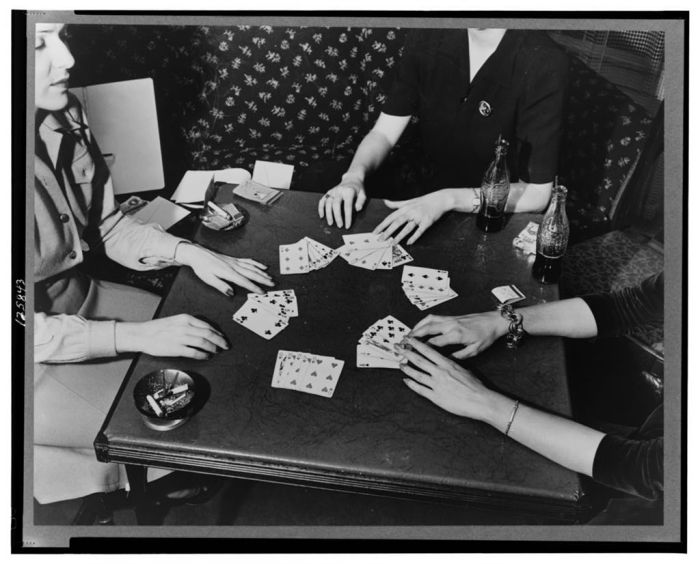
Image Credit: “Detroit, Michigan. Poker hand and hands of girl players” (1941) Arthur S. Siegel. from The Library of Congress
“The Selfie” By Mike Acker


The Selfie

Holding it right is half the challenge.
The other is not to shake before the click.

They say that the aim may change due to
the pressure applied by the finger.

To think that in the old days they had to
handle the powder directly to produce

the explosion, which, of course, also
gave the flash. The modern version

is so much easier; just aim and shoot.
The only question is: the temple, or the mouth.

.
.
About the Author: Mike Acker lives in Vancouver, British Columbia. He has lived in various parts of the world; his early education was in German and French. While living in California, he worked as a professional translator. Mike enjoys writing short poetry, especially with the intent of exploring the possibilities latent in a single image.
.
.
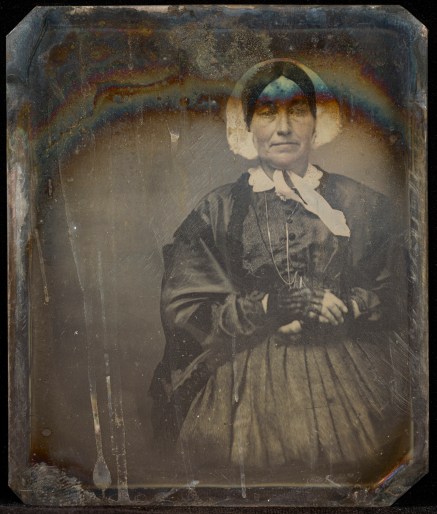
Image Credit: “Portrait of a Woman in Bonnet” Jacob Byerly, daguerreotypist (American, 1807 – 1883) Digital image courtesy of the Getty’s Open Content Program


Bunkong Tuon: “Ice Cream”


This is the first in a series of poems from a forthcoming poetry collection about raising a biracial daughter in Contemporary America, during this polarizing time of political and cultural upheavals where sexual harassment allegations abound, where a wall, literal and figurative, threatens to keep out immigrants like the narrator, a former refugee and child survivor of the Cambodian Genocide. You can find links to the full series of poems below.


Ice Cream

I take Chanda
to the local mall,
where she flies
in the bounce house
with other kids,
screaming and laughing.
She climbs up
the slide and rolls
down the cushy steps.
She pirouettes
on the piano floor.
Then I take her
to the ice cream place
where we share
a cup of vanilla.
I watch her quietly
shove a spoonful
into her waiting mouth,
tasting the sweetness
on her pink tongue.
Memories of my father
flood, how he lost his wife.
When the Khmer Rouge regime
fell, Grandma was preparing to
take me with her to Thailand.
My father took me out
for ice cream one day.
He was telling me
something important.
That he would follow
Grandma and bring me home.
That he would wait
for me.
That he would always . . .
But I couldn’t hear a word
he said once the ice cream
flooded my tongue with
such sweetness.


About the Author: Bunkong Tuon is the author of Gruel (2015) and And So I Was Blessed (2017), both poetry collections published by NYQ Books, and a regular contributor to Cultural Weekly  He is also an associate professor of English and Asian Studies at Union College, in Schenectady, NY.


Bunkong Tuon’s series of poems on raising a biracial daughter in contemporary America:

Ice Cream

Gender Danger

The Bite

Tightrope Dancer

Women’s March in Albany

My Mother on Her Deathbed


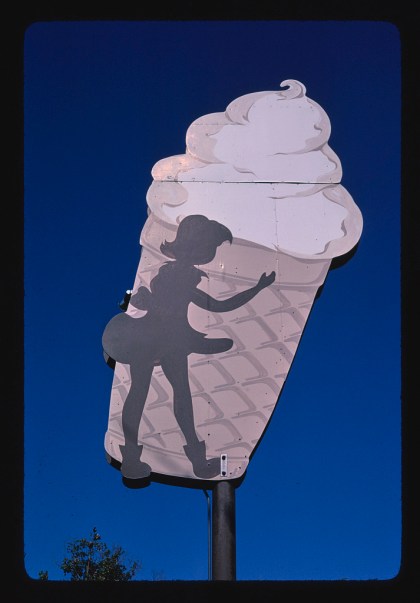
Image Credit: “Miss Lisa’s ice cream sign, old Rt. 31, Perrysburg, Michigan” By John Margolies, The Library of Congress

“My Joints Hurt And Other Fascinating Topics Of Conversation” By Margaret Crocker


MY JOINTS HURT
AND OTHER FASCINATING TOPICS OF CONVERSATION

So.

This is what it’s come to.
You
and me,
green tea
and a free association of maladies.

You cannot know how sick I am,
the pain I feel,
the woes I have.

But, hey,
here’s a dirty joke to make it better.

All laugh.
I cough.
You sweat.
We both sigh,
and limp
ever closer
to the finish line.


About the Author: Margaret Crocker is an artist, writer, wife, mother, daughter, sister and thief. She collects stray animals and has this weird fantasy of being on The Great British Baking Show, despite the fact she uses a bread machine. She knows little but proclaims much. There is much we don’t know about her.


More By Margaret Crocker

“The Art of Acquiescence”

“Earth, Air, and Lynda Carter”

“Mental Health Portraits”


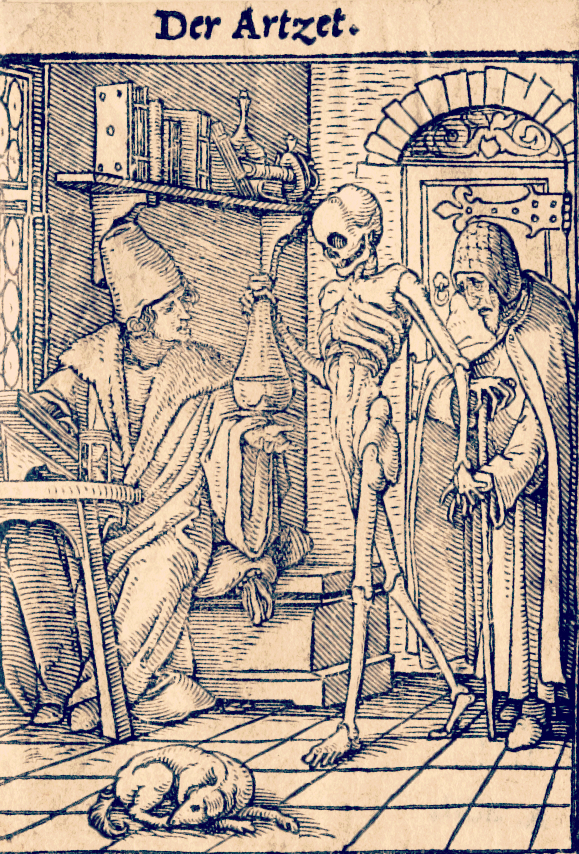
Image Credit: “Dance of Death: The Doctor” Hans Holbein (The Cleveland Museum of Art)


Two Prose Poems By Mike James


Moving Again

Not everything fits on the back of my motorcycle. For instance, neither my pet cactus nor my roommate cat travel well. Both claw me considerably in different ways. And my bike is not large. It’s the small engine type I never grew out of.

Thomas De Quincey knew it was time to move when no more books would fit on shelves and when bill collectors came more often than meals. I know it’s time when someone tells me. My jokes worn thinner than the cheapest tissue paper, which won’t absorb more than a shot glass of tears.


Gutter Angels

Identify not by wings, which mostly stay jacket-hidden, but by sadness which serves as eyeliner. Also, by any buffalo penny worn as a pendant. If wings are seen, feathers are frequently oily. Often a few lost on alley bets and during sidewalk waltzes. Be warned: when they crack their knuckles dreams escape. Mice can hear it. And dogs who so often come and happily lick their hands.


About the Author: Mike James is the author of eleven poetry collections. His most recent books include: First-Hand Accounts From Made-Up Places (Stubborn Mule Press) Crows in the Jukebox (Bottom Dog), My Favorite Houseguest (FutureCycle), and Peddler’s Blues (Main Street Rag.) He has previously served as associate editor for both The Kentucky Review and Autumn House Press. After years spent in South Carolina, Missouri, Pennsylvania, and Georgia, he now makes his home in Chapel Hill, North Carolina with his large family and a large assortment of cats.


More By Mike James

“Grace”

“Two Ghazals”

“Two Prose Poems”


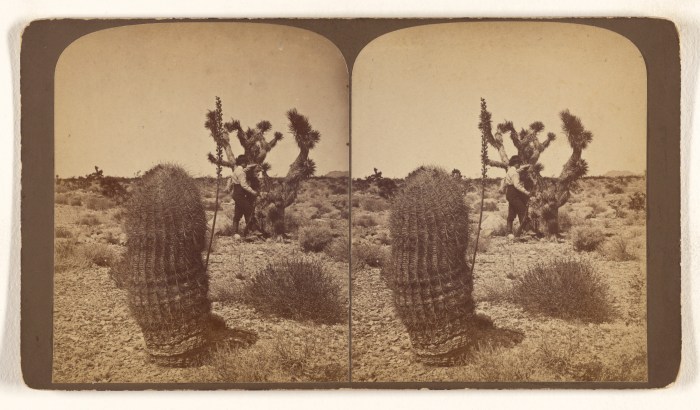
Image Credit: “Barrel Cactus” C.R. Savage. (1870s) Digital Image Courtesy of the Getty Digital Collection

“Betty Doesn’t Know Who She Loves More” By Daniel Crocker


Betty Doesn’t Know Who She Loves More

Bruce is the sensitive type
a little nervous but
It’s nice when someone
really listens

Honestly, most of the time
she probably prefers him
Hulk tries, but his thoughts get
muddled. They go from rage
to depression and back again

But Bruce can be a little boring
at times with his talk of
quantum physics, cures and
medication

Hulk has something
and it’s not just the ripped
abs and cantaloupe biceps

Hulk once
knocked a man through
a wall for her

The man died

That says something, doesn’t it
That he would end everything
a man could possibly be so easily
wipe out a billion timelines

and maybe she just couldn’t
love one without the other

Both Bruce and Hulk
know their place
Neither are very happy with it
but it is what it is

and she knows something
they don’t. She knows they are in
love with each other. She couldn’t
force them to part. No, she’ll have both.
Thanks.

.

This poem appears in Daniel Crocker’s book Gamma Rays. For more information, check out this interview between our Managing Editor Chase Dimock and Daniel Crocker about his collection of Hulk inspired poetry.

.

About the Author: Daniel Crocker’s work has appeared in The Los Angeles Review, Hobart, Big Muddy, New World Writing, Stirring, Juked, The Chiron Review, The Mas Tequila Review and over 100 others. His books include Like a Fish (full length) and The One Where I Ruin Your Childhood (e-chap with thousands of downloads) both from Sundress Publications. Green Bean Press published several of his books in the ’90s and early 2000s. These include People Everyday and Other Poems, Long Live the 2 of Spadesthe novel The Cornstalk Man and the short story collection Do Not Look Directly Into Me. He has also published several chapbooks through various presses. His newest full length collection of poetry, Shit House Rat, was published by Spartan Press in September of 2017. Stubborn Mule Press published Leadwood: New and Selected Poems—1998-2018 in October 2018. He was the first winner of the Gerald Locklin Prize in poetry. He is the editor of The Cape Rock (Southeast Missouri State University) and the co-editor of Trailer Park Quarterly. He’s also the host of the podcast, Sanesplaining, about poetry, mental illness and nerd stuff.

SATURDAY POETRY SERIES PRESENTS: CL BLEDSOE

DREAMCATCHER
By CL Bledsoe

Her hair is a tangled field of sweet straw
knocked crooked in heavy winds, catching
any light that stumbles nearby. Maybe this
is why she radiates heat, when I’m trying
to nap, sick, on the couch and she perches high
on my side watching screaming cartoons. Dazzled
strangers stop us on sidewalks to remind us
in case we’ve forgotten: life isn’t always gray. It’s not.
Bees follow us to get at the pollen they can smell
trapped in the mess. I thump them away
when they get too close and scare her. If I had time,
I’d learn to collect their honey, walk her through
the sweetest fields, open a boutique to pay
for college. But I can barely remember to stop smiling
long enough to thank the policeman for the speeding
ticket most mornings. Brushes are an enemy to her,
the confining toil of hair ties lead to tears. Stickers lost
are found. Twigs. Fuzz. All of it down the drain with
the bath water. It won’t last.


Today’s poem previously appeared in Mockingheart Review and appears here today with permission from the poet.


CL Bledsoe‘s most recent books are the poetry collections Trashcans in Love and King of Loneliness and the novel The Funny Thing About… He lives in northern Virginia with his daughter and blogs (with Michael Gushue) at How To Even…

Guest Editor’s Note: There are not many poems full of unabashed joy and magic, but CL Bledsoe’s “Dreamcatcher” is one of them. The language continually surprises as it turns a little girl’s head of blonde hair into a dreamcatcher, full of wonderment and mystery. Bledsoe moves with alacrity and agility from the initial simile that describes his daughter’s hair “as a tangled field of sweet straw / knocked crooked in heavy winds, catching / any light that stumbles nearby.” Nothing in this poem feels forced, even though he never lets an opportunity go by without pushing the language and imagery as hard as he can, to capture the girl’s spirit as she “radiates heat” or “perches high” when “watching screaming cartoons” to reveal the joy he experiences simply by being open to the wonders of his daughter’s essence. This is a poem that truly shows us that “life isn’t always gray” and the wonder that occurs as “Bees follow us to get at the pollen they can smell / trapped in the mess.” Read it, smile, and bask in the sunlight that Bledsoe has captured.

Want to read more by and about CL Bledsoe?
Amazon Author Page
How To Even blog
Not Another TV Dad blog
Not Another TV Dad column


Guest Editor Alan Toltzis is the author of The Last Commandment. Recent work has appeared in print and online publications including Hummingbird, Right Hand Pointing, IthacaLit, r.k.v.r.y. Quarterly, and Cold Noon. Find him online at alantoltzis.com.


A NOTE FROM THE MANAGING EDITOR:

After nearly ten years as Contributing Editor of this series, it is an honor and a unique opportunity to share this space with a number of guest editors, including the editor featured here today. I am thrilled to usher in an era of new voices in poetry as the Managing Editor of this series.

Viva la poesia!
Sivan Butler-Rotholz, Managing Editor
Saturday Poetry Series, AIOTB


“Dolly Floats” By Stephen Roger Powers


Dolly Floats

              2012

Pigeon Forge raised Dolly
up on eagle’s wings, and she flew
on those wings of an eagle while
the eagle stared down its nest at the front of the float
and followed it like a donkey after a carrot.
When the parade was over,
Dolly took the stairs through the eagle’s tail
feathers, and popped out the back
like an Easter egg.

              2013

Rocks, an inflatable dinghy, and fresco rapids
rushed forth a lifeguard station
with baywatchful Dolly waving a floatation
board and singing along to her own songs.
She lifted the hem of her red swim
skirt and blew one of the cherry
whistles sewn around it. Policemen
blocked the end where she got off,
so I traffic-sulked to Ole Smoky
Distillery, where I drowned
in samples of every flavor.

             2014

Ole Smoky was the first stop this year.
The guy in overalls who gave me free
cherries sanitized his hands
with White Lightnin’. By the time
I got to the parade, I was corned
for engine-and-ladder Dolly with blazing
spangle-sparkles on her hat.
Her nieces sat with fake
fireworks at the front of the roller-coaster
float. Some of Dolly’s hair stuck
in her lipstick. She pulled it free
and blew a kiss in one motion.

             2015

Dreams came true when Dolly, garnished in red
with gold trim, jack-in-the-boxed from a cake,
her great big yellow wig a flaming candle.
Her beefcake bodyguard hollered at the drone following.
It hovered off backwards like a scared puppy
because she posed her arms at it spread wide
for a picture. Sometimes I wonder if she gets tired
of waggling her hands this way, then that,
this way again, that way again.

            2016

My Tennessee cousin, some unknown
number of removes, called my new
Dollywood Gold Pass a roller coaster license.
The woman working the photo
booth took my picture for it a half-smile,
wind-disheveled second before I was ready. Six o’clock,
out paraded laced-up Dollyized lumberjack boots,
icepick heels more honed than usual. Dolly’s fashion
assistant fastened a seatbelt around Dolly’s waist.
A gristmill float or a riverboat float?
Depends how you looked at the paddle wheels
turning on each side. Blue and white
streamers were fluttery water fill-ins. Either way,
Dolly sat high enough to mark twain.

            2017

Antibiotics pinholed my right hip.
“If I take it easy do you think I could
go to Pigeon Forge on Friday
for Dolly’s annual parade?”
“No.”
Steroids pricked my left hip.
“But you don’t understand—”
“Absolutely not.”
No Dolly Parton on account of doctor’s orders.

             2018

Four months in advance Dolly
announces after 32 years grand
marshaling she will step
down. Social media smells
a conspiracy, because Dolly is guilty
of having stood between Lily and Jane
at the Emmys. Cal Ripken Jr.
will ride a mountain-mural
guitar. A giant baseball will roll
behind him. Maybe next year
the resonant frequency of everyone in the
world singing a Dolly song
at once will parade Dolly
out once more.

.

About the Author: Stephen Roger Powers started writing poetry almost twenty years ago to pass time in the middle of the night when he was too energized to sleep after coming off the stage in comedy clubs around the Midwest. He is the author of The Followers Tale and Hello, Stephen, both published by Salmon Poetry. Other work has appeared in 32 PoemsShenandoahThe Southern Poetry Anthology Volume V: GeorgiaRabbit Ears: TV Poems, and Stone, River, Sky: An Anthology of Georgia PoemsHe hasnt done stand-up in a long time, but every once in a while he finds avenues for the performer he was born to be. He was an extra in Joyful Noise with Queen Latifah and Dolly Parton, and he can be seen if you know just where to look.

“Remembering the Great Flood in the Frozen Food Aisle” By Ronnie Sirmans


REMEMBERING THE GREAT FLOOD IN THE FROZEN FOOD AISLE

0 g. Zero grams: No trans fats, according
to the big numeral and letter on the label.
As I rolled my cart past the frozen foods,
I’d first read zero grams as a word: Og.
The giant who died in the Great Flood.
Or did he?  Some say this freakish ruler
accompanied the ark. His anaconda-fingers
holding tight, his oxen-calves wrapped around
any wood that would not break, his walrus-torso
pressed firmly, resisting the rough breakers.
This supercenter — tools, groceries, sundries,
scented candles and oils of deserts and tropics,
live fish for pets, frozen-boxed fish for eating —
could serve as a modern sepulcher to the king.
Did Og relate to the pachyderms? Did Noah’s
daughters swoon? Can sea elephants blow kisses?
Or did this king’s domain and lineage conclude,
not like the dinosaurs in ash, but in a deluge?

I navigate toward an open aisle
in the archipelago of checkouts,
lighted numerals above cashiers
are north stars guiding my passage.
As I wait, I think Og shows: How little
we know about some very big things.
I get lost in some sermons’ sameness.
In church this Sunday morning,
they might even talk about Noah
or the other fantastic seafarer Jonah,
but I am instead listening to the beep
as an infrared scanner says this
is the price I must pay for a case
of bottled water, so much water.

.

About the Author: Ronnie Sirmans is a digital editor for a print newspaper in Atlanta, and his poems have appeared in Gargoyle, The South Carolina Review, Tar River Poetry, BlazeVOX, The American Journal of Poetry, Deep South Magazine, and elsewhere.


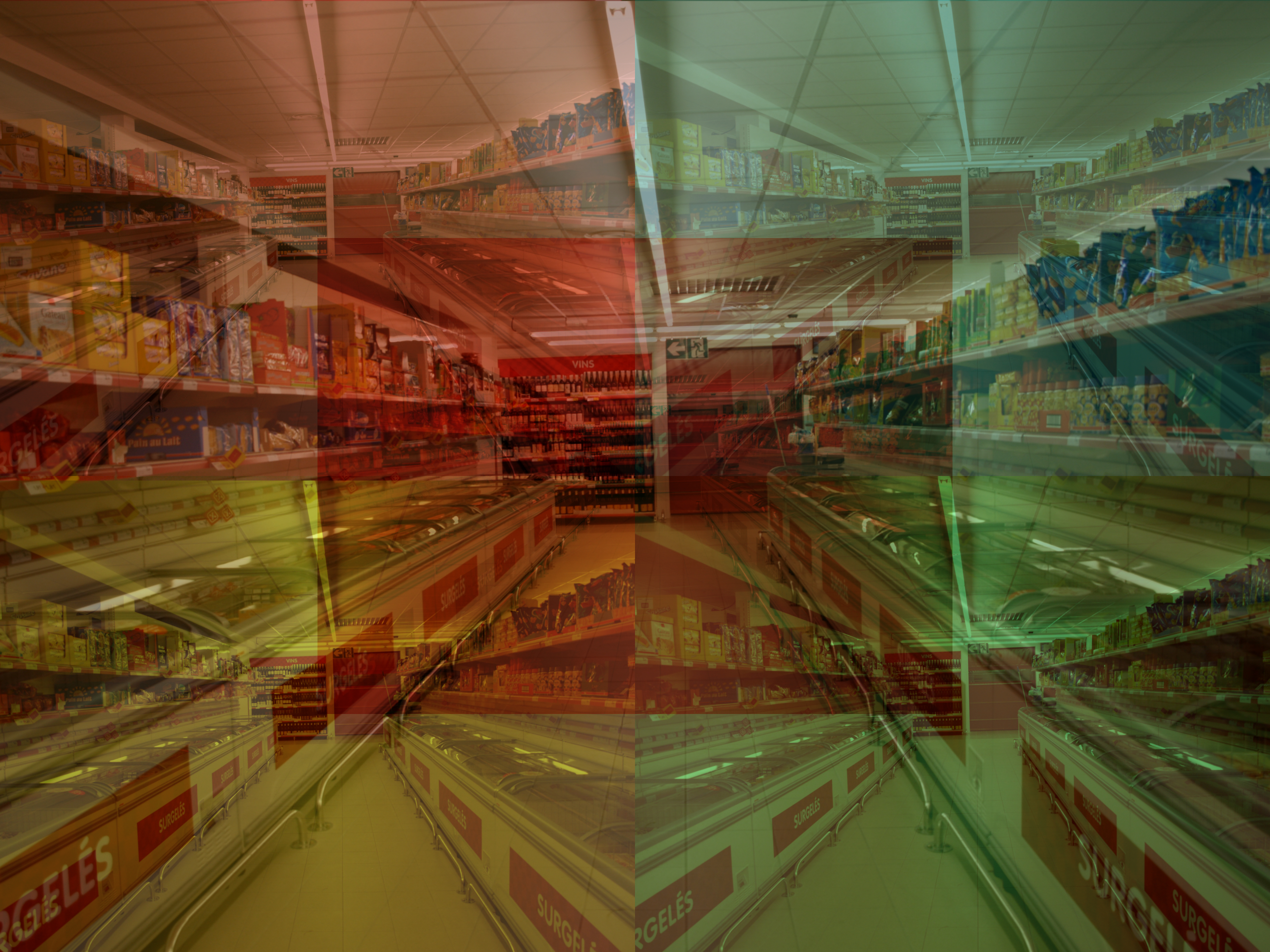
Image Credit: Digital photo collage by Chase Dimock

“Creatures of Our Better Nature” By John Dorsey


Creatures of Our Better Nature

as i stop to watch the gossip of a bluebird
through a dirty glass window
i think it is november
& i’m sipping champagne
on a half built deck
in the woods
that may never get finished

just me & some lonely bluebird
fluttering our wings
like crazed teenagers
mauling each other
in front of some steamy glass sunset
on some makeout mountain
that even time
can’t look away from  

for a few seconds i am that bird
& that bird is me

& we are both beautiful here

when all at once
the sun wraps its fingers
around our throats
& begins to sing.

.

About the Author: John Dorsey lived for several years in Toledo, Ohio. He is the author of several collections of poetry, including Teaching the Dead to Sing: The Outlaw’s Prayer (Rose of Sharon Press, 2006), Sodomy is a City in New Jersey (American Mettle Books, 2010), Tombstone Factory, (Epic Rites Press, 2013), Appalachian Frankenstein (GTK Press, 2015) Being the Fire (Tangerine Press, 2016) and Shoot the Messenger (Red Flag Press, 2017). He is the current Poet Laureate of Belle, MO. His work has been nominated for the Pushcart Prize. He may be reached at archerevans@yahoo.com


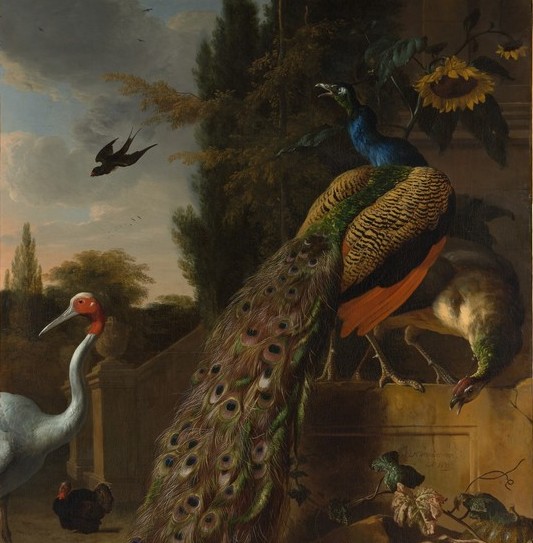
Image Credit: “Peacocks” by Melchior d’ Hondecoeter