“No Walls” By Larry Smith


15584v


No Walls

Where is the wall that can hold us
keep us from each other’s love?
Artifice is nothing before spirit
mind melted by heart.
Dogs bark at its corners
bay at rocks stacked high,
cement poured into would-be tombs.
Birds fly over, creatures dig under,
people reach through and around.
We paint its face, tear it down by night.
Sun, moon, and stars deny it.
O, where is the wall that can hold us,
keep us from each other’s love?


About the Author: Larry Smith is a poet, fiction writer, and editor-publisher of Bottom Dog Press in Ohio where they feature a Working Lives and an Appalachian Writing Series. He is also the biographer of Kenneth Patchen and Lawrence Ferlinghetti. He lives in Huron, Ohio, along the shores of Lake Erie.


More by Larry Smith:

Wages


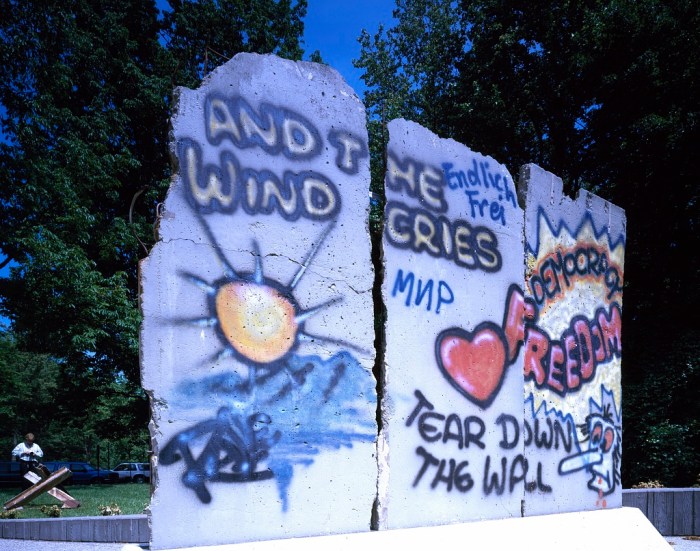
Image Credit: Carol M. Highsmith “Piece of the Berlin Wall displayed at the Newseum museum, Arlington, Virginia” from The Library of Congress

“Down Tobacco Road, Where The Leaves Fell” By Nick Soluri


Down Tobacco Road, Where The Leaves Fell

There were plastic-wrapped blankets and the smell of ammonia,
fans on high all over the front room and scuff marks from the beds wheels,
and theyd brought her home like that, and she began to sleep again.
There was a hat, a thin blue sheet like a doily, (she had those all over
the house, different designs, she took pride in them) and her sunken eyes
were gray and tired, and that was not how she always looked at me.
She didnt talk except for a few words, a few coughs,
a few cries from the chest tube cleanings, I remember that
red liquid coming out of her and into a machine, and how I
saw a bionic thing, hardly a woman, a creature unknown to me.
The sun peaked through the window cautiously, as to not disturb,
beginning with a spot on the floor and creeping to her bed,
up her towel covered legs and onto her thin hands.
Those hands created this home, that one blanket, all the smiles
we gave to her before she got real bad, the way I still remember her.
I was always kept in the dark about things like that, we all were,
us kids werent supposed to know the inner workings of pain,
her kind of pain, a different kind that caused my mother to weep out of fear.
Her mouth was slightly open, a hand on my little shoulder,
the sun outside hit my back felt warm and comforting,
and I wanted her to feel that way too.
So I took the suns warmth from my back and let it flow through my fingers,
like beams out of my hands and onto hers, but hers were cold.

There were rows of tobacco out of the window, we sped down the road,
my mother and father, my sister, we were quiet, just sitting in the
dark listening to the hum of the wheels on the pavement, an innocuous bump or two.
The dark night was clear, clear like eyes glistening in autumnal air,
and the leaves swirled behind us, different shades of reds and yellows,
and I heard my mother begin to cry, and thats when I began too.


About the Author: Nick Soluri is a writer from New York.  His words have appeared in Five:2:One Magazine, Boston Accent, Ghost City Review, Selcouth Station, Occulum, Anti-Heroin Chic Magazine, and others.  He tweets @nerkcelery


More by Nick Soluri:

Mementos


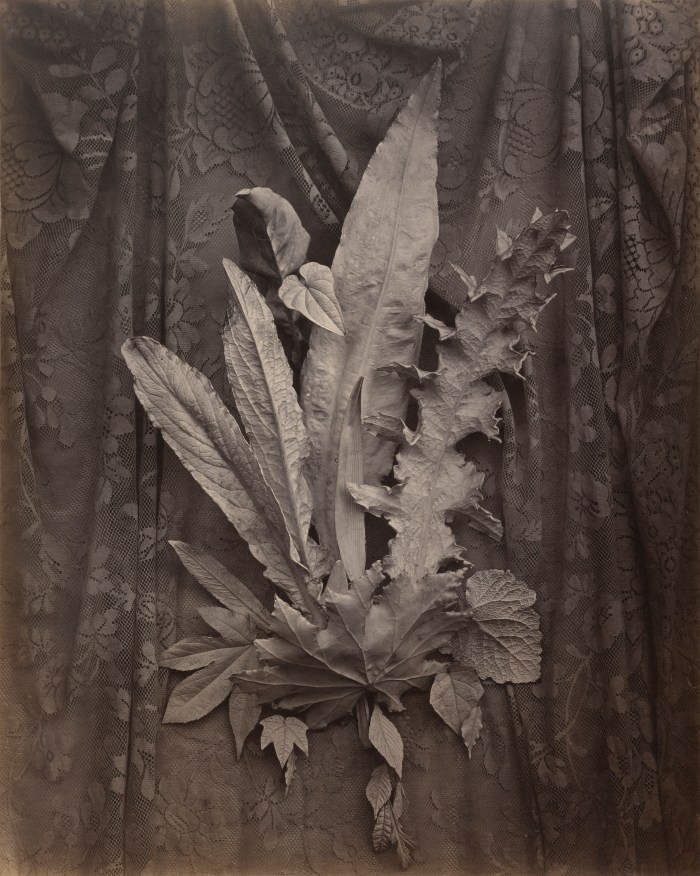
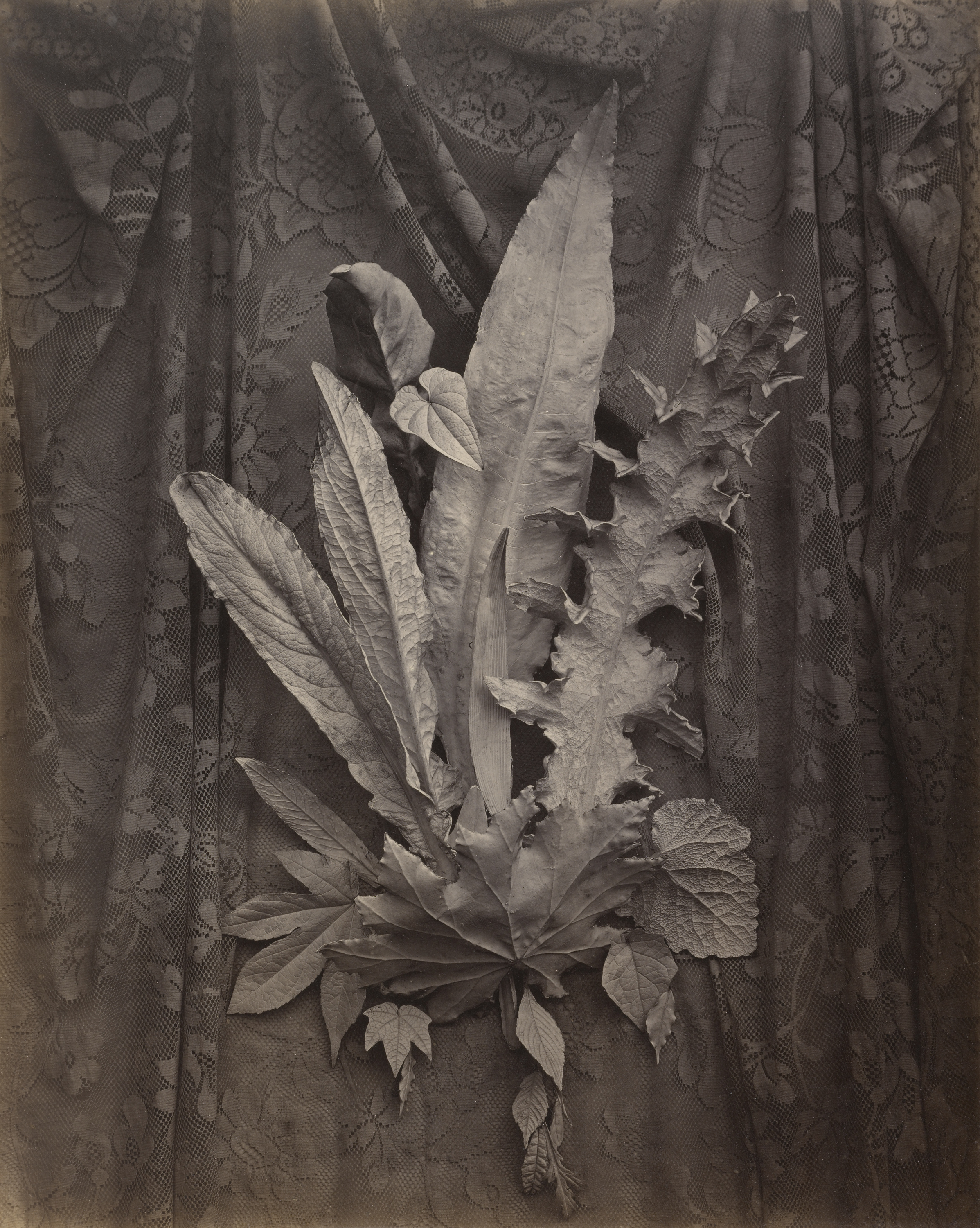
Image Credit: Charles Aubry “An Arrangement of Tobacco Leaves and Grass” (1864) Digital image courtesy of the Getty’s Open Content Program.
“Why Answers Are Never the Answer” By Ryan Quinn Flanagan


Why Answers Are Never the Answer

You could go your whole life in a fog,
kicking up blanks with some of the cobbler’s
best attire, tugboat brinkmanship just out of sight
and still you are pleased, joyous even, sidewalks
leaping up into your arms like a bouquet of flowers,
briefcases rush by with the secret plans, intricate actions
that will never be taken, and the song in your throat
has already found radio, crank calls to the pharmacist’s wife
because she always picks up the phone, just as indignant as
the last time, never letting you down; why answers are never
the answer, and later outside the arcade you finger around
your pockets for coins, stuff a handful into the machine
and try for the high score.


About the Author: Ryan Quinn Flanagan is a Canadian-born author residing in Elliot Lake, Ontario, Canada with his wife and many mounds of snow.  His work can be found both in print and online in such places as: Evergreen Review, The New York Quarterly, Cultural Weekly, In Between Hangovers, Red Fez, and The Oklahoma Review.


More By Ryan Quinn Flanagan:

“Robbie the Owl”

“He Brought His Canvases Over”

“Before Evening Med Pass”

“It’s a girl I can tell, we’ve had nothing but trouble”


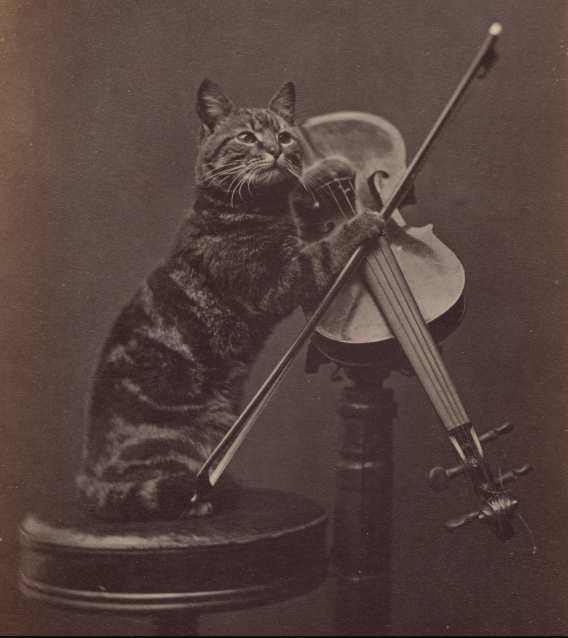
Image Credit: Henry Pointer “Cat on a stool “playing” a violin” (1872) Digital image courtesy of the Getty’s Open Content Program.
“Tightrope Dancer” By Bunkong Tuon


This is the fourth in a series of poems from a forthcoming poetry collection about raising a biracial daughter in Contemporary America, during this polarizing time of political and cultural upheavals where sexual harassment allegations abound, where a wall, literal and figurative, threatens to keep out immigrants like the narrator, a former refugee and child survivor of the Cambodian Genocide. You can find the complete series of poems below.


Tightrope Dancer

You climb the five-rung ladder
at the children’s playground.

Your mother crouches
below, holding breath.

I stand behind
counting the plastic rungs.

You kick us away,
“I’m a big girl.”

Your mother prepares
to catch your fall.

Each day we hold our breath,
cover our mouths with our hands,

close our eyes, and pray.
Of course, we want you to reach

The top, but not too fast.
And not too far from us.


About the Author: Bunkong Tuon is the author of Gruel (2015) and And So I Was Blessed (2017), both poetry collections published by NYQ Books, and a regular contributor to Cultural Weekly  He is also an associate professor of English and Asian Studies at Union College, in Schenectady, NY.


Bunkong Tuon’s series of poems on raising a biracial daughter in contemporary America:

Ice Cream

Gender Danger

The Bite

Tightrope Dancer

Women’s March in Albany

My Mother on Her Deathbed


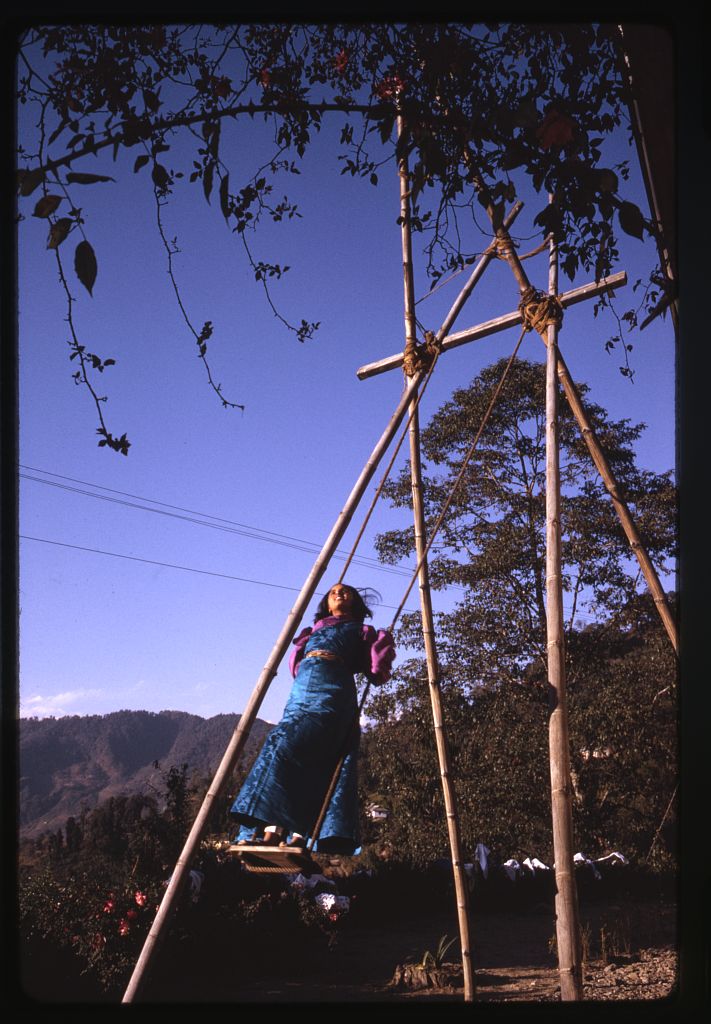
Image Credit: Alice S. Kandell “A young girl swinging on a handcrafted swing, Sikkim” (1969) The Library of Congress

“The Fire of Now” By William Taylor Jr.


The Fire of Now
for Ursula Nichowski

Sometimes it feels like there’s not much
other than the fact of death
waiting just beneath the flimsy
surface of it all,
and the crass dullness of our hours
wearing us down like the ocean.
The poets are useless, having
broken with the music of things,
the day an unfortunate
accident no one will cop to.
You find no solace
in the misty gray sky
or the sad old buildings
propped against it,
still haunted by ghosts
of decent things long gone.
You wander the streets
in the soft rain
looking for that old place
with the perfect juke,
but they tore it down
and replaced it
with a world of safe spaces
when all you wanted
was a bit of pretty danger.
And then suddenly her face
like a prison break,
her lips like a pardon
from this world and the next,
reminding you that the fire of now
is forever equal
to the smugness of the void.
You are struck by the bravery
of her beauty in the face
of whatever remains of things.
You tell her as much
and she laughs and says,
why don’t you write
a poem about it,
and you do.


About the Author: William Taylor Jr. lives and writes in the Tenderloin neighborhood of San Francisco.  He is the author of numerous books of poetry, and a volume of fiction. He is a five time Pushcart Prize nominee and was a recipient of the 2013 Kathy Acker Award. He edited Cockymoon: Selected Poems of Jack Micheline, published by Zeitgeist Press in 2017. From the Essential Handbook on Making it to the Next Whatever is his latest collection of poetry. 


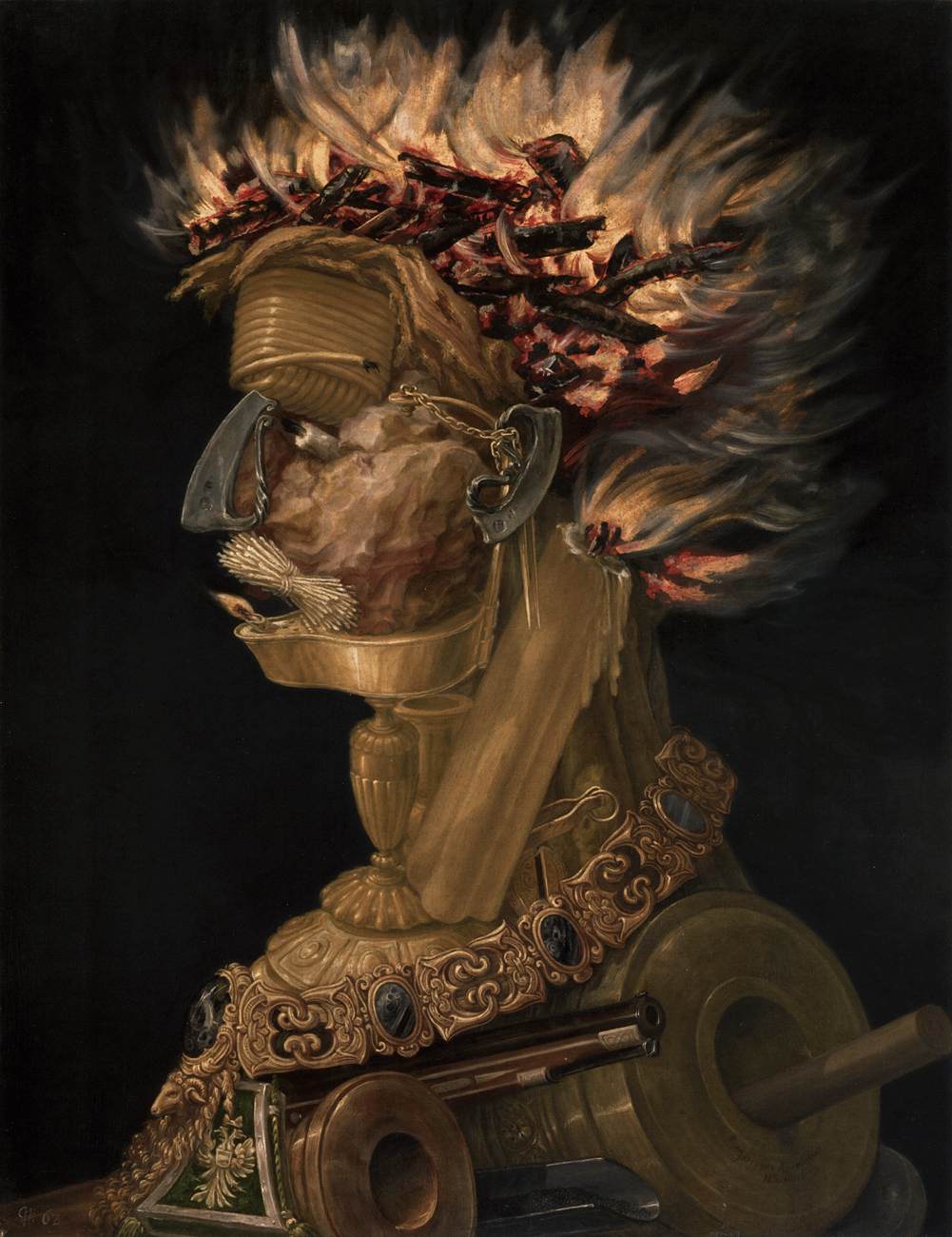
Image Credit: Giuseppe Arcimboldo “Fire” (1566)

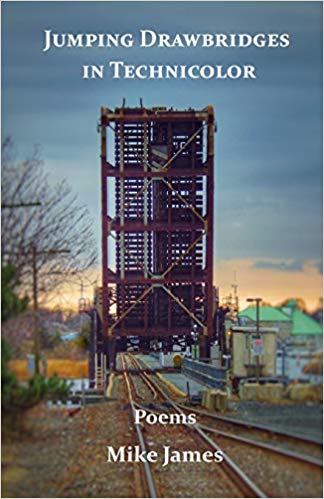
“A Review of Mike James’ Jumping Drawbridges in Technicolor” By Chase Dimock


In “My Wife’s Shoes,” the first poem of Jumping Drawbridges in Technicolor (Blue Horse Press), Mike James writes “some nights we turn the radio to ballroom music and I pretend to be Fred Astaire, led by Ginger Rogers for a change, and dance in high heels in reverse.” “High heels in reverse” is the essence of his book. Astaire and Rogers had to know the geometry of each other’s bodies and steps inside and out to perform their moves. A careful eye can spot the scenes where Rogers is actually leading. This is exactly what Jumping Drawbridges in Technicolor achieves.

We’ve all heard the old adage about reserving judgement until we’ve walked a mile in a man’s shoes, but that always assumes a lack of empathy and the need for a radical thought experiment just to imagine outside the self. In reality, as Mike James reminds us, we are always wearing each others shoes, although sometimes we lack the insight to see them, or we keep our steps hidden. Just as the surrealists were not about random weird imagery, but about making the real experience of our psyches visible, so too does Mike James make the multiplicity of self and the malleability of the body legible in his prose poems.

Like in his previous collections, My Favorite Houseguest and First-Hand Accounts from Made Up Places, James populates some of his book with portraits of celebrities. Yet, these portraits are never about the celebrity him or herself so much as they are about the process of painting them and seeing the pigment of self in each brushstroke. In “The Films of Burt Reynolds” he begins with “not the films, but the books about the films…Someone loved Burt enough to watch each, then write descriptively.” While James writes about someone writing about Burt, he’s also writing about himself, and how his “mother said she’d marry him if he’d just stop by.” For men, Burt’s mustachioed masculinity is something we’re supposed to identify through as he “walked down the carpet with Dinah, Lauren, Sally and Loni.” Yet, when he is written about, he becomes an object of grammar. Straight, gay, or in between, all men must ask, do we want to be Burt, do we want Burt, do we want to be wanted by Burt, or is it all of the above? Continue reading ““A Review of Mike James’ Jumping Drawbridges in Technicolor” By Chase Dimock”

“Flotsam” By Agnes Vojta


Flotsam

I shipped my past to this continent
in a box I open rarely. In it,

my mother’s amber necklace
and my grandmother’s silver cross,

a dried flower from my prom bouquet,
ribboned letters from old lovers,

notebooks with poems written
thirty years ago in another tongue,

a brass key that opens no lock I know,
a photograph of the house on the hill

that stands now empty, where my voice
still echoes, unheard,
five thousand miles away.


About the Author: Agnes Vojta grew up in Germany and now lives in Rolla, Missouri where she teaches physics at Missouri S&T. She is the author of Porous Land (Spartan Press, 2019). Her poems recently appeared in Gasconade Review, Thimble Literary Magazine, Trailer Park Quarterly, Poetry Quarterly, and elsewhere.


Image Credit: Marion Post Wolcott “Child bringing home suitcase on sled, Franconia, New Hampshire” (1939) The Library of Congress

“Frontiers are frontiers but once” By Jeremy Nathan Marks


Frontiers are frontiers but once  

The only thing I recall seeing clearly in the night sky
were all those stars I couldn’t identify.

I never spied Jupiter, Saturn or Uranus up close. I didn’t have
the right glass. Venus and the moon were obvious.

My father remembers Sputnik’s streaking light. Armstrong’s steps,
Cronkite’s glasses, Schirra’s speechless tears on CBS.
Gagarin,
Glenn,
and Shepard.

I witnessed the Challenger.

Frontiers are frontiers but once.
Just ask Alaskans as they collect their cheques.
Or Magellan’s children. Not to mention the People
of the Sun.
.

.

About the Author: Jeremy Nathan Marks is a London, Ontario-based writer. Recent poetry appears/is appearing in Unlikely Stories, Writers Resist, Poets Reading The News, KYSO Flash, Poetry Pacific, Rat’s As Review, The Wire’s Dream, NRM Magazine, Cajun Mutt Press, Eunoia Review, The Conclusion Magazine, Bravearts, and Runcible Spoon. His short story, “Detroit 2099,” will appear in The Nature of Cities Anthology later this year.
.

.
More By Jeremy Nathan Marks:

“Plus Ten”
.

.
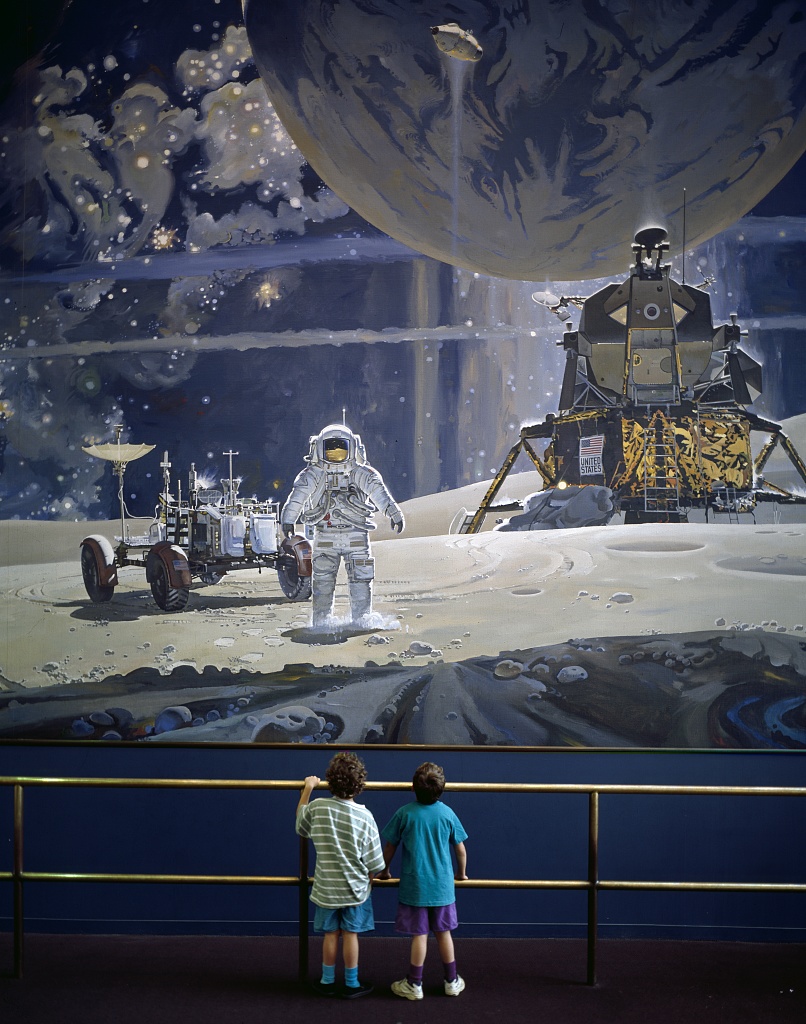
Image Credit: Carol M. Highsmith “Children stand in wonder at a mural of astronauts at the Smithsonian Institution’s Air and Space Museum in Washington, D.C.” Library of Congress

“Visitor’s Day at the Group Home” By Tony Gloeggler


VISITOR’S DAY AT THE GROUP HOME

Robert, twenty-one yesterday,
walks down stairs carefully.
Both hands clench rails. Head
down, he watches each foot land.
Reaching bottom, he claps twice,
sees her and smiles. He mumbles
and she knows he’s saying mommy.
She hugs him close. Drool slides
down the back of her neck. “Mommy
missed Robert so much.” He digs
into the shopping bag of gifts,
finds a Walkman. She clamps
the headphones on him. He bobs
like a spastic puppet to the Supremes
Greatest Hits. She opens a pint
of rice pudding, starts to spoon it
into his mouth. I pass her a handful
of napkins. Later, she lays his head
in her lap, sings Happy Birthday
and lights matchsticks to wish on.
I place a coloring book, his special
extra thick crayons on the table.
He scribbles interlocking spirals
while his eyes track her movements.
A car horn sounds and she steps
to the window, motions ‘just
a moment’ with her hand.
She bends, kisses Robert’s
forehead.  “See you next week
sweetheart.” We nod goodbye
as she pushes open the door.
Robert throws a blue crayon
across the room, crumples
the scribbled page. He stands,
climbs up the stairs and fits
into his bed, his clothes still on.


This poem first appeared in Wordgathering


About Tony Gloeggler: I am a life-long resident of New York City and have managed group homes for the mentally challenged for over 35 years. My work has appeared in Columbia Poetry Review, Rattle, The Examined Life Journal, Raleigh Review, New Ohio Review, Stirring and The NY Times. My full length books include One Wish Left(Pavement Saw Press 2002) and Until The Last Light Leaves (NYQ Books 2015) which focused on my job and the autistic son of a former girlfriend. My next book, What Kind Of Man, will be published by NYQ Books in 2019.


More By Tony Gloeggler

“Crossing”


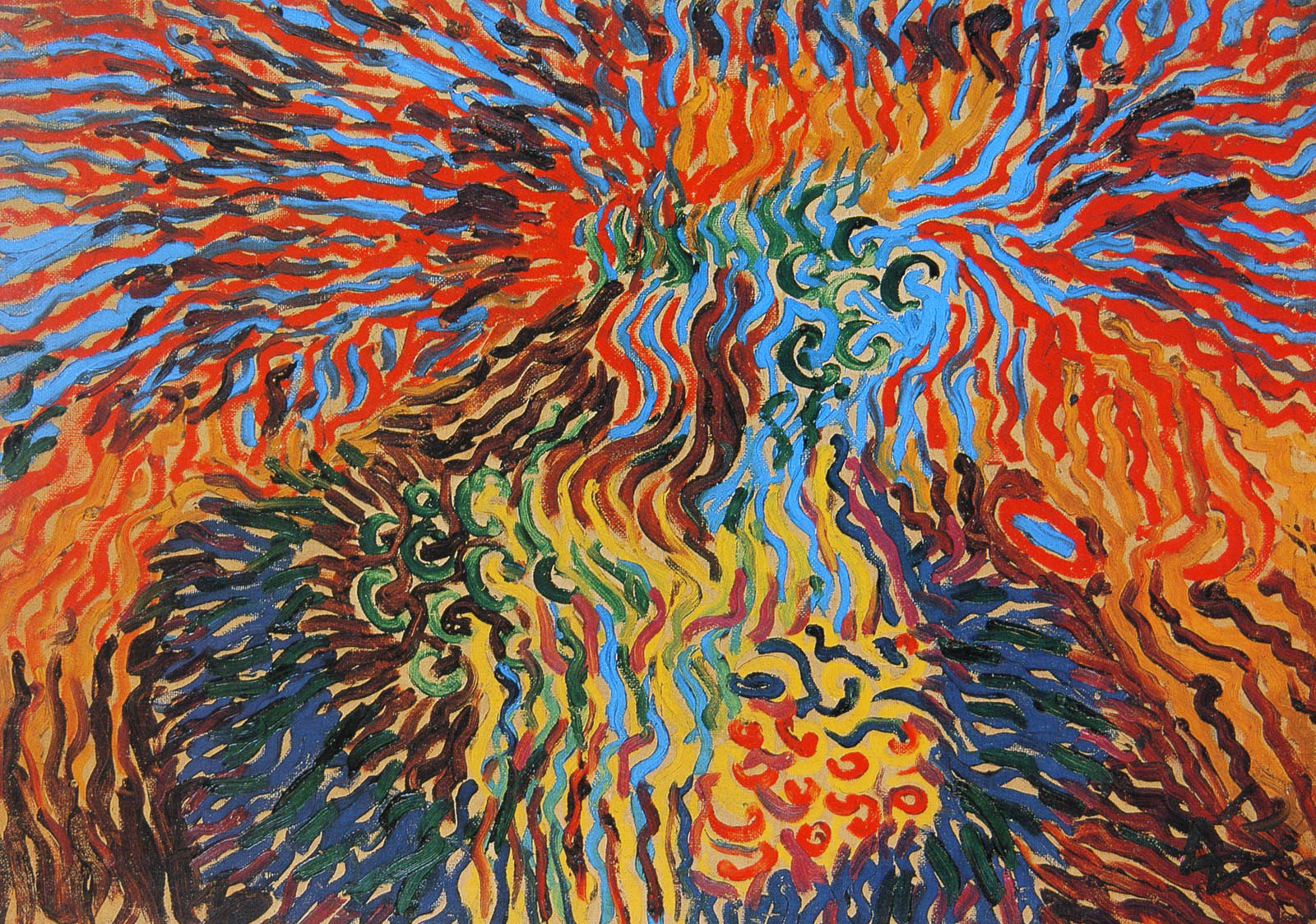
Image Credit: “Astrale Komposition XI” by Wilhelm Morgner (1911) Public Domain

“Out of the Blue” By Mike Acker


Out of the Blue

Out of the blue, I hear your rustling in the back
of my frontal lobe among the cellular boxes,
caved-in and heavy with sediment.

When I pull the yellowed, frail strings
leading to you, covers are nudged open
and you appear.

Forty years have worn down your features like
pebbles in a stream; past passions are now
but faint, electrical pulses, barely registering.

But, in this commotion, a crumpled neuron nearby
opens releasing apparitions of you and me standing
over a spot in our favorite park,

searching for the golden snake ring I had thrown
into some bushes after a jealous fit over a once-
sharp reason, now too pointless to recall.

But it is not really you and me; it is aged molecules
that oscillate into a semblance of our shapes
and then shift back to forgetfulness.

As quickly as these stirrings of recollection had come
to life, they fade; the dust of the past settles
back down, like lazy snow.

I will hold on to your shadow
but you, you are now forty
light-years away.

.

About the Author: Mike Acker lives in Vancouver, British Columbia. He has lived in various parts of the world; his early education was in German and French. While living in California, he worked as a professional translator. Mike enjoys writing short poetry, especially with the intent of exploring the possibilities latent in a single image.

.

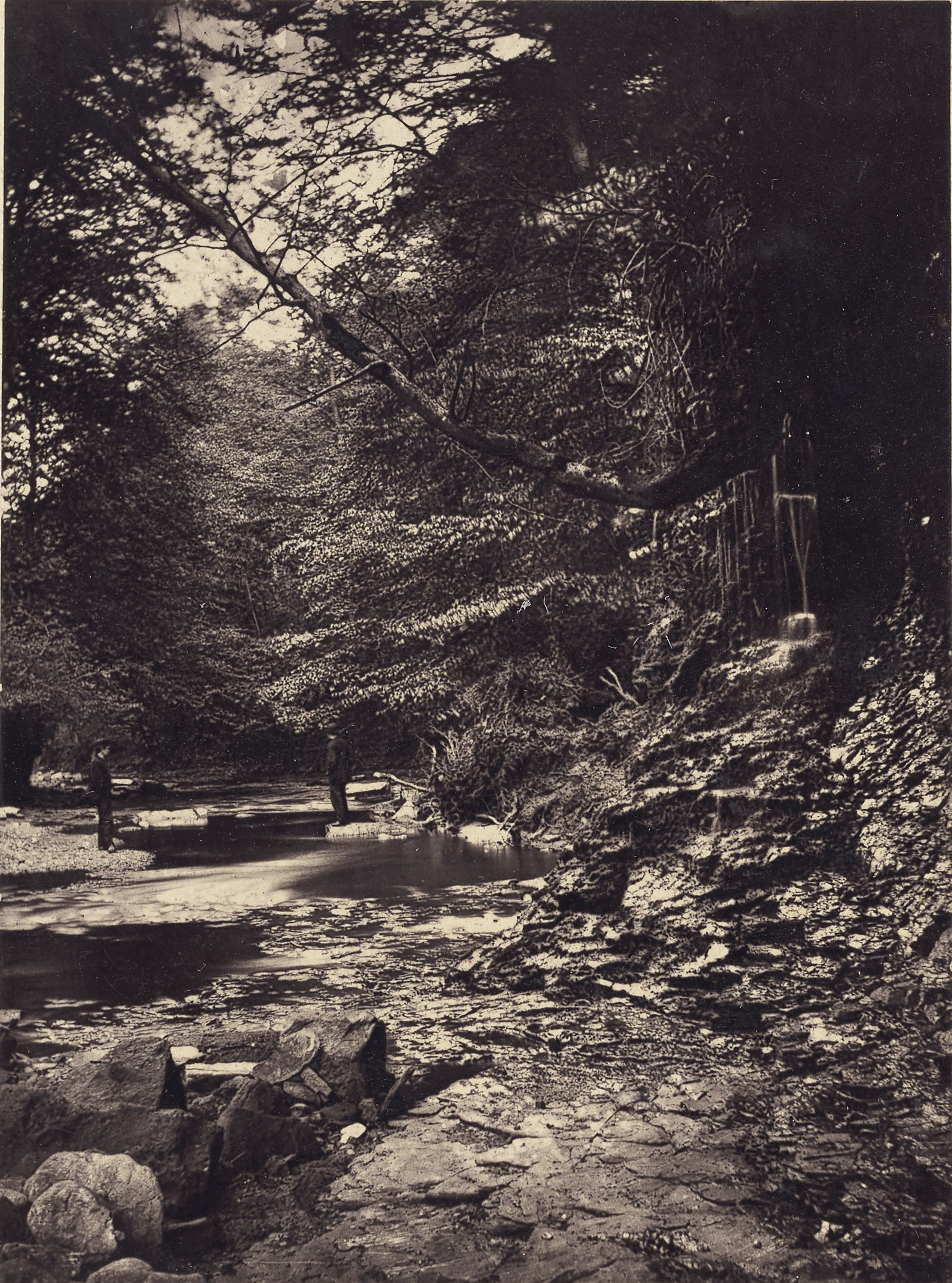
Image Credit: “Two Men on Banks of Stream” By Arthur Brown (1878) Digital image courtesy of the Getty’s Open Content Program

.

More By Mike Acker:

The Selfie

What Do You Call This? Bubba Ganush?