Paul Ilechko: “Lemonade”


Lemonade 

A summer day     hot as lemonade stand
and there she was    a mere child     learning

capitalism from first principles     a folding chair
and a rickety desk     a stack of paper cups

or possibly plastic     who remembers such
details at this distance     and the honeyed jug 

ice cold in the quivering breath of heatwave 
continual now for days without respite

and there we appeared     to spend our quarters 
assisting in the catechism of commerce 

of location  location  location     as she pounced
on the closure of the general store

on this holiday     that suffered through 
the dazzling whiteness     we also suffered 

sweaty and parched   we dismounted from
our bicycles     first in dismay     and then relief

now     some years later   we observe 
                                                 in our rear mirrors

not weather    but a prophecy     
                                          speeding to fulfillment.


About the Author: Paul Ilechko is the author of the chapbooks “Bartok in Winter” (Flutter Press, 2018) and “Graph of Life” (Finishing Line Press, 2018). His work has appeared in a variety of journals, including Manhattanville Review, West Trade Review, Cathexis Northwest Press, Otoliths and Pithead Chapel. He lives with his partner in Lambertville, NJ.


Image Credit: Digital Art made from “Iced lemonade: cool & refreshing” by Currier & Ives (1879) The Library of Congress

Ace Boggess “Rock Garden”


Rock Garden

Stacked in awkward symmetry, 
fenced to keep the lot in place
like cattle. Grays, browns, 
opalescent pearls—monolith to pebble, 
they ride backs of one another
like children at play in the schoolyard mud.
Not even faded orange of a cigarette butt
has landed on this isle to blight it.
Old earth reclaimed by eminent domain:
what the city loses, we regain.


About the Author: Ace Boggess is author of five books of poetry—MisadventureI Have Lost the Art of Dreaming It SoUltra Deep Field, The Prisoners, and The Beautiful Girl Whose Wish Was Not Fulfilled—and the novels States of Mercy and A Song Without a Melody. His writing has appeared in Harvard Review, Notre Dame Review, Mid-American Review, Rattle, River Styx, and many other journals. He received a fellowship from the West Virginia Commission on the Arts and spent five years in a West Virginia prison. He lives in Charleston, West Virginia. His sixth collection, Escape Envy, is forthcoming from Brick Road Poetry Press in 2021.


More By Ace Boggess:

“And Why Am I a Free Man?”

“Why Did You Try to Sober Up?”

“Are Your Emotions More Or Less Intense?”


Image Credit: William Henry Jackson “Balanced Rock, Garden of the Gods” (1880) Digital image courtesy of the Getty’s Open Content Program.

Jenny Bates: “Patience not Panic”


Patience not Panic

Grandfather on the farm in Michigan
was a dowser, he’d raise his willow rods
their pendulum swing and shudder
always found water.
Back and forth, twisting down toward
underground flow.
Patience not panic, he’d say as his
body shivered with water witching.

I’d watch him suspend power 
in quivering air like the

           soothing trill of grey tree frogs
           at morning pond
           the rustle of wild turkey
           leaves a call to prayer

I’d watch the rods bend with grace like the

          prowl of feline
          shares a ritual hour
          vibrates stones and sometimes,
          the moon
          vain and vacillating as opal or rose
          a reservoir of temples and ditches
          lit by tapers,
          extinguished altar candles

I’d drink the cold stream cupped in hands like
they were a chalice of divination.


About the Author: Jenny Bates is a poet from the foothills of North Carolina. A member of Winston-Salem Writers, NC Poetry Society, NC Writers Network. She has two published books, Opening Doors: an equilog of poetry about Donkeys (Lulu Publishing, Raleigh, NC); and Coyote with Coffee, a single poem fine craft volume (Catbird on the Yadkin Press, Tobaccoville, NC). Her work has been published in Flying South, Wild Goose Poetry Review, and Old Mountain Press, and Hermit Feathers Review. She is a consecutive contributing poet in Poetry in Plain Sight and in 2017 she was a top 10 Finalist in the Press 53 Single Poem Contest. Jenny’s poetry has appeared in laJoie 2017- 2019a quarterly publication of Animals’ Peace Garden, dedicated to promoting appreciation for all beings. In 2019 her poem “Fame Looks Both Ways” was included in the Walt Whitman Bicentennial Celebration for publication in Poets to Come.  Her new book, Visitations has been published 2019 by (Hermit Feathers Press). Jenny currently volunteers as animal whisperer and helping hand at Plum Granny Farm. An organic local farm in Stokes County, North Carolina.


Image Credit:  Historic American Buildings Survey, Stanley P. Mixon, Photographer September 11, 1940 EXTERIOR VIEW OF FARMHOUSE & BARN STONE GROUP, SEEN ACROSS MILL POND. – Farm Group & Mill Pond, Cocalico, Lancaster County, PA. The Library of Congress

R.T. Castleberry: “July, Roadhouse Dinner”


JULY, ROADHOUSE DINNER

No leg level, no 2 chairs bent alike,
café tables bear an Aztec mosaic top.
Blue neon of a “Family Service” sign 
blocks the windows view.
After early over-service,
office clerks stumble to SUV and sedan.
High chatter of children at their coloring
clip a drinking mother’s flirtation.
Plastic menu pages flap to flutter open.
Date night dinner decisions split
between barbecue and buffalo wings,
Jamaican beer, California merlot.
I top Bacardi dark with Mexican soda,
offer an excuse no one wants,
no one expects to hear.
A rockabilly band rumbles
at a Junior Parker melody,
chords fat as a freight train.
Phone cameras flash, texting screens 
vivid as a predator’s smile.
A table of wits withers the air.

The band breaks.
I take a bottle from the car,
leave my watch in its bag,
find a bench on the smoker’s patio. 
The skin of the sky is a wind of ocher sand,
the fracture of stars beyond, behind
the desert’s slivered moon.
There are county-wide flames to the west.
With a shift in direction,
fire breaks at the highway line won’t hold.
Ocatillo rattle against wrought iron posts.
Through the talk, no one is listening.


About the Author: R.T. Castleberry is a widely published poet and critic. His work has appeared in Roanoke Review, Trajectory, Blue Collar Review, White Wall Review, The Alembic and Visitant. Internationally, Castleberry’s work has been published in Canada, Wales, Ireland, Scotland, New Zealand and Antarctica. Mr. Castleberry’s work has been featured in the anthologies, Travois-An Anthology of Texas Poetry, The Weight of Addition, Anthem: A Tribute to Leonard Cohen and You Can Hear the Ocean: An Anthology of Classic and Current Poetry.


More By R.T. Castleberry:

Down Cold Lanes


Image Credit: John Margolies “Mr. Peanut sign, (Half Dollar Bar sign), Route 1, Peabody, Massachusetts” Courtesy of the John Margolies Roadside America photograph archive (1972-2008), Library of Congress, Prints and Photographs Division.


M.J. Arcangelini: “Ten Movies”


TEN MOVIES
   (after Tim Dlugos)


Niagara (1953)

Marilyn sings along, breathlessly, with a record.
Can’t remember why she married Joseph Cotton.
Jean Peters studies the way she moves.


The Ten Commandments (1956)

Everything pales before the parting of the Red Sea,
its walls collapsing onto Pharaoh’s charioteers.
Piety and the wisdom of masculine flesh.


Cries and Whispers (1972)

Sisters gather for the death of the spinster.
The nursemaid gives the dying woman her breast.
The husbands are oblivious.


Barb Wire (1996)

Pamela playing Bogie playing Rick
in a gender role bending dystopia.
“Don’t call me babe.”


Island of Lost Souls (1932)

Family values moralist encounters mad
scientist who only wants to be left alone.
We may not all be men after all.


The Cooler (2003)

Limping schlub falls in love with waitress
in the casino where they both work.
Everyone gets just what they deserve.


The Monolith Monsters (1957)

Space crystals multiply, grow gigantic,
collapse onto buildings, turn people to stone.
Just add water.


The Conversation (1974)

Somebody is listening to everything.
Gene Hackman playing saxophone in
the twilit apartment he’s just torn apart.


Quintet (1979)

Everybody’s breath is visible.
Dogs eat corpses in a frozen city.
Paul Newman’s ice blue eyes.


The Letter (1940)

Bette being a bad girl on a rubber plantation
while subjugated natives huddle in huts
waiting for the white men to kill each other.


About the Author: M.J. (Michael Joseph) Arcangelini was born 1952 in western Pennsylvania, grew up there & in Cleveland, Ohio.  He’s resided in northern California since 1979. He began writing poetry at age 11. His work has been published in magazines, online journals, over a dozen anthologies, & four books: “With Fingers at the Tips of My Words” 2002, Beautiful Dreamer Press; the chapbooks “Room Enough” 2016, and “Waiting for the Wind to Rise” 2018, both from NightBallet Press; & “What the Night Keeps” 2019, Stubborn Mule Press. In 2018 he was nominated for a Pushcart Prize.


More by M.J. Arcangelini:

A Few Random Thoughts


Image Credit: Public Domain still from “The Letter” turned into digital art.

Thomas M. McDade: “Christo’s Bridge”


Christo’s Bridge

The bookstalls have opened
A woman, a copy of Catherine Deneuve
Holds a paper that will find an apartment
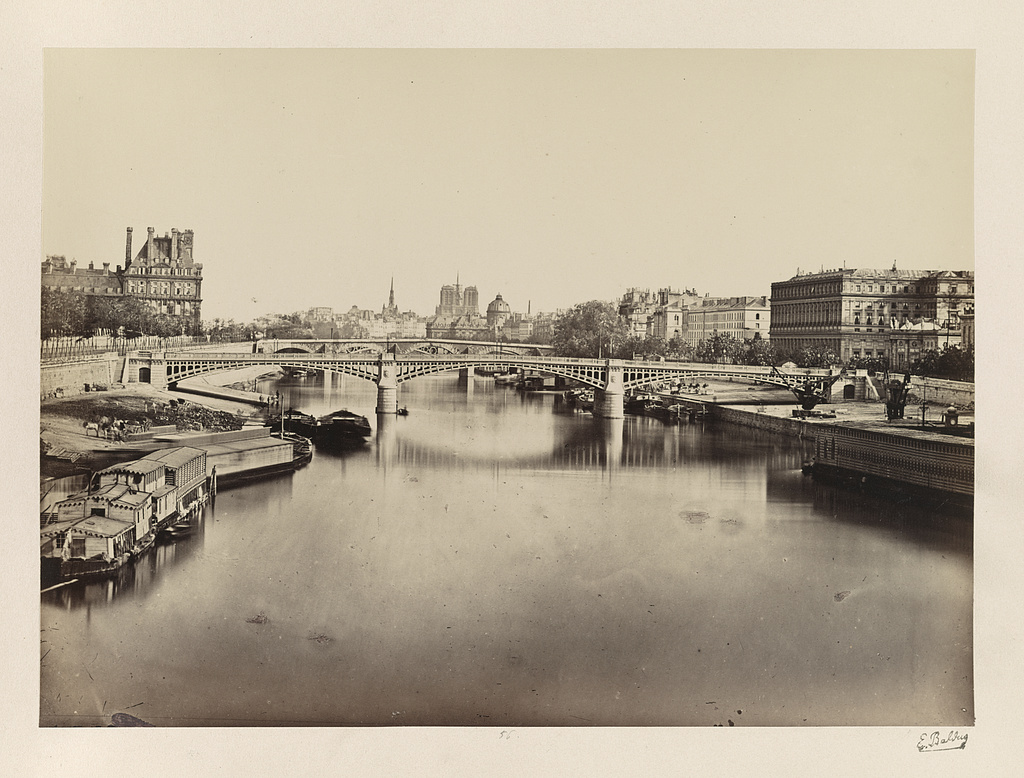
Christo’s work on the Pont Neuf is progressing
Imagine a bridge wearing a jacket
He wants to strip away detail 
With his fabric, reveal basic form
The guide on the boat tour
Describes sites in French
A young American translates
A worker sandblasts graffiti on a quoi
A group of children, observe Christo’s art
People waiting at a bus stop gaze 
At us perhaps with envy or disdain
The Concorde Bridge built
Of stones from the Bastille
Is where the boat turns
No mention of the strike
By the bargemen 
Their crafts decorated with mums
And geraniums who are blocking
The Seine over
Christo’s shenanigans
Homeless beneath the Louis Philippe
Sit on sleeping bags and smoke
A couple of them fish with long pipes
One is reading a book
Others wave weakly
Some passengers might wish
The artist would bag them too
I can’t see Catherine Deneuve
Or her lookalike concurring
I hope the latter has found an address
We pass a film barge
The marquee is blank
So much for coincidence


About the Author: Thomas M. McDade is a 74-year-old resident of Fredericksburg, VA, previously CT & RI. He is a graduate of Fairfield University, Fairfield, CT. McDade is twice a U.S. Navy Veteran serving ashore at the Fleet Anti-Air Warfare Training Center, Virginia Beach, VA and at sea aboard the USS Mullinnix (DD-944) and USS Miller (DE / FF 1091).


More By Thomas M. McDade:

Puff of Eternal Hot Air


Image Credit: Edouard Baldus “View of Seine River, looking toward Notre-Dame” [between 1851 and 1870] The Library of Congress

Sue Blaustein: “A Song for Noise”


A Song for Noise

Time has been called God’s way of making sure everything doesn’t happen at once. In the same spirit, noise is Nature’s way of making sure we don’t find out everything that happens.

– Hans Christian Von Baeyer (in Information, The New Language of Science)


I was there – passing by –
             on an April day
when industrial gases arrived.
A long truck parked on Holton Street –
Advance Diecasting – their new home.

I saw tanks secured on the flatbed.
Primary colors on Hazmat signs.
Warnings in triangles – yellows
and reds. The delivery was almost over.  

It was something that happened –
an event – so I marked it. Goodbye
welding gases I said. Cordial, to cylinders
in my rear-view mirror. Visit again sometime soon! 

I could’ve said goodbye
            to the driver too. 
Said goodbye, unloaders and signs.
Goodbye tires, goodbye pebbles
caught in the tread, rolling 

            away to where? 
When to leave off? To wrap it up –
when nothing’s really “over”?
It’s a never-ending, all-at-once
            overlapping onrush –

Something happened…What 
             happened?
            What’s next?


About the Author: Sue Blaustein is the author of “In the Field, Autobiography of an Inspector”. Her publication credits and bio can be found at www.sueblaustein.com. Sue retired from the Milwaukee Health Department in 2016, and is an active volunteer. She blogs for ExFabula (“Connecting Milwaukee Through Real Stories”), serves as an interviewer/writer for the “My Life My Story” program at the Zablocki VA Medical Center, and chases insects at the Milwaukee Urban Ecology Center.


More by Sue Blaustein:

A Song for Harvest Spiders


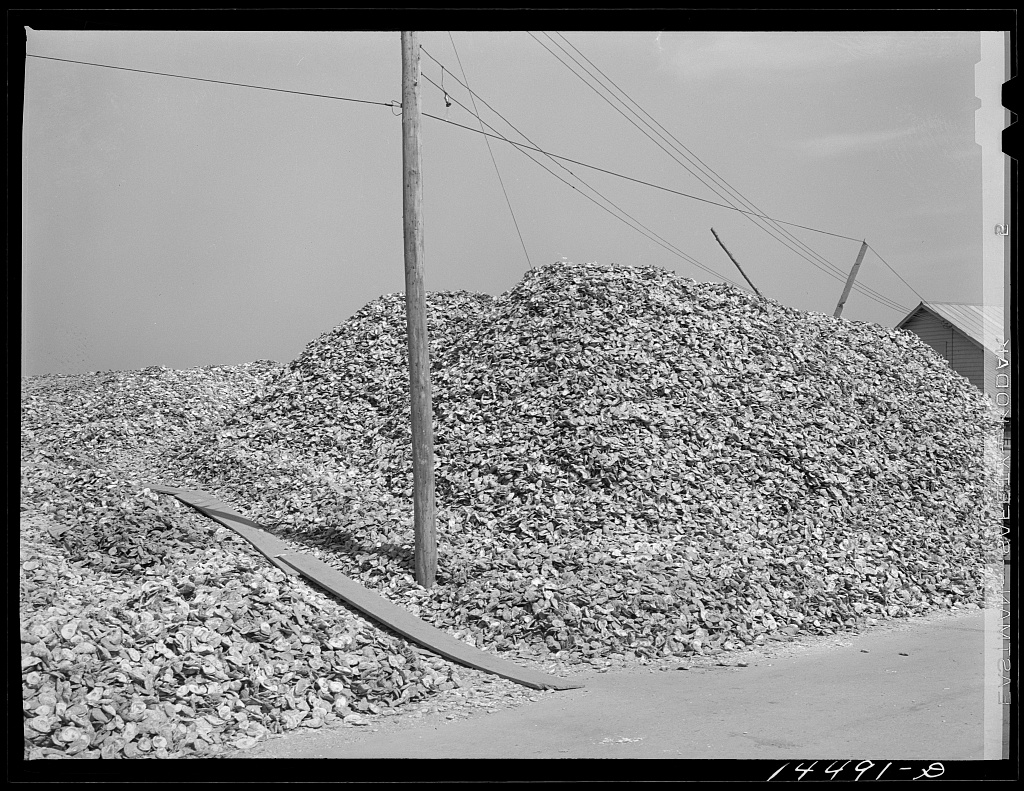
Image Credit: Reginald Hotchkiss “Shuck pile. Rock Point, Maryland. These shells are returned to river to start new beds” (1941) The Library of Congress

Ryan Quinn Flanagan: “You’d Think the Mafia Would Take the Year of the Rat More Seriously”


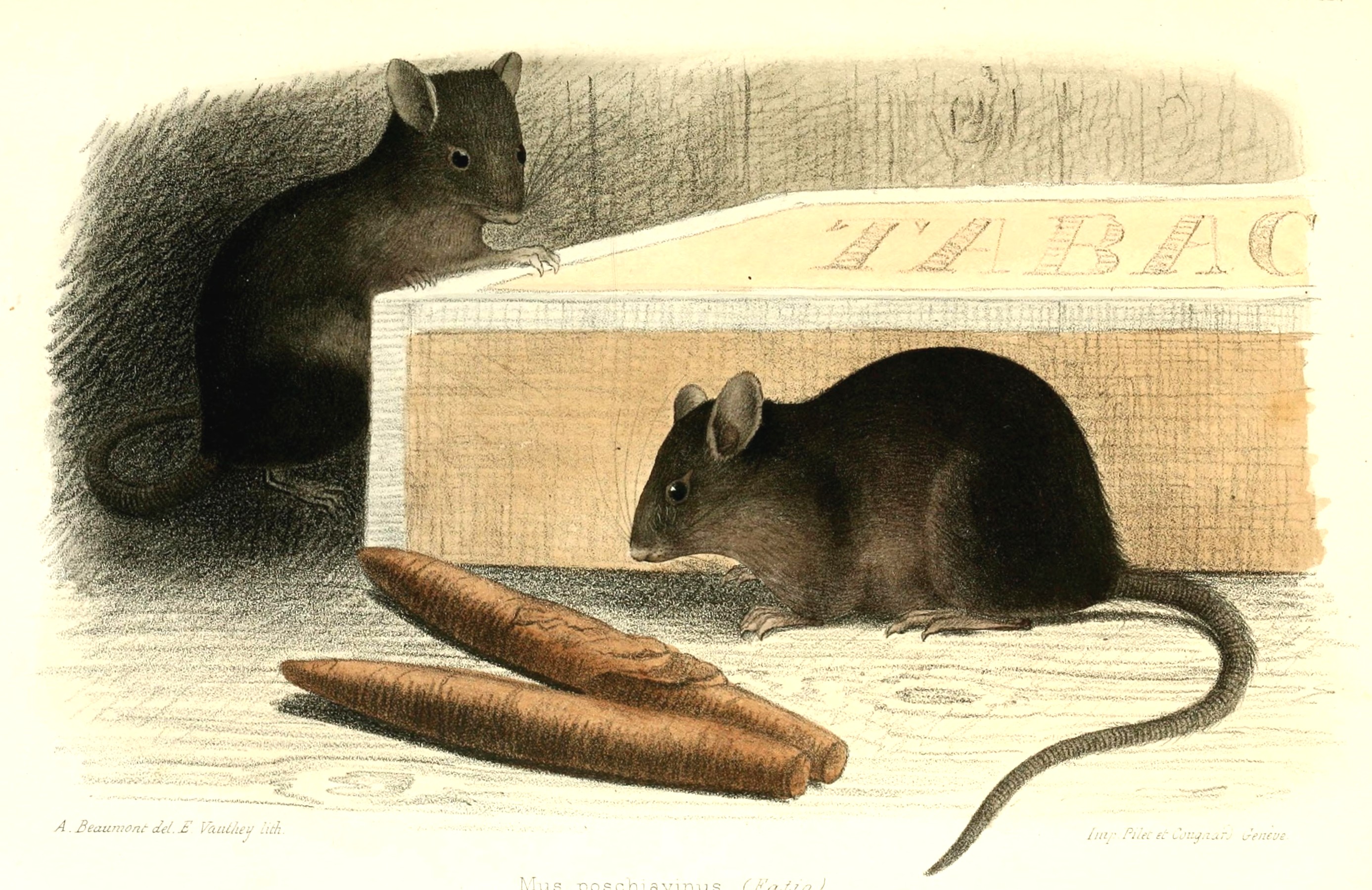
You’d Think the Mafia Would Take the Year of the Rat More Seriously

Close ranks, clean house.
Vacation for most of the year.
One behind the ear for good luck.

But it’s business as usual.
These wise guys don’t seem so wise to me.
You’d think the Mafia would take the year of the rat more seriously.
Look for wires in more than the backs of their televisions.

Old friends you haven’t seen in a while suddenly show up
wanting to get chatty.

To reminisce about old times
that are still open cases.

Leaning in close, so attentive.
But what do I know?

Some solitary Mick.
With no paid informants
of my own.

I’m sure the made men think they
got it made.

Down at the Mediterranean social club
where the old timers play dominoes.
Behind dark roaming sunglasses so thick
they could be a pound of butter.


About the Author: Ryan Quinn Flanagan is a Canadian-born author residing in Elliot Lake, Ontario, Canada with his wife and many mounds of snow.  His work can be found both in print and online in such places as: Evergreen Review, As It Ought To Be Magazine The New York Quarterly, Cultural Weekly, In Between Hangovers, Red Fez, and The Oklahoma Review.


More By Ryan Quinn Flanagan:

“Robbie the Owl”

“He Brought His Canvases Over”

“Before Evening Med Pass”

“It’s a girl I can tell, we’ve had nothing but trouble”

“Why Answers are Never the Answer”


Image Credit: From “Faune des vertébrés de la Suisse” Public Domain. Image courtesy of The Biodiversity Heritage Library

Max Heinegg: “Open Letter to Ezra Beeman”


Open Letter to Ezra Beeman
           Portland, OR 1997

I was losing her so I quit 
smoking Camels in kitchens, drinking Stone,
answering phones in undecorated offices
leaving behind the pallets in the carpet warehouse, 
the tight apartment share, the pool tables at the Silver Dollar  
& gracelessly, a huge phone bill.

You introduced us to Thai food, & the X-Files 
& drove me to the airport, blaring Cobain
who illustrated a pattern of Paradise 
& then blew it to bits.

You said you love the absence of clarity in a singer, 
how an open letter is read into 
according to what you bring to it,
but most singers are no surface
the listener can write upon. 
Down the highway, those notes of not fitting 
or wanting to fit were enough for me,

fearing return to where everything needed repair,
I said goodbye & wandered into the airport, 
on the other side of an ending, 
too close to the feeling to see its size.


About the Author: Max Heinegg’s poems have appeared in Thrush, The Cortland Review, Nimrod, Columbia Poetry Review, and Tar River Poetry. He lives and teaches English in Medford, MA, and is also a singer-songwriter (whose records can be heard at www.maxheinegg.com) and the co-founder and brewmaster of Medford Brewing Company.


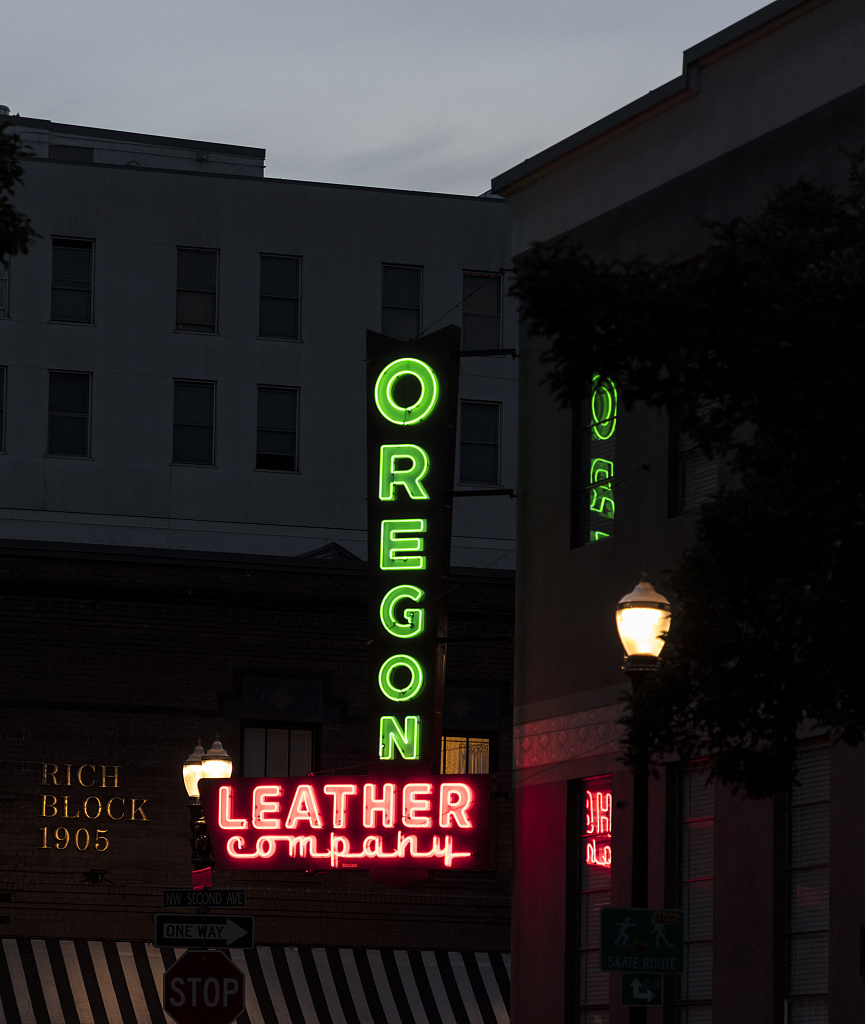
Image Credit: Carol M. Highsmith “The old Oregon Leather Company neon sign in downtown Portland, Oregon”  Photographs in the Carol M. Highsmith Archive, Library of Congress, Prints and Photographs Division.


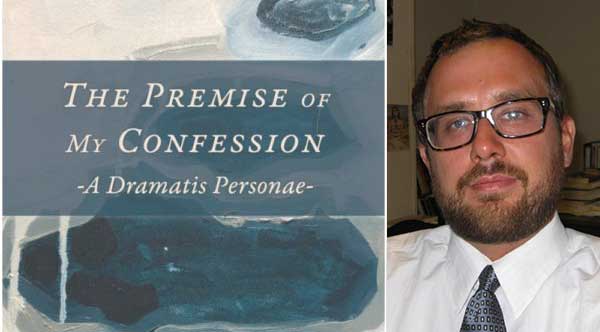
Chase Dimock reviews “The Premise of My Confession: A Dramatis Personae” By Sean Karns


Chase Dimock reviews

The Premise of My Confession: A Dramatis Personae

By Sean Karns


Many times, I have sat next to a random, drunk stranger at a bar, and he used the chance meeting to stammer and slur his words through his life’s story, the dizzying heights and crushing defeats. He has used my expressionless face as a sounding board for his ill-defined philosophies, raging impotently at foes he never really explained, pining for lost joys whose sweetness I couldn’t smell over his beer breath. He has seen a reflection of a younger self in my eyes, and tried to warn himself about the agonies of the future in which he lives.

Many times, that random drunk stranger at the bar was me. 

Maybe it’s because the bourbon has washed away all the specific contents of these tavern confessions, but I don’t remember any of them coming close to the philosophical depth and poetic craft of Sean Karns’ new book, The Premise of My Confession: A Dramatis Personae. 

The premise of this chapbook is simple. A retired magician meets an nameless stand-in for the reader at a bar and in 25 pages, we hear the rise and fall of a magician addicted to and debilitated by his craft and the audience’s adoration of his spectacle. The longform poem is set up like a dramatic play, though the only other character who speaks and breaks up the magician’s monologue is a nameless narrator who addresses you, the reader, to provide exposition. Yet, the narrator does not just describe the scene and plot; he also tells you how you feel and react while listening to the magician:

You impatiently shift in your barstool
And stare at your hands and pick at your nails.
You have no clear exit strategy

Perhaps I am in the minority here, but this voice of a narrator explaining my own actions to myself replicates my experience of drinking and remaining silent as others prattle on.

Karns’ chapbook follows a tradition of random encounters with monologuing, philosophical drunks in literature. As I read the magician’s story, I thought about Crime and Punishment and The Fall. Raskolnikov listens to the drunken laments of barflies who squandered their family’s savings and reputation as Dostoevsky explores what he called “the present question of drunkeness.” In The Fall Camus places the reader in an Amsterdam bar. You are the unlikely recipient of the confession of a once prominent and respected defense attorney whose fall from grace came from the paralyzing realization he did not authentically believe in the values he championed in court.

Karns’ Magician is somewhere between the drunken oblivion of Mameladov and the weary introspection of Clemence. Like both Dostoevsky and Camus, Karns’ perspective is existential. All the world’s a stage, and that is where the crisis of authenticity opens the void, or as the Magician explains, a wound:

When you’re a spectacle, you can’t be something else.
There are consequences for acknowledging

There is an absence. I didn’t want to be
A lonely spectacle…how’re we spectacles,

You ask? Why so dismissive? The Wound will
Let you know what you are or aren’t.

We’re formed by a collection of the Wound’s 
Memories, and through these memories,

We become a spectacle, a viewing pleasure
For others, especially for the Wound.

Here, I feel as though I am under the gaze of Jean-Paul Sartre, thinking of how we internalize the gaze of others and become not a being in of itself, but a being for others. When how we perform for others pleases the other, we internalize that role and mistake it for an authentic self. As the magician puts it “While performing a pointless trick/ Perhaps our real selves are locked in trunks.” 

As a young queer scholar, a short passage from Sartre’s Being and Nothingness redefined my understanding of my own identity. To illustrate the problems with authenticity, Sartre presents a scenario in which a homosexual man refuses to come out to another person who believes he has the right to urge him out of the closet. The homosexual man is in a bind here. If he were to lie about homosexual desires, he would be inauthentic with his true desires. But, if he were to confess, he would would be accepting the definition and expectations of sexuality that the other man holds, which the homosexual man does not agree with. He can’t deny himself, but he also can’t validate the flawed thinking of others that would place a label and category on him that doesn’t come from himself.

Karns’ Magician presents a similar problem with authenticity and being turned into a being for others:

As a spectacle, for it was all
I knew, and I knew I’d regret it.

Hypnotize, I’d regret it. Don’t,
I’d regret it. Disappear and relocate

An audience member, I’d regret it.
Don’t I’d regret it. Unknowingly

The audience follows the spectacle
Into ocean bound trunks.

Like Sartre’s example of the closeted homosexual, you regret staying in the trunk and hiding, but you also regret pantomiming the expectations of the crowd on stage. Even celebrated figures like famous magicians become bound by the persona needed to achieve applause. I wonder if those 80s and 90s bands, well past their glory years, that you see playing county fairs every summer ever feel this way. Could you find the guy from Smash Mouth sitting next to you at the funnel cake stand, confessing that he’d rather lock himself in the mic trunk than sing “All Star” one more time?

But here’s the inherent problem with confessions that the Magician, the homosexual man in Sartre’s story, and maybe even the Smash Mouth guy knows: they are always given to someone who does not possess the power to forgive them. As the Magician says: 

And I longed for forgiveness for years
Of deception, but the Wound ignores confessions

And redemptions–the Wound requires you
To absolve your guilt, alone.

Since in this poem, the person receiving this statement is “you,” I wonder if this means that the magician knows this barroom confession is invalid since he is not alone and “you” cannot absolve his guilt, like some people assume priests can. Maybe this confession is as much a performance for an audience as any of his magic tricks.

Or, maybe this is why “you” do not speak in this poem, and why he speaks to a random stranger. Even though you’re there to hear him, he’s still alone in the bar.


The Premise of My Confession: A Dramatis Personae is available via Finishing Line Press


About the Author: Chase Dimock is the Managing Editor of As It Ought To Be Magazine. He holds a PhD in Comparative Literature from the University of Illinois and his scholarship has appeared in College LiteratureWestern American Literature, and numerous edited anthologies. His works of literary criticism have appeared in Mayday MagazineThe Lambda Literary ReviewModern American Poetry, and Dissertation Reviews. His poetry has appeared in Waccamaw, New Mexico Review, Faultline, Hot Metal Bridge, Saw Palm, Flyway, and San Pedro River Review among othersFor more of his work, check out ChaseDimock.com.


More Reviews By Chase Dimock:

A Review of All Seats Fifty Cents by Stephen Roger Powers

A Review of Willingly by Marc Frazier

A Review of Your Daughter’s Country by John Dorsey