Nada Faris: “Echo’s Song to Her Lover”

.

Echo’s Song to Her Lover

.

“Mother made Frank smell her Bible
she knew he loved the aroma of fine leather”
— CAConrad, The Book of Frank

.

It was my father who taught me how to drive. When I sat
in the passenger seat, he said with a glint in his eye,
if I made a mistake, he would punch my shoulder, hard.

         “It is how I trained your mother.” 

I could die of compassion. All this suffering, everywhere.
How can anyone muster enough hope, desire, or will
to invest in finitude? Of course, our candle fizzles
and every song knows little doves
learn the crackle of aching from belts in sharp nests.
Father in our presence. Father in our midst.
Father on the terrace. Father on the swings.
Father, I don’t blame you.
God made everything beautiful, terrible and beautiful,
as well as narcissists.

.

.

About the Author: Nada Faris is an Honorary Fellow in Writing at Iowa University’s International Writing Program. She has earned an MFA in Creative Writing from Columbia University, received an Arab Woman Award from Harper’s Bazaar Arabia for her impact on Kuwait’s creative sector, and authored three international books.

Twitter: @nadafaris


.

Image Credit: Chase Dimock “Sunset Reeds in Klamath Falls” (2020)
Meg Pokrass: “Neurology”

.

imgonline-com-ua-andy-warhol-lZIF5GiJJ2Yz

.

.

Neurology

When he walks in I’m crushed
and loved. My foot grabs the pain,
happy for his entrance lines
thick medical folder as prop.
Monthly he opens the door to my face.
If this ends
I will never get better. He writes
with his red pen all over my heart.
How long will this go on? I ask.
For a long time, he says
pain bringing its own bench

.

.

About the Author: Meg Pokrass is the author of five flash fiction collections and a book of prose poetry, Cellulose Pajamas, for which she received the Blue Light Book Award. Her work has been widely internationally anthologized, most recently in New Micro (W.W. Norton & Co., 2018), Flash Fiction International (W.W. Norton & Co., 2015) and The Best Small Fictions2018, 2019. She serves as Founding Co-Editor of Best Microfiction 2020 and teaches flash fiction online and in person.

.

More by Meg Pokrass:

Blueberry Blue

.

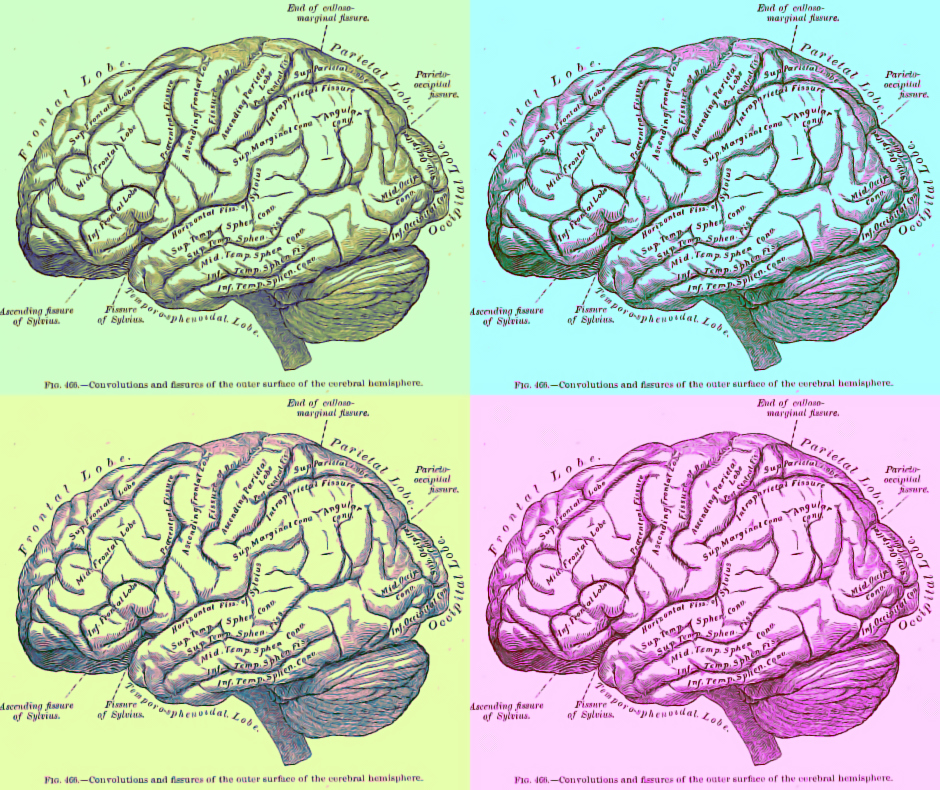
Image Credit: Photo collage adapted from a public domain image from Gray’s Anatomy

John Macker: “Nostalgia Poem”

.

.

.

Nostalgia Poem

Last night, a skunk swaggered
through the yard. Not too long ago
the skies were turbid like a teabag,
empirical proof that once language
abandons the heavens, it becomes
landscape.

At first I thought the day
was about tender aging, backyards &
companionship. The wind not so fierce
to need fire, found my woodpile to ply
its trade against. North is a word that needs
no evidence. Winds and birds come from
it sure in their skins.

For some reason
today it’s Earthboy James Welch and nostalgia
is not fit for a decent burial. A river, an elder
I still love, arrives again gratis and sings through
its teeth. Last night I longed for someplace
until it disappeared.

.

.

About the Author: John Macker grew up in Colorado and has lived in New Mexico for 25 years. He has published 8 full-length books of poetry, 2 audio recordings and several broadsides and chapbooks over 30 years. His most recent are Atlas of Wolves, The Blues Drink Your Dreams Away, Selected Poems 1983-2018, (a 2019 Arizona/New Mexico Book Awards finalist), Desert Threnody, essays and short fiction, and El Rialto (a short prose memoir published by Dry Creek Art Press) In 2019, his poem “Happiness” won a Fischer Poetry Prize finalist citation, sponsored by the Telluride Institute.  His manuscript, Acetylene Sunsets is in progress. He lives with his artist wife Annie and two mutts, Ruby Tuesday and Sean O’Casey. Has grandchildren, will travel.

.

More by John Macker:

Last Riff for Chet

Abundance

.

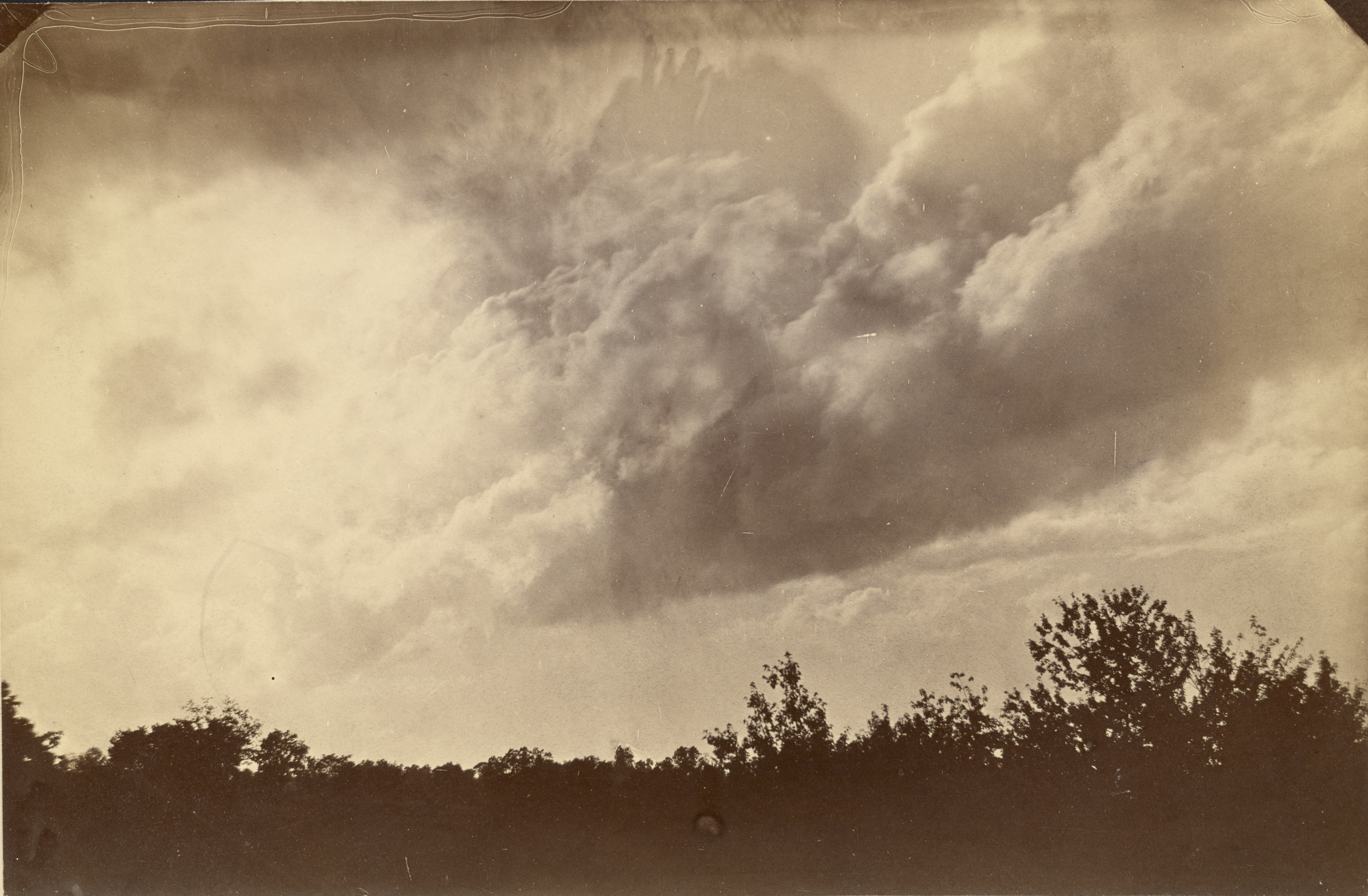
Image Credit: “Cloud study” Unknown maker, American. Digital image courtesy of the Getty’s Open Content Program.

James Diaz: “Lake Origin”

.

.

Lake Origin 

We all have our processes of abandon
Shake a leg
They say
Get a move on
whatever it is
Waiting for us tonight
Can’t be good if it’s a thing you have to rush to
We all have our slow arrivals

Tenderness was a word my mother never used
You couldn’t frighten a boy with tenderness
Could not break a bone with a word
Way you could with something solid

Hit me, my father says
To a man in the deep dark of a trailer
His arm tied off
And ready for a taste of God

Are you ready yet
We’ve a ways to go
Before you can tell the story differently
It’ll take some doing
Rough haul, this

There is no way to know
The weight of what you carry
Until you set it down.

.

.

About the Author: James Diaz is the author of This Someone I Call Stranger (Indolent Books, 2018) and All Things Beautiful Are Bent (Alien Buddha Press, 2021,) as well as the founding Editor of Anti-Heroin Chic. Their work has appeared most recently in Cobra Milk Mag, Bear Creek Gazette, Negative Capability Press, Line Rider Press and Resurrection Mag

.

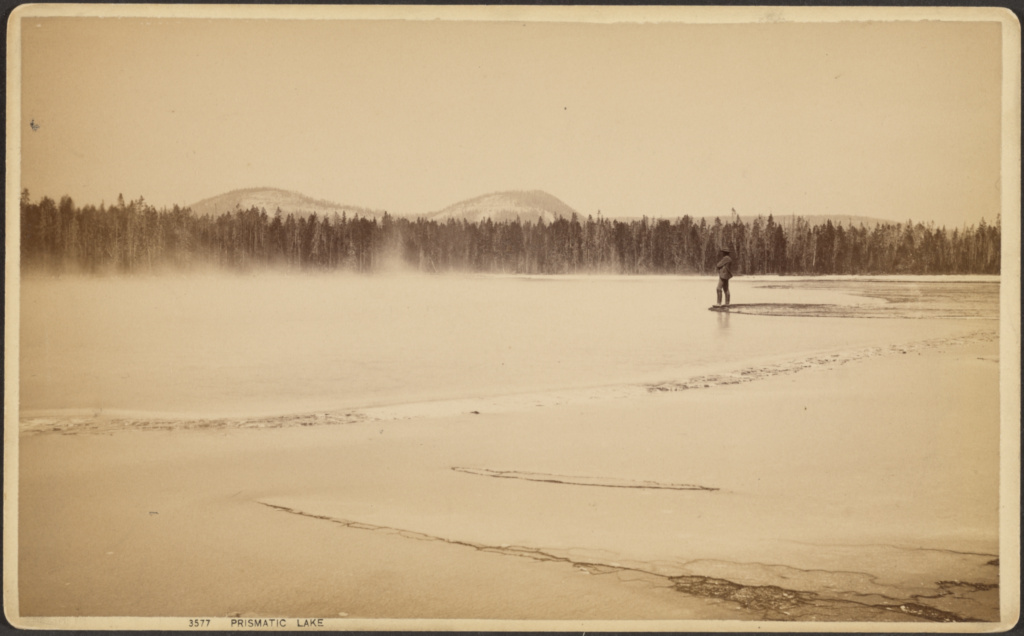
Image Credit: Frank Jay Haynes, “Prismatic Lake” (1881–1889) Digital image courtesy of the Getty’s Open Content Program.

Kelley White: “Why have you made the church so cold?”

.

.

.

Why have you made the church so cold?

The brilliant jewels from your stained glass
clock past my pew. They glow
distant. I try to remember color and light.

Darkness.
You make me remember Stephanie.
Who tried so earnestly to balance on her one foot.
To reach and follow my finger.
Whose eyes stayed crossed.
Cerebellum, tumor.

This could be her grandfather’s church.
The cold steel of the organ.
Her frilled petticoats.
Her too new shoes

Here is my seeking pride at making that diagnosis.
That I spoke the tumor that stole
her balance and sight.

And here is Michael.
Red, blue and yellow falling on my cold arms, crossing my face.
Michael, the brother born to her mother three years after
she slipped into birdsong, held and bathed.

Michael, who leaps, tosses his ball, hops, and counts by sevens.
Who says MaMa told me you knew my sister
You have her picture
Will you show me?

Is this my gift?

.

.

About the Author: Pediatrician Kelley White has worked in inner-city Philadelphia and rural New Hampshire. Her poems have appeared in Exquisite Corpse, Rattle and JAMA. Her recent books are Toxic Environment (Boston Poet Press) and Two Birds in Flame (Beech River Books). She received a 2008 Pennsylvania Council on the Arts grant.

.

Image Credit: Jack E. Boucher ” Sept 1966 DETAIL OF PEW – Trinity Church (P. E.), 651 Pequot Road, Southport, Fairfield County, CT”. Image courtesy of the Library of Congress.

Alice Teeter: “Leaf blowers”

.

.

.

Leaf blowers

Wind moans through the trees, clatters
deck furniture against railings,
pushes leaves into a corner,
whirls them up again.

In the wild, leaves fall, cushion the ground;
softness builds up, things are fed and covered.
It’s usually quiet, it’s often calm –
loud sounds are over soon, mayhem quickly
passes into peace.

It’s us, isn’t it, who drive
down the mountain
as fast as we can go?

.

.

About the Author: Alice Teeter’s most recent book Mountain Mother Poems was published in 2017 by Finishing Line Press. Previous books include Elephant Girls (2015 Adrich Press), and When It Happens To You… (2009 Star Cloud Press). Her poems have appeared in The Atlanta Review, Poetry Daily, The Tower Journal, Per Contra, and Kentucky Review. Her chapbook String Theory won the 2007 Georgia Poetry Society Charles B. Dickson prize. Teeter was awarded a Hambidge Fellowship in 2010. She was adjunct professor teaching poetry writing at Emory University in Atlanta, Georgia, from 2011 to 2016. She studied poetry with Peter Meinke at Eckerd College in St. Petersburg, Florida. She lives with her wife, Kathie deNobriga, in Pine Lake, Georgia.

.

More by Alice Teeter:

Directionless

.

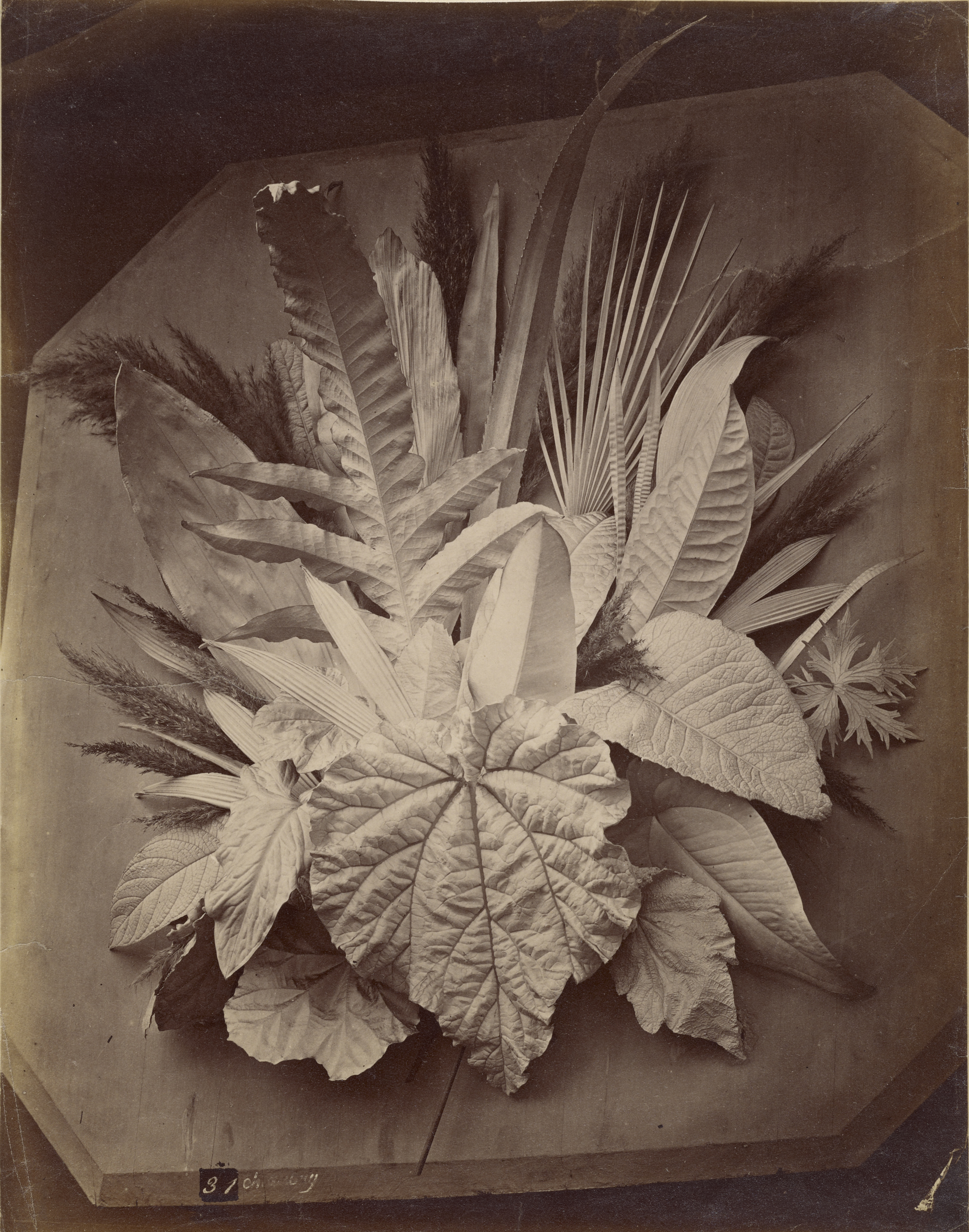
Image Credit: Charles Aubry “Leaf Arrangement” (1860–1869) Digital image courtesy of the Getty’s Open Content Program.

R.T. Castleberry: “Just to Waste the Morning”

.

.

.

Just to Waste the Morning

Too early for dogs barking,
for the train’s rolling whistle,
the sun is seized by night’s glassy course.
November rattles the sidewalk’s seam,
studio apartment windows above
a winter-shuttered pool.
Mealy apple, day old doughnuts for breakfast,
I’ll spend the day finding
the cheapest copy of a desired book,
a match for a print lost to breakup.

Stepping past grapefruit, dropped
and rotting on the sidewalk,
I wear a Bosque Redondo tourist tee
under a German greatcoat,
a twelve dollar haircut beneath a newsboy cap.
Unsteady on the landing,
optical illusions of cracked stone,
pebbled strip, rusty wrought iron
trip me up.
The clinic doctor’s instructions
rattle my last nerve.
Addresses and keys in hand,
like Son House striding his blues pony,
I’ll slake my sorrows in collection remains.

.

.

About the Author: R.T. Castleberry is a widely published poet and critic. His work has appeared in Roanoke Review, Trajectory, Blue Collar Review, White Wall Review, The Alembic and Visitant. Internationally, Castleberry’s work has been published in Canada, Wales, Ireland, Scotland, New Zealand and Antarctica. Mr. Castleberry’s work has been featured in the anthologies, Travois-An Anthology of Texas Poetry, The Weight of Addition, Anthem: A Tribute to Leonard Cohen and You Can Hear the Ocean: An Anthology of Classic and Current Poetry.

.

More By R.T. Castleberry:

Down Cold Lanes

July, Roadhouse Dinner

.

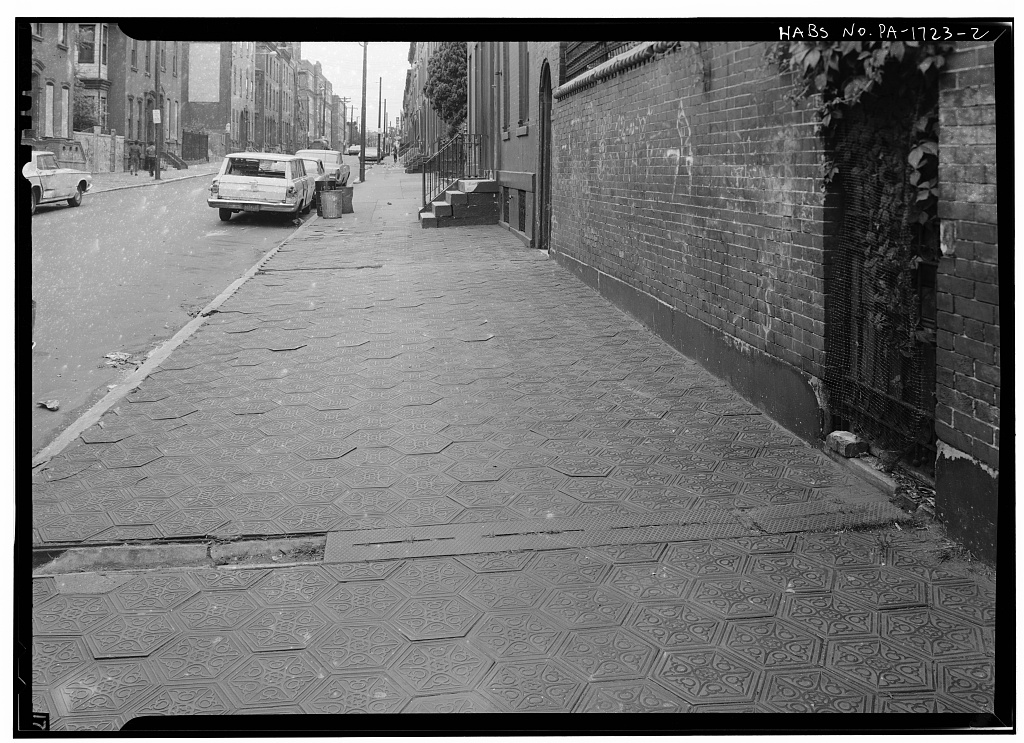
Image Credit: ” VIEW OF SIDEWALK SHOWING IRON TILES – Cast Iron Sidewalk, 1907 North Seventh Street, Philadelphia, Philadelphia County, PA” The Library of Congress

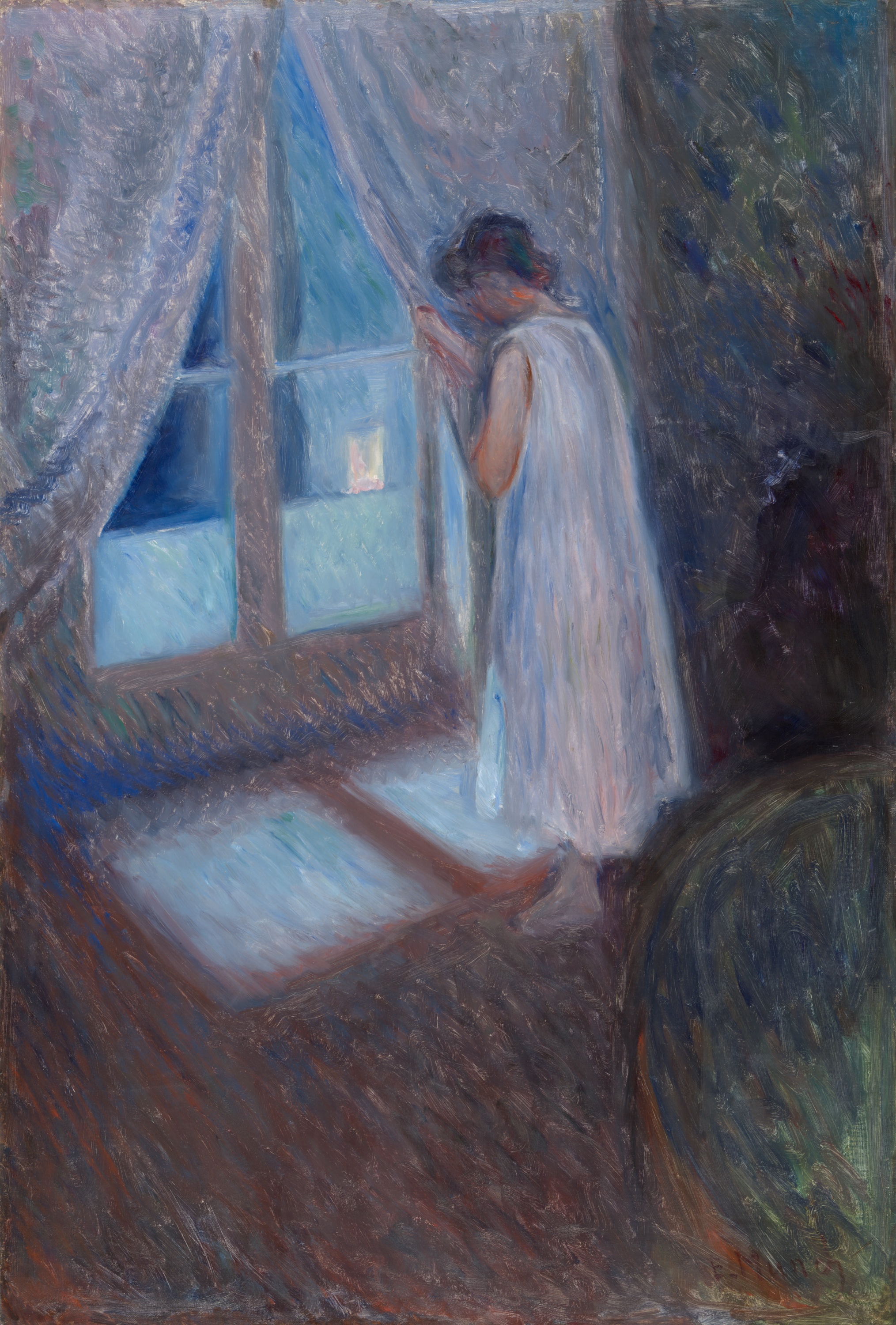
Susan Cossette: “She Waits Behind the Drapes”

.

.

.

She Waits Behind the Drapes
-after Edvard Munch


Gaslit shadows from St. Cloud Street slip through the windowpane.
Unannounced, pecking at her bruised feet.

The otherness has begun.

Hallowed room bathed in crepuscular light,
Occupied only by shadow and impossible stillness. 

The nurses feed her warm chicken noodle soup,
Record vital signs.

She imagines her daughter lying beside her,
Warm breath, soft cheek.
The child remembers things she can no longer.
Grilled cheese sandwiches and tomato soup,
Christmas mornings, drinking warm cocoa after ice skating.

The child is 1,368 miles away.
In her mind,
She is there—
A responsible mourner in training.

Prepared to face the menace,
Prepared to let the dead enter her,
A living organism of memories.

.

.

About the Author: Susan Cossette lives and writes in Minneapolis, Minnesota. The Author of Peggy Sue Messed Up (2017), she is a two-time recipient of the University of Connecticut’s Wallace Stevens Poetry Prize. Her work has appeared or is forthcoming in Rust and Moth, Vita Brevis, Adelaide, Clockwise Cat, Anti-Heroin Chic, The Amethyst Review, Ariel Chart, Poetica Review, Crow & Cross Keys, Loch Raven Review, and in the anthologies Tuesdays at Curley’s and After the Equinox.

.

Image Credit: Edvard Munch. “The Girl by the Window,” (1893). The Art Institute of Chicago. Public Domain


Gale Acuff: “Die and you go to Heaven or Hell says”

.

.

.

Die and you go to Heaven or Hell says

our Sunday School teacher so I raise my
hand and ask What if I live forever
and my classmates laugh and I join them but
I’m a hypocrite, I was serious, don’t
tell me that no one out there in the world
hasn’t or maybe even isn’t, some
-one’s as old as the hills of Granny’s chest
or even older, Methuselah-old
but a lot more than that and I wonder
if that could be our teacher, too, she looks
25 but you never know and then
she says Gale, don’t be silly–now please
lead us in the Lord’s Prayer. God damn it.

.

.

About the Author: Gale Acuff has had poetry published in Ascent, Chiron Review, McNeese Review, Adirondack Review, Weber, Florida Review, South Carolina Review, Carolina Quarterly, Arkansas Review, Poem, South Dakota Review, and many other journals. He has authored three books of poetry: Buffalo Nickel (BrickHouse Press, 2004), The Weight of the World (BrickHouse, 2006), and The Story of My Lives (BrickHouse, 2008).

Gale has taught university English in the US, China, and the Palestinian West Bank.

.

More by Gale Acuff:

Rub

.

Image Credit: Ben Shahn “Sunday school, Penderlea Homesteads, North Carolina” (1937) Public Domain photo courtesy of The Library of Congress

Jason Ryberg: “Never Enough to Go Around”

.

.

.


Never Enough to Go Around

6am, and the world is just about
to fire up again and

over across the way
there’s a black dog straining at its chain,
barking and barking at a starless black sky,

black sky fading to a sheet metal grey,
then, a pale powder blue,

hot black coffee starting to cool,

sixteen Redwing Blackbirds
sitting on a wire,

right above a rusted-out pick-up
that’s missing its front driver’s side tire.

A shoebox full of unopened letters,

a black pleather cowboy boot
sprouting yellow flowers,

a piece of notebook paper,
found in a copy of Don Quixote;
a long list of “things to do, Summer 2002
(#14- finish Don Quixote).”

And here, at the center of it all,
an old-school, wind-up alarm clock
chopping out our meager allotments of time
with a tiny, relentless, insectile sound.

Time;
just never enough of it to go around.

.

.

About the Author: Jason Ryberg is the author of thirteen books of poetry, six screenplays, a few short stories, a box full of folders, notebooks and scraps of paper that could one day be (loosely) construed as a novel, and, a couple of angry letters to various magazine and newspaper editors. He is currently an artist-in-residence at both The Prospero Institute of Disquieted P/o/e/t/i/c/s and the Osage Arts Community, and is an editor and designer at Spartan Books. His latest collection of poems is The Ghosts of Our Words Will Be Heroes in Hell (co-authored with Damian Rucci, John Dorsey, and Victor Clevenger, OAC Books, 2020). He lives part-time in Salina, KS with a rooster named Little Red and a billygoat named Giuseppe and part-time somewhere in the Ozarks, near the Gasconade River, where there are also many strange and wonderful woodland critters. 

.

More by Jason Ryberg:

Beef, It’s What’s for Dinner

Sometimes the Moon is Nothing More than the Moon

All of the Above

.

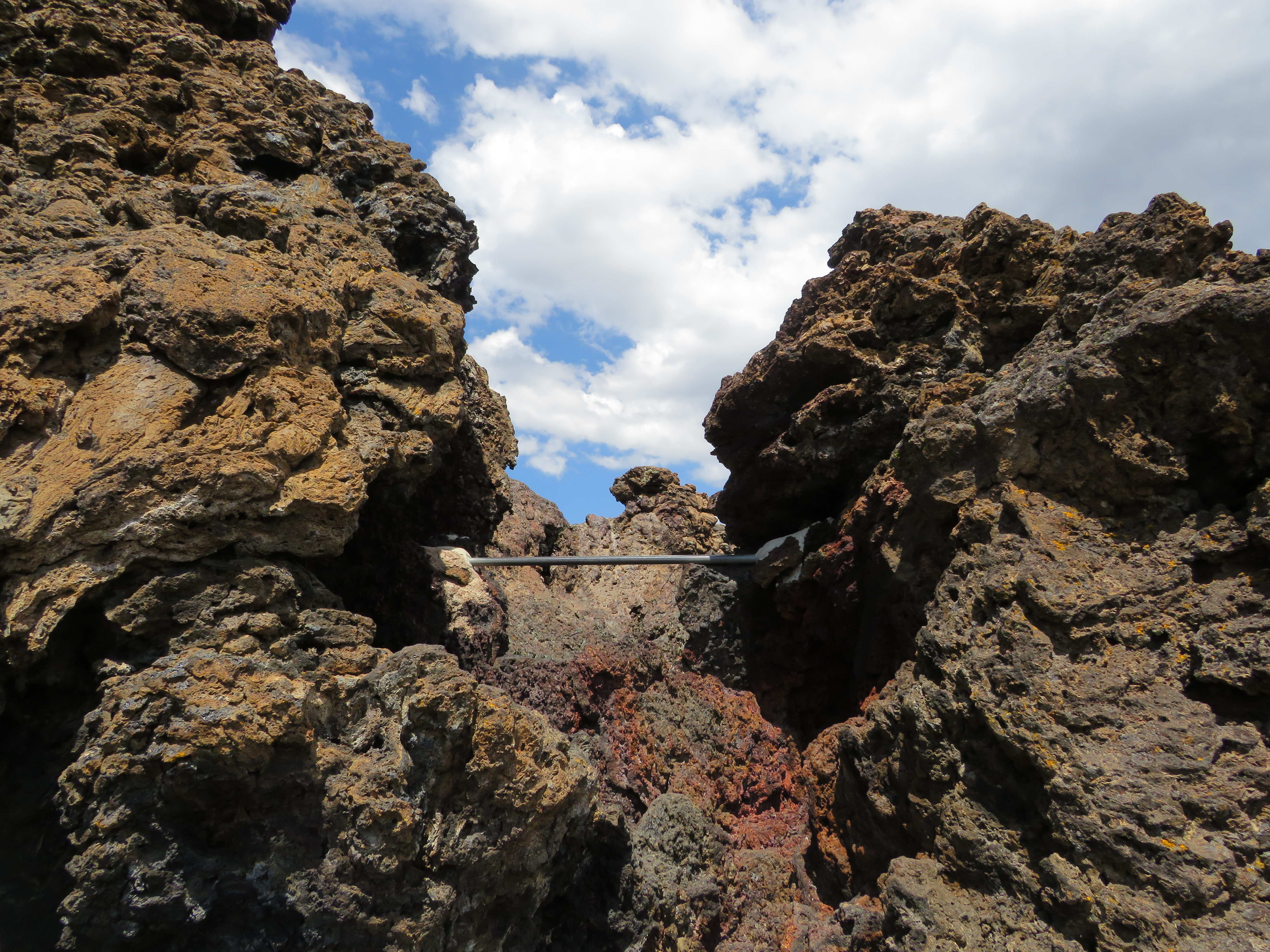
Image Credit: Chase Dimock “Fleener Chimneys, Lava Beds National Park” (2020)