What We’re Here for
for bart solarczyk & bob phillips

your whole generation
seemed to know
how to swat away a compliment

kind words tossed
into a river
full of mud & rust
born out of houses
with tin roofs & tar paper hearts
by men & women
who knew the weight
of factory gloves
after so many years
their fingers piercing
the very edges of time

even poems are just about
doing the job

like pushing a mop
or wiping sweat
away from your heart
after the loss of a friend or a spouse or your sanity
knowing that’s just what time does
knowing you just have to keep putting the work in

because that’s what we’re here for.
About the Author:John Dorsey is the former Poet Laureate of Belle, MO. He is the author of several collections of poetry, including Which Way to the River: Selected Poems: 2016-2020 (OAC Books, 2020), Sundown at the Redneck Carnival, (Spartan Press, 2022, and Pocatello Wildflower, (Crisis Chronicles Press, 2023). He may be reached at archerevans@yahoo.com.
Image Credit: Carol M. Highsmith “Historic house with tin roof in Eutaw, Alabama” (2010) Public domain image courtesy of The Library of Congress
Skin once taut over muscle and bone grows soft and softer still, as age moves on and may bring sadness unknown before, or a kind of thrill to mark the passage on a map of being in this place, this age. Adventures are remembered in crinkling folds. Sitting or standing will require slower motion. No matter the pain that is now no small matter. An old drum at rest for a while needs the essential oil of caring hands, each touch and each beat deepening into warm inviting sounds, smelling of vanilla rain. Pitter patter, falling softly. Softly enfolded in loved arms. Hush and listen, safe and dear one, ever close to heart, where ear is at the center, just as art is in the earth, and ripples continue beyond the edge of the pond.
About the Author: Geraldine Cannon is a poet, scholar, and editor, also working as a Professor of English and Creative Writing at the University of Maine at Fort Kent, under her married name–Becker. She has been published in various journals and anthologies. She published Glad Wilderness (Plain View Press, 2008).. She has been helping others publish, and had stopped sending her own material out, but she was encouraged to do so again, and most recently has a new poem in the Winter issue, Gate of Dawn (Monroe House Press, 2024).
I open doors in the middle of the night, like a game show where I have to choose
which of the three—bulb-shaped doorknobs, no difference, but what can I do
except stub my toe? My husband and I arrived to follow birds, hike coastal trails, eat local bread,
but the real reason—to escape our friend taken to the ICU and his wife's detailed recaps
of each new protocol. A few years ago he helped curate the Summer of Love exhibit.
We followed him through galleries— heard about Better Living Through Chemistry,
a poster on psychedelics. Heard how he met Ben who videoed Winterland concerts, visual-acid footage
covering the audience, the walls, the band on stage as we filed through, color and image left on our skin.
Heard about the March to End the Vietnam War poster, when my father in the VW squareback drove John
to Kezar stadium, up and down San Francisco hills along with his mother because he wasn't old enough.
Heard about the poster—Help, the Oracle Needs You Today, the Haight Ashbury underground paper. And this week,
John's installed in a new cancer center, harboring tumors so plentiful there's no middle back left.
On our hike today in Pt. Reyes, down to the sea, I didn't know John received
his first chemo drip, told by the nurses he could hallucinate, found an aura in the room,
flashes of color, found Oneness because he knows how to love. And here I am, awake in the middle
of the night, trying to find my own way, standing still for a minute,
realize there's a full moon coming through the skylight. If I could find an issue of The Oracle, I'd read
the Loving Insertion, an extra sheet tucked in, and because I have to imagine the script,
because I know so little about loving, I would pay special attention when the writer appeals
to a culture of tenderness, explains how love can save someone. And I'll go further, for it will include
a drawing for how to repair the spine, help John walk. Yet all I can do is open doors, choose the middle door,
groping hangers and blankets, feeling for a light and finding none.
About the Author: Laurel Benjamin is a Cider Press Review Book Award finalist. She is active with the Bay Area Women’s Poetry Salon, curates Ekphrastic Writers, and is a reader for Common Ground Review. Current and upcoming publication: Pirene’s Fountain, Lily Poetry Review, Cider Press Review, Taos Journal of Poetry, Gone Lawn, Nixes Mate. Pushcart Prize nominee, Laurel holds an MFA from Mills College. She invented a secret language with her brother.
Image Credit: Carol M. Highsmith “Colorful Historic Motel, Wildwood, New Jersey” (2006) Public domain image courtesy of the Library of Congress
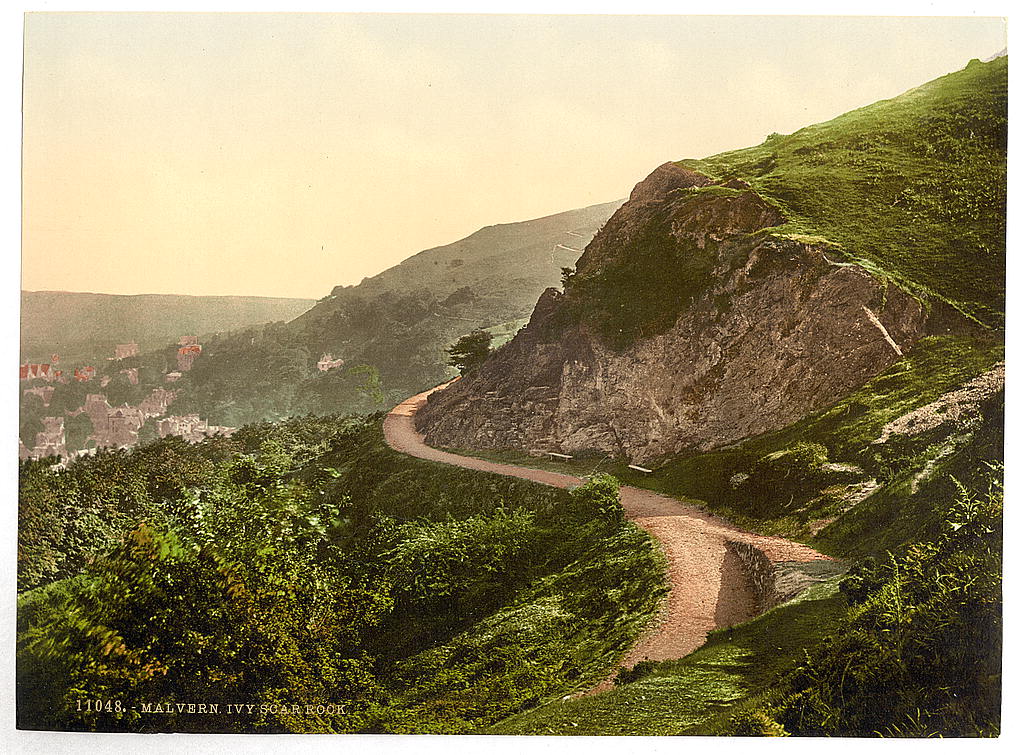
We start from the north end, hearts and lungs weighted down as we climb hard between scree,
emerge above low cloud that smudges the backdrop and recasts the landscape.
The curves of the hills snake onwards in stately perspective through the fog.
East, England’s farms lie flat. Light mist rolls like smoke on battlefields.
West, old mountains are lost in fresh swirling ranges built in the air.
Our footsteps skip through the sky but two heavy transport planes from Brize Norton
give bone perspective, disturb birds. The tops of rooks’ heads and wings glide beneath us.
This new world – its fake mountains, upside-down birds and smeared views – thins our blood, drains our thoughts.
About the Author: Michael Hurst’s writing has been published by The Fiction Desk, Ellipsis Zine, Gemini, GWN and Stroud Short Stories. He lives in Gloucestershire with his wife and daughter.
Image Credit: Detroit Publishing Co. “Ivy Scar Rock, Malvern, England” Public domain image courtesy of the Library of Congress
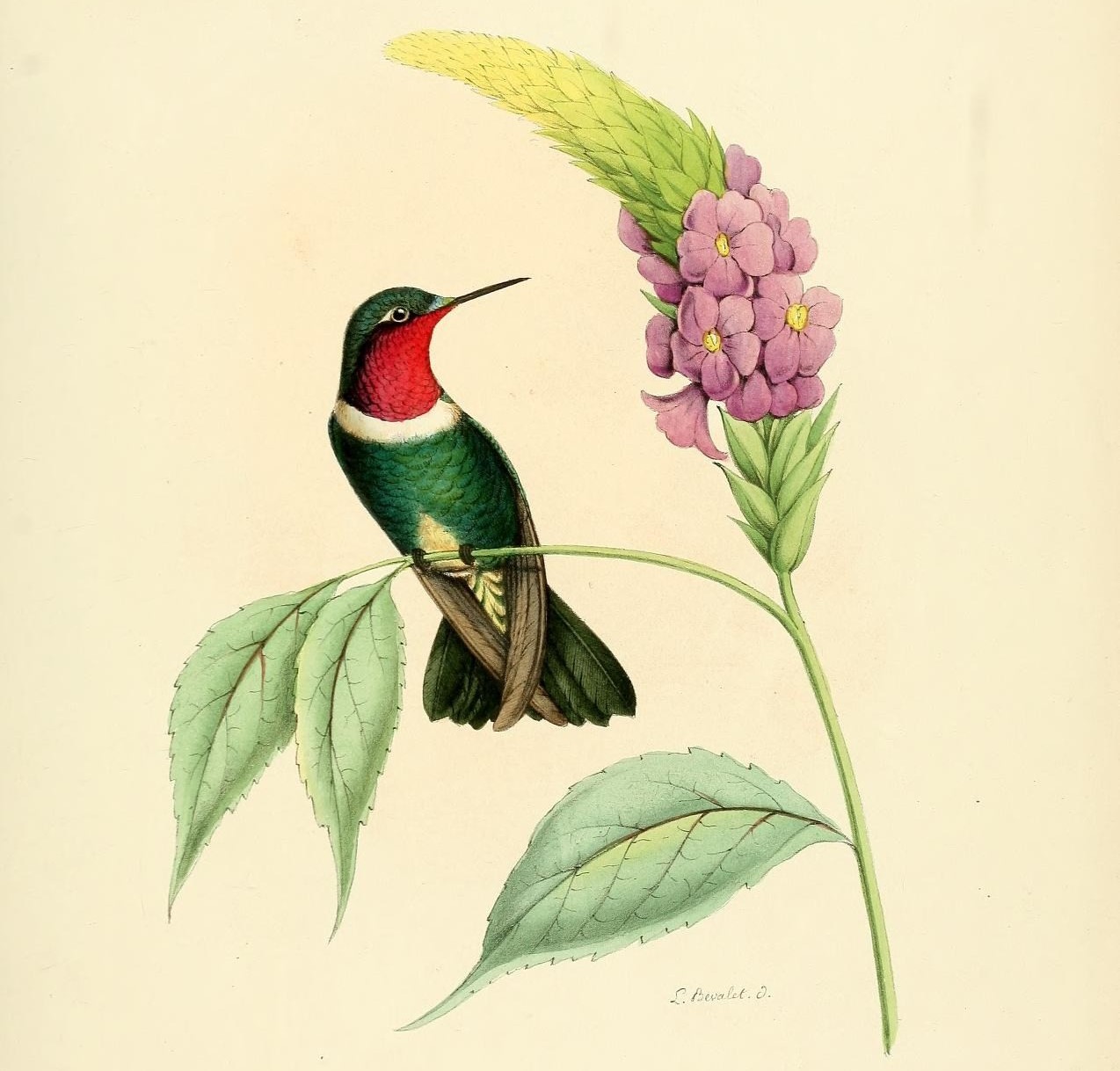
The counselors had no bands that fit a hummingbird, but should one get caught in the mist net, you rattled it between cupped hands until it lay in your palm (unhurt, we were assured) with a quiet that seemed, except for its heartbeat, calm.
Then everyone who might admired its smallness, red enamel throat, wings a green suitcoat, but suddenly it took flight, slid steeply up a ramp of air full-powered, pivoted in the leaves to a hopeful gap and sped out of there.
God! to feel my head clear for good, to recognize the windy or waiting skies are real, to get out of here.
About the Author: Gerald Friedman grew up in the suburbs of Cleveland, Ohio, and now teaches physics and math in northern New Mexico. He has published poetry in various magazines, recently Rat’s Ass Review, The Daughter’s Grimoire, W-Poesis, and Cattails. You can read more of his work at https://jerryfriedman.wixsite.com/my-site-2
Image Credit: Public domain image originally from Histoire naturelle des oiseaux-mouches, ou, Colibris constituant la famille des trochilidés. Lyon: Au Bureau de la Société Linnéenne,1874-1877. Courtesy of the Biodiversity Heritage Library.
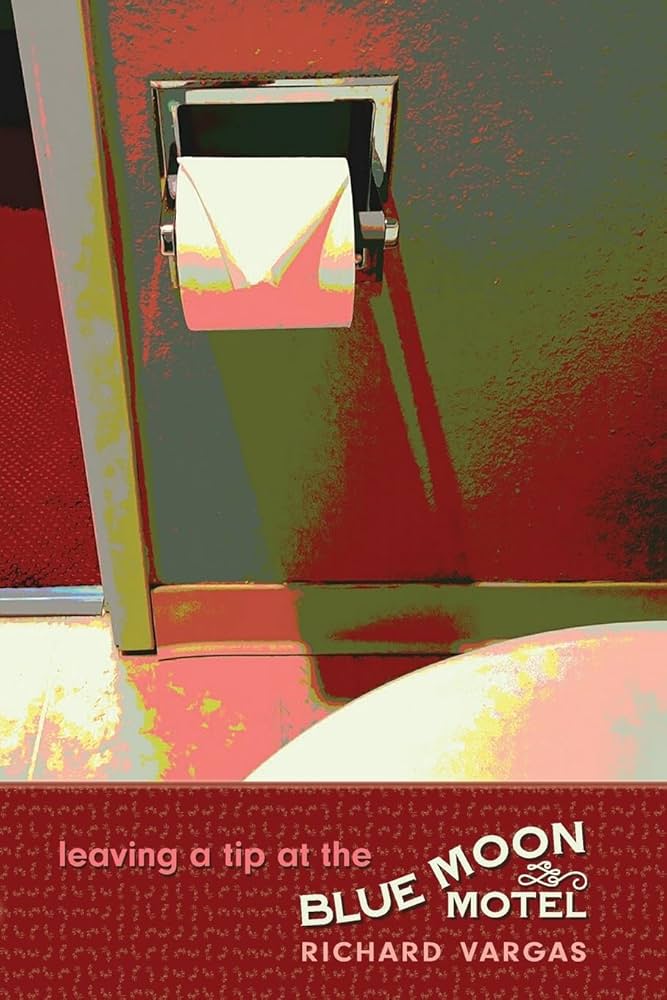
I want to hit on about three things, all of which intersect, in praising Richard Vargas’s collection, “leaving a tip at the Blue Moon Motel.” I want to talk a little bit about what it means to do a ‘political poem,’ in the loosest sense that this means. Meaning: I want to talk about writing from direct experience, as opposed to writing from theory. This brings up Vargas’s unique sense of empathy. And last, I want to talk about style just a little bit, to remind us all that clarity and clean writing is not an abandonment of it. All these things explain why I like Richard Vargas’s poetry.
In an anthology of essays titled “Poetry and Politics,” edited by Richard Jones, I want to say I recall the poet Denise Levertov making a succinct point about some of what we call “political poetry.” She alluded to Bertolt Brecht’s version of the political poem as something akin to “marching orders.” I remembered this and wrote it down and it has stuck with me, but I don’t have the patience to re-read her essay right now. So if she did not characterize some political poetry, like Brecht’s, as something like “marching orders,” then let me do so now, and continue to credit her with the idea, just in case.
Don’t get me wrong. A theoretician or an academic poet who cares about humanity, without having experienced the bad jobs or prison experience he or she writes about, is still on the human and not the dehumanizing side of things. Bertolt Brecht was on the side of humanity. But when poets write about such things from some place other than their own experience, they must invariably do so in the third person, or do so in an abstract or at least imagined way. We, as readers, tend not to relate as much to such work. But Vargas only writes about what he has experienced himself, without assuming to understand worse. He wonders about it, and more on that later, but he never presumes.
My mother and the birds: we watch them at the feeder. I call out their names.
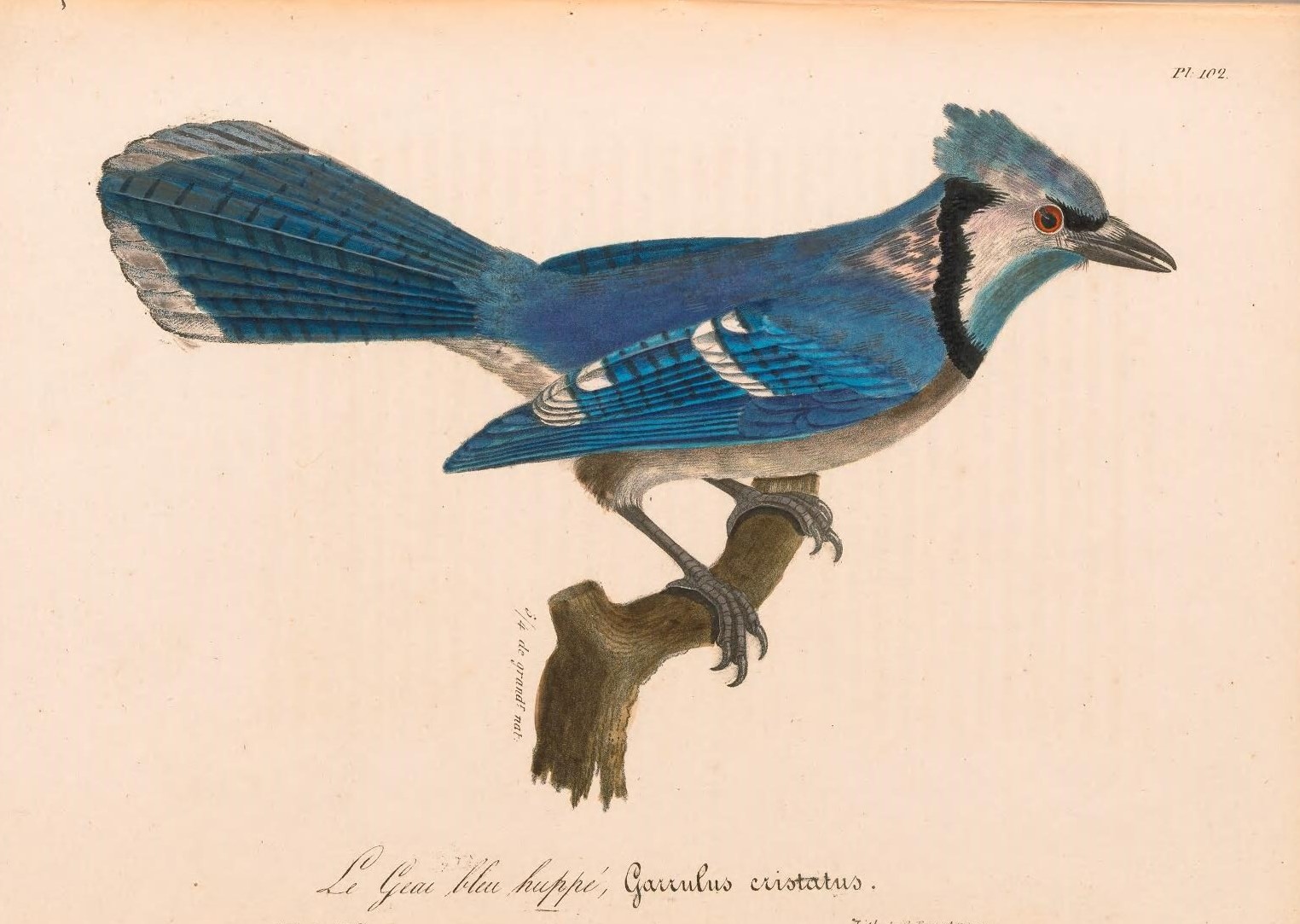
Look mom! The blue jay’s back! That one! she says. That one!! And the red-headed woodpecker–
Such a big…nose thing… Yes, he has a long beak. And there are the chickadees, the little nuthatches
and the turtledoves, grey and homely their sound all the beauty they own. Then the red-winged blackbird – Mom, look!
They’re a sign of spring. That will never – she says…. Oh yes, my love. And the robin too. It will come. You will see it.
All the names she has forgotten I recite like a litany: a prayer to the birds, distinct and various as the language slipping away.
Good bye to wingéd words. I say the names of birds; she does not repeat them. Nor do I ever hear the name I own.
About the Author: Paula Reed Nancarrow’s work has appeared or is forthcoming in Ballast, Hole in the Head Review, and Book of Matches, among other journals. She is a past winner of the Sixfold Poetry Prize and her poems have been nominated for Sunrise Publications’ Best of the Net and the Pushcart Prize. Find her at paulareednancarrow.com.
Image Credit: Public domain image originally from La galerie des oiseaux. Paris, Constant-Chantpie,1825-1826. Courtesy of the Biodiversity Heritage Library.
Starting with charcoal catch the movement sixty seconds to finish
the drawing to capture the gesture in the fewest possible lines so much is about
touch move on to the camera and now it’s about framing it’s about depth of field
where so much depends on the interaction of speed and aperture talk to me
about art and how it defines our lives we are windblown through space and time
we are the green edges that surround this city the mailman on his rounds
the fish in the canal where a man floated slowly past a long pole
in his hands make a movie from these elements the story should tell itself.
About the Author: Paul Ilechko is a British American poet and occasional songwriter who lives with his partner in Lambertville, NJ. His work has appeared in many journals, including The Bennington Review, The Night Heron Barks, deLuge, Stirring, and The Inflectionist Review. He has also published several chapbooks.
When the latest version of Dogs of War dropped, adolescents of all ages kept vigil.
Children played like adults. Adults played like children. True for all good fun, killing
felt almost real. In this virtual world (“virtual” comes from the Latin for “manly”),
the human body springs alive with detail, down to platelets and red and white blood cells.
In slow motion, you watch the discharged round spin and spin and spin until you see the impact,
then hear the sound. The slow motion kill effects are insane, down to shattering bone.
How could verisimilitude this true not make anyone fall in love with war?
About the Author: Richard Stimac has published a poetry book Bricolage (Spartan Press), two poetry chapbooks, and one flash fiction chapbook. He is a fiction reader for The Maine Review.
Image Credit: Rik Wouters “Nightmare – War” (1914) Public domain image courtesy of Artvee
The last time I spoke to my husband was a Saturday night before bed. We hugged and gave each other a smooch on the lips. My husband put his hands on my shoulders and said, “Now tomorrow morning we will go to Trower’s for sure!” Several Sundays were missed because of bad weather. He drove to Trower’s, a twenty-minute drive, because his cigarette brand was not sold in any of our local stores. We used to go to Trower’s for breakfast, but that was before my husband became more depressed and weaker due to cancer, and vascular disease. He began to withdraw from society, except for Trower’s. He had given up his life-long hobbies making reproductions of Kentucky and Pennsylvania muzzle loaders and playing the banjo. He no longer practiced Buddhism. On several occasions he said he wanted to die but didn’t want me left “flapping in the wind.” I didn’t know how to respond to that, so I was always silent, just holding his hand. If I would have assured him I would be okay, would that be like giving him permission to kill himself? If I said I wouldn’t be okay, that would put an extra burden on him.
What had we been through in the last two or more years because of his illnesses? Endless doctor appointments, Cat-scans, bloodwork, X-rays, radiation treatment, stent surgery. Bad reactions to several antidepressants. Falling, requiring a hospital stay which revealed nothing. Physical therapy to gain strength. He didn’t become strong. He became weaker, falling several more times. On one occasion, he fell against the bedroom door, and I could barely get the door open to lift him onto the bed. I wouldn’t allow him to smoke in the house, only in his room. I had uncontrolled asthma. He didn’t resent this decision except on very cold winter days when his open ventilating window made the room unbearable. But at least he smoked his half a cigarette very quickly: a half a cigarette every hour. We had many disagreements about his smoking, but since he had been smoking for more than 60 years, the thought of him quitting was out of the question for him. “The damage is done, I’m 80 so how many years do I have left anyway? I have to have one pleasure.” I would rant and rave about the insanity of lethal corporations and government regulations that outlawed heroin and weed, but not cigarettes. My only coping mechanism. “Well, it’s your choice to smoke, but at least I don’t have to enable your addiction by going with you to Trower’s.” I eventually went with him, but I didn’t drive, rationalizing that at least I wasn’t a total enabler.
On that last evening I ever saw my husband alive, I resigned myself to drive him in the morning to get his cigarettes rather than having him die in a car crash. His decreased depth perception and slowed reflex problems didn’t bode well for a successful trip. “Goodnight, sweetheart.” “Me, too.” When he wasn’t out of bed by 6:30 am, I knocked on his door. Since there was no reassuring answer that he was awake, I opened the door. His head was sticking out of the covers. I touched his cold head. I moved his head. There was no response. I kissed him on the forehead and said, “I’ll always love you.” I walked out to the living room to call 911.
“This is it!” I said to myself, as I ambivalently welcomed death into my house.
About the Author: Connie Woodring is a 79-year-old retired psychotherapist who has been getting back to her true love of writing after 45 years in her real job. She has had many poems published in over 40 journals including one nominated for the 2017 Pushcart Prize. She has had ten excerpts from her novel Visiting Hours, published in various journals. She has had five excerpts from her non-fiction book, What Power? Which People? Reflections on Power Abuse and Empowerment, published in various journals. Her memoir was published in White Wall Review.


 As It Ought To Be
