SATURDAY POETRY SERIES PRESENTS: THE GLAD HAND OF GOD POINTS BACKWARDS

9780896728547


From THE GLAD HAND OF GOD POINTS BACKWARDS
By Rachel Mennies:


HOW GRANDMOTHER PAID HER PASSAGE TO NEW YORK

One by one her mother sold her silver spoons
and heirloom bracelets; goodbye, porcelain bear,
silk blouses, patent-leather Mary Janes, the scarves
and stud earrings for newly pierced ears, the red wool coat
spotted walking on another tiny body’s shoulders
down Wittenbergplatz. Goodbye, books bound
in leather, bone china, even the hangers, the goblets
and cabinets; goodbye to the Torah buried in the backyard,

the neighbors, the schoolmates, the mothers dressed so well
at services, the men with businesses who stayed behind
one week, two weeks more. What stylish
objects they became: the coins from fillings
and wedding rings, the soap, the wigs, lamp
after lamp to light a thousand decorated homes.


PHILADELPHIA WOMAN

The old sisters spoke with the wild gestures of trapped birds, snared or
cooped, their wings working toward an impossible escape. They stood
on street corners in Germantown and gesticulated the full span of their
arms. They argued over coffee, over books, over the dinner table, food
chilled to the temperature of the air. They hewed their beliefs for the
sake of debate. Soft-handed and pale-skinned, they lived mostly inside.

They took the trolley to Center City when they were in their twenties,
living in Logan with the rest of the refugee Jews. They told wild stories
of their childhoods, never explored or questioned. They worked as
bookkeepers, secretaries. They went to Girls’ High School, classrooms
filled with young women speaking foreign tongues, caught and released,
caught and released each day, back when men and women were kept
separately until marriage, fine china and daily dishware.

The oldest of the three married a soldier (never explored) who loved her
dearly (never questioned). When he died his mouth made words that
opened her chest like shrapnel. Tell them whatever you want, he said,
but I need you to know. I need you to know. Her hands stayed slack at her
side. Her name was. It was. She left his bedside and paced a block of Old
York Road, north and south, east and west, as if a cage around her kept
her close.


YAHRZEIT

Here the eye of God opens, unblinking,
at the throats of our grandmothers. The small pale
candle flickers on the windowsill, making
constellations of all our deaths.

How long a wick, how short a year. And here,
the family site, the only real estate
that’s mine—how clever, the way earth
makes us into mud—how heavy

the feet of our commemorators, how white
the knuckles that clasp their books of prayer.


Today’s poems are from The Glad Hand of God Points Backwards, published by Texas Tech University Press, copyright © 2014 by Rachel Mennies, and appear here today with permission from the poet.


The Glad Hand of God Points Backwards: In her first poetry collection, Rachel Mennies chronicles a young woman’s relationship with a complicated God, crafting a nuanced world that reckons with its past as much as it yearns for a new and different future. These poems celebrate ritual, love, and female sexuality; they bear witness to a dark history, and introduce us to “our God, the / collector of stories / and bodies,” a force somehow responsible for both death and liberation. Here, Mennies examines survival, assimilation, and intermarriage, subjects bound together by complex, if sometimes compromised, ties to the speaker’s Judaism. Through wit and careful prosody, The Glad Hand of God Points Backwards lays bare the struggles and triumphs experienced through a teenage girl’s coming of age, showing the reader what it means to become—and remain—a Jewish woman in America. —TTUP


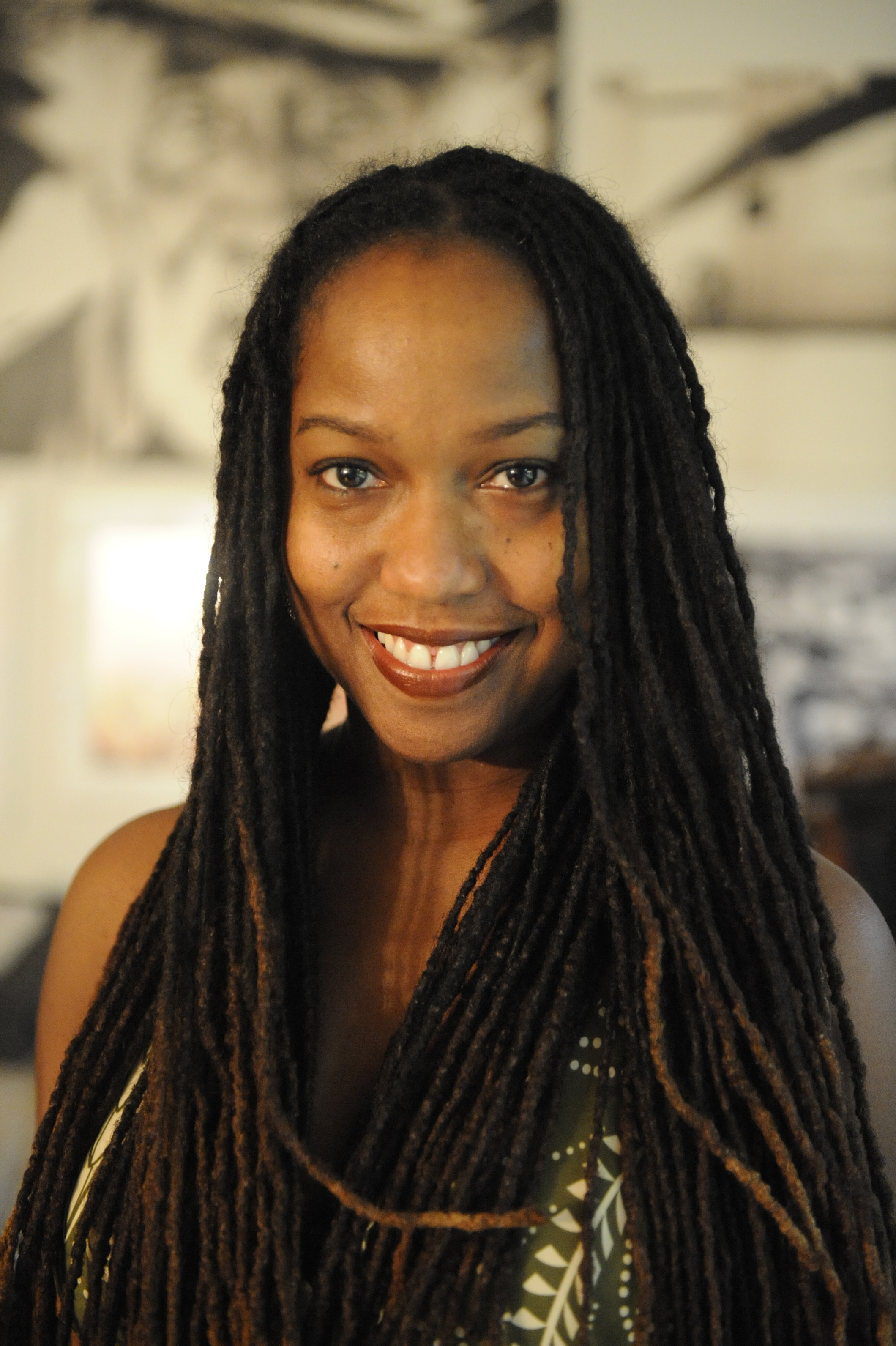
Rachel Mennies is the author of The Glad Hand of God Points Backwards, winner of the Walt McDonald First-Book Prize in Poetry (Texas Tech University Press, 2014), and the chapbook No Silence in the Fields (Blue Hour Press, 2012). Her poems have appeared in Hayden’s Ferry Review, Poet Lore, The Journal, and elsewhere, and have been reprinted at Poetry Daily. She teaches in the First-Year Writing Program at Carnegie Mellon University.


Editor’s Note: The Glad Hand of God Points Backwards is an absolutely stunning collection. It is that rare breed of poetry book that you cannot help but read cover to cover, knowing all the while that you will return to it again and again. There is magic in this work. Ritual. Tradition. Its stories rise from the page in painstaking detail—vivid, emotive, and all too real. History is both honored and excavated; bones and memories are buried in the backyard. Time is not linear, but fifth dimensional; the past, present, and future unfold more like a snowflake than a line. The soundscape is rich and evocative, the themes resonant and deeply lyric, the entirety layered and striking.

And then there are these moments. These perfect, brilliant, heartbreaking moments. Reveals like the volta in “How Grandmother Paid Her Passage to New York,” when we discover what became of “the men with businesses who stayed behind / one week, two weeks more.” Lines like “When he died his mouth made words that / opened her chest like shrapnel.” Like every freakin’ moment of “Yahrzeit.”

Easy to invest in, the rewards of The Glad Hand of God Points Backwards are “as numerous as the stars in the sky and the sand on the seashore.”


Want to see more from Rachel Mennies?
Rachel Mennies – Official Website
Buy The Glad Hand of God Points Backwards from Texas Tech University Press
Buy The Glad Hand of God Points Backwards from Amazon
Linebreak
Thrush Poetry Journal

SATURDAY POETRY SERIES PRESENTS: SALLY BLIUMIS-DUNN

SallyFrontPageResized


By Sally Bliumis-Dunn:


THEIR NAMES

Like a rain I feel but cannot see,
the names of the dead, falling.
Silences I hear between
first names, middle, last

are slivers of empty air between
lines of rain. I want
to be in these tiny silences
that cannot hold their deaths

but join them to all silence ––
rests in a piece of music,

the quiet beneath a rock,
the feather on a crow,
beak closed, wings
perfectly still.


THE VIETNAM MEMORIAL

I was reading the names,
carved in the black marble
as rows that rose
like a strange city’s skyline.

The columns of their names,
tall, skeletal
buildings with no walls,

rows of letters standing
like scaffolding in the stony

night of the black marble.

I walked along the path;
the grayish-white of my body

floated beside me ––
reflected on the wall,
sliding over their names
like a veil or ghost.

The wall grew taller,
burying me, it seemed,
in the bright noontime air.

I could feel the joining:
the alive and
the not alive.


Today’s poems were previously published in Talking Underwater (Wind Publications, 2007) and appear here with permission from the poet.


Sally Bliumis-Dunn’s poems have appeared in The Academy of American Poets’ Poem-a-day series, Bellevue Literary Review, From the Fishouse, The Paris Review, PBS NewsHour, PLUME, Poetry London, the NYT, Terrain.org, and The Writer’s Almanac, among others. In 2002, she was a finalist for the Nimrod/Hardman Pablo Neruda Prize. Her two books, Talking Underwater and Second Skin, were published by Wind Publications in 2007 and 2009, respectively.

Editor’s Note: Poetic meditations on death are an ancient art. In today’s pieces Sally Bliumis-Dunn contemplates the micro and the macro, “the dead” representing lost individuals and the masses alike. Her poems mirror the Vietnam Memorial of which she writes, etching into the lyrical landscape an act of remembrance and mourning. These poems are beautiful, heartbreaking, and reflect the longing of those left behind: “I want / to be in these tiny silences / that cannot hold their deaths.”

Want more from Sally Bliumis-Dunn?
Plume
Rattle
Academy of American Poets
Buy Talking Underwater from Barnes & Noble

SATURDAY POETRY SERIES PRESENTS: LESLIE CONTRERAS SCHWARTZ

IMG_0427 - Copy


By Leslie Contreras Schwartz:


LABOR PANTOUM

We climb, all legs and hands
clutching for each other’s
eyes that we cannot see.
Before I see you, I have met you.

Clutching for each other’s eyes
& faces, your moon-shape up to my swollen one.
There is Green’s Bayou meeting thick vines,
plastic bags scuttling across the water.

Where I rode up and down the shore, swelling
with solid loneliness, clay and sand repeating.
Click and hum from houselights, grasshoppers rasping on water
the evening when my father was on his way

home, the twitch of his fingers a solid loneliness repeating
as he played piano on top of my fingers.
He picked up my mother’s hand on his way to some place
in the backseat of his car. She climbed out of her house for good.

She watches her shows, I hold onto her fingers
when she says to the television I always wanted to do that,
to a woman climbing out of sequins
dancing across the stage, face drowned out by light.

I always wanted to do this,
to ride my bike beside the wildness, the surge
& the bayou where drowning is so close to surviving
& my mother’s face as she washes the dishes by hand.

Baby, now you are born into this surge, a wild
search of dirt paths and bayous. You are a signal
sent back to the world, the hand
I held in the air, the shadow it made in the dusk

as I held onto the handlebar, a signal to myself
that I can conjure something out of barely.
Shadows and dusk.
Climbing, all my legs, your hands.


“Labour Pantoum” appears here with permission from the poet.


Leslie Contreras Schwartz has an MFA from Warren Wilson College in poetry, and her work has appeared in Pebble Lake Review, Southern Women’s Review, and the anthology Improbable Worlds, an Anthology of Texas and Louisiana Poets, edited by Martha Serpas and published by Mutabilis Press in 2012. She also writes personal essays and fiction. She lives in Houston.

Editor’s Note: There are few poetic forms as subtle and lulling as the pantoum. A skilled hand knows how to manipulate the repetition, creating ripples and echoes as lines reemerge in new contexts. Leslie Contreras Schwartz has just such a hand. Through the mists of the form a story emerges, elliptical and swaying. A story of what was and what was unrequited, “a solid loneliness repeating” in a world where “drowning is so close to surviving.” But also a story of what is and how it came to be. A world where the poet “can conjure something out of barely,” out of “Shadows and dusk.”

Want more from Leslie Contreras Schwartz?
Build the School – Leslie Contreras Schwartz’s Official Blog

SATURDAY POETRY SERIES PRESENTS: NICOLE ROLLENDER

_59A1171-Edit


THE FORMS OF SEEKING
By Nicole Rollender

Behind my father’s house, the lake is stained
with floating water lilies, where deep marsh grass smells

like want. Where we’re always returning. Swan wings extended,
a flash of white and water. My father, now blind in one eye,

doesn’t know what chartless world he’ll enter tomorrow.
These flowers, here now, will die by week’s end. I understand why at night

they close so slowly, sinking under moon drift and leaf fall. He watches
a snapping turtle cross the lake, a slow, even trailing – its weighted body

knows how to cross waters, unsinking. Yet, my father’s journey
still ripens. Unmoored, he walks the yard, seeking the self

who has already walked up the mountain path toward a village,
its gate festooned with red flags and bells. And a woman holding a wash

basin filled with oil and flowers, a bread basket. He creates and creates
these streets, hung with paper lanterns, windows open, fountains flowing

with the passage of time. From the gates, what man will emerge?
Will he always wonder how his life was chosen for him?

Underwater, the lilies’ stalks will curl up, submerging and holding
the pollinated flower heads. As something beautiful dies,

it makes another kind of rapture: From bees’ flight, the flower petals
browning into thick seed pods (oh, the memory of their fragrance) will burst

into the lake, the old lily falling apart and drifting. His chance
for survival is remembered joy: Live your life as if pulling from a well

inside yourself. For you are alone, and within you is all of your past
and all of what will come. Live your depths over and over with gratitude.

Behind the shed, he finds a deer skull resting on moss, stippled
with evening light, and then rain. Here now, he’s swept away,

swept away.


“The Forms of Seeking” appears here with permission from the poet.


Nicole Rollender is the author of the poetry chapbooks Absence of Stars (forthcoming July 2015, dancing girl press & studio), Little Deaths (forthcoming November 2015, ELJ Publications) and Arrangement of Desire (Pudding House Publications). She is the recipient of CALYX Journal’s 2014 Lois Cranston Memorial Prize, the 2012 Princemere Journal Poetry Prize, and Ruminate Magazine’s 2012 Janet B. McCabe Poetry Prize for her Pushcart Prize-nominated poem “Necessary Work,” chosen by Li-Young Lee. Her poetry, nonfiction and projects have been published or are forthcoming in The Adroit Journal, Alaska Quarterly Review, Creative Nonfiction, Radar Poetry, Ruminate Magazine, PANK, Salt Hill Journal and THRUSH Poetry Journal, among others. She received her MFA from The Pennsylvania State University, and currently serves as media director for Minerva Rising Literary Journal and editor of Stitches Magazine, which recently won a Jesse H. Neal Award.

Editor’s Note: I suggest you curl up with today’s poem as you would with a good book. Read and reread until its thick layers enfold you. Read once for sound. For music and alliteration. Read once for story. For the father and the momentary windows that open into his life. Read once for structure. For form. Then read several times for beauty. Because “As something beautiful dies, // it makes another kind of rapture.” Because this poem wants you to “Live your life as if pulling from a well // inside yourself.” Give this poem enough of yourself to discover all that it offers in return. Then go forth and “Live your depths over and over with gratitude.”

Want more from Nicole Rollender?
Nicole Rolldener’s Official Website
CALYX
Heron Tree
Thrush
Quail Bell Magazine
Hermeneutic Chaos

SATURDAY POETRY SERIES PRESENTS: ALEXIS KIENLEN

alexiskienlen

By Alexis Kienlen:


HOW TO PICK AN APPLE

find a ripe specimen,

gaze at its perfection,

cup it in your hand,

turn the bottom star to the sky.

show the end of the apple to heaven,

let it fall.


“How to Pick an Apple” appears here today with permission from the poet.


Alexis Kienlen is the author of two collections of poetry, 13 and She Dreams in Red. She’s also the author of a biography of a Sikh civil rights activist called Truth, love, non-violence; The story of Gurcharan Singh Bhatia. Alexis lives in Edmonton, Alberta, Canada where she works as an agricultural reporter for a newspaper called Alberta Farmer. From 2001-2006, she was the Literary Editor for Ricepaper magazine, a Vancouver based Asian Canadian arts and culture magazine. She currently writes a weekly literary column for The Grande Prairie Daily Herald Tribune. Her poetry, fiction and journalism pieces have appeared in numerous publications across Canada and online. She’s currently working on a novel and a new collection of poetry.

Editor’s Note: Today’s poem is vivid and whimsical and whisks the reader away on a brief yet epic journey. Placing us, at first, in the everyday pleasure of picking an apple, the poem turns on the word “turn” in the fourth line. From there we are shifted upward, toward the stars and the sky and the heavens, and are transported from the orchard into the realm of the spiritual, the mystical, the otherworldly. The last line echoes what has been biblically ingrained in the western apple, the fall.

Today’s poem is dedicated to my friend Luis, a faithful reader of this series and a man who knows and loves a good apple.

Want more from Alexis Kienlen?
Alexis Kienlen’s Official Website
Buy 13 and She Dreams in Red from Frontenac House
Buy Alexis Kienlen’s books from Amazon
Blue Skies Poetry
Alberta Farmer Express

SATURDAY POETRY SERIES PRESENTS: KAREN PAUL HOLMES

Karen Paul Holmes with roses

By Karen Paul Holmes:


DRAWN INTO CIRCLES

Last evening, I placed fresh towels on both dog beds
heard scratching and rearranging in the night.
This morning, each dog lay curled
into a circle of towel
like a bird’s nest.

How life loves
a circle:
the sun
cups of tea
pizza, roses, embraces
wedding rings, cathedral domes, bells
with notes radiating like ripples from skipped stones
the egg, the womb, the opening, downy heads
suckling mouths, breasts, eyes filled
with delight for bubbles
and bouncing balls.

Why do we box ourselves into corners
put our babies into rectangular cribs
build square houses and boxy buildings
drive cars to perpendicular crossroads
stare at newspapers, monitors, dollars
go to our rest in hard-edged coffins
slowly lowered into matching graves?

It’s a comfort
to imagine our rounded bones
becoming round bits of the globe
our spirits rising to orbit among spiral galaxies
joining those who completed the circle before us.


TEACHING MOZART IN STONE MOUNTAIN PRISON

I didn’t know what crimes they committed,
didn’t want to: those 12 guys glaring at me,
wondering what I had in store.

No female had taught there before
so I wore a calf-length, shapeless dress;
no make up; tortoise shell glasses instead of contacts.

Twice a week, iron gates banged behind me,
paperwork shuffled, an armed guard took me down
a warren of halls. He stationed himself by my door.

I needn’t have worried–soon knew, just as told,
if one prisoner caused trouble, he’d be jumped
by the others grateful for the chance of a college degree.

This was music appreciation. None knew the classics,
but one had played William Tell Overture in band.
All began to embrace opera, symphony, sonata—

I think the music transported them, comforted
even as they struggled to study in noisy rows of bunks.
One evaluation stays with me 30 years later,

Thanks be to God for blessing us with Mrs. Holmes.
But I felt blessed early in the semester:
We arrived at Mozart Piano Concerto Number 21.

Their books covered just the first movement, yet
I left the record playing into the second, saying,
You’ve got to hear a bit of the andante.

Muted violins conjured the ethereal melody while
repeated notes in the violas mesmerized.
After the pianist took up the solo for several bars,

I reached out to lift the needle… Twelve students
—no longer thief, mugger, murderer—
sang out in unison, No, leave it on!


“Drawn into Circles” was first published in Poetry East and appears in the collection Untying the Knot (Aldrich Press, 2014), and “Teaching Mozart in Stone Mountain Prison” was first published in POEM. These poems appear here today with permission from the poet.


Karen Paul Holmes is the author of the poetry collection, Untying the Knot (Aldrich Press, 2014), which tells a story of loss and healing “with grace, humor, self-awareness and without a dollop of self-pity,” according to Poet Thomas Lux. Karen received an Elizabeth George Foundation emerging writer grant in 2012. Publishing credits include Poetry East, Atlanta Review, Caesura, POEM, The Sow’s Ear Poetry Review, Every Day Poems, The Southern Poetry Anthology Vol 5: Georgia, and the forthcoming anthology of Georgia poets from Negative Capability Press.

Editor’s Note: Today’s poems shed new light on existence, demanding that we reconsider our human condition. “Drawn into Circles” deftly considers both the concept of the ‘circle of life’ and the roundness of nature versus the right angles of the man-made world. “How life loves / a circle: / the sun… the egg, the womb, the opening.” So “[w]hy do we box ourselves into corners / put our babies into rectangular cribs / build square houses and boxy buildings”? “It’s a comfort / to imagine our rounded bones… joining those who completed the circle before us.” While “Teaching Mozart in Stone Mountain Prison” engrosses us in a moving narrative that forces us to forfeit our assumptions and accept the beauty of being human. Both poems demand a second read, and a third, and neither poem leaves us quite the same as we were before we encountered them.

Want more from Karen Paul Holmes?
Buy Untying the Knot from Amazon
simply communicated, inc.
Interview with Karen Holmes on NetWest Writers
Reality Show: Save This Marriage on SoundCloud
Kentucky Review

SATURDAY POETRY SERIES PRESENTS: JACINTA V. WHITE

JVW by John H. White

STANDING IN COURAGE
By Jacinta V. White

Dangerous, wanted
Endangered, hunted
             Majestic
Beauty protected
Enraged
             You, young
                          Black man
Stand in courage
             In love
             In honor
                          Resurrected
             In glory
Forget put upon shame
Young man stand
             In beauty
             In strength
             In dignity
Stripped and threatened
Generations down
                                       Hands down
Young black man
             Brother, father, husband, son
Stand in your weariness
Stand in your strength
             In your courage
             In your truth
             In your faith
Stand knee high in the depths of your passion
                          Take your crown, young black man
             Wear your crown
Young black man


“Standing in Courage” was originally published by New Verse News and appears here today with permission from the poet.


Jacinta V. White is a NC Arts Council Teaching Artist and the founder of The Word Project. Her chapbook, broken ritual, was published by Finishing Line Press in 2012. Most recently, she has had poems published in Typoetic.us, Prime Number Magazine, and What Matters, an anthology published by Jacar Press.

Editor’s Note: “A wild patience has taken me this far…and when freedom is the question it is always time to begin.” So says Adrienne Rich, and your faithful editor agrees. It is time to begin. Speaking up. Speaking out. For freedom, and against injustice.

There is a rich history of poetry in social justice. Of outcries from the poetic heart of humanity for human rights. Since time immemorial poets have used their words to demand equality, whether based on race or class or gender, and from time to time they have even been heard.

Today’s poem takes part in this critical tradition, demanding the world pay attention and that the world order be reversed. It cries out for the oppressed to rise up, not in violent retribution, but in glory. It requires us to admit and to remember, while allowing us our outrage, our grief, and a new hope alike.

Want more from Jacinta V. White?
Jacinta White’s Official Website
Typoetic.us
Prime Numbers Magazine
The Word Project
Jacinta White on Facebook

SATURDAY POETRY SERIES PRESENTS: DIANE LOCKWARD

Lockward-headshot

By Diane Lockward:


SERVICE FOR THE MURDERED BOY

                           In Tibet they lay their dead
                           on the side of a mountain.

All night I dream of the murdered boy
decomposing in the Himalayas,
laid out under a Banyan tree.
No monsoon of grief in this unarable land,
only mountains rumbling
with footsteps of tigers, snow leopards,
and moon bears. A hundred vultures fill the sky.
All circle in, nuzzle the boy with snouts and beaks,
and devour him until nothing’s left but bones
and a skull, resting on stones hard as fists.

I dream a mission of monks, roaming
the desert, spinning prayer wheels,
and searching peasant villages for the right
boy, the one birthed at the exact moment
of death. They lift the born-again buddha
and carry him home.

But my dream lasts only as long as the night.
Morning brings echoes of Ave Maria.

The father’s wearing a red jacket
with white leather sleeves, the kind
boys wear when they make the varsity team.
He leans into the mic and says,
“I don’t want to talk about the future,
or games that won’t get played,
or the boy who shot him. I want to talk
about songs that were sung.”
Then he breaks down, turns to his son
still smiling in the blown up photograph.

I don’t want church music, soft and mournful.
I want hard rock, heavy metal,
music all bass and treble, cranked up full blast,
the kind that blares out windows of cars
driven by boys, the kind that rocks
the ground and trembles the earth with their songs.


A MURMURATION OF STARLINGS

                     It was raining dead birds.
                              —Mayor Brian Levine, The Star-Ledger, 1/27/09

Starlings dropped from the sky,
mid-flight, like balloons suddenly deflated.

No time to spread their wings and glide on air,
and, synchronized, to soar and dive.

No time to close their wings, to wrap
themselves in shrouds of feathers, and sleep.

They fell like water balloons tossed blindly
from dormitory windows.

They fell like rocks dumped from the unlatched
rear end of a construction truck.

They fell like bombs, like stars, like fallen angels,
they fell like dead starlings.

Hundreds plummeted from the sky
on cars, porches, and snow-covered lawns.

They’d taken the poisoned bait
and, headfirst, dreamed one last time of England.

Birds who’d once disturbed a king’s sleep
with cries of Mortimer, Mortimer.

Memento mori, forcing us to contemplate
unexpected death.

Do we not already think of the fallen,
earth’s fields littered with corpses?

Dark vision made real,
their glistening bodies, silent now and still.

Birds who’d sung their own song
and wooed their mates with lavender and thistle.


“Service for the Murdered Boy” is from the collection Eve’s Red Dress (Wind Publication, 2003) and “A Murmuration of Starlings” is from the collection Temptation by Water (Wind Publications, 2010). These poems appear here today with permission from the poet.


Diane Lockward is the author of The Crafty Poet: A Portable Workshop (Wind Publications, 2013) and three poetry books, most recently Temptation by Water. Her previous books are What Feeds Us, which received the 2006 Quentin R. Howard Poetry Prize, and Eve’s Red Dress. Her poems have been included in such anthologies as Poetry Daily: 360 Poems from the World’s Most Popular Poetry Website and Garrison Keillor’s Good Poems for Hard Times, and in such journals as Harvard Review, Spoon River Poetry Review, and Prairie Schooner. Her work has also been featured on Poetry Daily, Verse Daily, Gwarlingo, and The Writer’s Almanac.

Editor’s Note: Today’s poems are, sadly, incredibly timely. I was originally drawn to “Service for the Murdered Boy” with thoughts of Michael Brown, but now both poems cry out in response to yesterday’s school shooting in Washington. Written years ago, the mourning and meditations of these poems are heartbreakingly timeless. There is a still and quiet beauty in their language and imagery, a slowing down of time that enables us to grieve. These mindful pieces reflect upon both today’s atrocities and the mourning songs that are as ancient as poetry itself. So, too, do these poems turn in upon themselves, questioning the very act of contemplating death: “Do we not already think of the fallen, / earth’s fields littered with corpses? // Dark vision made real, / their glistening bodies, silent now and still.” And they speak in chorus with those who have lost their children, to those who seek only to remember: “I don’t want to talk about the future, / or games that won’t get played, or the boy who shot him. I want to talk / about songs that were sung.”

Want more from Diane Lockward?
Buy The Crafty Poet: A Portable Workshop from Amazon
Diane Lockward’s Official Website
Diane Lockward’s Blog
Sign up for the poet’s free monthly Poetry Newsletter

SATURDAY POETRY SERIES PRESENTS: NOMI STONE

Stone headshot

By Nomi Stone:


WAR GAME, AMERICA

The war scenario has: [vegetables stalls], [roaming animals],
and [people] in it. The people speak

the language of the country we
are trying to make into a kinder country.
Some of the people over there are good
others evil others circumstantially

bad some only want cash some
just want their family to not
die. The game says figure

out which
are which.


WHAT IS GROWING IN THESE WOODS

Green in here, gleaming like
being inside a fable but with
stalls of fruit you can’t eat.
To go home, leave crumbs.
When the wood circles you
back here instead, let the lost
and the impossible ripen in
you, ripen and go.


US AND THEM

“I would make love to one of our

whores before I
would fuck one of their
bourgeoisie.” There was a proverb,

like this: Don’t trust a         if
he becomes a         even though
he remains a       for

forty years. And the sister opposite
proverb: Don’t trust a       even
though he has been in the grave

for forty years. It was a difficult day,
a bomb had spun open
a bus, and children

had been crushed down by
a machine. Each wondered if he was born
too soon, if later would have been better, if 40

+ 40 + 40 + 40


War Game, America” and “What is Growing in these Woods” previously appeared in Painted Bride Quarterly, and “Us and Them” previously appeared via The Poetry Foundation. These poems appear here today with permission from the poet.


Nomi Stone is the author of the poetry collection Stranger’s Notebook (TriQuarterly, 2008), a PhD Candidate in Cultural Anthropology at Columbia University, and an MFA Candidate in Poetry at Warren Wilson. She previously earned a Masters in Modern Middle Eastern Studies from Oxford and was a Creative Writing Fulbright scholar in Tunisia. Her poems have been published or are forthcoming in Poetry Northwest, Memorious, The Painted Bride Quarterly, The Bloomsbury Anthology of Contemporary Jewish Poetry, at The Poetry Foundation, and elsewhere. She is currently researching and writing a book of poetry as well as a book of non-fiction about combat simulations in mock Middle Eastern villages erected by the US military across America.

Editor’s Note: Nomi Stone’s poetry is a veritable minefield of experience. Politics, war, violence, history, proverbs, culture, peoplehood, nationality, borders, mythology, folklore, fairy tales, and biblical referentiality lie in wait for the keen and unsuspecting reader alike. The unsaid is as present and powerful as what is written, so that her poetry echoes the Bible’s black fire written on white fire. This is a poetry rich and blooming. Thick with the sights and smells of Near Eastern markets, yet heavy with human tragedy. Herein lies the old world. Herein lies the Levant. Herein lies the wild woods of our imagination set against the all-too-real world of war. If you cannot find your way out, “let the lost / and the impossible ripen in / you, ripen and go.”

Want more from Nomi Stone?
“Many Scientists Convert to Islam”
“Trapped on Djerba, Island of the Lotus Eaters”
“Purim, Spring Festival: How to Escape Massacres”
Interview with Nomi Stone with poems: “The Notionally Dead” and “War Game America”
An interview about Nomi Stone’s research on war games

SATURDAY POETRY SERIES PRESENTS: RESURRECTION PARTY

resurrection_cover


From RESURRECTION PARTY
By Michalle Gould:


SELF-PORTRAIT AS A SERIES OF PREPARATORY STUDIES FOR A NUDE BY MATISSE

The breasts hang low like fruit hoping
to be picked yet still on the branch,
While the body largely reclines, a letter K
lain on its side and slightly bent,
or in a less common pose, my back faces the viewer
so I resemble a pushed in O, my arms and legs drawn in,
like a turtle withdrawing far into its shell
to escape some predator that has come to suck;
We are become a rock. Our hearts lie hidden far
Below its skin. The artist scrapes my flesh onto his brush
but cannot touch what lies beneath, whatever he thinks—
nor can you, my dear, even as you read me.


SELF-PORTRAIT AS THE MAIDEN OF ATHENS

That day, I went forth to kill the Minotaur.
Since Theseus, they sent us all naked;
I had no ball of string; I had no sword.
For tools, instead, I had only the instruments
of my body: my nails for daggers, my hair for thread.
I had heard of his legendary cruelty;
I had heard how he killed without a word.
Then I came to the center and saw him.
His strong arms beckoned—and I cut the cord.


SELF-PORTRAIT AS A PAIR OF LOVEBIRDS

Opening their beaks, they thrust
their tongues out for one last kiss
before the long journey south—
like worms they each intend to drop
into the other’s hungry waiting mouth.


Today’s poems are from Resurrection Party, published by Silver Birch Press, copyright © 2014 by Michalle Gould, and appear here today with permission from the poet.


RESURRECTION PARTY concerns itself, almost to the point of obsession, with the question of how the imagination grapples with the fear of death. The collection intertwines religious and mythical subjects and themes with more fleshly concerns about the body and decay, presence and absence. It has been described as containing poems of “almost exquisite refinement, illuminated by the taut glow of sensuous prosody and imagery” and as “a deeply meditative collection at once intelligent, tender, and utterly human.” (From the Silver Birch Press website.)


Michalle Gould has been working on the poems that constitute Resurrection Party for almost 15 years. In that time, her poems and short stories have appeared in Slate, New England Review, Poetry, American Literary Review, The Texas Observer, and other journals. She currently lives in Los Angeles, where she works as a librarian, and is in the process of researching and writing a novel set in the North of England during the 1930s.


Editor’s Note: Michalle Gould has a deep and fearless understanding of the self. In her quest to write poems that grapple with life’s big questions—life and death, self-awareness, relationships—she is bold and unafraid. She views her own body as honestly as an artist would. Yet she understands truths about the self that no other can reveal: “The artist scrapes my flesh onto his brush / but cannot touch what lies beneath, whatever he thinks— / nor can you, my dear, even as you read me.”

In “Self Portrait as the Maiden of Athens” the poet re-examines the Greek myth of the minotaur from a female perspective. Here she notes that, unlike the male hero in the story, when the maiden faces the beast, “I had no sword. / For tools, instead, I had only the instruments / of my body: my nails for daggers, my hair for thread.” This concept translates into the larger role of women in the world, and the question of what few tools and resources we have traditionally been allowed.

SPS-beloved poet Louise Mathias writes that the terrain of Resurrection Party “is somewhere between body and spirit, life and death, intimacy and solitude, elegance and intuition. Possessing a sly humor coupled with a laser sharp awareness and assertion of how all is ephemeral, Resurrection Party accomplishes the rare: it makes even the big questions fresh.”


Want to see more from Michalle Gould?
Michalle Gould Official Website
Buy Resurrection Party from Amazon
Resurrection Party on Goodreads
More Excerpts from Resurrection Party