On This Earth What Makes Life Worth Living

By Mahmoud Darwish

Translated by Karim Abuawad

On this earth what makes life worth living:

the hesitance of April

the scent of bread at dawn

an amulet made by a woman for men

Aeschylus’s works

the beginnings of love

moss on a stone

the mothers standing on the thinness of a flute

and the fear of invaders of memories.

On this earth what makes life worth living:

September’s end

a lady moving beyond her fortieth year without losing any of her grace

a sun clock in a prison

clouds imitating a flock of creatures

chants of a crowd for those meeting their end smiling

and the fear of tyrants of the songs.

On this earth what makes life worth living:

on this earth stands the mistress of the earth

mother of beginnings

mother of endings

it used to be known as Palestine

it became known as Palestine

my mistress:

I deserve, because you’re my mistress

I deserve life.

Mahmoud Darwish (1942-2008): is a Palestinian poet born in the village of al-Birweh, in Galilee. A few months before the declaration of the State of Israel, Darwish’s family was expelled to Lebanon. Upon their “illegal” return to Galilee in 1949, the family found their village razed, their property appropriated by the state. Darwish went into exile in 1970, returning to live in Ramallah, Palestine after the signing of the Oslo Accords in 1993.

He’s considered one of the most prominent poets writing in Arabic in the twentieth century. He made many contributions among which helping to popularize free-verse, a project championed by earlier poets to free modern Arabic poetry from the strict meter and rhyme that characterized the earlier traditional poetry.

Many of his poems have become lasting, and quite recognizable, songs, the most famous of which is the poem he wrote for Rita, the Jewish girl who was Darwish’s first love. The first line of the poem, which reads “There’s a rifle between Rita and me,” encapsulates this romantic encounter between a Palestinian living in Israel without citizenship and his lover who enlists in the Israeli army.

More recently, Darwish published the long poem Mural (2000), an extensive monologue where the poet talks to, and argues with, Death which has come to claim him several times before finally succeeding in 2008.

In June, 2010, the Council of Paris inaugurated “Mahmoud Darwish Square” in honor of Darwish and his artistic legacy. In the words of Paris mayor, Bertrand Delanoë, Darwish “is not just any poet [but] a Palestinian poet, a poet whose inspiration is born of his suffering in exile.”
SATURDAY POETRY SERIES PRESENTS: KING SOLOMON


TO EVERYTHING THERE IS A SEASON / EXCERPT FROM KOHELET/ECCLESIASTES
by King Solomon


To every thing there is a season, and a time to every purpose under the heaven:

A time to be born, and a time to die; a time to plant, and a time to pluck up that which is planted;

A time to kill, and a time to heal; a time to break down, and a time to build up;

A time to weep, and a time to laugh; a time to mourn, and a time to dance;

A time to cast away stones, and a time to gather stones together; a time to embrace, and a time to refrain from embracing;

A time to get, and a time to lose; a time to keep, and a time to cast away;

A time to rend, and a time to sew; a time to keep silence, and a time to speak;

A time to love, and a time to hate; a time of war, and a time of peace.

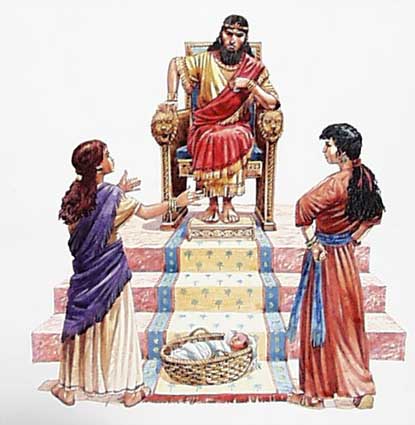
King Solomon was, according to the Hebrew Bible, a King of Israel. The biblical accounts identify Solomon as the son of David. The Hebrew Bible credits Solomon as the builder of the First Temple in Jerusalem and portrays him as great in wisdom, wealth, and power. Solomon had seven hundred wives and three hundred concubines. The wives are described as foreign princesses, including Pharaoh’s daughter and women of Moab, Ammon, Sidon and of the Hittites. He is considered the last ruler of the united Kingdom of Israel before its division into the northern Kingdom of Israel and the southern Kingdom of Judah. According to Jewish tradition, King Solomon wrote three books of the Torah/Bible: Mishlei (Book of Proverbs), Kohelet (Ecclesiastes), and Shir ha-Shirim (Song of Songs). (Annotated biography of King Solomon courtesy of Wikipedia.org, with edits.)

Editor’s Note: Today’s post became most famous in modern popular culture for the version put to music (with six words added) by Pete Seeger in 1962 and made more famous in 1965 when recorded by the Byrds. Thus, today’s post continues our ongoing discussion about where the lines of poetry and music are blurred.

Today’s post takes that discussion a step further, by taking a look at how biblical text and mythology come into play in poetry. Arguably mythological stories and oral storytelling, which later became incorporated into the written word and went on to form important texts such as the Torah, Bible, and Koran (among many others) are the oldest form of poetry. Ideas became stories and songs, stories and songs became the written word, the written word was crafted as a form of art, that art informed and inspired others, and poetry as we know it was born.

On my paternal grandmother’s side of the family a family tree has been kept for so many generations that it traces our lineage to King David. That makes King Solomon my kin, and I am proud to honor him today by celebrating his poetry. Let’s hope his talent runs in the family!

Want to read more by and about King Solomon?
King Solomon on Wikipedia
Turn! Turn! Turn! on Wikipedia
U Penn / Song of Songs

SATURDAY POETRY SERIES PRESENTS: RABINDRANATH TAGOR


UNTITLED

by Rabindranath Tagore


The foolish run.
The clever wait.
And the wise go into the garden.


Rabindranath Tagore (1861-1941) was an Indian Bengali polymath. He was a popular poet, novelist, musician, and playwright who reshaped Bengali literature and music in the late 19th and early 20th centuries. As author of Gitanjali and its “profoundly sensitive, fresh and beautiful verse”, and as the first Asian to win the Nobel Prize in Literature, Tagore was perhaps the most widely regarded Indian literary figure of all time. He was a mesmerizing representative of the Indian culture whose influence and popularity internationally perhaps could only be compared to that of Gandhi, whom Tagore named ‘Mahatma’ out of his deep admiration for him. (Annotated biography of Rabindranath Tagor courtesy of Wikipedia.org.)

Editor’s Note: This piece was by suggestion of my mother, a poet and gardener who, often, knows best.


Want to read more by and about Rabindranath Tagor?
NobelPrize.org
SchoolOfWisdom.com
INDOlink.com

SATURDAY POETRY SERIES PRESENTS: OCTAVIO PAZ


BETWEEN GOING AND STAYING

by Octavio Paz


Between going and staying the day wavers,
in love with its own transparency.
The circular afternoon is now a bay
where the world in stillness rocks.

All is visible and all elusive,
all is near and can’t be touched.

Paper, book, pencil, glass,
rest in the shade of their names.

Time throbbing in my temples repeats
the same unchanging syllable of blood.

The light turns the indifferent wall
into a ghostly theater of reflections.

I find myself in the middle of an eye,
watching myself in its blank stare.

The moment scatters. Motionless,
I stay and go: I am a pause.


Octavio Paz (1914-1998) was a Mexican writer, poet, and diplomat. Under the encouragement of Pablo Neruda, Paz began his poetic career in his teens by founding an avant-garde literary magazine, Barandal, and publishing his first book of poems, Luna Silvestre (1933). In 1962, Paz became Mexico’s ambassador to India and resigned six years later in protest when government forces massacred student demonstrators in Mexico City. Paz was awarded the Cervantes Award in 1981, the Neustadt Prize in 1982, and the Nobel Prize for Literature in 1990.

Editor’s Note: This post is both in line with my love for great Spanish poets and with an ongoing discussion here on As It Ought To Be of the role of artists in politics. In a time of great turmoil – the new racist police state law in Arizona, the BP oil catastrophe, and Israel’s attack on those trying to aid occupied Palestine, to name a few – we as artists have a responsibility to use our voices for the greater good. May Octavio Paz serve as an inspiration to do so.


Want to read more by and about Octavio Paz?
Poets.org
NobelPrize.org
Britannica Online

SATURDAY POETRY SERIES PRESENTS: ANTONIO MACHADO

LAST NIGHT, AS I WAS SLEEPING, I DREAMT MARVELOUS ERROR!

by Antonio Machado


Last night, as I was sleeping,
I dreamt — marvelous error! –
that a spring was breaking
out in my heart.
I said: Along which secret aqueduct,
Oh water, are you coming to me,
water of a new life
that I have never drunk?

Last night, as I was sleeping,
I dreamt — marvelous error! –
that I had a beehive
here inside my heart.
And the golden bees
were making white combs
and sweet honey
from my old failures.

Last night, as I was sleeping,
I dreamt — marvelous error! –
that a fiery sun was giving
light inside my heart.
It was fiery because I felt
warmth as from a hearth,
and sun because it gave light
and brought tears to my eyes.

Last night, as I slept,
I dreamt — marvelous error! –
that it was God I had
here inside my heart.


Antonio Machado (1875-1939) was one of Spain’s most esteemed modern poets. He has been referred to as “a poet of time and memory.” Machado was prominent in the Spanish literary movement known as The Generation of ’98. He published a number of works during his lifetime, beginning with Soledades in 1903 and ending with Juan de Mairena in 1936. Machado’s death was related to the Spanish Civil War. When he died, in his pocket was found his last poem, “Estos días azules y este sol de infancia.

Editor’s Note: This poem was a request. If you have a request of your own please feel free to post it as a comment. Of course, I will not post a poem that I do not stand behind. But how can one not stand behind a poem by one of Spain’s greatest modern poets, especially one with such a line as: “And the golden bees were making white combs and sweet honey from my old failures.” I have yet to find poets that blow me away in quite the way that Spanish poets do.

Want to read more by and about Antonio Machado?
Poetry Chaikhana
Famous Poets and Poems
Green Integer

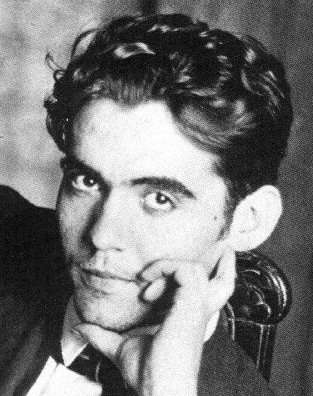
SATURDAY POETRY SERIES PRESENTS: FEDERICO GARCIA LORCA


SONG OF THE BARREN ORANGE TREE

by Federico Garcia Lorca


Woodcutter.
Cut my shadow from me.
Free me from the torment
of seeing myself without fruit.

Why was I born among mirrors?
The day walks in circles around me,
and the night copies me
in all its stars.

I want to live without seeing myself.
And I will dream that ants
and thistleburrs are my
leaves and my birds.

Woodcutter.
Cut my shadow from me.
Free me from the torment
of seeing myself without fruit.

“Song of the Barren Orange Tree” by Federico García Lorca, from THE SELECTED POEMS OF FEDERICO GARCÍA LORCA. Translated by W. S. Merwin, copyright © 1955 by New Directions Publishing Corp.

Federico Garcia Lorca (1898-1936) was a Spanish poet, dramatist and theatre director. García Lorca achieved international recognition as an emblematic member of the Generation of ’27. He is thought to be one of the many thousands who were ‘disappeared’ and executed by Nationalists at the beginning of the Spanish Civil War.
(Annotated biography of Federico Garcia Lorca courtesy of Wikipedia.org.)

Editor’s Note: I think few poems have achieved what this poem does. This poem both inspires me to want to be a better poet and intimidates me with its greatness.

Want to read more by and about Federico Garcia Lorca?
Poets.org
The NY Times
Repertorio.org

SATURDAY POETRY SERIES PRESENTS: SOLOMON IBN GABIROL


I’M PRINCE TO THE POEM

by Solomon Ibn Gabirol


I’m prince to the poem my slave,
I’m harp to the court musicians,
my song is a turban for viziers’ heads,
a crown for kings in their kingdoms:

and here I’ve lived just sixteen years,
and my heart is like eighty within them.

© Translation: 2001, Princeton University Press.

Solomon Ibn Gabirol (approx. 1021 – approx. 1058), one of the greatest liturgical poets of the Middle Ages, was a Hebrew poet whose entire life was spent in Spain. He was born in Málaga in Andalusia in the third decade of the 11th century and died approximately thirty years later in Valencia. (Annotated biography of Solomon Ibn Gabirol courtesy of Israel – Poetry International Web.)

Editor’s Note: As I move toward graduate school I am contemplating what specific areas of poetry interest me and what I might want to spend the duration of my PhD program working on. As an Israeli-American poet whose parents were founding members of Shalom Acshav, a prominent peace movement in Israel in the 1970’s and 1980’s, I feel drawn toward middle eastern poetry, and particularly poetry that contemplates Israeli-Palestinian peace struggles. Poets have been political activists and anti-war protesters for nearly as long as poetry has existed as an art form. Poets throughout history have played an important role in peace struggles, as well they should given their ability to manipulate language and be heard. As I embark on this journey into this particular subset of poetry you will see more posts that explore middle eastern poets, and particularly those who contemplate politics and peace.

Want to read more by and about Solomon Ibn Gabirol?
Article by Yehuda Ratzaby
Jewish Encyclopedia
SOLOMON IBN GABIROL: AN ANDALUSIAN ALPHABET
Poetry Chaikhana

SATURDAY POETRY SERIES PRESENTS: MARTIN CAMPS

By Martin Camps:

DO YOU STILL WRITE POETRY?

They ask
               sometimes
as if it were a demise
in need
           of a cure
No one asks a doctor
are you still curing people?
             Yes,
I have not
been cured at all.


PERSISTENCE OF WATER

Poetry is not carried in vessels of mud.
I said: I will stop writing, one or two years,
Let poetry speak through other mouths.
I will forget. I will not be called a poet.
Now I will be a teacher, a laborer, an employee.
I will not listen to the inner anthill,
this noise of sheets waved by the wind.
But poetry finds its way,
Like water that filters through
a wall of plaster.
And to begins again,
as if from fear, to suffocate
the noise of the leaves.
Poetry does not spill like wine,
it is not exchanged for thirty silver coins,
it does not even hide like talents in the ground.
Poetry shatters your mouth.


T. REX AT THE ACADEMY OF SCIENCES

How
hungry
time
is
to
leave
us
these
clean
bones


Martin Camps has published three books of poetry in Spanish: Desierto Sol (Desert Sun, 2003), La invencion del mundo (The Invention of the World, 2008), and La extincion de los atardeceres (The Extintion of Twilight, 2009). Has is the recipient of two poetry prizes from the Institute of Culture of Mexico and an Honorable Mention in the Bi-National Poetry Prize Pellicer-Frost in 1999. His poems have been published in The Bitter Oleander (Pemmican Press), Alforja, and Tierra Adentro, among others. He answers all email at markampz@hotmail.com.

Editor’s Note: Martin is one of the most innovative poets I know. I have seen his poems in video format, power point, as if an investment brochure, and laid out on the page so that form mirrors meaning. Sometimes political, often comedic, and always heartbreakingly good, Martin masterfully illuminates both his own experience and that of the Poet at large.

Want more of Martin Camps?

Buy his books online, or email markampz@hotmail.com to buy them directly from the poet for $6 each.
Peticao a NASA
La Belleza de No Pensar
Mosquitoes

JÜRGEN BECKER

brandenburg


Three Poems by Jürgen Becker

translated by Okla Elliott

Jürgen Becker was born in Köln, Germany, in 1932. He is the author of over thirty books—novels, story collections, poetry collections, and plays—all published by Germany’s premier publisher, Suhrkamp. He has won numerous prizes in Germany, including the Heinrich Böll Prize, the Uwe Johnson Prize, and the Hermann Lenz Prize, among others. Becker’s work often deals with his childhood experience of WWII and the political consequences of the postwar division of Germany.

I first discovered his work when I was a student for a year in Germany and only later decided to contact him about translating his work. I can say that spending as much time as I have with his poetry has been hugely rewarding, and there are days when I enjoy being the conduit for his work into English as much as I enjoy doing my own writing. The following three translations have all appeared in print journals (A Public Space, Absinthe, and Indiana Review, respectively). I hope they give some idea of how wide-ranging and engaging Becker’s work is.

***

In the Wind

Blackbirds, then other voices. It doesn’t stop
when it snows, when with the snow
a newness comes that is
entirely essential this morning. Or how
do you see it? I see the pear tree and how it
(the pear tree) reacts to the wind (to the
wind). This morning, yet again,
the decision fell. War
between magpies and crows, only this war,
no trappings, only this clear understanding.
Yet another voice, the next commentator; it’s all about
(yet again) the whole. Are you standing
in the garden? The you know, tsk tsk, the blackbird
warned above all else, you know, I’ll say it yet
again, in war, in the new snow, in the wind.

***

Belgian Coast

Toccata and tango; the afternoon
not bright. One hotel
weathered after another;
postcards of emigrants.
Doors, doors
are blown away by the sand,
disappear behind the sand. The calm
of anglers. Invisible England; reports
from the British transmitter, wartime.
Children run
with balls, wheels, propellers;
and paratroopers all about.

***

Oderbruch

The camera’s broken? It’s cold out,
and there are crows bigger than crows
usually are, scattering smoothly over there
across the fields.
Nothing over there. Twilight. Gold gray twilight
spreads out. A tree in Poland
is over there the lost barren tree.
Lighted and empty, the bus drives over the levee.
On the riverbank, two men with their backs
to the dam, which neither begins nor ends.
You don’t hear anything. You hear the slippage
of the floe, the circling floe. You hear
for a long time yet, later, in the dark, the drifting ice.
The camera’s broken, else why are the pictures
blurry now? Two men stood on the riverbank.

They came back. They could tell the story.