Raul G. Moldez “When He Gets Bored”

.

.

.

When He Gets Bored

he goes out of the house,
catching hermit crabs

at the back of a makeshift toilet
by the shore. Putting them,

one by one, inside an empty
Milkmaid can. He can hear them

moving. Keep on crawling.
Perhaps looking for a way

out. But each time they take steps
upward, they fall back. Fighting

for freedom or seeking for justice
is not easy. It may even cost life.

At noon, he would start crushing
their shells using stones as anvil

and hammer, killing all of them.
The crushed meat is collected

in a coconut shell. Used as bait
in the hook. And as the sun turns itself

into lemon in the west, he would cast
his fishing line into the waters.

.

.

About the Author: Raul G. Moldez writes from Cagayan de Oro City, Philippines. Author of two collections of poetry, A Day in a Poet’s Life and Other Poems and Mga Taho Gikan sa Akong Uniberso, his works have appeared in Philippines Free Press, Philippines Graphic, Philippine Panorama, Sunday Times Magazine, Crowns and Oranges, Kinaadman Journal, Bisaya, Sunstar Weekend, Homelife, Ani Literary Journal, Bituon, Dagmay, Tinubdan, Red River Review, The Literary Yard and Sentinel Literary Quarterly, among other publications.

.

Image Credit: Chase Dimock “Lemon Sunset” (2021)
Ruth Bavetta: “Signals”

.

20210721231734_IMG_2077

.

.

Signals

This winter did not bring the hazy world
of wet, nor the susurrus of falling

beads of rain, yet the year proceeded.

Green hills faded to brown. The flowering
plum became a harbinger too soon.

Now we have the nameless season elbowing

into spring. Rudely thrusting back the rain
it beckons summer heat before its time,

pulls forth the breath of August

while April dissolves in bright and light,
calls for spark and ember, the errant

cigarette, the bit of broken glass,

tears up the pages of the calendar
to build an illicit and illegal fire

that will last to light our closing.

.

.

About the Author: Ruth Bavetta’s poems have appeared in Rattle, Nimrod, American Poetry Review, Tar River Review, North American Review and many other journals and anthologies. Her books are Fugitive Pigments and Flour, Water, Salt (Futurecycle Press), Embers on the Stairs (Moon Tide Press), and No Longer at This Address (Aldrich Press). She has been a Best of the Net and Pushcart Prize nominee.

.

More By Ruth Bavetta:

Neon Boneyard

A Murder

Spell to Name the Unnameable

.

Image Credit: Chase Dimock “Utah Cliffs”(2021)

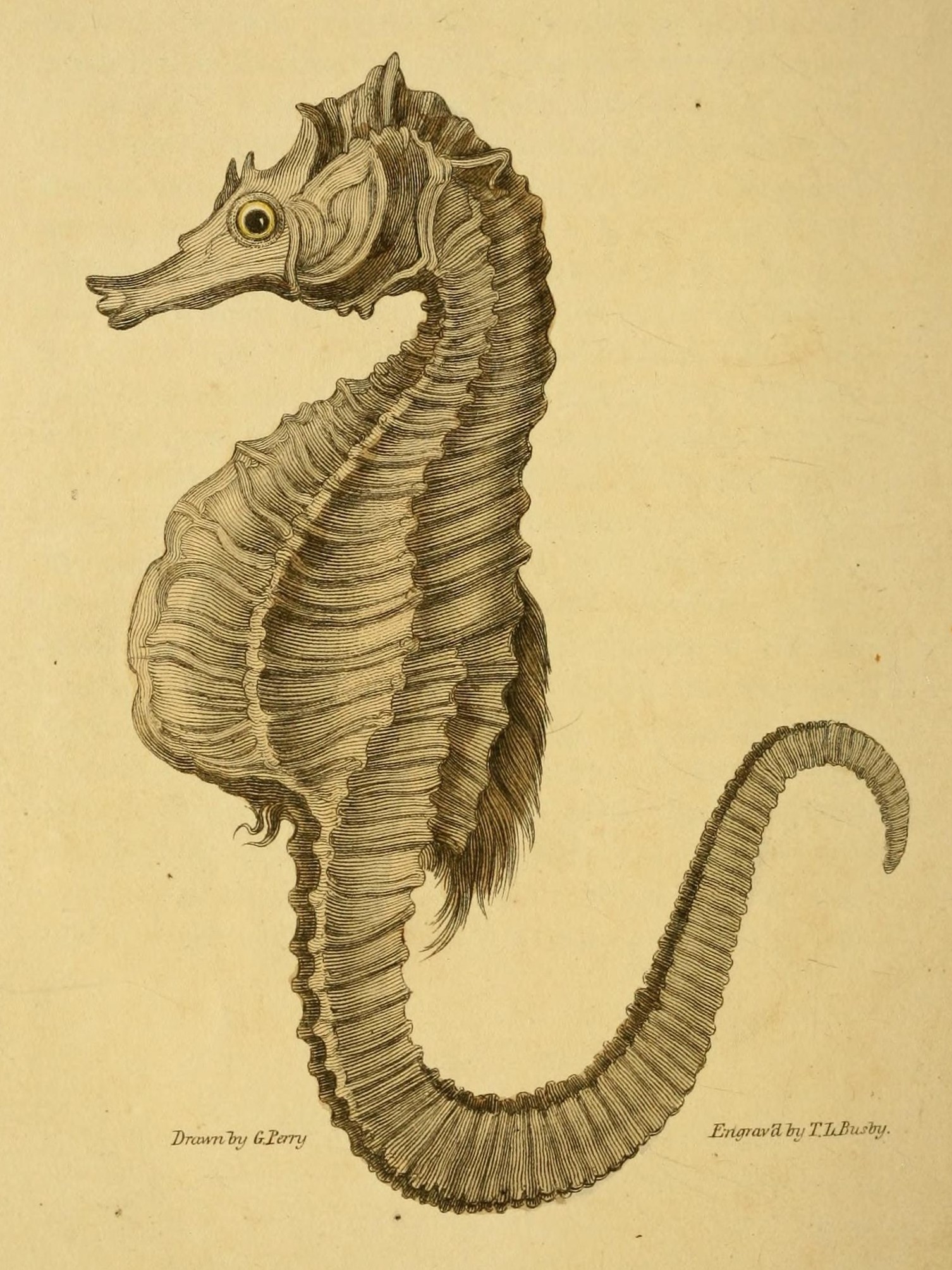
John Dorsey: “A Chicken Strip in the Shape of A Seahorse”

.

.

.

A Chicken Strip in the Shape of A Seahorse

sold by a high school girl
in a hairnet
who can’t swim

is proof
that god
once danced
underwater.

.

.

About the Author: John Dorsey lived for several years in Toledo, Ohio. He is the author of several collections of poetry, including Teaching the Dead to Sing: The Outlaw’s Prayer (Rose of Sharon Press, 2006), Sodomy is a City in New Jersey (American Mettle Books, 2010), Tombstone Factory, (Epic Rites Press, 2013), Appalachian Frankenstein (GTK Press, 2015) Being the Fire (Tangerine Press, 2016) and Shoot the Messenger (Red Flag Poetry, 2017),Your Daughter’s Country (Blue Horse Press, 2019), and Which Way to the River: Selected Poems 2016-2020 (OAC Books, 2020). His work has been nominated for the Pushcart Prize, Best of the Net, and the Stanley Hanks Memorial Poetry Prize. He was the winner of the 2019 Terri Award given out at the Poetry Rendezvous. He may be reached at archerevans@yahoo.com.

.

More By John Dorsey:

Anthony Bourdain Crosses the River of the Dead

Punk Rock at 45

Perpetual Motion

.

Image Credit: Digitally enhanced image from Arcana, or, The museum of natural history : London, Printed by George Smeeton for James Stratford,1811. Public Domain. Image Courtesy of the Biodiversity Heritage Library.

AIOTB Magazine Announces Our Nominees for the 2021 Best of the Net Anthology

.

20210429045248_IMG_1704(1)

.

.

As It Ought To Be Magazine is proud to announce our nominees for the 2021 Best of the Net Anthology, published by Sundress Publications.

.

Nadia Arioli: On “I Walk Without Echo” By Kay Sage

Frank Gallimore: The Shape of My Name

Ken Hines: What the Children Know

Dan Overgaard: Drifting Off

Ilari Pass: Delayed Rays of a Star

Melody Wang: All That My Mother Cultivates

.

Congratulations to our nominees, and thank you to everyone who contributed to AIOTB Magazine this year!

-Chase Dimock
Managing Editor

Ronnie Sirmans: “Cygnus”

.

50912341532_76556cc8b9_o

.

.

Cygnus

    Homo homini lupus.
    (A man is a wolf to another man.)
                – Latin proverb

We think we are wolves.
I often don’t see the lupine
although I know most of us
can live quite carnivorously.
But the ravenous I admire
comes from the Latin cygnus.
A man is a swan to another man.

Wolves can pull like vicious tides,
while swans push wakes of silence.
Canine hairs scatter like fallen leaves,
while feathers are a welcome snow.
Swans carry a grace of awareness.
Whether ivory or ebony or other hues,
their bodies can iridescently blind us.

A swan is a man is a wolf too.
A man drowned when a swan
protecting his mate overturned
the thin kayak and kept the man
from swimming safely ashore.
Old wives’ tales (and old husbands)
say male swans who are defending
a mate, a nest, or their supposed honor
can break a man’s arm—or his heart.
Swans will hiss. Swans can bite.
You say: but they have no teeth.
Let me tell you, they do, they do.

.

About the Author: Ronnie Sirmans is an Atlanta print newspaper digital editor whose poems have appeared in Tar River Poetry, Deep South Magazine, Atlanta Review, The American Journal of Poetry, Fathom, and elsewhere.

.

More by Ronnie Sirmans:

Sloughing Words

The Word with the Schwa that’s Really a Short U

Remembering the Great Flood in the Frozen Food Aisle

.

Image Credit: Digitally enhanced image from A natural history of birds London :Printed for the author, at the College of Physicians in Warwick-Lane,MDCCXLIII-MDCCLI [1743-1751, i.e. 1750-1776?] Public Domain. Image courtesy of the Biodiversity Heritage Library

Maryfrances Wagner: “Love Should be More Like Yarrow”

.

50382119468_17350c1b2f_o

.

.

Love Should be More Like Yarrow

One small leaf will speed decomposition
of a wheelbarrow full of raw compost.

Its root secretions activate disease resistance
of nearby plants.  It intensifies

medical action of other herbs, a booster
that enhances the power of others. Meant

to heal, it staunches cuts and wounds, aids
colds, and fevers.  Blood cleanser.  Easer

of toothaches.  Drought tolerant.  Content
to live in pastures, embankments, roadsides,

waste ground, and from a ditch, it waves
to us with its feathery foliage and yellow blooms.

.

.

About the Author: Maryfrances Wagner’s books include Salvatore’s Daughter, Light Subtracts Itself, Red Silk (Thorpe Menn Book Award for Literary Excellence), Dioramas, Pouf, The Silence of Red Glass, and The Immigrants’ New Camera. Poems have appeared in New Letters, Midwest Quarterly, Laurel Review, Natural Bridge, Voices in Italian Americana, Unsettling America:  An Anthology of Contemporary Multicultural Poetry (Penguin Books), Literature Across Cultures (Pearson/Longman), Bearing Witness, The Dream Book, An Anthology of Writings by Italian American Women (American Book Award from the Before Columbus Foundation), et.al.  She co-edits I-70 Review and served as Missouri’s Individual Artist of the Year for 2020.

.

More by Maryfrances Wagner:

Dreaming Through Covid

Losing Cousin Carolyn

.

Image Credit: Digitally edited illustration from: Eclogae plantarum rariorum aut minus cognitarum Vindobonae :Sumptibus auctoris, typis Antonii Strauss …,1811-1844. Public Domain. Image courtesy of The Biodiversity Heritage Library

Ruth Bavetta: “Spell to Name the Unnameable”

.

20210624_195342

.

.

Spell to Name the Unnameable

Light small fires against the screen
that separates close from distant.
Petition the sea tern to spin the compass,
the horse to silhouette the sky.
Burn mushrooms, magazines,
and mayberries salted with stars.
Balance rainbow upon rainbow
until there is no trace of longing,
no residue of what was lost.
Follow the red clay road
over the hill to an unspecified town
where the houses are unnumbered
and the answer lies buried
under the doorstone. Leave
your footprints leading away.

.

About the Author: Ruth Bavetta’s poems have appeared in Rattle, Nimrod, American Poetry Review, Tar River Review, North American Review and many other journals and anthologies. Her books are Fugitive Pigments and Flour, Water, Salt (Futurecycle Press), Embers on the Stairs (Moon Tide Press), and No Longer at This Address (Aldrich Press). She has been a Best of the Net and Pushcart Prize nominee.

.

More by Ruth Bavetta:

Wildfire

A Murder

Neon Boneyard

.

Image Credit: Chase Dimock “Take Off Sunset” (2021)

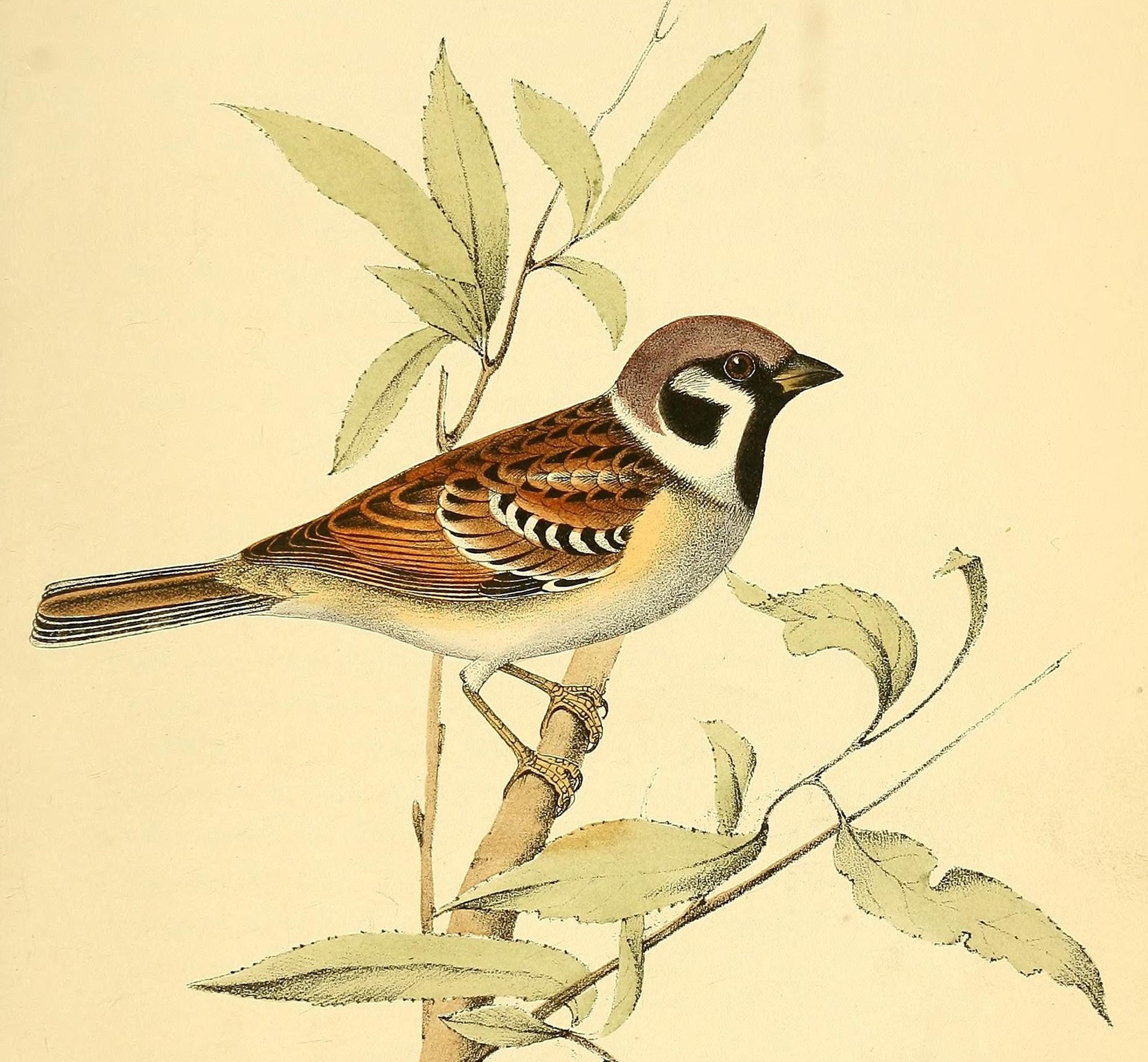
Melody Wang: “When I Die, Liken Me to the Sparrow”

.

.

.

When I Die, Liken Me to the Sparrow

Tread lightly near the clearing in fading
light; there is no telling which plants
contain pure poison nestled in
waxy-smooth petals and stems

Pretend not to notice striated pink-purple flowers
strewn about the forest floor — unsuspecting
creatures pulled from their nesting
place and tossed aside as an afterthought

Seek and find near a clump of irises: the cold
sparrow, cramped on its side, lurid flesh showing
more than it had in life, features oddly twisted and
sleep-softened eyes closed eternally

Revel in the sacred realization that it belongs
to the earth now, requiring neither proper burial
nor the slightest acknowledgment of the fact
that it is no longer among the living

.

.

About the Author: Melody Wang currently resides in sunny Southern California with her dear husband. In her free time, she dabbles in piano composition and also enjoys hiking, baking, and playing with her dogs. She is a reader for Sledgehammer Lit and can be found on Twitter @MelodyOfMusings.

.

More by Melody Wang:

All that My Mother Cultivates

.

Image Credit: Illustration from “Coloured illustrations of British birds, and their eggs” London :G.W. Nickisson,1842-1850. Public Domain. Image courtesy of The Biodiversity Heritage Library

Curtis Hayes: “Paradox”

.

.

.

Paradox

The brilliance of the night sky
remains mostly hidden
over Los Angeles
with only the brightest stars
able to punch through the haze.
In the City of the Angels,
the dazzle of the cosmos
can only be seen
from the desert.

We were camping
deep in the Mojave,
the Milky Way above
glistening
more beautiful
than a thousand
cities of man.

We had pitched a tent
and a campfire, circled by stones
crackled and popped.
The October air was still warm
and we would instead
sleep outside,
the bed of my pickup
softened by army blankets
and unzipped sleeping bags.

We passed a bottle
looking out at the silent llano.
A shepherd rested next to her,
tired from the heat of the day.
Shooting stars crossed the sky,
so many that we stopped
calling them out.
She asked me if I thought
there were others out there
looking back at us.
I think there must be
I said quietly.
Do you think we’ll ever be able
To travel out there
And see?

I pictured miles of gravel roads
scattered houses peeling in the sun
rusted chain-link
dusty kids on dirt bikes
and the flags
that decorated the bumpers
of broken-down vehicles.
I thought about the Fermi Paradox
which is astronomer talk
for the theory that
any civilization
with the machines
needed to cross the expanse
would have burned itself out
before it could ever make the
final leap.

Her hair, golden in the firelight.
Stroking the dog
waiting for an answer.
The fire popped twice
sounding like the cap guns
I shot as a kid
and my voice
softly
Why would we want to be
anywhere
but right here.

.

.

About the Author: Curtis Hayes has worked as a grip, gaffer, and set builder in TV and film production. He’s been a truck driver, a boat rigger, a print journalist and a screenwriter. 

He is the author of the non-fiction top-ten NYT bestseller, I Am Jesse James, and his first poetry collection, Bottleneck Slide, has recently been published by Vainglory Press.  His work has been featured in numerous anthologies and small press journals.

.

Image Credit: Chase Dimock “Utah Sunset” (2021)

Samuel Prestridge: “Coyote”

.

6216706189_a028aae1b6_o
.

.

Coyote

The night before my 68th,  I dreamed

of walking a bookmarked scrap of land.

I saw a coyote following me.

He wasn’t threatening, just staring,

just sizing me up.  I didn’t want to

be sized up.  I walked the other direction.

He followed, ran to me, heeled.

We walked together.

I ignored him.  He stayed heeled.

We came to an abandoned stable, walked in.

I stopped in front of a stall.

The coyote climbed up the door,

arced his body across the gap, gracefully draped himself

              across my shoulders.

I stood there, not wanting to move, the coyote

snugged against me.  Maybe I worried

about fleas.  Maybe I was guarding his sleep.

               I don’t know how long I was still and quiet.  I don’t know

how time is measured there.

.

.

About the Author: Samuel Prestridge lives and works in Athens, Georgia.  He has published or has forthcoming articles, poems, essays, and interviews in a wide range of publications, including Literary Imagination, Style, Appalachian Quarterly, Paideuma, Poem, The Southern Humanities Review, The Lullwater Review, The Arkansas Review, Autumn Skies, and Better Than Starbucks.

Regarding his approach to writing, he says, “I write poetry because there are matters that cannot be directly stated, but are essential to the survival of whatever soul we can still have.  Also, I’m no good at interpretive dance, which is the only other options that’s occurred to me.”

.

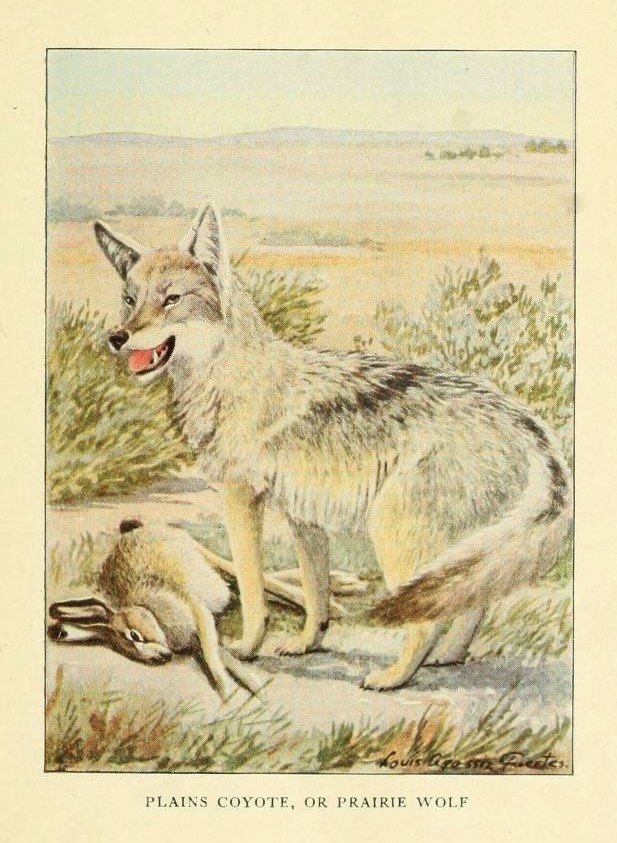
Image Credit: Illustration taken from Wild animals of North America Washington, D.C.,The National geographical society[c1918] Public Domain. Courtesy of the Biodiversity Heritage Library.