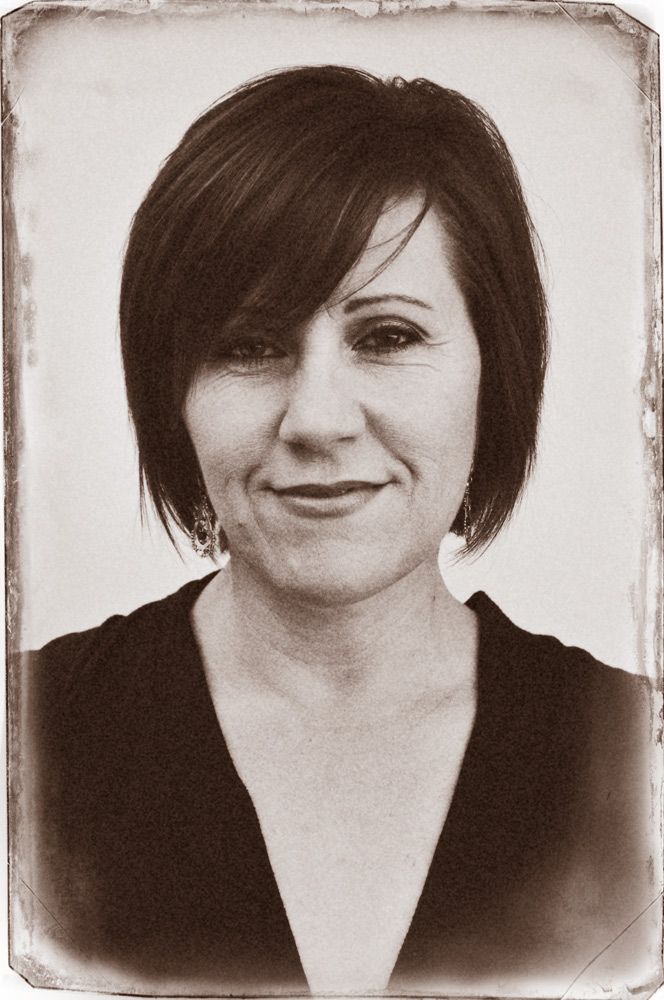
SATURDAY POETRY SERIES PRESENTS: KAREN ALKALAY-GUT

karen2014


By Karen Alkalay-Gut:


HER STORY

I have never been able to tell her story
Sometimes it escapes me, sometimes I am not sure
It could really have happened, sometimes I read
Different accounts of her demise, or a paragraph
From some testimony jogs my memory and the terrible days
When I first heard what happened to her return.

This much is in my blood:
I was conceived on the day she died.
This much is in my blood.
She blew up trains.
The courage came from her uplifted chin
And the two infants she watched
Dashed against the wall of their home.
Avram twelve months old and Masha two years.
My first cousins.
They too – in my blood – all that is left.

If I can write of these babies,
I can manage the rest –
Following her path as she escaped
The prison camp with her husband
And joined the Otrianski Otriade
Lenin Brigade, Lipinskana Forest.

I can feel her mouth, her narrow lips clamped
As she bends over the delicate mines,
Solemn as in the photo when as a child
She sat for with the rest of the choir
Unsmiling amid the festive singers
Unwilling perhaps to feel poetic joy
Perhaps destined for so much more.

There are at least three accounts of her death:
The partisan Abba Kovner told me she was caught
In a mission and hung. He looked away when he spoke,
Not piercing me as always with his tragic eyes,
And I knew there was more he would not say.

Another book says she lagged behind the platoon
Escaping an attack, perhaps pregnant,
And was imprisoned in Zhedtl.
The jail was ignited, perhaps by accident,
And she was just one of the victims.

When mother first told me the story
She had just heard at the hairdresser’s,
I must have been fifteen, and outraged
That she was weeping, tears
Rolling down her face. She knew
All I cared for was my own life,
And her latest discovery
Of the fate of her youngest sister
A disruption.
But who else could she tell?

The loft in the barn, she said,
They were hiding there – three women,
Her husband and her. They came
And set the barn afire. He helped
The women first, and his wife came last
But didn’t come, was burnt alive.

Malcah Malcah who saved all our lives
Malcah who was waiting for them
When the ship brought them back to Danzig
After they were barred from the Holy Land,
Who found them the agricultural visas to England
And saw them off the night that Hitler invaded.
But there is no real story.
All that remains is a faded snapshot
A few sentences in unread memorial tomes,
And me, who cannot tell any story for sure.


Today’s poem was originally published in Prairie Schooner and appears here with permission from the poet.


Karen Alkalay-Gut is now easing out of a fifty-year academic career at Tel Aviv University and beginning to concentrate on writing. Born in London during World War II, she was raised in Rochester, New York and moved to Israel in 1972. She has published almost 30 books in English, and Hebrew, Spanish, and Italian translation, and has collaborated on half a dozen music CDs.

Editor’s Note: Is it possible to read today’s poem without being moved to tears? To wax poetic (this is the place for that, after all), when I read today’s poem the first words that come to mind are “How do I love thee? Let me count the ways.” No, really. Let me.

1) Parallelism, as both an incantatory device and as a conversation between the poem and biblical poetry. “This much is in my blood: / I was conceived on the day she died. / This much is in my blood.” “Malcah Malcah who saved all our lives / Malcah who was waiting for them.” This parallelism is working on more levels than we might imagine. To echo the Bible in this way is a tradition that dates back to the earliest World War II and Holocaust poetry. But, in fact, it dates back to long before the Holocaust, finding rich roots among the varied history of all Jews in exile, and particularly those in Spain’s Golden Age and the time of the expulsion.

2) Vivid imagery that does not let us forget the many tragedies of “her story.” “[T]he two infants she watched / Dashed against the wall of their home,” “I can feel her mouth, her narrow lips clamped / As she bends over the delicate mines,” “He helped / The women first, and his wife came last / But didn’t come, was burnt alive.” This poem is rife with what Aristotle termed Pathos, the emotional connection to the audience. This is not a poem that you can read without feeling, deeply.

3) The poet herself shines through as a character, real and flawed and human. We know her struggles and her failings, and we experience them with her. “If I can write of these babies, / I can manage the rest,” “When mother first told me the story… I must have been fifteen, and outraged / That she was weeping… She knew / All I cared for was my own life, / And her latest discovery / Of the fate of her youngest sister / A disruption.”

4) Malcah, on the other hand, is made a hero through raw nostalgia. Malcah means “queen,” and while the poet did not invent her lost aunt’s name, bringing her name into the poem elevates the heroine to near-godly proportions. “She blew up trains. / The courage came from her uplifted chin,” “Malcah who saved all our lives / Malcah who was waiting for them / When the ship brought them back to Danzig / After they were barred from the Holy Land, / Who found them the agricultural visas to England / And saw them off the night that Hitler invaded.” Malcah the martyr, who did not die before first ensuring that the poet and her family would live.

5) “Her Story.” It is no secret that I am a big fan of herstory. I created a project to revive and celebrate it. But herstory, as today’s poem makes clear, is multi-faceted. It is women’s history, it is one woman’s history, it is women’s stories, and it is one woman’s story. But in today’s poem it is also the admission that there is no one story. (An idea I am incredibly interested in, as I spent the fall of 2013 researching my own family’s history through the lens of varying versions of the same story, much as today’s poem does.) In today’s poem we are given every known version of Malcah’s story, but the poet twins the telling of “her story” with the idea that “there is no real story” to tell. This is as true to an accurate historical retelling as anyone can come.

Want more from Karen Alkalay-Gut?
Karen Alkalay-Gut’s Official Website
Interview in The Madison Journal of Literary Criticism
Tel Aviv Radio
Buy The Encantadas: Evolution and Emotion from Amazon
The Bridge at Raqqa (eBook)
Youtube


SATURDAY POETRY SERIES PRESENTS: KELLY CRESSIO-MOELLER

Photo on 2014-12-29 at 18.20_2_2


By Kelly Cressio-Moeller:


ITHAKA

Dear Penelope, do you now sleep among the catacombs?

Scarves of white drift over the Aegean – an altar of bottomless blue.

I have gone to the edge of the world and still cannot find you.

Even the olive trees raise their spangled limbs skyward in longing.

Mother Earth slides her abacus beads, conjures storms quick as curses.

When lightning struck, did the boat protect or beckon the bolt?

Island flowers shut their eyes only when the stars disrobe – hope and sorrow held
within the same root.

She imagines him bright-toothed & swarthy, but her husband is just sunburned & homesick.

So many suitors holding her skeins – she’s woven a trail for her waylaid mariner, long
as his beard and her undoing.

In twenty years she has never asked, What shall I wish for myself?

Odysseus wonders, Do I have the right to return?

Maids cast offerings to the sea: red rose petals and grape leaves, love and wine all that remain.


** The line What shall I wish for myself? is a reworking Mary Oliver’s line What shall I wish for, for myself?


Today’s poem was originally published in Thrush Poetry Journal and appears here with permission from the poet.


Kelly Cressio-Moeller’s poetry is forthcoming in burntdistrict and has previously appeared in Crab Orchard Review, Gargoyle, Poet Lore, Rattle, Spillway, ZYZZYVA and elsewhere as well as the anthology First Water: Best of Pirene’s Fountain and Diane Lockward’s book, The Crafty Poet. Three of her poems have been nominated for the Pushcart Prize. She shares her fully-caffeinated life with her tall husband, two ever-growing sons, and their immortal basset hound in Northern California.

Editor’s Note: “Ithaka” exists in the eye of the storm of the epic. Address and persona are interwoven with the personal, the poet’s experience becoming one with Penelope’s need and Odysseus’ long journey home. Against the backdrop of the familiar, we find ourselves adrift on a sea of the unexpected, where lyricism is heroic and longing is complex. Similes and metaphors are seamlessly stitched into the poem’s fabric: limbs are spangled, clouds are “scarves of white,” the ocean is an altar. When the poet enters, the simple is made profound: “I have gone to the edge of the world and still cannot find you.” When we arrive, the shores are shaped like questions: “Do I have the right to return?” “What shall I wish for myself?

Want more from Kelly Cressio-Moeller?
Boxcar Poetry Review
Cultural Weekly
Escape Into Life
Rattle
Valparaiso Poetry Review

SATURDAY POETRY SERIES PRESENTS: STEVE MUESKE

SteveMueske


By Steve Mueske:


TO ALL THE FROGS

who sleep in the mud,
who cling to the trees and sing me
to sleep each night: I confess
a love for your instrument.
Your throats fill like instant bellows
with enough air for those
profundo lows: quick clench
of muscle that needs
the whole body, the Baby,-
I’m-Your-Man muscle, the muscle
that coils all the way down
to your toes. Then gone:
a belching horn blast of a note
that blows across the pond.
I love to listen to your ethereal choir –
your basses and altos, tenors
and sopranos – through my window
after making love, when you sing
of all the world’s loneliness,
and I lie sweaty on the sheets,
nerves jangling like a hotwired Yes.
“I love that sound,” my wife says,
her voice dreamy and slow;
I listen to the flavor of the dark,
its mosses, its mud and still water –
the insects, the leaves breathing –
as my body cools, and I feel
the drowsy tendrils of sleep
bring me down easy, so easy.


“To All the Frogs” was originally published in Thrush Poetry Journal and appears here with permission from the poet.


Steve Mueske is an electronic musician and the author of a chapbook and two full collections of poetry, most recently Slower Than Stars. His poems have been published in The Massachusetts Review, Crazyhorse, Crab Orchard Review, Third Coast, Court Green, Hotel Amerika, CURA, Water-Stone Review, Best New Poets, and elsewhere, with work forthcoming in The Georgetown Review. His music is available on Bandcamp. He can be reached on Facebook or Twitter @SteveMueske.

Editor’s Note: Today’s poem pays homage to the wonder of the frog and the glory of its song. The appreciation is inspired: “I confess / a love for your instrument,” while the poem is humid, steamy, evoking earth and water, sweat and music. “I love to listen to your ethereal choir…through my window / after making love… I listen to the flavor of the dark, / its mosses, its mud and still water – / the insects, the leaves breathing.”

Want more from Steve Mueske?
CURA
Linebreak
Buy Slower Than Stars from Ravenna Press
Buy Slower Than Stars from Amazon
Steve Mueske – Bandcamp
Steve Mueske – Soundcloud

SATURDAY POETRY SERIES PRESENTS: NORMA LILIANA VALDEZ

NLValdez head shot


By Norma Liliana Valdez:


UNACCOMPANIED

Everything is happening now. Everything is present tense. The horses. The running.

The losing. This operation is a well-oiled machine. All is slow motion until dusk. After

dusk come the icy furrows. Overnight temperatures the kind of cold that enters marrow.

There is so much winter in the eyes. From here the only lights: the moon and Chula

Vista. After the ice, the running. Ravine. Huizache. Thorns. The hiding. A Cadillac.

There is a gun in the glove compartment. There are two boys in the trunk. Two other

boys contort their bodies on the back seat floor, legs entwined. Face down. Face down.

He is the one balled on the front passenger floor because he is the smallest. He is bones

and destiny.


HUMMINGBIRD

every breath you exhaled

a blanket of hosannas

each hand like prayer, like

unfettered music

you were night, naked

shoulders in moonlight

I lost my breath

beneath your gravity

your touch slid along the arc

of every whisper

I inhaled greedily

filled every room

filled every empty space

inside of me

you must have known my anthem

when you left

urgent as an animal


“Unaccompanied” was the poetry winner of the 2015 San Miguel Writers’ Conference Writing Contest, and “Hummingbird” is an original feature on the Saturday Poetry Series on As It Ought To Be. Both poems appear here today with permission from the poet.


Norma Liliana Valdez is an alumna of the VONA/Voices Writing Workshop, the Writing Program at UC Berkeley Extension, and a 2014 Hedgebrook writer-in-residence. Her poems have appeared in Calyx Journal, The Acentos Review, As It Ought To Be, La Bloga, and Dismantle: An Anthology of Writing from the VONA/Voices Writing Workshop. She is the poetry winner of the 2015 San Miguel Writers’ Conference Writing Contest. Additional work is forthcoming in Poetry of Resistance: A Multicultural Anthology by University of Arizona Press. She lives and works in the San Francisco Bay Area.

Editor’s Note: Over the years Norma Liliana Valdez’s writing has grown much in the way bougainvillea grows. Along earth-toned buildings in warm places. A steady, fertile spread erupting in vibrant blossoms. Like the sight of bright and blooming bougainvillea, today’s poems take my breath away.

“Unaccompanied,” winner of the 2015 San Miguel Writers’ Conference Writing Contest in poetry, is a work of art. The title is evocative, deftly making its mark. The narrative envelopes us in a gripping and heart-wrenching tale that speaks as much to the experience of the few as to the dreams and suffering of the masses. This work is vocal, political, and brave. Brimming with stunning lyric, we feel “the kind of cold that enters marrow,” see how “there is so much winter in the eyes,” and are left with what reads like a told fortune: “He is bones / and destiny.”

While “Unaccompanied” is yin-like—covert and treacherous—”Hummingbird” is like the yang—in relief, open, belonging to this world. The energy is sensual and intense, with “each hand like prayer.” And while both poems end spectacularly, “Hummingbird” is volta-like in its finale, confessing that “you must have known my anthem / when you left / urgent as an animal.”

This is the poet’s third Saturday Poetry Series feature. Three is a sacred number. The Holy Trinity. Maiden, Mother, Crone. The Triple Bodhi. The Trimurti. Which is fitting, as the poet divines poems that are alchemical. Spiritual. Faithfully wrought and nearly religious in their lyricism. Evocative of a humanity made palpable through poetry.

Want to read more by Norma Liliana Valdez?
Saturday Poetry Series feature, As It Ought To Be, 2011
Saturday Poetry Series feature, As It Ought To Be, 2010
Winners of the 2015 San Miguel Writers’ Conference Writing Contest
Spiral Orb
The Acentos Review

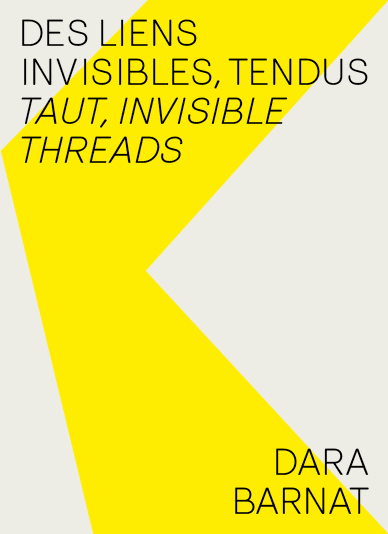
SATURDAY POETRY SERIES PRESENTS: DES LIENS INVISIBLES, TENDUS / TAUT, INVISIBLE THREADS


Liens


From DES LIENS INVISIBLES, TENDUS / TAUT, INVISIBLE THREADS
Poems by Dara Barnat; Translations by Sabine Huynh:


A BRILLIANT FISH

We must choose each other
again and again.

The feeling is a brilliant fish
you catch a thousand times.

We must carry each other
like smooth stones
in the palms of our hands –

a familiar feel,
a roundness.


UN POISSON MOIRÉ

Un poisson moiré
Se choisir l’un l’autre, s’y reprendre
à plusieurs fois.

Cet émoi ressenti face à un poisson moiré
qu’on pourrait attraper des milliers de fois.

Transportons-nous
tels des galets lisses
dans le creux de la paume –

toucher familier,
rondeur.


GROWING VEGETABLES

Her wide hips remind me
that I was born,
because in photos at twenty
they are still narrow
and slim.

Bending over
and planting roses
she gathers immense joy
from the dirty pebbles
and the new petals.

I hold her basket
like a daughter should
and almost pretend
to smile and be grateful
for the fresh, ripened tomatoes.

Is it with age
that happiness can be found
in growing mint
and drinking ice water
that has collected tiny bugs?

My mother shares soap
with a man who is not my father
but a good man,
waiting inside
to make our sauce.

The basket is now full
and since her joy
takes up the whole garden
there is no room
for my joy.

But she says daughter,
you will have your own life,
and your own garden,
just pray for rain,
and grow your vegetables.


CULTIVER SON POTAGER

Ses hanches généreuses
me rappellent ma naissance
– dans des photos d’elle à vingt ans
elles sont encore étroites
elle est encore mince.

Penchée
sur les roses mises en terre
elle recueille une joie immense
des cailloux sales
et des jeunes pétales.

Je lui tiens son panier
telle une fille dévouée
et réussis presque
à sourire de gratitude
pour ces tomates mûres.

Est-ce avec l’âge
que l’on trouve du bonheur
à faire pousser de la menthe
à boire de l’eau glacée
où surnagent des petites bêtes?

Ma mère partage son savon
avec un homme qui n’est pas
mon père, un homme bon,
il attend à l’intérieur
de préparer notre sauce.

Le panier est plein
la joie de ma mère
remplit le jardin
plus de place
pour la mienne.

Alors elle me dit : tu sais ma fille,
tu auras ta propre vie
et ton propre jardin,
prie pour qu’il pleuve
et cultive ton potager.


PRAYER I DO NOT KNOW

No one is here, just me,
alone. I close

my eyes and try
to remember your face,

its light, your
fingers, their light

touch, your laugh,
the lightness. I recite a prayer

that is my own:
May we live

a thousand years together
in another life.


PRIÈRE OBSCURE

Comment prier
pour toi ? Personne

ici, moi
seule. Je ferme

les yeux, tente de voir
ton visage,

sa lumière, tes doigts,
l’affleurement,

ton rire,
la légèreté. Je récite une prière

qui est mienne:
Puissions-nous vivre

mille ans ensemble
dans une autre vie.


Today’s poems are from Des liens invisibles, tendus / Taut, Invisible Threads, published by Recours au poème éditeurs (2014), and appear here today with permission from the poet.


Des liens invisibles, tendus / Taut, Invisible Threads is a bilingual collection of poems by the American poet Dara Barnat, translated to French by Sabine Huynh. Dara Barnat explores migration (between New York, where she was raised, and Tel Aviv, her adopted city), the experience of being an English-language poet in Tel Aviv, intimate familial relationships, her father’s long illness and passing, as well as secrets, history, and memory. Loss is certainly at the core of the poems; although she succeeds in guiding her readers to comfort, even joy, with wisdom she has learned from enduring grief. In the last poem of the book, the speaker addresses her father in the afterlife, and they are both happy to be “alive.” This exhilarating vision demonstrates how Walt Whitman informs the poet’s elegies. She imagines herself walking down the street with Whitman. It is also not surprising to encounter Emily Dickinson or Robert Frost, since the power of Dara Barnat’s poetry resides in its capacity to observe our solitude with grace and honesty.


Dara Barnat was born in 1979. Her poetry appears widely in journals in the United States and Israel. She is the author of the chapbook Headwind Migration (2009), as well as poetry translations and scholarly essays. Dara holds a Ph.D. from the School of Cultural Studies at Tel Aviv University. Her dissertation explored Walt Whitman’s influence on Jewish American poetics. She teaches poetry and creative writing.


Sabine Huynh was born in 1972. She holds a Ph.D. in Linguistics (Hebrew University of Jerusalem), has authored poetry and prose books (novel, short stories, academic book, literary essay, diary), and has edited an anthology of modern French poetry, which were published by Galaade Editions, Voix d’encre, La Porte, éditions publie.net, Recours au poème éditeurs, E-Fractions Editions, among other French publishers. She writes in English and French, translates daily, occasionally teaches creative writing classes, and regularly contributes to the French literary journals Terre à ciel, Terres de femmes, and Recours au poème. Her website: http://www.sabinehuynh.com


Editor’s Note: The opening poem in Dara Barnat’s debut collection begins, “Please know that taut, / invisible threads / tethered us / to those years.” Threads that bind the speaker to mother and home, to father and illness, to time, to what comes into being and what inevitably slips away. And so Des liens invisibles, tendus / Taut, Invisible Threads invites us into a deeply personal yet resonant world of life and death, love and loss, relationship and the human experience.

Nestled within the honest, reflective, beautiful lyric of these poems are the moments poetry was made for: “maybe / we should part now, because oceans / dry up in time, / even the whitest bones / turn to ash.” Equally powerful are so many of the poems’ closing stanzas and end-lines: “daughter, / you will have your own life, / and your own garden, / just pray for rain, and grow your vegetables;” “May we live // a thousand years together / in another life.”

Throughout the book we are welcomed into a private, sacred space. Into kitchens and gardens, hospitals and homelands. We are invited to bake bread and receive intimate moments like sacrament. Crossing the wide span between memory and horizon, Taut, Invisible Threads is like a migrating bird that “fights the seasons, / and lands wherever / there are seeds, / water, and soft earth, // until it arrives.”

I wish that I were well-versed in French and thereby able to comment on the translations by Sabine Huynh housed within this moving bilingual collection. Falling far short of that wish, I can only say that I have had the pleasure of hearing the translator read some of her poetry translations aloud in French, and it was a transformative experience. Her voice is emboldened by its quiet humility, and the passion she has for translation is well-known amongst the numerous writers who seek to have their work translated by this gifted writer and translator.

I have had the pleasure of featuring both Dara Barnat and Sabine Huynh on this series, and am thrilled to see these two incredibly talented writers and translators brought together in one stunning collection. This book—and this collaboration—is a gift to the poetry world that should be read, shared, and celebrated.


Want to see more by Dara Barnat?
Buy Des liens invisibles, tendus / Taut, Invisible Threads from Recours au poème éditeurs
Dara Barnat’s Official Website
Dara Barnat’s Official Blog
“At Least Forward Now” in Haaretz

SATURDAY POETRY SERIES PRESENTS: THE GLAD HAND OF GOD POINTS BACKWARDS

9780896728547


From THE GLAD HAND OF GOD POINTS BACKWARDS
By Rachel Mennies:


HOW GRANDMOTHER PAID HER PASSAGE TO NEW YORK

One by one her mother sold her silver spoons
and heirloom bracelets; goodbye, porcelain bear,
silk blouses, patent-leather Mary Janes, the scarves
and stud earrings for newly pierced ears, the red wool coat
spotted walking on another tiny body’s shoulders
down Wittenbergplatz. Goodbye, books bound
in leather, bone china, even the hangers, the goblets
and cabinets; goodbye to the Torah buried in the backyard,

the neighbors, the schoolmates, the mothers dressed so well
at services, the men with businesses who stayed behind
one week, two weeks more. What stylish
objects they became: the coins from fillings
and wedding rings, the soap, the wigs, lamp
after lamp to light a thousand decorated homes.


PHILADELPHIA WOMAN

The old sisters spoke with the wild gestures of trapped birds, snared or
cooped, their wings working toward an impossible escape. They stood
on street corners in Germantown and gesticulated the full span of their
arms. They argued over coffee, over books, over the dinner table, food
chilled to the temperature of the air. They hewed their beliefs for the
sake of debate. Soft-handed and pale-skinned, they lived mostly inside.

They took the trolley to Center City when they were in their twenties,
living in Logan with the rest of the refugee Jews. They told wild stories
of their childhoods, never explored or questioned. They worked as
bookkeepers, secretaries. They went to Girls’ High School, classrooms
filled with young women speaking foreign tongues, caught and released,
caught and released each day, back when men and women were kept
separately until marriage, fine china and daily dishware.

The oldest of the three married a soldier (never explored) who loved her
dearly (never questioned). When he died his mouth made words that
opened her chest like shrapnel. Tell them whatever you want, he said,
but I need you to know. I need you to know. Her hands stayed slack at her
side. Her name was. It was. She left his bedside and paced a block of Old
York Road, north and south, east and west, as if a cage around her kept
her close.


YAHRZEIT

Here the eye of God opens, unblinking,
at the throats of our grandmothers. The small pale
candle flickers on the windowsill, making
constellations of all our deaths.

How long a wick, how short a year. And here,
the family site, the only real estate
that’s mine—how clever, the way earth
makes us into mud—how heavy

the feet of our commemorators, how white
the knuckles that clasp their books of prayer.


Today’s poems are from The Glad Hand of God Points Backwards, published by Texas Tech University Press, copyright © 2014 by Rachel Mennies, and appear here today with permission from the poet.


The Glad Hand of God Points Backwards: In her first poetry collection, Rachel Mennies chronicles a young woman’s relationship with a complicated God, crafting a nuanced world that reckons with its past as much as it yearns for a new and different future. These poems celebrate ritual, love, and female sexuality; they bear witness to a dark history, and introduce us to “our God, the / collector of stories / and bodies,” a force somehow responsible for both death and liberation. Here, Mennies examines survival, assimilation, and intermarriage, subjects bound together by complex, if sometimes compromised, ties to the speaker’s Judaism. Through wit and careful prosody, The Glad Hand of God Points Backwards lays bare the struggles and triumphs experienced through a teenage girl’s coming of age, showing the reader what it means to become—and remain—a Jewish woman in America. —TTUP


Rachel Mennies is the author of The Glad Hand of God Points Backwards, winner of the Walt McDonald First-Book Prize in Poetry (Texas Tech University Press, 2014), and the chapbook No Silence in the Fields (Blue Hour Press, 2012). Her poems have appeared in Hayden’s Ferry Review, Poet Lore, The Journal, and elsewhere, and have been reprinted at Poetry Daily. She teaches in the First-Year Writing Program at Carnegie Mellon University.


Editor’s Note: The Glad Hand of God Points Backwards is an absolutely stunning collection. It is that rare breed of poetry book that you cannot help but read cover to cover, knowing all the while that you will return to it again and again. There is magic in this work. Ritual. Tradition. Its stories rise from the page in painstaking detail—vivid, emotive, and all too real. History is both honored and excavated; bones and memories are buried in the backyard. Time is not linear, but fifth dimensional; the past, present, and future unfold more like a snowflake than a line. The soundscape is rich and evocative, the themes resonant and deeply lyric, the entirety layered and striking.

And then there are these moments. These perfect, brilliant, heartbreaking moments. Reveals like the volta in “How Grandmother Paid Her Passage to New York,” when we discover what became of “the men with businesses who stayed behind / one week, two weeks more.” Lines like “When he died his mouth made words that / opened her chest like shrapnel.” Like every freakin’ moment of “Yahrzeit.”

Easy to invest in, the rewards of The Glad Hand of God Points Backwards are “as numerous as the stars in the sky and the sand on the seashore.”


Want to see more from Rachel Mennies?
Rachel Mennies – Official Website
Buy The Glad Hand of God Points Backwards from Texas Tech University Press
Buy The Glad Hand of God Points Backwards from Amazon
Linebreak
Thrush Poetry Journal

SATURDAY POETRY SERIES PRESENTS: ALEXIS KIENLEN

alexiskienlen

By Alexis Kienlen:


HOW TO PICK AN APPLE

find a ripe specimen,

gaze at its perfection,

cup it in your hand,

turn the bottom star to the sky.

show the end of the apple to heaven,

let it fall.


“How to Pick an Apple” appears here today with permission from the poet.


Alexis Kienlen is the author of two collections of poetry, 13 and She Dreams in Red. She’s also the author of a biography of a Sikh civil rights activist called Truth, love, non-violence; The story of Gurcharan Singh Bhatia. Alexis lives in Edmonton, Alberta, Canada where she works as an agricultural reporter for a newspaper called Alberta Farmer. From 2001-2006, she was the Literary Editor for Ricepaper magazine, a Vancouver based Asian Canadian arts and culture magazine. She currently writes a weekly literary column for The Grande Prairie Daily Herald Tribune. Her poetry, fiction and journalism pieces have appeared in numerous publications across Canada and online. She’s currently working on a novel and a new collection of poetry.

Editor’s Note: Today’s poem is vivid and whimsical and whisks the reader away on a brief yet epic journey. Placing us, at first, in the everyday pleasure of picking an apple, the poem turns on the word “turn” in the fourth line. From there we are shifted upward, toward the stars and the sky and the heavens, and are transported from the orchard into the realm of the spiritual, the mystical, the otherworldly. The last line echoes what has been biblically ingrained in the western apple, the fall.

Today’s poem is dedicated to my friend Luis, a faithful reader of this series and a man who knows and loves a good apple.

Want more from Alexis Kienlen?
Alexis Kienlen’s Official Website
Buy 13 and She Dreams in Red from Frontenac House
Buy Alexis Kienlen’s books from Amazon
Blue Skies Poetry
Alberta Farmer Express

SATURDAY POETRY SERIES PRESENTS: DIANE LOCKWARD

Lockward-headshot

By Diane Lockward:


SERVICE FOR THE MURDERED BOY

                           In Tibet they lay their dead
                           on the side of a mountain.

All night I dream of the murdered boy
decomposing in the Himalayas,
laid out under a Banyan tree.
No monsoon of grief in this unarable land,
only mountains rumbling
with footsteps of tigers, snow leopards,
and moon bears. A hundred vultures fill the sky.
All circle in, nuzzle the boy with snouts and beaks,
and devour him until nothing’s left but bones
and a skull, resting on stones hard as fists.

I dream a mission of monks, roaming
the desert, spinning prayer wheels,
and searching peasant villages for the right
boy, the one birthed at the exact moment
of death. They lift the born-again buddha
and carry him home.

But my dream lasts only as long as the night.
Morning brings echoes of Ave Maria.

The father’s wearing a red jacket
with white leather sleeves, the kind
boys wear when they make the varsity team.
He leans into the mic and says,
“I don’t want to talk about the future,
or games that won’t get played,
or the boy who shot him. I want to talk
about songs that were sung.”
Then he breaks down, turns to his son
still smiling in the blown up photograph.

I don’t want church music, soft and mournful.
I want hard rock, heavy metal,
music all bass and treble, cranked up full blast,
the kind that blares out windows of cars
driven by boys, the kind that rocks
the ground and trembles the earth with their songs.


A MURMURATION OF STARLINGS

                     It was raining dead birds.
                              —Mayor Brian Levine, The Star-Ledger, 1/27/09

Starlings dropped from the sky,
mid-flight, like balloons suddenly deflated.

No time to spread their wings and glide on air,
and, synchronized, to soar and dive.

No time to close their wings, to wrap
themselves in shrouds of feathers, and sleep.

They fell like water balloons tossed blindly
from dormitory windows.

They fell like rocks dumped from the unlatched
rear end of a construction truck.

They fell like bombs, like stars, like fallen angels,
they fell like dead starlings.

Hundreds plummeted from the sky
on cars, porches, and snow-covered lawns.

They’d taken the poisoned bait
and, headfirst, dreamed one last time of England.

Birds who’d once disturbed a king’s sleep
with cries of Mortimer, Mortimer.

Memento mori, forcing us to contemplate
unexpected death.

Do we not already think of the fallen,
earth’s fields littered with corpses?

Dark vision made real,
their glistening bodies, silent now and still.

Birds who’d sung their own song
and wooed their mates with lavender and thistle.


“Service for the Murdered Boy” is from the collection Eve’s Red Dress (Wind Publication, 2003) and “A Murmuration of Starlings” is from the collection Temptation by Water (Wind Publications, 2010). These poems appear here today with permission from the poet.


Diane Lockward is the author of The Crafty Poet: A Portable Workshop (Wind Publications, 2013) and three poetry books, most recently Temptation by Water. Her previous books are What Feeds Us, which received the 2006 Quentin R. Howard Poetry Prize, and Eve’s Red Dress. Her poems have been included in such anthologies as Poetry Daily: 360 Poems from the World’s Most Popular Poetry Website and Garrison Keillor’s Good Poems for Hard Times, and in such journals as Harvard Review, Spoon River Poetry Review, and Prairie Schooner. Her work has also been featured on Poetry Daily, Verse Daily, Gwarlingo, and The Writer’s Almanac.

Editor’s Note: Today’s poems are, sadly, incredibly timely. I was originally drawn to “Service for the Murdered Boy” with thoughts of Michael Brown, but now both poems cry out in response to yesterday’s school shooting in Washington. Written years ago, the mourning and meditations of these poems are heartbreakingly timeless. There is a still and quiet beauty in their language and imagery, a slowing down of time that enables us to grieve. These mindful pieces reflect upon both today’s atrocities and the mourning songs that are as ancient as poetry itself. So, too, do these poems turn in upon themselves, questioning the very act of contemplating death: “Do we not already think of the fallen, / earth’s fields littered with corpses? // Dark vision made real, / their glistening bodies, silent now and still.” And they speak in chorus with those who have lost their children, to those who seek only to remember: “I don’t want to talk about the future, / or games that won’t get played, or the boy who shot him. I want to talk / about songs that were sung.”

Want more from Diane Lockward?
Buy The Crafty Poet: A Portable Workshop from Amazon
Diane Lockward’s Official Website
Diane Lockward’s Blog
Sign up for the poet’s free monthly Poetry Newsletter

SATURDAY POETRY SERIES PRESENTS: RESURRECTION PARTY

resurrection_cover


From RESURRECTION PARTY
By Michalle Gould:


SELF-PORTRAIT AS A SERIES OF PREPARATORY STUDIES FOR A NUDE BY MATISSE

The breasts hang low like fruit hoping
to be picked yet still on the branch,
While the body largely reclines, a letter K
lain on its side and slightly bent,
or in a less common pose, my back faces the viewer
so I resemble a pushed in O, my arms and legs drawn in,
like a turtle withdrawing far into its shell
to escape some predator that has come to suck;
We are become a rock. Our hearts lie hidden far
Below its skin. The artist scrapes my flesh onto his brush
but cannot touch what lies beneath, whatever he thinks—
nor can you, my dear, even as you read me.


SELF-PORTRAIT AS THE MAIDEN OF ATHENS

That day, I went forth to kill the Minotaur.
Since Theseus, they sent us all naked;
I had no ball of string; I had no sword.
For tools, instead, I had only the instruments
of my body: my nails for daggers, my hair for thread.
I had heard of his legendary cruelty;
I had heard how he killed without a word.
Then I came to the center and saw him.
His strong arms beckoned—and I cut the cord.


SELF-PORTRAIT AS A PAIR OF LOVEBIRDS

Opening their beaks, they thrust
their tongues out for one last kiss
before the long journey south—
like worms they each intend to drop
into the other’s hungry waiting mouth.


Today’s poems are from Resurrection Party, published by Silver Birch Press, copyright © 2014 by Michalle Gould, and appear here today with permission from the poet.


RESURRECTION PARTY concerns itself, almost to the point of obsession, with the question of how the imagination grapples with the fear of death. The collection intertwines religious and mythical subjects and themes with more fleshly concerns about the body and decay, presence and absence. It has been described as containing poems of “almost exquisite refinement, illuminated by the taut glow of sensuous prosody and imagery” and as “a deeply meditative collection at once intelligent, tender, and utterly human.” (From the Silver Birch Press website.)


Michalle Gould has been working on the poems that constitute Resurrection Party for almost 15 years. In that time, her poems and short stories have appeared in Slate, New England Review, Poetry, American Literary Review, The Texas Observer, and other journals. She currently lives in Los Angeles, where she works as a librarian, and is in the process of researching and writing a novel set in the North of England during the 1930s.


Editor’s Note: Michalle Gould has a deep and fearless understanding of the self. In her quest to write poems that grapple with life’s big questions—life and death, self-awareness, relationships—she is bold and unafraid. She views her own body as honestly as an artist would. Yet she understands truths about the self that no other can reveal: “The artist scrapes my flesh onto his brush / but cannot touch what lies beneath, whatever he thinks— / nor can you, my dear, even as you read me.”

In “Self Portrait as the Maiden of Athens” the poet re-examines the Greek myth of the minotaur from a female perspective. Here she notes that, unlike the male hero in the story, when the maiden faces the beast, “I had no sword. / For tools, instead, I had only the instruments / of my body: my nails for daggers, my hair for thread.” This concept translates into the larger role of women in the world, and the question of what few tools and resources we have traditionally been allowed.

SPS-beloved poet Louise Mathias writes that the terrain of Resurrection Party “is somewhere between body and spirit, life and death, intimacy and solitude, elegance and intuition. Possessing a sly humor coupled with a laser sharp awareness and assertion of how all is ephemeral, Resurrection Party accomplishes the rare: it makes even the big questions fresh.”


Want to see more from Michalle Gould?
Michalle Gould Official Website
Buy Resurrection Party from Amazon
Resurrection Party on Goodreads
More Excerpts from Resurrection Party

SATURDAY POETRY SERIES PRESENTS: PAPER COTTON LEATHER

Paper_Cotton_Leather_cover


From PAPER COTTON LEATHER
By Jenny Sadre-Orafai:


RETRACT OR RECANT

This accordion love expands or exhales,
retracts or recants. It is only as much
as we allow. It squeezes out warnings
of cardboard walls closing in.

Its wheezing fills a willful tide
with dread. I turn to this gone
love. I was taught curve into the slide
when spinning on frozen road.


CUTTING YOUR HAIR

When I was done, a ring of hair
or a halo curved your hunched
shoulders. Your broad back didn’t
flinch when the scissors’ legs twitched,
when I wanted to cut more than you mimed.


PREMATURE OBITUARY

I pretend you’re dead.
I don’t let them say your name.
I was taught it’s impolite
to talk behind a dead man’s back.

I wear black four months and ten days.

I smell your clothes before
hand washing, bagging,
and then giving them away.
I don’t give your mother a thing.

I pray for what’s left of you.

I stack the wedding ring, all the rings
you gave me on my right hand,
my proclamation that you are no longer
with us or like us, the living, listening.

I tell myself what I tell myself
to keep from going back.


Today’s poems are from Paper, Cotton, Leather, published by Press 53, copyright © 2014 by Jenny Sadre-Orafai, and appear here today with permission from the poet.


PAPER COTTON LEATHER: “The specter of divorce haunts Sadre-Orafai’s debut, although Paper, Cotton, Leather is much more than a lyrical response to loss. Paper, Cotton, Leather is an instruction manual for the amateur anthropologist, the domestic ghost-hunter, and the doomsday prepper. In ‘Retract or Recant,’ Sadre-Orafai writes: ‘I was taught curve into the slide/when spinning on frozen road.’ This is exactly what Paper, Cotton, Leather can teach us: how to navigate the heart’s switchbacks, how to survive a spin-out on its loneliest back roads.” —Shelley Puhak, author of Guinevere in Baltimore (From the Press 53 website.)


Jenny Sadre-Orafai is the author of four poetry chapbooks—Weed Over Flower (Finishing Line Press), What Her Hair Says About Her (H_NGM_N Books), Dressing the Throat Plate (Finishing Line Press), and Avoid Disaster (Dancing Girl Press). Her poetry has appeared in H_NGM_N, Gargoyle, Rhino, Redivider, PANK, Mount Hope, Sixth Finch, iO: A Journal of New American Poetry, and other journals. Her creative nonfiction has been published in The Los Angeles Review, South Loop Review, and The Rumpus. She co-founded and co-edits the literary journal Josephine Quarterly. She lives in Atlanta and is an Associate Professor of English at Kennesaw State University.


Editor’s Note: Reading Paper, Cotton, Leather is like reading a diary written in achingly executed lyric. The compact, controlled poems function almost ironically; tiny scaffolding straining beneath the pressure of massive weight and breadth. The poems are honest. Fiercely, unapologetically honest. Surely it took no small amount of courage for the poet to sift through the wreckage of her failed marriage and catalogue its failures for us in verse.

In the poem “Fortune,” Sadre-Orafai writes, “Our pictures live in a box marked / THE PAST in my parents’ garage.” Each poem reads like its own discreet picture from that box. Vignettes of trying, failing, moving on, and learning to let go. Together those pictures—these poems—tell a story. This book is carefully held by a narrative arc that gives the illusion that we might piece together the end of this marriage like a puzzle. And yet, You know nothing, Jon Snow. This is an expertly crafted book of poems, not a memoir. We are left only with what the poet chooses to reveal. With what poetry is perhaps best at conveying. A selection of life’s moments as if through lens and shutter. Emotion. Regret and loss and heartache. Experience that finds a kindred spirit in the reader. This is a book that one reads to remember that life’s trials are universal, that we are not alone.

We are not alone. So many of us know, or have known, love like an accordion, squeezing out warnings, wheezing and transforming into gone love. “Cutting Your Hair” recalls Delilah, in all her power, destroying her lover. So, too, does that recollection call forth Regina Spektor (who is quoted in one of the book’s epigrams) in her song “Sampson”: “I cut his hair myself one night, a pair of dull scissors in the yellow light.” In this manner one can read Paper, Cotton, Leather like an archaeologist, dusting away layers to discern history, or, as Shelley Puhak suggests, like an anthropologist, observing humanity, past and present. So how does the poet pick herself up, dust herself off, and move into the future? In the most human way imaginable: striving and imperfect. “I pretend you’re dead. / I don’t let them say your name.” “I smell your clothes before / hand washing, bagging, / and then giving them away.” “I tell myself what I tell myself / to keep from going back.”


Want to see more from Jenny Sadre-Orafai?
Buy Paper, Cotton, Leather from Press 53
Jenny Sadre-Orafai’s Official Website
Jenny Sadre-Orafai on As It Ought To Be