Pope slams America, the headline said. It wasn’t necessary for me to read the story to know that frightful changes were afoot. First, a pod of orcas had rammed a fishing vessel in revenge for past depredations, and then the last of the Western deities crashed to Earth. For weeks afterwards, people would leave flowers and cards and stuffed animals at the spot. Even a police spy was forced to look away in embarrassment at the outpouring of emotion. My own sense of propriety probably derives from the self-sacrificing patriotism of the World War II movies I grew up watching on TV. Although long ago I forgot the titles and plots of the movies, I’ve always remembered one scene. A young soldier, sprawled on his back at the edge of a bomb crater, his face half sheared off, cries in a little boy’s voice, Mama! Mama! And all around, the war goes on.
About the Author: Howie Good’s newest poetry collection, Frowny Face, a mix of his prose poems and collages, is now available from Redhawk Publications He co-edits the online journal UnLost, dedicated to found poetry.
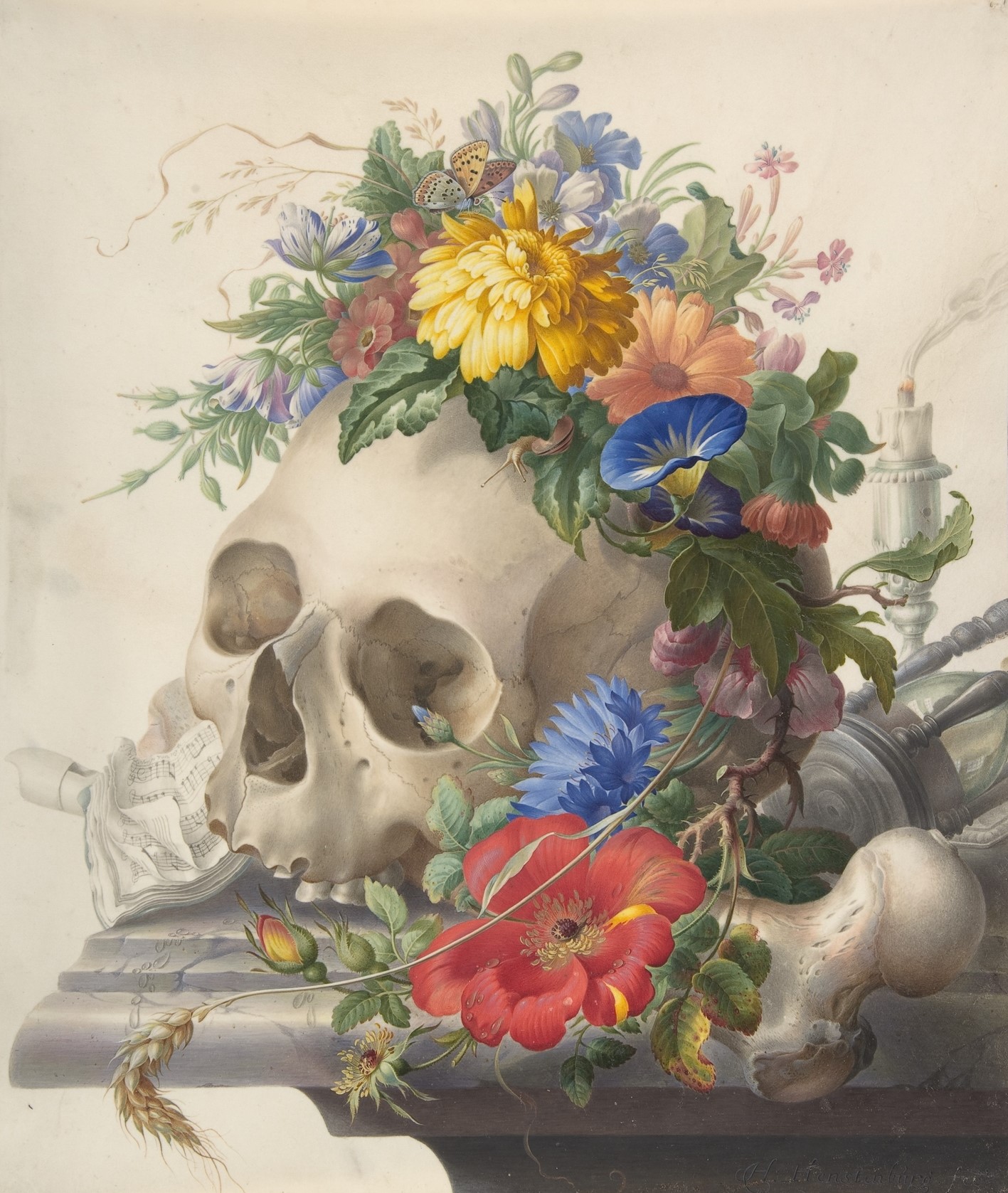
Image Credit:Herman Henstenburgh “Vanitas Still Life” Public domain image courtesy of Artvee.
Sunday, you’ll have been dead a week. I sit at the kitchen table, laptop open in front of me, doing what I think you’d be doing in my place, writing something. You were a poet, a real one, a soldier with a flower in his helmet. I’m hunting and pecking when I suddenly hear the tinkling of Tibetan prayer bells. Five seconds – 10 max – pass before I realize it’s the new ringtone on my phone. A prim female voice announces, “Unknown caller.” I always just assumed Death would have the surly demeanor of the lunch ladies in a school cafeteria.
About the Author: Howie Good’s newest poetry collection, Frowny Face, a mix of his prose poems and collages, is now available from Redhawk Publications He co-edits the online journal UnLost, dedicated to found poetry.
Occasionally – very occasionally – a relative or acquaintance will look up long enough from their phones to ask what a chapbook or a prose poem is. Their unfamiliarity with the terms suggests the general irrelevance of my writing to even people I’m related to. This shouldn’t be a surprise to anyone, and it isn’t to me, but it is dispiriting.
According to my research (OK, Wikipedia), the tradition of chapbooks arose in the 16th century, as soon as printed books became affordable, and reached its height during the 17th and 18th centuries.
Many different kinds of ephemera and popular literature were published as chapbooks: almanacs, folk tales, ballads, nursery rhymes, poetry, and political and religious tracts. Usually between four and twenty-four pages long, and produced on rough paper with crude woodcut illustrations, chapbooks were the reading material of the poorer classes. “Twenty-volume folios will never make a revolution,” Voltaire said. “It’s the little pocket pamphlets that are to be feared.
The term “chapbook” for this type of cheap literature was coined in the 19th century and is still in use today for short, inexpensive booklets. I’ve had something more than 40 chapbooks of poetry published since the early 2000s. It’s very much like me to succeed in an area of publishing that most people have never heard of.
How would you describe your pain? Stabbing? Aching? Sharp? Dull? I would describe mine as a skeletal tree with twisted limbs rattling in the wind. Every day seems a bad imitation of the day before. If I look ahead, I see myself walking on corpses instead of the ground, and if I look back, I see night and fog, and my father angrily clenching the steering wheel and my mother locked in cold silence beside him, while alone in the backseat, I watch through the side window the black-veiled moon follow us home.
About the Author: Howie Good’s latest poetry book is The Horse Were Beautiful (2022), available from Grey Book Press. Redhawk Publications is publishing his collection, Swimming in Oblivion: New and Selected Poems, later this year.
Nights back then somehow seemed darker than they do now. I resigned myself to long empty hours of insomnia. Someone said, “Have you been checked out by a psychiatrist recently?” The house across the street from ours was strung with Christmas lights way into the spring. Police treated any outdoor gathering of three or more people as a riot. The latest idea in art was that only when a painter destroyed a painting, scratched it out, was it ready to be seen. A life’s work could just about fit inside a shoebox.
About the Author: Howie Good is a poet and collage artist on Cape Cod. His latest poetry books are Famous Long Ago (Laughing Ronin Press) and The Bad News First (Kung Fu Treachery Press)
Image Credit: Herbert Crowley “A Dark Landscape” Public Domain image courtesy of Artvee
“It’s not dark yet, but it’s getting there.”
     - Bob Dylan
During his brilliant and destructive youth, Steve Earle (singer-songwriter extraordinaire) once proclaimed, “Townes Van Zandt is the best songwriter in the whole world, and I’ll stand on Bob Dylan’s coffee table in my cowboy boots and say that.” Later, older and sober. Earle recanted such unorthodoxy and admitted that Van Zandt was not as good as the forever mutable Dylan.
What does this story, which sounds almost apocryphal, have to do with the prose poetry of Howie Good? Well, like Steve Earle talking about Van Zandt, Good’s prose poems summon similar hyperbolic and unorthodox statements. In his varied landscapes which encompass the political, the personal, the pop, the historical, and the surreal, Good’s prose poems are unique in American literature.
Unlike the masterful prose poems of Robert Bly and James Wright, his work is seldom vatic. The characters which occupy his poems believe in horror more than transcendence. The god he comes across is “absorbed in his own thoughts” and acts “like he didn’t believe he ought to exist.” Within these poems, as in life, the mundane and the awful happen side-by-side. People die or climb a tree to survive, but hope left on a train to an unnamed camp long ago.
The world Good creates is both visual (he loves to reference painters) and apocalyptic. His work does not re-state the commonplace. A reader will not think, “I have also felt this way.” Instead, Good offers a kaleidoscope view of another reality which often bleeds into our own.
None of this is to imply that his work is without humor. Good often laughs at himself, but his humor is not like vaudeville. It is like the existential jokes of Steven Wright or the ironic jokes of Franz Kafka or the exit door jokes of the patient in the cancer ward. Even his many book titles like The Bad News First, The Titanic Sails at Dawn, and The Death Row Shuffle display his dark humor. Sometimes Good’s characters laugh until they cry and then they keep crying.
It’s important to say characters since these poems are occupied by various figures. There’s no self-willed persona in Good’s work as there is in the work of Bukowski and his acolytes. Only the constancy of themes (fear of the unknown, the certainty of pain and death, the cruelty of existence, and the occasional redemption of art) reveal anything about the man behind the writing.
In his essay, “A Small Note on Prose Poetry”, Good wrote, “All poetry worthy of the name exists in opposition to the churn of mass culture.” The idea of opposition is the force behind Good’s work and aesthetic. He writes as an outsider who makes arguments against the easy and expected.
Good’s background in journalism gives a clarity to his work even when he seems to take notes from a made up country. Journalism taught him the value of a strong declarative sentence and he is a solid student of the ways a sentence can be shaped.
Good’s outsider status is confirmed in his life and in his poetry. He’s a bit like Alfred Starr Hamilton: tied to no group or school he has few readers and fewer supporters, but many fine poems. His writing career includes approximately 40 books from small and tiny presses in the United States and England, but involves neither a MFA program nor a WPA conference. Since no one told Good what kind of poems he should write, he went off and wrote like no one else.
Uniqueness is both difficult and rare. Howie Good’s work is not difficult, but it is rare in the quality of the language, the vibrancy of the images, and the challenges of the worldview. What he offers the reader is a tilt-a-whirl ride where the landscape is always changing and where frogs rain in abundance.
About the Author: Mike James makes his home outside Nashville, Tennessee. He has published in numerous magazines, large and small, throughout the country. His most recent book, Portable Light: Poems 1991-2021, was published by Red Hawk in April 2022. Mike’s previous poetry collections include: Leftover Distances (Luchador), Parades (Alien Buddha), Jumping Drawbridges in Technicolor (Blue Horse), and Crows in the Jukebox (Bottom Dog.)
The medical assistant asked in a flat, toneless bureaucratic voice how I would describe the pain. Stabbing? Aching? Sharp? Dull? She entered my answer on the form, but without showing any actual interest in it. A philosopher once said – or should have – that a society is only as just as its treatment of its most vulnerable members: the old, the sick, the poor. Using a dropper, I strategically place .50 milliliters of Triple M tincture under my tongue. I wait fifteen, twenty minutes, and then gray-clad troops burst from the treeline with a rebel yell. The tongue is all muscle.
.
.
About the Author: Howie Good is the author of Failed Haiku, a poetry collection that is the co-winner of the 2021 Grey Book Press Chapbook Contest and scheduled for publication in summer 2022.
Image Credit: Howard R Hollem “Transfusion donor bottles, Baxter Lab., Glenview, Ill.” Library of Congress, Prints & Photographs Division, Farm Security Administration/Office of War Information Color Photographs. (public domain)
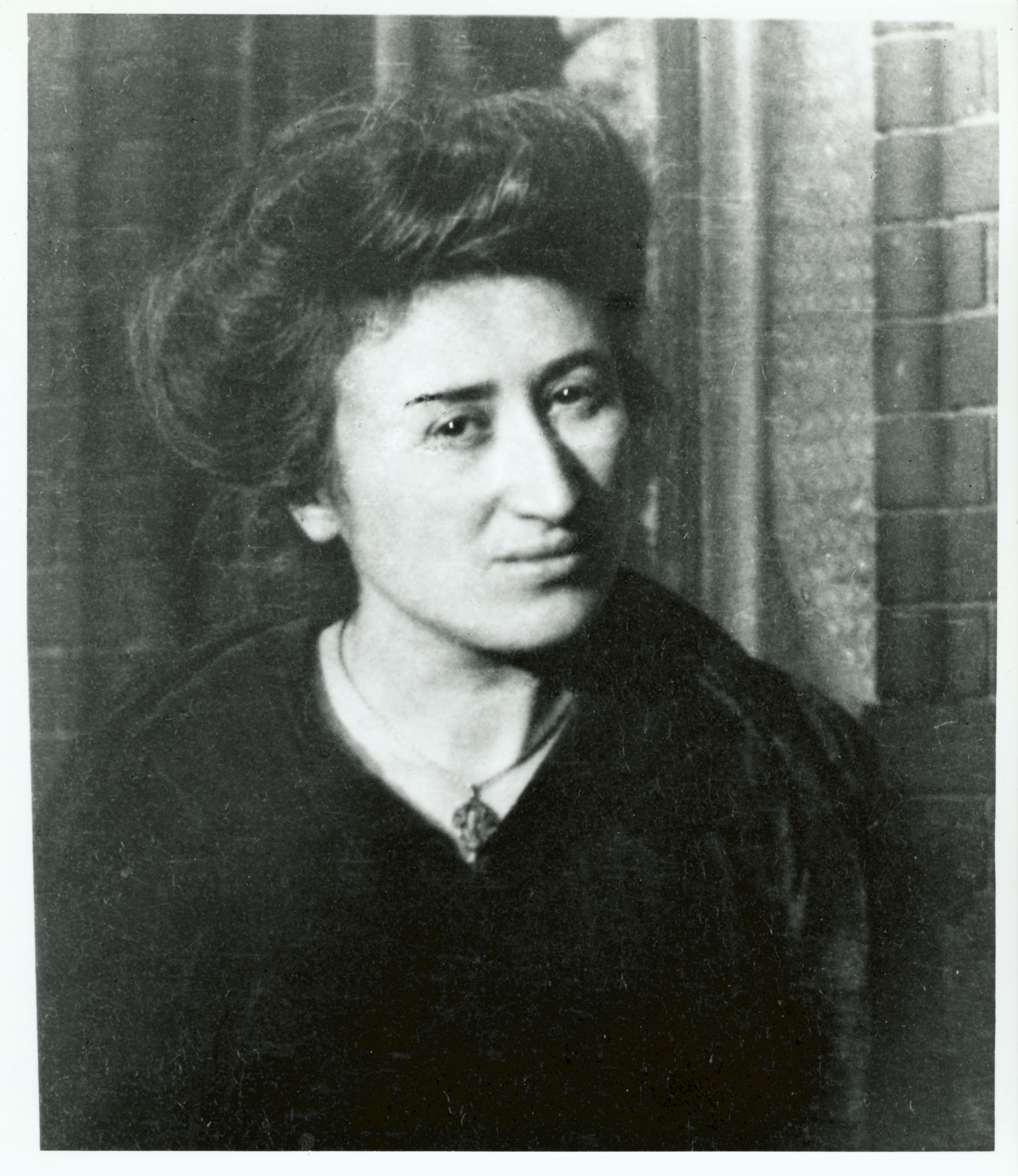
She lost a shoe as the political police were dragging her from the Hotel Eden to the waiting car. Lieutenant K. Vogel, the commander of the unit, shouted insults (“Whore!”) and spat at her. She was bleeding from a blow to the head with a rifle butt, but could still see with the eye that didn’t have blood in it. As they pushed her into the back seat, she saw the dark breath of crematoria, Berlin burning, rubble everywhere. Then she passed out. They would take her to the hospital only when they were sure she was already dead.
.
.
About the Author: Howie Good’s latest poetry collection, Gunmetal Sky, is due in February from Thirty West Publishing
By late March, tens of thousands were about to die from the virus. I was sad, so sad. Then the sun would come up and the buds open a little more each day. You could hear the music – the Mister Softee truck was out. You just had to watch for it.
&
As I go around town, I see people wearing face masks all wrong, under their noses or even their chins. I don’t want to get into it with them. I just want to get away. Given a choice, I’d live somewhere civilized and safe, somewhere like Switzerland, but without all the cows and glaciers.
&
It’s important to pay attention to possible omens. Like the tall weed growing across the street, whose milky white sap is said to relieve pain. Do you have 30 seconds? I swear sometimes it glows.
About the Author: Howie Good is the author of THE DEATH ROW SHUFFLE, a poetry collection forthcoming from Finishing Line Press.





 As It Ought To Be
