An Open Letter to Charlotte Raven about My Footwear and My Feminism

I contain multitudes.

An Open Letter to Charlotte Raven about My Footwear and My Feminism

By Kirsten Clodfelter

Dear Charlotte,

I appreciate that you have words of wisdom to share with the next generation of “hip” young feminists as we get dressed each morning, but the truth is, I don’t want you in my closet any more than I want Republican legislators in my vagina.

Admittedly, I am not exactly the poster girl for “girly.” Aside from the two days a week that I’m on campus to teach, I write from home, where I hang out with an awesome but not quite fashion-adept toddler. (Yes, you read that right. I have a Master’s degree and did not seek full-time employment in order to stay at home with my kid—BY CHOICE!) Most of the time, I live in yoga pants, rarely brush my hair, and sometimes go three entire days without showering—like, in a row. But I do own a pair or four of high heels, and occasionally I even wear them.

As someone who didn’t win the genetic lottery as far as grace and poise are concerned, it is true, as you argue, that I sometimes look silly when I put on said high heels. But no part of that silliness is due to the fact that while wearing them I also identify as a feminist.

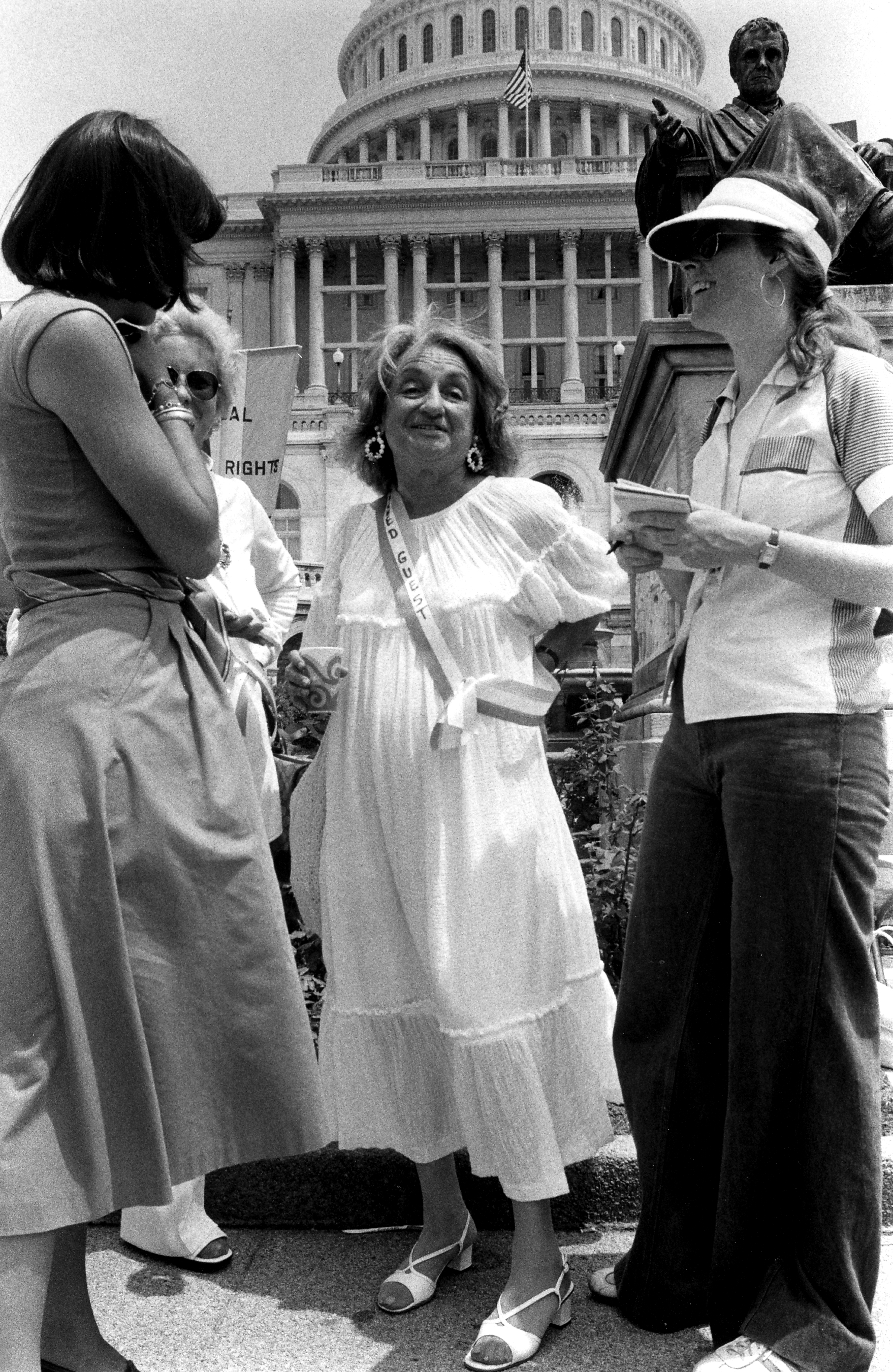
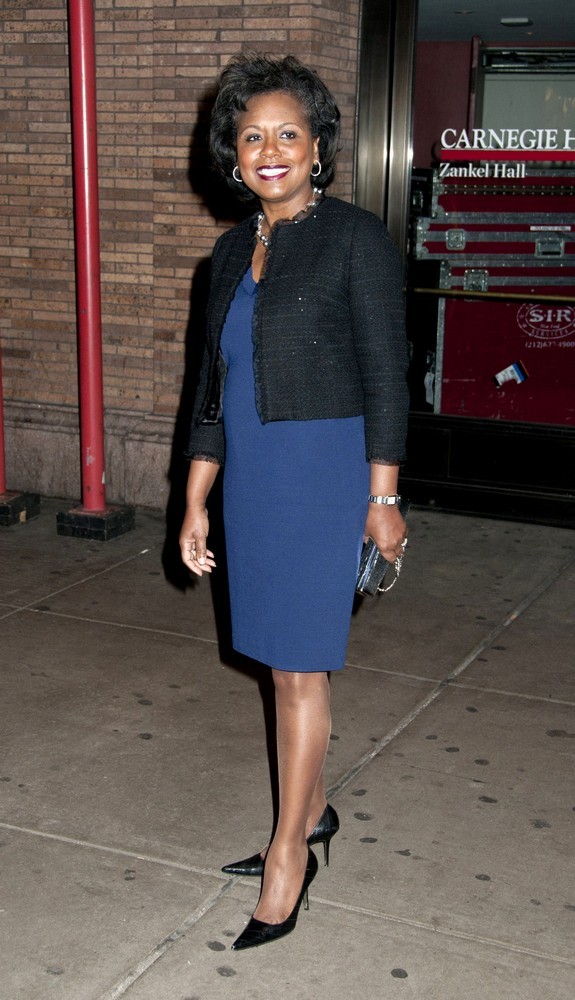
I imagine many other women might agree, like, I don’t know, Hillary Clinton. Or Betty Friedan. Or Eve Ensler. Or Anita Hill. If Wendy Davis had rocked pink peep-toed Christian Louboutinis instead of her iconic pink sneaks during that heroic filibuster, she would be no less of a champion for women’s reproductive freedom. And though it might only be the very highest stripper heels causing the self-harm you mention, it seems that the bigger concern is the idea that women wear heels because female sexiness is interpreted—by men and women alike—predominately through an oppressive male gaze.

And I get that. I do. But I also wonder if in many ways that male gaze isn’t already broken by the act of acknowledging it, by a feminist—or anyone—stopping to practice genuine self-awareness when considering what’s attractive or interesting or fulfilling outside of the boundaries established by those patriarchal norms.

In this space, we might find that kick ass, grrl power Doc Martens are sexy or awesome or strong, but so too are pleather high heels. Or crocs. Or whatever. (For the record, Dr. Marten was a nazi before he staked his claim in the footwear market, so I’m just going to stick to my Rocketdogs.)

If you can’t believe this inclusive view of feminism is possible, then I’m curious to know what other behaviors I engage in that would draw criticism or ridicule. The Belle Jar has already come up with a pretty decent list, but I’m still looking for a handbook or something to clarify the following: Is it anti-feminist to tweeze my eyebrows? Wear my hair in a high, tight ponytail? Don pantyhose and pointy-toed flats? Gorge on holiday cookies? Birth a child? Go to the dentist? These intentional actions could be considered forms of self-harm too—they’re at times uncomfortable, restrictive, or bad for our bodies, and some are done solely for aesthetic value. But do you know what seems much sillier than a feminist wearing heels? One who says that other women are less feminist because of how they dress.

I agree, whole-heartedly, that in the context of feminist discourse, asking if a feminist can wear high heels is a tired, trivial question. But rather than dismiss it in the moment with a witty one-liner or, better yet, just ignore it completely in favor of talking about something more meaningful, you dedicated an entire column to parsing what a feminist looks like—to you. Fortunately, many of us already know that feminists can look like a lot of different things.

But what about the people who don’t? By anointing yourself Dress Code Monitor of the entire movement, you give permission to non-feminists to continue to objectify women and to make value judgments based on a person’s attire. These ideas perpetuate the terrible myth that a woman can’t be intelligent or taken seriously (by either gender) if men find her attractive, that the way a woman dresses or behaves makes her responsible for her sexual assault, that we need not look farther than a woman’s ankles to determine her worth. This is irresponsible and dangerous, and it definitely isn’t feminism.

As far as respecting the human body is concerned, there is a pretty significant leap between, say, wearing heels and female genital mutilation (SFW, no photos)—a type of self-harm on which our attention and concern might be better spent. And as someone who was previously married to a verbally and emotionally abusive spouse, let me be very clear in assuring you that there is absolutely no—as in fucking zero—similarity between putting on high heels and regularly being devalued, manipulated, or intimidated by someone who claims to love you.

The most troubling part of your piece, though, comes in the moment that you narrow your definition so that “[f]eminism emphatically isn’t about making women feel comfortable about bad or harmful decisions or choices.” But what you’ve missed is that feminism is emphatically about no longer universally dictating what constitutes a “bad” or “harmful” decision for another woman.

In her book, Gender Communication Theories and Analyses, Charlotte Krolokke elaborates:

Third-wave feminism manifests itself in “grrl” rhetoric, which seeks to overcome the theoretical question of equity or difference and the political question of evolution or revolution, while it challenges the notion of “universal womanhood” and embraces ambiguity, diversity, and multiplicity in its transversal theory and politics.

This is the reason that it isn’t acceptable to revoke Alisa Valdes’ feminist card because it took her awhile to recognize her abusive relationship, why it isn’t acceptable to slut-shame Miley Cyrus or Danica Patrick because of what they are or aren’t wearing, why it isn’t acceptable to make a blanket statement positing that wearing heels is a stupid decision, to offer a battle rally that “fear of seeming judgmental” shouldn’t stand in the way of others being, well, super judgmental about a person’s wardrobe.

Here’s the cool and actually not at all annoying thing about feminism that your piece left out: Women get to practice it wearing whatever the fuck we want. I can identify as a feminist while wearing a flannel button-down or stilettos. I can call myself a feminist with glittered curls or a purple mohawk, while listening to Tori Amos or Taylor Swift or Ke$ha. I can be a feminist with a baby on my hip or while getting cozy in the kitchen baking cupcakes for my feminist boyfriend, and I can do it without narrow, divisive views like yours boxing me in with the static vision of what a “real” feminist looks like.

Love ya like a sister, maybe,

Kirsten

***

Kirsten Clodfelter holds an MFA from George Mason University. Her writing has been previously published in The Iowa ReviewBrevity, and Narrative Magazine, among others. A Glimmer Train Honorable Mention and winner of the Dan Rudy Prize, her chapbook of war-impact stories, Casualties, was published this October by RopeWalk Press. Clodfelter teaches in Southern Indiana, where she lives with her partner and their awesome, hilarious daughter. KirstenClodfelter.com@MommaofMimo

Danica Patrick Can Do Whatever She Wants With Her Body

Danica-r

Danica Patrick Can Do Whatever She Wants With Her Body

by Kirsten Clodfelter


Even if, like me, watching auto racing isn’t one of your top five (or top one hundred) favorite ways to spend a weekend, you’re probably at least aware of Danica Patrick, who in the last ten years has grown to be ubiquitous within the industry. A quick highlight of her many accomplishments: In 2009, she placed third at the Indy 500, and she won the IndyCar Series’ Japan 300 in 2008. In this year’s Daytona 500, she was the fastest pole qualifier (the first female racer ever to earn this spot) and in this same race became the first female to lead a lap in the NASCAR Sprint Cup Series (she lead five). This contributed to her finishing the Daytona 500 in the top twenty percent, in eighth place. There’s plenty of debate among racing enthusiasts about whether or not these feats legitimize her as a talented driver (for the record, I’m saying they definitely do), but either way she’s the most successful woman in the history of American auto racing, and that’s a pretty big deal.

Danica Patrick is also a spokesperson for GoDaddy.com. Recently, Laura Helmuth at Slate’s Double X wrote an article expressing her outrage over Patrick’s participation in her most recent Go Daddy Super Bowl ad. Unlike previous ads in which Patrick has appeared in a towel or glittery lingerie, Patrick narrates this ad entirely covered (dressed in leggings and a leather jacket). Meanwhile, model Bar Refaeli and actor Jesse Heiman—representing beauty and brains, respectively—make out, an analogy for how perfect things can be when the sexy side and the smart side of the tech industry combine under the Go Daddy umbrella.

“Offensive commercials are everywhere,” says Helmuth, “and there’s only so much outrage to go around. But people are right to be pissed at Danica Patrick. She squandered the good will of a multitude of fans who wanted to see a woman win at what used to be a man’s game.” Helmuth builds her argument around the idea that Patrick is doing a disservice to women’s lib by agreeing to sometimes get sexy on TV, even going so far as to call her a “harmless, hair-flipping mascot.” But here’s the thing: Danica Patrick can do whatever she wants with her body—it’s her choice—that’s the beauty of feminism. There’s space for Patrick to be both a talented driver behind the wheel and a sexy, flirtatious woman behind the camera.

Helmuth calls the most recent Super Bowl ad “sexist and stupid,” and she’s correct—it is both of those things. Those adjectives can be applied to many of Go Daddy’s commercials. But I don’t see anyone arguing that Bar Refaeli needs to hang up her modeling career in favor of focusing on her current business venture in order to encourage young women to apply their intelligence and savvy toward becoming international business moguls. Helmuth, in her article’s subtitle, argues that Patrick is setting back the women’s moment, but if that’s the case, then Helmuth is most certainly guilty of doing the same, particularly when she instructs Patrick in the article’s headline to just “shut up and drive.”

I’ve seen plenty of photo spreads of tennis phenom Maria Sharapova in a bikini, and I don’t find her to be any less of an athlete for it. The talented Venus Williams stunned crowds at a 2010 French Open game when she showed up wearing a fun and unique cancan-dancer-inspired outfit that looked like something she could have picked up at Victoria’s Secret. She went on to win the match and several subsequent rounds before her elimination on day eight, but I don’t see her being called a “harmless, hair-flipping mascot.” Soccer star David Beckham and tennis ace Rafael Nadal left very, very little to the imagination with their Armani underwear campaigns, but no one claimed this made them irrelevant to their sports.

There’s another important aspect to Patrick’s actions that Helmuth completely overlooks in her article. Sports reporter Jenna Fryer comments on this aptly: “Nobody gets a job driving race cars at the top level without sponsorship, and those who successfully find a corporate partner will always get the rides. Every single week, in a series somewhere, there’s a driver on the track only after finding enough sponsorship to buy the seat for that particular race.” She also adds, quite pointedly, that “[i]t’s doubtful anyone has ever paid attention to what five-time NASCAR champion Jimmie Johnson has worn to a press conference, but one publication noted that Patrick wore ‘orange hooker heels’ to last Thursday’s announcement.”

And so what if she did? Patrick faces sexism from the racing industry, from sports anchors, from celebrities, from talk show hosts, and likely from other racers. I cannot imagine telling a woman who complained about sexist behavior in her office to just buy a more conservative blouse, put her head down, and focus on her expense reports. In the face of this kind of misogyny, we don’t instruct women to shut up, to cover up, to stop being themselves, or to do anything that might make it easier for her naysayers to forget she’s a woman. In fact, outside of the most dangerous or life-threatening situations, we almost always encourage the opposite. Rather than adding another tired, critical voice about Patrick’s wardrobe choices, we should champion for Patrick to navigate both of these selves fluidly and with our full support.

We are all accountable to each other, and in the spirit of that sentiment, it’s my hope that anyone in the limelight uses that platform to do good things, to be a positive role model, to advance causes that help others, and to teach young men and women to respect themselves and each other. What I see reflected in Patrick’s actions is someone who feels capable and self-assured enough to put her best foot forward in the worlds of both racing and modeling, who doesn’t feel she has to sacrifice one interest for the other, and who is comfortable in her own skin, whether that skin is under the full coverage of a firesuit or simply a bath towel. Slut-shaming Danica Patrick for not donning only turtleneck sweaters off the track isn’t setting a great example for the next generation of potential female racers either.

In 2008, Patrick appeared in a GoDaddy commercial featuring a girl who aspires to be a professional racer. It’s my sincere hope that Patrick will take on an even bigger role in advocating for women to make their way in what has long been a “man’s industry,” but whether she does or doesn’t, she can wear pretty much whatever she wants.

Yes, many of those Go Daddy ads are cheesy and sexist. Yes, I love that Sarah Fisher runs her own racing team and that Lyn St. James founded a program to train girls to race, and yes, I hope Patrick takes a few pages from their books and does more to reach out to young women, encouraging them to forge a path into the parts of our culture that are still traditionally dominated by males. But I also think it’s time to take a step back and reflect on the purpose of international protests like slut walk, about the current push to educate both men and women that the number of layers of clothing a woman is wearing does not correspond to how deserving she is of sexual assault. We need to do better to teach our daughters and sons—the next generation of feminists—that someone’s intelligence, skill, or success does not have to be mutually exclusive from the way they choose to celebrate their body.

 ***

Kirsten Clodfelter holds an MFA in Creative Writing from George Mason University (’10). Her work has been previously published in The Iowa Review, Brevity, Word Riot, Narrative Magazine (as the runner-up in their 2011 30 Below contest), Rock & Sling, and Hunger Mountain, among others. She is a regular blog contributor at Fogged Clarity, and she writes and teaches in Southern Indiana. You can read some facts about her at KirstenClodfelter.com.


Image Credit: Danica Patrick on Pole Day at Indy, 2007. Photo by Tim Wohlford. Creative Commons 2.5

Okay but Seriously, Stop Blaming the Victim

Okay but Seriously, Stop Blaming the Victim

by

Kirsten Clodfelter

As a feminist, I admire Hanna Rosin. I enjoy the important work she’s done in co-founding DoubleX, and I regularly teach excerpts of her essay, “The End of Men,” to my undergraduate composition students. As a new, breastfeeding mom, I’m appreciative of her refreshing, my-body-my-choice approach to the Breast is Best agenda. This made Rosin’s response to The Feminist and the Cowboy author Alisa Valdes’ recent blog post (since deleted but cached here), in which Valdes revealed the terrifying abuse she suffered at the hands of the book’s “hero,” all the more surprising and disappointing.

Valdes’ memoir details her dissatisfaction with feminism and its “dreary shroud of lies,” all while lauding a man who forces her into submission, helping her to see the way things are, according to Valdes, biologically supposed to be. As Rosin points out in her initial review of the book, some of the scenes with the controlling cowboy are definitely “creepy”; the red flags have been raised.

But after Valdes comes clean about the cowboy’s aggressive, intimidating behavior, the headline of Rosin’s next Valdes piece is disaffected and bored: “The Cowboy Abused the Feminist. What a Surprise.” In this article, Rosin writes, “Many of us skeptical, desiccated feminist types suspected that submission would mostly just lead to being submissive and that the long-term result would be something less than happiness.” This criticism of the submission Valdes touts isn’t wrong. However true it may be, though, it’s not an adequate reason for glossing over the issue of domestic violence.

In her book, Valdes rejects second-wave feminism and instead aligns herself with the theory of “difference feminism,” celebrating her newfound femininity under the guidance of her macho boyfriend. Any person, a so-called “reformed” feminist or otherwise, who has been victimized, manipulated, or brainwashed by an abuser (and in Valdes’ case, it seems, over a long enough period of time for that behavior to become normalized) does not deserve a cavalier, yawning, here’s-my-shocked-face brush off from anyone, but especially not from someone who is herself a feminist.

Rosin appropriately takes Valdes to task forpublicizing a book that is encouraging women to submit themselves to a romantic formula whose end sum is ‘painful, controlling, emotionally abusive, crazymaking,’” and this is truly an important part of the conversation that we should all continue to address. Had Rosin taken the time to speak with Valdes, though (and I can’t say for sure if she attempted to reach out to her), she would have learned that, according to her conversation with Max Read at Gawker, Valdes now readily acknowledges that she’s written “a handbook for women on how to fall in love with a manipulative, controlling, abusive narcissist.”

Rosin closes her article discussing the possibility of Valdes writing a follow-up, which she may use as a platform for processing some of the cowboy’s reprehensible actions. Rosin is quick to silence that voice, “But as the cowboy would say, Alisa: Stop. It’s over.” I agree wholeheartedly with Rosin that Valdes is doing a grave, dangerous disservice by continuing to promote this sham of a love story in any way, but I think what we’re seeing in Valdes’ string of recent, controversial blog posts following the memoir’s release is an attempt to reconcile the abuse she’s suffered. How, then, is it helpful or kind or ethical to tell Valdes to put a lid on it?

If we attached that “What a Surprise” headline to the provocatively-dressed eleven year old in Texas who was gang-raped in November of 2010 or to the blackout-drunk high school student in Steubenville who last year was sexually assaulted and peed on as she was carried unconscious from party to party by members of the football team, there would be, and rightfully so, a loud and raging outcry.

So why the cold shoulder to Valdes? Is it that she marketed herself as a disgruntled product of the worst parts of feminism and used her memoir to push an anti-feminist agenda? In his article for The Atlantic, Noah Berlatsky writes that even after revealing the abuse, “In comments on her [blog] post, Valdes insists that she still rejects the feminist ideology that prevented her from trusting men. She insists she still stands by her claim that ‘feminism stole my womanhood.’” Are Rosin, and other writers and article commenters discussing this issue, feeling some flicker of validation in light of this development? If Valdes claims that feminism directed her to believe that men were un-trustworthy, and then it turned out that she couldn’t trust that powerful, manly, dominant cowboy after all, is this supercilious attitude a consequence of haughtily thinking that, well, those feminists were right?

But as feminists, as people who champion for women—for their equality, for their freedom, for acknowledgement of their value—do we really want to shame someone who rejected that ideology (and, arguably, just a small but vocal minority within the feminist umbrella) with a big dose of, hey, that’ll teach her? The feminist community should be a safe space for the many women who don’t have one, not an exclusive, snobby club only for people who subscribe to a very particular and rigid set of ideals about the movement. My experience with feminism and, in speaking with my friends and colleagues, many other men and women’s experience as well, is thankfully nothing like what Valdes has described. Regardless, to turn up our noses at her now only helps prove her point.

Some of the worst comments I’ve seen from readers of Rosin’s article and others around the Internet suggest that Valdes is making up the whole thing as some type of twisted publicity stunt (because certainly I can think of nothing that might sell a love story more than traumatizing abuse). Others, rather missing the point, demand that in light of submitting to her abuser, Valdes’ “feminist card” be revoked. The most offensive demand that Valdes “shut the fuck up” and call her an idiot, an attention-seeker, and “an embarrassment to humanity,” and then there’s just the ridiculously obnoxious, such as, “Giddy-up, bee atch.” Are we not better than this? When we find out a woman has suffered through a violent relationship, do we really believe that the appropriate response is to tell her we guess that means she really isn’t a feminist? Or worse, that she brought it on herself? That she deserved it?

In September, Mary Elizabeth Williams smartly shut down the idea that Rihanna should be castigated for her reconciliation with abuser Chris Brown; yet when Valdes writes a book in which she professes her love for a man who she later begins to realize is abusive, or even after that, when she reflects on her complicated feelings for her former abuser and denies some of the worst conclusions being drawn about him (a pretty common consequence of a long-term, abusive relationship), the common response seems to be annoyance that anyone, least of all Valdes, is surprised by this information.

Valdes is being shamed when what she needs is a supportive community that won’t stand for domestic violence to rally around her. Where is the calling out of the publishing community—her publisher, agent, and editor who read early drafts of this book, who surely must have seen the obvious, early warning signs of manipulative, controlling, and dangerous behavior that many reviewers have already mentioned—and still elected to market the book to women as a beautiful romance with a fairy-tale finish? (To be fair, Max Read at Gawker has at least mentioned this issue of mutual accountability.)

Tracy Clark-Flory recounts some of Valdes’ abuse in her article at Salon, detailing in Valdes’ words from her initial blog post that the “cowboy became emotionally and physically abusive, and during one fight ‘simply dragged me down the hall to the bedroom, bent me over, and took me, telling me as he did so that I must never forget who was in charge.’”

Yet both Berlatsky and Rosin, in their respective articles, describe this particular incident from Valdes’ now shattered love story as “something close to rape.” As Valdes has told it, however, dragging a woman down the hall during a fight and then physically entering her body while you remind her who’s in charge is rape. Are people choosing not to call it that because then they’d have to show more outrage?

Regardless of whether or not we agree with every decision Valdes has made up to this point or with the way she’s choosing to communicate parts of her story currently, she is brave for speaking out about her experience. The message of Valdes’ book is, frankly, reprehensible, but voicing the truth about Steve Lane’s twisted behavior—possibly at risk to her own physical safety—so that others who might still read her book have a more accurate understanding of what was really going on is commendable.

One thing that I imagine would be the helpful for Valdes at this point, as with any abuse victim, is a little empathy. What is certainly not helpful are other men and women, other feminists, rolling their eyes in light of this news. If this is the so-called “feminism” that Valdes felt she had to run away from, honestly, can we really blame her?

 ***

Kirsten Clodfelter holds an MFA in Creative Writing from George Mason University. Her work has been previously published in The Iowa Review, Brevity, Word Riot, Narrative Magazine (as the runner-up in their 2011 30-Below contest), Rock & Sling, and Hunger Mountain, among others. She is a regular blog contributor at Fogged Clarity, and she writes and teaches in Southern Indiana. You can read some facts about her at KirstenClodfelter.com.

Femme Savage

Femme Savage by Billee Sharp

I am at my absolute worst when I’m ill, even a minor cold will deconstruct the reasonable persona I possess in the full flush of health. My husband knows this well, he tries not to take it personally when I weep uncontrollably because the honey and lemon drink he has brought to my sick bed is either NOT HOT ENOUGH or TOO SWEET or  sob, ARE YOU TRYING TO KILL ME WITH THESE CHUNKS OF GINGER??  He quickly deposits my supplies: that imperfectly concocted beverage, the nose-blowing toilet roll etc and escapes my under-the-weather-breakdown. Usually I’m a stalwart and I’ll keep pretty upbeat even if things are really grim: I can be cheerful even when I’ve spent the piano lesson money on Frontline and the dog still has fleas, or I get a final warning from management for talking too much, but even a slight snivel and I’m wrecked. I know this irrefutable truth about myself and so I do try and isolate my loved ones from the onslaught of my immune deficient humors: I take to bed and let them fend for themselves. This can be a good time for a teenager,  last weekend the sophomore in the house ate Chinese take-away three times in two days and managed to silently turn his bedroom into a garment-strewn flophouse for three other teen boys (boys also have fashion attacks and try on all of each others clothes) without so much as a single bollocking from nasty bedridden mom.

So I stay in bed, drinking cold honey and lemon, blowing my nose and reading. I read a lot and sleep in between, when I’m not doing one or the other I’m weeping and berating anybody who comes close. The reading really helps, it distracts me from my neurosis that I am probably dying (the recent news story about the deaths from mouse-transmitted hantavirus didn’t help, the first symptoms being akin to low-grade flu) In seventy-two odd hours, propped up on every pillow in the house I read: (predictably) Northanger Abbey, (proudly) six chapters of The Secret Life of Trees, (guiltily) the long-unfinished tomes A Year in Provence, Bel Canto and a Nero Wolf mystery. Also many articles by Cat Marnell, Caitlin Moran and weirdly all five hundred and eight pages of Shirley Conran’s “Savages”.

I missed Conran’s furious output of fiction in the eighties, I was too busy trying to read Derrida and Lacan for christsakes. My friend Adam told me that Lace was the Conran of choice but demurred from lending it to me. No matter, “Savages” kept me busy and amused for at least five hours.  Basically the story is about a group of pampered executive wives who witness their husbands’ execution by dastardly insurgents at a luxurious resort on a remote Polynesian island. The wives secretly hate their bossy husbands anyway and openly despise each other, they are all miserable spoiled cows even though they don’t have to work or worry about money. After their husbands’ demise they are left with the captain of the day-tripping boat they’ve spent a boring afternoon with, they have no supplies to speak of  and have to survive in a terrain inhabited by cannibals. I don’t think that Conran is a great writer, but she certainly did her homework on how to eat weird shit in the jungle and make huts out of leaves and other bits of nature. Less than half way through I started laughing phlegmatically and underlying lines like , How fast could insects travel up your vagina? And making perhaps delirious notes, “Carey is still wearing a pale-blue bra!”

Why was I doing this? Perhaps to assuage my guilt about reading a trash  novel instead of  being diligent and dipping into Henry Miller’s glistening text “On Writing” where he goes on about writer’s block and all the French philosophy he read in the original. My  notes, naughtily made in ink, were to convince myself that I could make some smart contemporary remarks about feminism by gorging myself on her lengthy adventure story: after all, Conran was sort of writing feminist tracts she just wasn’t  using long words, except “inexorably” which is longish and she uses it  a lot.  The feminism of “Savages” is about how the patriarchy makes women merciless rotten bitches to each other and this is illustrated by how relentlessly they harsh on the pretty one, the lazy one, the downtrodden one and the athletic capable one. This is no rosy tale of  sisterhood, the ladies  do survive and develop a modicum more empathy and self-esteem but they definitely do not become significantly nicer. I started to do some meandering internet research on Conran but I could not find synopses of her other blockbuster publications (Lace I & II, Superwoman, the Superwoman Yearbook, Futurewoman etc) but I did find a clinically brief Wikipedia entry and discovered she has a website and she twitters! The website was not enticing, she uses “Life is too short to stuff a mushroom” as her by-line which was a turnoff for me even though she meant no insult to psilocybin. Basically her twenty-first century output is like reading a temperance granny’s diary compared to Cat Marnell or Caitlin Moran.

I just recently started reading Cat Marnell and now I think I’m done. The beautiful and  verbose Marnell, who writes mostly about her drug intake came to my attention because of an article Sarah Hepola wrote in the NYT mag, ostensibly about confessional tendencies in journo-land, blah blah, but really its an excuse for her to harp on about how she too has always wanted to be confessional about her own boozing-writing experiences. I missed chortling at Marnell’s output as Beauty Editor for xojane because I waste my online time elsewhere but now I’m up to speed ( no pun!) and I see her stuff  is a great read. Perhaps she is a better writer than hard drugette, she obviously has  so many brain cells left one has to wonders if her dealers sell her real angel dust or if its just reconstituted  Johnsons Baby Powder. She asserts her right (and all womens rights!) to do hard drugs and never rinse out  hair conditioner but it’s a bummer for me that she doesn’t elucidate what its actually like to be on angel dust or snort-cocktails of xanax and whatever. I would like to know because I’m sure as hell not going to do it myself.   She now makes a living working for the uber-cool Vice writing exclusively about  “pills and narcissism” instead of getting sent to rehab by xojane but unless she starts getting more descriptive re. the exotic highs  I’m out.

Moran is hilariously palatable, like Tina Fey but English, and I like that she is so brazen about wanking and thinks feminism should be funny. I’ve ordered her bound to be brilliant “How to be a Woman” and I’m glad that she is unabashed about how the incoming troves of  royalties are paying to make her house nicer. I tried to read some of her columns for The Times but it’s a pay site and there is no way I’m paying Murdoch for so much as a paragraph. I loved Moran’s piece about hanging out with Gaga, and now I get why dress-up girl is the pin-up for pubescent feministas. Moran is super clever too but hello no sympathy from me for having been home-schooled by “insane hippie parents” in a council house in Wolverhampton, no wonder she is so jolly, I save my tears for Jeanette Winterson’s miserable homelife growing up with uptight Baptists or whatever they were.

Feminism has struggled so hard for a workable public image, Moran, Marnell and Fey are its just desserts, and Gaga should probably be in that list too. These women  are smart, funny and honest about  the female condition without any lip-service to the evil empire of patriarchy.

Mrs. Fifty Shades of Grey, on the other hand, is the empire’s creature, she doesn’t do a lot of publicity because she was in TV for years and finds it all boring (at least that’s what her husb wrote in the Gruniad while hyping his own recently published novel.) Mrs Fifty is the antithesis of these formidable aforementioned  femmes, her writing is awful and her sex message is droopy. The good news is that erotica has surged in hipness and sales since she wrote her S & M saga and I’m a wannabe Buddhist so I’m trying to be  happy that she too probably has a new kitchen with  a bondage Jacuzzi next to her top-o-the-line dishwasher. It’s the least she deserves considering she did confess that her book didn’t spice up her own sex life.

Women are mostly savvy as well as savage and contrary to Shirley’s advice will probably get more satisfaction out of stuffing a mushroom than imagining that their spouses are cruel and handsome like Christian Grey.

Image: Wild Woman of the Woods” Wayne Alfred, ( alder, horse hair)

Billee Sharp’s book “Lemons & Lavender: the eco guide to better homekeeping” Viva Editions, 2012 is available at bookstores and on amazon.com.

SATURDAY POETRY SERIES PRESENTS: KILIAN MCDONNELL

ON HEARING THINGS MALE
By Kilian McDonnell

In the beginning when God created the heavens and the earth . . . a wind from God swept over the face of the waters . . . Then God said, “Let there be light”; and there was light. Genesis 1:1-3

Did the author of Genesis hear Yahweh’s voice
like the rumble of thunder over Mount Zion?
And did the man say to himself, as though spitting
against the wind, this boom must be male?
Male ears hear things male. Even medieval giants
decreed, Whatever is received, is received
according to the mode of the receiver.
And if
Yahweh drops her hairbrush in the desert,
who can hear it? And write it in the book?


(Today’s poem appears in God Drops and Loses Things, and appears here today with permission from Liturgical Press and the poet.)


Kilian McDonnell, osb, born in Great Falls, Montana in 1921, has been a monk/priest of St. John’s Abbey, Collegeville, MN since 1945. He began writing poetry seriously at the age of 75. He will be 91 in September of 2012. His poems have appeared in America, Minnesota Monthly, Theology Today, American Benedictine Review, ISTI Bulletin, Christian Century, and The National Catholic Reporter. In 2000 Park Press—of Waite Park, Minnesota—published some 30 poems in a promotional volume entitled Adam on the Lam. In 2003 St. John’s University Press published his first book of poetry, Swift, Lord, You Are Not, which also contained a personal essay, “Poet: Can You Start at Seventy-Five?” His second book of poetry, Yahweh’s Other Shoe (St.John’s University Press, 2006) was a finalist in the Minnesota Book Award for poetry. In 2009 he published God Drops and Loses Things, and in 2011 Wrestling With God. For the larger portion of his life Kilian McDonnell has been active as a professional theologian and a university professor. He has taught in the graduate school of theology of St. John’s University and has written, edited, and been published in numerous theological publications and works.

Editor’s Note: During the writer’s residency I recently participated in, “Believing in Writing,” at The Collegeville Institute in Collegeville, MN, I submitted a number of poems from my current project to be workshopped. I am writing a book of poetry that explores and contemplates the feminine in biblical literature. During the workshop, one of my fellow writers asked if my poems are an homage to Father Kilian McDonnell. I had never read “Father Kilian,” as the man lovingly referred to him, and so he pulled all four of his poetry books off the shelf and suggested that I take a look.

I began with Yahweh’s Other Shoe, and within twenty-four hours I had read all four of Father Kilian’s books. I could not believe what I had read. Of all of the poets I know of who are contemplating Judaism in their work, who are contemplating the Torah, who are writing or exploring midrashic literature, I found that I have more in common as a poet with a ninety-year-old Catholic Priest than any other poet I’ve read. I returned my borrowed books to the Collegeville Institute and walked over to the Liturgical Press to buy all four for myself.

Father Kilian truly inspires me. To come into poetry so late in life is impressive in and of itself. But to be a male, a Catholic male, a Catholic priest no less, and be asking questions about the role of women in biblical literature takes an admirable amount of courage and humility. Today’s poem asks one of the most essential questions about the inception of the sublimated role of women in Judeo-Christianity, and I thank Father Kilian for his talent, for his bravery, and for sharing his own questions with the world.

Want to see more by and about Kilian McDonnell?
Purchase Kilian McDonnell’s poetry books from Liturgical Press

“From the Same Source as Her Power: A Threnody for Adrienne Rich” By Chase Dimock

.

imgonline-com-ua-andy-warhol-tCDVFwF5nIhj

.

How do we account for and preserve a writer’s power after she dies? At the Bibliothèque Nationale in Paris, any researcher who wants to access the lab books and notes of the legendary scientist Marie Curie must first sign a waiver acknowledging the danger of leafing through her papers. Over a hundred years after Curie’s discovery of radium and polonium, her lab book is still radioactive enough to set off a Geiger counter. Perhaps this is why when I heard of Adrienne Rich’s passing last month, I immediately thought of her 1974 poem “Power” about Marie Curie. Just as Curie’s words literally radiate from her pages with the physical properties of the power that she discovered, so too does Rich’s six decades of poetry continue to empower the reader with her social critique and introspection.

.

The Poetical is the Political

.

In the past few weeks, several obituaries and memorials have been written to commemorate the life of Adrienne Rich after she passed away from rheumatoid arthritis at age 82. In every remembrance, Rich’s status as a “feminist poet” comes to the forefront and in the process of assembling a biography, the age-old rift between politics and poetics, art for art’s sake versus art for raising social consciousness, is still being waged over Rich’s death. Most of Rich’s critics and detractors over the course of her career dismissed her work as overly polemical, accusing her of sacrificing poetics for politics, as if these are somehow mutually exclusive entities. As Rich herself once said, “One man said my politics trivialized my poetry…. I don’t think politics is trivial — it’s not trivial for me. And what is this thing called literature? It’s writing. It’s writing by all kinds of people. Including me.” For Rich and other feminists who came of age under the belief that “the personal is the political”, it was impossible for the deep introspection of poetry to not find the political oppression of gender and sexual non-conformists as inextricably determinative of one’s psyche and soul.  Rather, Rich would contend that to believe poetry could be written outside of the political is to naturalize one’s worldview and political privilege. Being “apolitical” is the privilege of those who have power.

The poetical is the political, but according to Rich, the poetical needed protection from the political. In 1997, Rich refused the National Medal for the Arts as a protest against the House of Representatives’ vote to end the National Endowment for the Arts. She argued that ”the very meaning of art, as I understand it, is incompatible with the cynical politics of this administration,” adding that art ”means nothing if it simply decorates the dinner-table of power which holds it hostage.” While Rich believed in poetry’s ability to illuminate the political, she was unwilling to allow politics to use her poetry as a token gesture to feign interest in women’s issues while camouflaging the growing disparity of power in the nation and the fact that, as Rich put it, “democracy in this country has been in decline”.

Rich did write political essays as well, including the seminal “Compulsory Heterosexuality and Lesbian Experience” in 1980, which predicted the anti-normative analysis of queer theory that would be pioneered by Judith Butler and Eve Sedgwick a decade later. Her essay identified the power of heterosexuality in our culture to define and naturalize standards for acceptable social and sexual practices and to marginalize and pathologize those who did not comply. She contended that this power not only harmed lesbians, but all women because it reinforced a sex-segregated delegation of social obligations that denigrated the power of women to pursue their own desires. Rich declared that all women should think of themselves as part of a “lesbian continuum”, which valorizes all same-sex bonds from the platonic to the erotic in order to create new practices and knowledges outside the constraints of patriarchy. It is in this respect that I understand Adrienne Rich’s power to be more than being a poet: she was a theorist on the very nature of power itself, scribing in verse and lyric what Michel Foucault wrote in volumes of philosophy.

.

Excavating Power

.

When Adrienne Rich wrote her landmark poem “Power” in 1974, the concept of Women’s History, the study of women’s historically marginalized contributions to society and the experience of women living under patriarchy, was still taking form during the second wave of feminism. “Power” performs much of the work that the study of Women’s History has done in the past four decades. Rich does not just call attention to Marie Curie’s contributions to science, but she also examines the social context of her work in the male-dominated world of scientific inquiry at the turn of the century and how her status as a woman and her research on radioactivity created a mutually informing, and ultimately fatal relationship. Her research on radioactivity granted Curie the worldwide fame and prestige in the academy that few women had ever enjoyed; yet as radioactivity empowered her social being, it weakened her physical being as it ate away at her body and slowly consumed her. Writing in the great rising of feminist consciousness, Rich updates Christopher Marlowe’s famous maxim “quod me nutrit me destruit” (that which nourishes me destroys me) for a generation of women challenging patriarchy’s Faustian pact that offers material comfort at the cost of social agency.

Rich frames her poem as an excavation of that which is “Living in the earth-deposits of our history”. This sets us up for a reconciliation of two aspects of history, its socially constructed aspect built on master narratives and received knowledges and its material aspect composed of the actual artifacts left behind and the impact it had in shaping the present . Both aspects mutually inform each other to create a palimpsest of discourse and knowledges, both conceptual and as material as the very ground in which we bury the past and build the future upon. The privilege of excavating this past and to reconcile it with present cultural narratives and mythologies is the power to create knowledge and truth.

In the first full stanza, Rich burrows into a material engagement with the historical palimpsest: “Today a backhoe divulged out of a crumbling flank of earth/ one bottle amber perfect a hundred-year-old/ cure for fever or melancholy a tonic/ for living on this earth in the winters of this climate”. This bottle found in the ground would seem neutral enough just as a mere object, yet when placed in its historical context, it becomes a clue toward illuminating the lived-experience of women a century in the past. As Christopher T. Hamilton writes:

“the bottle of tonic is likely a symbolic reference to quackery, an indirect analogy to charlatans who looked for opportunities to exploit others for financial gain, and ultimately for power…A common feature in many towns in the 1870s was a type of male “doctor” who preyed on the sick, capitalizing on their vulnerabilities to make a quick reputation and a quick dollar before moving on to extort more money in other towns and cities.”

I also add that the 19th century was a time of renewed interest in the physiology and psychology of women and that a tonic that could cure melancholy may also be a reference to hysteria, a now discredited feminine psychological disorder or catchall diagnosis that lumped together depression, anxiety, and other nervous constitutions as one overall condition that stemmed from the perceived inferiority of the woman’s body. These symptoms of depression that very well could have resulted from unhappiness under patriarchal control were treated as a disease with tonics, dietary restrictions, and even electrical vibrators by doctors who believed women’s unhappiness was the result of sexual dysfunction. In short, the rise of interest in women’s health in the 19th century was guided by the patriarchal bias of feminine inferiority that attempted to naturalize the subjugation of women through pathologizing their anatomy. For Rich, it is not enough to just preserve artifacts of the past; we must also preserve the social context of the artifact in order to become literate readers of history as determinative of the present.

.

The Toxic Remnants of Power Exercised on the Body of the Earth

.

Before I move to Rich’s address of Marie Curie in the next stanza, I want to draw a parallel between the perfectly preserved amber bottle of tonic and the still present radiation in Curie’s lab books. Last weekend, I had the privilege to hear an excellent talk by Phillip Dickinson of the University of Toronto at the American Comparative Literature Association Conference on Michael Madsen’s documentary “Into Eternity” about the Onkalo nuclear waste facility in Finland. The film documents the construction of a deep geological repository for nuclear waste, which will seal drums of radioactive material 2,000 feet into solid bedrock “into eternity” and take until next century to fill. The repository will not be safe for human entry for another 10,000 years, and accordingly, the film raises questions about how we will warn generations thousands of years into the future about the radioactive danger we have buried for them, given the fact that no human structure has ever existed for that long and that human civilization could be radically different from our present state, just like it was at the dawn of recorded history 5,000 years ago. How do we both bury and warn the future about the damage our generation has done when we ourselves can barely understand the social conditions of history from only 100 years ago, let alone thousands of years ago? How do we preserve our present social context for future generations when we seem so inclined toward always burying and concealing the unpleasant aftermath, the toxic spillover of our civilization?

I believe that Rich’s poem is addressing a similar issue in trying to investigate and preserve the social context of found artifacts and historical discourse for women. Just as we may fear that generations thousands of years from now may find Onkalo, the refuse of our ability to produce power, and think it may be a historical treasure akin to our “discovery” of the tomb of King Tut, so too does Rich reiterate that the bottle is not some benign novelty, but evidence of the damage that the power of a generation had inflicted on the bodies and minds from a century ago. Unlike the nuclear waste, the contents of the bottle were chemically benign, but the social politics built around it were oppressive and, like a radioactive fall-out, we have yet to experience the half-life of the damage that it has wrought on the future.

In this context, the radioactive properties of Marie Curie’s lab book become sadly ironic. Shifting from the amber bottle to the biography of Marie Curie, Rich’s poem at first gives us the illusion of a stark contrast between a scene of women’s oppression at the hands of science and a scene of a woman empowered by science whose work would revolutionize the practice of medicine. Yet, as she further investigates Curie, we see that even in the hands of a genius, power (both in the social sense and in the scientific sense of the term) is a complicated relationship between forces without any possible mastery. Rich writes: She must have known she suffered from radiation sickness/her body bombarded for years by the element/ she had purified/ It seems she denied to the end/ the source of the cataracts on her eyes/ the cracked and suppurating skin of her finger-ends/ till she could no longer hold a test-tube or a pencil”.

Curie’s discovery challenged the 19th century law of the conservation of energy, and her resulting fame challenged the laws of the land that subjugated women. Curie discovered power in its very material essence–the power that would be refined into running the engine of 20th century civilization through its nuclear power plants and fight its conflicts when dropped from the heavens to annihilate entire populations.

This intellectual power to discover physical power made her a woman of nearly unparalleled fame and power, yet as Foucault reminds us in philosophy and Rich reminds us in poetics, power is not something one can possess, but it is instead a relationship between entities that determines knowledge, discourse, and constitutes our identities and social realities. We can direct and influence power, but we cannot control it. Curie discovered the effects of radioactivity and helped to channel its use toward productive means, but she herself could not control it or keep it from infecting her. For Rich, these relationships of power are inherent in patriarchy. Patriarchy builds civilization, but its cost has been the subjugation of billions of gender, racial, class, and sexual minorities, generation after generation. Civilization has harnessed the generative powers of radioactivity for medicine and for energy production, but it comes at the cost of nuclear waste that will outlive us and scar the planet for thousands of years.

.

Denying our Wounds

.

Ultimately, we, like Curie at the end of the poem are left denying our wounds, denying our wounds came from the same source as our power. We bear the scars of civilization’s oppressive foundation, but we powder over them with talk of democracy, humanitarianism, and spirituality—preferring to dwell on the powers it has given us instead of those that have been taken away. Yet, I do not believe that Adrienne Rich set out to make Marie Curie a tragic or pathetic figure. Rather, she makes it clear she believes that Curie, “must have known she suffered from radiation sickness”, meaning that she was fully aware that the source of her power was killing her, but that she decided to pursue her research regardless.

Writing from after the advent of queer theory, which owes much to Rich’s work, I have to think that Curie becomes “queered” toward the end of the poem. Her orientation toward futurity and self-preservation inherent to normative heterosexuality becomes deferred in favor of the pursuit of knowledge and a devotion to her research that will ultimately kill her. She chooses a truncated, but brilliant and fulfilling existence, to channel and exercise a power that she understands will cripple her. According to Rich, this is not just the fate of Curie, but of all women rising up during the second wave of feminism in the 60s and 70s who understood that the same institutions of empowerment guaranteed to them by liberal democracy to articulate themselves and redress their grievances will also be used against them by state authorities to silence and intimidate them. Rich saw in the 60s that freedom of speech and public assembly would greeted by the state with riot gear, fire hoses, and police dogs.

Yet, Rich knew that these wounds came from the same source as one’s power and by speaking back to these institutions, like the state and patriarchy that grant us freedoms on paper but endeavor to restrain us in practice, Rich articulated the inner-workings of power and revealed that power relations exercised by social institutions work because they operate from within. We internalize them, shape ourselves by their imperatives, then deny the violence that they wreak inside us. Rich’s greatest revelation is this denial—and that this act of denying is in of itself an exercise of power.

.

.

About the Author: Chase Dimock is the Managing Editor of As It Ought To Be Magazine. He holds a PhD in Comparative Literature from the University of Illinois and his scholarship has appeared in College LiteratureWestern American Literature, and numerous edited anthologies. His works of literary criticism have appeared in Mayday MagazineThe Lambda Literary ReviewModern American Poetry, and Dissertation Reviews. His poetry has appeared in Waccamaw, Saw Palm, Hot Metal Bridge, The San Pedro River Review, and Trailer Park Quarterly. For more of his work, check out ChaseDimock.com.

.

More By Chase Dimock:

“In the Mental Architecture of the Deceased”

“Removed from Society: The Prison System and the Geography of Nowhere”

“Growing Up on the Island of Misfit Toys”

“Different From the Others: LGBT History Month and the Almost Century-Old Legacy of an Early Gay Rights Film”

.

.

All images in the public domain

Queen Eileen and the Twisted Knickers of Feminism

As soon as I read Susan Faludi’s essay American Electra: Feminism’s Ritual Matricide (Harpers Oct 2010) I felt a little uncomfortable bunching in my undergarments. Faludi tells a lamentable tale concerning the history of the feminist movement where every succeeding generation denounces those that went before. Her premise is that there have been three significant “waves” of feminist activity and thought: the First Wave who were truly hardcore and suffered incarceration, force-feeding and widespread derision to win the vote for women: the Second Wave who emerged in the ‘60s and ‘70s and worked to establish sexual equality, sexual liberation and rights for women and children: finally the Third Wave who have championed gender issues and delved into race, gender and pop culture studies and scandalized their predessessors by proclaiming  Lady Gaga as the future of feminism. READ MORE