Ken Gierke: “Beyond Casper”

Beyond Casper

horses watch
from roadside fences
riders pass by
wheels turning

inside, outside
pronghorn pay no mind
to fences, a leap of faith
takes them where they will

washboard road
holds no one
to their promises
one slip, and the shoulder is gone

down the road
and up the drive
a house nearly empty
waits for change

mule deer watch
through glass doors
as we empty it
before taking one last ride

About the Author: Ken Gierke is a retired truck driver, transplanted to mid-Missouri from Western New York. His poetry has been published or is forthcoming both in print and online in such places as The Rye Whiskey Review, Amethyst Review, Rusty Truck, Trailer Park Quarterly, The Gasconade Review, and River Dog Zine. His first collection of poetry, Glass Awash, was published by Spartan Press. His second collection, Heron Spirit, is forthcoming. His website: https://rivrvlogr.com/

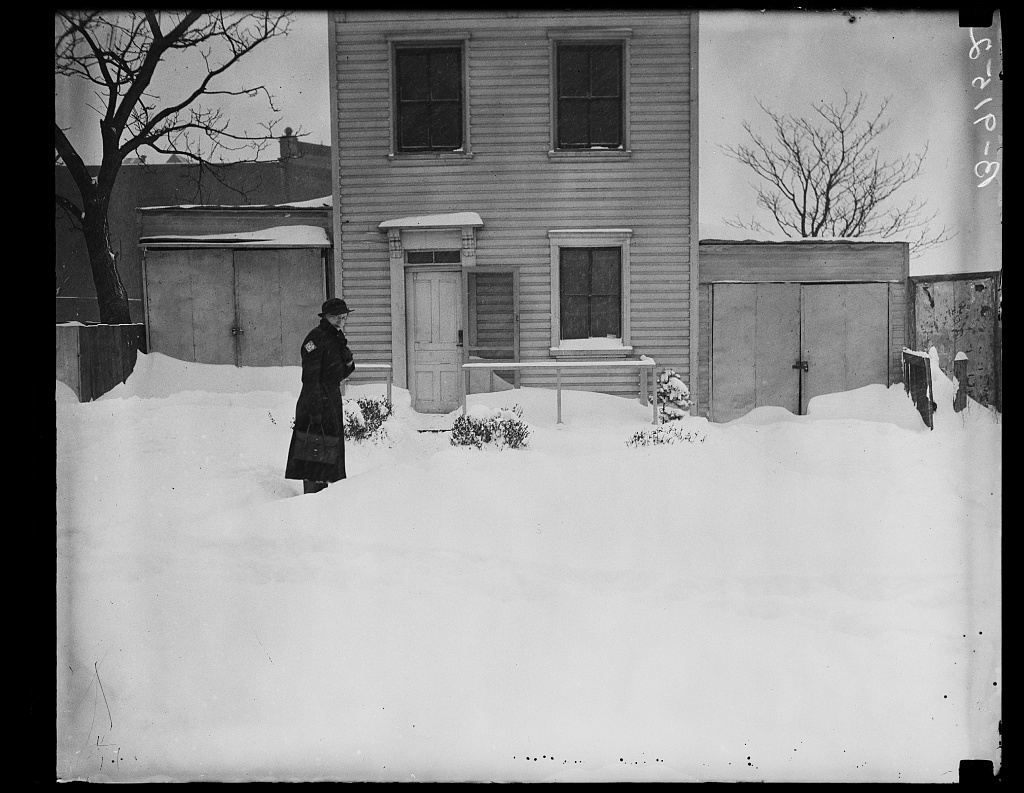
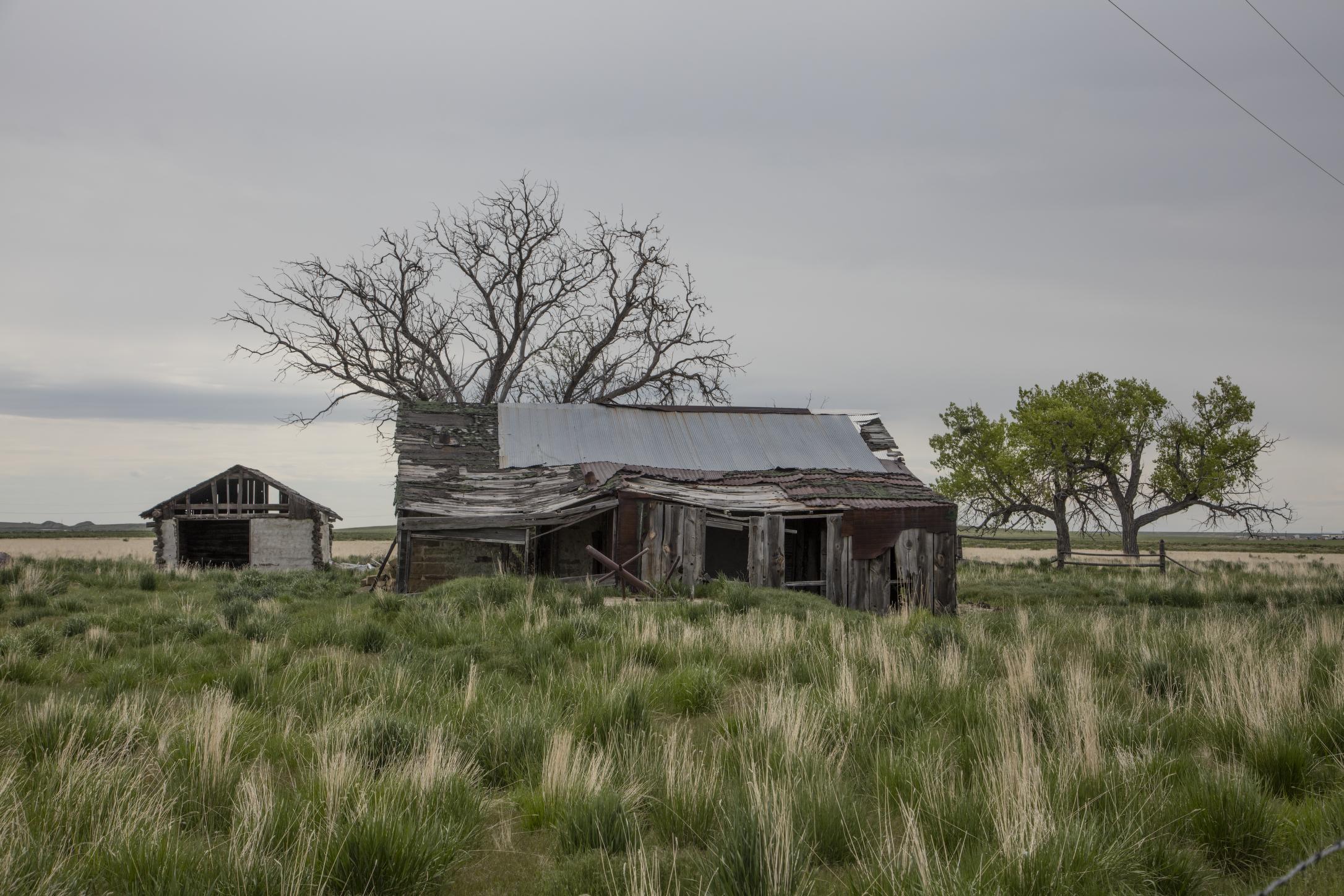
Image Credit: Carol M. Highsmith “Abandoned ranch or farmstead west of Casper in Natrona County, Wyoming” (2015) Public domain image courtesy of the Library of Congress

Rebecca Schumejda: “Meatsuits”

Meatsuits

Within a week of burying my husband,
I took all his clothes, minus three shirts,
from hangers and drawers, stuffed them
into garbage bags and hauled them off to
a church donation bin. I took down pictures
of him, of us. I slipped into my extra-large
meatsuit each morning and went to work,
took care of my sick mother and my daughters.
I believed that getting through the day
was enough, then it wasn’t and there he was.
To find that kind of love again, to cradle
that love in my bones, a baby in a carriage,
a love I’ll raise knowing everything here
is ephemeral. Babe, these are just meatsuits,
this new love promises, love never dies.
I want to believe that we can raise love
high above the bulky restrictions we inhabit,
a dozen balloons floating above us like angels
instead of a tumor resting at the base of a
skull, a tombstone, a marker, these meatsuits.

About the Author: Rebecca Schumejda is the author of several full-length collections including Falling Forward (sunnyoutside press), Cadillac Men (NYQ Books), Waiting at the Dead End Diner (Bottom Dog Press), Our One-Way Street (NYQ Books) Something Like Forgiveness, a single epic poem accompanied by collage art by Hosho McCreesh (Stubborn Mule Press) and her new collection Sentenced (NYQ Books). She is the co-editor at Trailer Park Quarterly. She received her MA in Poetics from San Francisco State University and her BA from SUNY New Paltz. She lives in New York’s Hudson Valley with her family. You can find her online at: rebecca-schumejda.com

Image Credit: Ben Shahn “Clothes hanging in house at farmland auction, New Carlisle [i.e. Marysville], Ohio” (1938) Public domain image courtesy of the Library of Congress

Jason Visconti: “Dressing Up”


Dressing Up

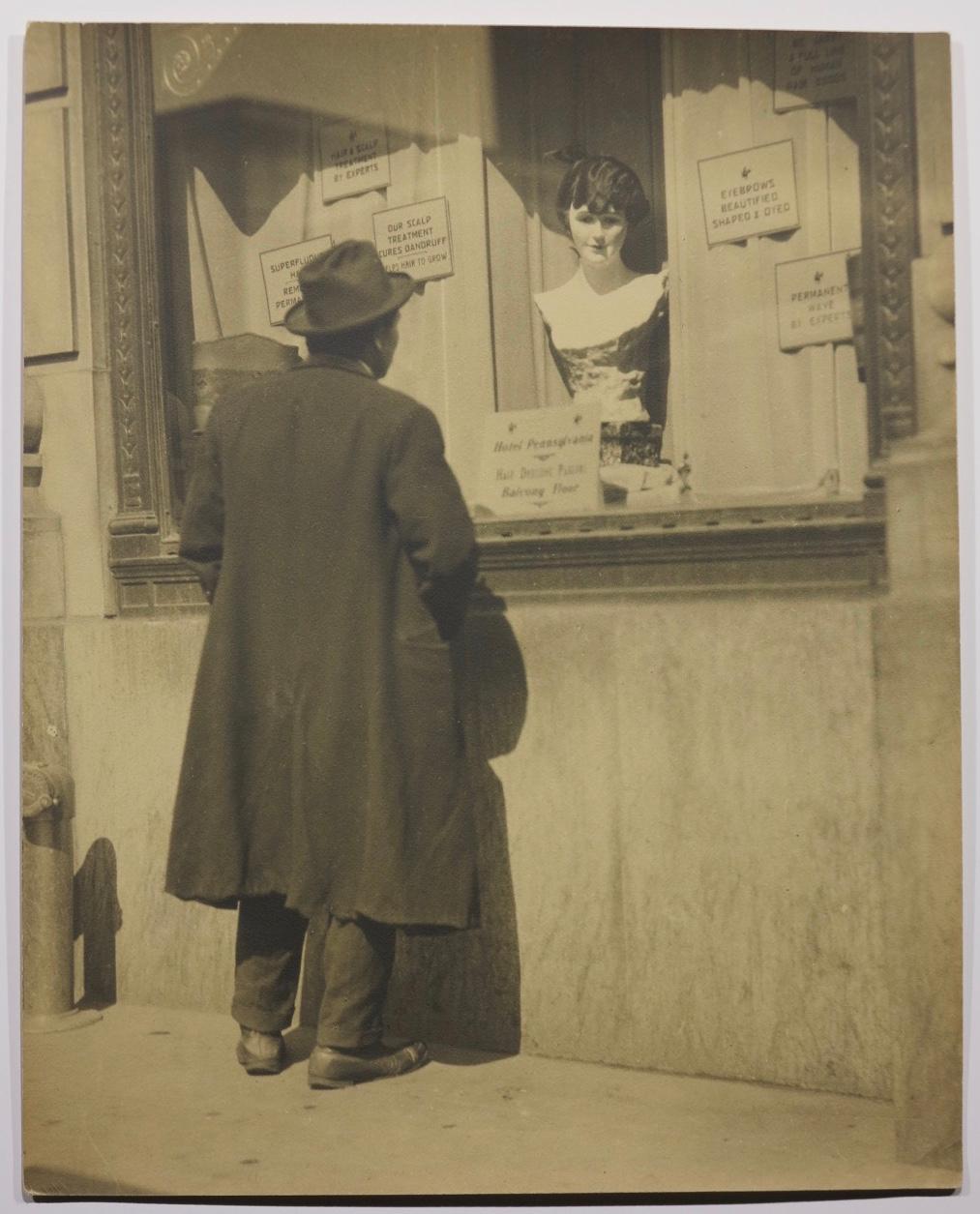
What is the God doing in that oddball hat,
tilted so his brows hint at some wisdom,
I never signed up for heaven’s scraps,
this is the camouflage that disturbs Creation,
mannequins get more fanfare than that.

About the Author: Jason Visconti has attended both group and private poetry workshops. His work has appeared in various journals, including “Blazevox”, “Valley Voices”, and “The American Journal of Poetry”. He especially enjoys the poetry of Pablo Neruda and Billy Collins.

Image Credit: Jonathan Blackwell Pardoe “Beauty in the Beast” (1925) Public domain image courtesy of Wikimedia Commons

Larry Smith: “Proverbs”

PROVERBS
(for Mike James)

They say the moon is an orange we should not eat.
They say sweat on your neck brings good luck.
They say to brag is to cut off a toe at a time.
They say your virtues are your grandchildren; hold them close.
They say tomorrow will be like today, only the weather will change.
They say speak gently to the old, they are a bridge you must pass over.
They say robins speak to robins, crows to crows.
They say grief has many faces, depression only one.
They say kindness is a seed we plant in each other.
They say.

About the Author: Larry Smith is a poet, fiction writer, memoirist and editor of Bottom Dog Press books in Ohio. He and his wife Ann cofounded a meditation center in Huron, Ohio. His most recent book is CONNECTIONS: Moring Dew: Tanka. 

Image Credit: Image originally from The Birds of North America. New York :Published under the auspices of the Natural Science Association of America,1903. Courtesy of the Biodiversity Heritage Library

Agnes Vojta: “Gone Fishing”

Gone Fishing

A storefront window on Main Street
displays a collection of wooden rainbow
trout. Carved and painted to look real,
their speckled bodies curl in mid-jump

next to a model ship with billowing sails,
an engraved sign reading Jeremiah Hale,
Attorney at Law,
and a set of scales.
The lights in the office are off.

Perhaps the attorney has gone fishing,
wades knee-deep in the cold river,
hears the kingfishers shriek from bank to bank,
watches silvery fish dance in the reeds.

Perhaps he sits in the dusty backroom
on a desk that is suffocating with papers
and dreams of a ship with white sails
that will come to carry him far away.

About the Author: Agnes Vojta grew up in Germany and now lives in Rolla, Missouri where she teaches physics at Missouri S&T and hikes the Ozarks. She is the author of Porous Land, The Eden of Perhaps, and A Coracle for Dreams, all published by Spartan Press. Together with eight other poets she collaborated on the book Wild Muse: Ozarks Nature Poetry (Cornerpost Press, 2022.) Her poems have appeared in a variety of magazines; you can read some of them on her website agnesvojta.com.

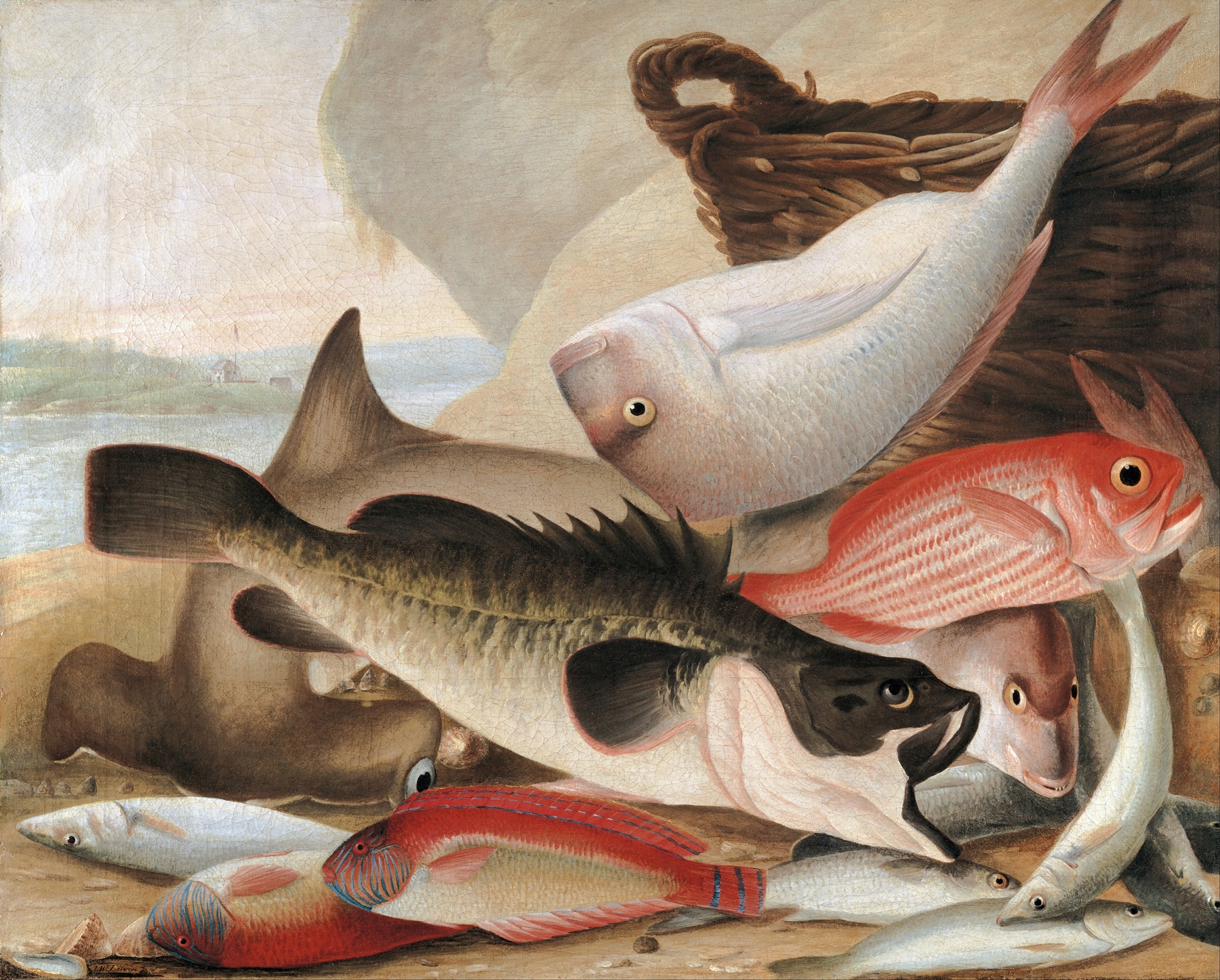
Image Credit: John William Lewin Fish catch and Dawes Point, Sydney Harbour (1813) Public domain image courtesy of Artvee.

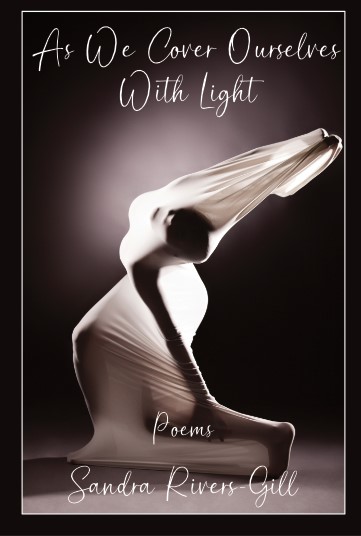
A Review of “As We Cover Ourselves With Light” By Sandra Rivers-Gill

Wendy McVicker Reviews

As We Cover Ourselves With Light

By Sandra Rivers-Gill

With deft and musical language, and a great deal of heart, Sandra Rivers-Gill gives us a collection that honors family, food, community: love, and its complications. The very first poem, “Ain’t Nothing Like Family,” sets the table for the rest of the book. She tells us:

Family is like leftover stew

and: 

We are a culture of ripened fruit
consuming what is not always easy.

and:

We are marinated in love,
seasoned with salt for our journey.

From the start we know that we are in the capable hands of a woman with the courage (from the Latin cor: heart) to look into the shadows cast by the light. She asserts her own vision, her own right to name that vision, and she passes this message on to her children — and us. In “Colored Imagination,” she writes about her daughter and, I suspect, herself, brown girls asserting their visions in a too often uncaring, if not downright hostile, world. She writes,

If a girl teaches her teacher about her sun
colored from the world of her brown hands,
beyond the margin of a grammar school desk,
the girl will weave her own narrative.

You would be forgiven for thinking about hair, and how hair itself is politicized in our world. In another poem, “Snip,” she writes

It is how the barber begins
to censor a man.

And yet these poems are crafted and delivered with a light touch and a great deal of warmth. In the poem that gives us the title of this collection, “The Quilt Maker,” she writes, 

Home is where the edges are salvaged—

and we are made aware of the edges, sometimes still raw, where the family pieces, parents, children, grandparents and great-great grandparents, have been stitched together, and sometimes ripped apart, to form a family, a life, many lives, all of them precious.

Rivers-Gill has chosen lines from Gwendolyn Brooks as the epigraph of this book: “Reading is important—read between the lines. Don’t swallow everything.” Rivers-Gill clearly “reads between the lines,” and, while she may swallow some of the home-cooked meals offered to her, she also looks carefully at what is set before her. In the poem that whispers back to Gwendolyn Brooks’ lines, fittingly titled “Between the Lines,” she examines the largely unspoken, often uneasy, understandings that tie mothers and daughters, when her mother suggests, between the lines, that she take on a task the mother can no longer manage. Rivers-Gill tells us,

She does not invite my help
but teaches me time and timbre—
the fine art of reading.
Between unspoken lines
mothers and daughters dwell.

I would venture to say, between unspoken lines, poets dwell — and they report back on what they read there.

There are many tender moments in this book; one comes away with a clear sense of the people the poet has been shaped by, the people she loves, in all their complexity. Reading this collection can be like sitting at that table and listening in on conversations that fly back and forth over the rapidly devoured food. We are well-nourished by Rivers-Gill’s clean lines. Even when she brings us poems about difficult subjects (as in the one called “Fat Meat is Greasy,” which begins

“The air in our home spat like fat meat in a cast iron skillet.”) her light touch makes us eager to swallow what she puts before us.

I would be remiss if I did not mention the brilliant way Rivers-Gill addresses one of the more devastating events in our recent history. Toward the end of this collection, we have the poem, “D’Anjou.” You would be forgiven for thinking that this is another ode to a favorite food, but then you read, beneath the title, that she writes, “for George Floyd.” Clearly there is another dimension at work here. The poem begins as an ode to the pear, segues into the memory of “the white woman next door” who grew pear trees, and shared the fruits with her neighbor children, instructing Rivers-Gill and her brother on how to be patient and wait for the right moment to enjoy their sweetness. She brings us into the present moment, where she is paring a pear in her own kitchen, and then ends the poem with these lines:

I remember the instructions
that guarantee a pear’s ripeness:
simply press its neck.

This may be the most devastating and delicate political poem I’ve ever read. We need to know who George Floyd was, and what happened to him, but we should know: it is our collective responsibility to carry and reckon with this knowledge. Showing us how to hold the sweetness of a pear in one hand and the horror of George Floyd’s death in the other is Sandra Rivers-Gill’s gift, one that is reflected throughout this rich and beautiful collection.

About the Author: Wendy McVicker is poet laureate emerita of Athens, OH, and a longtime Ohio Arts Council teaching artist. She is the author of several books of poetry, most recently a dialogic collection with Cathy Cultice Lentes, called Stronger When We Touch (The Orchard Street Press, 2023) and, forthcoming from Sheila-Na-Gig Editions, Alone in the Burning. Her poems have appeared in a number of anthologies and journals, online and in print, including Pine Mountain Sand & Gravel, Women Speak, Gyroscope Review, and Sheila-Na-Gig online. She performs whenever she can with musician Emily Prince, under the name another language altogether.
	

Troy Schoultz: “An Angrier Shade of Blue”


An Angrier Shade of Blue

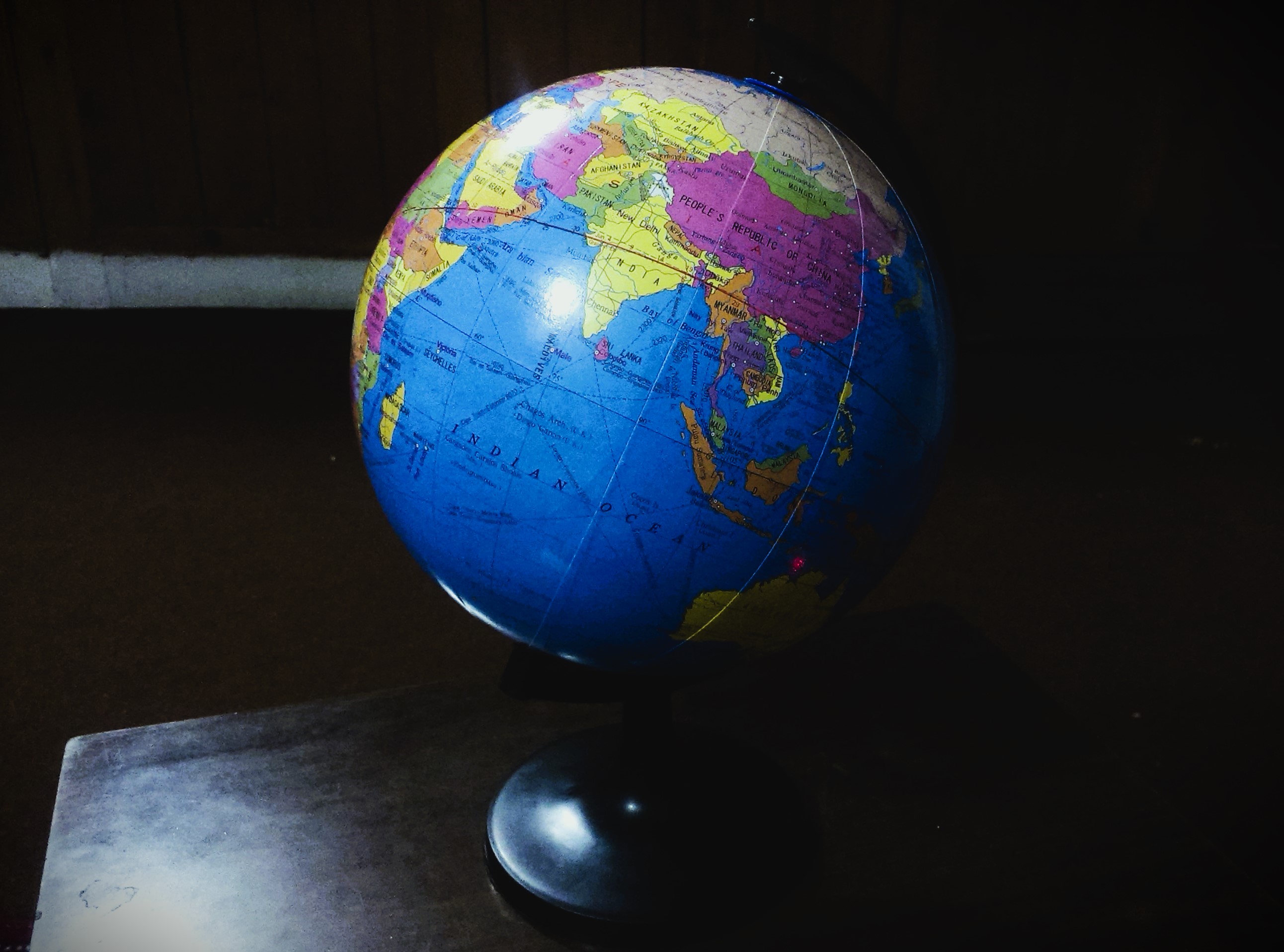
The oceans of the thrift store globe
Were not robin egg blue or
Rain-less skies, but rather
The hue of an oncoming storm.
Patchwork continents, countries redistributed, renamed
Were orange, green, contrasting the blue that came close
To black. The other items surrounding
Were unremarkable: glass milk and soft drink bottles,
A Philco radio, faded stuffed animals with weary fixed stares.
Everything in dust, window included
Itself, covered in a film of traffic exhaust residue.

She stood looking through the filthy window.
The globe spoke to her,
That world on a gold swivel,
That terrible, angry shade of blue.
She picked up a piece of broken concrete
And threw it against the glass, the sound
Dull, yet sad and ugly. 6:30 in the morning,
And nobody that morning was startled
By breaking glass. She held the globe close,
Shuffling off as the sunrise turned the alleys pastel
Clouds parted for therobin egg sky.
Finally, the world was hers.

About the Author: Troy Schoultz is a poet, analog collage artist, and former instructor at the University of Wisconsin in Oshkosh. He has three full-length collections of poetry published. He makes his home in Oshkosh, WI because he likes being next to bodies of water

Image Credit: Kskhh “GEO Globe” CC BY-SA 4.0, Courtesy of Wikimedia Commons

John Dorsey: “Poem for Kacie”


Poem for Kacie

after you check my blood pressure
you smile while threatening
to steal my prized winter coat
asking where i got it
on a cold day in ohio
so vivid that we can both almost still see it
even though you were never there
after nearly fifteen years
one of the sleeves
coming apart at the seams
will require another glaze of gorilla glue
before the winter sets in
but like you
some things are one of a kind
i want to take you back into my past
when everything still felt soft
& smelled like a field of red carnations
where you could feel my heart beating
as i imagined
wiping the snow
from your lips
& placing the coat
over your slim shoulders in repose.

About the Author: John Dorsey is the former poet laureate of Belle, Missouri and the author of Pocatello Wildflower. He may be reached at archerevans@yahoo.com.

Image Credit: Harris & Ewing “Snow” (1936) Public domain image courtesy of The Library of Congress

Joe Mills: “Skeletons in the Waffle House”

Skeletons in the Waffle House

 If you get there and the Waffle House is closed? That's really bad...
  — Craig Fugate, Former Head of the Federal Emergency Management Agency 

When the trick or treating is over,
we end up here, as we usually do 
after a work shift, a dance, a date.  

It’s comforting to know exactly 
what we’re going to get, no matter 
who we are at the moment, a skeleton, 
ghost, jilted lover, single parent.  

The staff doesn’t care. They’ve seen it all 
year after year. The faces and bodies 
and costumes change; the coffee doesn’t. 

So, when we go towards the light, perhaps
we shouldn’t be surprised if we discover
it’s a Waffle House sign, the first place
to open after an emergency or disaster.

About the Author: A faculty member at the University of North Carolina School of the Arts, Joseph Mills has published several collections of poetry, most recently “Bodies in Motion: Poems About Dance.”

Image Credit: Dvortygirl “Closeup of a homemade waffle” Image courtesy of Wikimedia Commons. CC BY-SA 3.0

Sue Blaustein: “A Song for Biofilms”

A Song for Biofilms

Wild yeasts and spores – meshed
with whatever minerals and mites

they passively snagged –
formed a mat of slime and grew

in the bar sinks at Johnny’s.
Almost a half-inch thick

when I first met it,
the mat hid the seamed bottoms

of old-style cylindrical sink compartments.
I stared at it. What next?

How high could it grow, how deep
could it get, left to circumstance?

Leaving things to circumstance wasn’t an option.
My job was intervention, so I wrote an order:

Clean and maintain the bar sinks. Slime buildup noted.
A Song for Biofilms Part II
(Science Fiction)


Intervention.
Prevention. Not imagination,
not invention...

and yet, picture it – a tangled, spongy horde!
The organisms and their household goods –

slimy here, dusty there –
clear the top of the sinks
cross drainboards
drop to the floor. Or
they climb! Drainboard to bar top and onward...
Picture yourself opening the door, finding that the letter carrier
who sat there afternoons watching Court TV has been engulfed!
The Microbiome
(Last Word)


Matter on us, in us – in and on
everything.
A lot of it’s alive!
Is there anyone/anything who isn’t
a substrate?
If we shed every last thing
we’re substrates for (we can’t) how tiny would we be?
Anything left?
And yes, who’s “we” anyhow?

About the Author: Sue Blaustein retired from the Milwaukee Health Department in 2016. She published her first book – In the Field, Autobiography of an Inspector – in 2018 and a chapbook The Beer Line in 2022. She blogs for Milwaukee’s Ex Fabula, and serves as an interviewer/writer for the Veteran’s Administration’s “My Life My Story” program. Find more information at www.sueblaustein.com.

Image Credit: NASA Earth Observatory/USGS “On Aug. 11, 2015, a NASA satellite captured this false-color image of a large bloom of cyanobacteria (Nodularia) swirling in the Baltic Sea.” (2015) Public domain image courtesy of Wikimedia.