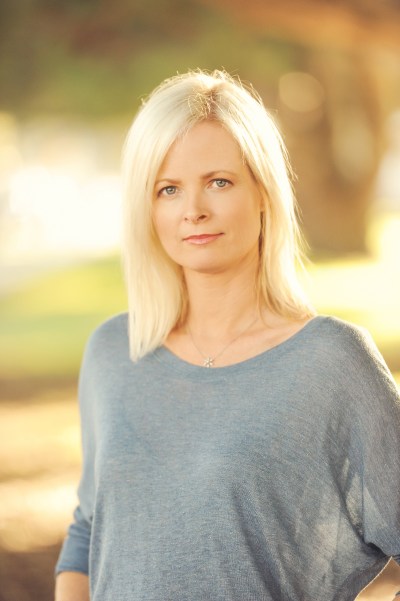
SATURDAY POETRY SERIES PRESENTS: RIVER ELECTRIC WITH LIGHT

river-electric-with-light


From RIVER ELECTRIC WITH LIGHT
By Sarah Wetzel:


A WORSHIP OF RIVERS

If I must choose a word for you,
let it be river. Not the river’s smoothed banks
that, like skin, give form
to breath and blood, the throb
of twenty trillion red cells wildly
ferrying their burdens.
If I must choose a word for you,
let it be the word
for what flows. Down one river,
a ruined house, down another,
eight empty boats bobbing. Inside a ninth,
there is a girl on her knees, knife
in hand. A kind of river
is running through her.
Because the worship of rivers
is also the worship of a chimney
for smoke, the needle its thread
as it closes the wound, of the wire
for its extra electron.
Because all three are worships
of motion, which is why
I race after rainclouds and trains, the postman
and bicycle messengers. Why I think
wind speaks to me. You,
you don’t speak. Yet you take
whatever I throw in. Which is why
I will always live close to water
but never again by the sea
from which everything eventually
finds its way shore again—
arthritic driftwood, the bones
of dogfish and dogs, and Mr. Levi,
the wristwatch still on his wrist. Which is why
I believe the girl puts down the knife
and she rises, the river
                                          electric with light.


THIRD VERSION

The rain leaves fingerprints
in last summer’s
window dust,

while just off shore, anchored
and waiting,
the barge that will ferry the lucky.

In one version of my story,
I sell my hair
and the good skin of my stomach.

In one version, I carry you
from the burning car
and this time you don’t die.

The sea with the rubber hose of a river
down its throat
is swallowing as fast as it can.

If you watch long enough, you’ll see that rain
shapes a path in the pane
for what falls behind it—

yet if you put a hand
to the glass,
the water will fall toward you.

Our lives are always half over.
There’s still time.


SAYING JERUSALEM

It’s become tricky to talk about Jerusalem
these days. Tricky, that is, without saying
cinnamon trees and narrow alleys, overfed
sparrows
, or Hasidic boys in metal spectacles.

I’ve nothing to say about trees or sparrows
or quaint Jerusalem characters, mustached men
selling talismans. Why don’t you like Arabs,
one asked, when I tried to bargain. Some Israelis joke

all we really need is Tel Aviv and the freeway
to Ben Gurion airport. Let the Arabs and fanatics
fight over everything else. From the roof
of my Tel Aviv house, I can sometimes glimpse

Jerusalem, the gleaming tip of al-Haram ash-Sharif.
Let them have everything else. Everything.


Today’s poems are from River Electric With Light (Red Hen Press, 2015), copyright © 2015 by Sarah Wetzel, and appear here today with permission from the poet.


River Electric With Light: Sarah Wetzel’s stunning second collection of poems, River Electric with Light, is a work of pilgrimage, a work in search of the sacred and the spiritually significant. Touching down in Tel Aviv and Jerusalem, Kabul, New York, and Rome, Wetzel’s poems, ranging from lyric meditations to discursive drama, weave themselves from her life as wife, lover, stepmother, and traveler. She names the force propelling her River—“If I must choose a word for you, / let it be the word / for what flows,” she writes. At times joyful, at times grief-ridden, Wetzel’s poems accumulate associatively pulling slivers of secular solace from a world where violence infuses the body, the landscape, and even dreams, recognizing that while: “Our lives are always half over. / There’s still time.” – See more at Red Hen Press


Sarah Wetzel is the author of River Electric with Light, which won the AROHO Poetry Publication Prize and was published by Red Hen Press in 2015, and Bathsheba Transatlantic, which won the Philip Levine Prize for Poetry and was published in 2010. Sarah currently teaches creative writing at The American University of Rome, Italy. She still spends a lot of time on planes, however, dividing time between Manhattan, Rome, and Tel Aviv, Israel. Sarah holds an engineering degree from Georgia Institute of Technology and a MBA from the University of California, Berkeley. More importantly for her poetry, Sarah completed a MFA in Creative Writing at Bennington College in January 2009. You can read samples of her work at www.sarahwetzel.com. ​​


Editor’s Note: Sarah Wetzel’s River Electric With Light is enigmatic, transversive, transformative. There is a motion within its pages–between sections and poems, between concepts and experiences–that is reminiscent of the Italian notion of attraversiamo; crossing over, moving on, getting to another place. Be it that of the smallest rain drop or the greatest ocean, be it that of trains, planes, or automobiles, this collection is electric with movement, even in its deepest and most sacred moments of quiet contemplation.

There is water–and the life water ensures–running through this book. Rivers that carry words, ideas, people. “If I must choose a word for you, / let it be the word / for what flows.” And along with this motion comes an unsettled feeling underlying the life of these poems: “Which is why / I will always live close to water / but never again by the sea.”

This collection hums with a delicate, thoughtful lyricism that lulls the reader so that we float along easily–though shifting locales, through political commentary, through mindful meditations on religion, relationship, life and death. Never set or singular–because life is never as black and white as one experience or perspective–we are reminded that “Our lives are always half over,” but, in the same breath, “There’s still time.”


Want to see more from Sarah Wetzel?
Superstition Review
Poetrynet.org
Ilanot Review
Recours au Poeme

SATURDAY POETRY SERIES PRESENTS: JEN LAMBERT


JenLambert


DINNER FOR THE DYING
By Jen Lambert


When the boy comes inside
with blood on his ripe hands
and a quiver of pointed explanations
on his back, I’m chopping yellow onions.

When he says it’s a doe, that she lies
on the edge of the wood, and that he knows
she was pregnant, my skin tightens.
The scar on my belly, that battered, barbwire grin
that opened like a window for him, twitches
for the dying mother and the calf like a love note in her womb.

When he hangs his knife on his belt
and heads toward the wood, I boil water, crush garlic.
I remember when the doctor pulled him, screaming,
from my belly. I remember the howl in my womb
as he sewed me shut. I remember my first meal
as a mother. Nothing could satisfy.
I salt the vegetables. Crush the mint.


Today’s poem was originally published in Boxcar and appears here today with permission from the poet.


Jen Lambert is a founding editor of Spark Wheel Press and burntdistrict magazine. She received an MFA from the University of Nebraska, and her work has appeared in journals such as Pank, The Los Angeles Review, Sugar House Review, and Redactions, among others.

Editor’s Note: As a new mother, I recently began a search for today’s best poems about motherhood. Jen Lambert’s “Dinner for the Dying” came highly recommended and does not disappoint. And so today we kick off a series of poems within this Saturday Poetry Series that will consider motherhood and hopefully leave their mark upon the reader as today’s poem has left its mark upon me.

There is something of Naomi Shihab Nye in this work. In the salted vegetables and crushed mint. In the intersection of the natural, the familial, and the body. This is a poem of quiet power, wherein tragedy is gently stitched to memory, where life and loss are depicted as two sides of the same coin. Moments of radiant lyric emerge from the subtlety and strength of today’s poem: “a quiver of pointed explanations,” “that battered, barbwire grin / that opened like a window for him, twitches / for the dying mother and the calf like love note in her womb.”

Want more from Jen Lambert?
Official Website
Heart Journal
Tahoma Literary Review

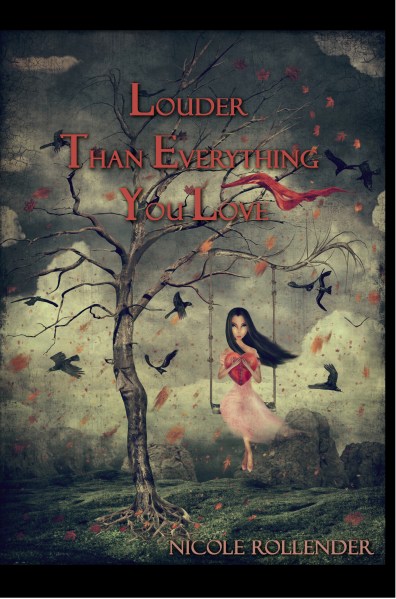
SATURDAY POETRY SERIES PRESENTS: LOUDER THAN EVERYTHING YOU LOVE


Louder_Cover


From LOUDER THAN EVERYTHING YOU LOVE
By Nicole Rollender:


SCATTERING

I remember your clavicle pressed like a blade
under your skin, the moon

pooling in your cheeks’ hollows. You wanted
to be buried in the green dress

you always wore with pearls. We’d sit outside your back
door, watching bats swing over the lake.

Once you were like a weather vane twisting
at the edge of a field as you watched tornados spin

toward your house, your mother asleep on the couch.
I suppose you couldn’t tell me you wanted

her dead. But now you’re gone like she is.
I listen for your voice in the church

inside me, where a priest’s hands outline the shape
of a death. Yes, he believes vertebrae have ghosts.

This luminous pew, where a bird can earn a spot
in paradise—but I’m told the earth

can’t perform the miracle of giving you back.
I know the music your bone shards

make in the urn. You could be an old woman
shaking fish skeletons to conjure the dead.

You could be this fish skeleton.
I should know when a body need not be resurrected—

when the ways we said our names between us,
quietly near the azaleas, trying not to startle

robins (now, now they’re singing on your spine),
stop being music I can hear in my mind,

but become something other: how I scatter
the notes, adagio, pianissimo, and what answers

as the wind scatters white feathers into the lake.


PSALM TO BE READ WHILE MY DAUGHTER CONSIDERS MARY

A swaddling, a manger: but what happened before all this, my
daughter says: when Mary was a girl: I said yes: did she feel an
undersea tug on her spirit: did she think she might be able to move
jugs of water with her mind: I said yes: to birth a man who would
walk on water: a man who would tattoo his image in blood and sweat
on a shroud: did she, in the night fields, look for a star that would
lead seven shadows as colors into her life: what is wine: what are
these fishes, these loaves: for, he entered and exited her as light: her
waters stayed intact: yet, she swaddled a baby who would nurse, laid
him in prickly hay next to goats’ stiff fur: I said yes: listen to this: your
great-grandmother saw Mary appear next to my mother’s crib: my
mother caught measles as a baby: your great-grandmother was a seer:
she walked with Mary back to the stable: comets circling as angels in
a flock overhead: Joseph, wondering: I said yes: Mary, whose baby
pierced through her as light: holding a boy who’d be lanced with a
sword: who would bleed, pee, sweat and groan: who contained God:
who contained her blood: who contained everything in the world:
yet, held out his hand and cried for her milk.


THE LIGHT MAKES MY GRANDMOTHER CRY

Her stories still smoke up the kitchen, a dead woman
cooking peasant soup. Pigeons, lightning boiling

for the living. What kind of truth-telling do we expect
to fall off bird bones? Her death was supposed to be

a leaving, except it wasn’t. Her mutterings clack on
the backs of my teeth. She’s learning what dead women

do: swim the blood of their daughters, spread themselves
on ceilings like giant moths radiating light. The solstice

lights the halo-less among us. Her gap-teeth swallow ashes
in the urn. The coffee grounds won’t settle. She pushes

her hands up into mine, slides her ghost bones under
my skin, and watches my fingers dance the shadow-

-woman-waltz-grasping-at-spoons. She remembers
the day Pinky the poodle was nabbed from her front

yard, pretends to pet his wooled head. That’s why you
need fences to keep the dark ones out
. She uses her skull

as a pot, hissing up, Give back the life I gave you. The sink
runs red angry water. She tiptoes up my spine in her

old slippers, knocking on every vertebra she sees.
It’s true that the dead get younger. Some nights she’s

a skinny girl waking from a bad dream, calling for
a winged mother, the saint of lost dogs, to come down

from a parapet. It’s this girl I let stay, because she also
cries at the stars, whose light goes right through her,

for the dead woman she will grow up to be. That new
blaze, coming from as far away as blue stars going nova,

the lesson in the death-light: The dead learn
to smell what’s sweetest among all the rotting.


Today’s poems are from Louder Than Everything You Love (ELJ Publications, 2015), copyright © 2015 by Nicole Rollender, and appear here today with permission from the poet.


Louder Than Everything You Love: Nicole Rollender’s poems balance on the uneasy boundary between third eye and communion wafer. Beside an “old woman shaking fish skeletons to conjure the dead,” the poet as body becomes a conduit for the generations in both directions, such that her “body is full of holes the dead / look in and out,” while of her daughter she says, “my ribs / were her scaffolding.” Rollender alternately glories and suffocates in her holy entanglement with her lineage, with her God. And when she comes up for air, she ululates a hauntingly familiar song. —Jessica Goodfellow, author of Mendeleev’s Mandala


Nicole Rollender’s work has appeared or is forthcoming in The Adroit Journal, Alaska Quarterly Review, Best New Poets, The Journal, Memorious, THRUSH Poetry Journal, West Branch, Word Riot and others. Her first full-length collection, Louder Than Everything You Love, was published by ELJ Publications in 2015. She’s the author of the poetry chapbooks Arrangement of Desire (Pudding House Publications, 2007), Absence of Stars (dancing girl press & studio, 2015), Bone of My Bone, a winner in Blood Pudding Press’s 2015 Chapbook Contest, and Ghost Tongue (Porkbelly Press, 2016). She has received poetry prizes from CALYX Journal, Ruminate Magazine and Princemere Journal. ​​


Editor’s Note: Nicole Rollender’s first full-length collection is haunting and haunted, tender and tendrils, eye of newt and mother’s milk. The poems contemplate generations and generation. Death and little deaths. The ways we go on, the ways we are remembered. How birds alight on our remnants after we are gone. Its pages are rife with the inheritance of seers and magic, wisdom and sight. With what is passed down amongst women through the ages, from mother to daughter again and again and beyond.

The book’s moments of stunning lyric are interwoven with its major themes so that they become “the music… bone shards // make in the urn.” On the theme of death, the poet writes: “I listen for your voice in the church // inside me, where a priest’s hands outline the shape / of a death” and “I’m told the earth // can’t perform the miracle of giving you back.” When contemplating Mary as mother, she notes the real miracle, that Mary birthed a god “who contained her blood: who contained everything in the world: / yet, held out his hand and cried for her milk.”


Want to see more from Nicole Rollender?
Author Website
Author Blog
Order a signed copy of Louder Than Everything You Love and get a bonus broadside
“How to Stop Drowning” in Muzzle Magazine
“Aperture” in A-Minor Magazine

SATURDAY POETRY SERIES PRESENTS: OLAM, SHANA, NEFESH

Etching on chapbook cover by Andi Arnovitz

From OLAM SHANA NEFESH
By Jane Medved:


SIRENS

They think it is the young girls singing
you see, we pull them to us as smoothly

as oiled rope uncurls into golden braids.
It only takes a few minutes before everything

they see is woman. The pale skin of the sails
spreading like thighs, the thick knots

that tie the anchor turning to strands
of dampened hair held by a lover

before she shakes it free. The salt tastes
as sweet as sweat and soon the ship’s thrust

into the sea becomes unbearable.
This would be enough for galley slaves,

soldiers who tattoo fortunes on their scars,
the simple, parched sailors. But they are not

the ones we want. When we see the heroes
whose fierce deeds fall like hammers, we lay

aside our nocturne of desire. We sing instead
as a mother holds a dying child until

the horizon is the circle of our arms, the wind
a cloth wrapping them in its whisper, the waves

a gentle hush upon each creaking of the deck.
“Do not be afraid. You will be remembered and reborn.”


WHITE FIRE

There is a cable and it reaches
from the side of loving kindness

to the cold window across the room
taking over the function of your heart

which is tired of trying to make blood
out of air. Some days it’s just too hard

to keep on lifting, to appear in a robe
which keeps on falling, exposing

all sorts of intimate matters and the
little whispers beneath. Do not worry.

You are the hand, the page, the white fire
and you cannot be erased. The black letters

will burn and sing and declare themselves
but they are nothing without your silence;

which is not the absence of words, empty
as the howl of a bowl, but the promise made

between all words before they are spoken,
that they will reach across the black lines

and know each other again, even
if they no longer recognize themselves.


LEAVING A NOTE AT THE WESTERN WALL

There is a splintered door leading
nowhere and a lot of women crying
today I can’t even get near the wall.
Luckily I have my own tricks.
I place my arm over a young girl’s shoulder,
sigh sympathetically as she bends
her head in prayer, then edge myself
into her space. Everyone wants to touch
God’s face, to press their forehead
against his slippery cheek and brush
the pitted marks beneath, thank you
for my eyes, my legs, my arms, my breath
.
Herod did a good job, the ancient stones
hold solid. They outweigh the base
of the great pyramids and nothing moves
them, perhaps they are even held up
by pleading, since every crack is filled
with scraps of blue-lined paper, torn
index cards, a piece of yellow legal pad,
a folded napkin, sealed envelopes, airmail,
express, please, listen, thank you for my eyes,
my legs, my arms, my breath, excuse me
,
a woman pushes past me, excuse me please,
when she reaches for the wall a handful
of notes loosen and fall at our feet.
The chair behind me is piled with prayers
as morning, evening and darkness
make their requests, songs from the sons
of Korach even though their father moans
in the earth thank you for my arms,
my legs, my eyes, my breath
, women beg
the matriarchs and children press letters
into fists of stone while God sends back his answers
– No and no and no.


Today’s poems are from Olam, Shana, Nefesh (Finishing Line Press, 2014), copyright © 2014 by Jane Medved, and appear here today with permission from the poet.


Olam, Shana, Nefesh: “‘Olam, Shana, Nefesh’ is a Kabbalistic phrase used to describe the three dimensions of Place, Time and Person. Olam is most commonly translated as ‘world.’ But in Hebrew olam comes from the root of the word ‘hidden.’ This implies that place always has an unrevealed element to it; that we are surrounded by a reality beyond what is immediately visible. Shana literally means ‘year.’ It invokes an image of repetition, re-visiting, return, a never -ending cycle of months. In the Jewish calendar time is not a passive backdrop to human endeavor, but an active force whose windows of opportunity open and close, blossom and die just like the seasons. Nefesh can be translated as ‘person’ but it refers to the spirit as well as the body; the infusion of the divine into the physical. This is an inherently volatile combination, since a human being always contains a push and pull between the material and the spiritual, the body with its appetites and fears and the spirit. This is ‘person’ as the container of the animal and the divine.” – From Olam, Shana, Nefesh (Finishing Line Press, 2014)


Jane Medved is the poetry editor of the Ilanot Review, the on-line literary magazine of Bar Ilan University, Tel Aviv. Her chapbook, Olam, Shana, Nefesh, was released by Finishing Line Press in 2014. Her recent essays and poems have appeared or are forthcoming in Lilith Magazine, Mudlark, Tinderbox Poetry Journal, Cimarron Review, Spoon River Poetry Review, Tupelo Quarterly and New American Writing. A native of Chicago, Illinois, she has lived for the last 25 years in Jerusalem, Israel.


Editor’s Note: Olam, Shana, Nefesh is an absolutely stunning collection. A rare assortment of meditations on myth and history, religion, spirituality, sensuality, gender and place. The questions posed are epic, the answers as small and as critical as breath. The poems themselves are absolutely gorgeous in their own right; lyric delights that any reader would feel indulgent slipping into, with moments like “The salt tastes / as sweet as sweat and soon the ship’s thrust // into the sea becomes unbearable,” “The black letters // will burn and sing and declare themselves / but they are nothing without your silence,” and “Everyone wants to touch / God’s face.” But this book is even more rewarding for those readers familiar with the rich landscapes the poems call and respond to. How rewarding is “Sirens” for those well-versed in Greek mythology, how brilliant “White Fire” for those who know and love midrash, and how masterful “Leaving a Note at the Western Wall” for students of religion and history, for Jewish women, for those who have been to Jerusalem’s Wailing Wall, who have “press[ed] their forehead[s]/ against [God’s] slippery cheek and brush[ed] / the pitted marks beneath, [saying] thank you / for my eyes, my legs, my arms, my breath.”


Want to see more from Jane Medved?
Tinderbox Poetry Journal
Lilith Magazine
Buy Olam, Shana, Nefesh from Amazon

SATURDAY POETRY SERIES PRESENTS: KEETJE KUIPERS

30_DSC5432

GETTING THE BABY TO SLEEP
By Keetje Kuipers


Sometimes the baby can’t reconcile
the self with the self: too hungry
to eat, too tired to sleep. I know

the feeling. O, America, on those nights
when you are too beautiful for me
to continue to forgive you any longer—

for allowing us to kill each other
with your graceless bullets, or exile
our neighbors across your fictitious

border, or argue over the ownership
of each young girl’s body as if its freedom
is a lie she must stop telling herself—

I go out into your radiant embrace.
The baby and I drive through your streets,
over the bridge and its light-chipped

waters, under a moon so big, so full
of itself that though I know it belongs
to the world, it can’t be anything but

American. I hang my arm out the window
and skim the air like touching skin.
I breathe you in, and the baby sleeps.


Today’s poem was originally published in Blackbird and appears here today with permission from the poet.


Keetje Kuipers has been the Margery Davis Boyden Wilderness Writing Resident, a Stegner Fellow at Stanford, and the Emerging Writer Lecturer at Gettysburg College. A recipient of the Pushcart Prize, her poems, essays, and fiction have appeared in numerous magazines and anthologies, including Best American Poetry. Her first book of poetry, Beautiful in the Mouth, won the 2009 A. Poulin, Jr. Poetry Prize and was published by BOA Editions. Her second collection, The Keys to the Jail, was published by BOA in 2014. Keetje is an Assistant Professor at Auburn University where she is Editor of Southern Humanities Review.

Editor’s Note: Today’s poem absolutely blows me away. It is too powerful to contain, and yet it is perfectly wrought as if chiseled from marble. It is metaphor and life, politic and country, as near as a closely-held infant and as far as the moon. It is the American affliction: needless gun violence, our backs turned and hearts hardened against immigrants and refugees, our deep seated fear of women’s sexuality, freedom, independence. “O, America, on those nights… you are too beautiful for me / to continue to forgive you any longer.” Absolutely stunning. Heartbreaking. An outcry in the form of a quiet, contemplative drive, cruising America in an attempt to get the baby to sleep.

Want more from Keetje Kuipers?
www.keetjekuipers.com

SATURDAY POETRY SERIES PRESENTS: STATE OF GRACE: THE JOSHUA ELEGIES

41oGCGJb2kL._SX331_BO1,204,203,200_


From STATE OF GRACE: THE JOSHUA ELEGIES
By Alexis Rhone Fancher:


DYING YOUNG

Midnight, and again I’m chasing
sleep: its fresh-linen smell and
deep sinking, but when I close my eyes I see
my son, closing his eyes. I’m afraid of that dream,
the tape-looped demise as cancer claims him.

My artist friend cancels her L.A. trip. Unplugs the
internet. Reverts to source. If cancer
will not let go its grip, then she will
return its embrace. Squeeze the life out of
her life. Ride it for all it’s worth.

By the time his friends arrive at the cabin
my son is exhausted, stays behind while
the others set out on a hike. He picks up the phone.
“Mom, it’s so quiet here. The air has never
been breathed before. It’s snowing.”

I put on Mozart. A warm robe. Make a pot
of camomile tea. The view from my 8th floor
window, spectacular, the sliver moon, the stark,
neon-smeared buildings, their windows dark.
Sometimes I think I am the only one not sleeping.

My artist friend wants to draw the rain. She
wants to paint her memories, wrap the canvas
around her like a burial shroud.

Tonight, a girl in a yellow dress stands below
my window, top lit by a street lamp, her long shadow
spilling into the street. She’s waiting for someone.

I want to tell my friend I’ll miss her.
I want to tell my son I understand.
I want to tell the girl he won’t be coming.
That it’s nothing personal. He died young.


SNOW GLOBE

Despair arrived, disguised as
nine pounds of ashes in a
velvet bag, worried so
often between my fingers
that wear-marks now stain
the fabric.

Is it wrong to sift
the remains of my dead son,
bring my ashen finger to my
forehead, make the mark of
the penitent above my eyes?

His eyes, the brown of mine,
the smooth of his skin, like mine.
Unless I look in the mirror
I can’t see him.

Better he’d arrived
as a snow globe, a small figure,
standing alone at the bottom of his
cut-short beauty.

Give him a shake, and watch
his life float by.


OVER IT

Now the splinter-sized dagger that jabs at my heart has
lodged itself in my aorta, I can’t worry it
anymore. I liked the pain, the
dig of remembering, the way, if I
moved the dagger just so, I could
see his face, jiggle the hilt and hear his voice
clearly, a kind of music played on my bones
and memory, complete with the hip-hop beat
of his defunct heart. Now what am I
supposed to do? I am dis-
inclined toward rehab. Prefer the steady
jab jab jab that reminds me I’m still
living. Two weeks after he died,
a friend asked if I was “over it.”
As if my son’s death was something to get
through, like the flu. Now it’s past
the five-year slot. Maybe I’m okay that he isn’t anymore,
maybe not. These days,
I am an open wound. Cry easily.
Need an arm to lean on. You know what I want?
I want to ask my friend how her only daughter
is doing. And for one moment, I want her to tell me she’s
dead so I can ask my friend if she’s over it yet.
I really want to know.


Today’s poems are from State of Grace: The Joshua Elegies (KYSO Flash, 2015), copyright © 2015 by Alexis Rhone Fancher, and appear here today with permission from the poet.


State of Grace: The Joshua Elegies: “Alexis Rhone Fancher’s book, State of Grace: The Joshua Elegies, maps in searing detail a landscape no parent ever wants to visit—a mother’s world after it’s flattened by her child’s death. Though her son’s early passing was ‘nothing personal,’ her poems howl with personal devastation. They insist that the reader take the seat next to hers in grief’s sitting room and ‘imagine him in his wooden forever.’ Fancher grapples with how to reconcile oneself to the slow loss of memory’s fade-out, and with how to go on living without betraying the dead, how to ‘[s]queeze the life out of / her life.’ You’ll need tissues when you read this book, but it’s well worth rubbing your heart raw against the beauty of these poems and their brave, fierce honesty.” — Francesca Bell, eight-time nominee for the Pushcart Prize in poetry, and winner of the 2014 Neil Postman Award for Metaphor from Rattle


Alexis Rhone Fancher is the author of How I Lost My Virginity To Michael Cohen and Other Heart Stab Poems, (Sybaritic Press, 2014). Find her work in Rattle, Menacing Hedge, Slipstream, Fjords Review, H_NGM_N, great weather for media, River Styx,The Chiron Review, and elsewhere. Her poems have been published in over twenty American and international anthologies. Her photos have been published worldwide. Since 2013 Alexis has been nominated for three Pushcart Prizes and two Best of The Net awards. She is photography editor of Fine Linen, and poetry editor of Cultural Weekly, where she also publishes The Poet’s Eye, a monthly photo essay about her ongoing love affair with Los Angeles. www.alexisrhonefancher.com


Editor’s Note: The poems in today’s collection slew me. Long after I finished reading them, they stayed with me, a specter. As I nursed my young son, worried over his maladies, rejoiced in his small accomplishments, there in the shadows was the poetry of Alexis Rhone Fancher reminding me that life is precious, fleeting, that nothing should be taken for granted, that anything–no matter how dear–can be taken away.

It is impossible not to be moved by these poems. By “a girl in a yellow dress [who] stands below / my window, top lit by a street lamp, her long shadow / spilling into the street… waiting for someone.” By the poet, the mother, who wants “to tell the girl he won’t be coming. / That it’s nothing personal. He died young.” By the admission, “Unless I look in the mirror / I can’t see him.” By the callousness of a friend who would ask if a mother is “over” her son’s death. By a mother’s very human reaction to such a question: “I want to ask my friend how her only daughter / is doing. And for one moment, I want her to tell me she’s / dead so I can ask my friend if she’s over it yet. / I really want to know.”

State of Grace: The Joshua Elegies is raw, brave, honest. It rips you apart as you read it–and leaves you grieving long after–because of the very vulnerable and wounded place from whence the poems arose. This is an incredibly compelling collection that does what lyric, confessional, narrative poetry does best: invites the reader into a human experience that is at once personal and shared, pairing vivid imagery and beautiful language with a story so moving that the reader is forever changed by the very act of having read it.


Want to see more from Alexis Rhone Fancher?
Buy State of Grace: The Joshua Elegies from Amazon
Four poems in Ragazine, including “When I turned fourteen, my mother’s sister took me to lunch and said:,” chosen by Edward Hirsch for inclusion in The Best American Poetry, 2016
Broad (“Dying Young” was first published in Broad)
Alexis Rhone Fancher’s Official Website / link to published works

SATURDAY POETRY SERIES PRESENTS: CHANEL BRENNER

Photo by The POD Photography


A POEM FOR WOMEN WHO DON’T WANT CHILDREN
By Chanel Brenner


I won’t preach about the rewards of motherhood.
I won’t say it’s the best thing that ever happened to me.
I won’t say it’s the best job I’ve ever had.
I won’t say you’ll regret not having a child.
I won’t say you’ll forget what life was like before.
I won’t say it makes life worth living.
What I will say
is my son died.
What I will say
is I would still do it again.


Today’s poem was originally published in Rattle and appears here today with permission from the poet. Hear the poet read today’s poem aloud via Rattle.


Chanel Brenner is the author of Vanilla Milk: a memoir told in poems, (Silver Birch Press, 2014). Her poems have appeared in Poet Lore, Rattle, Cultural Weekly, Diverse Voices Quarterly, Anderbo, West Trestle Review, and others. Her poem, “July 28th, 2012” won first prize in The Write Place At the Write Time’s contest, judged by Ellen Bass. In 2014, she was nominated for a Best of the Net award and a Pushcart Prize.

Editor’s Note: I won’t say it’s because I first read today’s poem while pregnant. I won’t say it’s because three weeks ago I became a mother for the first time. I won’t say it’s because I did not want children myself. I will say that my son is an amazing human being and that I am honored to be in his service. I will say that today’s incredibly moving, incredibly brave poem breaks my heart each and every time I read it.

Want to read more from Chanel Brenner?
Chanel Brenner’s Official Website
Deep Water Literary Journal
Cultural Weekly
Women’s Voices for Change
Silver Birch Press
Buy Vanilla Milk on Amazon

SATURDAY POETRY SERIES PRESENTS: VALERIE BACHARACH


Untitled


GENESIS
By Valerie Bacharach

I flew across the international
date line to yesterday.
Stayed on the plane,
circumnavigated the world,
arrived at time’s beginning.

A garden of wildness.

No need of that man
whose rib I stole,
no need of knowledge,
or apples,
or snakes,
or God…

Only this—
solitude
grace
pure air

before pain found me.


Today’s poem was originally published in Poetica‘s “Poem of the Week” series and appears here today with permission from the poet.


Valerie Bacharach is a poet and teacher in Pittsburgh, Pennsylvania. She is a member of Carlow University’s Madwomen in the Attic poetry workshops and has attended Chatham University’s Summer Community of Writers. In 2015, she participated in Chautauqua Institution’s Writers Festival, and worked with the poet, Tony Hoagland. She conducts weekly poetry workshops with the women of Power House, a halfway house for women in recovery from drug and alcohol addiction. Her poetry has appeared or is forthcoming in Voices from the Attic, Pittsburgh City Paper Chapter and Verse, Uppagus, U. S. 1 Worksheets, and Poetica.

Editor’s Note: Today’s poem is epic in its sparse simplicity. Rife with the unsaid, with what does not need to be written. At the same time, the poem is laden with intertextuality, the Bible doing the heavy lifting of connectivity and association, allowing what appears on the page to be ripe with the weight of ancient tales. Amid these rich layers, a lyric beauty emerges: “[I] circumnavigated the world, / arrived at time’s beginning,” “A garden of wildness,” “before pain found me.”

Want to read more from Valerie Bacharach?
Uppagus
Pittsburgh City Paper

SATURDAY POETRY SERIES PRESENTS: ALAN TOLTZIS

pic 003

FORTY-TWO PLACES
By Alan Toltzis

As time passed,
they didn’t need to study love,
pray for it,
or even speak its name.

Instead,
they lived their love
silently.
Secrets remained secret

as love sank into unbending bones,
fused with supple corpuscles,
and seeped through soft skin
beneath their fingernails.

Only by looking back
and naming each
of the 42 places (in order)
they had journeyed

did they realize they had grown
into an old couple
who survived a long-forgotten stopover
of bickering and concession

and the should-
and should-not-have-saids
they should never
have crossed

leaving only unspoken love
perpetuated by the comfort and intimacy
of taking each other
for granted.


Today’s poem is from the collection The Last Commandment, published by Poetica Publishing, copyright © 2015 by Alan Toltzis, and appears here today with permission from the poet.


Alan Toltzis is the author of the book of poems, The Last Commandment (Poetica Publishing, 2015). His work appears in print and online publications including The Provo Canyon Review, Poetica Magazine, Burningword Literary Journal, Soul-Lit, and Red Wolf Journal. Alan is working on his second book of poems and is developing The Psalm Project, to teach poetry to middle- and high-school students.

Editor’s Note: There is something of a prayer in today’s poem. A thanksgiving. Something quiet, humble, and honest. Something lived, understood, known. What it is to journey throughout a lifetime of relationship. What it is to look back and reflect upon “the should- / and should-not-have-saids … leaving only unspoken love / perpetuated by the comfort and intimacy / of taking each other / for granted.”

Want to read more from Alan Toltzis?
Alan Toltzis’ Official Website
“Miles Away” in the Red Wolf Journal
The Provo Canyon Review
“Noah” in the Red Wolf Journal
“Elegy for 107696” via Poetica Publishing

SATURDAY POETRY SERIES PRESENTS: DERRICK TYSON


1442353318186_1441927095124

POEM
By Derrick Tyson


My eyes
are so green that when

I look at you, your face
becomes an emerald,

or like a meadow
that is so completely absorbed

in its color that
it catches in your throat.

Flowers never need
alterations.

Sometimes
the sky is so beautiful

that even the windows
are in awe,

not letting me
see it clearly.

Windows
built into us, into our limbs,

my feet have bricked wells
built into them,

Thus
I fall into myself.


Today’s poem was previously published in SHAMPOO, and appears here today with permission from the poet.


Derrick Tyson is a a Visual Artist/Poet currently residing in the Atlanta-area. He has been published in various online and printed magazines nationwide, and has several books of poetry out. As an artist, he has been exhibited internationally in four different countries (Israel, China, Australia and Italy) and has had many of his photographs published in online and printed magazines. He loves co-mingling, cross-pollinating Fine Art with his love of Poetics, Literature, World Cinema and the Oneiric. He refers to this as Visual Poetry. He believes that all things are interconnected, whether or not we can visually render the connections. Since “Time” is inelastic, he cherishes every second with a passion. He’s easily-amused and takes nothing for granted.

Editor’s Note: Today’s poem is full of moments of stunning, impactful surprise. In the instant of connection, is it the watcher or the watched who becomes transformed? How perfect the flower, created by the hand of science or Mother Nature, that it never needs alterations. How beautiful the sky that not even the transparency of windows will allow it to be truly seen. How deep or burdened we are, that we fall into ourselves? Built moment by moment, each its own deep thought, each its own discreet image, today’s poem asks us to slow down, to reflect, to envision and imagine and contemplate. There is layer upon layer to consider and play with, if we will open our minds and take the time.

Want to see more from Derrick Tyson?
POETRY:
      Lispy Whispers
      Isolated Lightships
ART:
      flickr
      Artitbe