SATURDAY POETRY SERIES PRESENTS: CHANEL BRENNER

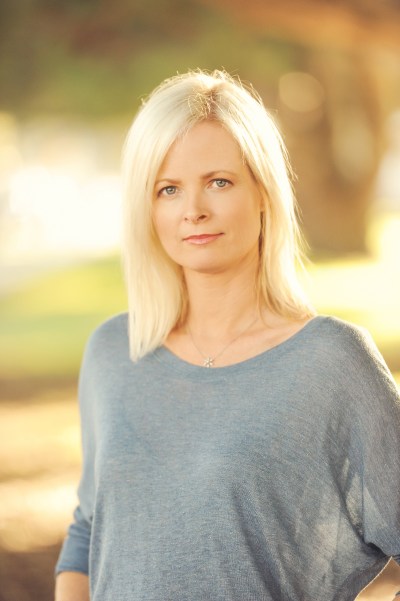
Photo by The POD Photography


A POEM FOR WOMEN WHO DON’T WANT CHILDREN
By Chanel Brenner


I won’t preach about the rewards of motherhood.
I won’t say it’s the best thing that ever happened to me.
I won’t say it’s the best job I’ve ever had.
I won’t say you’ll regret not having a child.
I won’t say you’ll forget what life was like before.
I won’t say it makes life worth living.
What I will say
is my son died.
What I will say
is I would still do it again.


Today’s poem was originally published in Rattle and appears here today with permission from the poet. Hear the poet read today’s poem aloud via Rattle.


Chanel Brenner is the author of Vanilla Milk: a memoir told in poems, (Silver Birch Press, 2014). Her poems have appeared in Poet Lore, Rattle, Cultural Weekly, Diverse Voices Quarterly, Anderbo, West Trestle Review, and others. Her poem, “July 28th, 2012” won first prize in The Write Place At the Write Time’s contest, judged by Ellen Bass. In 2014, she was nominated for a Best of the Net award and a Pushcart Prize.

Editor’s Note: I won’t say it’s because I first read today’s poem while pregnant. I won’t say it’s because three weeks ago I became a mother for the first time. I won’t say it’s because I did not want children myself. I will say that my son is an amazing human being and that I am honored to be in his service. I will say that today’s incredibly moving, incredibly brave poem breaks my heart each and every time I read it.

Want to read more from Chanel Brenner?
Chanel Brenner’s Official Website
Deep Water Literary Journal
Cultural Weekly
Women’s Voices for Change
Silver Birch Press
Buy Vanilla Milk on Amazon

SATURDAY POETRY SERIES PRESENTS: VALERIE BACHARACH


Untitled


GENESIS
By Valerie Bacharach

I flew across the international
date line to yesterday.
Stayed on the plane,
circumnavigated the world,
arrived at time’s beginning.

A garden of wildness.

No need of that man
whose rib I stole,
no need of knowledge,
or apples,
or snakes,
or God…

Only this—
solitude
grace
pure air

before pain found me.


Today’s poem was originally published in Poetica‘s “Poem of the Week” series and appears here today with permission from the poet.


Valerie Bacharach is a poet and teacher in Pittsburgh, Pennsylvania. She is a member of Carlow University’s Madwomen in the Attic poetry workshops and has attended Chatham University’s Summer Community of Writers. In 2015, she participated in Chautauqua Institution’s Writers Festival, and worked with the poet, Tony Hoagland. She conducts weekly poetry workshops with the women of Power House, a halfway house for women in recovery from drug and alcohol addiction. Her poetry has appeared or is forthcoming in Voices from the Attic, Pittsburgh City Paper Chapter and Verse, Uppagus, U. S. 1 Worksheets, and Poetica.

Editor’s Note: Today’s poem is epic in its sparse simplicity. Rife with the unsaid, with what does not need to be written. At the same time, the poem is laden with intertextuality, the Bible doing the heavy lifting of connectivity and association, allowing what appears on the page to be ripe with the weight of ancient tales. Amid these rich layers, a lyric beauty emerges: “[I] circumnavigated the world, / arrived at time’s beginning,” “A garden of wildness,” “before pain found me.”

Want to read more from Valerie Bacharach?
Uppagus
Pittsburgh City Paper

SATURDAY POETRY SERIES PRESENTS: ALL DAY, TALKING

allday_1024x1024


From ALL DAY, TALKING
By Sarah A. Chavez:


DEAR CAROLE, I FINALLY DID IT

I cut it all off into a trendy bob
that fades up the back. You told me
not to, said you loved my hair long.
Well, you’re not here anymore.


DEAR CAROLE, TODAY I’M WEARING THAT RING

you stole for me at the art fair
on the green at Fresno State.
God, was I such a baby!
Poor me, I don’t have any money
to buy things.
I kept whining.
I never get to have anything nice.
And most of what we’d seen
iron sculptures, clay dishes fired
for ornament, I was only just
discovering, but still, I thought
I deserved them.
That’s another thing age teaches you –
you ain’t owed shit. There is nothing
on this flying water rock that anyone deserves.
You should’ve smacked me, echoed
my father and told me to suck it up.
But you didn’t.

It was the third time we’d circled
back to that booth. Everything
about it was pretty: the rainbow
canopy, the sunlight glinting off
the semi-precious gems and hued
glass, the hot hippie without a bra
telling every passer-by about Gaia.
I fingered a large red and black
swirled ring, slipped it over
the callouses on my middle finger,
and spread my hand flat to admire it,
its heft impressive for something so lovely.
The hippie told me, the ring
wants to be a ring. I never take
from the Earth without her permission.
I spoke to the stone, told her what
she’d be
and she gave me her blessing.

The hippie looked so sincere
when she spoke, looked into my eyes
with her large cobalt irises, the pupil a pinprick
in the blue with the sun glaring
behind me. I’m sure I said something
stupid. I always get so nervous
around people like that, who walk
through life like an open wound, their blood
and tissue exposed to the elements,
their insides shining on the outside.

I probably said, Cool and behind me,
you probably rolled your eyes.
I put the ring back on the organic
hemp cushion with the other
metamorphisized rocks, then spun
the color-tinted glass of the wind chimes
hanging from the canopy’s aluminum
frame to hear their tingle-tangle
and submerged my hand into the basket
of oddly-shaped beads, feeling what I
imagined the quiet core within a fossilized
stone felt like. As we walked away,
you said Thanks, which was weird, but
I thought maybe it got to you too –
so much unattainable beauty,
the reminder of all the things
we didn’t have and all the things
we couldn’t yet know we wanted.

Walking to 711 for cigarettes,
we stopped at the crosswalk light.
You took my hand and pressed
the weight of the ring into my palm.
I looked up at you, squinting in surprise,
but you just shrugged, said The stone told me
to take it. It said it wanted you to wear it.


DEAR CAROLE, FOR HOURS, IT’S BEEN BURNING

a hole in my gut, the shame
of never saying thank you
twelve years ago for that fucking pizza
you bought with SSI back pay.
It tasted so good: the grease,
the sweet of the tomato sauce,
the salt from the olives prickling
my tongue – I could actually taste it.
They don’t say on those Cymbalta commercials
depression takes away taste.
Sleep, yeah, sex drive, focus, but not taste.
I never told you
how for those months, alone
in my one-bedroom apartment I tried
to eat just about anything,
but it was all so thick and waxen . . .
one night, ravenous and wretched
I tried to eat an entire loaf of bread.
Cross-legged on the kitchen floor
the light from the street lamp cast ghastly
shadows against the apartment blinds
while I took slice after slice
of Wonder Bread from the Hostess overstock
warehouse on Weldon Street and bit
into each one wanting desperately
for the next to taste
like summer,
like 1998,
like the smell of patchouli
in your room, like rain water,
like mud-stained carpet, like midnights
on the front porch,
like lying to our mothers and never getting caught.
Slice after slice – mutilated, the impression
of my teeth embossed on each one’s cottony
flesh – lay scattered
on the linoleum. I couldn’t bring myself
to swallow even the smallest
bite. Just kept spitting
slobbery hunks onto my naked lap,
into my tangled hair, until
I laid down, the floor clammy and smooth
like the palms of your hands.


Today’s poems are from All Day, Talking, published by Dancing Girl Press, copyright © 2014 by Sarah A. Chavez, and appear here today with permission from the poet.


All Day, Talking: “A stunning, gritty, and beautifully irreverent collection of poems, All Day, Talking repeatedly and necessarily corrupts the conventional elegy. Chavez mourns Carole, yes, but she also mourns herself—and all of us, the tragedy of how we see (or don’t see) one another in our contradictory identities and bodies. If you want to know the honest truth about what it means to grieve and to survive, keep these poems close and listen to this ‘all day, talking,’ which is both deeply personal and profoundly political.” — Stacey Waite, author of Butch Geography


Sarah A. Chavez, a mestiza born and raised in the California Central Valley, is the author of the chapbook, All Day, Talking (Dancing Girl Press, 2014), which was featured on Sundress Publications’ book spotlight, The Wardrobe’s Best Dressed. She holds a PhD in English with a focus in poetry and Ethnic Studies from the University of Nebraska – Lincoln. Her work can be found or is forthcoming in North Dakota Quarterly, Stirring: A Literary Collective, Spoon River Poetry Review, Luna Luna Magazine, among others. Her manuscript, This, Like So Much, was an Honorable Mention for the 2013 Quercus Review Press Poetry Book Contest. A selection from her chapbook manuscript All Day, Talking won the Susan Atefat Peckham Fellowship in 2013. She is a proud member of the Macondo Writers Workshop.


Editor’s Note: There is a refreshing honesty to the poems in All Day, Talking that is, in equal measures, surprising, laugh-out-loud funny, and deeply touching. In this collection grief is portrayed–and love remembered–through a lens of realism that mirrors the very real and very unstable experience of loss. Memory is the vehicle through which a life lost is a life recalled, and the speaker addresses the absence with a candor and wit that seems to honor the relationship that gave rise to it when Carole was still living. Amidst a text thick with engaging and humorous stories, within the world of deeply confessional admissions and recollections, there exists the heartbeat of the lyric, “the reminder of all the things / we didn’t have and all the things / we couldn’t yet know we wanted.”


Want to see more from Sarah A. Chavez?
Sarah A. Chavez’s Official blog/website
Buy All Day, Talking directly from the poet
Buy All Day, Talking from the publisher
Rogue Agent
Broadside of “The Day the Alligators Feasted on Time” from Stirring: A Literary Collection
The Poetry Foundation: Irene Lara Silva in conversation with Sarah A. Chavez

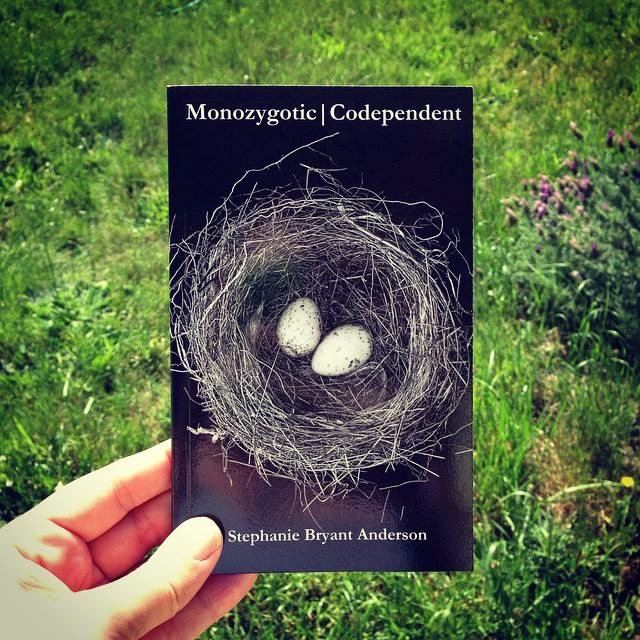
SATURDAY POETRY SERIES PRESENTS: MONOZYGOTIC | CODEPENDENT

monocofinal


From MONOZYGOTIC | CODEPENDENT
By Stephanie Bryant Anderson:


LONELINESS CAME INSIDE MY HOME, UNPACKED ITS
THINGS

I sat on the floor
in a blue room choking

on emotions, confessing
sadness to the cake falling

down my throat, wondering
how I have come to hate winter

when it snows
such beautiful white flowers.

But—

it’s the way I’ve neatly folded the laundry
over and over.

It’s the way fear visits me twice,
and courage once.

It’s the way I move alone at night
from the couch to the door

to the curtains,
back to the couch.

It’s how you catch me dreaming
and step over my body.


LIKE THE BLACK HOLE CARTOGRAPHER WHO WENT
HUNTING FOR WALNUTS

When the door closed this time, she knew it
       would be different. She saw his eyes—
emotionless ticks that had grown into the plural

patterns of empty walnut shells. Someone once
       star-mapped Aries the Ram, and generously
gave him horns. I am strong as an Ox

he reminded her as she stood to leave. Reminded
       her that she was the Year of the Rabbit with closed
curtains.

Safety over risk, she recalled looking at the door,
       but her body lied, it could not carry her there.
You cry too easily— he said, after the first hit

into her eye-bone crunched, sounding the way
       the nutcracker sounded when breaking open
walnuts. He stood over her

using the same angle God used to look down from.
       But, here, for her,
there was no longer a down—


ANXIETY WHILE CROSSING THE TENNESSEE-ARKANSAS
BRIDGE

Last November my sister got married.
My heart cropped, carried

for months in my handkerchief. At night
it would cry out from extinction.

This amputation being no small ache, I left
Tennessee, my heartbeat slow.

Memphis with her strange spell
filled my piano-ribs

with a slow blues loaded
with heavy bees and suicide ghosts.

The road tasted like salt. I drove until
I couldn’t see the shape of us,

until my heart could again beat
on its own.


Today’s poems are from Monozygotic | Codependent, published by The Blue Hour Press, copyright © 2015 by Stephanie Bryant Anderson, and appear here today with permission from the poet.


In Monozygotic | Codependent, Stephanie Bryant Anderson’s poems are concerned with splitting the self and uncovering the woman beneath the familial myths. Yet the essential paradox for Bryant Anderson: when the self has a twin—a ‘shadow,’ a ‘dark-haired mirror girl’—what then of the split? These poems ache; in the style of Southern gothic, these poems are ‘filled [with] piano ribs, a slow blues loaded with heavy bees and suicide ghosts.’ Bryant Anderson’s are poems of survival, built in fragile and beautiful shell casings, stanzas deceptively elegant and delicate, for what pinions each graceful couplet is a fierceness of spirit, a deep-seated desire for life, always life, even in the midst of pain and memory, ‘shaped as an open field plagued by black irises.’ I am broken and remade by these poems. —Jennifer Givhan, 2015 Winner National Endowment for the Arts fellowship


Stephanie Bryant Anderson is author of Monozygotic | Codependent (The Blue Hour Press 2015). Recent or forthcoming publications include Vinyl, burntdistrict, Rogue Agent and The Blueshift Journal. Besides poetry she enjoys kickboxing and math. Stephanie is founder of Red Paint Hill Publishing.


Editor’s Note: Monozygotic | Codependent opens with a quote from Sylvia Plath: “I do not know who I am, where I am going – and I am the one who has to decide the answers to these hideous questions.” And so Stephanie Bryant Anderson sets the stage for this brave, vulnerable collection. The journey the poet takes us on is deeply confessional, beginning in loneliness and ending in leaving, with panic, regret, abuse, anxiety, divorce, codependence, death, and God doggedly pursuing the I in-between. This is not the story of a light at the end of the tunnel; it is a story of survival. But there is so much beauty in the words, in their brutal honesty, in the intimacy of what is revealed, in the shared experience that arises when one speaks up about that which is too-seldom talked about. In this way, this book is Plathian, reflecting the intersection between lived suffering and staggering art.

Following the Plath quote, Monozygotic | Codependent welcomes us into its world with “Loneliness Came Inside My Home, Unpacked Its Things.” Here we sit on the floor. Here we are choking. Here we are eating our feelings. Here we are “wondering / how I have come to hate winter // when it snows / such beautiful white flowers.” A line so beautiful, it hurts to confront it. Like the idea of stepping over a woman dreaming.

From stepped over to stepped on, “Like the Black Hole Cartographer Who Went Hunting for Walnuts” takes us deep into the reality of a woman abused. She is not safe. She cannot leave. She is looked down on by man and God alike, only “here, for her, / there [is] no longer a down.”

In “Anxiety While Crossing the Tennessee-Arkansas Bridge” we encounter one of the major themes of the book: twin-ness. What it means to be a twin, to have been born into that level of codependence and to have to survive that conjunction into the individuality of adulthood. The result is a heart that must be “cropped, carried,” that has to learn to beat again on its own.


Want to see more from Stephanie Bryant Anderson?
Stephanie Bryant Anderson’s Website
Buy Monozygotic | Codependent from The Blue Hill Press
Follow Stephanie Bryant Anderson on Twitter