Lynn Houston: “At the Harbor Lights Motel After You Return”

.


At the Harbor Lights Motel After You Return

By Lynn Houston

.

In August 2016, while at a writing residency, I met a man who was already supposed to have deployed with his National Guard unit. We were given the gift of three weeks before he left, time we used to get to know each other, as we helped out on a friend’s farm, had long conversations on a porch swing, and rode his motorcycle up into the mountains. The night before he left the country, as he was driving to the base, we talked on the phone for over three hours. For six months while he was gone, I sent him near-daily poems in the mail. When he returned, after an initial successful reunion, it became clear that he was plagued with anger issues and other problems associated with a difficult re-entry into his civilian life. He began seeing someone else, and we broke up. In my grief, I revised the poems I’d sent him and began submitting them to poetry contests. Unguarded won the inaugural chapbook contest of the Heartland Review Press and is due to be released in December 2017, with a series of readings and book signings in the Elizabethtown, KY, area scheduled for early 2018.

.

At the Harbor Lights Motel After You Return

The fish aren’t biting on Key Largo
the morning we spend together
after you return. You nap all day,
sheets spiraled like a carapace
around your torso and legs.

Next to you in bed, I touch your head,
stroke the hair you’ve grown long,
and ask what it was like over there.
But you pull the blankets higher
and turn away to face the wall.

Hours later, I call to you from the doorway
to show you a snapper on my line. You dress,
find me on the dock where we drink beer
as the sun slumps behind the palms.

You sleep through the night, and in the morning,
before you leave for a dive on a coral reef,
you tell me that turtles sleep like humans do—
you’ve seen them at night tucked into the nooks
of wrecks, heads withdrawn into shells;
you’ve seen their eyes blink open in the beam
of your dive light; you’ve even seen one wake
and swim away when a fish fin came too close.
They have nerve endings there, you tell me.
They can feel when something touches their shell.

When you return from the reef, I ask you
again how it was over there, and this time
you begin to tell me what you can.

.

Editor’s Note: This poem is the third of a series. The first poem, “On the Farm, Before You Leave for Afghanistan,” and the second poem, “You Leave and I Can’t Sleep” were published in late 2017.

.

About the Author: Lynn Marie Houston holds a PhD from Arizona State University and an MFA from Southern Connecticut State University. Her poetry appears in numerous literary journals–such as O-Dark-ThirtyGravelPainted Bride QuarterlyOcean State ReviewHeavy Feather Review–and in her three collections: The Clever Dream of Man (Aldrich Press), Chatterbox (Word Poetry Books), and Unguarded (Heartland Review Press). For more information, visit lynnmhouston.com


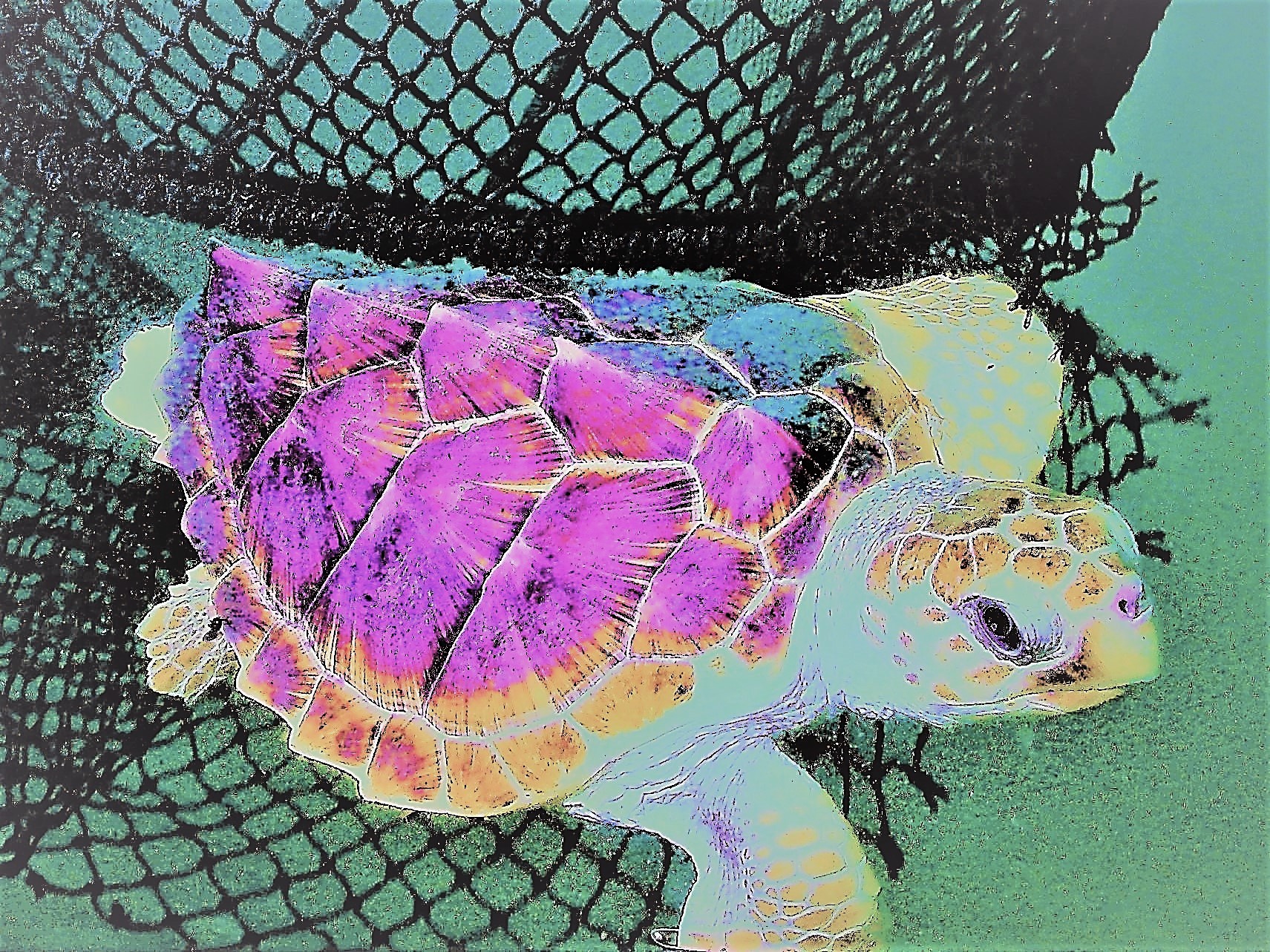
Image Credit: Loggerhead Sea Turtle (digital art based on a photo from NOAA.org)

Melissa Studdard: A Micro-Interview and Three Poems

cosmos

Melissa Studdard’s debut poetry collection, I Ate the Cosmos for Breakfast, was recently released by Saint Julian Press. She is also the author of the best­selling novel Six Weeks to Yehidah; its companion journal, My Yehidah (both on All Things That Matter Press); and The Tiferet Talk Interviews. Her awards include the Forward National Literature Award, the International Book Award, the Readers’ Favorite Award, and two Pinnacle Book Achievement Awards.

Melissa’s poetry, fiction, essays, reviews, and articles have appeared in dozens of journals and anthologies, including Boulevard, Connecticut Review, Pleiades, and Poets & Writers. In addition to writing, Melissa serves as editorial advisor for The Criterion and a host for Tiferet Talk radio. She received her MFA from Sarah Lawrence college and is a professor for the Lone Star College System and a teaching artist for The Rooster Moans Poetry Cooperative.

***

Okla Elliott: Your work engages with politics and philosophy without ever becoming pedantic or didactic. What role does poetry play in these larger cultural matters? (And feel free to answer either for yourself personally or for the culture at large or both.)

Melissa Studdard: Thanks for the compliment, Okla. So many of the things I’ve avoided in order to have time to make poetry, it turns out, are the things that make poetry. I tend towards solitude, meditation, and quiet communion with the keyboard. Like many poets, I often feel compelled to cloister myself in cave of words—and though that cave may be where the breath of poetry originates, it is not where the body of poetry moves. The body of poetry wants to kneel in the temple, protest in the streets, ramble through open-air markets, dance in clubs, and serve lunch at soup kitchens.
Even the most private-seeming poems are not truly private, but, rather, bottled messages sent from the island of self to the world. They say, “I’m here! I understand you.”

Because I enjoy writing so much, I used to think it was a self-indulgent waste of time. I thought there were more important contributions I could make. But all it takes is hearing an elegy recited at one funeral to know that poetry matters. It only takes one inaugural poem to see that poetry works a magic plain language cannot. Poetry lights the world on fire, whether in lament of a broken heart or in calling voters to the booth. It enacts an enchantment that touches the deepest place of care in us and lingers. It opens people to awareness and concern, without telling them to care. So—the more engaged culture and politics are with poetry, and the more engaged poetry is with culture and politics, the better.

OE: Since we know each other and each other’s work due to being friends on Facebook, and given that so many publishers and publicists are fixated on social media these days, I wonder if you have some thoughts about the good and the bad that the online literary community has brought about in the past decade or so. How has it helped independent publishers and authors? What have we lost because of it?

MS: In short, we’ve lost a little depth and gained a lot of breadth. There’s so much more of everything, but it’s harder to sort through and engage with in a deeply sustained way. Our attention is pulled in many directions at the same time. The good news is we now have access to information, people, organizations, works, and platforms that we did not have access to before. This is terrific, especially, for people who would not have been able to make these connections otherwise. I’ve learned about authors I probably would not have discovered any other way. In this sense, social media is a fantastic vehicle for small-budget publicity, which is, of course, a boon to indie publishers and authors.

However, the expectations set by online publicity are spreading some writers too thin. So much is demanded of authors that it’s hard for many to find time to write. We’re to be cheerleaders for our own work, yet for many of us, promotion does not come naturally, nor is it how we want to spend our time. I spoke above about poetry’s essential place within culture at large, but I am a firm believer in balance—and writers do need time in the cave—to simply be, observe, and reflect.

Driving back from the bank today, I noticed a thin strip of clouds in the pink sky, and I felt hungry for that sky and those clouds—not a picture of the sky, not a sky meme with an inspirational quote, not a YouTube video of drifting clouds. I was hungry to plop down in the grass and watch real clouds for hours, as I did when I was a kid. Much of life has become virtual, and I wonder how that will impact language and imagery in the long run. This does feel like a loss.

As well, many of us look to others regarding matters for which we should be looking inside. For a while, I was waking up and rolling over to my phone to text, email, and instant message before I even got out of bed. I’ve had to remind myself to write in my journal and meditate and look at the clouds and walk in nature. I’ve had to remind myself to write down my dreams and connect to my subconscious mind before connecting to the Internet. Lately, I’m trying to write in my journal, meditate, or read an actual, physical book last thing before bed and first thing in the morning. I feel so much more at peace.

Yet, despite the fact that I feel we need to remember to call on our internal resources first, I do believe the online literary community has fostered an amazing kinship among writers. I’ve made great friends through social media, as I know you and many other have. Writing can be a lonely occupation. It’s easy to feel isolated. Through the Internet, we can connect with others at all times of the day or night. And that can be an extraordinarily beautiful thing.

OE: Okay, now for the obligatory process question. How do poems happen in Melissa Studdard’s world? How do you revise? Do you research for your poems or just gather data organically and let it filter into the work as it will?

MS: I think I must mate with a different muse for each poem. It seems every poem is born from a new process. Some are hard-wrought, and others spring onto the page nearly fully formed in a matter of minutes. What I do know is that the poems that come easily ride in the wake of the poems that did not come easily. After struggling with a poem for weeks, I can be almost certain that within days of finishing it, one or more poems will flow quickly after. I don’t mind struggling with difficult poems to get to easy ones, either. The only thing that breaks my heart is not writing at all.

There is one pattern I sometimes repeat though, and which I love, and that is starting a poem in my journal and then carrying it to the computer once I see it’s really headed somewhere. Starting in the journal feels less formal and allows for a sort of raw expression I cannot quite achieve at the computer. The fluid movement of my hand across the page elicits an organic, intimate utterance that can later be sculpted through the facility of editing, revising and moving passages on the screen. Without both the keyboard and the pen as very different sorts of tools working together, I feel that many of my poems would have been different.

The research question is an interesting one. I follow my passions in life—reading about and engaging in the things that interest me. In that sense, my “research” is organic. However, if I am writing about something and need more information, I will seek it out—sometimes going back and forth between composition and research, and sometimes waiting until the first draft is done.

***

Creation Myth

So there God lay, with her legs splayed,
birthing this screaming world

from her red velvet cleft, her thighs
cut holy with love

for all things, both big and small,
that crept from her womb like an army

of ants on a sugar-coated thoroughfare.
It wasn’t just pebbles and boulders

and patches of sky, but the soul of sunlight,
the spirit of moon. She bore litters

of stars that glistened like puppies,
purring galaxies

robed in celestial fur, and galactic
clusters dusted with the scent of infinity.

It was her moment of victory:
the unveiling of seven billion milky breasts,

and she glowed—like a woman
in love with her own making, infatuated

with all corners of the blemished universe,
smitten with every imperfect thing:

splotchy, red-faced & wailing—
flawless in her omniscient eyes.

***

I Ate the Cosmos for Breakfast

after Thich Nhat Hanh

It looked like a pancake,
but it was creation flattened out—
the fist of God on a head of wheat,
milk, the unborn child of an unsuspecting
chicken—all beaten to batter
and drizzled into a pan.
I brewed some tea and closed my eyes
while I ate the sun, the air, the rain,
photosynthesis on a plate.
I ate the time it took that chicken
to bear and lay her egg
and the energy a cow takes
to lactate a cup of milk.
I thought of the farmers, the truck drivers,
the grocers, the people
who made the bag that stored the wheat,
and my labor over the stove seemed short,
and the pancake tasted good,
and I was thankful.

***

When You Do That

It feels like millions of tiny
harps are playing inside my body
and all the extinct animals
that ever were
are again
running into you
inside me
their hooves and claws
burning on the unexpected
asphalt
their tongues alive
with the ministry of light
Lyn Lifshin: A Micro-Interview and Three Poems

lyn

Lyn Lifshin: A Micro-Interview and Three Poems

by

Okla Elliott and Lyn Lifshin

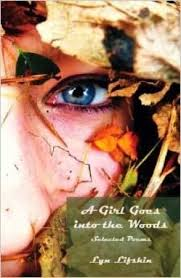
Okla Elliott: You organized A Girl Goes into the Woods by themed sections (autobiography, relationships, family, war poems, and so forth). How did you decide on these particular themes, and how did poems that might fit in more than one section end up where they did? Also, if poems were written years apart yet fit the same theme, what differences did you find in your own thinking on the theme?

lyn2Lyn Lifshin: Though I hadn’t thought of it until you asked the question, it seems many of my books (all three Black Sparrow books—Cold Comfort, Before It’s Light, and Another Woman Who Looks Like Me—as well as Persephone) are arranged in a similar way with similar themes. In contrast, are the many books that focus on one theme—all the equine books: my just published Secretariat: The Red Freak, The Miracle; The Licorice Daughter; My Year with Ruffian; and Barbaro: Beyond Broken. And many other books are one theme: Malala; Knife Edge & Absinthe: The Tango Poems; Tangled as the Alphabet; Blue Tattoo; Marilyn Monroe; The Doctor Poems; etc. Actually I had not realized until looking thru some titles how the one theme book is so prevalent!

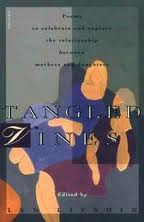
As for how I decided on these particular themes: when I first started writing, I wrote mostly political poems and was referred to as Mr. Lifshin. Later I wanted to show the variety of my work, not just political poems but erotica, family poems, nature poems, love poems, poems of place and of course, mother and daughter poems. (I had written no mother and daughter poems when I edited Tangled Vines, a mother and daughter anthology that stayed in print in various printings and versions for about 20 years—but from that time, it became an obsession for many years) Some poems were triggered by requests by editors doing anthologies: Richard Peabody ‘s Marilyn Monroe and Barbie anthology, got me going on poems that turned into my own books, as did the request for poems about Malala, Joni Mitchell, Dick for a Day, requests for poems about an earthly Jesus—a request for poems about Obama led to a series, as did requests for poems about September 11.

Sometimes I’ve wanted to do a collection of new poems but often the editor/publisher wants to do a best of. For A Girl Goes into the Woods I selected what I thought were the best and strongest poems whether they were new or old. It’s hard to say what difference I found in new and old poems on the same subject. I know sometimes when I read old poems, I change the language but it’s hard to make any generalizations. It’s true some poems could have fit in more than one section but mostly I think they are where they should be! I’m not sure I can give a true answer about how I may feel differently about a certain theme when I wrote it in the past and now am writing about it again. I think it would vary too much from poem to poem.

OE: Your poems “Barbie Wonders about Buying a Coffin” and “Thirty Miles West of Chicago” both touch on childhood and death in quite different ways—the former by playfully personifying a child’s dolls, the latter with a dark and heart-wrenching heaviness. Tell us a bit about these two poems, how you came to write them, and maybe discuss the wildly different styles employed.

LL: As I mentioned, when Richard Peabody asked for Barbie poems, I did intenselyn3 Barbie research not ever having a Barbie doll myself and just imagined her in a variety of situations— enough to do a whole book of Barbie poems. I don’t really remember when or what mood I was in when I wrote “Thirty Miles West of Chicago.” At different times of my life and in different places I seem to write at different times of the day. Somehow I remember when I first began, I stood at the kitchen counter. More recently, I write on the D.C. Metro going to ballet, an hour metro ride going and coming back, or in a cove in the living room in an apartment rented in DC with Janet Reno on one side, a drug dealer across the hall and the owners of the Fifth Column, a night club—they always came back about 3 am, loudly. Always thought they were selling drugs too—but it was income tax evasion or something like that. I wish I remembered the circumstances—I just don’t.

OE: What’s your current project? What can readers look forward to in the near future?

LL: After publishing 5 books this past year and having some of the most stressful experiences in and out of publishing, I planned to take a real break and just dance—Argentine Tango, ballroom. But some road blocks there. But I did get back and took a private class this week. In the shelf above my desk, I have about 60 spiral notebooks—I still write poems by hand and then am always way behind typing them up—now they are howling, waiting for me. Some of them go back to the early nineties…so that is a huge enormous undertaking and not a lot of fun since it’s hard to read my handwriting and the references. But forthcoming in July is Luminous Women: Enheduanna, Scheherazade and Nefertiti, a totally different kind of theme for me. It started off as a project with a painter—selecting women thru history who left an indelible stamp but the plan never materialized and I was left with poems about these three women (and also Pachamama—so I suppose that could be a book on its own) and another small book due in the fall, Moving Thru Stained Glass: The Maple Poems.

***

Thirty Miles West of Chicago

paint chips slowly.
It’s so still you
can almost hear it
pull from a porch.

Cold grass claws
like fingers in a
wolf moon. A man
stands in corn bristles

listening, watching
as if something
could grow from
putting a dead child

in the ground.

***

All Night the Night Has Been

lightening with moths

white behind the walnuts

If a woman couldn’t sleep
and came to this window
in this light her skin
would glow like bones

Clouds over the full moon
even with the wind

What would have been nuts
look like limes
on the white stones,

it sounds like some-
one tapping on a glass
coffin. It sounds

like someone tapping
from within the tree

***

Taking My Mother to the Bathroom

I lead her, a
child waking up
from a nightmare,
dazed by light.
She lags, hurries
then, half cranky,
half grateful.
She wants the
door shut, then
says open it,
wants my hands
the right way,
wash in between
my fingers. She
says the wash-
cloth is too
wet, too cold,
too soapy. The
towels are too
heavy. You don’t,
she spits, cover
your mouth. Go
home, you should
not be here to
see me like this.

***

Lyn Lifshin is the author of over 100 books, and her work has appeared in such journals as American Poetry Review, Another Chicago Magazine, Georgia Review, Iowa Review, The Literary Review, New York Quarterly, and Ploughshares, among many others. The above poems are included in A Girl Goes into the Woods: Selected Poems and are reprinted here by permission of the author.

SATURDAY POETRY SERIES PRESENTS: RON KOLM

ron kolm photo parkside oct. 13th


WALT WHITMAN
By Ron Kolm

You,
Walt
Whitman,
Like
God,
Are
Everywhere
All
At
Once.


(Today’s poem originally appeared via Brevitas, was published in the poetry collection Divine Comedy, and appears here today with permission from the poet.)

Ron Kolm is a member of the Unbearables, and an editor of several of their anthologies; most recently The Unbearables Big Book of Sex! Ron is a contributing editor of Sensitive Skin magazine and the editor of the Evergreen Review. He is the author of The Plastic Factory and, with Jim Feast, the novel Neo Phobe. A new collection of his poems, Divine Comedy, has just been published by Steve Cannon’s Fly By Night Press. He’s had work published in the Outlaw Bible of American Poetry, Live Mag! and the Poetry Super Highway. Kolm’s papers were purchased by the New York University library, where they’ve been catalogued in the Fales Collection as part of the Downtown Writers Group.

Editor’s Note: At a recent reading in Brooklyn featuring SPS-beloved poet Leah Umansky, a man walked up to me believing we’d met at another poetry event. I told him I did not believe that we had, and in response he gave me a copy of his most recent poetry collection. This is poetry. Community. Going to readings and meeting artists whose work you love. Books given as gifts because poetry is connectivity; poetry is love.

I read Divine Comedy from cover to cover on my way home on the train that night. Gritty, blunt, and overtly sexual, it is not a book for the faint of heart. But what I found was that the backdrop of harsh reality made the book’s quieter moments shine more brightly. Today’s poem was found within those pages, a peaceful and meditative beacon of calm amidst an ocean of neon lights, graffiti, and chaos. There is room for all of this in poetry, of course, but I am a sucker for the beautiful, for the contemplative, and, of course, for Walt Whitman. Whitman who, as Ron Kolm so simply and eloquently points out, “Like God,” is “everywhere all at once.”

Want to read more by and about Ron Kolm?
MungBeing
Sensitive Skin magazine launch reading – Youtube
The Villager
Poetry Superhighway
Urban Graffiti

Guy Davenport: A Tribute

12-Stories

Guy Davenport: A Tribute

by

Vincent Czyz

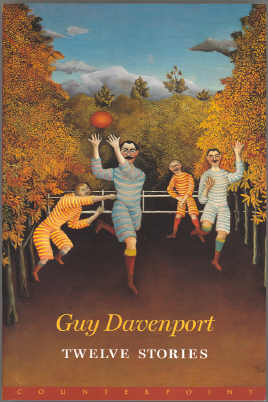
Dropping Guy Davenport’s name—even among the literati—often results in little more than “Sounds familiar …” or “Didn’t he write …?” To me, that is almost as tragic as the loss of the author himself to cancer on January 4, 2005. A MacArthur Foundation Fellow, Davenport bequeathed to us more than half a dozen collections of fiction, several books of essays, two volumes of poetry, assorted translations of Greek poets and philosophers, as well as an edition of drawings and paintings. How to account for the obscurity of a writer whom critics almost universally acclaim a creative genius? America, it seems, long ago lost its taste for the new and unusual in literature and has little patience for work that doesn’t hold itself upright with a backbone of what-happens-next.

Combining structural elements of essay, poetry, and narrative, Davenport virtually reinvents fictive form as he makes forays into various fields—history, aesthetics, physics, botany, philosophy, and religion among them. Made up of fragments, progressing by allusion and inference, his fanciful tales are nonetheless discernible wholes, lyrical mosaics in which language itself is as important as what it conveys.

“All at first was the fremitus of things, the jigget of gnats, drum of the blood, fidget of leaves, shiver of light, boom of the wind.” Here is a handsome illustration of Davenport’s style. I had to look up fremitus, but of course it was implied by the context. Jigget, however, doesn’t show up in any dictionary I could find. But we think of jagged, we think of jiggle and, since we are dealing with gnats, probably settle for jerky flight or perhaps erratic buzz. There are other words of this ilk: bodger, vastation, conder. And words that seem to be neologisms but aren’t (guidon, quitch, awn). Davenport isn’t showing off; he’s having fun—frolicking in language and inviting us to join in.

“C. Musonius Rufus” (out of Da Vinci’s Bicycle, now a New Directions Classic), from which the above line was taken, is one of the most beautifully written short stories I’ve ever read. In one thread of the narrative, Davenport imagines the Roman Emperor Balbinus speaking from the grave: “Then I went down to where iron grows. Down past root seines in loam like condered oakgall and down past yellow marl hard with quartz the splintered ores begin. Green, edged, with the black metal horses hate and wine sours next to, and which thunder has entered. Chill, sacred iron, bitter with lightning.” The dead ruler offers one gorgeous meditation after another while the other thread of the narrative follows the plight of the stoic philosopher Caius Musonius Rufus, who has been sent to a prison camp in Greece.

Da Vinci’s Bicycle is an excellent introduction to Davenport’s impressive oeuvre. Taking historical figures—James Joyce, Richard Nixon, Gertrude Stein, and Robert Walser—as points of departure, often weaving between eras centuries apart, Davenport dazzles page after page. In “Au Tombeau de Charles Fourier” he writes “All of nature is series and pivot, like Pythagoras’ numbers, like the transmutations of light. Give me a sparrow, he said, a leaf, a fish, a wasp, an ox, and I will show you the harmony of its place in its chord, the phrase, the movement, the all.”

Harmony is perhaps the key to entering Davenport’s writing: nothing in existence is separate, each is related, and Davenport not only perceives the connections but also communicates them; they are ours if only we are willing to sit for the performance.

The four longest stories in The Jules Verne Steam Balloon create a sort of novella. Hugo Tvemunding and his girlfriend, Mariana, lead a life both idyllic and ideal: there are simple repasts laid out like still-lifes, meticulous descriptions of the meadows and forests through which they wander, innovative and prolonged sexual encounters. Davenport presents, in sumptuous detail, the Greek concept of arête—excellence of mind, body, and spirit. Mariana, addressing Hugo, eloquently sums up this life in “absolute kilter”: “…your eyes fly open at six, you hit the floor like an Olympic champion, hard-on and all … jog three kilometers, swim ten lengths of the gym pool, nip back here for wheatgerm carrot smush while reading Greek, communing with your charming freckle-nosed kammerat Jesus, shower with unreasonable thoroughness while singing hymns, … teach your classes, Latin, gym, and Greek, meet me, bring me back here for wiggling sixtynine on the bed, tongue like an eel … race off and instruct your Boy Scouts in virtue, knots, and nutritive weeds, sprint back here … teach me English while fixing supper, show me slides of Monet and Montaigne …” and, after another roll or two in the hay, it’s time to start all over again.

The collection takes its name from three daimons (“spirits who possess or guide or tempt”) or perhaps three quantum particles (one of them is named Quark) incarnated as young boys who are spotted floating over modern Denmark in an antique balloon. Bearing a message from the Consiliarii, Davenport’s concept of elohim or some other divine council, they are clever, polyglot, and charming.

 A Table of Green Fields, a collection of 10 short stories—including a veritable prose poem inspired by a single line from Dorothy Wordsworth’s journal—continues in the vein of The Jules Verne Steam Balloon. Nature, sexuality unimpeded by social constraints, and Davenport’s own tireless wonder, his (implied) insistence that everything we need to be happy is pretty much within arm’s reach, run like currents through this book as well. Fremitus? Indeed, frisson, palpable thrill, sail shook so hard by the wind it sings in a kind of vibrato. Time and again in his writing, Davenport intimates that art possesses a beauty no less astounding than nature’s—he recommends both in large quantities, and woe to him who sacrifices up one in the name of the other.

Let Davenport’s writing also be recommended unreservedly. The truth is, if an author like Guy Davenport is allowed to sink into oblivion, then not only is the American soul unlikely to be spared “the inert violence of custom” (Emerson’s phrase), but it’s also unlikely that it’s worth saving.

A Marvelous Mosaic: A Review of Budget Travel Through Space and Time


goldbarthA Marvelous Mosaic: A Review of Budget Travel Through Space and Time

by

Vincent Czyz

Albert Goldbarth has been regaling us with his unique experiments in verse for more than 30 years and has twice won the National Book Critics Circle Award—the only poet to do so. Budget Travel Through Space and Time, published in 2004, is perhaps the single best of all of his collections. In other words, if you want to give Goldbarth a try, this is the place to start. A hefty 162 pages, Budget Travel is neutron-star dense (the neutron star is one of those celestial impossibilities likely to show up in a Goldbarth poem: a sphere of crushed-down matter a cubic inch of which weighs tons). Loaded with eye-poppers and jaw-droppers—that is, stunningly pulled-off metaphors and images—his poems also tend to stretch ingenious analogies the length of a three- or four- or even a nine-page poem and leave the reader with the equivalent of that blank, retinal ghost after a camera flash.

My mouth runneth off a bit, perhaps, so a few examples … the Moon in “Budget Travel through the Universe” is described as “the huge,/round resume of the career of light” and as “a curd of afterglow.” In ‘ “Far”: An Etymology’ Goldbarth writes

That handful in our skull might hold more distance
than the lights from the edge where our telescopes
shrug hopelessly and turn around for home.

In “The Sign” he takes as a central image

[…] geese across the sky
at the end of a day—the second when
its brightness is stubbed out on the horizon line.
Now there’s more sun on the bellies of these geese
than anywhere in the world altogether. Incandescent.
Freshly smelted ingots—flying.

In “Hoverers” when he wants to convey the tenor of “circling,” he instructs, “Think of the birds/that migrated back to Atlantis, circling the empty sea.” The image and the language are simple enough and yet the comparison is a perfect fit.

But this is Goldbarth at the micro-level where the skeptic can say, “Yeah, but does he have anything to say?” Herein also lies the beauty of a Goldbarth poem; whereas many are the anthologized poets who made me wonder why they bothered versifying rather trivial observations, Goldbarth is a kind of Samson who, if he doesn’t always bring down the house, at least leaves the columns we’ve come to rely on most—whether erected in the name of science, philosophy, religion or anything else—quivering. He makes us rethink, re-experience, and reassess; taken collectively, a sine qua non of the best art. The fact is, his poems have so much inner resonance, it’s difficult to pull out a few lines and stand them up on their own; a lot of the luster is worn off by this sort of detournement. Any one of the majority of the longish poems in this book—“The Feelers,” “The Sign,” “Into That Story,” “Where the Membrane is Thinnest,” “A Gesture Made in the Martian Wastes” among others—is worth the price of admission. The latter, perhaps my favorite in a book of favorites, begins with an epigraph from a science fiction novel (Goldbarth, with his omnivorous palate, doesn’t spit out comic books or aliens, the futuristic or pulp from the past; it all gets composted in). The poem opens with the image of a “svelte seductress” who is able “to feel her way among the walls and statues of a city/that no longer exists.” This metamorphoses into a scene in Vietnam in which a soldier is

“[…] feeling
gingerly over the ground with one arm
for his other arm, that had been torn off the in darkness. Only seconds
had gone by but already he reached out into that past
of himself as if it were countless centuries.

It ends up with Goldbarth recalling himself as an adolescent enamored of interplanetary adventures:

“…and I reach out
toward that sixteen-year-old boy from forty years ago,
who’s only a hole in the air now, that the wind blows through,
the wind of Mars, in it immemorial quarrel with stone
and skin and the scurf of the planet itself
and our on-loan solar resplendence.

It’s thoroughly refreshing to read poems that end, not obscurely or tritely, but with a line that almost always leave the air humming—sometimes as loudly as a whacked gong, sometimes as subtly as two gold coins touching rims. Equally refreshing that Goldbarth is not afraid to use words that encompass phenomena that generally surpass our ability to comprehend them (universe, supernova, singularity), of made-up words (telecyberfiber, uberglobal, terra mysterium), of rare words (suzerainty, cumulonimbus, ziggurat). He doesn’t feel the need to dumb-down his language so as to admit to his fabulous verbal theme park the so-called “common man” (who is much more likely to read a cereal box than a collection of William Carlos Williams), and yet he can be as colloquial as a blue collar worker sitting down to his beer at Miller Time. His poetry, full of wit and humor—both earthy and sophisticated—shrinks from nothing.

A marvelous mosaic of images, insights, ruminations, erudition, mundane details, quantum leaps of intuition, artifacts of pop culture, and historical anecdotes (Paul Revere and da Vinci both put in appearances), this collection proves you don’t need a machine to travel light years through space and time in the blink of an eye, all you need is a singularity like Albert Goldbarth.

Electromagnetic Compatibility

front BurnThisHouseCVR

Electromagnetic Compatibility

by

Kelly Davio

I am the conduit of all transmission.
The basebands of noise radiate from my skull.

I hear the faint buzz when I bend a knee
all the way to one hundred and eight megahertz.

My right hand taps the cool rhythm
of amplitude modulations; between the joints

of my smallest toes, a call-in talk show
pushes along my connective tissues.

Top-forty hits in mono and stereo
bisect my stomach, love handles jiggling

the fifty-two stories from local news breaks,
three weather reports, and a sponsorship message

from Lucky Charms. Their delicious magic
pulses, circumnavigates my navel.

A teleconference connected through my veins’
satellite rattles the back of my neck.

I shimmy shoulders, show my displeasure
when I tire of rasp in a haggler’s voice,

cast a web of white noise through my spine.
When I’m through with public broadcast pledge drives,

I listen for the red giants’ white signal,
static issued from billions of years of brilliance

from the center of the molecular bang.
All of it vibrating, all of it humming in bones.

***

Kelly Davio is Managing Editor of The Los Angeles Review, Associate Editor of Fifth Wednesday Journal, and a reviewer for Women’s Review of Books. Her work has been honored in Best New Poets, and she has published poems in journals including Gargoyle, The Cincinnati Review, Bellingham Review, Pank, and others. She holds an MFA in Poetry from Northwest Institute of Literary Arts, Whidbey Writers’ Workshop, and teaches English as a second language in the Seattle area. The above poem originally appeared in the Cincinnati Review and is included in Burn This House.

Medusa Song

up on blocks

Medusa Song

 by

Mary Akers

She scrambles the eggs while the baby howls at her knees. To drown out the racket, she hums as she jabs her fork into the yolks. She enjoys the way they spill their yellow color and swirl into the whites. She matches her tune to the schook, schook, schook of the fork against the bowl, then does a quick side-step when the baby lunges for her legs.

His little fat hands grasp the air, throwing him off balance. He totters on his heels for a moment then sits hard and rolls back sideways, bumping his head on the floor. He stops crying abruptly and flails his arms in the air like a big bug stuck on its back.

Cynthia knows she should pick him up, comfort him, but she’s too deep in her own need. She won’t look down, even, because if she looks at his face all twisted up and desperate for her, she’ll have to pick him up, and she just can’t do that motherhood stuff right now.

She used to love the feeling, everyone needing her so badly. She would peel and seed John’s oranges when she packed his lunch. She cut the crusts off his sandwich out of pure love. And when the baby fell asleep, she’d sit and hold him just as long as he would let her.

But John Junior is walking now—into everything—and he’s gotten so clingy. Her friend Alice says that John Junior is feeling separation anxiety. Every time Cynthia leaves the room he thinks she’s gone forever, just disappeared. Secretly, Cynthia wishes it could work like that—two steps into the bedroom, and poof, she’s in another life, another world.

She used to love her life. She looked forward to every day. Cynthia can’t even say when things changed. Maybe it was back when she suspected John of sleeping with his secretary. Maybe it was after John Junior was born and she couldn’t seem to do anything right.

John and she had never fought before. Well, sometimes, but it was always more of a disagreement and once Cynthia apologized it would be over. It never spilled out into the rest of her life.

Now things seem to get all tangled up, till she can’t separate them, one from the other. She feels like that woman with snakes for hair, only all her problems are tangled up there too, squirming and writhing around, hissing on top of her head.

She figures that must be why John isn’t home yet—imagine living with a woman who can’t comb her hair for the snakes. She tries calling his office, but that snooty Angela answers, so Cynthia puts on a different voice and pretends to be one of John’s clients.

“Mr. Albee promised to show us a home today, is he in?”

She smiles because she knows Angela is too dense to figure out it’s her. She’s careful to keep the smile out of her voice.

Then Angela says, “Mr. Albee hasn’t been in all day, Ma’am, may I give him a message?”

She says it real sly-like, with extra emphasis on the ma’am, until Cynthia is really getting sick. The eggs look disgusting and she feels so nauseous. Then she’s throwing up again, retching in the toilet, and thinking, God, please don’t let me be pregnant, but she’s known it for a while. Add another snake.

When she’s wiping her face, John calls and she thinks he says he’s at work, but it’s hard to hear for sure over the baby. Liar. She just called there. Cynthia doesn’t want to yell at him, but she feels it rising up in her throat like bile, and she wants to stop it but the words are pouring out all over the place like vomit, sour and steaming.

She hangs up and tries to finish supper, even if it is just eggs and toast. After John sells a house they’ll have steak. She puts the baby in his crib, and over the monitor she can hear him banging his head against the bars. She goes to the door and watches, fascinated. His eyes roll back in pleasure. She tries banging her own head once on the doorframe before she remembers the snakes. No sense getting them all riled up.

Then she hears the eggs frying too hard, and sure enough, they’re brown when she stirs them, and the toast needs scraping. Schook, schook, schook, the crumbs fly all over the sink, sticking to the sides. She thinks about that woman who drove her kids into the lake and cried about it on national TV. What a terrible person, a horrible mother. But the snakes hiss, “Yessss.”

She’s barely gotten the toast buttered when John Junior starts up again. He’s poopy, too. She can see it rimming the edges of his diaper. What with the snakes and the baby it’s really all just too much for her and she carries him out to the pickup and puts him squish onto the seat and she leaves supper unfinished and she’s really going to do it this time because she just can’t take it any more.

Halfway to the lake it starts raining. John Junior is sitting in the floorboard playing with his toes and the wipers are keeping time in the dark, schook, schook, schook, marking off the seconds till it’s done.

Cynthia pulls right up to where the lake meets the road, and there’s no one around, so she gets out and goes over to the water’s edge. The baby watches her; his face against the window, nose flattened, big eyes shining white through the dark.

The water smells dank and fishy and it’s way too cold when she sticks her head in. Cynthia is on all fours holding her breath and she thinks about how she must look—rear in the air, head in the lake. She doesn’t get up, though, and her chest starts to ache from needing to breathe. Her head is throbbing, and her throat spasms, her body trying to force her to breathe. But she won’t, she won’t, and she can hear the schook, schook, schook of blood in her head, looking for oxygen.

When her body starts to relax and she’s feeling like she could stay down there at the bottom of the lake forever, she jerks her head up hard, throwing back her shoulders, landing on her back at the muddy edge of the lake.

And possibly the baby is crying in the truck, but he’s safe enough, and she remembers that his diaper needs changing while she watches drops of rain fall silver through the night and feels them sting her cold lake-water face as she listens and waits and hopes the snakes have drowned.

***

Mary Akers’ debut short story collection, WOMEN UP ON BLOCKS, won the 2010 IPPY gold medal for short fiction and she co-authored a non-fiction book (ONE LIFE TO GIVE) that has sold in seven countries. She is Editor-in-chief of the online journal r.kv.r.y. and co-founder of the Institute for Tropical Marine Ecology. She received a Pushcart 2012 Special Mention and has published a book of short performance pieces for use in high school dramatic reading competitions (MEDUSA’S SONG AND OTHER STORIES). She blogs at http://www.maryakers.blogspot.com

Book Review of David R. Slavitt’s Re Verse

Re Verse: Essays on Poetry and Poets
David R. Slavitt
Northwestern University Press
ISBN: 0-8101-2084-4


David Slavitt´s Re Verse: Essays on Poetry and Poets is at once a meditation on his long and varied career, an investigation into the nature of poetry, and an homage to some of America´s finest (if not always most celebrated) poets. Slavitt has studied with or been friends with many of the biggest names in writing and publishing in the second half of the twentieth century, and for that intimate vantage point alone, this collection of essays is a must-have for every academic library, every scholar and student of American literature, and every would-be poet.

Re Verse immediately strikes the reader as well suited as a supporting text to a poetry workshop. In the reworking (with present-day, memoir-like commentary) of his Master´s Essay on Dudley Fitts (the original essay having been written for his MA at Columbia), Slavitt shows a profound understanding of how poetry works and how we learn to become poets. Slavitt writes: “You learn to write defensively, as you learn to drive defensively, always looking out for sudden wacky things those with whom you share the road are likely to do. But there is a limit beyond which caution becomes anxiety so that you can´t even get into the car.” How true. But this essay offers more than just wise, quotable catch phrases. It, and the collection as a whole, “gives the reader the tools with which to construct a canon out of the labor of thought and reading,” as Mark Rudman´s blurb on the book´s jacket claims.

Its usefulness is therefore not limited to the workshop environment, but would also serve well as a warmer companion text in advanced and intermediate American Literature courses. Daniel Mark Epstein writes of Re Verse: “David Slavitt has known some of the finest poets and teachers of the twentieth century and writes about them with delightful humor and enthusiasm. His tone is a unique blend of fireside storytelling, literary analysis, and heartfelt reflection.” In place of a jargon-laden text destined to make students who once loved literature switch their major to pre-law, Re Verse will deepen the understanding and appreciation literature fans bring to the classroom, while at the same time instructing. But Re Verse is more than mere textbook. These are personal essays as much as they are essays on literature.

It would be a lapse not to mention Slavitt´s ponderings on his own career in Re Verse. Slavitt has published some eighty-odd books in his career. He has been included in numerous anthologies (Best American, Norton, et cetera), and he has made millions writing under pseudonyms, while at the same time being respected as one of the premier literary translators. By all respects, he has had an astonishing career. Yet we find references to himself as a “minor” author, or lines such as this one, from his essay on Winfield Townley Scott, occasioned by an article Slavitt read in TLS in which Scott is dismissed as minor: “The word that stuck with me, though, was ‘minor,´ which hurt as much as anything else because it is probably true, and I have been thinking about what that means.”

There is also an undercurrent of investigating what it means to be Jewish that intermittently pops up in Re Verse. It does not define or restrict the essays in any way, but it is there. Offhanded remarks such as the claim that comedy is to the Jewish people what the Blues are to African-Americans, or the notion of the Jew as the sayer of the unspeakable (e.g. Freud speaking candidly of sex in an age that repressed sexuality, or Marx pointing out class struggles when it was uncouth to mention such things in polite company).

Slavitt can be scathing and dismissive, and often the most enjoyable pieces in this collection are ones in which he is saying what no one else will. In his essay on (against?) Harold Bloom, Slavitt aptly points out much of Bloom´s intellectual posturing. The following passage shows Slavitt´s deft, harsh dismissal of Bloom:

“His [Bloom´s] bullying classroom habits are not easy to put aside, however, and addressing us common readers he can be abruptly confrontational. I cannot otherwise explain why he would write: “My late friend Paul de Man liked to analogize the solitude of each literary text and each human death, and analogy I once protested. I had suggested to him that the more ironic trope would be to analogize each human birth to the coming into being of a poem…I did not win that critical argument because I could not persuade him of the larger human analogue; he preferred the dialectical authority of the more Heideggerian irony.’

This is pure Bloomishness, graceless, pretentious, and absurd” (p. 92).

Slavitt goes on to point out that Bloom´s “late friend” was a Nazi collaborator and that Bloom should not have been so concerned with not convincing de Man, but rather concerned that he, “in the intricacy of the engagement, […] neglected to call him a fucking collaborator, slap his face, and then do [his] best to see that he got fired.” Bloom mentions de Man with warm regard, failing to so much as acknowledge the disgrace de Man heaped upon Yale (and humanity), in a typically defiant gesture, “a show of Bloom´s refusal to be intimidated by mere evidence.”

From his heartbreaking, elegiac essay on Thomas McAfee to his friendly essay on Fred Chappell (“Ole Fred”) to his investigations into the nature and uses of depression, or his illuminations on Robert Penn Warren (under whom Slavitt studied at Yale), Re Verse never panders and never obfuscates for the sake of sounding smarter than it is. This collection is the real thing, a rare find, and probably the best book about poetry published in years.


Okla Elliott


[The above review originally appeared in Pedestal Magazine.]