“Mull to Ulva” By Tobi Alfier


Mull to Ulva

Because the distance from land-shore to island
is a fingersnap in the constant of all time.

Because the tides bless fishermen and landlocked alike, full creels
the harvest here, no watery graves, no heartsong, no tears.

Because the store displays bait and boat, strong needles
for sewing the lace of fishing line, not delicate woman-lace.

Because the sun burns with savage brightness, much
as the evening stars will burn unwatched and un-wished upon.

Because the ghosts of old souls and older relics own
the dark, with nary a mortal light upon any land, sea or shore.

Because here, no one interprets the thousand pin-pricks
composing a symphony in the eggy blackness of night.

Because the fragrance of this summer conjures
memory after memory of all pasts and futures.

Because there is no caretaker, no guardian to aid thin fog
search the inlet for branch or crevice with which to gain purchase—

I wish to walk barefoot on old stone, become one with the earth and sea,
learn their secrets, raise my arms to the stars. Palm to palm, our hearts.

.

(This poem was originally published in Down Anstruther Way)


About the Author: Tobi Alfier (Cogswell) is a multiple Pushcart nominee and multiple Best of the Net nominee.  Her chapbook “Down Anstruther Way” (Scotland poems) was published by FutureCycle Press. Her full-length collection “Somewhere, Anywhere, Doesn’t Matter Where” was published by Aldrich Press. “Slices of Alice & Other Character Studies” was just published by Cholla Needles Press. She is co-editor of San Pedro River Review (www.bluehorsepress.com).


More by Tobi Alfier:

Possession Sound, Whidbey Island, Washington

Cape Split


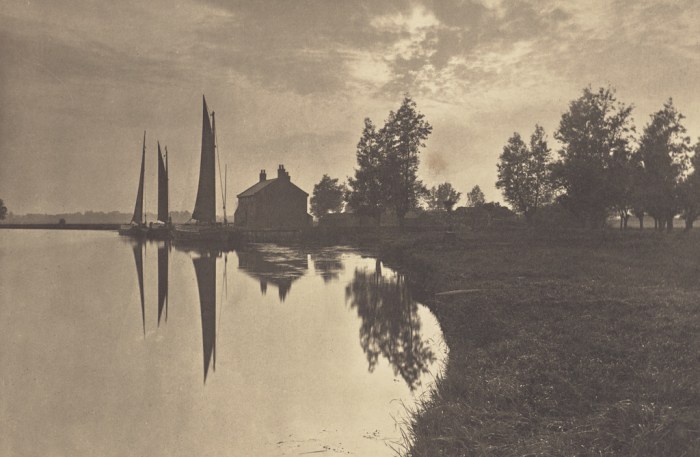
Image Credit: Peter Henry Emerson “Cantley: Wherries Waiting for the Turn of                  the Tide” Digital image courtesy of the Getty’s Open Content Program


The Ferry Captain

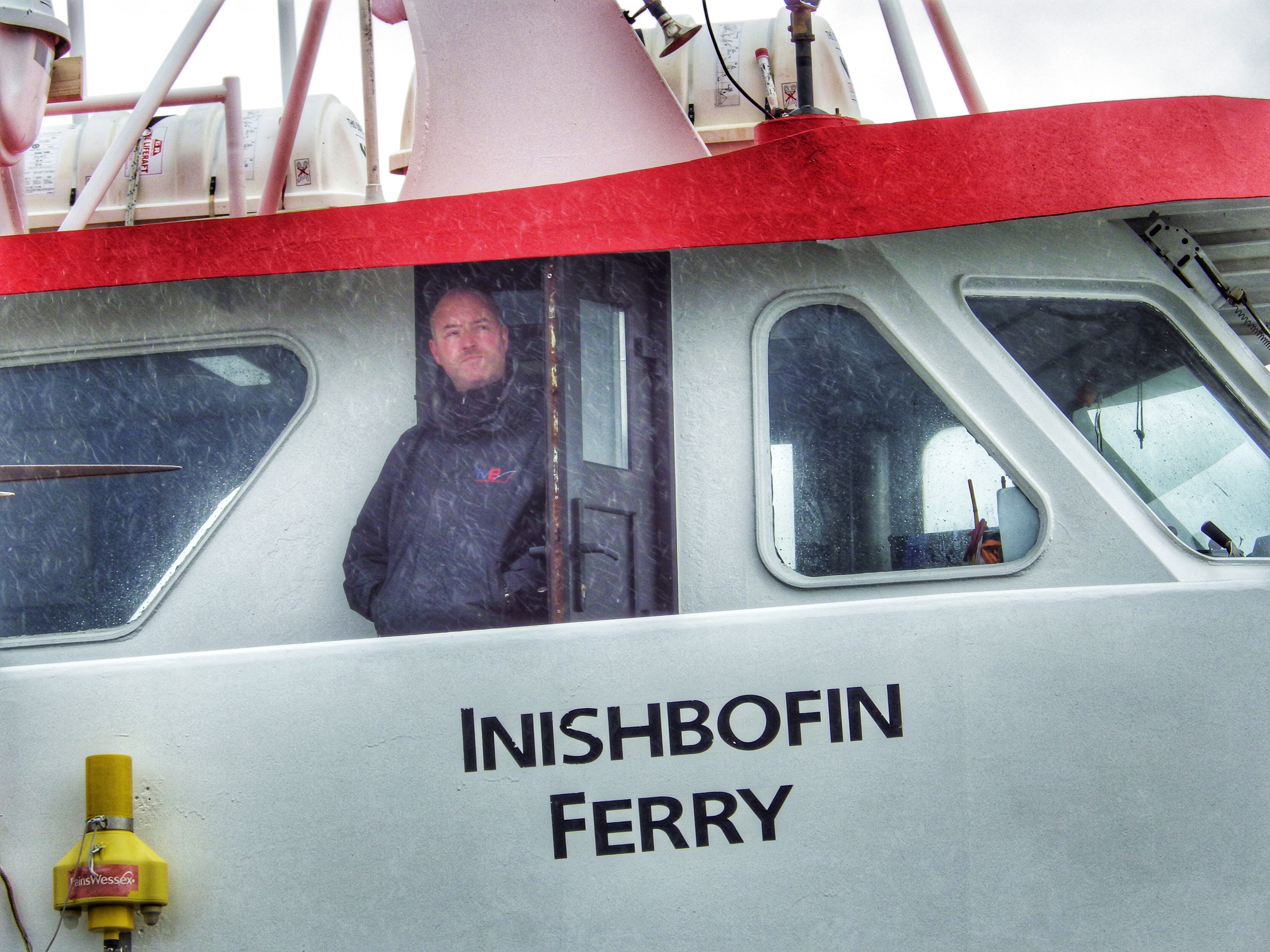
“Captain in the Rain at Cleggan Pier, Ireland.” By Jeffrey Alfier


The Ferry Captain

By Jeffrey Alfier


The Ferry Captain

He is the hull, diesel and waterline that mark him,
ligature of fists on the wheel. He is bow wave
and sting of spindrift, inlets sprawled with waterfowl,
tidewrack, a mind drawing tangent lines no one sees.
The wheelhouse is his tabernacle in the wilderness.
He’s a bulkhead’s argument with rust, a pennant’s
argument with gales. Spend enough of your life
at sea and you can tell windward from leeward
by the taste of wind alone. At a small remove,
just back of the helm, passengers serry against
north Atlantic cold, their voices clipped
by gusts keening through antenna wires.
Sheltered waters far astern, he is the rote cadence
of the deck crew’s footfalls. He won’t worry how late
he gets home, how long he’ll stand with his back
to the seawall, a phone ringing somewhere without
his answer, the sea a rhythm locked in his heart.

,

(This poem originally appeared in The Storm Petrel: Poems of Ireland (Grayson Books, 2014)

.

About the Author: Jeffrey Alfier is 2018 winner of the Angela Consolo Manckiewick Poetry Prize, from Lummox Press. In 2014 he won the Kithara Book Prize, judged by Dennis Maloney. Publication credits include Crab Orchard ReviewSouthern Poetry ReviewAtlanta Review, Copper NickelEmerson ReviewIron Horse Literary ReviewKestrelHotel AmerikaMidwest QuarterlyPoetry Ireland Review and South Carolina Review. He is author of The Wolf YearlingIdyll for a Vanishing RiverFugue for a Desert MountainAnthem for Pacific Avenue: California PoemsSouthbound Express to Bayhead: New Jersey PoemsThe Red Stag at Carrbridge: Scotland PoemsBleak Music – a photo and poetry collaboration with poet Larry D. Thomas and The Storm Petrel: Poems of Ireland. He is founder and co-editor at Blue Horse Press and San Pedro River Review. An Air Force veteran, he is a member of Iraq and Afghanistan Veterans of America.

“Springmaid Pier” By Jonathan K. Rice

16665003_10102742814744128_6766398863973375673_o


Springmaid Pier

Cigarettes glow orange on cheeks
of patient ruddy faces.
The odor of strip bait and shrimp fills the air.
Tackle boxes, buckets and coolers
line weathered planks.

Lights on fishing boats dot the ocean
as darkness falls. Lanterns and flashlights
on the pier give shadowy shapes
to anglers casting their lines upon the water.

Drag of spinning reels set silent
ready for the tug, pull and fight
of a good-size fish.

Some fishermen armed with heavy line
and oversized lures try for tarpon or barracuda,
while some use chunks of meat, hoping for a shark,
ignoring “No Shark Fishing” signs.

Sea gulls wait on the beach like onlookers
as the tide eases out. Before long I got one!
is heard down the pier. A man pulls in a croaker.
His friend grabs it with a gloved hand,
freeing the hook and dropping it in a bucket.

Another man spits tobacco at the water,
yanking up a blowfish. He cusses, laughs,
throws it back. I quietly wait for a tug on my line
as an old man beside me whispers I think I got something.

He’s slowly reels it in, lifts it from the water,
says what the hell is that?
I tell him it’s an octopus.
He doesn’t know what to do.
I reach for his catch.

I gently take the octopus in one hand.
Its body is about as big as my fist.
Tentacles wrap around my arm,
suction cups hug my wrist.

I carefully try to remove the hook,
its beak mouthing my palm,
when unexpectedly a tentacle comes off.
The old man groans at its loss.

I assure him one will grow back.
He says he’s had enough
and packs up his gear.

I loosen the tentacles.
A squirt of ink runs down my arm,
as I release the octopus
to the water below.

.

About the Author: Jonathan K. Rice edited Iodine Poetry Journal for seventeen years. He is the author of two full-length poetry collections, Killing Time (2015), Ukulele and Other Poems (2006) and a chapbook, Shooting Pool with a Cellist (2003), all published by Main Street Rag Publishing. He is also a visual artist. His poetry and art have appeared in numerous publications, including Cold Mountain Review, Comstock Review, Diaphanous, Empty Mirror, Gargoyle, Inflectionist Review, Levure Litteraire, The Main Street Rag, Wild Goose Poetry Review and the anthologies, Hand in Hand: Poets Respond to Race and The Southern Poetry Anthology VII: North Carolina.


More By Jonathan K. Rice:

Cards


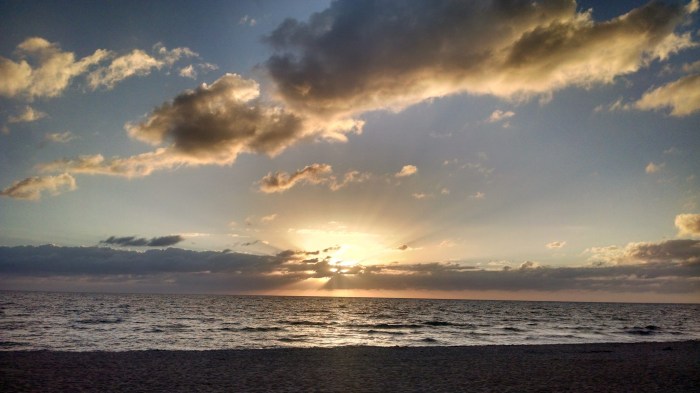
Image Credit: Chase Dimock “Sunrise in Fort Lauderdale” (2017)

Eve

“The First Mourning” By William-Adolphe Bougereau (1888)

.

Eve

By Sister Lou Ella Hickman


eve

was the original survivor story
evicted from her plush garden palace
which meant she had to start over
this time she would discover
how much life isn’t fair
when she lost both her sons
and she started over
 again
another son
then her long shadow of silence
cast under a sun that had blistered
begin again or despair

.

About the Author: Sister Lou Ella is a former teacher and librarian. She is a certified spiritual director as well as a poet and writer. Her poems have appeared in numerous magazines such as America, First Things, Emmanuel, Third Wednesday, and New Verse News as well as in anthologies including The Night’s Magician: Poems About the Moon, edited by Philip Kolin and Sue Brannnan Walker, Down to the Dark River edited by Philip Kolin, Secrets edited by Sue Brannan Walker and After Shocks: The Poetry of Recovery for Life-Shattering Events edited by Tom Lombardo. Last year she was nominated for the Pushcart Prize. Her first book of poetry entitled she: robed and wordless was published in 2015. (Press 53.)

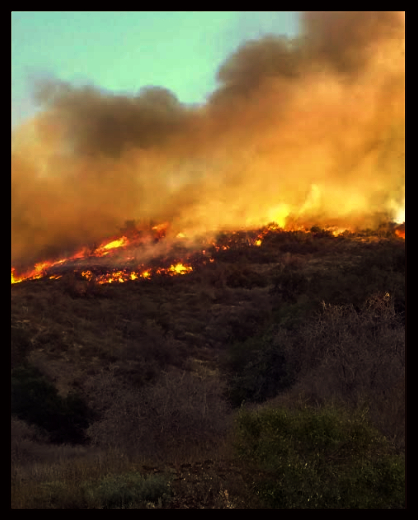
Ruth Bavetta: “Wildfire”


Wildfire

Moon dismantled,
sun a red disk, reflecting

sea a rusty mudflat,
hot wind hollowing

canyons, hills littered
with dust, ash, soot,

chaparral, squirrels, palm trees,
shingles, Chevrolets, dictionaries,

wedding dress, quilt stitched
by a grandmother fifty years ago,

the bones of those who stayed,
the hopes of those who fled.

Close the windows.

.

This poem previously appeared in 10×3 Plus

.

About the Author: Ruth Bavetta writes at a messy desk overlooking the Pacific Ocean. Her poems have appeared in Rattle, Nimrod, Tar River Review, North American Review and many other journals and anthologies. Her books are Fugitive Pigments (Future Cycle Press, 2013) Embers on the Stairs (Moontide Press, 2014,) Flour Water Salt (Future Cycle Press, 2016.) and No Longer at This Address (Aldritch Books 2017.) She likes the light on November afternoons, the music of Stravinsky, the smell of the ocean. She hates pretense, fundamentalism and sauerkraut.


More By Ruth Bavetta:

Neon Boneyard

A Murder


Image Credit: Chase Dimock “Wildfire in Simi Valley” (2018)

Five Hundred Channels and Nothing On

Five Hundred Channels and Nothing On

By Kevin Ridgeway


Five Hundred Channels and Nothing On

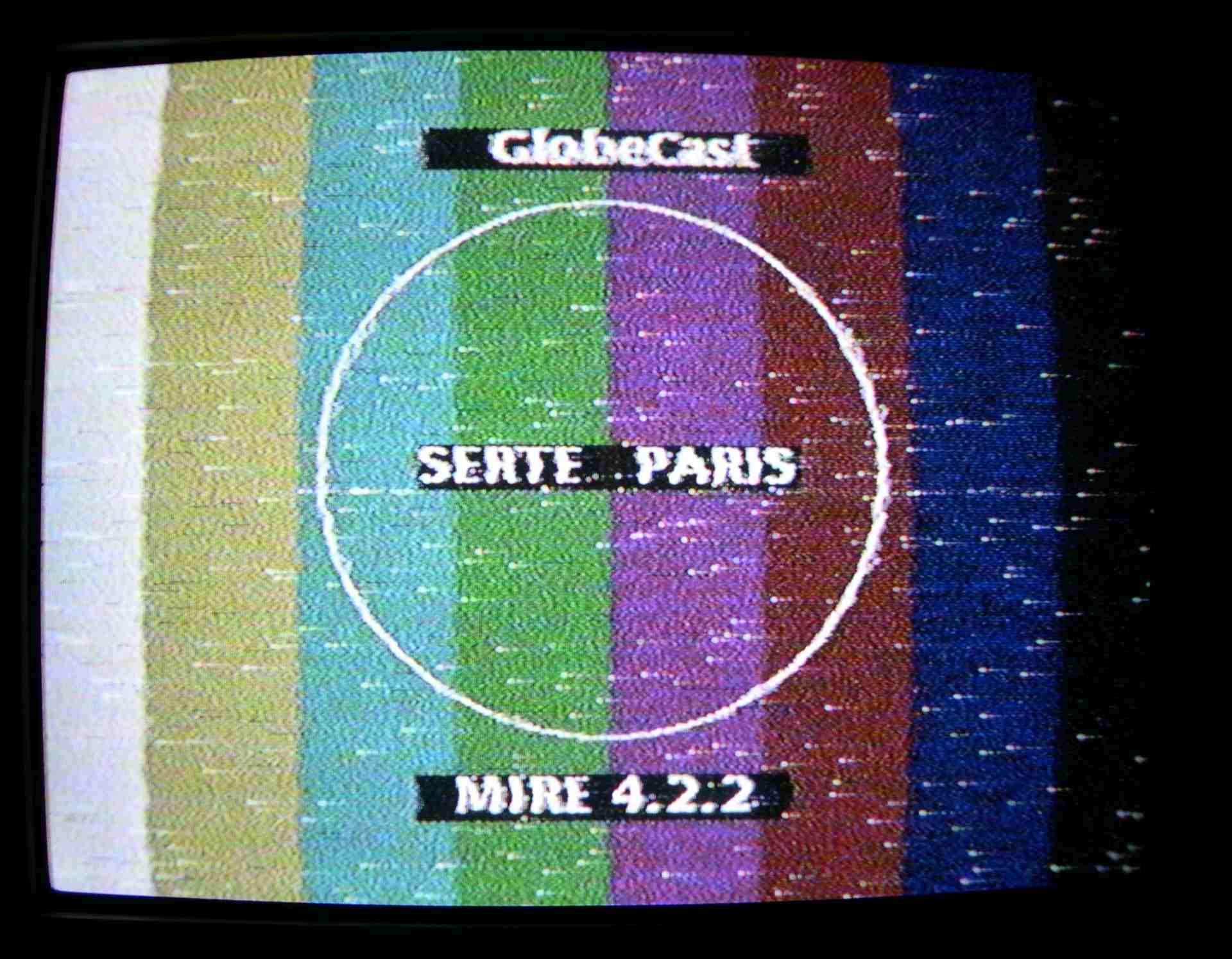
After Letterman signed off and the cartoon Peacock serenaded us with its three tone sign-off warning me to avert my eyes of the artificial bars of what looked just like the rainbow beam-stitched curtain but no Jack Paar successor hired to keep us all at ease, the retired magician who always demonstrated his improved golf swing in the wake of pitiful and incomprehensible demoralization, while an eerie beep told us to go to sleep. I can’t find those bars or that sound in the months following David Letterman’s retirement ten years after the death of a secret magic composed of wild, wild stuff comedy needs a transplant for so there will be no humorless misery in all the infomercial women that are not even beautiful enough to make an insomniac headache disappear in the nocturnal tenderness of a five am weather girl juvenile gameshow manning the remote from bed at three in the morning as human and animal faces plead with me to adopt them or let them predict my future and I snore through a public access channel’s encore presentation of Dorf on Golf that makes me dream in closed captioning.

.

About the Author: Kevin Ridgeway is from Whittier, CA. He is the author of six chapbooks of poetry. His latest book is A Ludicrous Split (alongside poems by Gabriel Ricard, Alien Buddha Press). Recent work has appeared or is forthcoming in SlipstreamChiron ReviewUp the RiverNerve CowboyThe American Journal of PoetryMain Street RagCultural WeeklySan Pedro River ReviewLummoxMisfit MagazineThe Cape RockPlainsongs and So it Goes: The Literary Journal of the Kurt Vonnegut Memorial Library. He lives and writes in Long Beach, CA.

Paramnesia 2

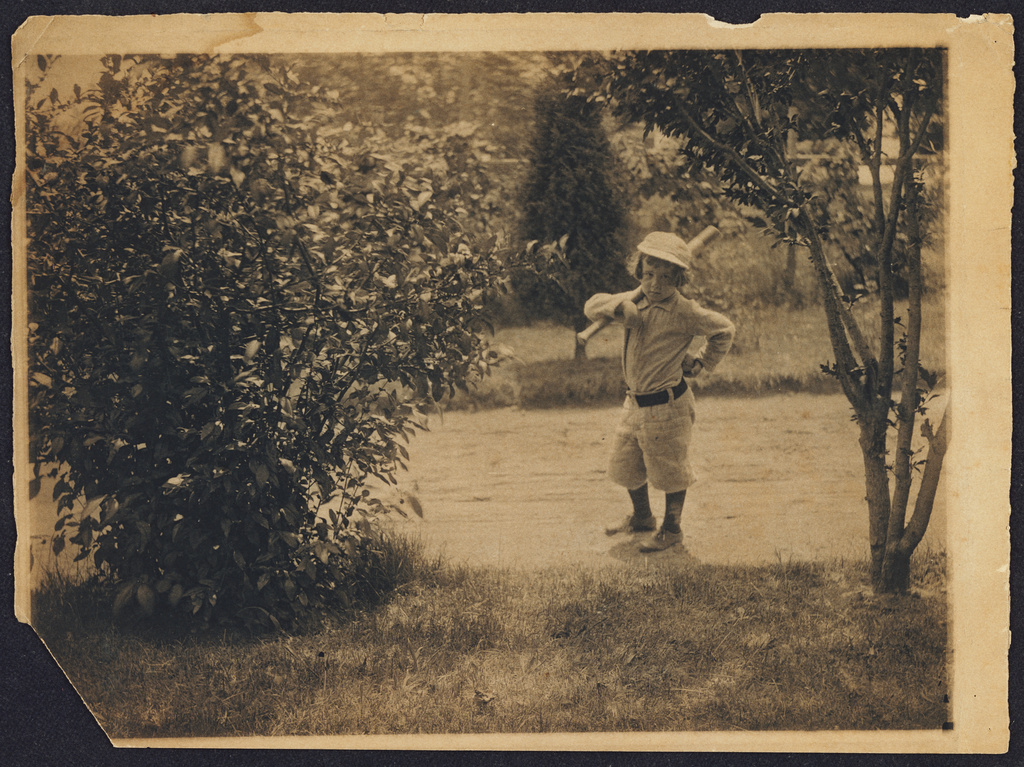
Photo by Gertrude Käsebier (1905) Digital image courtesy of the Getty’s Open Content Program

Paramnesia 2

By Tim Peeler


Paramnesia 2

The deluge of nighttime dog barks
Pauses for the after storm gutter drip.
There was a game, he says, can’t
Remember if it was 47 or 8, but we had
A two run lead in the bottom of the ninth.
Crickets like a crowd roar and the faint
Leaving of a train across the river gorge.
You got a light. Thanks. Well they got
The bases loaded, drunk as they say.
The old man’s profile, a Hemingway
Hillbilly with bifocals in porch light.
And coach, he hollers for me to get in there
To pitch to this Babe Ruth no neck left hander. 
A bawling cow somewhere, the Judge’s braying
Donkeys, hungry in their dark pasture.
So I say a little prayer ‘cause I believed back then,
Hid the ball in my glove behind my back.
A neighbor’s old pickup truck inching
Through the front yard of his trailer.
I throw it hard and outside at the knees.
He swings and misses. Lights was so bad.
An owl in the maple top, sounding out a
Whole summer of loneliness.
When he struck at the third bad pitch, that was
The game, but then he come after me with his bat.
A Hmong woman across the field, singing by the
Lanterns in her vegetable garden.
Our first baseman, Rosenbluth, stopped
Him out between the bases.
The hiss of traffic on the wet road,
River like a belly against the old dam.
We piled on him, beat the shit out of him
Before his teammates got out there, must have
Been 48, same year I met your mother.

About the Author:  A past winner of the Jim Harrison Award for contributions to baseball literature, Tim Peeler has also twice been a Casey Award Finalist (baseball book of the year) and a finalist for the SIBA Award. He lives with his wife, Penny in Hickory, North Carolina, where he directs the academic assistance programs at Catawba Valley Community College. He has published close to a thousand poems, stories, essays, and reviews in magazines, journals, and anthologies and has written sixteen books and three chapbooks. He has five books in the permanent collection at the Baseball Hall of Fame Library in Cooperstown, NY. His recent books include Rough Beast, an Appalachian verse novel about a southern gangster named Larry Ledbetter, Henry River: An American Ruin, poems about an abandoned mill town and film site for The Hunger Games, and Wild in the Strike Zone: Baseball Poems, his third volume of baseball-related poems.

Chase Dimock: “The Haunted Pop-Up Halloween Store”


The Haunted Pop-Up Halloween Store

is the zombie corpse of a long dead
retail outlet rising from the grave.
Beneath the orange banner
looms the faint spectral glow
of a Borders Books sign.

Crumbling red Circuit City tile
lines the gates of hell.
The ghosts of VCRs and Walkmen
haunt the shelves now lined
with sexy nurse costumes
and adult sized My Little Pony onesies.

The souls of empty Blockbuster DVD cases
moan in the aisles, grieving the hole within:
the lost copy of Shrek II that will never be returned.
Radioshack floppy disks flutter like bats
in the rafters, blindly searching among
the plastic pitchforks and novelty severed hands
for the Tandy computers they once called home.

The death mask of Geoffrey the Giraffe
silhouetted in dust and grime on the wall
looks over a display of polyester werewolves
hears the faint memory of children jumping rope
and dressing Cabbage Patch Dolls drowned out
by the eternal loop of “Monster Mash”
bellowing from the rusty intercom.

Come November,
when Smarties and Almond Joys line
the discount candy bin and the trucks collect
boxes of unsold rubber Pennywise masks
the retail Zombie will shut off the fluorescent lights
and bury himself again beneath the crumbling
asphalt parking lot and the scuffed linoleum.
It once more becomes the haunted K-Mart
teetering on the hill. The ghosts peer out
eyeholes cut in their Martha Stewart bedsheets.
The damned wipe Ecto-Cooler off their chins.

.


About the Author: Chase Dimock lives among mountain lions and coyotes in an undisclosed location between Laurel Canyon and the Hollywood Hills of Los Angeles. He serves as the Managing Editor of As It Ought To Be Magazine and makes his living teaching literature and writing at College of the Canyons. He is the author of Sentinel Species, published in 2020 by Stubborn Mule Press His poetry has been published in Waccamaw, Hot Metal Bridge, Faultline, Roanoke Review, New Mexico Review, and Flyway among others. He holds a PhD in Comparative Literature from the University of Illinois and his scholarship in World Literature and LGBT Studies has appeared in College Literature, Western American Literature, Modern American Poetry, The Lambda Literary Review, and several edited anthologies. For more, visit chasedimock.com


More by Chase Dimock:

Imitation Unicorns

“Women Who Love Men Like Ours” By Rebecca Schumejda


(Editor’s Note: This is the second of a two part series of poems on incarceration by Rebecca Schumejda. You can read the first one here.)

Before my brother’s incarceration, I held many beliefs that I now grapple with; one is my once vehement view embracing an eye for an eye, the law of retribution. The idea once seemed simple, if you do wrong, you should suffer an equivalent consequence. The problem is I interpreted this guiding principle through the kaleidoscope of my own limited experience, an experience that did not take life’s complexity or the fallibilities of the justice system into account. The variables are endless, for example just pick up Anthony Ray Hinton’s new book, The Sun Does Shine, which discusses how he survived three decades on death row in Alabama for a crime he did not commit. The number of death row inmates who were set free is absolutely staggering. Then of course, you have to consider mental illness and countless other factors when considering retaliation in lieu of a more magnanimous alternative.

Here’s the thing, I never thought I would be standing on line, shoes in hand, waiting to walk through a metal detector at a maximum-security prison to see my little brother. I never thought I would sit across from someone whom I once knew as the kindest, gentlest person and question every conviction I ever held about him and about all my perceptions. I never thought someone I loved would cause others, including myself, such intense pain by committing an inane act, an act still unfathomable to all affected. Here’s another thing, sometimes you cannot make sense of a tragedy no matter how hard you try. That aside, I want to believe that if you are willing to look at your experiences, even the most painful ones, as opportunities to learn then you will grow as a person and you may even be able to help others along the way. I have to constantly remind myself that good can come from a tragedy, that all is not lost. I use what I know, poetry, as a catalyst for thought and discussion, the chance to make people feel less lonely. I believe poetry is a good place to start any conversation.


Women Who Love Men Like Ours  

I drive toward your house 
and end up at a maximum-security prison,  
knowing I didn’t make a wrong turn.  

I witness the woman guard,  
at the first checkpoint, turn away  
three women for dress code violations.  

The woman in front of me steps out of line  
to bring those three women out to her car  
where she has t-shirts and sweatpants  
in all different sizes for moments like this.   

I take off my shoes before entering  
your house, not to keep the floors clean,  
but to pass through a metal detector  
before being allowed inside.   

The guard gives me a dirty look  
for letting the woman, who helped,  
back into her place in line and I regret  
drawing attention to myself   

but then the woman says,  
We got to be here for one another  
cause ain’t no one else gives a shit  
about women who love men like ours.  

Since I feel connected for the first time  
in months, I nod in agreement as if  
I traveled hours to see my lover or husband  
instead of my little brother.  

At dusk, on my way back to a life,  
where I forget my brother’s address,  
the setting sun is an orange jumpsuit  
crumpled up in the corner of a dingy cell.

.

About the Author: Rebecca Schumejda is the author of Falling Forward (sunnyoutside press), Cadillac Men (NYQ Books), Waiting at the Dead End Diner (Bottom Dog Press), Our One-Way Street (NYQ Books) and several chapbooks including Common Wages, a joint project with poet Don Winter. She received her MA from San Francisco State University and currently lives with her family in New York’s Hudson Valley. She is a co-editor of the online publication Trailer Park Quarterly.


Image Credit: “Prison, Albany, N.Y” (1865) Digital image courtesy of the Getty’s Open Content Program
Margaret Crocker: “Earth, Air And Lynda Carter”


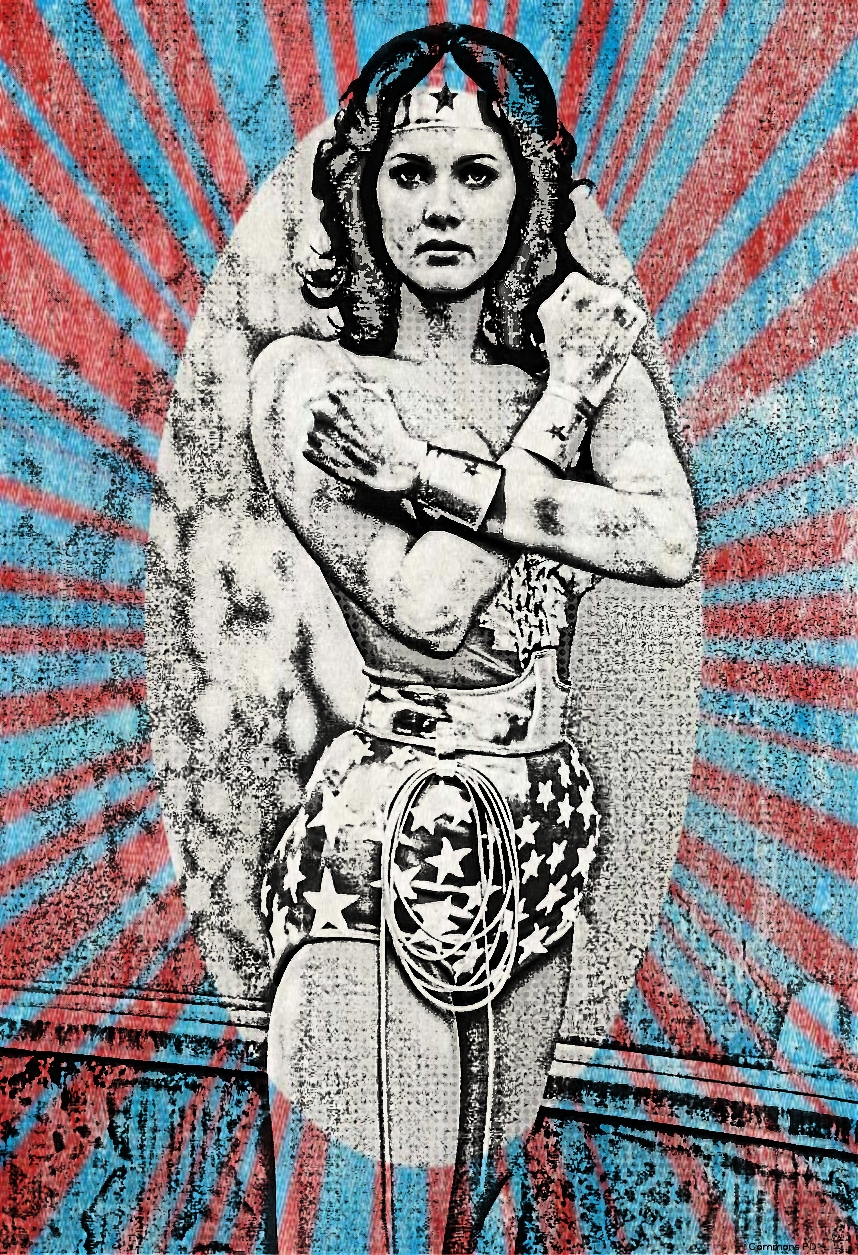
Earth, Air And Lynda Carter

I first remember flying.

Flying

with the ceiling’s 70’s popcorn textures
at my cheek.
I could touch it
if I’d only stretched out my hand.

I was a superhero then,
in my first moments of life and memory,
with my Wonder Woman Underoos,
Lasso of Truth
and the bad guy in the background
for seconds,
long particles of seconds,
an eternity of nanoseconds,
in Million Dollar Man slow motion,
with the Bionic Woman smiling at my shoulder.

“Forget Lee Majors,”
she whispers,
“and fuck the Army.
Let’s leave it all behind with our invisible jet.”

And then I land,

Remembering landing for the first time,
as I remember no other landings before now.
The Underoos ruck up to my armpits,
everything explodes,
the house explodes,
sound and sight explode,
the air, Lynda Carter and Lindsay Wagner are sucked from my universe,
the villain is there,
and the ultimate final twist–

That our heroine
could never fly,
after all.

.

About the Author: Margaret Crocker is an artist, writer, wife, mother, daughter, sister and thief. She collects stray animals and has this weird fantasy of being on The Great British Baking Show, despite the fact she uses a bread machine. She knows little but proclaims much. There is much we don’t know about her.