“When the Watched Pot Boils” By Kory Wells


When the Watched Pot Boils

You know time is getting by,
and you try to remember
all she told you:

Use both dark meat and white.
Save bone and skin and gristle
for the cat. Roll the dough thin
as a paper sack. Slice it into strips
no wider than your thumb.
You’d give up sweets for a month
to hold again her wood-handled knife,
its old blade so often sharpened
it was almost gone.

You think of these things
as you stand at the stove,
the kettle’s broth rolling.
Think of the stories she told.
That time a door-to-door peddler
tried to snatch her youngest.
That hot night she and her lover
broke every dish in the house.
That Sunday the kids ate
their own pet rooster for lunch.
Reminding you,
chicken and dumplings need
plenty of salt. You taste

that name passed down to her,
Tennessee,
and she is with you,
barefoot, stirring the pot,
one eyebrow raised.
That hard T, that soft S,
the irony she was born
in Georgia and lies now
all too soon, in Alabama soil.

Some things are never right.
Some things are not better with time.
But maybe her name was perfect.
After all, how many of the stories
she told had a happy ending?


About the Author: Kory Wells is a poet, writer, storyteller, and advocate for the arts, democracy, afternoon naps, and other good causes. In 2017 she was named the inaugural poet laureate of Murfreesboro, Tennessee, where she also founded and manages a reading series. Her poetry collection Sugar Fix is forthcoming from Terrapin Books. Read more of her work at korywells.com.


More By Kory Wells:

Untold Story


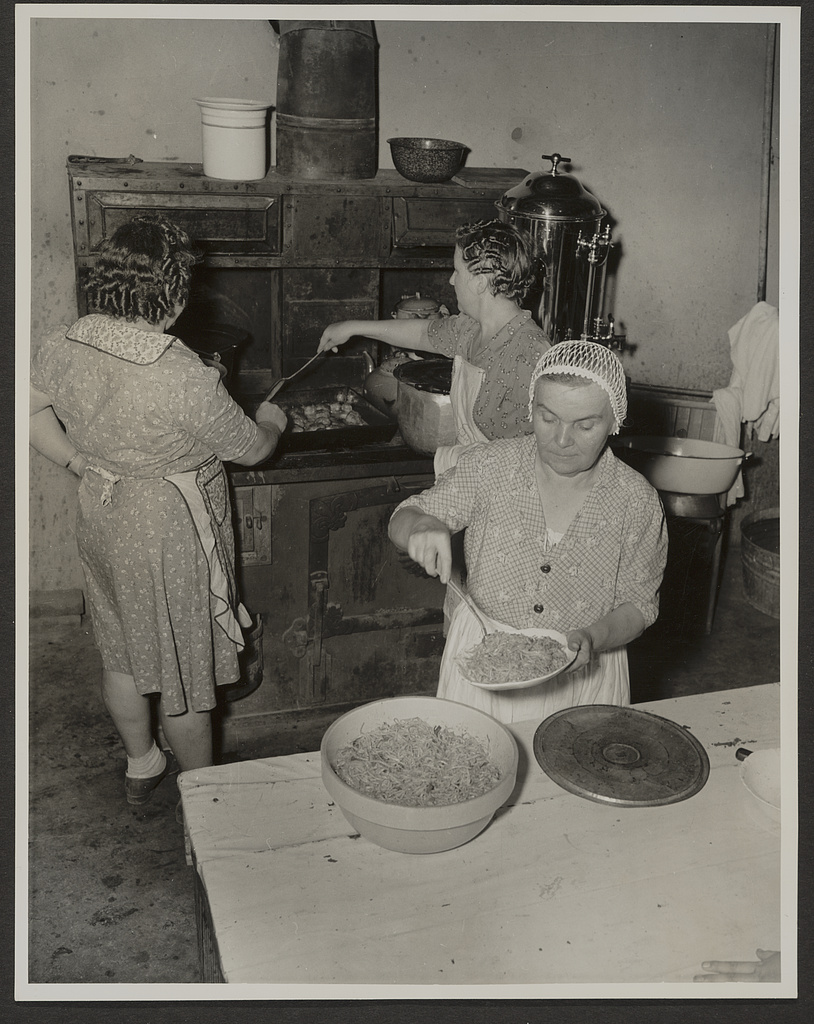
Image Credit: “Cooking spaghetti and frying chicken for a spaghetti supper at Grape Festival, Tontitown, Arkansas” (1941) The Library of Congress


Two Prose Poems by Mike James


Things I Hate

Things I hate mainly start with u. Things like newly upholstered umbrellas taking umbrage at the rain for doing what it does. Any ordinary person or day declaring herself unique. Special and different are matter-of-fact fine, but unique seems untucked from what is.

Of course, I make exceptions. I’m fine with whatever is ungainly. Even prefer it. And I have nothing against unicorns of saddled or unsaddled variety. If I were Ezra Pound, I would complain about usury. But I’m not. So I don’t. Borrowings don’t make me think of interest. Instead I think of theft. What starts as a favor, ends as a complaint. Such things don’t happen in utopias, but only princes live there. The plain world gets upturned more than twice a day. At any moment the sky might crack open with a new birth of tears.


Tribulations Down the Street From the Quickie Mart

So, the Four Horsemen of the Apocalypse ride into town and what are you doing, Mr. Sunshine, except licking a vanilla ice-cream cone and digging through your neighbor’s trash? Yesterday you were talking about all the things you wanted to do in the Falklands once winter vacation arrived. You planned to watch penguins and begin each day rousing your companion by singing God Save the Queen in the key of Sid Vicious. Now, all that will have to be postponed. And all the Horsemen have noisy and glittery spurs. It would be foolish to think they wouldn’t. And why is one playing a harmonica? And why does another have your name tattooed, with John Hancock style flourish, right above his heart? Each is busy doing what they came to do. And each is pretty good at it. Despite it all, that ice-cream is still delicious.


About the Author: Mike James has been widely published in magazines, large and small, throughout the country. His thirteen poetry collections include: Jumping Drawbridges in Technicolor (Blue Horse), First-Hand Accounts from Made-Up Places (Stubborn Mule), Crows in the Jukebox (Bottom Dog), My Favorite Houseguest (FutureCycle), and Peddler’s Blues (Main Street Rag.) He has served as an associate editor for the Kentucky Review and Autumn House Press, as well as the publisher of the now defunct Yellow Pepper Press. He makes his home outside Nashville, Tennessee. More information can be found on his website at mikejamespoetry.com.


More By Mike James:

Grace

Paul Lynde


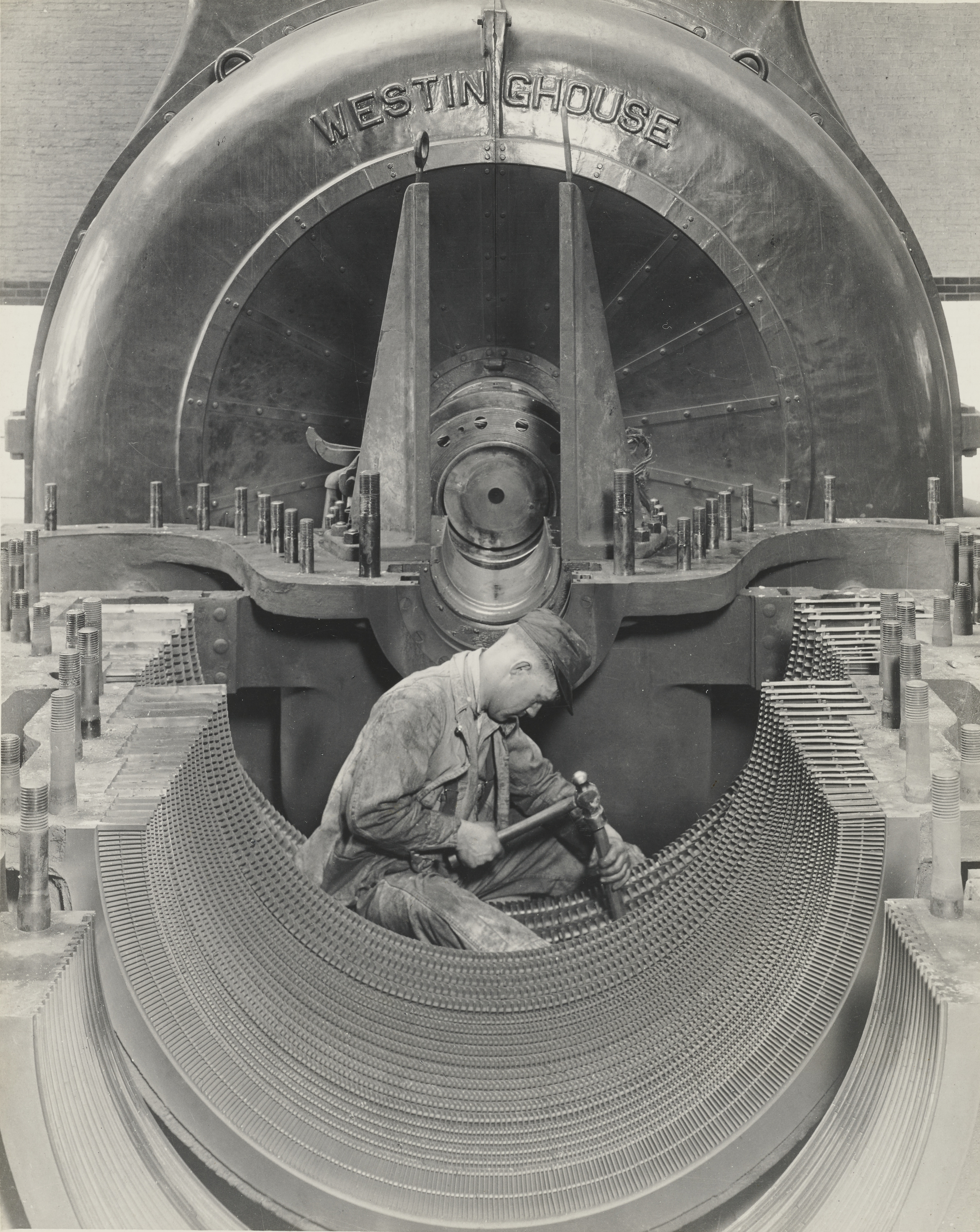
Image Credit:Heart of the Turbine” Lewis W. Hine (1930) Digital image courtesy of the Getty’s Open Content Program


“A Good Bad Day” By Tony Gloeggler


A GOOD BAD DAY

John walks slowly up the stairs
to my office every day. Between
four and four-thirty, after the bus
brings him home from day program
and after he uses the bathroom,
he says, “Oh, hello, Tony,” as if
he’s surprised to find me
sitting at my desk. He says
he had a good day, stands
by a chair, and after six years
of living at the residence,
his home, he still hesitates,
wonders if he needs permission
to sit down. I don’t give it,
wait until he sits on his own.
He tells me if he read or painted,
exercised or sang today and I ask
questions as if I was his mother.
Maybe he went to a park, a store,
the library. All along he wears
this pleasant, half smiling,
perfectly balanced, zen-like gaze
across his Fred Flintstone face
and I don’t know if I’m stressed
or bored, mean, or just a smart-ass
acting like we are friends;
but when he asks me about my day
sometimes I tell him the truth.

Uselessly endless meetings, piles
of paper work, asshole administrators.
Not enough sleep. Girlfriend trouble.
Yesterday, I told him that a woman
I loved is getting married on a boat
in September and I wished
I owned a torpedo. He didn’t say
anything, just sat there smiling
and I’m sorry, but I couldn’t help it
I had to ask him if he ever
had a bad day. When he said no,
none that he could remember,
I said are you sure. He said
I don’t think so and looked like
he was thinking hard. I leaned
forward, said that I felt very sad
when my father died and I wondered
how he felt when his mom and dad
passed away. John jutted out his chin,
looked beyond me and said yeah
that was a bad day. When I asked
if he missed them, he chewed
on his lips, said sometimes,
and I said I know what you mean.


(This poem first appeared in Rattle)


About Tony Gloeggler: I am a life-long resident of New York City and have managed group homes for the mentally challenged for over 35 years. My work has appeared in Columbia Poetry Review, Rattle, The Examined Life Journal, Raleigh Review, New Ohio Review, Stirring and The NY Times. My full length books include One Wish Left (Pavement Saw Press 2002) and Until The Last Light Leaves (NYQ Books 2015) which focused on my job and the autistic son of a former girlfriend. My next book, What Kind Of Man, will be published by NYQ Books in 2019.


More By Tony Gloeggler

“Crossing”

“Visitor’s Day at the Group Home”

“In the Building”


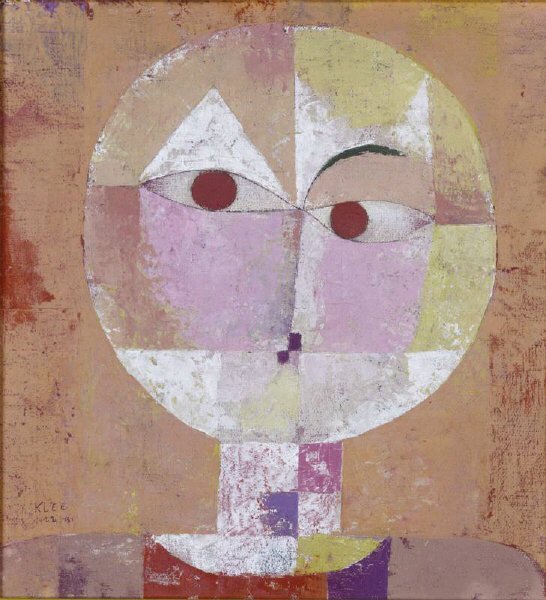
Image Credit: Paul Klee “Senecio” (1922) Public Domain

“Melancholy & The Afterglow” By Damian Rucci


Melancholy & The Afterglow

You can throw all the rocks
from here to Norwood Avenue
up to heaven but they’ll find
home again in the earth

maybe in different places, maybe
find new homes down the road
in the silk grasses of privilege
but they’ll always be covered in dirt

then why do we mourn dawn
hold on to the black skies
of transcendence as light rays
remind us we’re still ourselves?

They remind us that any
enlightenment that comes in a baggy
is another layer we hide truth behind

after all the higher you climb
the worse it hurts falling back down

.

About the Author: Damian Rucci’s work has recently appeared in Cultural Weekly, Beatdom, Big Hammer, and coffee shops and basements across the country. He is an author of three chapbooks and a split Former Lives of Saints with Ezhno Martin. Damian hosted the Poetry in the Port reading series, currently hosts the Belle Ringer Open Mic and is a poet in residence at the Osage Arts Community in Belle, Missouri. He can be reached at damian.rucci@gmail.com

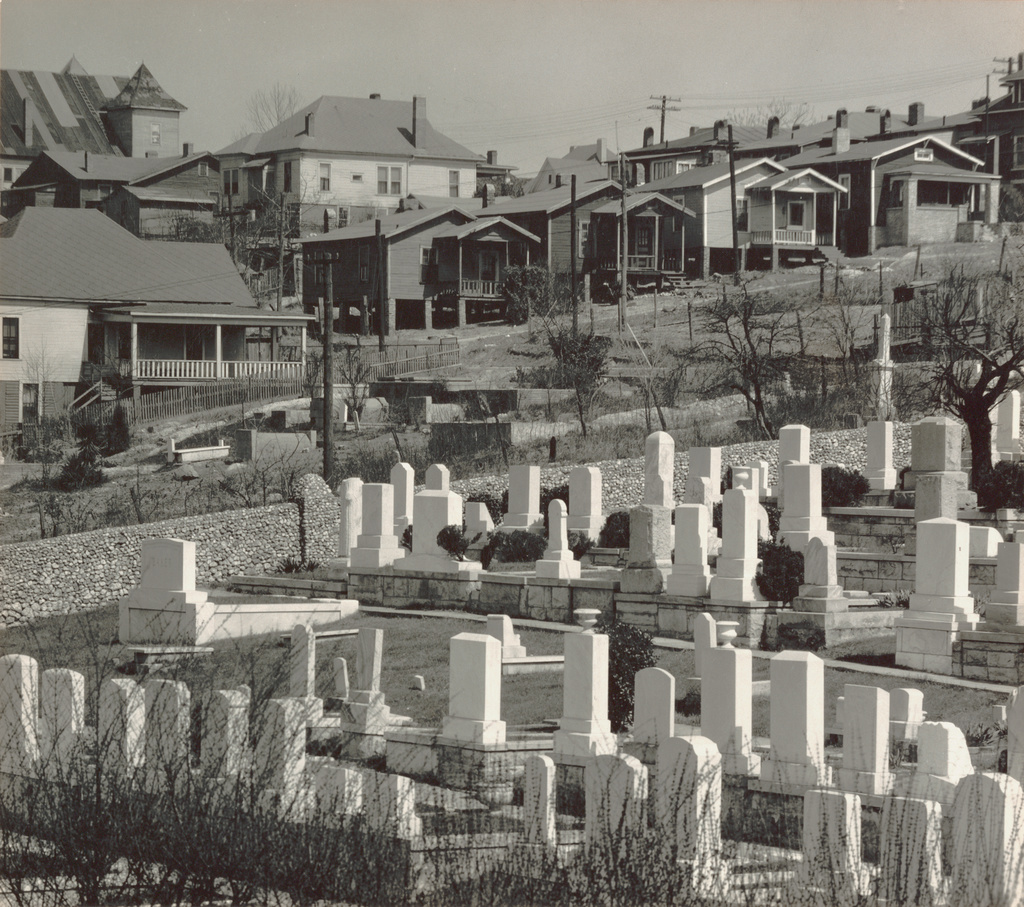
Image Credit: Walker Evans “Houses and Cemetery, Birmingham, Alabama” (1936) Digital image courtesy of the Getty’s Open Content Program.

“Forget Math and Science” By Larry Smith


Forget Math and Science

Birds live inside of birds
tucked away for spring release
their naked bodies embraced
in sleep’s sweetness.
Their wings are tongues licking
each other’s face.
Don’t try to count them all
they’re an infinite multiple of six.

To love a single bird
you must become one
inside and out, top to bottom.
Then rise wings up and fly
sing through beak and body
the song of I Am.


About the Author: Larry Smith is a poet, fiction writer, and editor-publisher of Bottom Dog Press in Ohio where they feature a Working Lives and an Appalachian Writing Series. He is also the biographer of Kenneth Patchen and Lawrence Ferlinghetti. He lives in Huron, Ohio, along the shores of Lake Erie.


More By Larry Smith:

Wages

No Walls


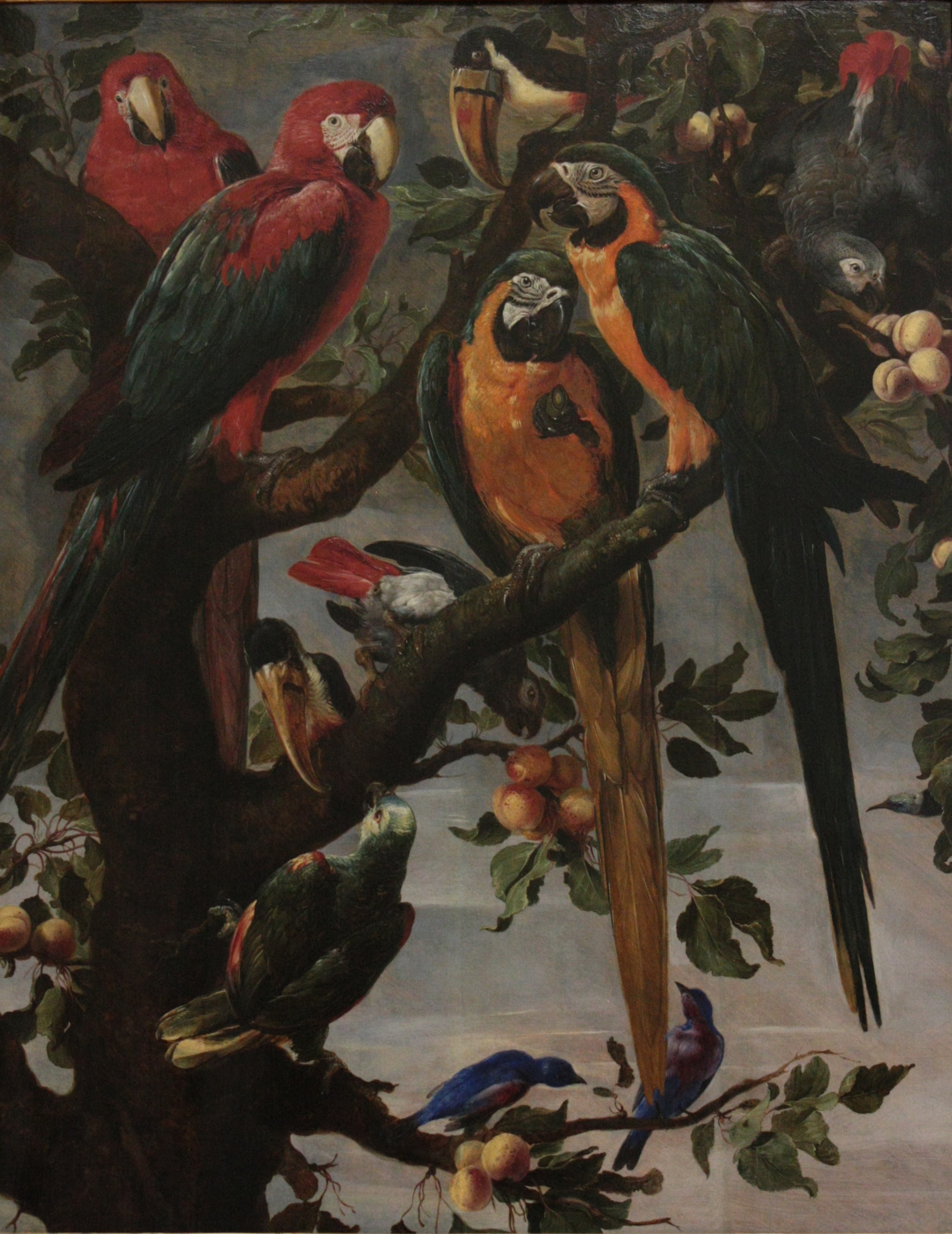
Image Credit: Frans Snyders “Perroquets et autres oiseaux” (17th Century) Public Domain

“Explaining Depression to My Cousin” by Nathan Graziano


Explaining Depression to My Cousin


It’s melodrama shot execution-style on a sidewalk.

It’s a pit in your stomach stuffed with fluff.

It’s two a.m. with morning’s foot pressed to its throat.

It’s me grabbing your hand and crying on your shoulder.

It’s words desperate to find a sentence that loves them.

It’s an airless dream then waking, suddenly, suffocated.

It’s not losing a job, a loveless marriage or the desertion

of a childhood dream that once made you smile.

It’s the pill you have to take twice a day, knowing

it’s not resolved with exercise or diet or thinking

the positive thoughts that positive people think.

It’s mustering the courage to wake up tomorrow and dress,

one stupid leg after the next laborious leg, and press on.


About the Author: Nathan Graziano lives in Manchester, New Hampshire, with his wife and kids. His books include Teaching Metaphors (Sunnyoutside Press), After the Honeymoon (Sunnyoutside Press) Hangover Breakfasts (Bottle of Smoke Press in 2012), Sort Some Sort of Ugly (Marginalia Publishing in 2013), and My Next Bad Decision (Artistically Declined Press, 2014), Almost Christmas, a collection of short prose pieces, was recently published by Redneck Press. Graziano writes a baseball column for Dirty Water Media in Boston. For more information, visit his website: www.nathangraziano.com.


More By Nathan Graziano:

“My Bipolar Ex-Love”

“The Misery of Fun”


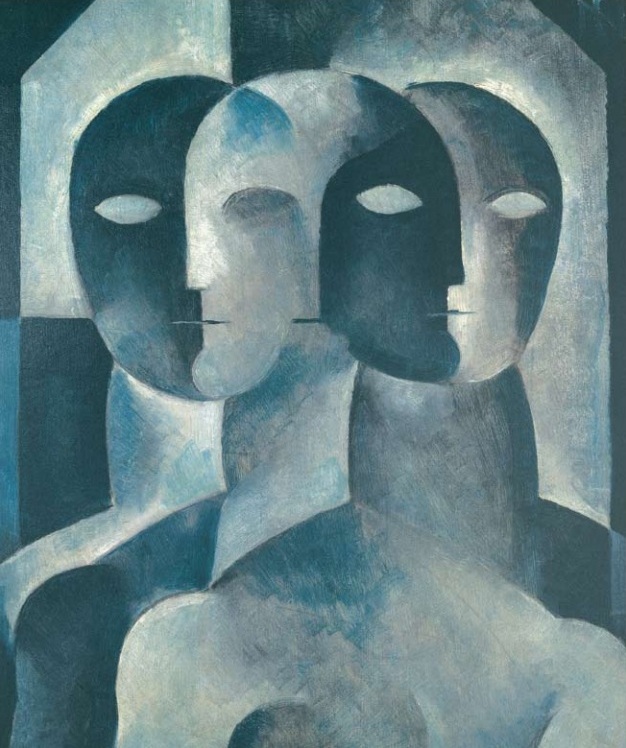
Image Credit: “Nos” by Ismael Nery Public Domain

“Why Did You Try to Sober Up?” by Ace Boggess


“Why Did You Try to Sober Up?”
                           [rehab workbook]

Couldn’t afford the cost of words.
I snorted sentences, gambled paragraphs
on Texas Hold’em—no limit.
My wallet left me in stanzas of regret.
Someone would’ve placed a lien on my house.
Someone would’ve called the cops
if I hadn’t invited them first.

I wrote, wept, raved, & spent,
chewed bad checks like after-dinner mints.

Was it the drugs that broke me, or the prose?
We never know what value to place
on what we want. I wanted
to etch my unconscious thoughts on rocks.

Did I love the pills? I loved them: little songs
I could sing to me, pay-to-play,
the tab so great I’d be muzzled
if I wasted coins on anything but wishes.


About the Author: Ace Boggess is author of four books of poetry, most recently I Have Lost the Art of Dreaming It So (Unsolicited Press, 2018). His writing appears in Notre Dame Review, Rhino, North Dakota Quarterly, Rattle, and many other journals. He received a fellowship from the West Virginia Commission on the Arts and spent five years in a West Virginia prison. He lives in Charleston, West Virginia.


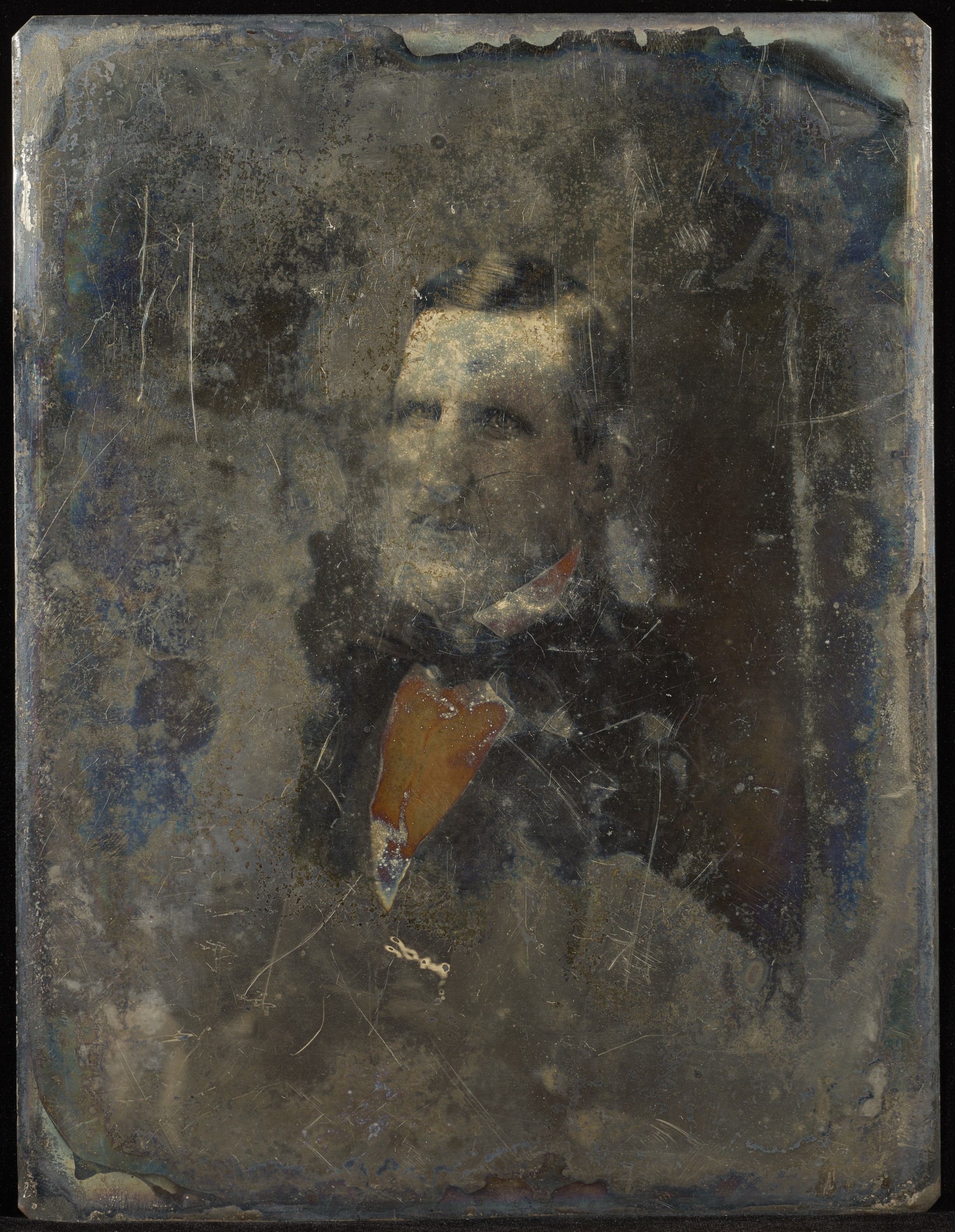
Image Credit: Jacob Byerly “Portrait of a Man” (1855) Digital image courtesy of the Getty’s Open Content Program.

“One of Pessoa’s Ghosts” By William Taylor Jr.


One of Pessoa’s Ghosts

Under the kind and forgiving influence
of three glasses of cheap red wine

I haunt the city like
one of Pessoa’s ghosts,

adrift in the beauty and the terror
of an ordinary Tuesday afternoon.

At Vesuvio Cafe the tourists
drink and laugh at balcony tables.

I take my wine and sit among them,
the soft music of their faces,

my heart forever breaking a bit
for something I can never
quite name,

and it’s all I’ve ever
asked of the world.


About the Author: William Taylor Jr. lives and writes in the Tenderloin neighborhood of San Francisco.  He is the author of numerous books of poetry, and a volume of fiction. He is a five time Pushcart Prize nominee and was a recipient of the 2013 Kathy Acker Award. He edited Cockymoon: Selected Poems of Jack Micheline, published by Zeitgeist Press in 2017. From the Essential Handbook on Making it to the Next Whatever is his latest collection of poetry. 


More By William Taylor Jr.:

The Fire of Now


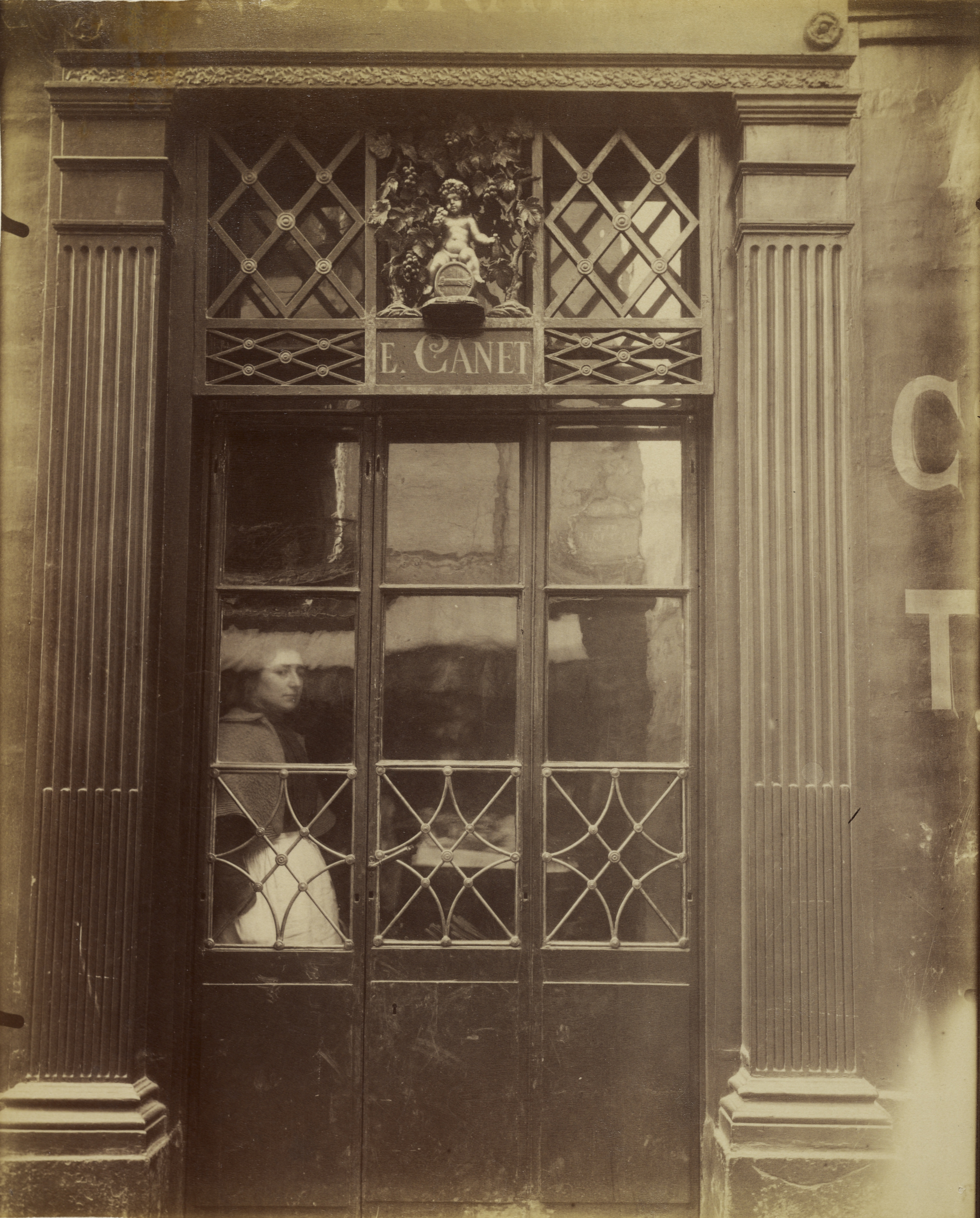
Image Credit: Eugène Atget “Petit Bacchus, 61, rue St. Louis en l’Ile” (1901) Digital image courtesy of the Getty’s Open Content Program.

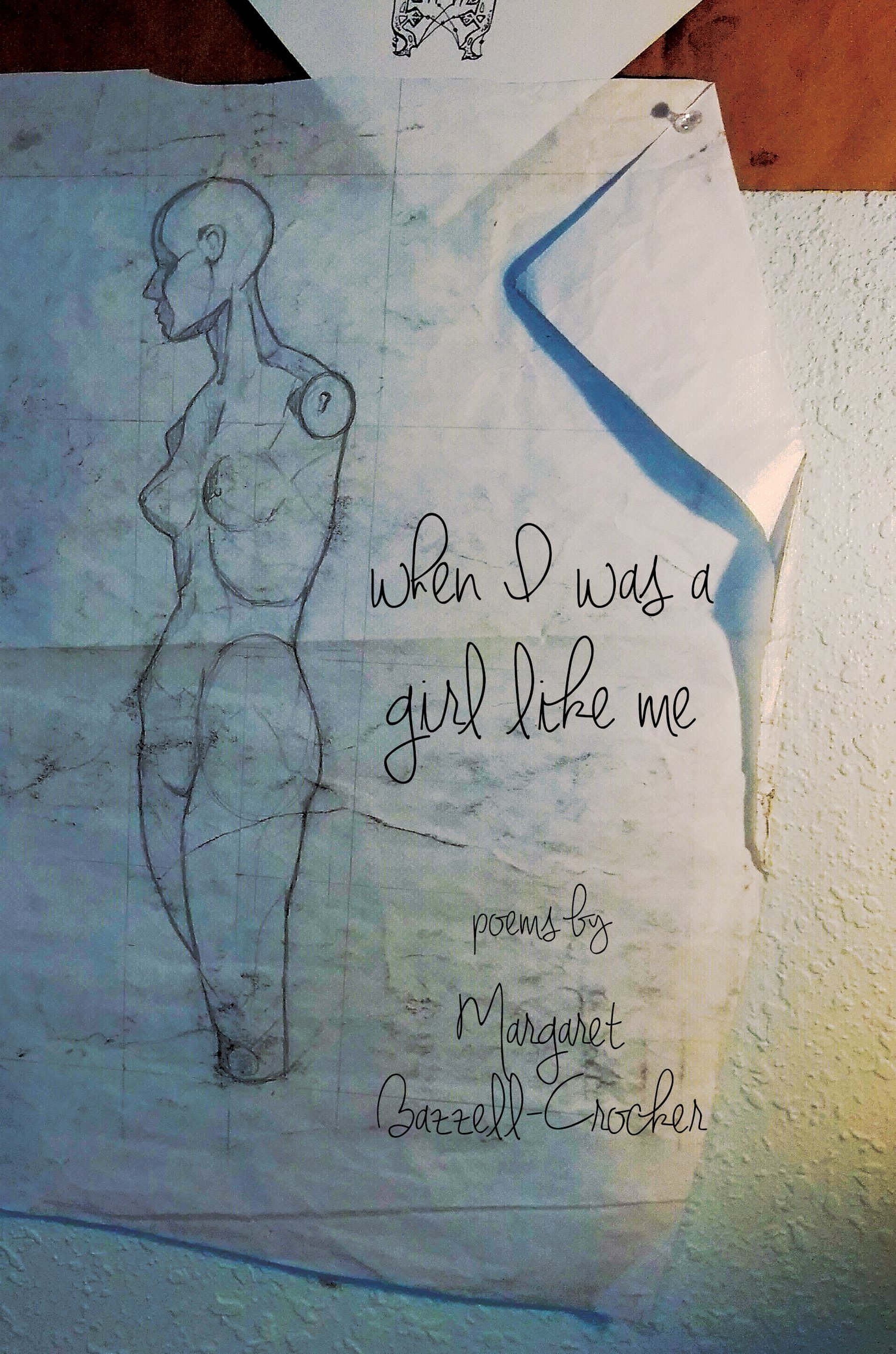
“When I Was A Girl Like Me: An Interview With Poet Margaret Bazzell-Crocker” By Chase Dimock


When I Was A Girl Like Me:

An Interview With Poet Margaret Bazzell-Crocker

By Chase Dimock

When Margaret Bazzell-Crocker told me she would be publishing her first collection of poetry in 20 years, I expected her to be revelation to anyone who picked up her book. As a good friend of hers, I knew readers would be equal parts charmed and provoked by her perspective. Her personality certainly radiates from the pages: funny, empathetic, authentic, unrepentantly unorthodox, and insightful.

What I didn’t expect was for the book to be a revelation to me. When you’ve known someone for a while, you tend to think you’ve got them figured out, even when your base assumption is that they are amazing and capable of anything. I learned a lot about Margaret: about her relationship with anger and disillusionment, how these feelings came from her upbringing and her dissatisfaction with the status of women in the world of her youth, and how the Margaret I met in her 40s is a product of decades of harnessing and channeling this into an energy that can create and nurture.

After finishing the book, I wondered if I had been daft and dense to have missed some of this in my friend. But, what I realized while interviewing Margaret is that it is through the language of poetry that so much of this experience can be expressed and heard. When I Was a Girl Like Me is the annotated guide to the life of Margaret Bazzell-Crocker. The following interview is just as much about wanting to better understand a friend as it is about wanting to share her with the world.

Chase Dimock: Your book contains a short introduction in which you address your anger. You write, “People are afraid of anger and especially women are afraid to be angry” and that you are now “comfortable” with your anger because you can “aim it with laser precision.” Why did you decide to begin by addressing your history of dealing with anger and what role does this anger play in your poetry?

Margaret Bazzell-Crocker: I think I wrote first about anger because it’s the emotion I’ve wrestled with most, and I’ve been fascinated with the idea that it seems to be especially shocking when a woman is angry. I remember feeling the same way when I got old enough for my mother to make me start wearing shirts. Why did I have to go around in shirts? None of the boys or men in our neighborhood did! Our household wasn’t really great when I was growing up and anger seemed to be the go-to feeling for all of us, although we always expressed it in gender-specific ways. The girls were allowed to sulk and the boys were allowed to hit.

I think a big, powerful moment growing up for me was when I discovered I had the power to express my anger in more definite ways, and I’m sad to say that I wasn’t, at first, very responsible with this power. I hit, I threw things, I did things I was sorry for afterwards, and I wouldn’t go through that experience again if I could help it. However, I think the message I got when I was younger, and that women continue to get now, was that a girl or woman could feel things in a corner, but they’d better not sit at the table with it. I’m not completely comfortable sitting at the table today, but I’ll do it, by God. As far as how anger affects my poetry, I think it affects some of it, of course. I hope readers will see that this collection begins with anger, but then talks about all kinds of emotions and situations. The collection gets past my anger, but still acknowledges it as a great source of power. Good and bad.


Chase Dimock: Let’s talk about where this anger and your attempt to harness and manage it surface in your poems. A few months ago, we published the second poem in the book, “The Art of Acquiescence,” in As It Ought to Be Magazine. In it you write:

To be a woman
in this world
is to bend and curve and slip around its corners
like a snake in the river.

You explain that a woman must “contort” herself. How do you feel this compulsory contortion and acquiescence feeds into the anger you feel? How does this connect your personal experience with the women of the world who you broadly address in the first two lines?

Margaret Bazzell-Crocker: First of all, I like the words you use about the anger in my poetry, because I think they are correct: “harness,” and, “manage.” That is what I tried so hard to do in the past whenever I felt angry. I would add another that’s in “The Art of Acquiescence” poem itself: “meet.” I did try to harness my anger because it went far into a dangerous field when I found I had the power to wield it, and as I’ve said, I regret that. But, then I found I over-corrected, because I was trying to be accommodating to everyone but me. There is still a tendency now to please everyone around me and be resentful of it. The more I matured and was around different women, the more I found their anger and resentment, even for the people they loved sometimes, matched my own. The more I still found this tendency in many of us, to turn the art of acquiescence into a line, drawn in battle. And the more determined I was to erase, or at least redefine, this line in myself. That’s why I would add the word “meet.” In the poem, the snake meets all obstacles. I love that little snake!

I hope, with this collection of poetry, readers see, not that I am finally at Hallmark Channel peace with my anger, but that I am working to remove the battle from it, to negotiate a peace-accord, maybe with myself. I have come of age, I guess, in my willingness to see it as a part of me, but no longer a defining part of me. I would never advise anyone else to do the same. My poem is my journey, and no one else’s. I wrote it because I feel my journey with anger and with other emotions that stand in the way of growth, change, or even just a happy, still life may resonate with others, too.

Continue reading ““When I Was A Girl Like Me: An Interview With Poet Margaret Bazzell-Crocker” By Chase Dimock”

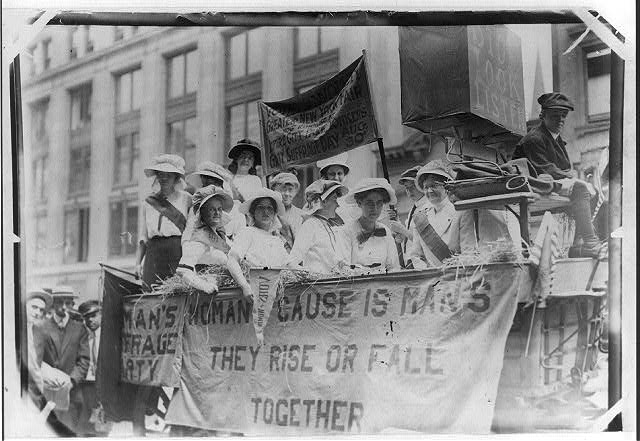
“Women’s March in Albany” By Bunkong Tuon


3a25016r


This is the fifth in a series of poems from a forthcoming poetry collection about raising a biracial daughter in Contemporary America, during this polarizing time of political and cultural upheavals where sexual harassment allegations abound, where a wall, literal and figurative, threatens to keep out immigrants like the narrator, a former refugee and child survivor of the Cambodian Genocide. You can find the complete series of links below.


Women’s March in Albany

I take Chanda out of the stroller,
lift her high up over my head,
and put her on my shoulders.

So she can see that she’s never alone.
We are here for her, my wife and I,
and other women and men too.  

We will march city streets,
climb mountains, and cross rivers
and jungles to let her know.

Our strength is in our love for her.
And her strength is felt in the trembling
ground, the demands for autonomy,

respect and decency, no woman
left behind, in speaking up and out,
in hollering and screaming. In songs.


About the Author: Bunkong Tuon is the author of Gruel (2015) and And So I Was Blessed (2017), both poetry collections published by NYQ Books, and a regular contributor to Cultural Weekly  He is also an associate professor of English and Asian Studies at Union College, in Schenectady, NY.


Bunkong Tuon’s series of poems on raising a biracial daughter in contemporary America:

Ice Cream

Gender Danger

The Bite

Tightrope Dancer

Women’s March in Albany

My Mother on Her Deathbed


Image Credit: “Suffragettes riding float…New York Fair, Yonkers” (1913) The Library of Congress