Daniel Romo: “The Main Event”


The Main Event

The man standing behind me in Target tells his buddy 
his workplace is creating a fight club.
And I wonder if hands will be thrown in the name of
middle management and manhood 
or if the employees will simply be arguing back and forth,
pointing fingers like political parties stressing 
just how wrong 
         the other one is. 

I recently read about a man dying immediately after
entering a taco-eating contest.
The coroner officially listed choking as the cause of death,
but what are the odds the autopsy would also show 
ego and competition are 
kindred spirits?

           I understand the dynamics of blowing off steam.
           I’ve studied how the mouth forms a shape just small enough 
           to free the air from the toxic body,
           but large enough to proclaim and pronounce 
                                                                              glory.

I struggle with how much of my personal life 
to share in a poem.
Should I say how the fissures from my own darkness 
spread until I was ready to stop lamenting 
the curvature of imperfect lines, 
finally ready to plug the cracks 
and resurrect the foundation?
Or should I just say,
    Earthquakes suck, man.

Is there a Richter scale that ranges from self-pity to rehabilitation?
How well can you withstand 
what is eating you alive?
It’s often a case of self vs. selfless, 
the poet vs. the person,
picking your punches 
as if the next uppercut to the gut
           could end it all. 


About the Author: Daniel Romo is the author of Apologies in Reverse (FutureCycle Press 2019), When Kerosene’s Involved (Mojave River Press, 2014), and Romancing Gravity (Silver Birch Press, 2013). His poetry can be found in The Los Angeles Review, PANK, Barrelhouse, and elsewhere. He has an M.F.A. in Creative Writing from Queens University of Charlotte, and he is an Associate Poetry Editor at Backbone Press. He lives and teaches in Long Beach, CA

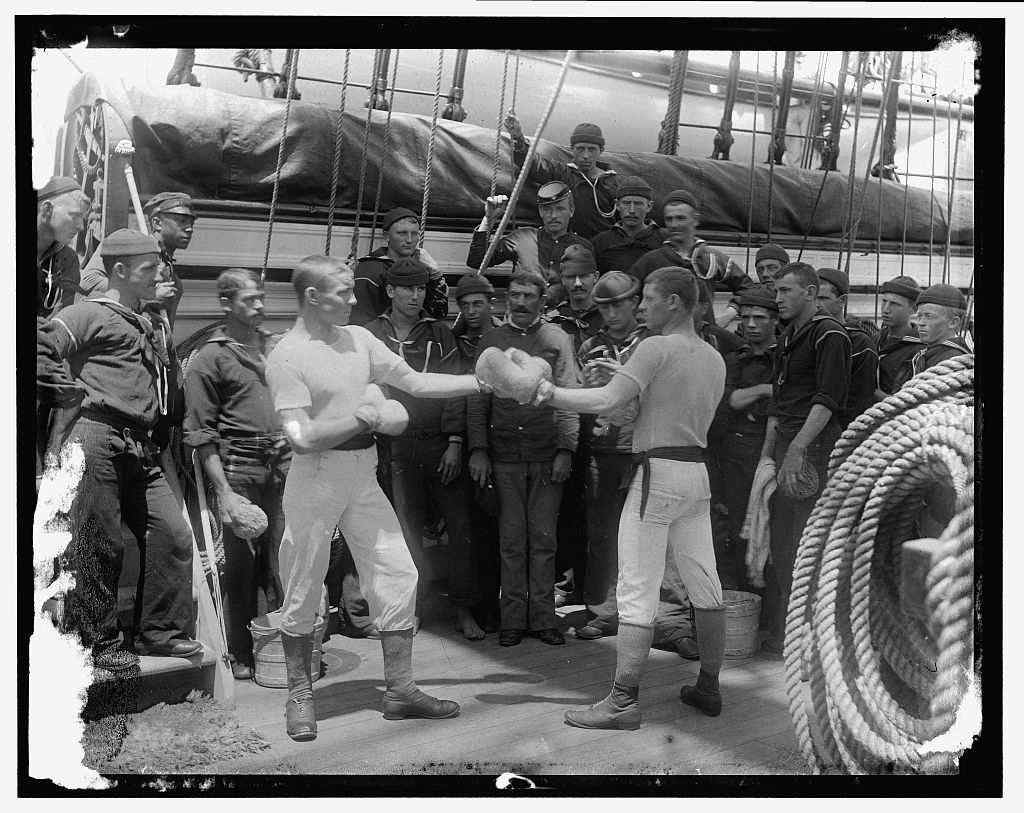
Image Credit: “A Boxing Match” (1890) The Library of Congress

Jason Baldinger: “it was a golden time”


it was a golden time

been on the road
long enough now
to feel like three
mummified frogs
dried in a tejas mudpuddle

a woman in a wal-mart
parking lot shouts
I don’t believe you
should leave a baby
in a car, even if its running

I’m gonna steal what I need
some scoundrel hunter
gatherer from ancient time

there’s a dead bear in an irrigation
ditch, it left me with the strange
feeling I’ve been here before

the windshield grows
a mustache, I see the world
clearer in my dreams
problem is, I never
remember my dreams


About the Author: Jason Baldinger is a poet from Pittsburgh, Pennsylvania.  He was recently a Writer in Residence at Osage Arts Community, and is founder and co-director of The Bridge Series. He has multiple books available including the soon to be released The Better Angels of our Nature (Kung Fu Treachery) and the split books The Ugly Side of the Lake with John Dorsey (Night Ballet Press) as well as Little Fires Hiding with James Benger (Kung Fu Treachery Press). His work has been published widely in print journals and online. You can listen to him read his work on Bandcamp on lps by the bands Theremonster and The Gotobeds.


More by Jason Baldinger:

“I forgot the earth and heaven”

“When Cancer Come to Evansville, Indiana”

“blind into leaving”


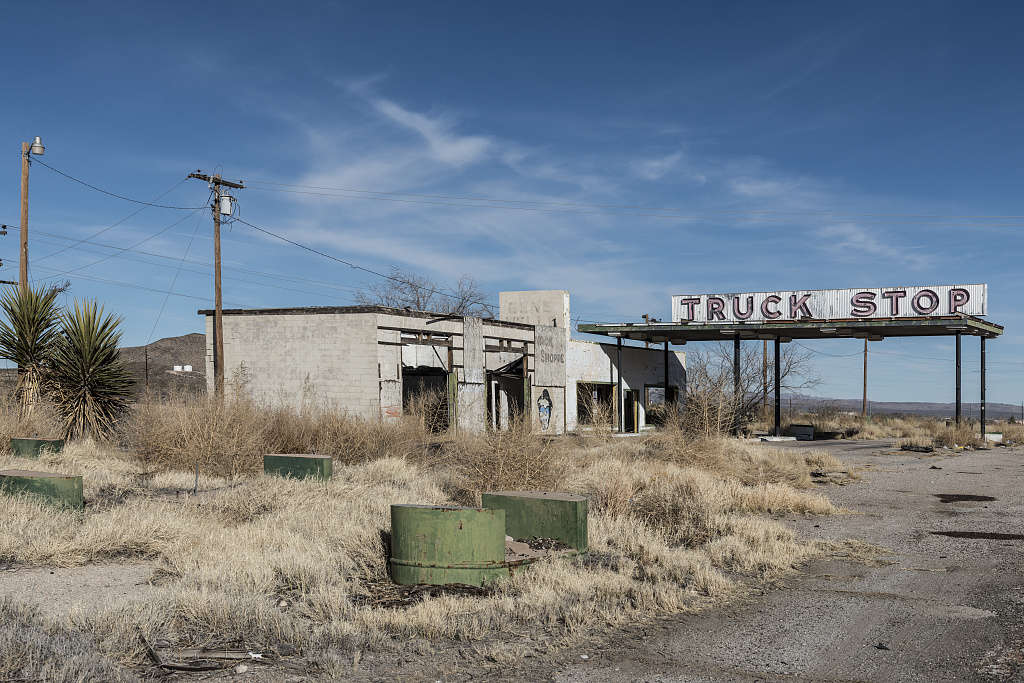
Photo Credit: Carol M. Highsmith “Deserted truck stop in Sierra Blanca, made a virtual ghost town when the interstate highway bypassed it in Hudspeth County, Texas” (2014) The Library of Congress

Dandylion Riot: An Interview with Poet and Artist Jeanette Powers


Dandylion Riot:
An Interview with Poet and Artist Jeanette Powers
By Chase Dimock

The problem with writing an introduction to Jeanette Powers’ work is that by nature, an introduction presumes that you can define your subject and contain it in a rough overview. It also presents the reader with the assurance that you have prepared them for what you’re about to subject them to. I’m not sure I can wholly achieve that because Powers’ art is consciously transgressive of definition and containment. Powers’ poetry explores identity and the language with which we express it, not by defining it in a way that pins down or immobilizes, but by pushing at the seams of what these words can hold. 

Powers identifies as a hillbilly, but stresses how this identity can be reclaimed as subversive, queer, and ecologically progressive. And yet, for all this rebellion against expectations, their writing is never isolating or cold. There are so many deeply personal stories and intricate descriptions of their relationships with nature, family, and one’s self that it’s easy to connect individually with Powers’ work. To simultaneously challenge and intimately connect with a reader is the toughest, yet most powerful move a poet can make. In short, Jeanette Powers is heckin’ rare.

Chase Dimock: What first drew me to your work was how you locate expressions of queerness and gender non-conformity within the nature and culture of the midwest. As someone who has lived on both coasts and the midwest, I feel that the coasts tend to overlook how the midwest cultivates uniquely queer communities and identities. How do you feel that living in the midwest has shaped how you articulate queerness in your poetry?

Jeanette Powers: I’ve never lived on the coasts, so I can’t speak to the real differences between the queer communities, but I can definitely say that I find a lot of interest on the coasts and abroad in specifically the Midwestern and MW queer experience. People sometimes are shocked to find out about large and thriving queer communities in the Bible Belt, people want to know how we are surviving in MAGA America, and they are very interested in how our communities thrive. 

I am born and raised in Kansas City, both sides of the state line, so Kansas and Missouri. I’m a Pure D Midwesterner and that experience shapes the paradigm from which my ethics and art both arise. I am a poor, “white trash”, river rat, polite to a fault, redneck hillbilly; farm loving, meat-eating, off-leash dog having, bonfire building, corn eating, hot plate cookin, truck loving, camouflage wearing radical. I want to de-stigmatize some of those traditionally derogatory words I used there. For me, being a hillbilly is directly related to the subversive attitudes I have: an idea of living “off-the-grid”, a belief in the value of our indigenous cultures, an anti-authoritarian ethic, a deep value of the land and resources. I reclaim being poor white trash as being something beautiful and an agent for change. In some ways, class struggle and connection to nature supersede my queerness even, and I think my heartland upbringing are part of why.

So from that perspective, queerness is an underlying fact and lens through which my connection to the rest of America happens to occur. My art is less about being a non-binary, pansexual queer human than it is about loving nature, discovering the inherent self, abhorring oppression, seeking equity, and striving for healing or reconciliation. In that way, my location becomes less visible because folks all over the world share those values. But the Ozarks, the prairie, rivers and state fairs are the context from which all the metaphor arises. And being a hella queer who lives for performance art, challenging the status quo, and being a deeply intellectual human is all in there, too. 

I do question sometimes if the queerness being an underlying rather than leading component is a reflex of preserving my safety. I pass as straight, cis as long as I restrict my language, and that is powerful here in the Midwest, where hate crimes against queer folk are common. Many of our families reject us, discrimination is still happening. These thoughts have caused me to lead with the queerness more often, and to shake the chains which hold all non-passing queer folks in danger. That is using my privilege as a tool for change rather than as a mechanism to keep just me safe.


Chase Dimock: To go a little deeper in exploring where your poetry comes from, I’d like to bring up the role family plays in your work. Your new book, Dandylion Riot is filled with childhood memories of your grandparents, aunts, and other family members. You also have a tendency to connect your memories of family with objects: a yellow rotary phone with your grandparents in “Hearts Break All the Time,” a stuffed monkey with your aunt in “The Mon Chi Chi,” and a Buddha statue with your grandfather in “The Laughing Buddha.” How do these portraits of your family fit into the objectives of your art that you talked about in your previous answer? Why do certain associations with people and objects stick with you as you depict them?

Jeanette Powers: It is interesting how much my family plays into my poetry, when in reality I don’t have much of a relationship with them. Except for my son (and bonus kid, and an aunt and cousin, and my sister), who I actually write about very seldom. I guess I’m tracing back the lineage of my emotional being, trying to reconcile what one is taught and how that shapes one against what one wants to be, or maybe really is. It’s part excavation, part commemoration, part study. It’s all very interesting to me and does tell the story of the culture I was raised in, which of course shapes the person I am today. In some ways, I’m dismantling the cognitive dissonance that I’ve experienced trying to reconcile the love with the trauma. And I hope I do that respectfully. I know my family is upset with me talking about the darker aspects of our family culture, but I’m committed to not being silent about what made me, I don’t feel that helps anyone. And maybe, some other folks will feel the solidarity and in some way that will help them feel less isolated, or consider their (and my!) own problematic, learned coping mechanisms.

Those specific examples you bring up speak so much to the life of poor, emotionally unavailable, working class white people. Well, everyone had rotary phones once, so maybe not that example so much, but that memory is so powerful because it’s the only time I ever heard my grandfather say I love you to my grandmother. Ours was not a physically (or verbally) loving family. In fact, I’d say I grew up in a atmosphere of neglect. So what makes the phone so powerful is hearing that affirmation. I am very affirmation seeking, really, a natural born optimist and creature of love. 

Much of my early work is about the negative, trauma informed memories and objects, but Dandylion Riot begins an exploration of the other moments, too. The Buddha opens a door to acknowledging the racism of my family. I’m in a space where I believe strongly in adding that element to my art, not to shame me or my family, but simply because it’s true. I hope the love of my grandfather shows through still, I think many of us struggle with reconciling our family’s problematic views and behaviors with our love and appreciation for them. The Mon Chi Chi was an object which felt unattainable as a child, much too expensive, and the monkey is a device to illuminate how my aunt was never stopped from eating sugar, an object to orbit a wider story around. As an adult I look back and realize the price that consumerism and denial had on my aunt, potentially anyway. It’s also a call to why her adopted kids were abandoned by my family after she died. The same way I’m abandoned? I’m not recording precise history here, I’m recreating vast emotions that span decades and working to encapsulate them in a moment. 

Continue reading “Dandylion Riot: An Interview with Poet and Artist Jeanette Powers”

Glen Armstrong: “Bestiary”

270_of_'La_Belgique_illustrée,_ses_monuments,_ses_paysages,_ses_œuvres_d'art._Publiée_sous_la_direction_de_M._E._van_Bemmel._500_gravures_..._par_les_premiers_artistes,_cartes,_etc'_(11124036855) (1).jpg


Bestiary

Three aggressive swans fall
in love with my daughter’s Tickle
Me Elmo.

I fail again
to observe the Feast
of Saint George.

So we drink.

Faces real and imagined,
flawed and remade
with cosmetics,

trade places.

So we drink and wash
the cheeks of dirty turtles.

We fail again
to completely fill

the crude alligator
form with plastic

and can only imagine
the edges that should be

smooth to the touch.


About the Author: Glen Armstrong holds an MFA in English from the University of Massachusetts, Amherst and teaches writing at Oakland University in Rochester, Michigan. He edits a poetry journal called Cruel Garters and has a forthcoming book of prose poems: Invisible Histories. His work has appeared in Poetry NorthwestConduit,and Cream City Review.


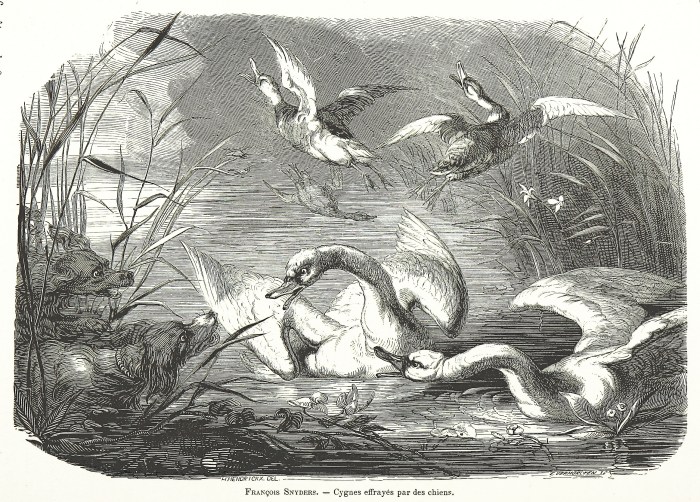
Image Credit: Frans Snyders “Cygnes effrayes par des chiens” Public Domain

Kevin Ridgeway: “Strange Rumination”


Strange Rumination

I am going to break free from this prison
that I built from twisted blueprints,
it’s ramshackle facade collapsing over me
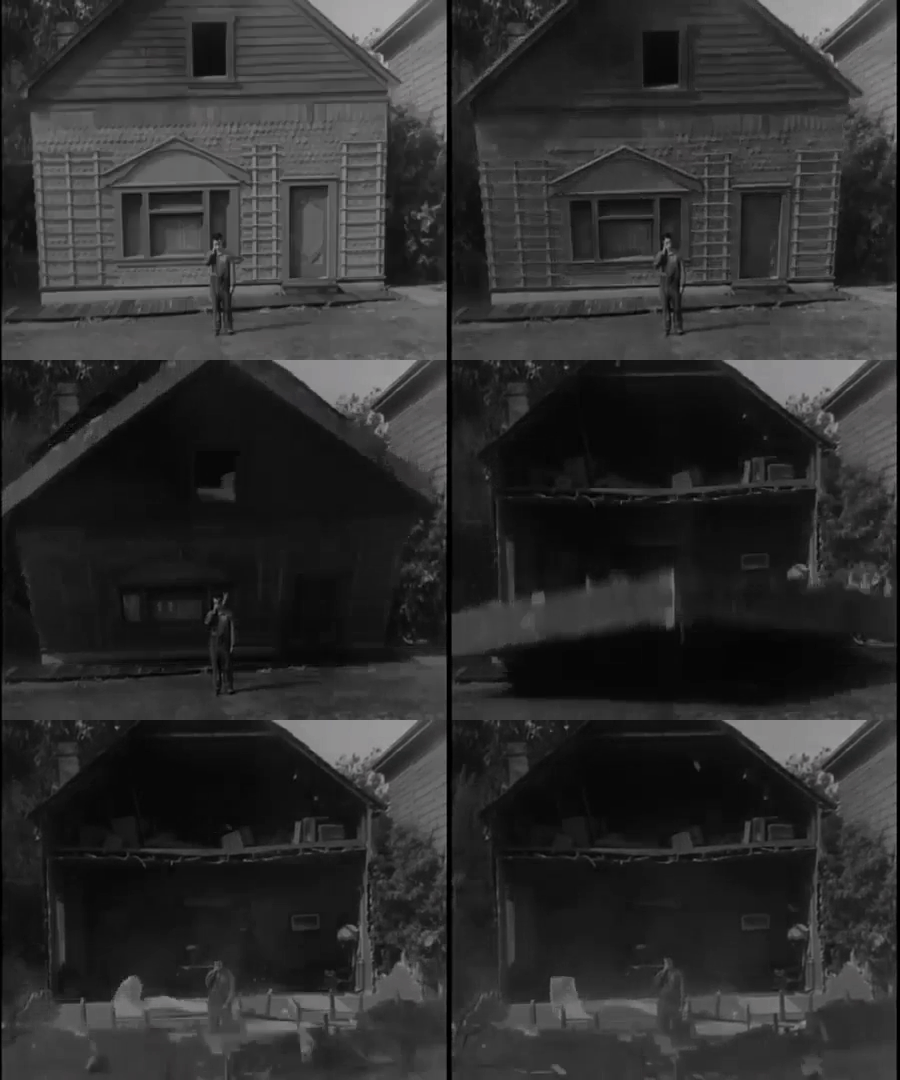
like a Buster Keaton near
death experience. I will no longer
befriend isolation, because isolation
feeds me too many bad ideas,
most of which I’ve kept to myself.
I will no longer stare out the window
at other kids while they all become
close, lifelong friends and I am dragged
further away than any man or woman
has gone before, through the same
black hole my mother entered
when she tried to start a riot
with the blade of her cutting words
but her self-destructive quest for justice
enslaved her and me, a lonesome spirit
who doesn’t believe in a god
to perform miracles because
that would make the world a fair
and balanced place where they would
embrace my individuality. 
But I’m still here, stigmatized 
and staring out of the same old window, 
passing notes with poems 
written on them in chicken scratch
underneath the front door 
no one knocks on any more, 
out there in a world of freedom 
where I can see everyone but me.


About the Author: Kevin Ridgeway is the author of Too Young to Know (Stubborn Mule Press). Recent work has appeared in Slipstream, Chiron Review, Nerve Cowboy, Main Street Rag, Cultural Weekly, Gasconade Review, The American Journal of Poetry and So it Goes:  The Literary Journal of the Kurt Vonnegut Memorial Library, among others.  A Pushcart Prize and Best of the Net nominee, he lives and writes in Long Beach, CA.


More By Kevin Ridgeway:

Fake Dad

500 Channels and Nothing On

Sally with the Accent

Good Timing


Image Credit: Clip from “Steamboat Bill Jr.” with Buster Keaton. Public Domain

Mather Schneider: “NONRETURNABLE”


NONRETURNABLE

At the bookstore we sell home divorce packets
or “kits”.
It’s strange to watch people
come in and purchase them.
Certain types will wander in smiling
like it was some kind
of afterthought.

Some men come in and ask for them
like they’re asking directions to the can.
Others come straight from the bar
and make the inquiry to the entire store
staring glossy eyed at the jury of shoppers.

Then there is the occasional family
that arrives together
the children running off to the KIDS’ KORNER
father shuffling off to GUNS AND AMMO
and mother gravitating over
to the home divorce packets.

Some people have even fallen in love
there at the divorce packet rack.
Of course, it is far more common
for two or more people
to be arguing over the last one.

When they are all gone
the sign says TIME TO ORDER MORE.

And someone always does,

bless their heart.


About the Author: Mather Schneider was born in 1970 in Peoria, Illinois. He has lived in many places. He was a cab driver for 15 years in Tucson and now lives in Mexico. He has been published in many places and has 4 books available.


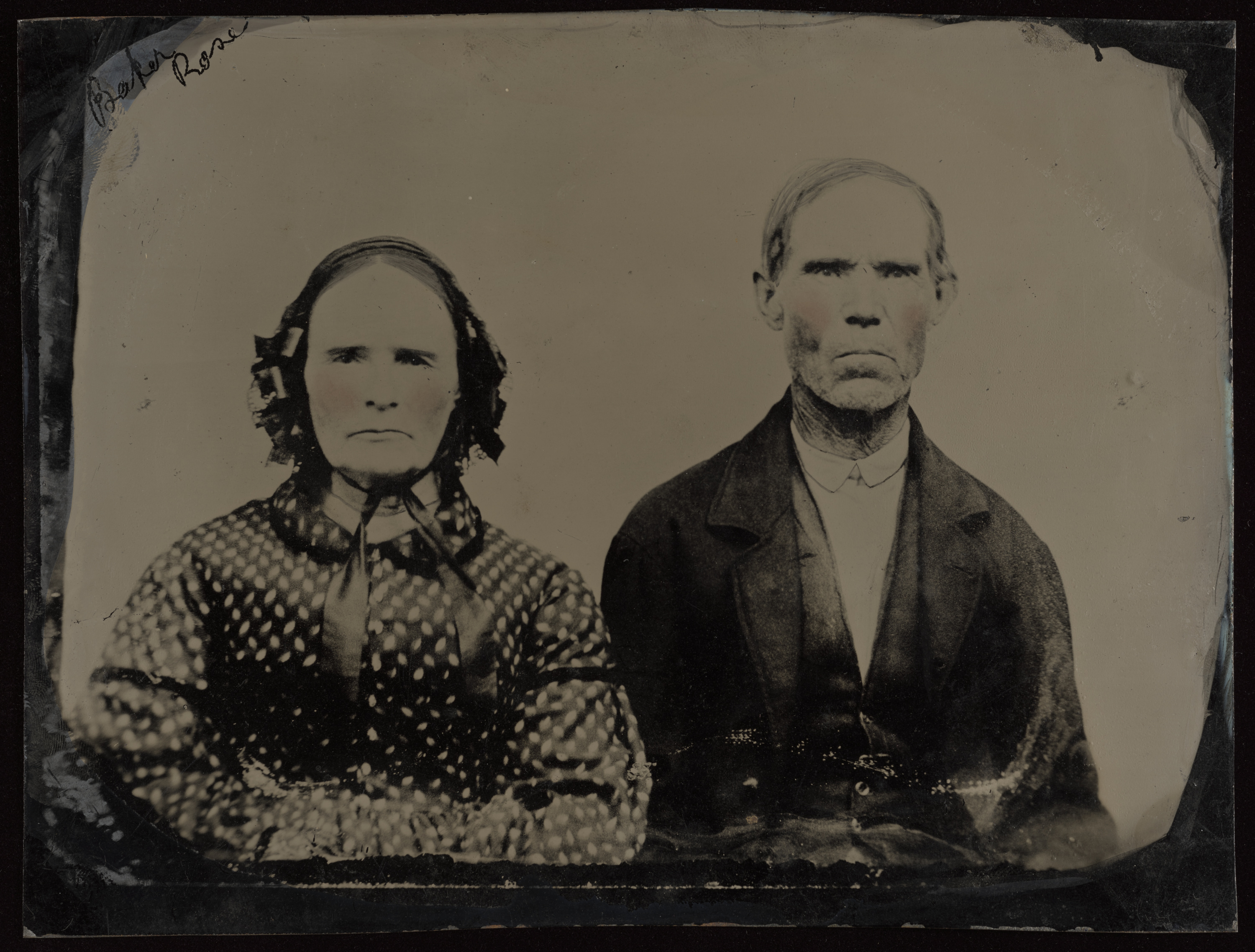
Image Credit: “Portrait of a Seated Elderly Couple” Unknown Maker (1856) Digital image courtesy of the Getty’s Open Content Program

Diana Rosen: “Dinner at Six”


Dinner at Six

Just like every night, our family sits around 
the canary yellow Formica and chrome table, 
on stick-to-your-thighs matching vinyl chairs 
eating a wintertime meal of the fifties: gray 
canned peas, home-made potato soup,
a good chunk of meat. We talk about our day, 
what my sister and I learned in school, how 
piano practice went, stories from the store,
till I can’t resist and ask still another riddle 
which reminds my father of a joke which 
reminds my mother of an even older one, 
and around the table we go, playing can you 
top this? Mom leaves to answer the phone,
returns walking slower, looking older. Mary
can’t come to clean tomorrow. Remains 
of a soldier near Seoul. Her husband. 
We lean against our padded chairs, silenced 
dancers in a frozen ballet of sorrow. For 
once, my sister and I get up, clear the table 
without being asked, keep to our room 
where we hold hands stretched between
matching corduroy-covered beds, listen 
to the murmuring voices downstairs. 


(This poem originally appeared in KISS ME GOODNIGHT, Stories And Poems by Women Who Were Girls When Their Mothers Died edited by Ann O’Fallon & Margaret Vaillancourt)


About the Author: Diana Rosen writes essays, flash fiction, and poetry with work published online and in print including Ariel Chart, Dime Show Review, and Zingara Review, and many others. An essay will appear in “Far Villages” from Black Lawrence Press, and poems are forthcoming in Poesis, Existere Journal of Arts & Literature, the art and poetry anthology, “Book of Sighs”, and a hybrid collection of her flash and poetry will be published as  “Love & Irony” by Redbird Chapbooks.


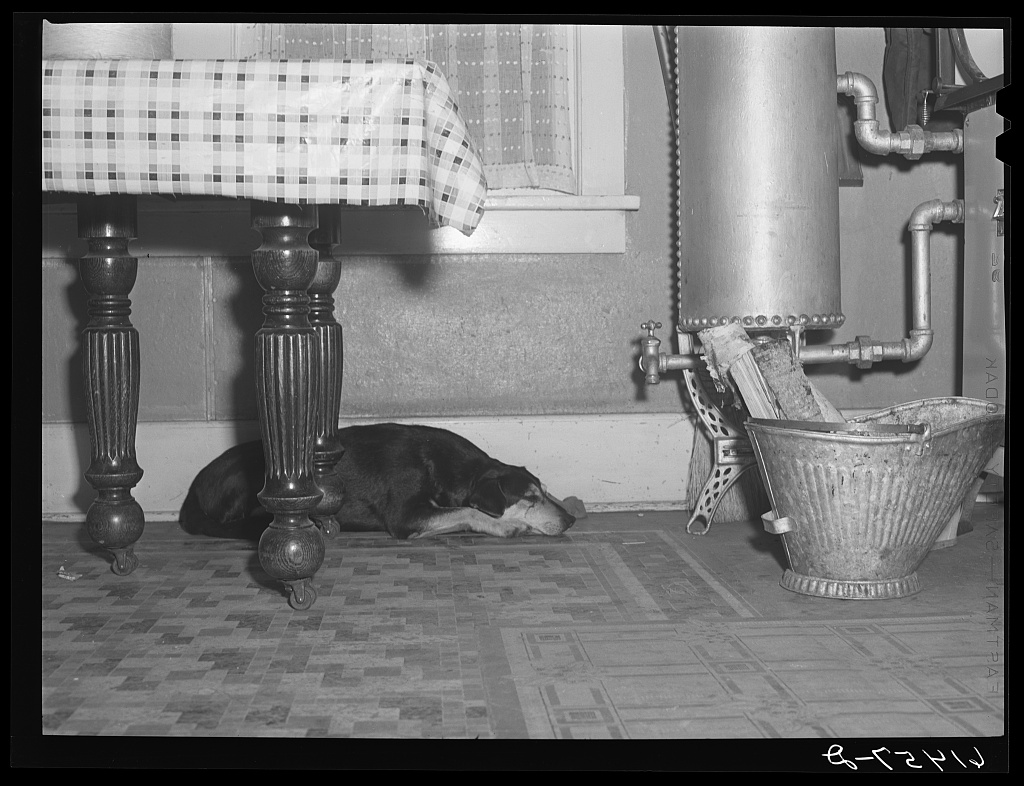
Image Credit: John Vachon ” Dog sleeping under kitchen table in farm kitchen. Cavalier County, North Dakota ” (1940)

Richard Houff: “When there’s Nothing Left to Say”


When there’s Nothing Left to Say

Picking a stone from the bed
beneath his feet, he skips them
over quiet water and counts
the rings before they sink.
At other times, he pays them
no mind. Stooping for a nice
flat one and a final throw;
he feels the texture of the stone
interweaving with his own sense
of being. This cold wet rock
carrying significance and belonging
to the nonessential; bending sunshine
hints into shadow
—moving forward


About the Author: Richard D. Houff edited Heeltap Magazine and Pariah Press Books from 1986 to 2010. He is also a journalist that’s comfortable in writing both poetry and prose. His work has been published in Academic and Arts Review, Brooklyn Review, Chiron Review, Louisiana Review, Midwest Quarterly, North American Review, Parnassus, Rattle, San Fernando Quarterly, and many other fine magazines.


More By Richard Houff:

Naked Machines


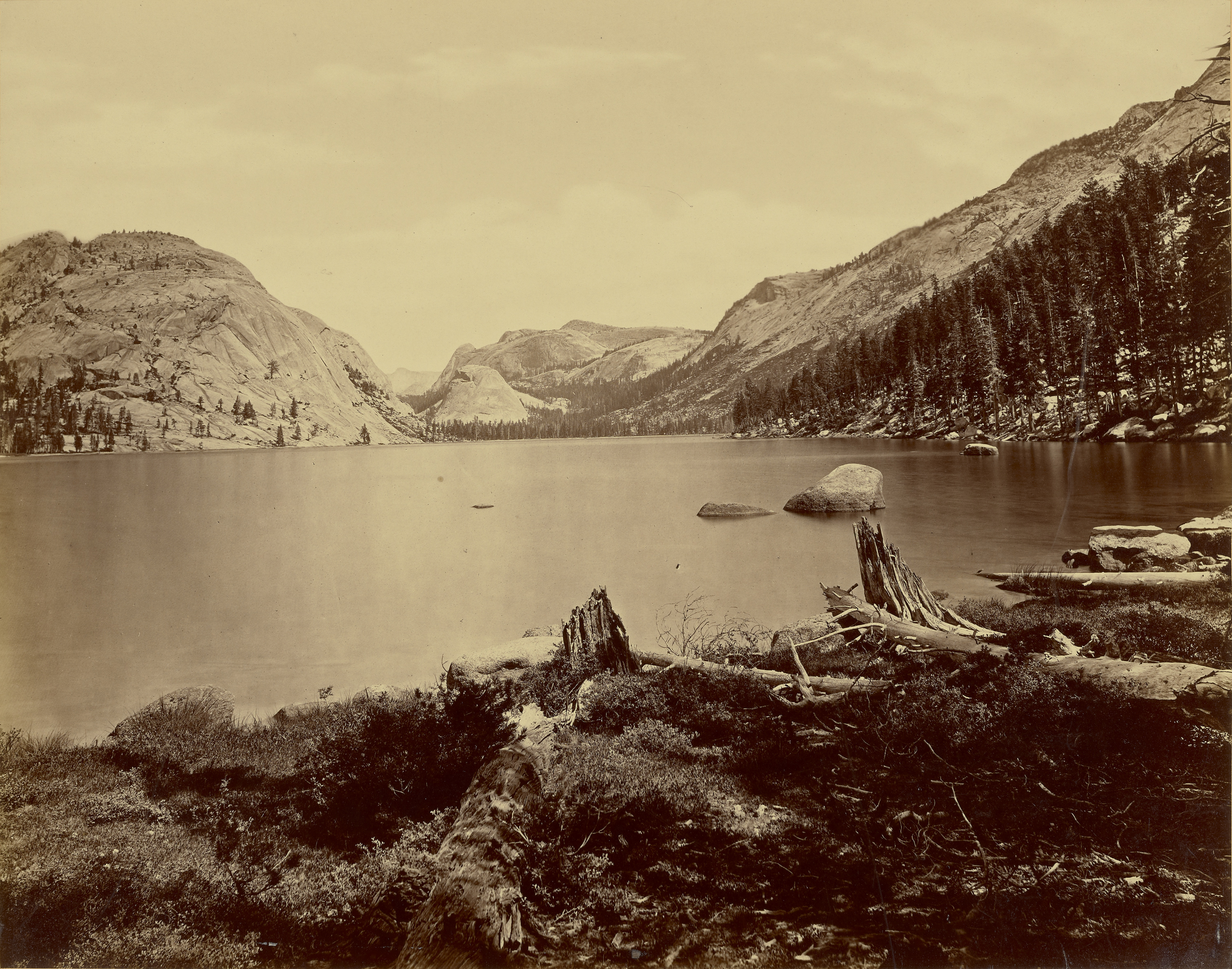
Image Credit: Eadweard J. Muybridge “Lake Tenaya. Sierra Nevada Mountains” (1872) Digital image courtesy of the Getty’s Open Content Program.

William Doreski: “A Letter to Hart Crane”


A Letter to Hart Crane

Dear Hart: two saltwater-sodden 
bundles of newsprint arrived
today, all that remains of you
after your interrupted voyage.
I scan the headlines: MAN -EATING 
SHARK exclaims one front page; SHARK-
EATING MAN reads the other.

Whoever sent me these bundles
expects me to make a papier
mâché mannequin of you 
from this briny muddle of news
from the Twenties when you roamed
waterfront bars with Emile,
the love of your lovelorn life.

No one in this grizzled town
reads poetry except pale women
recently smitten with Robert Frost. 
The mannequin will represent you
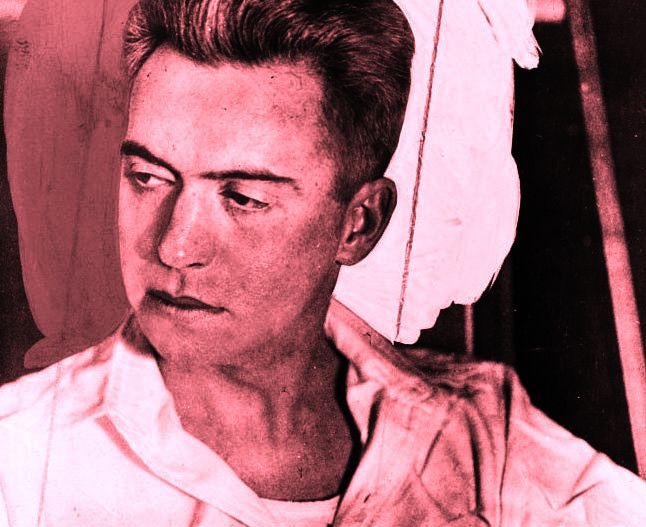
as Walker Evans portrayed you—
serious, almost sober enough
to challenge small-town rhetoric.

You can shout everyone down
by working consonants so hard
they crack underfoot like snails.
You can describe your drowning
in the most vulgar terms and earn
the pity of men who served in wars
and had lonely sex in foxholes.

Not that a sculpted paste statue
is likely to speak loudly enough
for everyone to appreciate. 
But you and I will converse
in sundown colors too subtle
to impress anyone who hasn’t 
lived a long time under the sea.


About the Author: William Doreski has published three critical studies and several collections of poetry. His poetry, essays, fiction, and reviews have appeared in many print and online journals. He has taught writing and literature at Emerson, Goddard, Boston University, and Keene State College. His most recent books are A Black River, A Dark Fall and Train to Providence. He has a blog at williamdoreski.blogspot.com.


More by William Doreski:

Remind Me What We Believe


John Dorsey: “Picker”


Picker

that’s what they called him
a finger buried deep in his nose
as a way to cope 
with a flabby stomach
& a face covered with so much acne
that it was about as baby soft
as the surface of mars

that was before everyone had anxiety
when ptsd was reserved for people with real problems
when kids threw lit matches at anyone
they couldn’t just burn at the stake 
when we ate pop rocks & pepsi
because we wanted to spontaneously combust
as if daring god to give it his best shot

his sister sat in the back of the bus
hiding from her own bloodline
denying his existence 
to sit next to cheerleaders
who would shoot spitballs  
into her greasy black hair
when she wasn’t looking

she would just laugh
as if she was in on the joke
saving her tears for after supper
when she could write it all down
in a secondhand trapper keeper
with a wrinkled picture 
of mary lou retton 
taped to the front

they used to jump rope
in their front yard
with these same kids  

their mother used to tell them 
they could be whatever they wanted

but she never had to carry 
their books in the snow
heavy with the weight of hours

when silence greeted them
in crowded halls

& blood seemed thicker
than almost anything.


About the Author: John Dorsey lived for several years in Toledo, Ohio. He is the author of several collections of poetry, including Teaching the Dead to Sing: The Outlaw’s Prayer (Rose of Sharon Press, 2006), Sodomy is a City in New Jersey (American Mettle Books, 2010), Tombstone Factory, (Epic Rites Press, 2013), Appalachian Frankenstein (GTK Press, 2015) Being the Fire (Tangerine Press, 2016) and Shoot the Messenger (Red Flag Press, 2017) and Your Daughter’s Country (Blue Horse Press, 2019). His work has been nominated for the Pushcart Prize, Best of the Net, and the Stanley Hanks Memorial Poetry Prize. He was the winner of the 2019 Terri Award given out at the Poetry Rendezvous. He may be reached at archerevans@yahoo.com.


More By John Dorsey

Creatures of Our Better Nature

The Mark Twain Speech

Punk Rock at 45

Poem for Curtis Hayes


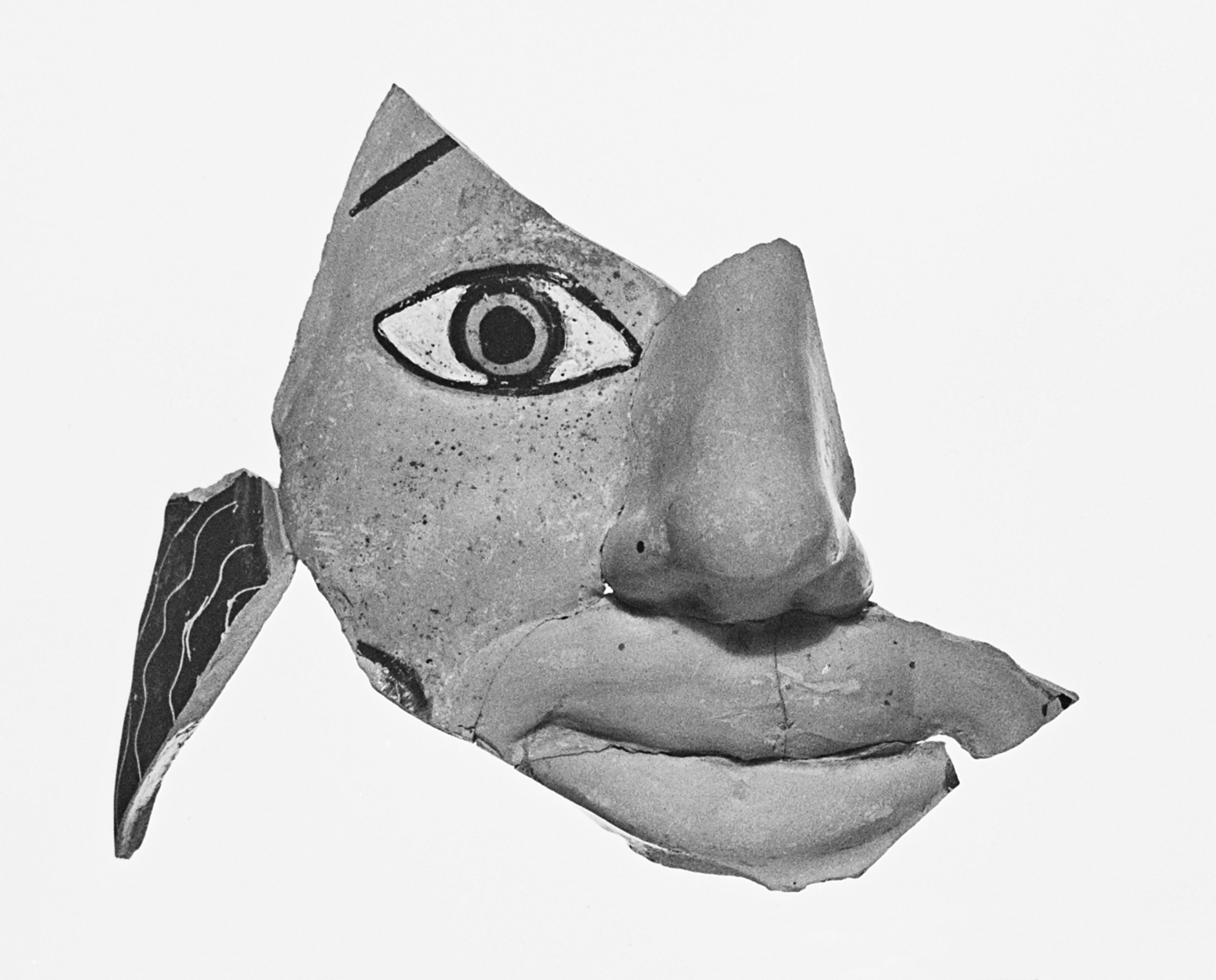
Image Credit: Attic Red-Figure Janiform Kantharos Fragment. Attributed to Onesimos, painter (Greek (Attic), active 500 – 480 B.C.) Attributed to Euphronios, potter (Greek (Attic), active 520 – 480 B.C.) Digital image courtesy of the Getty’s Open Content Program.