“Blue Collar Blues: The Poetry of Wayne F. Burke”


Blue Collar Blues:

The Poetry of Wayne F. Burke

By Arthur Hoyle


Wayne F. Burke is a populist poet living in central Vermont, where he works as a Licensed Practical Nurse. His biography on Amazon tells us that he was born in 1954 in a small Massachusetts manufacturing town. His father had served in the U.S. Marine Corps before becoming the manager of a Mobil Flying-A gas station, and his mother worked in a textile mill. Both his parents died while he was a boy, and he and his three siblings were raised by their paternal grandparents and an uncle. He graduated from Goddard College in 1979 with a degree in Regional and Urban Planning, then took to the road, traveling around the country, working in a variety of occupations unrelated to his degree, and writing. He began publishing his poetry in 2013, when he was fifty-nine years old.

It is not surprising that a poet of such blue-collar origins would write blue collar poems, notable for their blunt honesty, visceral imagery, and gritty situations à la Bukowski. But what really distinguishes Burke, for me, is his persistent use of a deadpan irony that brings both humor and surprise to scenes and situations with dark and often malevolent undertones.  This signature attitude, or tone, he uses with skilled effect to jolt his reader into a state of awareness⎯one of the high aims of all art. To sample his unique style and technique, and hear his plain, unpretentious voice, read Escape from the Planet Crouton (Luchador Press, 2019), under review here. 

A glance at the titles of the poems in this collection reveals that we are in the presence of a poet of the ordinary and the everyday, the world of highways, farms, tattoos, naps, raindrops, firecrackers, speeding tickets, seedy bars, and sordid streets. But a feral, menacing reality lurks below the surface of this world. The tattoo is worn by an employer who fires the speaker of the poem for coming to work drunk. The tattoo is the number branded on the employer’s arm by his captors in a World War II concentration camp. “Raindrops on the eaves/sound like a beautiful/loneliness,” the poet lyrically writes, but we learn immediately that he is listening to them to escape “her/talking/ in the darkened room,/high on medication/or on . . ./whatever.” The “Nap” is not a restful snooze on a cozy couch; it is the sleep of the homeless narrator in an empty parking lot behind a credit union, “the curb stone a hard cushion/but welcome one.”

Burke’s sensory language immerses the reader in this dreary underworld. “Polio” is not about polio. It describes a Halloween prank perpetrated in his boyhood by the narrator and his friend Charlie, who “stripped the thorny pulp off horse chestnuts/and put the ebony nuts into/a brown shopping bag/and threw the nuts that night/Halloween/at the Camel’s house across the street/until cops came with their shining blue/light.” Aged seven, the narrator runs away from his harsh home “down the road/along cracked and gouged sidewalk/a quarter mile to the lime kiln/loud waterfall-roar of machinery/white dust in the air and/smoky white buildings,/trucks banging along the highway/over railroad tracks.” The stubby lines with their short rhythms throb a relentless drumbeat of despair.

Many of Burke’s poems locate the reader in a scene or situation and tell a story. The stories are often edged with irony and morbid resignation. The runaway boy, frightened by a chained German Shepherd watchdog that barks at him, hightails it home to discover that “Nobody there knew that I had been gone,” a line that hints at his neglect and loneliness. While working with a highway maintenance crew he waves at a female high school classmate who drives by in her Cadillac without acknowledging him. In another incident as an adult, he tries to escape homelessness by staying in a room at the YMCA, but gives up when he cannot think of a name to enter in the “in case of emergency notify” box on the registration form. Loneliness and alienation are persistent themes in the collection. In the final poem, titled ungrammatically “It a Lie,” the speaker insists “I will never/be in need/never cry/at night/not me/not me/I am/different/breed of/liar.”

Escape from the Planet Crouton is arranged into eight sections, several of which have a clear organizing principle, but nearly all of which give voice to the speaker’s sense of isolation from the people and society around him. The first section, which opens with the epigraph “the clapboard Inn/My grandfather owned⎯/marble in the dream,” deals with the narrator’s childhood upbringing in a severe, loveless home. The next section covers his high school and college years, marked by heavy drinking, brushes with the law, and glimpses of the rawness in the wider world. There is a section on his turbulent relationships with women, including a very funny dialogue with “The Old Lady” (his wife), and scattered poems about his health and drinking problems.

An exception to the pattern is Section 3, which is prefaced by the meditative lines “busy/all/morning/watching/the/clouds,” a lead-in to poems about art and artists, where Burke finds salvation from the drabness of his ordinary existence. His portrait of Van Gogh is especially moving as it honors “canvases/like portals so vast/and deep/with emptiness/nothing could fill them/but/eternity.” He also writes about Kurt Schwitters, Jackson Pollock (“a momma’s boy”), fellow poets he met in college, and his progenitor Charles Bukowski, “a misanthrope and/hater of the herd.” Henry Miller gets a mention too.

The poem “I Write for the Factory Workers” sums up this poet’s artistic sensibility and mission, and so I quote it here in full to give the reader an undiluted dose of Wayne F. Burke.

I Write for the Factory Workers

the bums,
the burn-outs
the renegades who
left town and never returned,
the unmarried
the unheralded,
lumpen and prole
who never made the honor roll
in High School
never were handed a job
or a promotion
or a trophy,
but got probation,
parole,
an eviction notice,
a Dear John letter,
a court summons,
a pink slip,
a knuckle sandwich,
a room in a nut house,
a ride in the paddy wagon,
a jail sentence,
divorce papers,
bad acid,
food poisoning,
herpes simplex,
crabs,
bronchitis,
mononucleosis,
and hangovers that
lasted for days.

It remains to ponder the significance of the title of this volume, and the design of its cover, which pictures a pink and yellow science fiction rocket ship zooming across the star-filled night sky. At the start of Section 5, Burke tells us that “in Croutonville everyone is guilty/until they prove themselves innocent;/the bums gather in the park,/and hot-rodders roar up and down/the empty streets;/dogs bark at all hours/of the spot-lit nights,/and the primary cause of death/is O.D.”

Croutonville sounds very much like the hollowed-out core of the American dream of which so many are now dispossessed. Burke has made his escape in the rocket ship of poetry.


Escape from the Planet Crouton is available via Luchador Press


About the Author, Arthur Hoyle: I am the author of The Unknown Henry Miller: A Seeker in Big Sur (Skyhorse/Arcade March 2014). I have also published essays in Huffington Post, Empty Mirror, Across the Margin, and Counterpunch. My second non-fiction book, Mavericks, Mystics, and Misfits: Americans Against the Grain, was published March 17, 2020 by Sunbury Press.

Ben Nardolilli: “Low Risk Fuel”


Low Risk Fuel

Paramedics, attend to this body,
open up your stretcher arms
and take me with you on a healing route
to a bed at last,
put me in a vehicle blaring and bright,
just as fierce and fast at those flames
which set their embers in me

I got out early, among the first,
but I pressed plenty of bad buttons
on the way down,
every time the doors opened up for me
I was on a burning mezzanine,
escape was difficult, I laid down chords
and tripped over half of them

Go ahead, take him and her away,
if you think they are worse,
mottled with damage and losing parts,
my diagnosis is no telescope,
I will stay here at the site and continue
to feel my future melting,
looking at the fire I left behind.


About the Author: Ben Nardolilli currently lives in New York City. His work has appeared in Perigee Magazine, Red Fez, Danse Macabre, The 22 Magazine, Quail Bell Magazine, Elimae, The Northampton Review, Local Train Magazine, The Minetta Review, and Yes Poetry. He blogs at mirrorsponge.blogspot.com and is trying to publish a novel.


More by Ben Nardolilli:

Large Bull-Thistle


Image Credit: “VIEW OF ELEVATOR SHAFT FROM FIRST FLOOR TO SKYLIGHT, LOOKING SKYWARD, NORTH” The Library of Congress

Howie Good: “The Third Reich of Dreams”


The Third Reich of Dreams

A professor emeritus was reading in his apartment when the walls around him disappeared. From the street outside, a loudspeaker boomed, “According to the decree of the 17th of this month on the Abolition of Walls. . .” It was now hard to be slow and small. A factory owner had been unable to muster a salute during a visit from the governor-general. He struggled for half an hour to lift his arm, then his backbone just simply broke. Officers pointed a shotgun at his face and an assault rifle at his chest. There was raucous cheering. Banners with the slogan “Public Interest Comes Before Self-Interest” fluttered in endless repetition along a street.

&

In place of street signs, posters had been put up on every corner, proclaiming in white letters on a black background the 20 words people weren’t allowed to say. The first was “Lord”; the last was “I.”  About a week later, I was awakened in the middle of the night by the ringing of the telephone. A dull voice said, “This is the Monitoring Office.” I found myself begging and pleading that this one time I be forgiven – please just don’t report anything this one time, don’t pass it on, please just forget it. The voice remained absolutely silent and then hung up without a word, leaving me in agonizing uncertainty. Somehow I finally fell back to sleep. I dreamed that it was forbidden to dream, but I did anyway.


Sources:

Neglected Books

The New Yorker


About the Author: Howie Good is the author most recently of Stick Figure Opera: 99 100-word Prose Poems from Cajun Mutt Press. He co-edits the online journals Unbroken and UnLost.


More by Howie Good:

“Maiden Voyage”

“Spy Culture”

“The Anxiety of Influence”


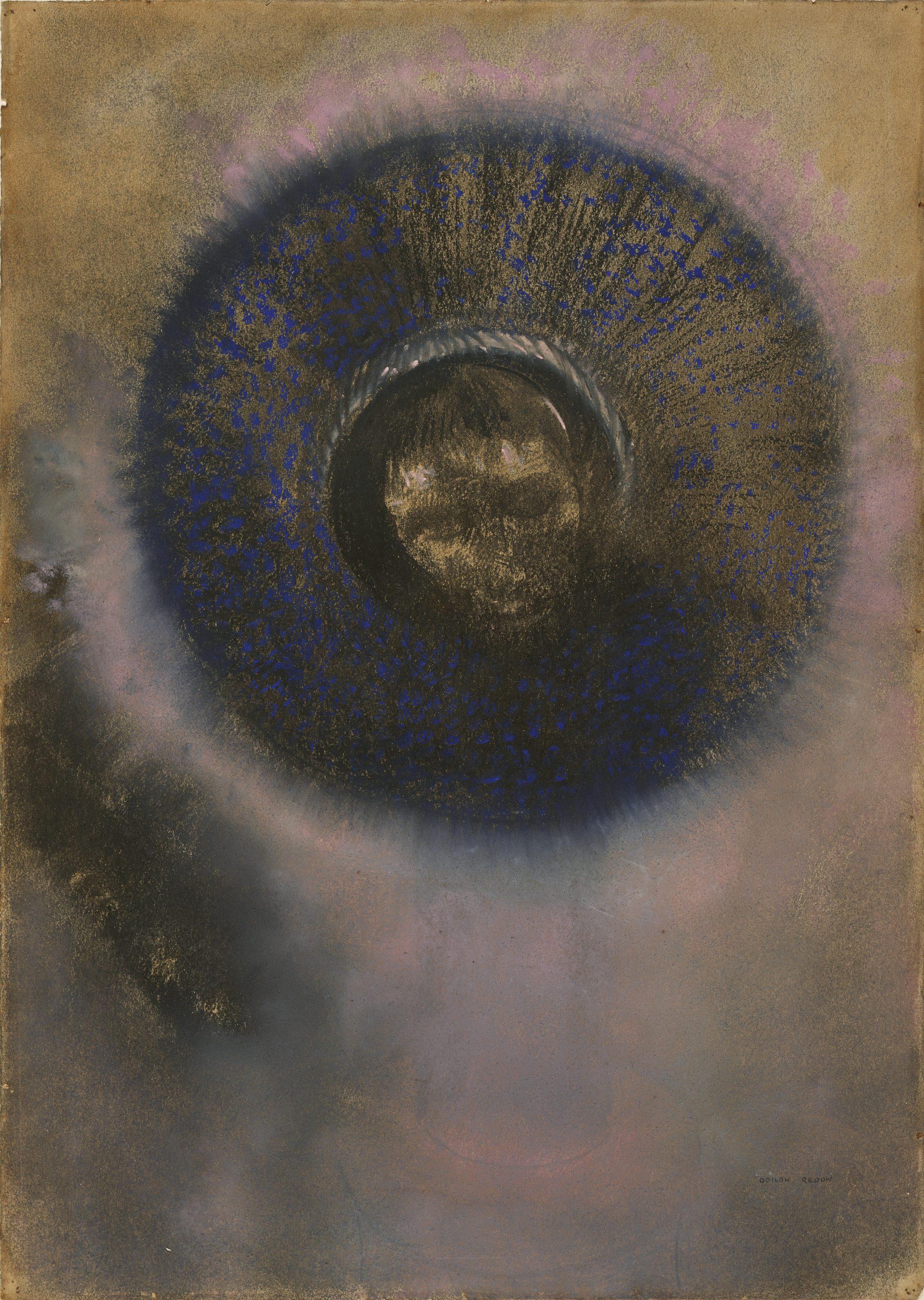
Image Credit: Odilon Redon “Head within an Aureole” (about 1894–1895) Digital image courtesy of the Getty’s Open Content Program.

Matthew Borczon: “In 2010”


In 2010

Afghanistan
embedded
the war
in my
chest like
a pacemaker

I still
feel the
cold metal
every time
I salute
the flag


About the Author: Matthew Borczon is a writer and a Navy sailor from Erie, Pa. He has published widely in the small press and written 12 books of poetry; the most recent the PTSD Blues was released through Rust Belt Press in 2019. He works hard as a nurse for developmentally disabled adults and works even harder at forgetting the war he served in in 2010.


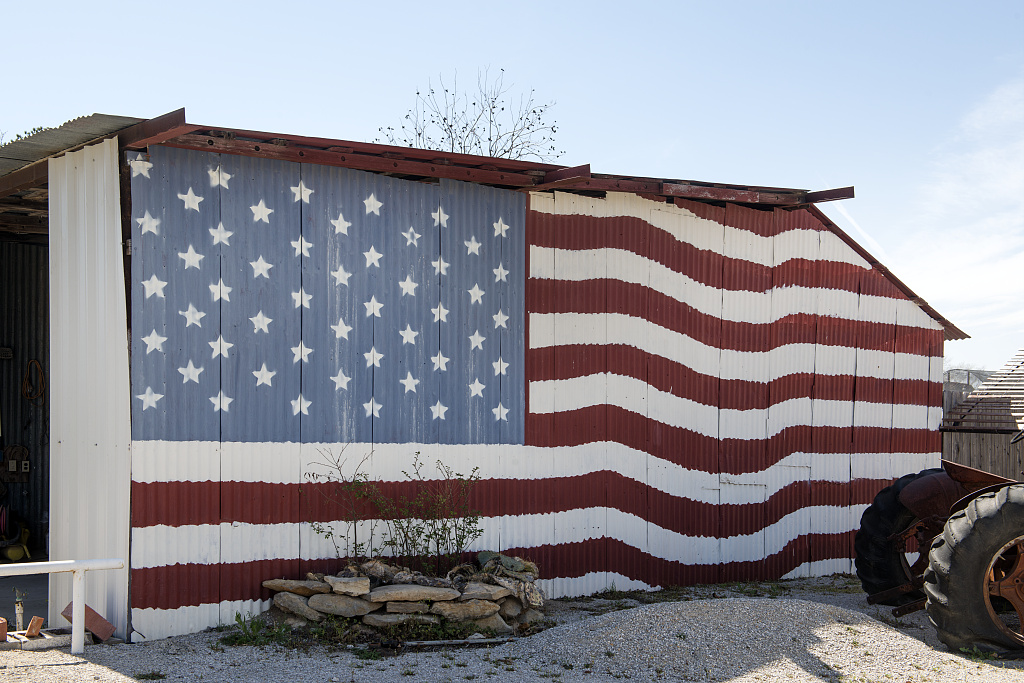
Image Credit: Carol M. Highsmith: “A colorful rendition of the American flag, painted on the side of a large utility shed in the town of Carbon in Eastland County, Texas” (2014) The Library of Congress

Seth Jani: “Forest Dream”


Forest Dream

I knelt down to touch the multiplicity
bursting from the soil. The red hoods
met my fingers. Their little figures bowed.
I dreamt of toads and the dark doors of fable,
of infectious sleep traveling the spores
of wind, of the countryside fallen into itself
forming a shadow image: inverted houses,
underground fruits, chromatic summers
blooming in reverse. And the mushrooms,
in their gnarled approximations,
running, like lunatics, through the streets.


About the Author: Seth Jani lives in Seattle, WA and is the founder of Seven CirclePress (www.sevencirclepress.com). Their work has appeared in The American Poetry Journal, Chiron Review, Rust+Moth and Pretty Owl Poetry, among others. Their full-length collection, Night Fable, was published by FutureCycle Press in 2018. More about them and their work can be found at www.sethjani.com.


More By Seth Jani:

Vesper


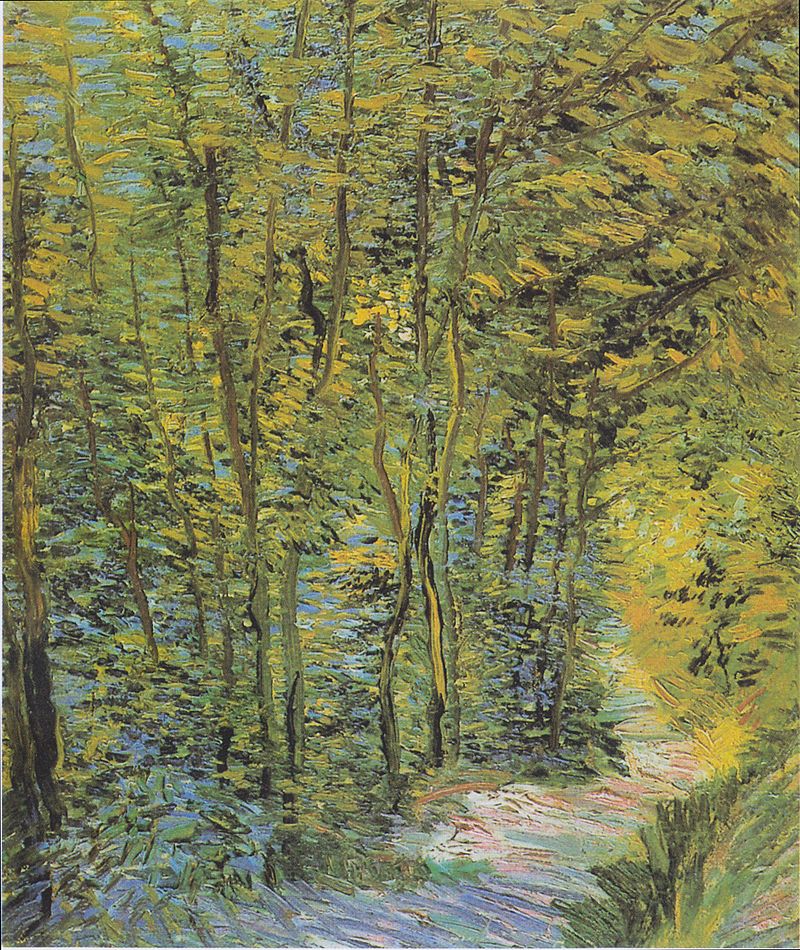
Image Credit: Vincent Van Gogh “Path in the Woods” (1887) Public Domain

Thomas M. McDade: “Puff of Eternal Hot Air”


Puff of Eternal Hot Air

Sometimes I think I sleepwalked 
Into an obliteration chamber that failed
Leaving me merely invisible

Take the time stranded in a long line
At a Dollar Tree, while the clerk inflated
A bunch of balloons and that break 

In the action gave an elderly woman time 
To take the floor to share a piece of her life 
She tells my wife, “Someday you’ll do this”

While holding up a bunch of artificial flowers
She’s going to place on her husband’s grave
I might as well have been hanging in effigy 

Off an errant balloon that the A/C 
Is bouncing along the ceiling for tots
Considering methods to go airborne

Her hubby fought in WWII and they were
Engaged before she finished high school 
He insisted on a diploma before wedding

I imagine inhaling helium and freaking 
Her out as if my voice were from a crypt
Landscaped with palms tall and plastic

Outside I say no blossoms or Mylar tributes
For me and I recall the clerk revealing that
The world supply of helium is waning

I release my some-morning-I-will-not-rise 
Fear as a mere puff of eternal hot air as any 
Man acquainted with invisibility might do


About the Author: Thomas M. McDade is a 74-year-old resident of Fredericksburg, VA, previously CT & RI. He is a graduate of Fairfield University, Fairfield, CT. McDade is twice a U.S. Navy Veteran serving ashore at the Fleet Anti-Air Warfare Training Center, Virginia Beach, VA and at sea aboard the USS Mullinnix (DD-944) and USS Miller (DE / FF 1091).


Image Credit: Carol M. Highsmith “Hot Air Balloon Jubilee Festival, Decatur, Alabama” (2010) The Library of Congress

Stephen Barile: “Engine Block”


ENGINE BLOCK

On the Lost Coast 
in dense fog, 
from a weathered cliff
held by wildflowers and weeds,
a warning-bell clangs
every five seconds
for eight hours straight.
Boats that venture too close
near the anchoring ground 
enter a sea-churned chaos, 
Anguish of white foam
and piteous self-destruction.
On the shore at Shelter Cove,
a rusted, cast-iron engine block,
Barr Marine V-8,
valve-covers torn off
rocker arms crumbling
flywheel frozen, resting
in a cobble field
sea-grass smelling profane.
Where were the mountings
of the pleasure craft 
that surrounded you?
Way too heavy 
for the price of salvage
battered inward
with each succeeding tide,
to the land 
where it came from. 
The sea’s contribution, 
a predictable pull 
of sun and moon
in the maelstrom.


About the Author: Stephen Barile, a Fresno, California native, was educated in the public schools, and attended Fresno City College, Fresno Pacific University, and California State University, Fresno. He is the former chairman of the William Saroyan Society, and a long-time member of the Fresno Poet’s Association. Mr. Barile taught writing at Madera Center Community College, lives and writes in Fresno. His poems have been published extensively, including The Heartland Review, Rio Grande Review, The Packinghouse Review, Undercurrents, The Broad River Review, The San Joaquin Review, Haight-Ashbury Literary Journal, Beginnings, Pharos, and Flies, Cockroaches, and Poets.


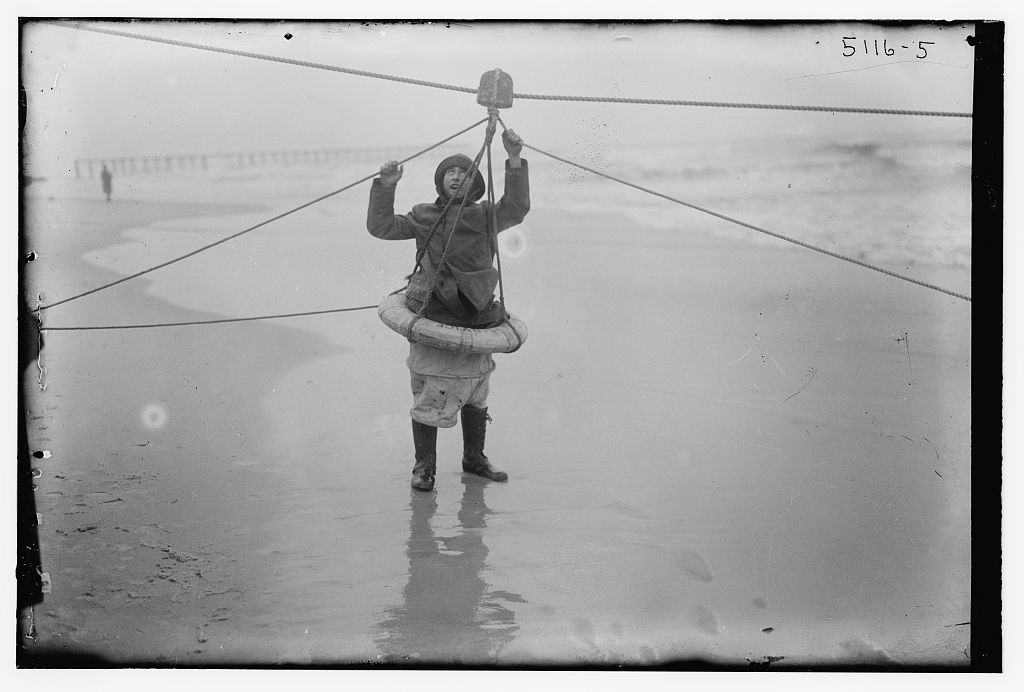
Image Credit: “Man demonstrating ship rescue apparatus” Bain News Service, The Library of Congress, Public Domain

L.B. Sedlacek: “Higher Paint”


Higher Paint

A purple and white jitterbug – 
maybe a few times each year
exploding from the sun’s surface:
red blasts of solar flares, charged
particles.

October 2003 the sun blasts
knocks out satellites,
disrupting power grids.  The
rain was magnificent.

A northern aurora (the aurora
borealis) emerges as a glowing
ring.  It alters every 5 seconds.
The motivation – elemental curiosity:
this is what happens when the sun
collides with oxygen.


About the Author: L.B. Sedlacek is an award winning poet and author with poetry and fiction appearing in many different journals and zines.  Her latest poetry books are “The Adventures of Stick People on Cars” (Alien Buddha Press), “The Architect of French Fries” (Presa Press) and “Words and Bones” (Finishing Line Press.)  She is a former Poetry Editor for “ESC! Magazine” and also co-hosted the podcast for the small press, “Coffee House to Go,” for several years.  She teaches poetry at local elementary and middle schools and publishes a free resource for poets, “The Poetry Market Ezine.”  In her free time, LB enjoys swimming, reading, and taking guitar lessons.


More By L.B. Sedlacek:

The Moon’s Trees


Image Credit: “Aurora Borealis over the US Navy Ice Camp Sargo” Public Domain

Jonathan K. Rice: “AAA”


AAA

My car gassed up, 
oil changed, 
tires balanced and rotated.

Roadworthy
all I needed 
was roadmaps. 

I approached the rep
at the counter, 
a young woman

with a Gothic look −
black hair, pale skin, 
black nail polish,

silver nose ring. 
With a smile she asked
how she could help me.

I told her I needed maps. 
Maps of states, cities,
the Eastern Seaboard. 

A few west of the Mississippi.
She was curious where I was heading. 
I told her at the time I wasn’t going that far

but I didn’t trust my cell phone, GPS,
computers and satellites.
What if there’s a Zombie Apocalypse?

What good will technology be?
And who can even read a simple roadmap these days?
Her jaw dropped. She slapped the counter

with an open hand. Exclaimed, 
That’s what I’ve been saying! You never know!
Here, take all the maps you want!

Her coworkers looked on 
as she gave me one of everything.
I left arms full, bottled water,
nonperishable food and can opener next on my list.


About the Author: Jonathan K. Rice edited Iodine Poetry Journal for seventeen years. He is the author of two full-length poetry collections, Killing Time (2015), Ukulele and Other Poems (2006) and a chapbook, Shooting Pool with a Cellist (2003), all published by Main Street Rag Publishing. He is also a visual artist. His poetry and art have appeared in numerous publications, including Cold Mountain Review, Comstock Review, Diaphanous, Empty Mirror, Gargoyle, Inflectionist Review, Levure Litteraire, The Main Street Rag, Wild Goose Poetry Review and the anthologies, Hand in Hand: Poets Respond to Race and The Southern Poetry Anthology VII: North Carolina.


More by Jonathan K. Rice

“Springmaid Pier”

“Cards”

“Stravinsky in the Shower”


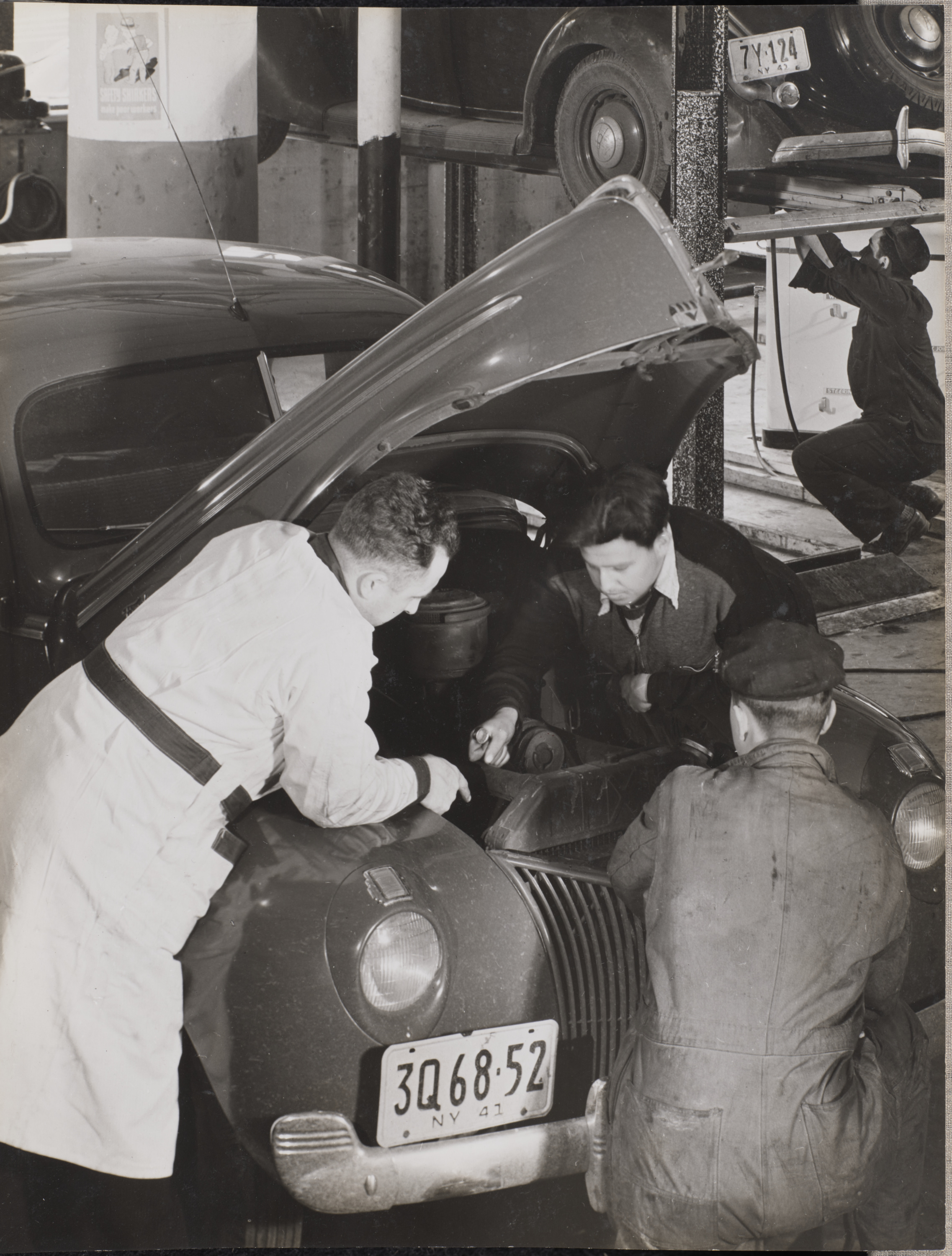
Image Credit: Arnold Eagle “Three men work under the hood of a car” (about 1940–1942) Digital image courtesy of the Getty’s Open Content Program.

Larry Smith: “Union Town”


Union Town

Once a month for decades
he brought home the Catholic Worker
folded gently and laid it on kitchen table,
where it would be picked up, read, 
folded, and laid back again.
A fabric in their lives,
like the Catholic missals
she kept in rubber bands
folded in her dresser drawer.
He spoke little of the mill,
except of friends, left it
at the mill gate where others
might stop in bars to drink
their bitterness away.

Their children are taught by Catholic sisters
of Charity, Franciscans who share
Christ’s preference for the poor by
having them bring cans of food each month,
and at some secret signal near recess
gently bowl them forward on the wooden floor—
twenty cans of green beans, corn, tomato sauce
reaching the blackboard with sweet laughter,
as the Sister feigns surprise, then bends
to gather them up, and they all
bow their heads in thanks.


About the Author: Larry Smith is a poet, fiction writer, and editor-publisher of Bottom Dog Press in Ohio where they feature a Working Lives and an Appalachian Writing Series. He is also the biographer of Kenneth Patchen and Lawrence Ferlinghetti. He lives in Huron, Ohio, along the shores of Lake Erie.


More By Larry Smith: 

No Walls

The Story of Rugs

Wages


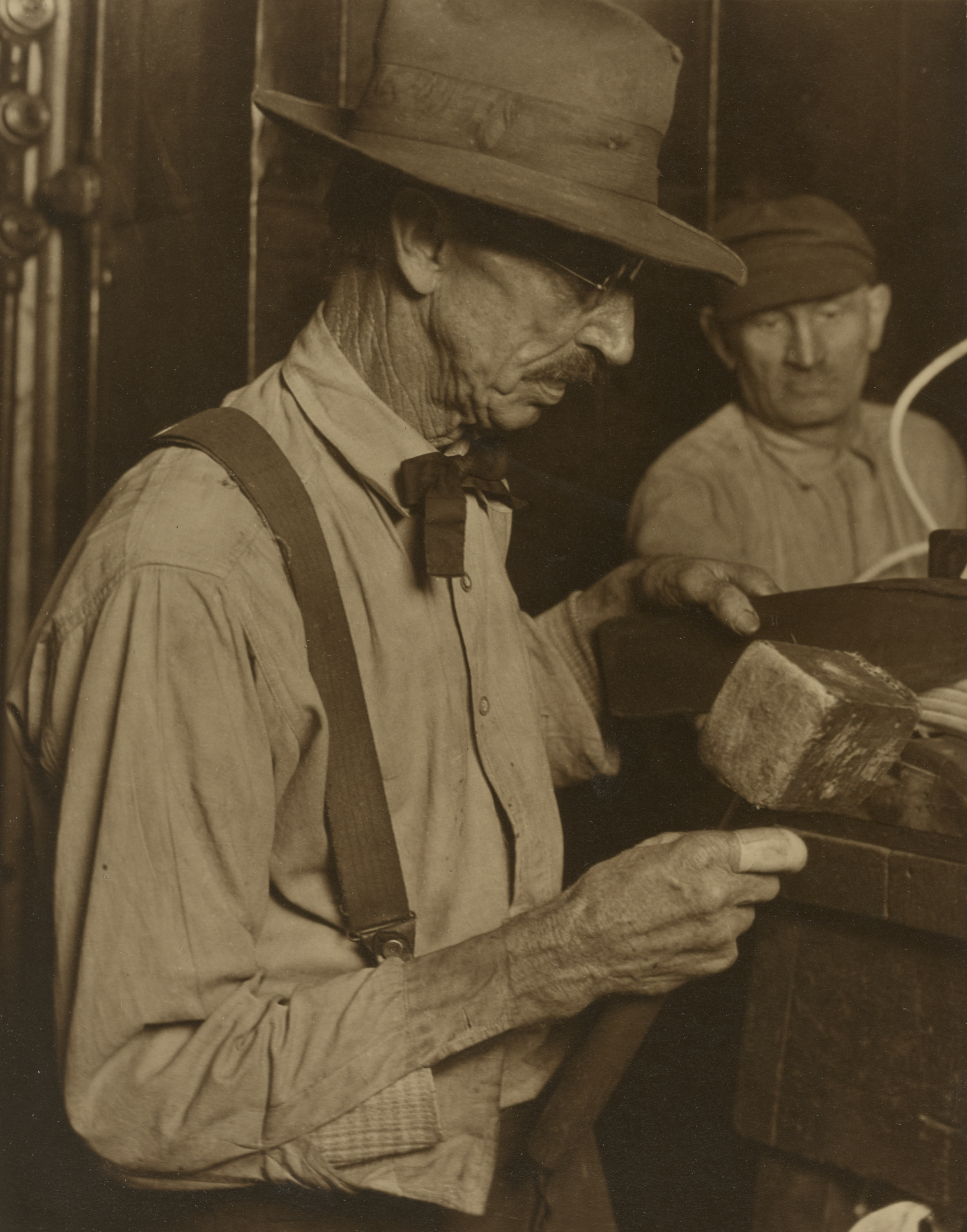
Image Credit: Lewis W. Hine “Furniture Factory Worker or Printer?” (1930s) Digital image courtesy of the Getty’s Open Content Program.