SATURDAY POETRY SERIES PRESENTS: MARISA CRAWFORD


By Marisa Crawford:


I’m too sensitive for this world / this Foot Locker

Oh right, the bomb
Sorry so boring
300-year-old wiener dog
China teacups rimmed in gold
Oh right, underwater
Backwards somersault, no
Outside w/ the flowers
Uhhhhhhhhhhhhhh like it matters
9th grade Metallica disaster
Cutest hottest-pink dress ever
Janie / not Janie / not over
Summer that bled into forever
See that backslash that’s the gash in my left arm
See that scar that’ll always be there
Janie’d be like, so show me so stop doing it
So eat something, J
So coconut cake bonne bell
You shoved it in my face / posted on my wall
Smell it, smells like a memory
Smells like a fake cake
This metal gate has been a gift to me
That metal guy at the party with the long hair and the gift for
Piercing the beer can / swallowing it all in one gulp
Was that the first time
He like, put his arms around me from behind
Somehow I willed it to happen w/ my mind
& then there was / a porch swing
Macbeth, my whole life, my death, everything


Poem

I like being a lil bit mean to Stephen
Wearing things that look architecture-y
Eating apple pie with my ice cream
I guess I couldn’t help it
I imagined my wedding brunch
on the tabletop catalog spread
called “A Perfect Match”
Girls at work who talk on the phone
in another language, girls who don’t
She asks me where I live in New York City
I don’t live there, I don’t live anywhere
Clip art of a nine-year-old
girl climbing a tree
leaning on her elbow
skinning her knee
VP of Creative sending an email
with the subject line “The Future”
You calling my tampon a “little mouse”
as you pulled it out


Today’s poems appear here today with permission from the poet.

Marisa Crawford is a New York-based writer, poet, and editor. She is the author of the poetry collections Reversible (2017) and The Haunted House (2010) from Switchback Books, and the chapbooks Big Brown Bag (Gazing Grain) and 8th Grade Hippie Chic (Immaculate Disciples). Her poetry has appeared in publications including Prelude, Bone Bouquet, Glittermob, and No, Dear, and she’s written about feminism, art, and pop culture for Hyperallergic, BUST, Bitch, Broadly, The Hairpin, and elsewhere. Marisa is the founder and editor-in-chief of Weird Sister, a website and organization that explores the intersections of feminism, literature, and pop culture.

Guest Editor’s Note: Reading Marisa Crawford’s poems reminds one of the feeling you get while looking through a Viewmaster. The reader experiences a gut punch of image and sensory recognition as Crawford takes the reader to the a New York City street, to a party, to a phone screen, face-to-face with a tampon. She plays on our olfactory senses. Macbeth shows up and makes us briefly feel those feelings of doom and futility in the face of human fallacies, blood trails and all. In “Poem” we confront the absurdity and futility of office life. Crawford writes, “VP of Creative sending an email / with the subject line ‘The Future,’” and with that the future unfolds. What will it taste like? What will it remind us of? She is a master of non-sentimental nostalgia. There’s a lightness of being to reading these poems, but the poems themselves are not light. They speak of the feminist and the feminine, the collective experience of being alive in these weird times.

Want to read more by and about Marisa Crawford?
Marisa Crawford’s Official Website
Buy Reversible from Swtichback Books
Weird Sister


Guest Editor Natalie Lyalin is the author of two books of poetry, Blood Makes Me Faint, But I Go For It (Ugly Duckling Presse 2014), and Pink & Hot Pink Habitat (Coconut Books 2009), as well as a chapbook, Try A Little Time Travel (Ugly Duckling Presse 2010). She is the co-editor of Natural History Press. She lives in Philadelphia and is working to befriend a flock of crows.

A NOTE FROM THE MANAGING EDITOR:

After nearly ten years as Contributing Editor of this series, the time has come for change. I am thrilled to expand my role to Managing Editor and provide the opportunity for fresh voices to contribute to this ongoing dialogue. Today and in the coming weeks, please help me welcome a series of guest editors to the newest incarnation of the Saturday Poetry Series.

Viva la poesia!
Sivan, Managing Editor
Saturday Poetry Series, AIOTB


SATURDAY POETRY SERIES PRESENTS: ALICE IN GREENPOINT


from Alice in Greenpoint
By Iva Ticic:


Alice in Greenpoint

Four glasses of fine red wine at a dinner party in Brooklyn
and you go from being a wallflower to discussing Trieste.

Though they mostly wanted to speak of Girls at this soirée—
An irony which caught in the mind of the writer
as an annoying bug caught in the web of a spider.

These four girls in Greenpoint discussing a show
about the four girls in Greenpoint
mirroring lives.

But I felt like Alice, the one from the book,
crossing on to the other side
of the baroque looking mirror the apartment contained— a
s if I haven’t been looking as it is
to check if I’m worthy, in presence of smooth skirts.

Meanwhile, the wine glasses have been placed on a puzzle
portraying Manhattan in three hundred pieces

minus one.

For there’s a piece missing in midst of the chatter
the clinking and clacking
with edges of crystal leaving a stain ring
on the Chrysler building.

The point of fixation and hypnotic frustration;
this elaborate jigsaw
without the very part which would have provided
someplace to draw meaning—

While white rabbits and grinning cats
are starting to be born
in the pregnant pauses of the evening.

And yet it gapes open, this odd imperfection,
shaped like a bug that chewed through the web

and eerily left.


On Loan

I have eavesdropped all day in search of something
beautiful.
Under Brooklyn Bridge where sewers funnel into beaches—

I have found it in the reverb
stolen from the unsuspecting:

The girl who flings her Conway bag
back and forth, a Sunday church bell—

Chiming for the crimson palette,
the holy shimmer of skyscraper
swimming on water.

I mean just look at that shit.

The boys who wrestle in shaggy grass,
strangling each other with an

Attitude adjustment
after
Attitude adjustment.

The lovers who say nothing.

A jet ski slits the water open like a wound;

I smell like coffee on the weekends,
if that’s something you’re into.


The Interpreter

I want to live in the hollow
of your Steinway piano.

Right there beneath the
slender silk of peeled ebony.

I want to become
a part of your conversation
between the pulse
of your fingertip symphony
and the dignified elephant
which you saddle and tame.

I want to learn the dialects
of this foreign arena.

Where are you taking me?

Give me the keys by which to decipher
the treble and bass
needed in order
to follow the melody
of tangy disorder.

Please bring me along.

I can be very still
while you improvise symphonies,
ponder the harmonies—

I’ll translate the hum.


Today’s poems are from Alice in Greenpoint (Finishing Line Press, 2015), copyright © 2015 by Iva Ticic, and appear here today with permission from the poet.

Alice in Greenpoint: “Welcome to the world of Alice in Greenpoint where everything is an eerie reflection of itself but slightly different — the global village tilted and on air. Our speaker strides through a foreign landscape at once knowing and homesick – but for where? The traveler is in constant exile – but the poems are witty and joyous, brimming with expectancy and hunger. Such a debut collection!” –Marie Howe, award-winning author of What the Living Do and the State Poet of New York

Iva Ticic is an internationally published bilingual poet from Zagreb, Croatia, who has lived, worked and studied in the US, Honduras, and now China. Her poems and short stories appear in Four Way Review, Prelude Magazine, and The Tishman Review. In 2013, she was awarded the Academy of American Poets John B. Santoianni Award for Excellence in Poetry for her poem, “The Interpreter.” Alice in Greenpoint is her first published poetry collection.

Guest Editor’s Note: Ticic’s poetry rings the many changes of dislocation: in place, in time, in the long struggle to become one’s own self against all challenges. She maps the many misunderstandings we both try and fail to overcome in our lives. Even when we believe we do understand one another, we still wonder if we got it all. The title poem, “Alice in Greenpoint,” makes, among others, the excellent point that even if some people feel themselves seen, really seen, others are always standing nearby, looking on, amazed, mystified. There is always a missing piece. In “On Loan,” the speaker walks through the city looking for beauty, picking up bits of language like pebbles, keeping some, tossing others back into the water. “I have found it in the reverb,” she writes. In “The Interpreter,” she documents the place in between where the translator lives, nearly invisible, the only one to hear “the melody of tangy disorder.” Iva Ticic’s poems are built of the recognizable and quotidian, but also spangled with arresting phrases: “I keep dreaming of parallel lines/slowly diverging/like the first sign of trouble/between lovers” or “As if . . . to believe in something, anything—could never be innocent,” or “the holy shimmer of skyscraper/swimming on water.”

Want to read more by and about Iva Ticic?
Four Way Review
COLDNOON
Buy Alice in Greenpoint from Finishing Line Press

Originally from MN, Guest Editor Julie Hart has lived in London, Zurich and Tokyo and now in Brooklyn Heights. Her work can be found in PANK Magazine, The Rumpus, Vol. 1 Brooklyn, the Brooklyn Poets Anthology and at juliehartwrites.com. She is a founder with Mirielle Clifford and Emily Blair of the poetry collective Sweet Action.


A NOTE FROM THE MANAGING EDITOR:

After nearly ten years as Contributing Editor of this series, the time has come for change. I am thrilled to expand my role to Managing Editor and provide the opportunity for fresh voices to contribute to this ongoing dialogue. Today and in the coming weeks, please help me welcome a series of guest editors to the newest incarnation of the Saturday Poetry Series.

Viva la poesia!
Sivan, Managing Editor
Saturday Poetry Series, AIOTB

“Fish Performance” By Sean Karns


Fish Performance

                        After Viewing a Lida Aboul photograph

You place the fishbowl in the freezer.  You sit on the couch and knit gloves, though it does not take long for the goldfish to freeze.  The poor goldfish, when removed from the freezer, it has a permanent O shaped mouth, and the fins are held in motion.  You chisel the goldfish into a novelty ice cube.  You raise the goldfish to your mouth; hold it in your palm as if lifting a child’s face and place a wishful kiss.  A little secret kept to yourself, and I can only think of your childhood: too many goldfish flushed.  Now you hold your memories in ice.  I look at your lips, wanting to be your strange ritual.

.

“Fish Performance” first appeared in the Los Angeles Review and is featured in the book Jar of Pennies.

.

About the Author: Sean Karns has an MFA in creative writing from the University of Illinois and a BA from The Ohio State University. He is the author of a collection of poetry, Jar of Pennies, and his poetry has appeared in the Birmingham Poetry Review, Hobart, Rattle, Pleiades, Los Angeles Review, Cold Mountain Review, Folio, and elsewhere; and his poetry has been anthologized in New Poetry from the Midwest. He is currently the poetry editor at Mayday Magazine.


More By Sean Karns:

From a Tree Limb

Outside the Bedroom

My Father’s Potato Death


SATURDAY POETRY SERIES PRESENTS: MEGAN WILDHOOD

After nearly ten years as Contributing Editor of this series, the time has come for change. I am thrilled to expand my role to Managing Editor and provide the opportunity for fresh voices to contribute to this ongoing dialogue. Today and in the coming weeks, please help me welcome a series of guest editors to the newest incarnation of the Saturday Poetry Series.

Viva la poesia!
Sivan, Managing Editor
Saturday Poetry Series, AIOTB
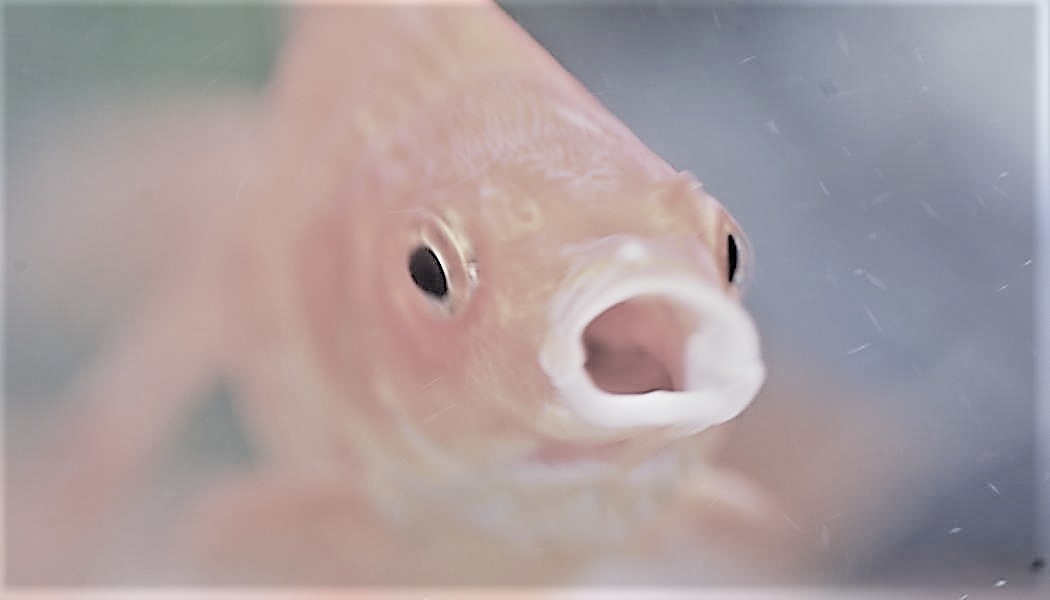


How to Use Water as Fuel
By Megan Wildhood

Dad says I should have been born a fish,
what with the eerily natural way I moved through water.

He and I got our scuba diving certificates
together when I was 12 – I didn’t notice

the Caribbean makes your hair sticky as it’s drying
under a sun I didn’t care would rudely

find every last fleck of flesh exposed.
My sister rejected diving, getting in the water

at all, because of what the wild does
to your hair and skin.

We glossed arguments in the family,
like makeup on my sister’s face. I had to be

persuaded to start wearing the stuff because it seemed
like both Mom and sister needed a cleanup crew

every night just for their faces. They used water
to wash; I used it to fly.


Today’s poem is from Long Division (Finishing Line Press, 2017), copyright © 2017 by Megan Wildhood, and appears here today with permission from the poet.

Megan Wildhood: Do you feel isolated, uncertain about where in the world your story might be welcome? Megan Wildhood, a Seattle-based writer and poet, can deeply relate – she feels like an outsider most places she goes. She’s written about the various ways she’s felt like a misfit in The Atlantic, Contrary Magazine, America Magazine and in her chapbook Long Division, released September 2017 from Finishing Line Press, among other publications. She’s working on a novel and more poetry projects; head on over to meganwildhood.com to learn more.

Guest Editor’s Note: Family dynamics are notoriously complicated, and Megan Wildhood tackles them with unflinching honesty in “How to Use Water as Fuel” from her chapbook, Long Division. In this poem, we’re immersed in water, exploring a closeness to certain family members and a distance from others. The speaker feels connected to her father — “Dad says I should have been born a fish, / what with the eerily natural way I moved through water” — but disconnected from her mother and sister. The final lines of the poem highlight this aching contrast: “They used water / to wash; I used it to fly.” Finding commonalities and bridging the gaps between us is critical. “How to Use Water as Fuel” ultimately explores the longing for connection, even when our differences get in the way.

Want to read more by and about Megan Wildhood?
Megan Wildwood’s Official Website
Buy Long Division from Finishing Line Press
“Not Jumping” in America Magazine

Guest Editor Alana Saltz is a poet, writer, and freelance editor living in Tacoma, Washington. She received her MFA in Writing from Antioch University and her work has been published in The Washington Post, The LA Times, The Huffington Post, Angels Flight, voxpoetica, and The East Jasmine Review. You can find out more about her at alanasaltz.com or @alanasaltz on Instagram and Twitter.

Lynn Houston: “At the Harbor Lights Motel After You Return”

.


At the Harbor Lights Motel After You Return

By Lynn Houston

.

In August 2016, while at a writing residency, I met a man who was already supposed to have deployed with his National Guard unit. We were given the gift of three weeks before he left, time we used to get to know each other, as we helped out on a friend’s farm, had long conversations on a porch swing, and rode his motorcycle up into the mountains. The night before he left the country, as he was driving to the base, we talked on the phone for over three hours. For six months while he was gone, I sent him near-daily poems in the mail. When he returned, after an initial successful reunion, it became clear that he was plagued with anger issues and other problems associated with a difficult re-entry into his civilian life. He began seeing someone else, and we broke up. In my grief, I revised the poems I’d sent him and began submitting them to poetry contests. Unguarded won the inaugural chapbook contest of the Heartland Review Press and is due to be released in December 2017, with a series of readings and book signings in the Elizabethtown, KY, area scheduled for early 2018.

.

At the Harbor Lights Motel After You Return

The fish aren’t biting on Key Largo
the morning we spend together
after you return. You nap all day,
sheets spiraled like a carapace
around your torso and legs.

Next to you in bed, I touch your head,
stroke the hair you’ve grown long,
and ask what it was like over there.
But you pull the blankets higher
and turn away to face the wall.

Hours later, I call to you from the doorway
to show you a snapper on my line. You dress,
find me on the dock where we drink beer
as the sun slumps behind the palms.

You sleep through the night, and in the morning,
before you leave for a dive on a coral reef,
you tell me that turtles sleep like humans do—
you’ve seen them at night tucked into the nooks
of wrecks, heads withdrawn into shells;
you’ve seen their eyes blink open in the beam
of your dive light; you’ve even seen one wake
and swim away when a fish fin came too close.
They have nerve endings there, you tell me.
They can feel when something touches their shell.

When you return from the reef, I ask you
again how it was over there, and this time
you begin to tell me what you can.

.

Editor’s Note: This poem is the third of a series. The first poem, “On the Farm, Before You Leave for Afghanistan,” and the second poem, “You Leave and I Can’t Sleep” were published in late 2017.

.

About the Author: Lynn Marie Houston holds a PhD from Arizona State University and an MFA from Southern Connecticut State University. Her poetry appears in numerous literary journals–such as O-Dark-ThirtyGravelPainted Bride QuarterlyOcean State ReviewHeavy Feather Review–and in her three collections: The Clever Dream of Man (Aldrich Press), Chatterbox (Word Poetry Books), and Unguarded (Heartland Review Press). For more information, visit lynnmhouston.com


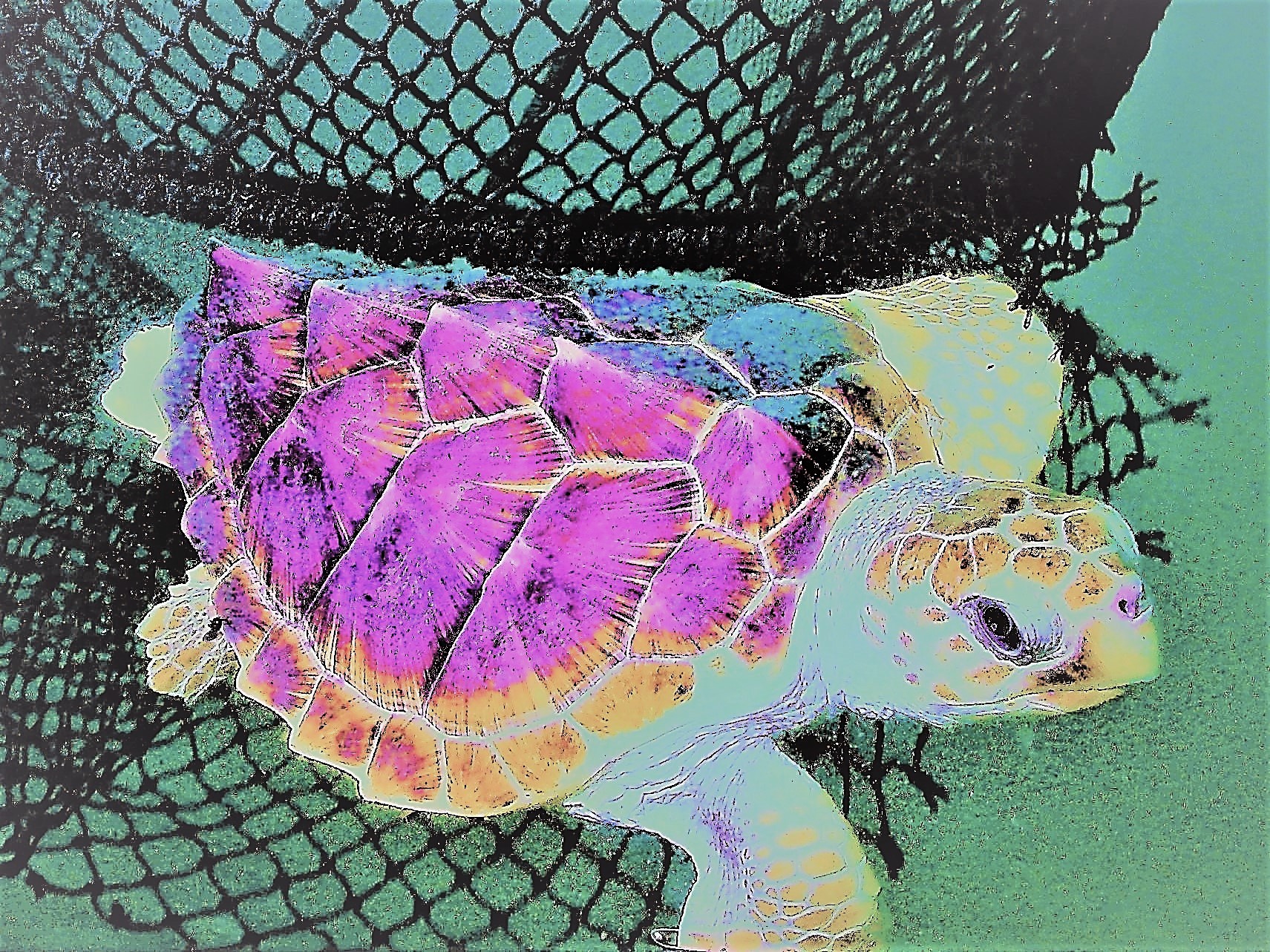
Image Credit: Loggerhead Sea Turtle (digital art based on a photo from NOAA.org)

Lynn Houston: “You Leave and I Can’t Sleep”


You Leave and I Can’t Sleep

By Lynn Houston

.

In August 2016, while at a writing residency, I met a man who was already supposed to have deployed with his National Guard unit. We were given the gift of three weeks before he left, time we used to get to know each other, as we helped out on a friend’s farm, had long conversations on a porch swing, and rode his motorcycle up into the mountains. The night before he left the country, as he was driving to the base, we talked on the phone for over three hours. For six months while he was gone, I sent him near-daily poems in the mail. When he returned, after an initial successful reunion, it became clear that he was plagued with anger issues and other problems associated with a difficult re-entry into his civilian life. He began seeing someone else, and we broke up. In my grief, I revised the poems I’d sent him and began submitting them to poetry contests. Unguarded won the inaugural chapbook contest of the Heartland Review Press and is due to be released in December 2017, with a series of readings and book signings in the Elizabethtown, KY, area scheduled for early 2018.

.

You Leave and I Can’t Sleep

.

If I’m writing this, it means I can’t sleep and that
the rain outside my window drops blindly in the dark.

The crops need it, the cashier told me earlier, ringing
me up for a pint of milk, making small talk, making change.

And now the tipped carton has marred the pages
on my too-small desk. I’m trying not to make too much of it—

this mess, the disasters my life and pages gather.
I’m trying to be kinder to myself, more forgiving.

Outside, a leopard moth lands on the screen, shudders
to dry its wings. One touch from my finger would strip

the powdered coating that allows it to fly in rain.
I wish it might have been so easy to keep you

from boarding the plane that took you to war.
In the predawn, my neighbors still asleep, I am the only one

to hear the garbage truck grind to a stop,
its brakes the sound of an animal braying.

The rain has stopped, too. I look over the smudged papers
on my desk. Nothing important has been lost.

When you come home safely to me in six months,
we will be able to say, nothing important has been lost.

.

Editor’s Note: This poem is the second of a series. The first poem, “On the Farm, Before You Leave for Afghanistan,” was published two weeks ago.

.

About the Author: Lynn Marie Houston holds a PhD from Arizona State University and an MFA from Southern Connecticut State University. Her poetry appears in numerous literary journals–such as O-Dark-ThirtyGravelPainted Bride QuarterlyOcean State ReviewHeavy Feather Review–and in her three collections: The Clever Dream of Man (Aldrich Press), Chatterbox (Word Poetry Books), and Unguarded (Heartland Review Press). For more information, visit lynnmhouston.com

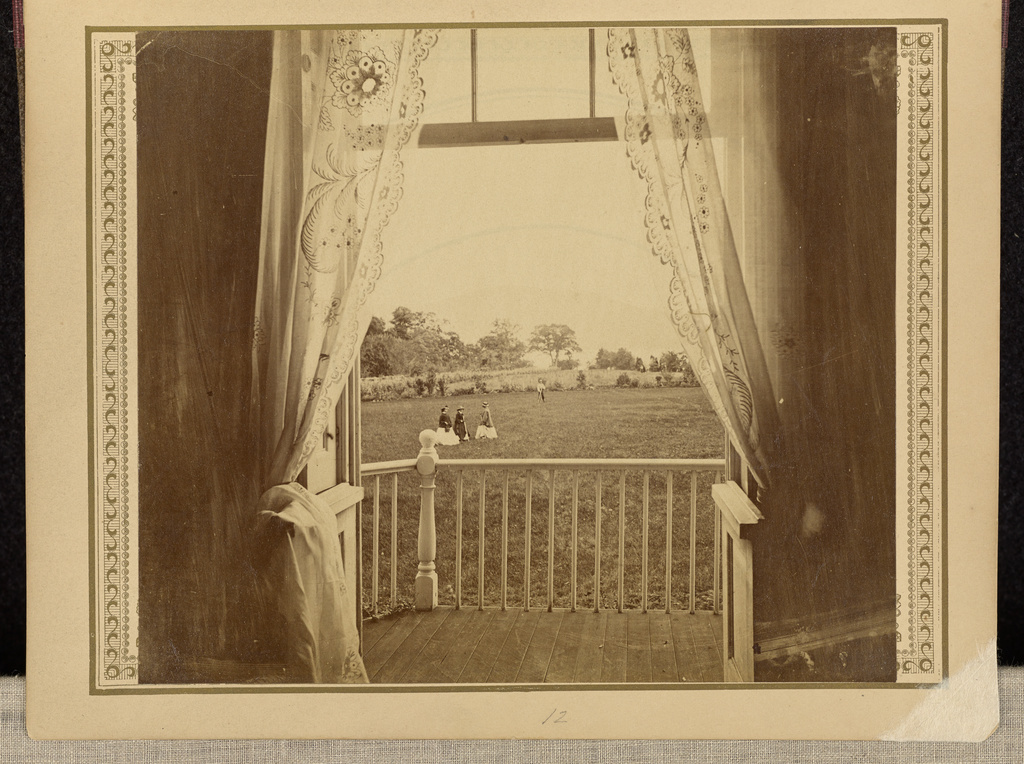
Image Credit: John Coates Browne “View from parlor window, Presqu’ile” (The Getty’s Open Content Program)


Two Prose Poems

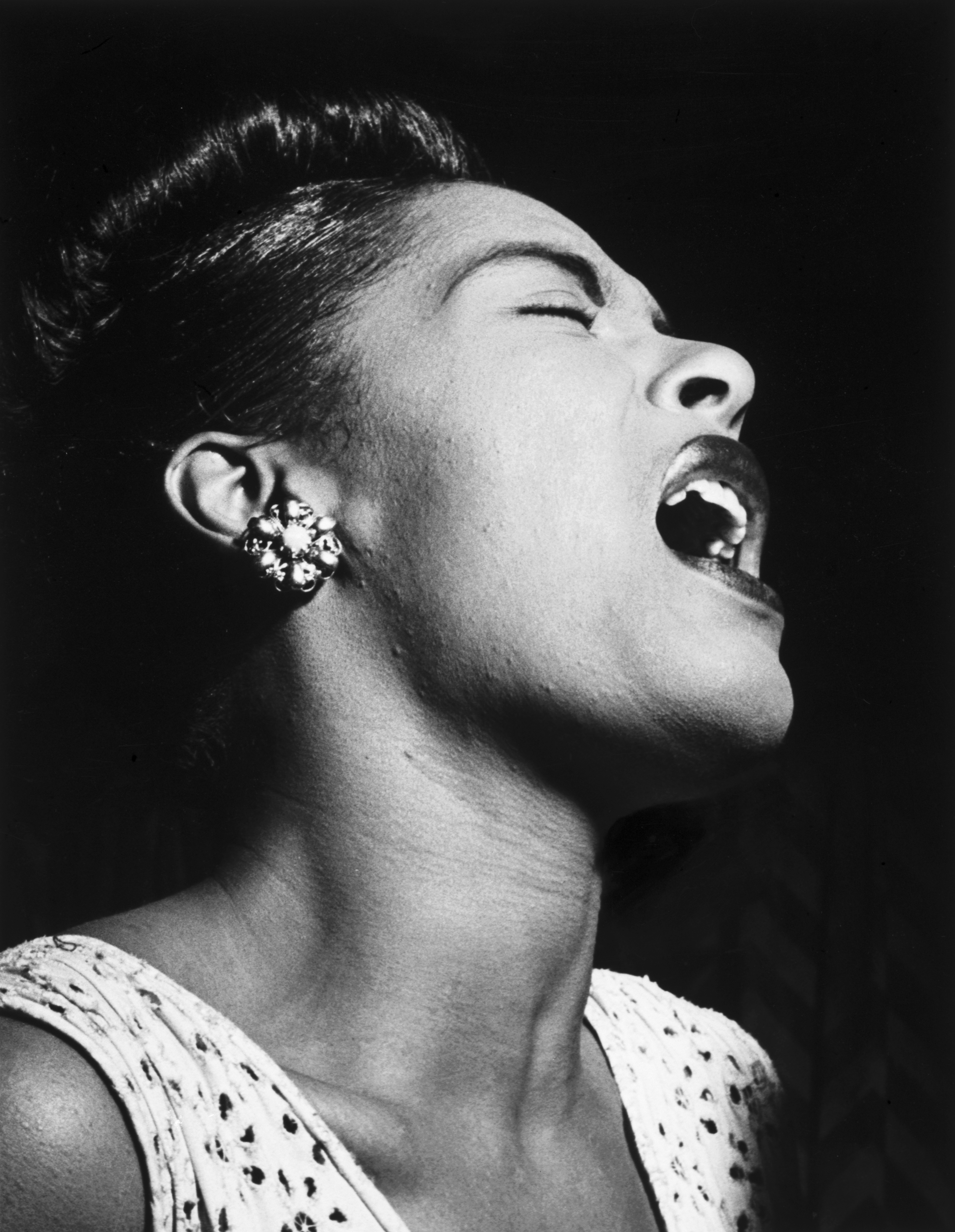
William P. Gottlieb “Billie Holiday at the Downbeat Club”

.

Two Prose Poems

By Mike James

.

That One Singer

Seems to know your life…How you lift yourself, just a little, from your seat when she reaches up past the ceiling, the roof, the trees, up near that first cloud to hit a high note…Or how you almost brace for a train to thunder by when she growls down and down with low ones…It’s like she looked out the window, for no good reason, the night you got your first streetlight kiss…As if she knows how you got that knee scrape from belt buckle dodging at ten…


Beyond The Land Of Misfit Toys

Drop that bucket into the memory well and it’s never what you wish. You pull up clown porn. (Yes, that’s a thing.) Shot glasses serve as telescopes to galaxies you’d rather not see. Even one night stands, much heralded in the movies, offer minimum relief. Every woman you end up with wears heels or boots you desire more than her. You beg to be her carpet, her footstool, her bath mat. If the question is lust, the answer is confusion. You look at every closet and hope for big locks. More than the butterfly you love the butterfly tattoo.

.

About the Author:  Mike James is the author of eleven poetry collections. His most recent books include: Crows in the Jukebox (Bottom Dog), My Favorite Houseguest (FutureCycle), and Peddler’s Blues (Main Street Rag.) He has previously served as associate editor for both The Kentucky Review and Autumn House Press. After years spent in South Carolina, Missouri, Pennsylvania, and Georgia, he now makes his home in Chapel Hill, North Carolina with his large family and a large assortment of cats.

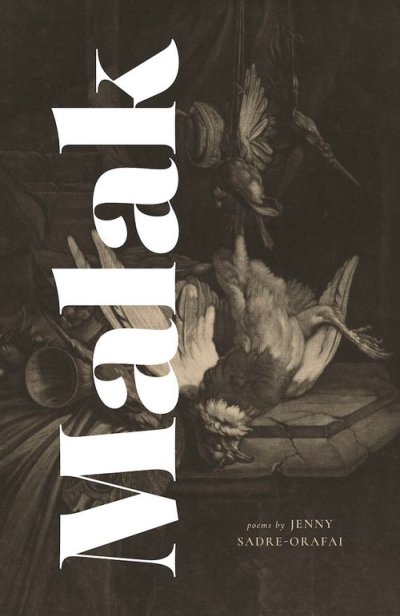
SATURDAY POETRY SERIES PRESENTS: MALAK


From MALAK
By Jenny Sadre-Orafai:


LAST READING

There is a pregnant bird in the cup.
Malak looks at me like she has never looked

at that in a cup before. My father looks at me
like there are things I’m not telling him.

She crochets baby caps, square blankets,
booties in Neapolitan ice cream colors.

If I ever have these babies, if I’m the bird
in the cup, I’ll want to devour them.

After the last reading she leaves the cup turned up,
daring the bird to forget I was pregnant.


MOTHER SPELL

I felt for mountain
and ocean, my first globe.

Mouth or beak. Arm or wing.
Skin or feather. Feet or feet.

Who brought these to me
to dress in booties and caps.

I didn’t ask to know a belly
so tight.

I didn’t ask if it was girl
or boy or bird.


LANGUAGE OF SIGNS

I slept the whole day
without remembering, Malak.

I dreamt I had a son
growing so fast,

a tomato plant sprawled
everywhere, unstoppable.

I held him at my hipline.
And I fed his hunger.

Now he’s a pitcher
of water.


Today’s poems are from Malak (Playtpus Press, 2017), copyright © 2017 by Jenny Sadre-Orafai, and appear here today with permission from the poet.


Malak is an invocation of past and future. With familial lament and childish wonder, the words lay tribute to the infinite—to the beauty in descent and the heartache that binds us to place. To our smallness in death and the importance of conjuring anew.

Jenny Sadre-Orafai is the author of Paper, Cotton, Leather and five chapbooks. Her poetry has appeared in Cream City Review, Ninth Letter, The Cortland Review, Hotel Amerika, The Pinch, and other journals. Her prose has appeared in Los Angeles Review, The Rumpus, South Loop Review, Fourteen Hills, The Collagist, and other journals. She is co-founding editor of Josephine Quarterly and an Associate Professor of English at Kennesaw State University.

Editor’s Note: Birds, tea leaves, foxes. If there are talismans that illuminate the path Jenny Sadre-Orafai’s Malak lays out for the reader, these may be those divining objects. There is magic within these pages — the kind that is conjured up in Gypsy tents and over old world kitchen tables, magic from a time and place when women were believed. But the future is always uncertain, and the tales that unfurl within Malak‘s pages curve and splinter like the lines on a palm.

What is inheritance, this collection asks. What is lived? What is lost? Do we inherit even that which cannot be passed down? Are predictions only as good as their fruition?

Malak is a book that pairs loss with beauty, future with past, the certainty of fate with the unknown and the unknowable. Throughout its pages, a sense of familiarity is established that both grounds and destabilizes. Its stories are told in the dark of night, but under the light of a full and generous moon. When Malak‘s truths reveal themselves, you bask in their luminosity and marvel at the careful magic of their making. You do not ask if they are boy or girl or bird.

Want more from Jenny Sadre-Orafai?
Buy Malak in paperback from Platypus Press
Buy Malak on Kindle from Amazon
Jenny Sadre-Orafai’s Official Website

“On the Farm, Before You Leave for Afghanistan” By Lynn Houston

.


In August 2016, while at a writing residency, I met a man who was already supposed to have deployed with his National Guard unit. We were given the gift of three weeks before he left, time we used to get to know each other, as we helped out on a friend’s farm, had long conversations on a porch swing, and rode his motorcycle up into the mountains. The night before he left the country, as he was driving to the base, we talked on the phone for over three hours. For six months while he was gone, I sent him near-daily poems in the mail. When he returned, after an initial successful reunion, it became clear that he was plagued with anger issues and other problems associated with a difficult re-entry into his civilian life. He began seeing someone else, and we broke up. In my grief, I revised the poems I’d sent him and began submitting them to poetry contests. Unguarded won the inaugural chapbook contest of the Heartland Review Press and is due to be released in December 2017, with a series of readings and book signings in the Elizabethtown, KY, area scheduled for early 2018.

.

On the Farm, Before You Leave for Afghanistan

Henry was the first to know I was your woman.
Henry, the goat. The one who hates you.

Since then I’ve been surprised by how often
clouds take the shape of curled horns
and remind me of that Tennessee morning

we left a shared bed to feed the herd
and took the smell of love-making with us.

Like any hard-headed man, when Henry knew
I was yours, he wanted me for a goat wife,
butted my thigh and bit my boot top,

rubbed his face against its orange leather.
Aware of Henry’s macho display and the force

of his horns, you turned your back on me
and walked toward the house, knowing that
to keep me safe you had to leave.

.

About the Author:Lynn Marie Houston holds a PhD from Arizona State University and an MFA from Southern Connecticut State University. Her poetry appears in numerous literary journals–such as O-Dark-ThirtyGravelPainted Bride QuarterlyOcean State ReviewHeavy Feather Review–and in her three collections: The Clever Dream of Man (Aldrich Press), Chatterbox (Word Poetry Books), and Unguarded (Heartland Review Press). For more information, visit lynnmhouston.com


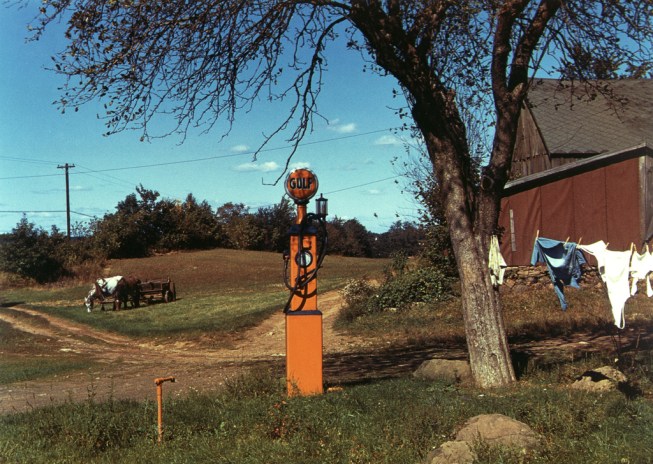
Image Credit: Jack Delano: “Rural Scene, Near Andover, Maine” courtesy of the Getty’s Open Content Program.

A Review of Daniel Crocker’s Shit House Rat

.

A Review of Daniel Crocker’s Shit House Rat

By Stephen Furlong

.

In a blurb for Daniel Crocker’s Everyday People and Other Poems (Green Bean Press, 1998), A.D. Winans writes “Daniel Crocker is one of a lively band of modern poets who write…from the heartland of the people, and I stress HEART, because Crocker’s poetry comes from deep inside him.” Daniel Crocker is a poet who lays it on the line, the poetic line, to provide his readers with impassioned honesty and the rawness of an exposed nerve. In Shit House Rat (Spartan Press, 2017), Crocker explores belonging, popular culture references, and sexuality.

In one of the first poems of the book, “Growing Up”, Crocker investigates youth and belonging. Channeling the 1990 documentary Silence=Death written and produced by Rosa von Praunheim, the speaker of the poem writes: “I saw Silence/equal death/and stayed silent/anyway.” The documentary focuses on the AIDS epidemic and includes appearances by Allen Ginsberg and David Wojanarowicz. This poem hints at a recurring theme in Crocker’s book which is, to borrow from Patricia Hampl: carry[ing] our wounds forward with us. Crocker’s poetry carries wounds forward in order to bring light to them and his poetry is remarkably admirable given today’s tumultuous climate of trying to hide, even deny, one’s misdeeds of the past. Crocker doesn’t hold back and doesn’t hide making his poetry powerful, even with its vulnerability.  Returning back to “Growing Up”, the popular culture references continue with the early 1980s Midwestern-driven sitcom “The Day After” and late 1970s “Roots”. The poem, itself, is honing in on these popular culture phenomena in an attempt to understand the Reagan administration and growing up during that timeframe.

In addition to these popular culture references, Crocker’s poems channel snuffleupagas, Wolverine, Reed Richards and writers who have influenced him throughout the years like Adrienne Rich and Lord Byron. In the last portion of the book, Crocker writes the poem “I Wish” for his wife, and longs to be Whitmanesque. The poem is gentle, heartfelt, and sincere which reveals growth and maturity throughout the course of the book. Throughout the course of the poet’s life. These references are entrances into Crocker’s livelihood, they are sometimes dark corners of the brain, but channeling back to A.D. Winans—they reveal Crocker’s heart. That makes all the difference in this collection.

There’s a devastating piece in this collection titled “Brutal,” which reminds me of Bruce Weigl’s “The Impossible”—a poem which talks about physical, namely sexual, abuse. The last line has stayed with me ever since I first read the poem: “Say it clearly and you make it beautiful, no matter what.”  Of trauma, Weigl says in an interview “to understand that this (trauma) was not something that I was going to get over, but instead something that I needed to find a way to live with.”

In writing “Brutal” Crocker tries to live with this memory instead of trying to get over it because, frankly, overcoming abuse is just not done, or for certain, easily done. Crocker’s speaker in this poem is young and, under peer pressure, has what is called a gay night. The individuals of the poem, Crocker and cousin Terry, reveal themselves and fall prey to an older cousin named Larry. Crocker confesses around halfway through:

…if I ever have the guts to write about it, it’s going to be brutal. It’s going to be honest and detailed. The details, however, are like an impressionist painting. Parts of it, like the monster, are painfully vivid. Larry’s white, white teeth. His beautiful body. The rest is images, textures, feelings. Feelings of guilt and desire are all mixed up in one.

The form of this piece, set in prose, reveals the blurring of everything coming together, of the pieces of this pain being fused with feelings of guilt and desire. Crocker has written extensively about his bisexuality and alludes to it in this piece as well, which makes the piece even more dizzying, even more crushing when this memory sticks out in his history. The poem later reveals Larry, the perpetrator, has died in a motorcycle accident, a fact which used to bring Crocker happiness; “I’m not sure I am anymore,” he then confesses immediately afterward. This poem reflects the confusion and anger abuse leaves in its wake. It also discusses the wretchedness it can have years after as both Crocker and Terry, both drunk mind you, discuss it. And the pain comes back. The frankness of this poem’s language haunts me because the poem doesn’t try to hide in veiled language or metaphor; it just speaks to the horrors of abuse and it does it directly and does not hold back.

To me, the success of Daniel Crocker’s poetry is exactly that: He does it directly and does not hold back. It’s admirable, it’s damn hard work, but it’s healing. Daniel Crocker’s poetry and writing helps my writing because of their frankness and honesty. Those qualities push me to do the same; they push me to be honest and detailed. I am convinced Crocker can’t write any other way. And I don’t think he would choose that.

.

About the Author: Stephen Furlong is a recent graduate of Southeast Missouri State University located on the Mississippi. His poems, reviews, and interviews have appeared or are forthcoming in Yes Poetry, Glass: A Journal of Poetry, and Pine Hills Review, among others. He also had a poem in A Shadow Map: An Anthology by Survivors of Sexual Assault published by Civil Coping Mechanisms and edited by Joanna C. Valente.