Sue Blaustein: It’s 2023, and We Still Need to Read Sally Carrighar

It’s 2023, and We Still Need to Read Sally Carrighar

By Sue Blaustein

The late author Sally Carrighar’s work is out of print. Between 1944 and 1975, Carrighar (1898-1985) published one novel, eight works of “nature writing” and an autobiography (Home to the Wilderness). Two of her books One Day at Beetle Rock and One Day at Teton Marsh were made into Disney features, making those titles very well-known. 

I must’ve read one or more of her books when I was in grade or middle school. As an adult, I found them while browsing used bookstores. They looked familiar, and I bought and read them again. By that time, I was a poet with a day job – better prepared to appreciate how exact, humble, and brilliant a writer; and how meticulous an observer she was. 

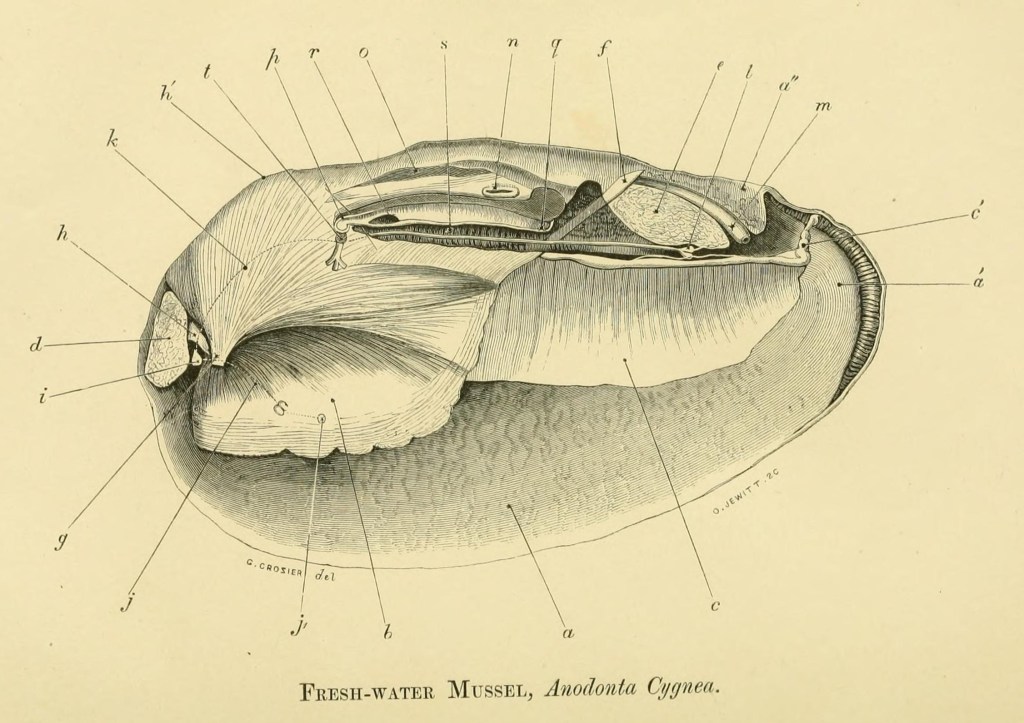
If you’ve never read her work, you don’t know yet, how in a few paragraphs – say about the reproductive habits of a freshwater mollusk – she could expand and reshape the way you see non-human creatures, yourself, and the world we inhabit together.

The swan mussel was not nearly as complex a creature as man, but even she had her satisfactions, and a simple nervous system with which to experience them.

Every creature – swan mussels included – has vital and specific needs. If those needs are satisfied, we live. Of course, the word “satisfy” carries layers of other meanings for humans. Most likely few if any apply to our mussel. Carrighar’s deft use of the word satisfactions doesn’t load mollusks up with human emotions and yet…it opens the door to kinship. 

How does the mussel breathe and eat? Carrighar explains how it pulls water into one tube and expels it through the other, thus receiving oxygen for the gills and minute plants and animals for nourishment.

No doubt she enjoyed some draughts of this living broth more than others; on windy days when the pond was stirred, the greater amount of oxygen may have felt rather invigorating. These were not very stimulating events, but the mussel was not equipped for excitement.

Enjoyed? Invigorating? Though these words come close to attributing human perception to a mollusk, they make a valid point more vivid. For any creature, no moment is the same as the one before, or ones to come. Experiencing and responding to change is what nervous systems are for. The language opens a portal, a way to imagine what it’s like to be something else. A way to care.

Continue reading “Sue Blaustein: It’s 2023, and We Still Need to Read Sally Carrighar”

Ed Ahern: “Gloria Mundi”

Gloria Mundi

I am in title his executor,
de facto the chief mourner.
He lived his adult life alone
but did die with company-
a hired tender and me.

A man who admitted
to fallibility but rarely
to vices or wrongdoing,
a man so private that I
read his past in his papers.

I buried and eulogized him
and marshalled all the wealth
he’d been reluctant to spend,
hard earned but not enjoyed,
for distribution to strangers.

I was perhaps his closest friend
and huckster for the indulgences
I wanted him to give himself,
but now must strew his measure
to the unknowing and the greedy.

About the Author: Ed Ahern resumed writing after forty odd years in foreign intelligence and international sales. He’s had over four hundred fifty stories and poems published so far, and eight books. Ed works the other side of writing at Bewildering Stories, where he sits on the review board and manages a posse of eight review editors.

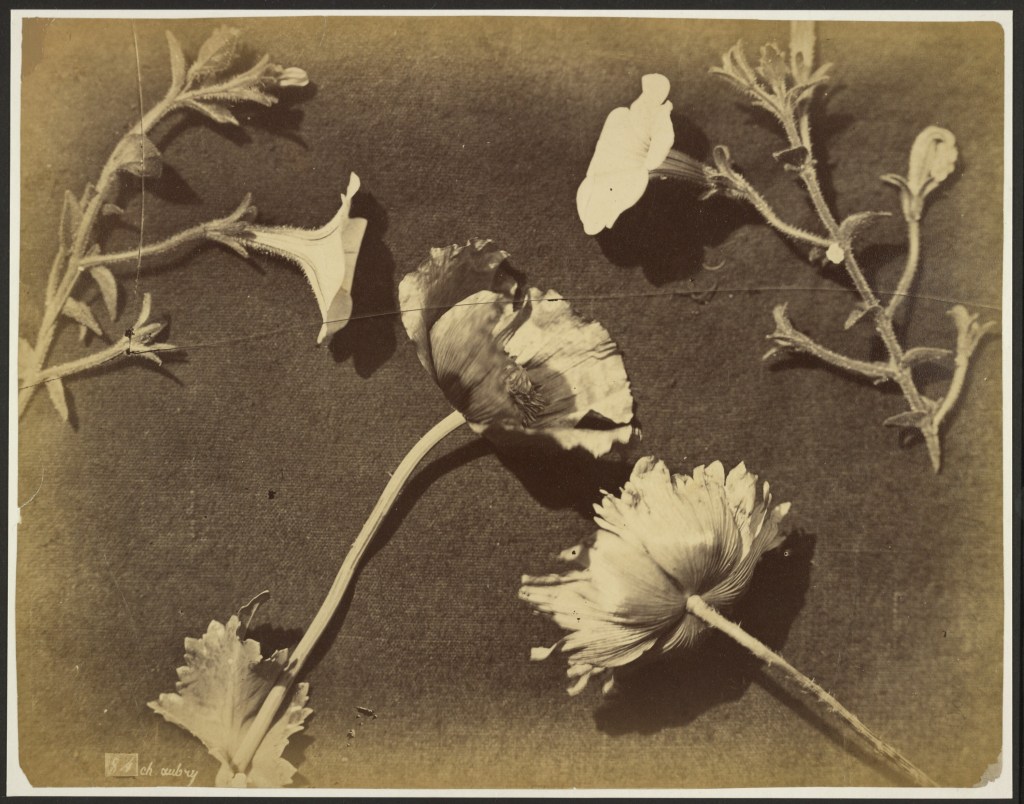
Image Credit: Charles Aubrey “Flower Still Life” Public domain image courtesy of the Getty Open Content Program.

Larry Smith: “Afraid of Heights”

Afraid of Heights

Yes, I am,
and maybe you are too—
vision blurs, stomach turns,
ground falls away.

Any bridge or ledge,
any tall building or tower
makes me tremble
and Oh, God,
never look down!
You may slip and fall,
you may be drawn into
its vortex.

Is it fear of falling,
or fear of jumping?
Might I lose control
or welcome new freedom?
I’ve thought long on it,
but only after, breathless,
I am across.

Once on a bridge
holding my baby
in my arms, I
shuttered and sat
straight down
wooden railing at my back.
In a glass elevator
I melted like candle wax
to the floor and stayed
for the door’s release.

I admit it here,
look it in the eye,
risk all, and welcome
any sweet relief.

About the Author: Larry Smith is a poet, fiction writer, memoirist and editor of Bottom Dog Press books in Ohio. He and his wife Ann cofounded a meditation center in Huron, Ohio. His most recent book is CONNECTIONS: Moring Dew: Tanka. 

Image Credit: Detroit Publishing Company “Cliff stairway, High Bridge, Ky.” (1907) Public domain image courtesy of the Library of Congress

G. M. H. Thompson: “Haiku from my Grandmother”

 Haiku from my Grandmother

                    I
“Don’t you think we should                                                                                                                                                 “eat that stuff now because it                                                                                                                                             “expires in five weeks.”

                   II
“I don’t need my cane;                                                                                                                                                      “I just use my shopping cart—                                                                                                                        “I shop at Walgreens.”

                  III
“Did you take your cups                                                                                                                                             “to the sink already or                                                                                                                                                       “are they still down there?”

                  IV
“Did you know that Paul’s                                                                                                                                                             “answer for everything is                                                                                                                                                                      “drink another beer??!?!!”

                   V
“Don’t you have something                                                                                                                                              “you should be doing today?                                                                                                                                                     “Why are you still here??”

                  VI
“I’m not eating that!                                                                                                                                                              “Just what do you think I am?                                                                                                                                                                  “Some kind of vulture??”

About the Author: G. M. H. Thompson enjoys golden sunsets with fine wine, taking long walks on the beach, & getting to know you better.

Image Credit: Carol M. Highsmith “Kitchen spice pantry at the Joseph D. Oliver House, also known as Copshaholm, in South Bend, Indiana” (2016) Public domain image courtesy of the Library of Congress

Royal Rhodes: “The Other Genesis”

The Other Genesis

What do we see outside 
except a canopy of ebony wings, 
garlands of feathery smoke 
moving on blackened water? 
Against the sketchy light 
it looks like a cancer patient 
showing us their fifth x-ray. 
The troubled lungs, highlighted: 
a cage of full-grown crows 
in a space too small for them 
and anxious for routes to escape, 
fanning their jittery wings 
against imprisoning walls. 
Something screamed in fear, 
locked inside us, watching. 
Resistance is useless, absurd, 
trapped in something we are. 
We saw their work when free: 
the substantial killing 
along the state route. They strutted 
around the roadkill, plucking 
at bits of the dying creatures, 
supple as the playful light. 
When will it end? we ask. 
And why did it ever begin? 
We are the understanding they lack. 
So we took them deep inside us. 

About the Author: Royal Rhodes, who was trained in the Classics, is a retired educator who taught classes in global religions and Death & Dying for almost forty years. His poems have appeared in: Ekstasis Poetry, Snakeskin Poetry, The Montreal Review, The Cafe Review, and other places. His poetry/art collaborations have been published with The Catbird [on the Yadkin] Press in North Carolina.

Image Credit: Image originally from British Ornithology: Norwich: Bacon,1815-22. Courtesy of the Biodiversity Heritage Library

Robin Wright: “Boarding House Bedroom”

Boarding House Bedroom
- After Vincent van Gogh

I tell the widowed landlady,
I’m an artist, and she rents
me the room cheap.
The colors for this room
must be both bright
and tranquil for me
to feel alive, work
round the clock in a fever.

I choose yellow for the bed
and chairs. Violet for walls,
green for the window frame,
a fence encasing light
that leads to a view
of the public garden
where men and women
stroll the lane surrounded
by blue pines.

I immerse myself for days,
weeks, months, until
a voice, a train inside
my brain, rumbles
through, rattles
the pictures on the wall.

About the Author: Robin Wright lives in Southern Indiana. Her work has appeared in The Beatnik Cowboy, As it Ought to Be, Loch Raven Review, Spank the Carp, The New Verse News, Rat’s Ass Review, Little Old Lady Comedy, Bindweed, Fevers of the Mind, One Art, and others. She is a Pushcart Prize nominee, and her first chapbook, Ready or Not, was published by Finishing Line Press in 2020.

Image Credit: Vincent Van Gogh “Bedroom in Arles” (1888)

Jake Sheff: “Crabbing at Nehalem Bay: a virelai”

Crabbing at Nehalem Bay: a virelai 

After “Douce Dame Jolie” by Guillaume de Machaut  

My will is that your claw should grab
This cat food, that your mind should stab
Its doubts and urge you, like its lab
Rat, into trying something new. 

The tide is closing out my tab…
I swab
The weather’s face and ocean’s too. 
I fill my boat with air and flab
To nab
Some pride and dinner for my boo. 

I’m frightened not when shorelines blab; 
I see the semi-love Les Schwab 
Half-buried under sand. My cab
Is fate; we’re not just driving through! 

My will is that your claw should grab
This cat food, that your mind should stab
Its doubts and urge you, like its lab
Rat, into trying something new. 

The seagulls here all do the dab. 
Ahab
I’m not, but niveous visions do
Call me away from any slab
A schlub 
Could stand on; courage isn’t blue. 

The clam beds sleep beneath Queen Mab
Despite my screams when every ab
I catch is slightly rounded. Drab
My engine’s soul and instinct’s clue. 

My will is that your claw should grab
This cat food, that your mind should stab
Its doubts and urge you, like its lab
Rat, into trying something new. 

Off Hwy 101 facts jab
Prefab
Experiences; they don’t come true
Because the gift of every crab
Is gab:
They rival Athens in a coup! 

But south of Wheeler, night’s hijab
Is not on yet. My buoys scab
The waters so that Dr. Krabbe,
If he was here, would say, “Achoo!” 

My will is that your claw should grab
This cat food, that your mind should stab
Its doubts and urge you, like its lab
Rat, into trying something new. 

About the Author: Jake Sheff is a pediatrician and US Air Force veteran. He’s published a full-length collection of formal poetry, “A Kiss to Betray the Universe” (White Violet Press), along with two chapbooks: “Looting Versailles” (Alabaster Leaves Publishing) and “The Rites of Tires” (SurVision).

Image Credit: Wissenschaftliche Ergebnisse der Deutschen Tiefsee-Expedition auf dem Dampfer “Valdivia” 1898-1899. bd.6. Atlas Jena,G. Fischer,1902-40. Public domain image courtesy of the Biodiversity Heritage Library.

Steve Brisendine: “Notice Served”

Notice Served

Low sky, gray beneath gray,
thin dim sun loitering behind
without noticeable intent;

aging summer drags beat-up
sandals at autumn’s order to
pack up its things and move on
	to the next hemisphere – 

but clouds above and bluster
below, orange leaves eddying
in gutters and entryways,

foreshadow the inevitable: a fall
of highs and lows, woodsmoke
perfuming dawns and dusks, 

frost’s hungry fingers tracing
windowpanes, cupping cheeks.

About the Author: Steve Brisendine – writer, poet, occasional artist, recovering journalist – lives and works in Mission, Kansas. His most recent collections are Salt Holds No Secret But This (Spartan Press, 2022) and To Dance with Cassiopeia and Die (Alien Buddha Press, 2022), a “collaboration” with his former pen name of Stephen Clay Dearborn. His work has appeared in Modern Haiku, Flint Hills Review, Connecticut River Review and other journals and anthologies. He holds no degrees, several longstanding grudges and any number of strong opinions. Write to him at steve.brisendine@live.com.

Image Credit: Andor Dobai Szekely “A Summer Landscape” (1910) Public domain image courtesy of Artvee

John Dorsey: “On the Prospect of Dying in December”

On the Prospect of Dying in December

not the end of the year
but maybe the end of your life
& you don’t know 
if you should buy another calendar
you didn’t buy the one you have now
given away by the local bank
curling at the bottom 
after an already brutal summer
you think about the winter of 1996
just before your grandfather 
closed his eyes one last time
while smiling 
knowing the battle 
was almost over
thinking about when you sold calendars 
over the holidays for the local bookstore
mostly of swimsuit models 
who are grandmothers now
& kittens that are long dead
& butterflies that have flown away
& you wonder 
how long it will be for you
on an unusually cool august morning
waiting for your ride

it won’t be long now.

About the Author: John Dorsey is the former poet laureate of Belle, Missouri and the author of Pocatello Wildflower. He may be reached at archerevans@yahoo.com.

Image Credit: Harris & Ewing “Washington Snow Scenes” (1924) Public domain image courtesy of the Library of Congress

Michael G. O’Connell: “On the Loss of a Daughter”


On the Loss of a Daughter	

It is summer.
The creek works its way through the world 
carefully,
lazily,
thoughtlessly.
It slices through fields and forests,
in sunshine and dark places,
and though dark,
is still painted by the sun
slowly, mostly,
yet still towards that bigger place it has to go.

Creeks become streams.
Streams, rivers.
Rivers, lakes,
and, ultimately, all become lost in the sea, 
but, do they really?

Does the creek that moves through this world, 
gathering bits and pieces of the earth—
rocks, wood, and sometimes even sky—
does that creek truly become lost in the ocean? 
Or is it part of that ocean? 
Something else? 

Sometimes the creek travels alone 
until it reaches the end.
Others mix and mingle 
and split and reinvent themselves along the way—
encountering rocks, fallen trees, and dams, 
and still, it is able to reclaim itself.

It is summer.
Sunlight dances on waves.
Children play in shallows—
splashing, digging, lazing, 
fighting.

The sun shines 
warming all it touches 
sending reddened visitors back into the ocean 
where just below the surface lies cooling waters
and things that bite and sting.

The sun shines.
Waters warm
until they rise on cobbled wings
and fly.
And
ultimately 
fall

back

About the Author: Michael G. O’Connell is an author, illustrator, and an award-winning poet. Having been published in various formats worldwide, his latest work can be found in the poetry anthology, Moss Gossamer. He is currently working on an illustrated middle grade book.

Image Credit: Marie Egner “Children by a Mountain Creek” Public domain image courtesy of Artvee