Mary Biddinger and Matthew Cheney in Conversation


*combine_images

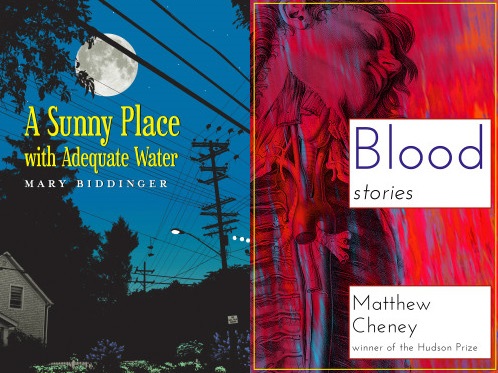
Mary Biddinger and Matthew Cheney have both published books with Black Lawrence Press, in Mary’s case five books of poetry and in Matthew’s a collection of short stories. Both are also ensconced in academia: Mary is a professor of English at the University of Akron, where she also edits the Akron Series in Poetry, and Matthew is currently a Ph.D. candidate at the University of New Hampshire, where he studies modernist prose and its legacies.***


MATTHEW CHENEY: First, maybe we can start with the most important question: Do you have any pets? Dogs? Cats?

MARY BIDDINGER: Matt, this is my favorite kind of question. When at home I’m surrounded by pets: four cats, and one dog. Sure, they can be pesky (try sequencing a poetry manuscript on a hardwood floor with an overzealous tabby who wants to give her input on section breaks), but they are also a great comfort and inspiration. The cats make a particularly good audience if trying out new poems for a reading: patient, fairly stationary, unafraid to purr if a metaphor is especially dazzling. My dog, on the other hand, barks when he hears “poet voice” emanating from behind a closed door. I won’t attempt to interpret that.

CHENEY: At what point do you read your poetry aloud? How much of it for you is an oral art?

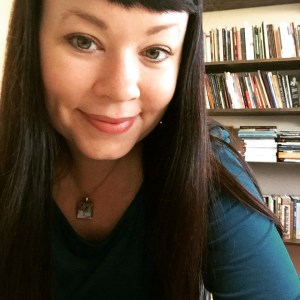
BIDDINGER: Maybe this is a poet thing, but I read my work aloud as I write, and I beg my creative writing students to do the same. Come to think of it, I do this with recommendation letters, too, but it’s different with a poem. One of the most difficult aspects of writing a poem is finding where to end, and reading aloud helps with that a lot. Sometimes you’ve already nailed your dismount from the balance beam, but you nonetheless go ahead and attempt another few handsprings because you aren’t sure. biddinger-author-photo-the-czarReading aloud also helps me craft my line breaks. It’s vital to the process.
In terms of public events, I always want to read my newest stuff and that can be a problem when I am trying to promote a book. Dear Audience, allow me to read five new poems and then remember what you came here to hear, and then shift gears, before ending with something I wrote this morning. I think as much about the arc and sequence of the poems as I do about what pieces to read. But I also tend to be spontaneous, and have been known to shuffle poems around at the podium. It’s definitely art for me, especially when I read poems with narratives that explore vulnerability on the part of the speaker.

Speaking of readings, I had the pleasure of hearing you read at the CB1 Gallery in Los Angeles during AWP 2015, and felt that experiencing your fiction aloud amplified my appreciation of your work. I’m a devout reader of fiction, but often public readings of prose fail to replicate the experience of discovery and engagement that I have with the page. What advice do you have for fellow fiction writers who are going to read their work aloud?

CHENEY: I have a theatre background, though I haven’t done any performing for a few years, so reading aloud is a way for me to indulge my performance side. But there’s also the fact that, as multiple people have told me, I write short stories as you’d probably expect a playwright to. Even if they’re not dialogue-heavy, as many are, the voice or voicescheney-author-photo-for-book in the narrative are my base. Before anything else, a story is something I hear in my head. I can’t write without an angle on the rhythms and tones of the sentences.

As for advice for writers giving readings, I always think of it as performing a role, with whatever I’m reading as the script. I’m generally quite introverted, and I have absolutely no talent for small talk. For that reason, scripts and rehearsals are things I love. I don’t have any desire to be in front of an audience as myself; in fact, I’m terrified of it. Instead, I’m there as The Writer. That’s a role I can perform.

One of the biggest problems I see even with experienced readers is that they fall into very narrow vocal patterns and rhythms. It happens to all of us. We get into a rhythm, and then stick to it, so the sound of the next sentence becomes very predictable. That’s a recipe for making an audience’s attention drift. Actors know this, and so have developed ways to counter the habit, because for most of us, you really do have to pay attention to it if you want to avoid it. Different styles of acting and theatre have different approaches, of course, but generally I’d say one of the most helpful techniques you can learn in the theatre is script analysis, which is basically close reading combined with performance notes. Mark accents, emphases, changes in voice, beat changes, etc. This will also help with developing confidence, because you’ll have this wonderful score for your reading to fall back on.

With poetry, you’ve already got something of a score in the shape of the poem on the page. As a prose writer, the things that I find most fascinating and alienating (in a good way) about poetry are line breaks and stanza shapes. I’m familiar with your most recent collections of poetry, Mary, and in each I’ve been struck by their stanzas. Beyond the individual poems, there’s a rhythm to the books as books because, for instance, you’ll have a lot of two- and three-stanza poems, then just as we readers are getting settled, there’s a poem that’s completely differently shaped. And then of course, there are the prose poems, which are different as well. I don’t really have a question here, I just have a curiosity, so I wonder if you might be able to talk about how you think and feel your way through line breaks and stanza shapes…

BIDDINGER: I’m kind of a “when in doubt, try couplets” poet, but I can say that prose poems come from a different place for me. With the conventionally lineated poems, I am often working line by line, reading aloud several times before proceeding to the next line. When writing prose poems, I am all about the momentum. I usually know that it’s going to be a prose poem by the end of the first line. However, even when writing a prose poem I try to break up the work into stanzagraphs, or prose verse paragraphs.

One tendency I have is to write poems in stanzas with one long line, and one slightly shorter line. I’m not sure why I do this, but it’s helpful as a generative device. Sometimes I switch things up and start with the shorter line, and other times I begin with the long line. I like giving myself a space to fill up. I tell my students that having some sort of form can offer structure, and use the analogy of a bunch of paired socks waiting to be stored. If you let them hang out on top of the dresser, they’ll get knocked down or mixed in with other things, but if you confine them to a tidy drawer, all the sock chaos will conform itself to that sized container. That’s exactly how I feel about stanzas. I give myself a box (of whatever shape), and then fill it again and again.

CHENEY: It strikes me that all but one of your books from Black Lawrence have images of places on their covers. One of the things that first attracted me to your work, in fact, was some ineffable feeling of, for lack of a better word, placeness in your Small Enterprise poems. Which might just be my own projection. But I wonder. Do you feel placed?

BIDDINGER: Hang on a minute, Matt. I’m going to go write about thirty new poems about the notion of being placed. What an excellent query, and something I’m not entirely aware of when writing, but I’m sure it’s among my main motivations. Growing up, my family relocated frequently, so I believe I had a sense of preemptive loss whenever I would move to a new place. Often when I’m writing a poem I wonder, is this poem addressed to a person, or to a city? I like blurring that line sometimes, as I did in my book O Holy Insurgency.

When I was a kid, one of my favorite activities was just staring out the window of a car or a train. I loved looking into windows (even if they were boarded up or broken) and imagining what secrets they held. I try to go to that place in my mind when I’m writing, and it’s always a place, not a concept or an object. It’s no surprise that I get a lot of my ideas when driving these days. It’s hard to remember them without writing them down (I am not savvy enough to record myself while on the go), but sometimes I’ll repeat something as I’m driving on the highway, half mantra, half pre-poem.

I’m so thankful for having landed in a place that’s truly right for me, after a life of moving every few years. Akron has the perfect balance of lively spirit and Midwestern grit; it’s a place where I finally feel at home.

CHENEY: I’ve had very much the opposite experience — I lived in the same house in rural New Hampshire until I went to college, and I’ve not only spent the majority of my life in New Hampshire, but in that house, since I inherited it when my father died and it’s cheaper for me to live in it than almost anywhere else right now. Without ever planning to be, I ended up very rooted. For a while, that meant I traveled a lot — Europe, Nicaragua, Mexico, Kenya, all over the U.S. — but I usually came home to the place that has most usually been home. I’m only now beginning to see how this affects my writing, and I’ve really grown weary of travel.

BIDDINGER: I entered your essay “Why I Am Not A Poet” with mild trepidation (we poets are always on the lookout for division by genre), and was thrilled to see the connection to O’Hara’s “Why I Am Not A Painter.” In the essay you said, “When I teach writing, I try to teach the students to think like poets, even if they don’t write like poets, even if they write the prosiest prose.” I’m interested in hearing about how this works with your students. What aspects of their writing are sloughed off in response to the idea of thinking like a poet? PS: This quote is amazing: “Poetry is great for my iconoclastic intentions, because even students who have had wonderful, innovative teachers of poetry in the past may still hold on to an idea that poems are things that sound like Hallmark cards and work like cryptography.”

CHENEY: Fundamentally, I try to get students to play around. We take writing so seriously! And it is serious, deadly serious, but I wouldn’t keep doing it if it weren’t also play, because there aren’t enough extrinsic rewards to make writing short stories a worthwhile activity otherwise. So I try to help students see the pleasure in the sound of language, the pleasure in playing around with form and structure. I use a lot of Gertrude Stein whenever I can — I challenge the students to try to write like her, which at first seems easy, but is actually really hard because it’s hard to give up on denotative meaning and look at the words as shapes and sounds. I encourage students to write badly, as badly as they can, because generally their idea of “bad writing” is something free and weird, something their high school English teacher would scowl at. The results can be illuminating and liberating. I also steal a lot from Lynda Barry’s books What It Is and Syllabus — for instance, I bring crayons to class and we write with them. To find what is serious about writing, we have to first get away from all the assumptions of seriousness we bring to the task. And then maybe we’ll find the real seriousness along the way.

This brings me to a question I have about teaching poetry — what do you do? How do you bring students into poetry, how do you get them thinking about it deeply, engaging with it deeply?

BIDDINGER: I tell students that I consider myself to be an ambassador for poetry, and often I find myself locating and undoing the students’ negative past experiences with poems. There are, of course, exceptions (sometimes students had a great high school teacher who exposed them to various poets, or didn’t force them to write a sonnet about autumn under duress). But generally, I try to convey to students the idea that poetry belongs to all of us; it stems from the oral tradition, and shares similarities with the music in everybody’s headphones as they’re walking across campus.

Speaking of music, I would love to hear more about your process in compiling a playlist for your short story collection Blood, which was featured at Largehearted Boy. Any playlist that kicks off with The The is a winner in my book. How is your writing influenced by music? Is it part of your process? And are there any current artists or songs that you would recommend to writers as inspiration?

CHENEY: I’m always happy to meet another The The listener! (I wrote at length about The The for Kelly Baker’s website, Cold Takes, as part of a series on music, memory, and emotion.)

I put the Largehearted Boy playlist together as a kind of pedaogical tool — I wanted to propose songs that would help readers find a way into the stories, into their tones and weirdnesses. This becomes especially important later on, because the stories toward the end of the book shift into a kind of surrealism that I’ve discovered can be really alienating to readers. So, for instance, what happens if we think of the song “I Wish I Was a Mole in the Ground” by Bascom Lamar Lunsford as a companion to the story “Walk in the Light While There Is Light”? There are few recordings I find as powerful as that song. I have no idea what the song is “about”, and yet all the brief images, those moments, somehow together add up to something overwhelmingly powerful, ineffable — an effect beyond words, despite being created by words.

If I’ve discovered anything by having this book published, its just how much some readers resist and, in fact, are angered by the weird turns a lot of my stories take. The teacher in me of course wants to fix this, to create pedagogies to make my work more pleasurable or at least accessible for readers, and the Largehearted Boy playlist is one such attempt.

You’ve had your own encounters with readers who reject the weirder moments of your work — the moments I really love in your work — and I wonder how you’ve dealt with that over the years.

BIDDINGER: Matt, I feel a “kinship of the strange” with you, and I’m so glad to talk about weird moments in our work. I’ve always been attracted to oddness in literature and music, film, art, and so on. Thankfully my parents cultivated this in me, and it was only when discussing movies or records with friends that I became aware of my non-mainstream tendencies. Something unusual about me is that I grew up watching very little television (except for the news, and of course Twin Peaks), so maybe that time spent reading Camus and listening to Laibach had an effect.

When I started taking creative writing classes as an undergraduate at the University of Michigan, my strangeness set me apart without alienating me from classmates and professors. Looking back, in some instances they were very forgiving of my overt weirdness, but the most important thing that they did was support me even it my poems made “no sense.” Later, in graduate programs, I encountered more peers and professors who would call me out on the strange. I became self conscious. Sometimes I would write a fake poem to bring to workshop, an accessible narrative with crowd-pleasing concrete details, rather than the weird thing I was working on at home and keeping to myself.

I struggled with this until my first book came out, and then I purged myself of all those voices that said things like This poem needs a topic sentence, or I just don’t get it. I think that’s one advantage of writing beyond a writing program. You finally come into your own, and become responsible for making your own decisions. Allowing myself to return to my strange roots was liberating, and I was glad to be able to truly surprise myself in my work again.

CHENEY: How have those experiences as a student shaped your own pedagogy? What do you do with the weird writers?

BIDDINGER: I try to be an advocate for my student writers who write the weird. First I share with them the work of fellow writers of the strange. Next we talk about reaching audiences and making them feel, without compromising the experiments of the poem. Often all readers need is a sense of setting, or a feeling of kinship with a speaker, and then they are able to make the necessary leaps. I am also very open about my own struggles as a writer, including workshop experiences where a weird poem was a huge flop, and I think this helps create a dialogue. Finally, I try to get all of my students to at least dabble in strangeness, whether it’s writing a poem without a linear narrative, or really pushing imagery into surreal territory. Even if the writers don’t continue their trajectories of weirdness, they nonetheless have a new appreciation for it as a craft decision.

CHENEY:  In the introduction to The Monkey and the Wrench: Essays into Contemporary Poetics, which you edited with John Gallaher, you write that you sought out essays “that are investigating poetry and the situation of poetry as something important, with something at stake.” It’s now more than five years since you put that book together, and I wonder how you see the importance of poetry — your own or others’ — now. What’s at stake these days for poetry and the situation of poetry?

BIDDINGER: Something that has struck me lately is how we’ve created better access to poems about social justice. This, of course, is due to necessity. But I believe we are in a moment where people are finding that they need poems, and perhaps those people aren’t ordinarily poetry readers. Thinking about poems like Maggie Smith’s “Good Bones,” or Ross Gay’s “A Small Needful Fact,” both of which I have shared with friends and students, and how they have been passed around so often lately to the point of becoming “viral,” suggests an increased demand for poetry of this nature. A new readership is seeking poems about racial injustice, about the struggle for LGBTQ rights, about economic disparities, and my hope is that this will further make a case for poetry’s relevance, and for its ability to articulate truths about the human condition in a way that only poetry can.

Responding to this question makes me wonder if you, too, have a report from the field. Have you noticed recent changes in the world of fiction, or any noteworthy trends?

CHENEY: I don’t keep up with contemporary fiction as much as I used to because I’ve got this whole Ph.D. thing going on that keeps me reading piles of stuff in very specific areas, leaving little time or, more importantly, brain capacity for other reading. At this point, I could tell you more about what was going on with 1930s British fiction than current U.S. fiction. But of course, even somebody who only reads occasionally in new work would notice a couple of trends, particularly the popularity of dystopian writing and the growing shelves of a certain type of eco-conscious writing, writing that is somehow grappling with what some philosophers and scientists have come to call the anthropocene. Roy Scranton’s New York Times essay (and later book) “Learning How to Die in the Anthropocene” is one entry into this idea. Jeff VanderMeer’s recent books are the most interesting fictional exploration of these concepts that I know. (Some people have taken to calling such stuff cli-fi, a term I deeply dislike because it sounds really silly, and I don’t think a term for basically the most important global issue facing us should sound silly. Anthropocene is an ugly word, but not silly, and ugliness is appropriate to the horrors the future holds for life on this planet.)

Maybe writers tend to be especially attracted to doom and gloom by temperament, and certainly it’s true that the world has always been ending, that apocalypticism is as close to a historical universal as anything is … but given the state of the world economy, with a tiny number of people controlling the majority of the world’s wealth; and given the tenacity of racism and sexism and nationalism all the other awful -isms that plague us; and given the state of the world’s ecology, which is wracked and wrecked by ever more chaos, destruction, disaster, misery, and extinction — given all this, it’s not entirely a surprise that writers are drawn to gloomy and doomy ideas. A lot, and maybe even most, of what gets written about this stuff in novels and stories is kitsch, with, it seems to me, an underlying agenda to make us feel better, but it’s hard to sell work that doesn’t to some extent or another try to flatter the reader. Maybe kitsch is better than nothing.

And I may be too pessimistic, too resigned, myself, to doom. Maybe that’s why I’m so drawn to literature from between the two world wars: with those writings, at least, we know what happened next, and we know who was accurate in their ideas, and who was too optimistic, and who was just full of themselves.

At a reading recently, I said that though I’ve tried to write science fiction, especially when I was younger, I’ve never succeeded at writing what I think of as actual science fiction — as opposed to a story like “Expositions” that uses science fictional tropes for non-science-fictional purposes — because to write science fiction, one must believe in the future, and I don’t. (The audience laughed. I laughed. What else could we do?)

Perhaps we should finish with something lighter. One of the things, actually, I like about your poetry is that it is often infused and enlivened with moments of lightness, sometimes absurd, sometimes touching, sometimes both. Do you have a favorite poem of lightness, or a poem that lightens you? (For me, it’s Olena Kalytiak Davis’s “sweet reader, flanneled and tulled”, which I can read at any time  — preferably aloud — and feel better. I’ve been known occasionally, even randomly, to just blurt out: “And I, Reader, I am but the daughter/ of a tinker.”)

BIDDINGER: Oh, that is a magnificent poem by OKD! And thanks so much for picking up on the humor in my poems. It’s always the worst when I read something that’s intended to be comical, and audiences look at me like I’m trying to be depressing or poignant or something other than funny. So much of my poetry comes from misunderstandings, typos, overheard and misheard phrases, and other potentially comical things. Humor is really at the heart of my work.

When I’m looking for a poem to fill me with lightness, or humorous joy, or to remind me of poetry’s performative properties, I turn to Matthew Guenette, who manages to be hilarious while also making a powerful social commentary. I offer you a video of Guenette reading his poem “Sestina Aguilera” here at the University of Akron. The quality isn’t great, because it was taken back before smart phone video, and because we couldn’t stop laughing. Wordplay, popular culture, improvisation, and humor come together in this performance, which is a joy to share.

SATURDAY POETRY SERIES PRESENTS: SARAH SARAI

sarah-sarai-2016-for-sivan

REMORSE
By Sarah Sarai

When he lumbered in the way of men
who use their hands to till earth,
he knocked rough doorway
to sob at unfairness and
the slaying. Dull, trembling,
he threw down three pelts against
a desert night, and feared heaven’s
white stars. We’ve all killed our brother.
The dead roam through us.
We toss beneath old gods’ blazing navigation.
Cain? It’s morning. He bites a sweet seedy fig.


Today’s poem originally appeared in the Terrain.org and appears here today with permission from the poet.


Sarah Sarai’s second collection, Geographies of Soul and Taffeta, was published this year by Indolent Books. Poet Melissa Studdard called Sarai’s first collection, The Future Is Happy, “a poetry of luminous, brave transparency” (American Book Review). Journals include Painted Bride Quarterly, Barrow Street, The Collagist, Boston Review, Threepenny Review, Ascent. After teaching English at a Catholic girls’ school in Los Angeles, Sarai received an NEH fellowship and used extra monies to move to Seattle where she began writing poetry. She has been Lecturer in comp and lit, editor-in-chief, file clerk for warrant officers, and, currently, freelance editor in poetry, fiction, and pharmaceutical advertising. Sarai has an MFA in fiction from Sarah Lawrence College. A native of Long Island, she lives in Manhattan.

Editor’s Note: Today’s poem is a vivid and moving reflection upon the slaying of Cain by his brother Able. The Bible’s first brothers, and already one slays the other. But then, as the poet points out, “We’ve all killed our brother.” And while “The dead roam through us,” life–and the poem–insists that we go on. For although in the night Cain “threw down three pelts against / a desert night, and feared heaven’s // white stars,” in the morning light life looks sweeter, even for the damned.

Want to see more from Sarah Sarai?
Geographies of Soul and Taffeta
Poems in Posit
Poem in The Collagist
Poem in Ascent
Poems in Yew

“Languages” by David Ishaya Osu

ishaya

Languages

i do not chew fruits
that i cannot pronounce

garden

whoever made

my body, first
drank a moon

revival

it is open & close
to fire, it will body
along midnight’s
circles—next
time you will
cry, she replied

material

it is written on bodies
that clocks will
not age nor
listen

flying

& shadows
in the attic
are sisters

because

sleeping
changes every
body from
lines to
a quiet family

***

David Ishaya Osu (b. 1991) is an Afo native from Onda. His poetry appears in: Vinyl, Chiron Review, Cutbank, The Lampeter Review, The Nottingham Review, Spillway, Juked, RædLeaf Poetry: The African Diaspora Folio, A Thousand Voices Rising: An Anthology of Contemporary African Poetry, among others. David is a board member of the Babishai Niwe Poetry Foundation, and was selected for the 2016 USA Callaloo Creative Writing Workshop. He was poetry editor for The James Franco Review. David is currently polishing his debut poetry book.

[The above poem originally appeared in Numero Cinq and is reprinted here with permission of the author.]

SATURDAY POETRY SERIES PRESENTS: SANDRA L. FAULKNER

sfaulkner


THE INTERVIEW
By Sandra L. Faulkner

for Sylvia Plath (after “The Applicant”)

Can you separate lights from darks,
gabardine from linen?
Too much bother? I cannot care

if your hands are
warm like Georgia hot springs
capable of sparing my feet

the Sisyphean walk over broken
crayons and wine glasses,
the laundry room of dog and dust.

Do you know how to make coffee,
float a river of cream
in my capacious cup?

Forget the sugar and call
my name with an accent auf Deutsch?
But speak only ein bisschen,

patch the noise of domestic bliss
with a steady pour and two clinks of ice.
Will you wait for the repairs,

bury the hamster with the holey
blanket, behind the dying Holly?
Never mind if you dig too shallow,
I want a wife, too.


Today’s poem originally appeared in the Pine Hills Review and appears here today with permission from the poet.


Sandra L. Faulkner is Professor of Communication at BGSU. Her poetry appears in places such as Gravel, Literary Mama, Rat’s Ass Review, and damselfly. She authored three chapbooks, Hello Kitty Goes to College (dancing girl press, 2012), Knit Four, Make One (Kattywompus, 2015), and Postkarten aus Deutschland. Sense published her memoir in poetry, Knit Four, Frog One (2014). She researches, teaches, and writes about relationships in NW Ohio where she lives with her partner, their warrior girl, a hamster, and two rescue mutts.


Editor’s Note: Today’s poem invites us in for coffee and contemplation. Welcomes us to a life–a real life replete with a “walk over broken / crayons and wine glasses, / the laundry room of dog and dust.” Lets us in on the secret desires and realities of the speaker, that a “steady pour and two clinks of ice” and a willingness to “wait for the repairs” trumps–or perhaps is–domestic bliss. Imperfection is expected–welcome, even–in this refreshingly honest portrayal of an interview for the role of wife.


Want to see more from Sandra L. Faulkner?
Carpe Noctum Chapbook Interview
A collection of Sandra L Faulkner’s work via Bowling Green State University
Buy Family Stories, Poetry, and Women’s Work: Knit Four, Frog One from Sense Publishers
Buy Writing the Personal: Getting Your Stories onto the Page from Sense Publishers
Buy Knit Four, Make One from Kattywompus Press
Buy Hello Kitty Goes to College from dancing girl press

A Review of Mary McMyne’s Wolf Skin

https://i0.wp.com/cdn.shopify.com/s/files/1/0719/1219/products/wolf_skin_1024x1024.jpg

A Review of Mary McMyne’s Wolf Skin

By Jennifer Dane Clements

We remember best that which haunts us. The memories or fears that we carry, percolate in our bloodstreams. As children, the unknown and unknowable facets of the world succumb to dreamscapes of mythical proportions, allowing us to be haunted by things ordinary and alive: the toothy jags of a broken window, an attic portrait with a traveling gaze, the gnarled witch and her warty moral to the story. As children, we await their instruction, understanding that which haunts us to have a strange and beguiling power.

It is with this in mind that Mary McMyne frames Wolf Skin, a chapbook of poems from the voice of a woman whose own childhood was steeped in the twists and vines of the old German fairy tales. Now, grown, the echoes of the tales return to her as commentary to her daily life and reminders from long ago.

The most harrowing of these echoes advises the woman to “Be not girl . . . but wolf.” Those who do not become wolves, speaks the memory of her mother, are little more than dolls, “dumb as porcelain.” As though one’s evolution through personhood is a journey built on unpleasant binaries: vicious or inert, brave or in need of rescue.

In the titular poem, we come to understand the huntsman from “Little Red Riding Hood” embellished his tale of heroism from something more closely approximating a sad act of butchery, his liberated victims still reeling from shock and too disoriented to mutter more than a few words. There were no great thanks or praise, no ceremonies, and the trophy he claimed to have taken from his heroic deed. The “wolf skin” of the poem and of the collection’s title speaks to the assumed persona, the larger-than-life fiction we cloak ourselves in to satisfy some notion of bravery, of gender, of morality.

Childhoods are fascinated with dark spaces and mystery, and lean with curiosity towards danger. In McMyne’s retelling of these familiar tales, we’re reminded of the darker themes lurking behind characters we’ve come to associate with youthful innocence: death, isolation, pain. And so we encounter the wolf lurking at the doorstep where a girl laps at her popsicle, the prince who’s been cursed to live as a hedgehog, the pregnant and yearning princess captive in her tower.

Indeed these reminders often deal in fierceness–how it can be assumed or appropriated, how growth and heroism seem intertwined. And, perhaps most importantly, how these values and lessons transcend and permeate into our time, today, where still we find what’s necessary at odds with what makes for a compelling hero’s tale.

The collection begins and ends with the image of a moth, from the mother’s collection, perfect and asphyxiated, pinned to a corkboard. As an expression of both the fairy tales she illustrates and of the book itself, this image carries acute resonance: delicate, inquisitive, and a tinge darker than people might expect.

Mary McMyne, Wolf Skin. Dancing Girl Press, 2014: $7.00

***

Jennifer Clements is a writer of all sorts based in Washington, D.C. Her work has been featured in publications including Barrelhouse, Hippocampus, WordRiot, Psychopomp, and on stages in DC and New York. She is a prose editor of ink&coda and writes regularly for Luna Luna Magazine and DC Theatre Scene. She holds an MFA in creative writing from George Mason University. Visit her online at www.jennifer-dane-clements.com.

Hala Alyan and Elizabeth Cantwell: A Conversation

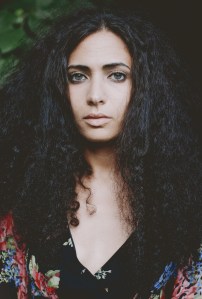
alyan
Hala Alyan

HA: Elizabeth, I have to start by saying how much I enjoyed this collection. I’m so curious about the process of writing it. Did you start off with a particular image that later shaped the collection? I ask because the repetition of dreamscapes was haunting and contributed to the book as a whole having an otherworldly quality.

EC: Thanks so much, Hala! I’m glad you asked about this – you’re absolutely right that the repetition of the dream world came from a specific image/experience. When I was in elementary school, I began having a recurring dream – the one outlined in various iterations in the book – that really haunted me for a lot of reasons. In the dream, my little brother and I were outside, having a picnic, and he’d always ask me for something — another half a sandwich, some more lemonade, a napkin, something that got me to stand up and walk away from the picnic blanket. And I’d be walking away, getting him this thing he needed, and I’d turn back and see some sort of small animal crawling over to him through the grass. A kitten or a fawn or a puppy or a small chick. And he’d get this huge smile on his face — I think I started having this dream when I was about 10 years old, which would make him 6 or so. And I’d just know in that dream second that something was very wrong. This is also about the part in the dream where I’d become aware that I’d had this dream before and it was happening again. I’d start running back towards the picnic blanket, to tell him not to touch the animal, it was a trap, but it was always too late, and before I could get there the tiny cute thing would transform into a tiger, snatch him up in its jaws, and take him away. And I’d be running after them, that slow awful impossible run you do in dreams, and I’d know I couldn’t save him, and I’d wake up, out of breath, having failed yet again.

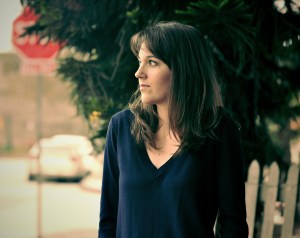
cantwell_photo
Elizabeth Cantwell

Later in life, when my brother began struggling with drugs, alcohol, and a series of stints in jail, the dream came back to me, and seemed somehow prophetic or real or upsetting on a new level, and I knew I had to write about it.

Your book, too, has a lot of dreams in it — and I wonder, because I so clearly had a concrete dream I was playing with — are the dreams you talk about in your book real, or do you sometimes invent dreams for the sake of the device of having a dream? I’ve definitely done both, in the past — I’d love to hear more about where those dreams in Four Cities came from, or just what the device of the dream means to you.

HA: Oh, wow. That is such a poignant and heartbreaking image to have had to return to nightly. Yes, there’s something prophetic about it, and also something tragic in how you were doomed to forget each time, doomed to have it happen all over again.

I’m so fascinated with dreamwork, in life and in art, and I find that many of my poems actually begin with a certain image or symbol that first came to me in a dream. I’ve certainly played around with dreamscapes in writing, sometimes recreating them faithfully, sometimes inventing them entirely. In Four Cities, the dreams I allude to were real. I go through periods of my life, depending on what is happening in my waking world, where I will dream lucidly and, more importantly, remember my dreams very vividly. While writing FC, this was a period of time when I was dreaming very intensely, carrying those dreams around with me daily.

With the collection I’m working on now, a very similar thing has been happening. For the past year, I’ve been remembering my dreams in very intense detail almost every night. And so snippets of them have reappeared in my recent poems, sometimes without me even realizing it’s happening. While it’s not the same dream in different iterations, as in your case, they are often the same themes and images: of drowning, of not saving the ones I love, of new cities that I have to explore on my own.

Has the dream stopped or changed since you wrote the collection? And what was it like to write about something so distressing, so elusive?

EC: Well, that specific recurring dream stopped in early middle school, so I haven’t had it since — if anything, I was surprised to find it bubble back up in my memory when I began to deal with my brother’s problems as an adult. As for what it’s like to write about something distressing and elusive — isn’t that what all writers do, all the time? We’re all obsessed with our own obsessions, writing to purge some elemental horror from our deepest selves that is, in the end, never completely rooted out. Even the poets whose work on the surface seems incredibly calm and self-assured and placid — I’m thinking of Merwin, maybe — once you dig in, it starts to become obvious that there are terrible repetitions and anxieties and dark rooms hovering underneath.

You talked about lucid dreaming, and how that seems to be something important in your writing process sometimes. I definitely had the sense of the kind of surrealism that comes with the not-dream-not-awake state in a lot of your poems. But you ground that surreal dream state so clearly in place. In “After Thunderstorms in Oklahoma,” which I love, you have the reader set clearly in one place (Oklahoma), which then morphs into a memory from another place (Ramallah), which then becomes a surreal forest and the space of dreaming … How did you deal with the ways place can be both fluid and concrete in a collection of poems that so clearly relies on place for structure?

HA: I love that description of the “dark rooms” that hover within. It’s so accurate. Yes, I think a lot of my work plays with that space between reality and surrealism, particularly because I’m so fascinated with how that space intersects with one’s sense of self. I think physical place (i.e. cities) play such a prominent role precisely because place, in my experience, is both fluid and concrete. In titling the collection Four Cities, I was aware that, in reality, I was actually encountering dozens and, of those dozens, each one was further quartered and slivered because I feel like I have many versions of every city I’ve loved within me: there’s the streets, the physical scents and sounds, but also the different selves I wanted to be (or discarded) in those cities, not to mention the ways I recreate those cities in memory and in dream. So I think that I dealt with that messy contradiction of fluidity versus concreteness by allowing it to exist, rather than trying to tidy it up.

There are certain images that flitted throughout your collection: those of fire, creatures, water, doors. One of the things I enjoyed about the book was how you were able to return to the same elements without it ever feeling tired or repetitive. It was always with a renewed vigor, what felt like a fresh pair of eyes. Could you speak a little about that?

EC: Oh man, the former selves. So many of them, strewn all over. That makes me think of your poem “Push,” which I read a couple different ways – both as a conversation between cities, and as a conversation between different versions of the self in those cities.

And yes! Images. I’m so glad to hear they didn’t feel tired or repetitive. I do think that’s a very real danger of writing a book inspired by a recurring dream — by the end of the book there’s a risk that the readers are going to be like “Okay, seriously, we’re doing the tiger thing again?” I don’t know if I had a real strategy to keep things from feeling redundant other than trying to be true to the feeling of the recurring dream, of déjà vu — you know you’ve had this experience before, but because you know that, the whole thing feels weirder and more unsettling, not ho-hum.

The thing I noticed almost right away in your collection, as far as images go, is that your poems are very busy. You’ve packed them full of objects, things, adjectives. They feel very dense that way. Image density is something that scares me sometimes, but you pull it off really well–how did you find yourself navigating that as you wrote?

HA: What a perfect way to describe it: how the feeling of déjà vu only makes you more unsettled.

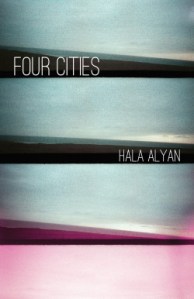
alyan_final-250x386I’m an adjective addict. I’m like a cook who oversalts every meal! When I gave my first proper piece of fiction to a writer friend of mine, she said, “Cut most of your adjectives and adverbs. Then cut some more.” In fiction, I think that sort of language can easily stifle the reader, but in poetry it feels more allowed somehow, more forgivable. It’s one of the things I love the most about poetry, how you can take a single tiny thing—a moment, an object, the arch of a lover’s eyebrow—and meditate on it.
I think how I write is very much a reflection of how I think; my mind is always in a state of buzzing, trying to consider every possible angle and incarnation of a thing, always making room for more. My poetry ends up dripping with images. Sometimes it works, sometimes not. I think in the past year or so, I’ve tried to see what kind of poetry I can produce with a more minimalist approach to language. It’s been quite a challenging, if at times rewarding, experiment.

My favorite line in you book (my heart!) was: “I’m always opening the door to the same threat/over and over/and every time it looks like love.” It stunned me. So honest, so raw. It got me thinking about the different ways we love and lose, and of course about the way something that appears to be love in the recurring dream (deer, rabbit, etc) ends up being a threat (tiger). Can you speak a little bit more about this idea? Did you intend for it to have so many different meanings?

EC: I feel like we should switch brains for a day in a sort of poetic Freaky Friday. I tend to be extremely wary of adjectives and I try to use only the most minimal and obvious and simple adjectives in my poems … But I really admire poets whose poetry encompasses a wider range of vocabulary and does so while sounding authentic. I would love to stay simple but also get better at describing images. It’s hard. I agree that the idea of meditating on a single moment is what’s alluring about poetry, but the closer I get to something the harder it is, for me, to accurately pin it down with words.

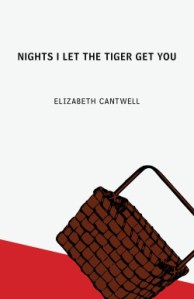
Which maybe speaks to that line you’ve pulled—the more starkly face-to-face with something I am, the easier it is to fail to see it for what it is. As far as what I intended thecantwell-cover5-250x386 line to mean—I actually remember writing that whole poem very quickly without thinking too hard about it, like walking really fast out into the ocean before your brain can tell your body it’s too cold and you have to stop. I try not to mean anything when I write. The poems I draft when I’m trying to mean something feel horrible and cliché and labored. But I can feel it—after the fact—when I’ve written something that’s managed to mean a lot of things successfully.

Don’t you think, in addition to those ideas about loving and losing, or loving the wrong things, that love itself is a threat, even the truest love? There is absolutely nothing more terrifying than the vulnerability you have to take on in order to really love someone. Nothing.

HA: Yes, yes, yes to poetic Freaky Friday! It’s interesting to me that what we’re essentially talking about is restraint: of self, of language, of self-censorship. I resonate with that idea of stepping into the ocean quickly before your mind can stop you. I feel like that’s what writing is for me in general, always trying to stay ahead of myself, or rather the smart-alecky part of myself that likes to clear her throat and say, “Well, actually, that’s a bit trite, isn’t it?”

I completely agree and would add that the truest love is often the biggest threat. To love is to yourself in something else, even if it’s just the tiniest inch of yourself, and that’s always daunting. Writing about love—as authentic and pure as it might be—is equally scary, because you are simultaneously witnessing and making witness out of the world, putting that process on display. I think there’s something remarkably brave about it, particularly when we’re talking about loving the wrong things.

My final question is about what comes next. What are you working on these days, what’s been effortless about it, what’s been particularly tricky?

EC: That’s a great question! I’ve actually been working today on a document currently titled “new manuscript” so … I guess I’m working on a new manuscript? I’m not really sure what it is yet, but it’s something. I think it’s about halfway done. Maybe not quite.

The things I’ve been writing in the past year or so haven’t been as united in theme as Nights I Let The Tiger Get You — I think that manuscript is really almost a story, and is certainly something you can read chronologically and get a cumulative understanding from. I’m doing more standalone poems right now, rather than working on a more project-oriented manuscript — you know, those manuscripts where it’s like “Every poem is title after a fast food meal!” or “It’s one poem for every day in 1943, but told through the eyes of a dying cow!” I kind of wish I were more project-oriented right now, because in a way that makes your task easier, but I just haven’t had the ability to make myself buy into a uniting theme yet. I bet if someone else were to read these poems, they would immediately identify a few obvious threads tying everything together, and probably I will eventually give all of them to someone I trust and make them tell me what I’ve actually written. But at the moment I’m just writing what I want to write.

What’s been effortless about it? Um, nothing? DO YOU WRITE EFFORTLESSLY? Give me the secret!

I am mostly joking … I guess I do, as I mentioned above, find it effortless to write a poem once I’m in the right headspace and can kind of just open myself up to whatever is going to happen on the page. But, mostly, this “book” (if I can even call it that yet) has felt a lot harder to work towards than Nights. Finding the time and space to get into the poetry mindset feels nearly impossible. I’m not in grad school anymore, I don’t have a stipend expressly for the purpose of writing poems, I have a full-time job that frequently requires night and weekend commitments, a 3-year-old who is currently crawling precariously on the couch behind my shoulders and shooting a Kylo Ren Hot Wheels car across the windowsill … My life is really full of a lot of wonderful beautiful things that have nothing to do with words. And that’s been the challenge and the inspiration for me lately—finding ways to shape this weird and boring and mundane and transcendent life into poetry even when everything about it resists poetry.

What about you? What’s next on your plate?

HA: Okay, I laughed aloud at It’s one poem for every day in 1943, but told through the eyes of a dying cow. Well, whatever form your New Manuscript winds up taking, I’m eager to read it. It sounds like these new poems are taking root in rich, evolving, honest soil, and that’s always a refreshing thing (as a reader; it’s hard as a writer, I know).

I’m working on a collection very tentatively titled “The Twenty-Ninth Year,” which is about, well, my twenty-ninth year. I turned thirty in July, and the year leading up to it was such a strange and difficult and marvelous one. Of all I’ve written, these new poems are probably the most easily “traceable” to me, in that I basically turned myself into a subject of study, and am trying to do it as authentically and unflinchingly as possible. Sometimes, it’s nothing short of impossible. Sometimes, it’s healing and good and I feel cleaner after the poem. We’ll see what the manuscript as a whole looks like, once I start stitching it together. That’s usually my favorite part.

This has been so wonderful, Elizabeth! I can’t wait for your new book. Thanks for letting me into your (lovely) mind.

***

Elizabeth Cantwell a high school teacher and poet living in Claremont, California. Her first book of poems, Nights I Let the Tiger Get You (Black Lawrence Press, 2014), was a runner-up for the 2012 Hudson Prize; she is also the author of a chapbook, Premonitions (Grey Book Press, 2014). Her work has recently been published or is forthcoming in such journals as The Los Angeles Review, PANK, The Cincinnati Review, and Hobart.

Hala Alyan is a Palestinian American poet and clinical psychologist whose work has appeared in numerous journals including The Missouri Review, Prairie Schooner and Columbia Poetry Review. Her poetry collection Atrium (Three Rooms Press) was awarded the 2013 Arab American Book Award in Poetry. Four Cities, her second collection, was recently released by Black Lawrence Press. Her latest collection, Hijra, was selected as a winner of the 2015 Crab Orchard Series in Poetry and was published by Southern Illinois University Press in 2016.

SATURDAY POETRY SERIES PRESENTS: A ROSH HASHANAH POEM BY SARAH MARCUS

12027738_10102555892782248_2229857784916307758_n

By Sarah Marcus:


ROSH HASHANAH, 5774

The moon was a sliver of itself
the first night I thought of you
combing a new year’s honey
through our hair.

We are taught to repent, but
it’s a poor translation,
for Teshuvah is to return
to ourselves,
to come back to who we really are,
to return
to an original state

where we have nothing
but possibility laid before us.

And it is written
as everything will be:

someone’s grandmother’s hands
smelling of cinnamon and clove,
a testament to a world
created as an expression
of limitless love,
of refinement.

The Rabbi says that when you share your words
you are sharing a part of your soul. Each moment
has the potential to be deeply spiritual, my children,
stand in the hugeness of it all.

Autumn has lingered years
for your arrival,
each leaf turned
in anticipation,
even the branches
held their breath

              waiting for us to ask the right questions,
                      for us to stop looking to the sky.


Today’s poem originally appeared in the Green Briar Review and appears here today with permission from the poet.


Sarah Marcus is the author of Nothing Good Ever Happens After Midnight (2016, GTK Press) and the chapbooks BACKCOUNTRY (2013) and Every Bird, To You (2013). Her next book, They Were Bears, is forthcoming from Sundress Publications in 2017. She is an editor at Gazing Grain Press, a spirited VIDA: Women in Literary Arts volunteer, and the Series Editor for As Is Ought To Be’s High School Poetry Series: Gender, Identity, & Race. Find her at sarahannmarcus.com.

Editor’s Note: But this is so much more than a Rosh Hashanah poem. This is a poem of the sacred and the secular. Of belief and being. Of awareness and action. This is the moment when memory becomes contemplation, when contemplation becomes questioning, when questioning demands more from us. Yes, this poem is stunning in its imagery and lyric. Yes, it is evocative and moving. Yes it is visceral and philosophical and spiritual. But it is so much more than that. For while “we have nothing / but possibility laid before us,” the very leaves hold their breath “waiting for us to ask the right questions, // for us to stop looking to the sky.”

Shanah Tovah u’Metukah to you, the faithful readers of this series. May the new year be sweet, and may you be the change you want to see in the world.

Want to see more from Sarah Marcus?
Spork Press
Booth
Nashville Review
The EstablishmentHuffington Post

SATURDAY POETRY SERIES PRESENTS: ABRIANA JETTÉ


abeheadshotphtocredchrisjette


LIES OUR MOTHER TOLD US
By Abriana Jetté


I do not believe in the story of the virgin
but in the value of the human: the body —

because no matter what you were told
that soul is not yours. But the body,

the body is yours. The slight round
of the breast like the sun or the depth of your

toes to your crown: these are the ways
we measure ourselves. I do not want to

believe she was a vehicle. Tell me
there was pleasure; there were moans.

Tell me when she was fully grown
she remembered a wave a release an ecstasy

that entered her, that she could feel it in her
teeth. Motherhood means you are no longer

maiden but Queen. Tell me the story of the one
who smiled at the rustling of her sheets.


Today’s poem was published in the The Journal for Compressed Creative Arts, Spring 2015, and appears here today with permission from the poet.


Abriana Jetté: Born and raised in Brooklyn, New York Abriana Jetté is an internationally published poet and essayist and educator. Her anthology 50 Whispers: Poems by Extraordinary Women debuted as a #1 best seller on Amazon, and her work has appeared or is forthcoming in The Seneca Review, River Teeth, Barrelhouse, The Moth, and many other places. She teaches for St. John’s University, for the College of Staten Island, and for the nonprofit organization Sponsors for Educational Opportunity.

Editor’s Note: And then there was the poet who reimagined the Virgin Mary. Not as virgin, but as human, as woman, capable of “a wave a release an ecstasy // that entered her, that she could feel it in her / teeth.” Advocating for agency, the poet insisted, “I do not want to // believe she was a vehicle.” Reverent of the woman’s transformation, she taught us that “Motherhood means you are no longer // maiden but Queen.” And we saw her as the poet saw her. And it was good.

Want to see more from Abriana Jetté?
Hermeneutic Chaos Journal
Truthdig
Abriana Jetté’s Official Website
Stay Thirsty Publishing
Barrelhouse Mag

A Review of Rochelle Hurt’s The Rusted City

41V+a8b2IHL

A Review of Rochelle Hurt’s The Rusted City

By J. Andrew Goodman

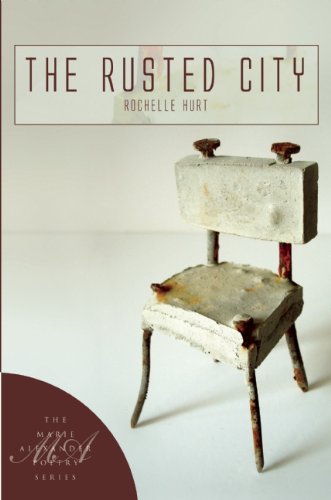
The Rusted City is an imaginative debut novella-in-poems by Rochelle Hurt, chosen as the 2014 installment of the Marie Alexander Poetry Series, an imprint of White Pine Press. The collection follows a family living in the Rusted City where buildings, fauna, and people have corroded from disuse. Jobs and fathers are mythologized and ephemeral, leaving wives and daughters equally susceptible to corrosion. “[Rust], mothers would say to one another, will eat through anything.”

The collection follows a family of four–the Favorite Father, the Quiet Mother, the oldest Sister, and the Smallest Sister–similar to many families in the Rust Belt town amid the strife of unemployment and listlessness and their byproducts. However, Hurt’s vibrant prose animates rivers, turns scrap gardens into jewelry boxes, and rust and oils into something palatable. On one’s first tour, the city glints with old world glory.

The Rusted City subsumes color–patina and verdigris, rust and blood, snow and ash–as a metaphor seemingly changing as scenes and characters do. In one scene, the red of rust signifies the accumulation of secrets; in another, the physical redness of eyes after much weeping.

Through Hurt’s tight and deliberate language, rust, the consequence of the city’s halted production, corrodes the alloyed inhabitants. Such corrosion makes them stiff, opaque, lacking in reflection. Rust becomes a metaphor for callousness or numbness. The city’s many fathers are guilty of sexual abuse. The Favorite Father seeks reconciliation with the Quiet Mother, but she reacts as her moniker suggests:

Once you were silver,/ skin-tease and flash, // I could reach inside/ your chest, empty // as a tin canister, the air / thick with echo, I could stretch // my fingers out and tap / my nail against your heart, // which hung like a spoon / from your ribcage, // once I tapped too hard / and it clattered to the bottom // of your gut. I spent months / trying to hang it back up.

The Rusted City’s other women respond similarly, ossifying against their husband’s apologies, effectively becoming constructs. “In need of music, dancing women began to hum, // bus still refused to move their tongues. Their men resolved to hold them still until // some mouths softened with moss or crumbled.” All the citizens adopt such forms to conceal their trauma or distress. Rochelle Hurt’s clever rendering of bodies reveals the “impatient decay” of heavily tested love, how quickly silence becomes distance.

Silence exudes almost every page as a gift of reprieve, as a secret, and as a weapon. The Smallest Sister, whom the collection follows most closely, tries to recapture the language to speak of her own abuse, to give a name to her experience. She appropriates it one word at a time with help from the Oldest Sister.

Once inhabited by silence, Hurt’s characters are inert machines: cold and interchangeable cogs, the mothers are indefatigable and quiet in their “sweeping” of the past. “Often, mothers caught one another / by the river at night, eyes wide, / arms locked to brooms. Often, // they agreed to make another secret / of their sweeping, and no one knew // how much of the city’s past / the water had swallowed.” More and more, the citizens and their pasts are enveloped in rust. In concerted effort, Rochelle Hurt reveals the nature of pain: infectious and ubiquitous.

The Rusted City is a product of collective labor. An entire city works to conceal its past before younger generations may rediscover it. In the process, one wonders if the intense corruption begins in the atmosphere or whether it is internal, spreading outward.

The Rusted City is an intimate examination of familial strife. Rochelle Hurt’s use of metaphor compounds the affect of language and implication. Her imagery is smart and wondrous, while her insights remind us that reconciliation is precipitous and piecemeal.

Rochelle Hurt, The Rusted City. White Pine Press, 2014: $16.00

***

J. Andrew Goodman is the Managing Book Review Editor for As It Ought To Be, a Library Page for the Louisville Free Public Library, and a former marketing and editorial intern for White Pine Press. He received his MFA in Creative Writing from Murray State University.

SATURDAY POETRY SERIES PRESENTS: SUSAN RICH

susan-rich-cropped

MOHAMUD AT THE MOSQUE
By Susan Rich

                  ~ for my student upon his graduation

And some time later in the lingering
blaze of summer, in the first days
after September 11th you phoned –

if I don’t tell anyone my name I’ll
pass for an African American.

And suddenly, this seemed a sensible solution –

the best protection: to be a black man
born in America, more invisible than
Somali, Muslim, asylum seeker –

Others stayed away that first Friday
but your uncle insisted that you pray.
How fortunes change so swiftly

I hear you say. And as you parallel
park across from the Tukwila
mosque, a young woman cries out –

her fears unfurling beside your battered car
go back where you came from!
You stand, both of you, dazzling there

in the mid-day light, her pavement
facing off along your parking strip.
You tell me she is only trying

to protect her lawn, her trees,
her untended heart – already
alarmed by its directive.

And when the neighborhood
policeman appears, asks
you, asks her, asks all the others –

So what seems to be the problem?
He actually expects an answer,
as if any of us could name it –

as if perhaps your prayers
chanted as this cop stands guard
watching over your windshield

during the entire service
might hold back the world
we did not want to know.


Today’s poem was published in the collection Cures Include Travel (White Pine Press, 2006), and appears here today with permission from the poet.


Susan Rich is the author of four poetry collections including Cloud Pharmacy, recently shortlisted for the Julie Suk Poetry Prize and the Indi Fab Award. Other books include the The Alchemist’s Kitchen, a Finalist for the Washington Book Prize, Cures Include Travel, and The Cartographer’s Tongue: Poems of the World (White Pine). She is a co-editor of an essay collection, The Strangest of Theatres: Poets Crossing Borders published by The Poetry Foundation and McSweeney’s. Susan’s poems have been published in 50 States and 1 District including journals such as New England Review, The Gettysburg Review, Poetry International, and World Literature Today.

Editor’s Note: Today’s poem is a stunning and moving commentary on racism in America today. A thoughtful reflection, now, with the 15th anniversary of September 11th this past weekend. How far have we come in moving past anti-Islamic sentiment in America? In the world? And how many steps backward have we taken in America’s racism against black men? What of the poem’s notion that “the best protection” is “to be a black man / born in America, more invisible than / Somali, Muslim, asylum seeker”? And what of those asylum seekers? How, in a country whose emblem bears the words “Give me your tired, your poor, your huddled masses yearning to breathe free,” have we opened our doors to Syrian refugees? And what of those Americans who are threatening to vote for a man whose response to our neighbors is to build a wall to keep them out?

Today, as much as it did when it was written, this poem asks: Who are we, America? Who are we, and how do we treat our fellow human? I, for one, fear that this America–this world–is “the world / we did not want to know.”

Want to see more from Susan Rich?
Buy Cloud Pharmacy from The Elliot Bay Book Company
Susan Rich’s Official Website
The Alchemist’s Kitchen – Susan Rich’s Blog
Twitter: @susanrichpoet
Facebook Author Page