G. M. H. Thompson: “Ruminations of an Airplane Passenger Before the Flight Turned Around & Returned to its Departure Airport”


Ruminations of an Airplane Passenger
Before the Flight Turned Around
& Returned to its Departure Airport


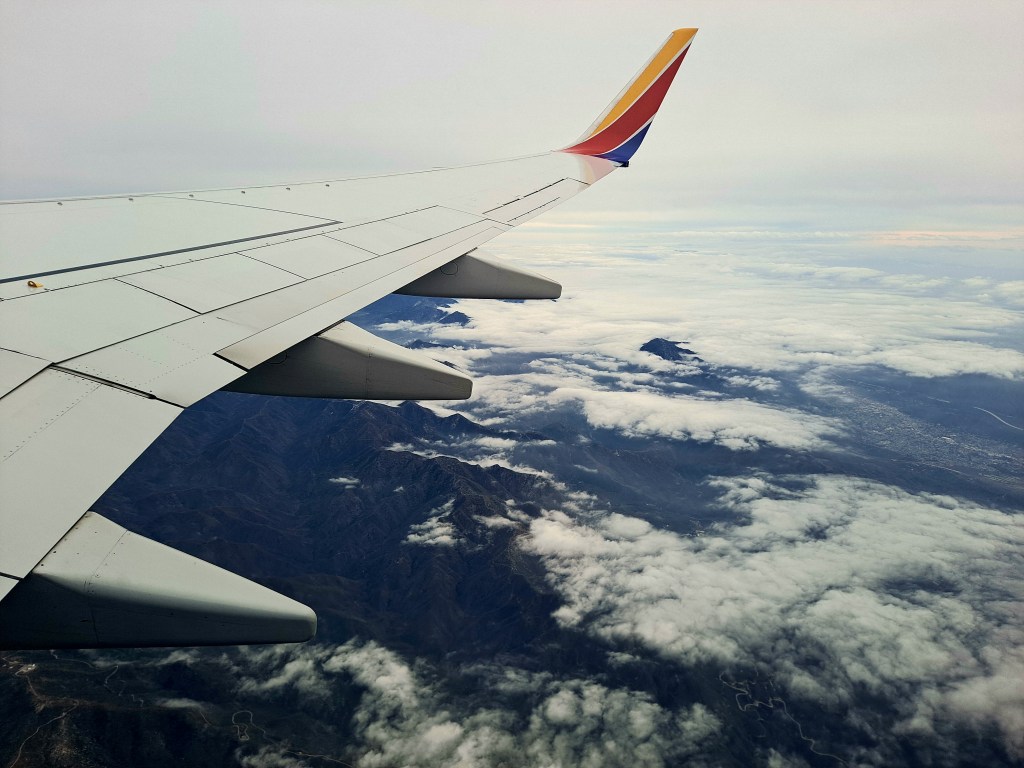
Up thirty-five-thousand feet above the ground,
going around and around and around in circles
for more than an hour in this flying tin can,
and far below, Rapid City is choked in mist
to the point where you can't even see it,
as if a sorcerer had cast a spell & hidden the town
& perhaps the buildings are now toys in this conjurer's top hat,
& looking down at that Emerald City of clouds is dizzying
& the sickly yellow light of morning pains my eyes
for I have had no sleep in twenty-eight hours
& my parents are waiting for me at the airport
to take me to my sister's wedding in the Black Hills,
& all I can think about is what will happen
to my computer files if we should somehow crash.

About the Author: G. M. H. Thompson enjoys golden sunsets with fine wine, taking long walks on the beach, & getting to know you better.

Image Credit: Chase Dimock “Airplane Wing” (2024)

Kellie Diodato: “TAKING MY STUDENTS TO SEE THE MAYANS AND AZTECS BUT THEY TALK ME INTO STARING AT A BUNCH OF DEAD THINGS.”


TAKING MY STUDENTS TO SEE THE MAYANS AND AZTECS BUT THEY TALK ME INTO STARING AT A BUNCH OF DEAD THINGS.

I. Essential question:
What is taxidermy,
and how does taxidermy enhance
your understanding of both the physical and meta
physical world?

II. Lesson Objective:
My students will make a scene. They will be awe-
filled and giddy. They will gallop in stupendous motion,
a herd of happy ponies. They will bounce up four flights
on one foot to pretend-lick dinosaur bones, rush
towards the ominous mosquito exhibit, and they will ask
for my phone. They will want to take a jumping selfie
one where they’re frozen in time, levitating over my multiple
attempts at a headcount. I will not be able to say no to their massive
bright and gleaming eyes when they ask,
just ten more minutes!

III. Objects/Materials Needed:
My students refer to the grizzly bear as “life-like”
and a “giant stuffed-animal.” Do I break the mirage,
tell them that these creatures were once as alive
as they will feel walking back with me to school?
Along the way, they will scream, cry, point towards a pigeon
with its head stomped in. Blood trickles from the bird’s eyes
every time it thrusts its broken neck towards the sky.
They will urge me to call 9-1-1.

IV: Check for Understanding:
Where do we go when we die?

About the Author: Kellie Diodato recently completed her MFA in poetry at Columbia University School of the Arts. She works as a Humanities educator for middle school students. Her writing can be found in Lifelines: The Geisel School of Medicine at Dartmouth Literary and Art Journal, Some Kind Of Opening, and The Pinch, among others.

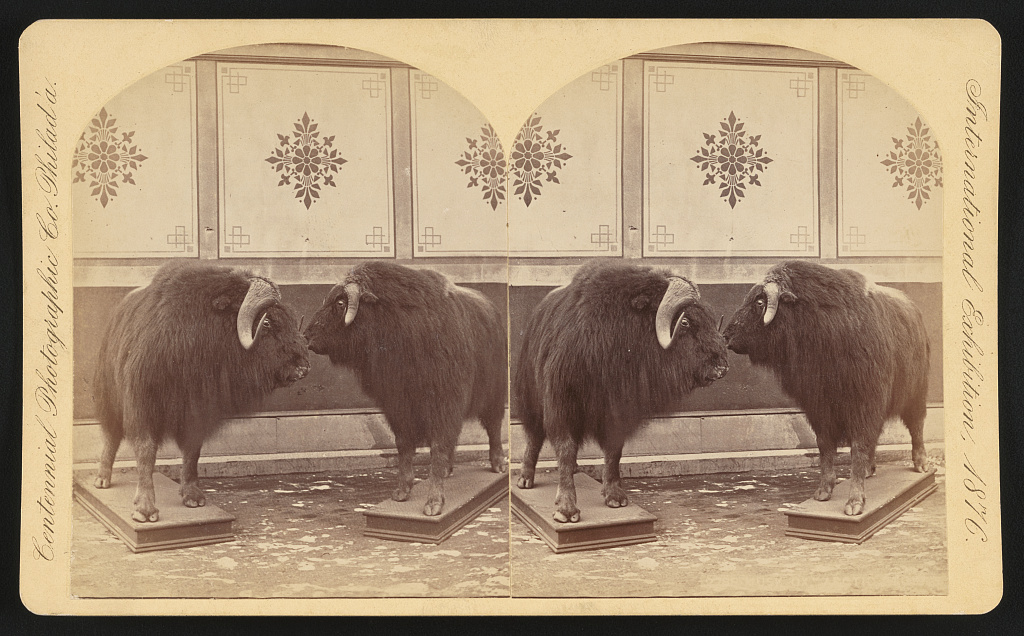
Image Credit: “Taxidermied musk ox” (1876) Public domain image courtesy of the Library of Congress

J.D. Isip: “Cope”

Cope

By J.D. Isip

for Jeff Albers

Who by aspersions throw a stone
At th’ head of others, hit their own.

– George Herbert, “Charms and Knots”

“Professor Isip,” my student is a little angry, holding up her laptop to me, a wiki for David Foster Wallace, the bandana photo, “You didn’t tell us he killed himself?”

It’s not the first time a student has confronted me about this. I’ve assigned Wallace’s 2005 Kenyon graduation speech, “This Is Water,” for well over a decade. Generally, maybe because these are freshmen who need something to believe in, maybe because it’s just that good, they fall in love. And, as they do, they dive all the way in—want to know everything about him. 

“Does that make a difference?” I ask, still curious myself.

She is shocked, “Yes!” She thinks about what to say, “I’m not saying he’s bad for killing himself. I know… I have a friend” she wrote about this friend in her first paper. There’s a lot of them who have a high school friend who committed suicide. A lot of them want to write about it.

When Infinite Jest came out, I didn’t know who David Foster Wallace was or that he was important. I was at a military base in Turkey trying not to be gay. When I went back to get my MA, it was 2008. I was in Dr. Bonca’s class getting ready to talk about postmodernism when he sat down at the front table and cried. He’d met him. Maybe they were friends, I can’t remember. I just know he meant that much to Bonca.

Wallace opens the speech with a story about two fish swimming and an older fish asks them, “How’s the water?” They wait for the older fish to pass and ask one another, “What the hell is water?”

“But if you’re worried that I plan to present myself here as the wise older fish explaining what water is to you younger fish, please don’t be,” though this is exactly what Wallace does for the next twenty or so minutes of the speech. I let my students listen to the speech in class. Recently, I’ve picked up on the eeriness of listening to the dead.

A large part of graduate school, for me, was bitching about how postmodernists got it all wrong. What the fuck did all of that deconstruction have to offer any of us after September 11th? Sometimes students ask me about 9-11 like it’s some far off time recorded in a textbook, certainly nothing the living know about firsthand, “How did you get over it?”

These days they mean September 11th, but they also mean what should have been their formative years spent locked inside, spent behind a mask, spent stuck. I think of President Bush saying we needed to go to Walt Disney World to beat the terrorists, so we went. We got back to living. We pantomimed what we remembered about living.

Continue reading “J.D. Isip: “Cope””

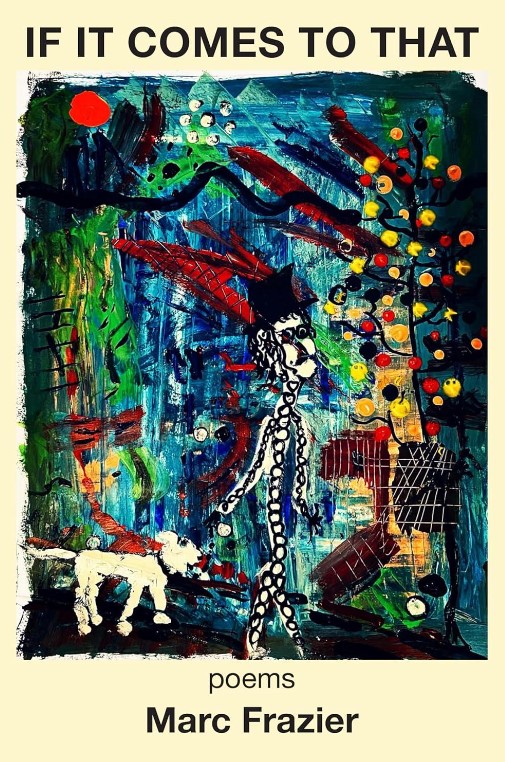
A Review of “If It Comes To That” By Marc Frazier

Chuck Kramer Reviews

If It Comes to That

By Marc Frazier

Marc Frazier is a poet who often ends a poem with a bombshell—a turn of phrase, an insight, or even a question. His skill at producing powerful endings is one of the delights of reading his work in If It Comes to That, his fourth book of poems, this one from Kelsay books. In “Kahlo” he asks, “Who is who they wanted to become?” In “The Discovery” he ends by stating “…our adolescent lives move on. Always move on. And not much is learned.” In “Journal of the Plague Years: One,” he concludes: “I was the river once. He was the sea.”

These poems wrestle with questions of identity, elitism and privilege, life and death, especially death, as they engage in a constant conversation with the arts. Some begin with a poetic epigraph while others reference movies, painting and art.  This gives the poems a large canvas to explore as they deal with both contemporary issues and the dark, lonely corners of Frazier’s personal family history.

In that history he looks for answers, often from people who can’t speak, as in “To Grandmothers Deceased Before My Birth.” Yes, the dead are always with him and he’s filled with dread of his own death. Three poems grouped together —”The Visit,” “Pasture of Dead Horses” and “Gathering,”— present these concerns with sharp focus.

Underlaying all this is his identity as a gay man which he openly explores, presenting the many facets of its reality in poems like “The Blind Leading the Blind” about auto repair with his dad and “Weekly Ritual,” his lament for all the gossip and feminine intimacies he missed because his mom and sisters never went to a beauty parlor. 

What is a real pleasure in reading Frazier is his formal dexterity. While most of the poems are free verse, there are also prose poems, a villanelle, a pantoum, and an unusual attempt to wring poetry from pages of material heavy with redactions.  “bulletproof blanket” starts with a sales promo from the manufacturer and “The Reward” is Frazier’s reworking of a statement by Boston bomber Tsarnaev. Given the difficult nature of the material he started with, Frazier achieves limited, mixed results here.

Far more vibrant are those poems conceived as conversations with the arts: film (“Indochine”), paintings (“Rivera” and “Little Nude by Table”), and poetry itself by many authors such as Plath, Oliver, Williams, and Gallagher. Some are full of admiration while others are full of questions but each provides a new slant on the work of other artists.

“Journal of the Plague Years: One and Two” are a pair of poems full of sadness and loss, histories of a love gone awry and the ephemeral nature of human experience. These same themes also run through “If It Comes to That,” which ends by asking the question, “In the deafening dusk, do I fit in us?”

The book ends with “Incident on the Green Line” which explodes first in violence and then in unexpected optimism. Like the rest of the collection, it doesn’t shy away from contemporary reality but isn’t overwhelmed by it either, and that is what makes this book an important assemblage of incisive, well-crafted poems.

If It Comes To That by Marc Frazier
Kelsay Books/September 2023
Cover painting by Steven Ostrowski
113 pages
Reviewed by Chuck Kramer

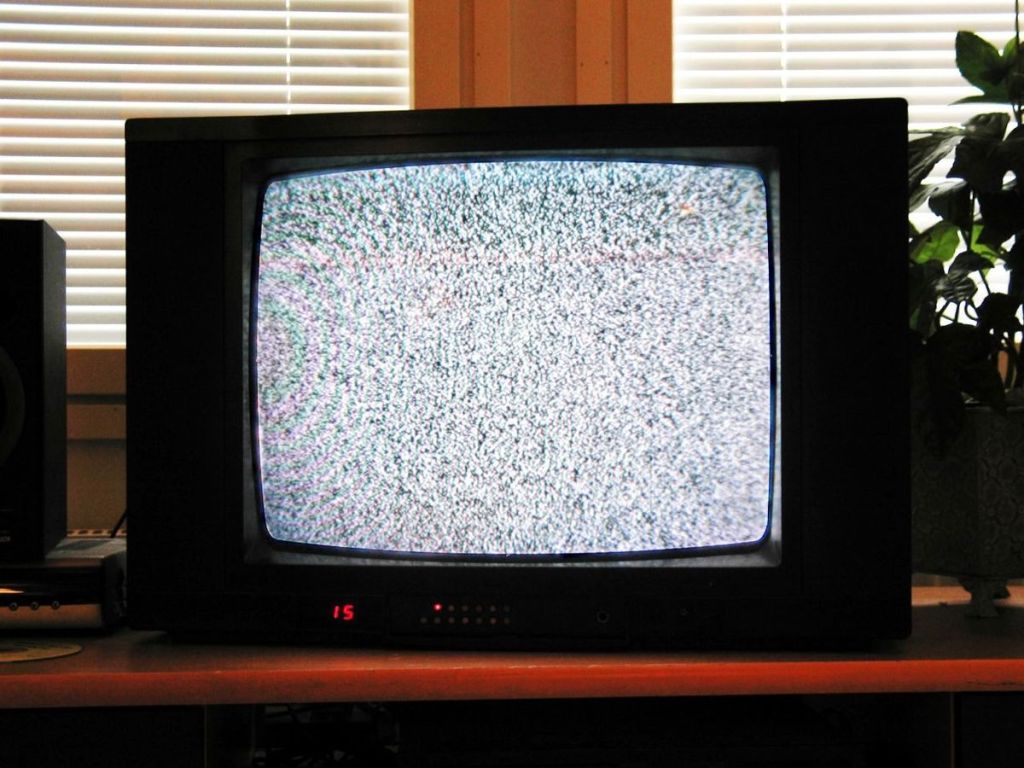
John Compton: “i hear it through the static,”


i hear it through the static,

each click, on & off, each
step further gone, closer come:
“we can be beautiful again”
quavers through empty
space, the white noise,
the shapeless lips curling
around each word. we can be
beautiful again—the noun,
the adjective: a second endeavor.

About the Author: john compton is a gay poet who lives with his husband josh and their dogs and cats. the latest book: the castration of a minor god (Ghost City Press; december 2022) and: blacked out borderland from an exponential crisis (Ethel Zine & Micro Press; aug 2023).

Image Credit: Mysid “An analog TV showing noise, on a channel with no transmission” Public domain image courtesy of Wikimedia.

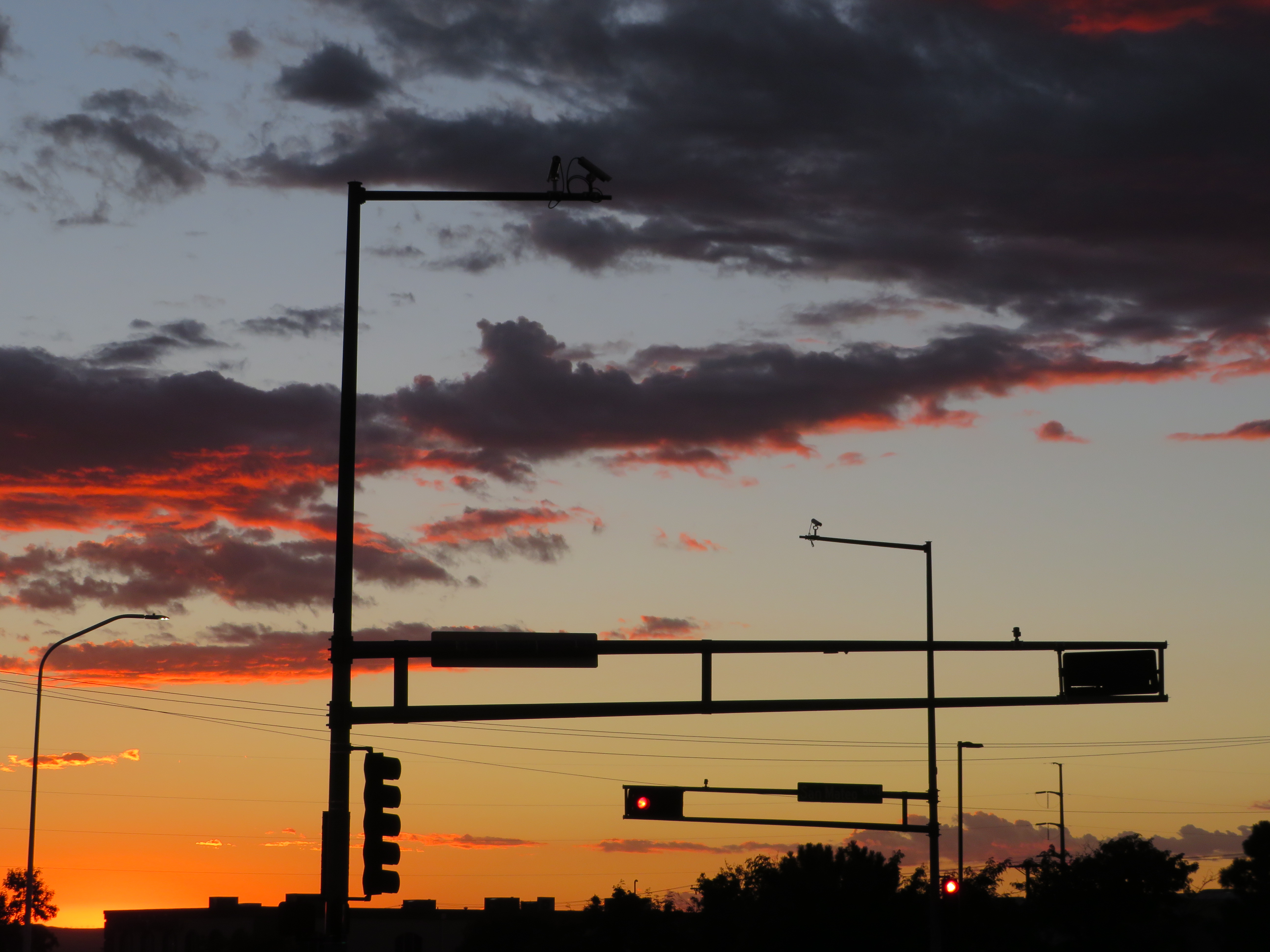
Jason Ryberg: “The Calm Before”


The Calm Before


It’s been another long and perilous week
but we’ve finally come around
to the relative calm of another Sunday afternoon.

And the sun has just now slipped away
behind a slate-grey bank of clouds
and the wind is still rolling around
in its dream-soaked sleep
over in the vacant, weed-clotted lot
across the street.

But the traffic ‘round town
churns and lurches
and then suddenly stalls,
lurches and stalls,
lurches and stalls
all with the passive-aggressive demeanor
of massive schools of tropical fish.

And so far,
it’s been another one of those
barren, bombed-out type of Sundays
wherein nothing really happens
and the weather and the time
fight a cold civil war of attrition
for a mere toehold on the day,
one of those days
when you just can’t seem
to get your bearings
or screw your head on straight
or locate your proper place
in a world full of places
where you don’t want to be,
people you don’t want to meet
and useless things you don’t need.

And all your meager thoughts
and sentences are randomly sprouting wings
(the very second they come into being, it seems)
and, somehow, the very likely likelihood
of (what in all likelihood would be)
some seriously white-hot sex is... no big thing,

and even Miles and Mingus and Monk
have, unprecedentedly,
misplaced their swing (surely
the problem couldn’t be
with you or me?).

Hell, it could only mean one thing:
the clouds,
the wind,
the traffic racing aimlessly around town,
the slow stalagmitization of seconds
into minutes into hours,

otherwise known as our Indentured Servitude
to Time (otherwise known as this Post-
Post-Modern Life of Ours),

they’re all larger parts of the sum
of the numb, melancholy calm
swelling before the storm
of Monday morning
comes rudely blundering in:

that vaguely ominous,
imminent negative
like an approaching tunnel
out of which
will eventually,
inevitably,
inescapably roar

a runaway freight train
haulin’ in nothin’
for you, baby,

but bills,
bad attitude
and diminished expectations

of everything.

About the Author: Jason Ryberg is the author of eighteen books of poetry, six screenplays, a few short stories, a box full of folders, notebooks and scraps of paper that could one day be  (loosely) construed as a novel, and, a couple of angry  letters to various magazine and newspaper editors.  He is currently an artist-in-residence at both  The Prospero Institute of Disquieted P/o/e/t/i/c/s  and the Osage Arts Community, and is an editor and designer at Spartan Books. His latest collection of poems is Fence Post Blues (River Dog Press, 2023). He lives part-time in Kansas City, MO with a rooster named Little Red and a Billy-goat named Giuseppe and part-time somewhere in the Ozarks, near the Gasconade River, where there are also many strange and wonderful woodland critters. 

Image Credit: Chase Dimock “New Mexico Intersection” (2021)

Jessica Wickens: “Dear Eve,”


Dear Eve,

movement is king, right? 
that moment when the light changes and you can cross the street
blacktop provides these flows, these guidelines
I tell myself: stick with this peace
it’s called being okay and it’s a full time job
I don’t want to hide in words anymore
in a jubilant bottomless purple sunset 
get closer to home      close to the bone
a surprising comfort
deeper layer of moss  
to be so calm is so lucky
to be so loved so lucky
are you there now   are you content
did you ride away on that motorized bike?

About the Author: Jessica Wickens is a poet and editor based in Richmond, CA. Her poetry has been published in journals such as Denver QuarterlyBone BouquetPositGinosko, and Whiskey Island Magazine. She is a founding editor of Monday Night, a small press and former literary journal. Jessica co-authored a correspondence poetics collection, Everything Reused in the Sea: The Crow & Benjamin Letters (Mission Cleaners Books). Her chapbook, Things That Trust Us was published by Beard of Bees.

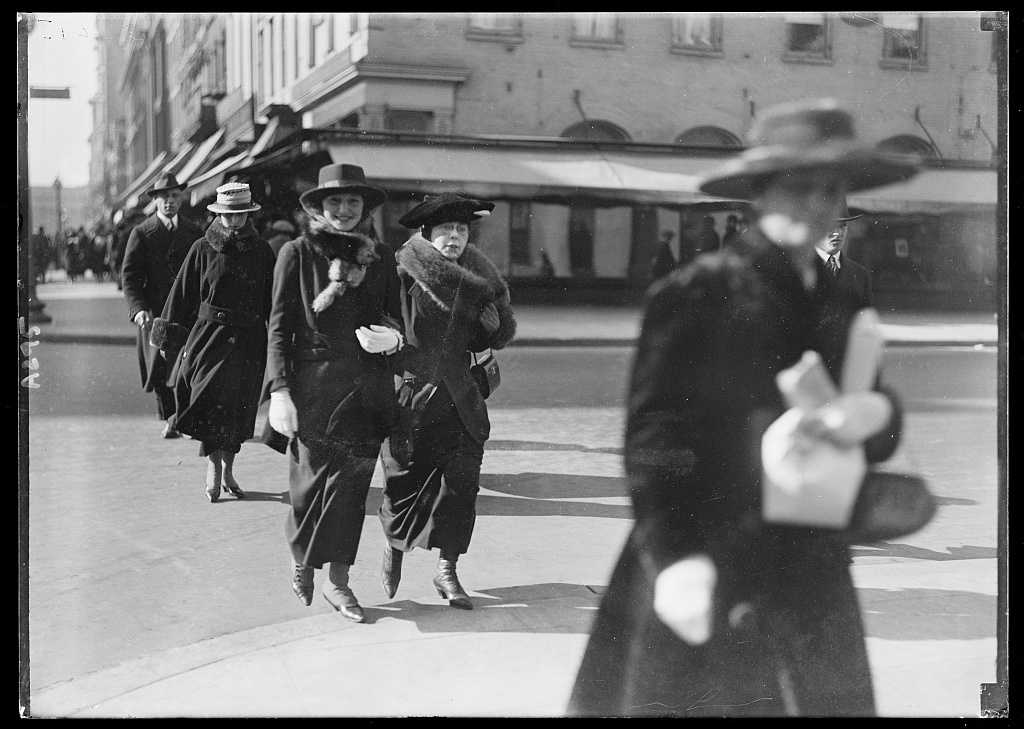
Image Credit: Harris and Ewing “Street views, pedestrians. Washington, D.C.” Public domain image courtesy of The Library of Congress

Sarah Carleton: “Privacy Setting”

Privacy Setting

When I said, Well, at least this will make 
good material for a book,
I thought 

everyone stored scraps of old relationships
for later use, but he was horrified.

I said, That’s what writers do
but he would not let it go,

this guy who is now an itchy memory
and the stuff of anecdotes, 

who’d just found out that a poet
will secrete linens from your shelves

and keep them folded in a trunk, 
waiting to be shaken.

About the Author: Sarah Carleton writes poetry, edits fiction, plays the banjo, and knits obsessively in Tampa, Florida. Her poems have appeared in numerous publications, including NimrodTar River PoetryCider Press ReviewThe Wild WordValparaiso, and New Ohio Review. Sarah’s poems have received nominations for the Pushcart Prize and Best of the Net. Her first collection, Notes from the Girl Cave, was published in 2020 by Kelsay Books.

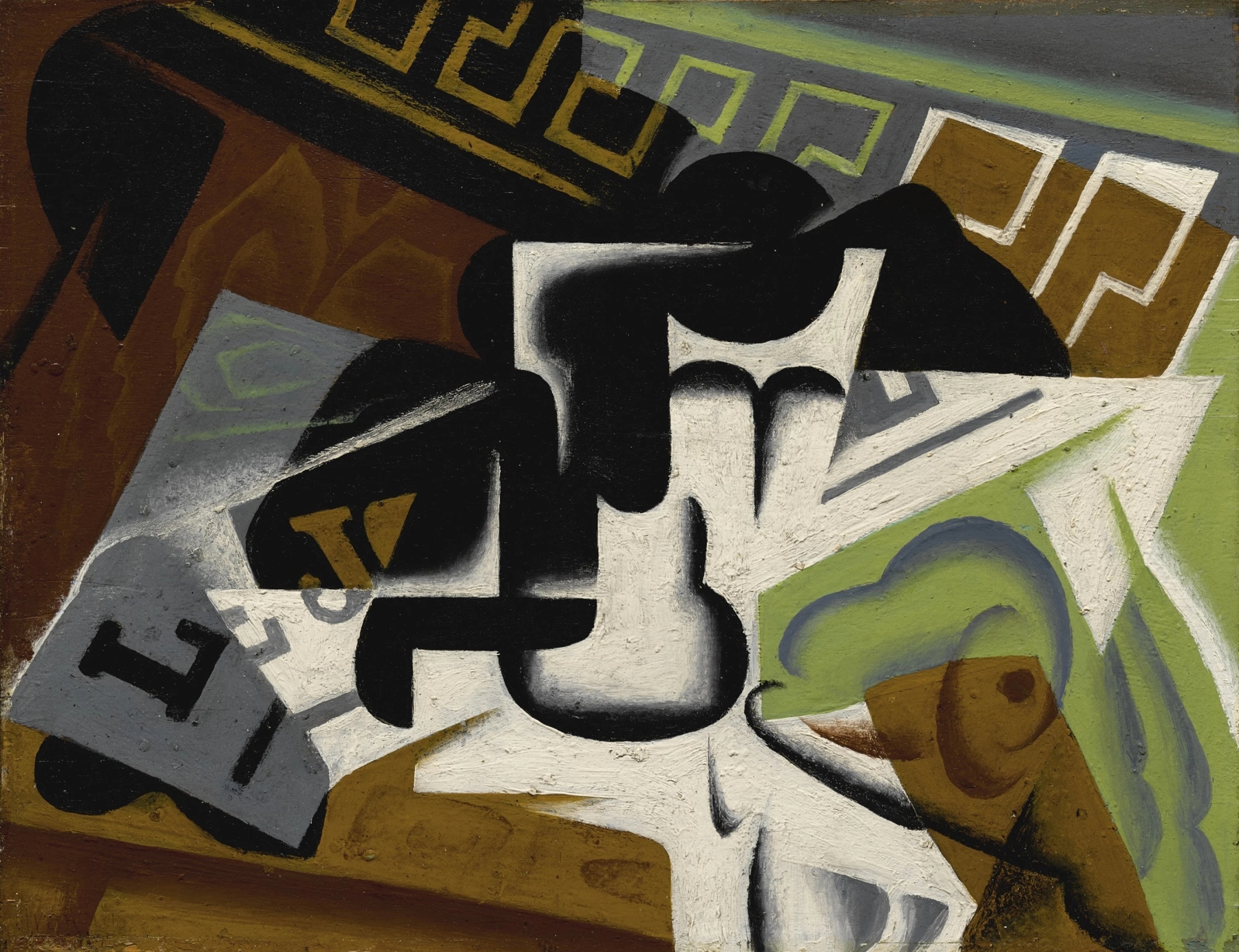
Image Credit: Juan Gris Journal et compotier (1917) Public domain image courtesy of Artvee

Justin Karcher: “How Birdwatching Saved Your Life”

How Birdwatching Saved Your Life


This morning the birds in your backyard
disappear through sunflower wormholes.

Popsicle feathers blowing in the hot wind.

You try following but it doesn’t work like that.

So you drink some coffee instead
and hum your favorite song.

Life is all about getting through grief
then doing it again and again and again.

Did you know that if you Google
“Who is the patron saint of regret?”
there isn’t just one
and there’s still not enough.

About the Author: Justin Karcher (Twitter: @justin_karcher, Bluesky: justinkarcher.bsky.social) is a Best of the Net- and Pushcart-nominated poet and playwright born and raised in Buffalo, NY. He is the author of several books, including Tailgating at the Gates of Hell (Ghost City Press, 2015). Recent playwriting credits include The Birth of Santa (American Repertory Theater of WNY) and “The Trick Is to Spill Your Guts Faster Than the Snow Falls” (Alleyway Theatre).

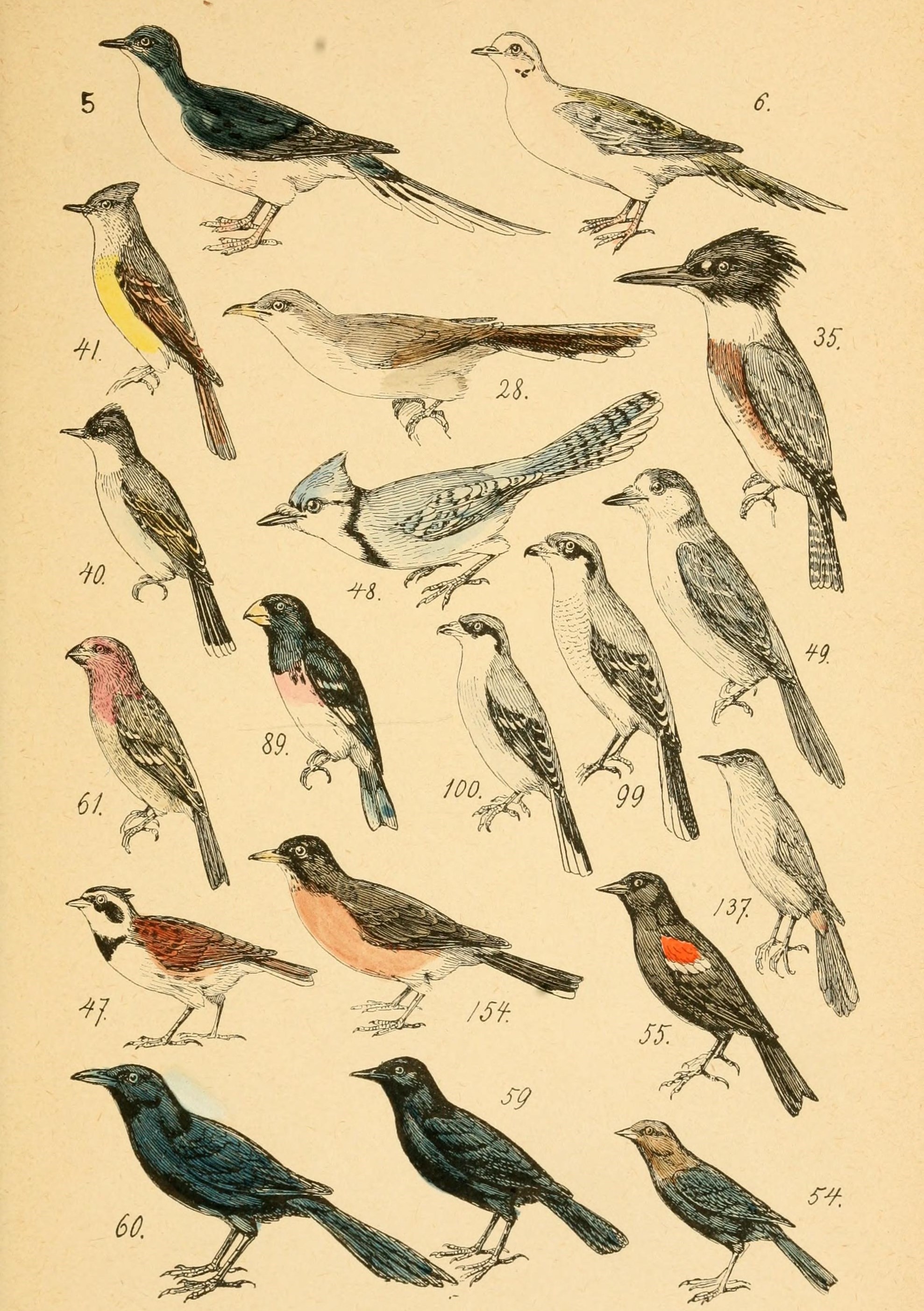
Image Credit: Public domain image originally from Field key to the land birds … Boston, B. Whidden,1899. Image courtesy of the Biodiversity Heritage Library

Howie Good: “In Memoriam”

In Memoriam


Sunday, you’ll have been dead a week. I sit at the kitchen table, laptop open in front of me, doing what I think you’d be doing in my place, writing something. You were a poet, a real one, a soldier with a flower in his helmet. I’m hunting and pecking when I suddenly hear the tinkling of Tibetan prayer bells. Five seconds – 10 max – pass before I realize it’s the new ringtone on my phone. A prim female voice announces, “Unknown caller.” I always just assumed Death would have the surly demeanor of the lunch ladies in a school cafeteria.

About the Author: Howie Good’s newest poetry collection, Frowny Face, a mix of his prose poems and collages, is now available from Redhawk Publications He co-edits the online journal UnLost, dedicated to found poetry.

Image Credit: Chase Dimock “Calla Lily” (2022)